

When you're trying to lose weight, the best snacks are the ones that actually work for you. They should be a powerhouse combo of protein, fiber, and healthy fats that leave you feeling satisfied and full of energy. Think classic duos like an apple with a spoonful of peanut butter, or a bowl of Greek yogurt topped with fresh berries.
The trick is to see snacking not as a restriction, but as a smart strategy. It’s all about using nutrient-packed foods to keep hunger in check and stop yourself from overdoing it when you finally sit down for a real meal.
How Smart Snacking Accelerates Your Weight Loss
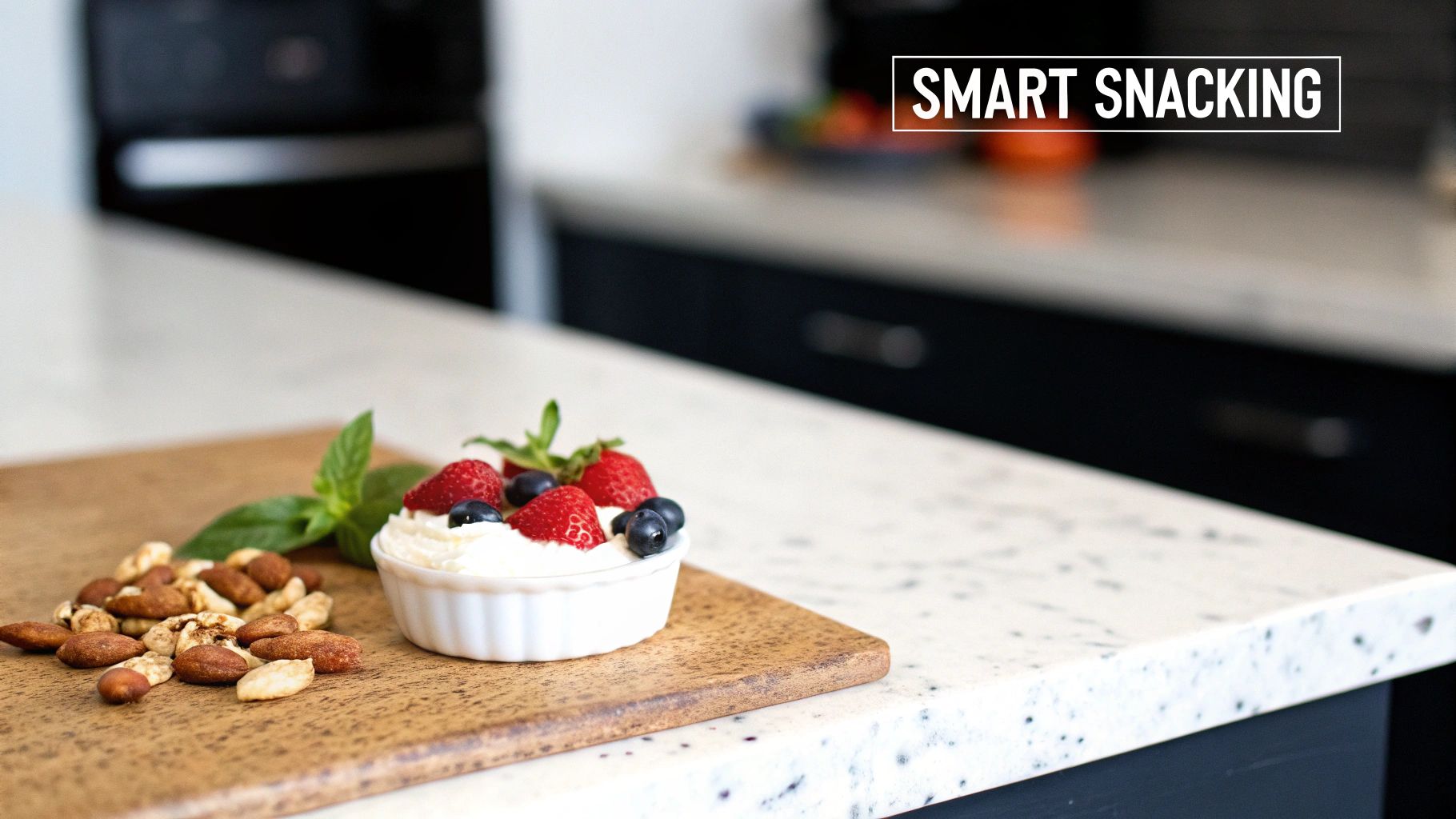
Let's be honest, for a lot of us, the word "snack" probably conjures up images of chips, cookies, and other diet-derailing temptations. But when you approach it the right way, snacking can be one of the most powerful tools in your weight loss arsenal. The secret is shifting from mindless grazing to strategic snacking.
Imagine your metabolism is a campfire. Your main meals are the big logs that keep it burning for hours. Smart snacks? They're the kindling you add between meals to keep the flames strong and steady. This simple act prevents the fire from fizzling out, which for your body, means you avoid that sluggish feeling and the intense hunger that can lead to grabbing whatever's convenient (and usually unhealthy).
The Purpose of a Strategic Snack
A well-chosen snack does more than just quiet a rumbling stomach. It’s a proactive way to nourish your body and stay on track with your goals.
- Hunger Management: A good snack bridges the long gap between meals, so you never get to that "I'm starving!" point where you're tempted to eat everything in sight.
- Energy Stabilization: It provides a consistent stream of fuel to prevent that dreaded afternoon energy slump, which is often what sends us running for a sugary pick-me-up.
- Nutrient Intake: Think of snacks as a bonus opportunity. You can use them to sneak in extra vitamins, minerals, and other important nutrients you might have missed at breakfast or lunch.
This isn't just a niche idea; it's a massive global trend. The healthy snacks market was valued at an incredible $106.54 billion in 2024 and is expected to keep growing as more people turn to nutrient-dense options to manage their hunger. You can dig into the market projections to see just how big this shift is.
The goal of a healthy snack isn't just to fill a void. It's to provide your body with the right tools—protein, fiber, and healthy fats—to maintain balance, manage cravings, and keep your metabolic engine running efficiently throughout the day.
When you start seeing snacks as planned fuel stops instead of guilty pleasures, you completely change the game. It’s about turning a potential pitfall into a key part of your success.
The Science Behind a Satisfying Weight Loss Snack
When you’re trying to lose weight, snacking can feel like a minefield. But what if I told you that the right snack isn't just about calories? It’s about the science of satiety—that feeling of being comfortably full and satisfied.
Think of it this way: your snack is having a conversation with your brain. The right nutrients send clear signals that you’re fueled up and good to go, effectively silencing hunger pangs for hours. This isn't just about willpower; it's about giving your body what it needs to stop asking for more.
The secret to this powerful communication lies in what I call the “Power Trio”: protein, fiber, and healthy fats. When these three work together, they turn a simple snack into a powerful tool for your weight loss journey. Each one plays a unique role, but they’re at their best when they team up.
The Power of Protein and Fiber
When it comes to feeling full, protein is the undisputed champion. Your body has to work harder to break it down, a process called thermogenesis, which actually gives your metabolism a little nudge. It’s no wonder high-protein snacks are seeing huge market growth at an impressive 8% CAGR—they can boost your metabolism by 15-30%.
Fiber is protein’s perfect partner in crime. It slows everything down in your digestive system, preventing the dreaded blood sugar rollercoaster that leaves you craving junk food. By keeping your energy levels stable, a snack high in fiber and protein can help reduce cravings by up to 25%. That's a huge win.
A truly satisfying snack doesn't just fill your stomach—it stabilizes your blood sugar and sends fullness signals to your brain. This powerful combination of protein and fiber is the foundation of smart snacking.
Why Healthy Fats Are Essential
Finally, let's talk about healthy fats. They’re the key to long-lasting satisfaction. While protein and fiber tackle immediate hunger, fats are what keep you from looking for another snack an hour later. They are incredibly energy-dense, so a little goes a long way toward making you feel full for the long haul.
Let's break down how this powerhouse team works to support your goals.
The Power Trio of Weight Loss Snacking
| Nutrient | Role in Weight Loss | Examples |
|---|---|---|
| Protein | Boosts metabolism and is the most satiating nutrient, keeping hunger at bay. | Greek yogurt, hard-boiled eggs, almonds, jerky |
| Fiber | Slows digestion to stabilize blood sugar and prevent energy crashes and cravings. | Apples, berries, chia seeds, carrots, Rip Van Wafers |
| Healthy Fats | Provides long-lasting energy and promotes a sustained feeling of fullness. | Avocado, nuts, seeds, olive oil |
When you understand how these three nutrients work together, you can shift from just "eating less" to eating smarter. It’s all about creating snacks that work with your body, not against it.
You can learn more about crafting snacks that keep you full by checking out our guide on healthy snacks that make you feel full. This knowledge empowers you to build snacks that are not only delicious but scientifically designed for success.
How to Read Nutrition Labels Like a Pro
Walking down the grocery store aisle can feel overwhelming. Every package seems to scream "healthy," but the real story is always on the back. Learning to decipher the nutrition label is like getting a backstage pass—it shows you what’s really going on behind the marketing hype. It’s the single most important skill for turning you from a confused shopper into a confident one who knows exactly what will help your weight loss journey.
First, Check the Serving Size
Before you look at anything else, find the serving size. It’s the key that unlocks the rest of the information. A snack might look like a low-calorie hero, but if the serving size is only two crackers and you end up eating the whole sleeve, you’ve just tripped up without even realizing it. All the numbers—calories, fat, sugar—are based on that one portion.
Once you’ve got that sorted, you can glance at the calories. But don't let that be the end of the story. The quality of those calories is far more important than the quantity alone. That’s where we shift our focus to the real power players: protein, fiber, and sugar.
Zero In on the Satiety Trio
To find a snack that actually keeps you full and fights off cravings, you need to look for two things: protein and fiber. These are the nutrients that give a snack its staying power.
I like to use a simple "5-gram rule" as a quick mental checklist: aim for snacks with at least 5 grams of protein and 5 grams of fiber per serving. This is a great shortcut to ensure your snack is substantial enough to keep you satisfied until your next meal.
Just as crucial is what you don't want to see a lot of: added sugars. These are the sneaky sugars manufacturers add during processing, not the kind you find naturally in an apple or a glass of milk. They’re basically empty calories that can send you on an energy roller coaster. To really get a handle on this, we've got a whole guide that breaks down what makes a snack low in sugar.
This Satiety Trio—protein, fiber, and healthy fats—works together to keep you feeling full and your goals on track.

Think of it like a team. Protein helps build muscle and is very filling. Fiber slows down digestion, keeping you satisfied for longer. And healthy fats provide long-lasting energy. Together, they’re a powerhouse against hunger.
And it’s not just a theory; people are catching on. Snacks high in fiber have been shown to boost fullness so much that they can help people naturally cut their daily calorie intake by 10-15% without feeling deprived.
By focusing on serving size, protein, fiber, and added sugars, you can quickly determine if a snack will help or hinder your progress. It's about looking past the flashy marketing on the front of the package.
Becoming fluent in the language of nutrition labels is a game-changer. For a deeper dive, check out a simple guide to reading nutrition labels that breaks down the process even further.
20 Delicious and Simple Healthy Snack Ideas
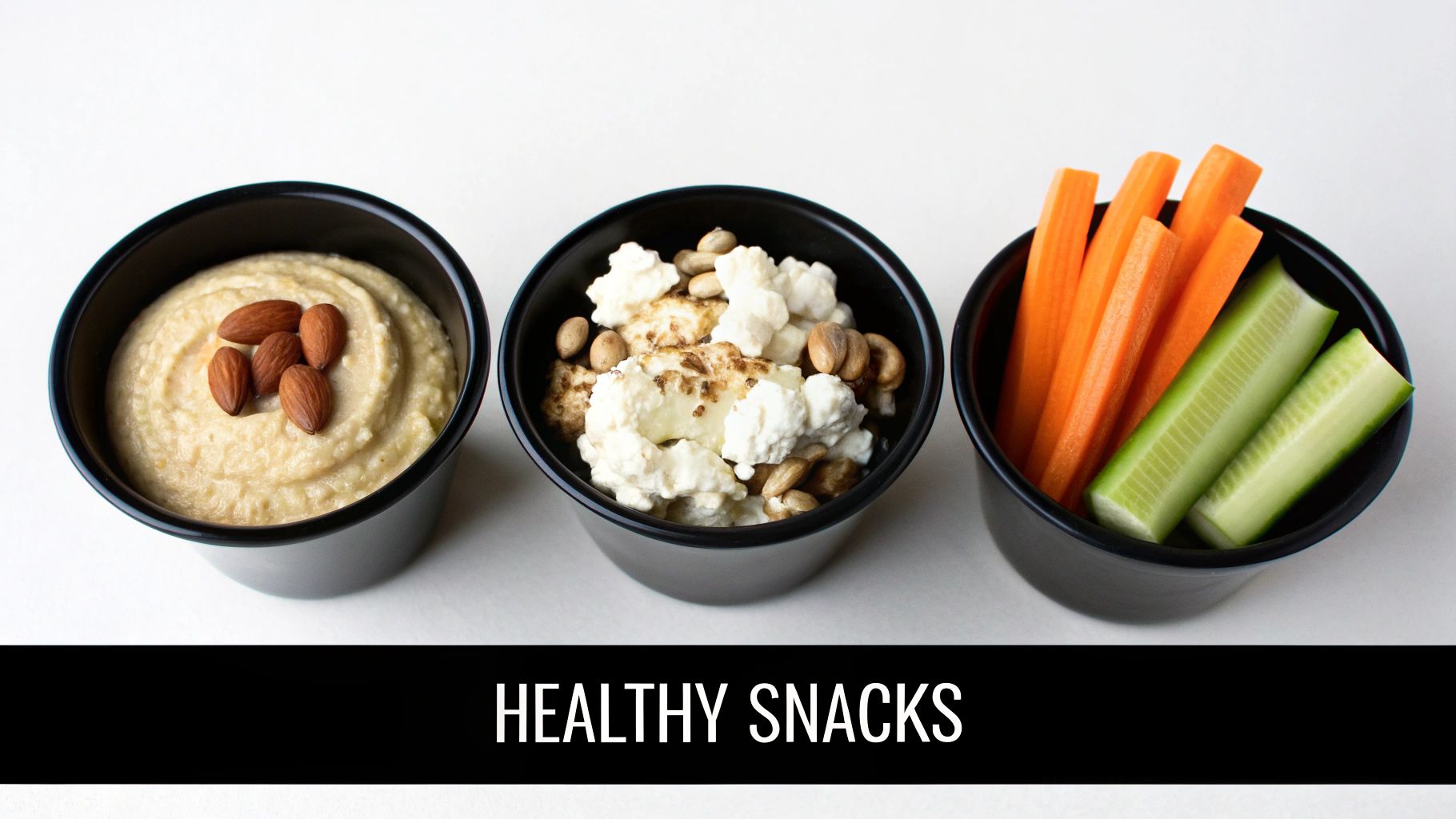
Knowing the why behind smart snacking is half the battle. The other half is having a go-to list of ideas so you're never caught off guard when hunger hits. Here are 20 simple, delicious, and healthy snacks for weight loss, broken down by the craving they crush.
This isn't about bland, boring "diet food." It's about finding real satisfaction in what you eat, making your health journey feel like a treat, not a chore. Every single one of these ideas is designed to be genuinely tasty and keep you fueled for whatever comes next.
High-Protein Power-Ups
When you need a snack that actually holds you over, protein is your best friend. Think of these options as the perfect bridge between meals, keeping that ravenous, "I'll eat anything" feeling at bay.
- Greek Yogurt with Berries (150-200 calories): A classic for a reason. You get a huge protein punch from the yogurt, while the berries add a touch of natural sweetness and a welcome dose of fiber.
- Hard-Boiled Eggs (78 calories each): It doesn't get much simpler. They're portable, perfectly portioned, and deliver pure, high-quality protein that just works.
- Cottage Cheese with Sliced Peaches (150-180 calories): The slow-releasing protein in creamy cottage cheese is a game-changer for long-lasting fullness. Fresh peaches bring in fiber and a juicy sweetness that cuts through the richness.
- Handful of Almonds (approx. 160 calories): A fantastic trio of protein, healthy fats, and fiber that delivers steady, reliable energy.
- Edamame (1/2 cup, shelled - 120 calories): Don't sleep on this plant-based powerhouse. It packs a surprising amount of both protein and fiber.
Fiber-Rich Fillers
Fiber is your secret weapon for slowing down digestion and keeping your blood sugar steady. In other words, it helps you feel genuinely full and focused, stopping cravings before they even get a chance to start.
- Apple Slices with Peanut Butter (200-250 calories): This combo is timeless for a reason. The apple's crisp fiber paired with the protein and healthy fats from peanut butter is a deeply satisfying mix.
- Baby Carrots with Hummus (150 calories): Get your crunch on! This snack delivers fiber from the carrots and a boost of plant-based protein from the hummus.
- Chia Seed Pudding (180-220 calories): Make this ahead of time, and you've got a grab-and-go snack that's absolutely loaded with gut-friendly soluble fiber.
- A Rip Van Wafel with Tea (120-150 calories): Sometimes you just want something that feels indulgent. This Dutch-style wafel is a smart, high-fiber, low-sugar answer to a cookie craving.
- Oatmeal with Cinnamon (150 calories): Who says oatmeal is just for breakfast? A small bowl of these whole grains offers sustained energy and a comforting dose of fiber.
The best healthy snacks for weight loss are those that combine key nutrients to work with your body's natural hunger cues. By pairing protein with fiber, you create a snack that not only fills you up but keeps you satisfied for hours.
Crunchy and Savory Swaps
Let's be real—sometimes you just need that salty, crunchy fix. Instead of diving into a bag of empty-calorie chips, these healthier swaps give you the texture and flavor you're after.
- Air-Popped Popcorn (100 calories for 3 cups): You get a huge volume of snack for very few calories. It’s perfect for mindlessly munching while satisfying that need for a crunch.
- Roasted Chickpeas (150 calories per 1/2 cup): Toss them with your favorite spices and bake until crispy. They are a fantastic, fiber-rich alternative to chips.
- Cucumber Slices with Tzatziki (80 calories): Cool, crisp, and incredibly refreshing. The Greek yogurt-based dip adds a little protein to the mix.
- Celery Sticks with Cream Cheese (100 calories): A low-carb classic that never fails. It's all about that satisfying snap and creamy texture.
- Turkey Jerky (80-100 calories per ounce): For savory cravings on the move, this is a great lean, protein-packed option.
Sweet and Satisfying Treats
A sweet tooth doesn't have to sabotage your goals. When a craving for something sweet hits, you can lean into it with options that offer real nutrients alongside their delicious flavor.
- Dark Chocolate (1-ounce square, ~170 calories): A small square of good quality dark chocolate (70% cacao or higher) can feel incredibly decadent and provides a nice dose of antioxidants.
- Frozen Grapes (80 calories per cup): It sounds too simple, but trust me—they taste like little bites of sorbet. A perfect, refreshing treat.
- Baked Apple with Cinnamon (100 calories): Tastes just like dessert but is packed with fiber and nutrients. Just core an apple, sprinkle with cinnamon, and bake until soft.
- Ricotta Cheese with Honey and Walnuts (200 calories): This feels downright luxurious. You get protein from the ricotta, healthy fats from the walnuts, and just a touch of sweetness from the honey.
- A Sliced Banana with a Sprinkle of Dark Chocolate Chips (150 calories): A winning combination of potassium and fiber from the banana, plus that satisfying chocolatey finish.
Mastering Snack Timing and Portion Control
 Choosing the right snacks is a fantastic first step, but it’s really only half the story. To get the most out of your snacking strategy, you also have to think about when and how much you eat. It’s all about fine-tuning your body’s natural rhythm to work with your goals, not against them.
Good timing isn't about watching the clock like a hawk. It's about listening to your body's cues and planning just a little bit ahead. A well-timed snack can be the secret weapon that prevents a productive afternoon from turning into a desperate raid on the vending machine. This proactive approach keeps you in the driver's seat, managing your energy and hunger all day long.
Sync Your Snacks with Your Schedule
Timing your snacks strategically can stop energy dips in their tracks and prevent you from showing up to your next meal absolutely starving—which, as we all know, is a recipe for overeating. The real trick is to eat before you get desperately hungry, not after.
Think about these key moments for a smart snack break:
- The Mid-Afternoon Slump: We've all been there. That dreaded 2-3 PM window where your energy just tanks. A snack packed with protein and fiber can stabilize your blood sugar and power you through to dinner without the urge to overdo it later.
- Pre-Workout Fuel: About 30-60 minutes before you exercise, a simple carbohydrate snack provides the quick burst of energy you need to give it your all. A banana or a low-sugar wafel is perfect here.
- Post-Workout Recovery: Within an hour after your workout, your body is ready to refuel. A snack that combines protein and carbs helps repair muscle tissue and replenish your energy stores so you can bounce back stronger.
Practical Portion Control Without a Scale
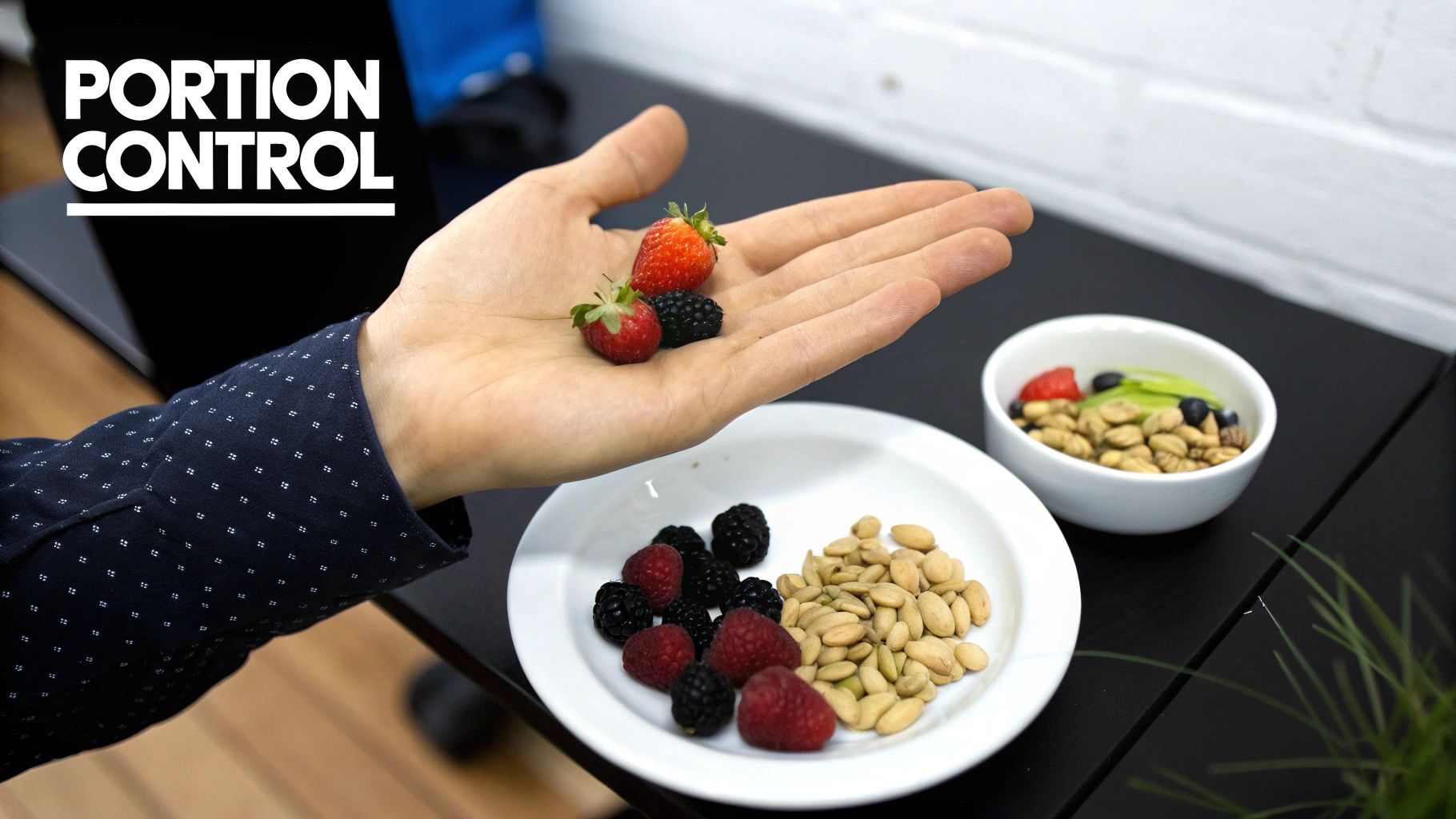
The term "portion control" can sound a little daunting, but you really don't need a food scale for every little thing. Believe it or not, your own hands are one of the best and most personalized measuring tools you have. Using simple visual cues like this helps build more intuitive eating habits that will stick for the long haul.
A portion isn't what fits in the bag; it's the amount that satisfies your hunger until your next meal. This mindset shift is crucial for building a healthy, sustainable relationship with food.
Here are a few easy-to-remember guides using your hands to keep snack sizes in check:
- Palm of your hand: Perfect for protein-dense foods like nuts or seeds (~1/4 cup).
- A cupped hand: Use this to measure out things like berries or whole-grain crackers (~1/2 cup).
- Your thumb: This is a great reference for high-fat foods like nut butter or a slice of cheese (~1 tablespoon).
Once you get the hang of these simple techniques, you'll feel much more confident in your choices. For even more guidance, head over to our page on essential snacking tips to support your journey.
Choosing the Right Snacks for Your Lifestyle
Let's be real: the "best" healthy snack for weight loss is the one you'll actually eat and that fits into your life. There’s no magic bullet. A one-size-fits-all approach is doomed to fail because everyone's body, schedule, and dietary needs are different.
The key to long-term success is learning how to adapt smart snacking principles to your specific situation, whether you're following a Keto, low-sugar, or gluten-free plan. It's not about forcing a new habit; it's about integrating a better one. This is especially true if you're managing a health condition, where finding options like good snacks for diabetics that keep blood sugar stable is a top priority.
Snacks for a Keto Lifestyle
Living the keto life means keeping your body in ketosis, a state where it burns fat for fuel instead of carbs. This puts some serious restrictions on snacking—you need options that are super low in carbohydrates, high in healthy fats, and have a moderate amount of protein.
- What to Look For: Go for snacks with minimal net carbs. Think whole foods like avocados, cheese, and nuts (pecans and macadamia nuts are fantastic choices).
- What to Avoid: You'll have to pass on sugary fruits, all grains, and starchy vegetables. Even some "healthy" snacks pack enough carbs to kick you out of ketosis.
A classic keto go-to is a handful of almonds paired with a cheese stick. It’s simple, satisfying, and gives you that perfect mix of healthy fats and protein without a big carb hit.
Finding Low-Sugar and Gluten-Free Options
If you're on a low-sugar or gluten-free diet, you need to become a master of reading nutrition labels. It's a critical skill. A "gluten-free" sticker on the front doesn't automatically make a snack healthy or low in sugar. In fact, many brands sneak in extra sweeteners to make up for lost flavor or texture.
The most effective snack is one that honors your dietary requirements without feeling like a compromise. It should support your health journey by making it easier, not more complicated, to stay on track with your goals.
When you're trying to cut back on sugar, aim for snacks with less than 5 grams of added sugar per serving. This is where options like Rip Van wafels really shine, since they’re designed to give you a satisfying, sweet-tasting treat without the dreaded sugar crash.
For anyone who needs to avoid gluten, the safest bet is to stick with foods that are naturally gluten-free—fruits, veggies, and nuts are always a solid choice. If you're grabbing a packaged snack, always look for the "certified gluten-free" label to be absolutely sure it's safe for you.
Your Top Weight Loss Snacking Questions, Answered
Let's be honest, figuring out the "rules" of snacking for weight loss can feel like a maze. I get these questions all the time, so let's break down some of the most common ones. The goal is to help you build a smart snacking habit that actually works for you.
Forget rigid rules. The best approach is learning to tune into what your body is actually telling you.
How Many Snacks Should I Eat Per Day?
There's no single magic number here. For some people, two small snacks—one mid-morning and another in the afternoon—is the sweet spot. It helps bridge the gap between meals and keeps their energy from crashing. For others, just one well-timed snack is enough to keep them from getting ravenous before dinner.
The real key is to listen to your body. You want to eat when you're feeling genuinely hungry, not just because the clock says it's "snack time." Pay attention to those physical hunger cues; they’re very different from eating out of boredom or stress.
Are Fruit Smoothies a Good Snack Choice?
This is a tricky one. Smoothies seem like a no-brainer for health, but when you blend fruit, you pulverize all that great natural fiber. Without the fiber to slow things down, your body absorbs the sugar incredibly fast. This can cause a big spike in your blood sugar, often followed by a crash that leaves you feeling tired and hungry again.
You're almost always better off eating the whole fruit instead. An apple or a handful of berries gives you all the fiber, which slows down digestion and keeps you feeling satisfied for much longer.
A successful snacking strategy isn't about following rigid rules; it's about learning to honor your body's hunger signals while choosing foods that provide sustained energy and true satisfaction. This approach builds a healthier, more intuitive relationship with food.
Can I Still Eat My Favorite "Unhealthy" Snacks?
Yes, absolutely! A sustainable, healthy lifestyle is all about balance, not deprivation. In fact, telling yourself a food is completely off-limits is often a recipe for disaster. It just leads to intense cravings and can make you feel like you've "failed" if you give in.
The secret is moderation. Don't ban your favorite chips or cookies—just plan for them. Sit down and mindfully enjoy a small, single-serving portion without any guilt. When you allow yourself these occasional treats, you create a much more realistic and enjoyable way of eating that you can actually stick with. That’s the real foundation for long-term success.
Ready to stock up on snacks that are both indulgent and smart? The treats from Rip Van are designed to satisfy your cravings with low sugar and high fiber, perfectly fitting your healthy lifestyle. Find your new favorite snack at Rip Van today.
Article created using Outrank
0 comments