

When you're managing diabetes, the best low-carb snacks are ones that pull double duty. They need to be high in fiber and protein but low in sugar. Think nuts, seeds, Greek yogurt, or even a simple hard-boiled egg.
These kinds of snacks provide stable, long-lasting energy, helping you sidestep those sharp blood sugar spikes that can really throw off your day.
Why Smart Snacking Is a Game Changer
Living with diabetes doesn't mean you have to say goodbye to snacking. It just means you have to be a bit more strategic about it.
Picture your blood sugar management as driving a car. Those sugary, high-carb snacks are like flooring the gas pedal only to slam on the brakes moments later. You get a quick, jerky burst of energy followed by a sudden crash, leaving you feeling tired and out of sorts.
In contrast, the best low-carb snacks for diabetics are like setting your car on cruise control. They deliver a steady, reliable stream of fuel, keeping your energy levels smooth and your body in balance. By choosing snacks packed with fiber, healthy fats, and protein, you naturally slow down how quickly your body digests food and absorbs glucose into your bloodstream.
This simple shift in how you snack can make a huge difference:
- Better Blood Sugar Control: Helps you avoid those unpredictable and often dangerous spikes and dips.
- Sustained Energy: Keeps you going all day, preventing that all-too-common afternoon slump.
- Feeling Fuller, Longer: Enhances satiety, which helps curb overeating and keeps you satisfied between meals.
- Supports Weight Management: Promotes balanced nutrition, making it easier to stick to your overall health goals.
The goal isn't deprivation; it's empowerment. A well-chosen snack is a powerful tool that helps you maintain control, feel great, and live well with diabetes. It's about turning a potential challenge into a simple, delicious part of your daily routine.
Making informed choices is the first step toward transforming your relationship with food. To build a solid foundation, it's helpful to understand the principles behind selecting a beneficial low sugar snack. The right knowledge makes it easier to navigate grocery store aisles and build a pantry that supports your health without sacrificing flavor or convenience. Throughout this guide, we'll break down everything you need to know, from reading labels to building a perfect, blood-sugar-friendly snack plate.
Understanding Carbs for Stable Blood Sugar
To get a handle on the best low-carb snacks, you first need a solid understanding of how carbohydrates actually work in your body. It’s simple, really: carbs are the primary fuel that directly affects your blood sugar. But not all carbs are created equal, and knowing the difference is the key to snacking smart and feeling good.
The Real Story Behind Net Carbs
When you glance at a nutrition label, your eyes probably land on "Total Carbohydrates." That number tells part of the story, but for anyone managing diabetes, the real hero is net carbs.
Think of it like this: Total Carbohydrates are all the passengers on a bus headed for your bloodstream. One group of passengers, however—fiber—decides to get off at an early stop and never makes it to the final destination. Since your body doesn't digest fiber in the same way as other carbs, it doesn't really raise your blood sugar.
To figure out the net carbs, just subtract the grams of fiber from the total carbohydrate grams. The number you're left with gives you a much more accurate idea of how a snack will actually impact your glucose levels.
This simple calculation is a game-changer. A snack could have 15 grams of total carbs, but if it also has 7 grams of fiber, you’re only dealing with 8 net carbs. Suddenly, a whole new world of high-fiber, satisfying snacks opens up—options that help keep your energy stable.
Decoding Glycemic Index and Glycemic Load
Beyond just counting carbs, it helps to know how fast a food will raise your blood sugar. This is where the Glycemic Index (GI) and Glycemic Load (GL) come into play. The easiest way to think of the GI is as a speed rating for food, on a scale of 0 to 100.
- High-GI foods (70 or more) are the sports cars of the food world. They break down fast, causing a quick, sharp spike in blood sugar.
- Low-GI foods (55 or less) are more like a reliable sedan—they release energy slowly and steadily, preventing those dramatic spikes and subsequent crashes.
The need for these slower-burning foods is becoming more critical. Projections suggest that by 2050, a jaw-dropping 853 million adults across the globe will be living with diabetes—a 46% increase from today. This has spurred a ton of innovation in the diabetic food market, which is on track to hit $24.86 billion by 2033, with a heavy focus on snacks that have a glycemic index of 55 or less.
The Glycemic Load (GL) takes this idea one step further by considering portion size, which gives you a more practical, real-world picture of a food's impact. Choosing low-GI and low-GL snacks is like taking a slow-release energy capsule. You get sustained fuel without the blood sugar rollercoaster. When you're digging into carbs, knowing each ingredient's role is crucial; for example, even fats have a place, which you can see by looking into the olive oil's glycemic index.
This image here really brings the core principles of diabetic-friendly snacking to life.
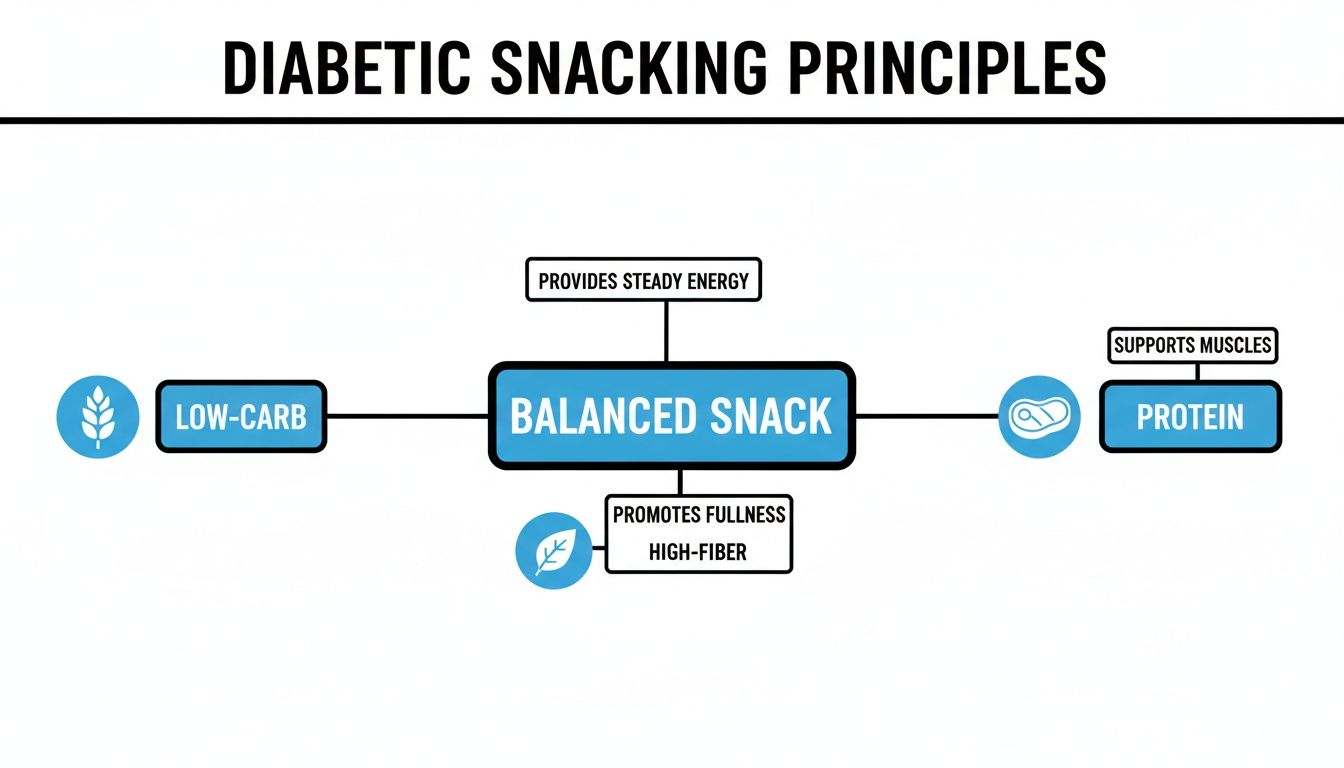
As you can see, the sweet spot is a snack that’s low in net carbs but packed with fiber and protein. This trifecta is your best bet for stable blood sugar. Once you get these concepts down, you’ll be able to read labels with confidence and choose snacks that work with your body, not against it.
Mastering Portion Control and Nutrient Pairing
Choosing the right low-carb snack is only half the battle. How much you eat is just as critical. The reality is, even the most diabetic-friendly food can send your blood sugar on an unwanted roller coaster if the portion is too large. But mastering portion control isn't about deprivation or obsessively weighing every bite—it's about building a simple, sustainable habit.
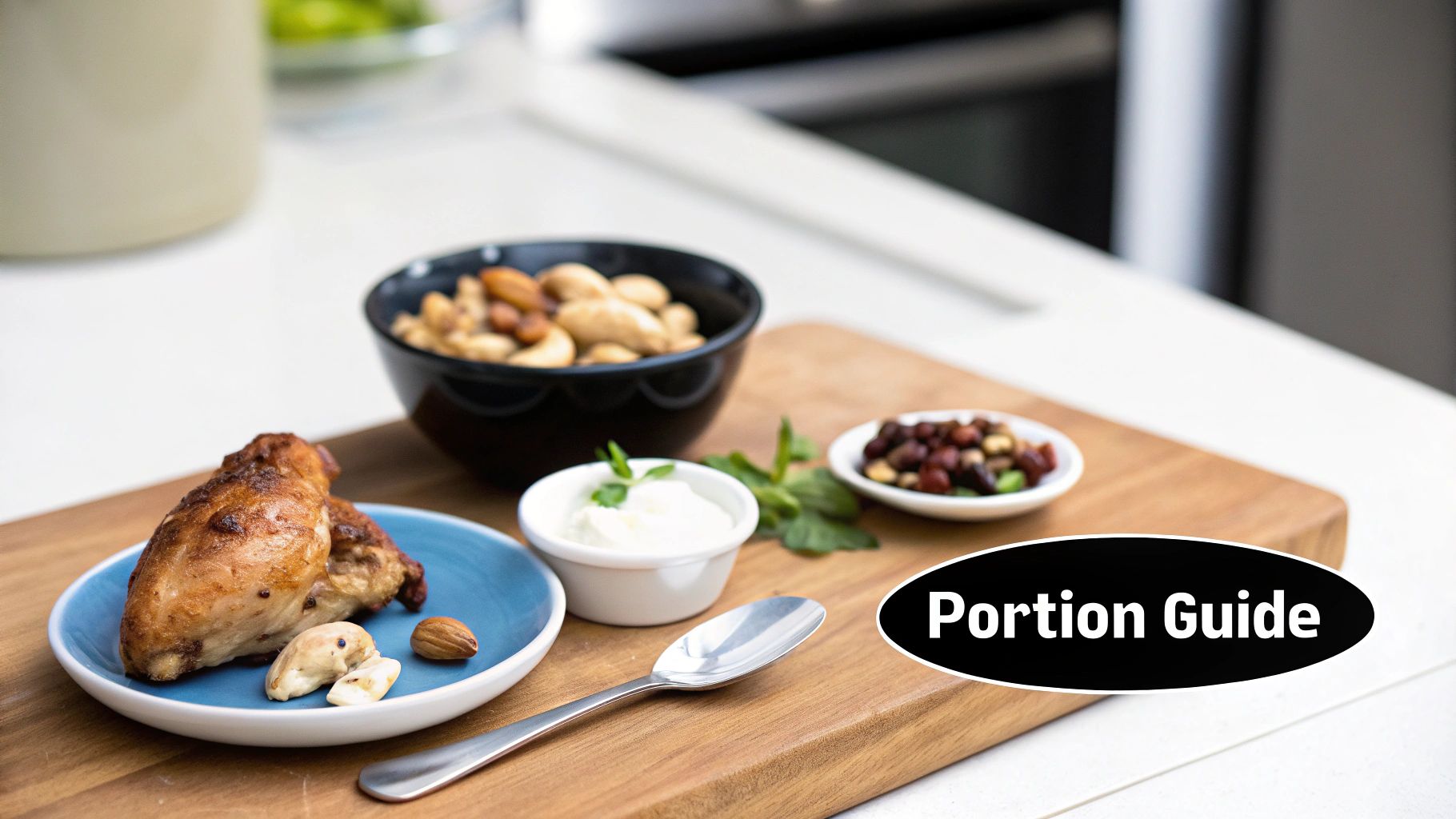
One of the easiest tricks is to use your own hands as a built-in measuring tool. It's a visual guide that's always with you, making portioning intuitive whether you're at home or grabbing a bite on the go.
- Protein (like chicken or fish): A serving should be about the size of the palm of your hand.
- Nuts and Seeds: A sensible portion fits neatly into a cupped hand.
- Cheese: Aim for a serving roughly the size of your thumb.
- Fats (like nut butter or avocado): Limit a serving to the tip of your thumb.
Using these quick visual cues helps you gauge an appropriate amount without the fuss of scales or measuring cups. It's a practical way to keep your snack's impact on blood sugar predictable and under your control.
The Power of Smart Nutrient Pairing
Beyond just how much you eat, what you eat together can completely change how your body responds. This is the simple genius of smart nutrient pairing.
Think of it like building a team where each player helps the others perform better. When you pair a carbohydrate with a protein or a healthy fat, you create a powerful synergy that works in your favor.
The protein and fat act like a brake, slowing down how quickly your body digests and absorbs the carbohydrate's sugar. This simple strategy helps prevent the rapid blood sugar spikes that happen when you eat carbs alone, giving you more stable energy and keeping you full.
This means you feel satisfied longer and sidestep that dreaded post-snack energy crash. For anyone managing their health with specific medications, these pairing principles become even more essential. Resources like a practical guide to what to eat on Mounjaro offer great insights into how nutrient timing and combinations can support stable blood sugar.
Delicious and Effective Snack Pairings
Putting this strategy into practice is the fun part. The goal is to combine a source of healthy carbs with a protein or fat to create a balanced, satisfying mini-meal. The possibilities are endless, but here are a few winning combinations to get you started:
- Apple Slices with Almond Butter: The apple’s fiber is a perfect partner for the healthy fats and protein in the almond butter.
- Greek Yogurt with Berries and a Sprinkle of Chia Seeds: You get a triple win: protein from the yogurt, fiber from the berries, and healthy fats from the seeds.
- Baby Carrots with Hummus: Fiber-rich carrots are a great vehicle for the protein and healthy fats found in hummus.
- A Hard-Boiled Egg with a handful of Whole-Grain Crackers: A classic powerhouse of high-quality protein and steadying fiber.
By embracing these simple portioning and pairing techniques, you can turn your snack from a potential risk into one of your best tools for managing blood sugar effectively. For more inspiration, check out these ideas for high-fiber, low-carb snacks designed to keep you feeling your best.
Building Your Diabetic-Friendly Snack Pantry
Knowing the rules of diabetic snacking is the first step, but putting that knowledge into practice is where you'll really see the difference. It's time to stock your kitchen with confidence. Creating a diabetic-friendly snack pantry isn't about restriction at all—it’s about surrounding yourself with smart, delicious choices that make healthy eating feel effortless and enjoyable.
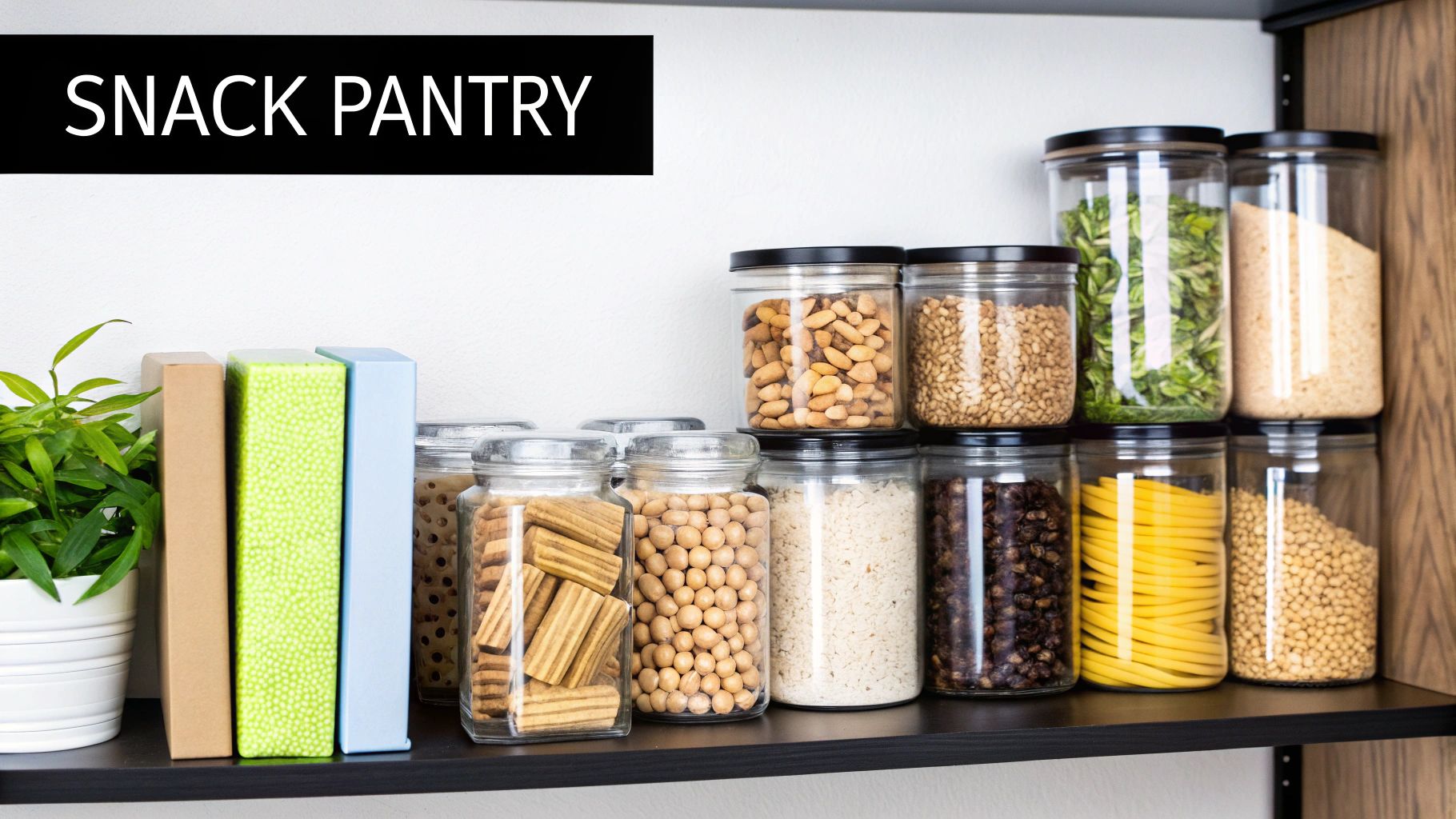
Think of this as your inspiration guide. The goal is to show you just how much variety you can have, proving that managing your health can be a flavorful adventure. Let's break down some of the best low-carb snacks for diabetics by category, explaining why they work and giving you plenty of tasty ideas.
Crunchy and Savory Staples
When a craving for something salty and crunchy hits, it’s all too easy to grab a bag of high-carb chips or crackers. But your pantry can be filled with alternatives that are just as satisfying and packed with nutrients instead of empty carbs.
Nuts and seeds are the undisputed superstars here. They’re loaded with healthy fats, protein, and fiber—a powerful trio that helps you feel full and has a very small impact on your blood sugar.
- Almonds: An excellent source of magnesium and vitamin E, they are low in carbs and high in satisfying protein.
- Walnuts: Rich in omega-3 fatty acids, which are fantastic for your heart health.
- Pistachios: They offer a great mix of protein and fiber, and the simple act of shelling them can help you eat more mindfully.
- Chia and Flax Seeds: These tiny powerhouses are packed with fiber. Sprinkle them on yogurt or blend them into a smoothie to help slow down digestion.
Roasted chickpeas or edamame also make brilliant crunchy snacks. They deliver that satisfying texture you're looking for along with a healthy dose of plant-based protein and fiber.
Creamy and Satisfying Choices
Sometimes you just need a snack that’s smooth, creamy, and comforting. These options are perfect for getting you through to your next meal while providing some serious nutritional benefits.
Plain, unsweetened Greek yogurt is a top-tier choice. It generally has double the protein and fewer carbs than regular yogurt, making it incredibly effective for stabilizing blood sugar and keeping hunger at bay. You can easily customize it with a handful of low-glycemic berries or a sprinkle of nuts for extra fiber and flavor.
Other fantastic creamy options include:
- Cottage Cheese: It's high in protein and relatively low in carbs. It pairs beautifully with savory additions like sliced tomatoes or just a dash of black pepper.
- Avocado: Loaded with heart-healthy monounsaturated fats and fiber, half an avocado with a sprinkle of sea salt is a simple, filling, and blood-sugar-friendly snack.
These snacks give you that rich, creamy texture you crave without the sugar and carbs you’d find in things like pudding or ice cream.
Convenient On-the-Go Options
A busy life demands snacks that are portable, convenient, and won't throw your health goals off track. Having reliable, pre-packaged options ready to go is the key to avoiding impulsive choices when you're out and about.
The demand for these kinds of products is booming. The global low-carb diet market hit an impressive USD 14.55 billion and is expected to climb to USD 22.25 billion by 2032. This growth is fueled by the increasing need for effective ways to manage diabetes and obesity, and brands are stepping up with snacks that are both convenient and compliant.
A great pre-packaged snack for diabetics should be low in net carbs, high in fiber, and free from artificial sweeteners and high-fructose corn syrup. Always read the label to ensure it fits your nutritional plan.
To make things easier, we've pulled together a quick-reference table summarizing the best snack categories.
Top Low-Carb Snack Categories and Examples
| Snack Category | Why It Works | Example Ideas (including Rip Van) |
|---|---|---|
| Nuts & Seeds | High in healthy fats, fiber, and protein, which slow carb absorption and keep you full. | A small handful of almonds, walnuts, pistachios, or a sprinkle of chia seeds on yogurt. |
| Dairy & Alternatives | Rich in protein and fat, providing sustained energy with minimal blood sugar impact. | Plain Greek yogurt with berries, cottage cheese with tomatoes, string cheese, or a cheese slice. |
| Fresh Produce | Low in net carbs and high in fiber and nutrients. Pairing with protein or fat makes them even better. | Sliced avocado with sea salt, celery sticks with nut butter, or a small portion of low-glycemic berries. |
| Lean Proteins | Naturally carb-free and excellent for satiety, helping to prevent overeating and stabilize blood sugar. | Hard-boiled eggs, sugar-free beef jerky, or a few slices of lean deli turkey. |
| Packaged Low-Carb | Specifically designed for blood sugar control, offering convenience without compromise. | Rip Van Low-Carb Cookies & Wafers with under 5g net carbs and high fiber. |
This table should give you a solid starting point for building a snack arsenal that keeps you feeling great. By stocking up on these varied and nutritious items, you'll always have a fantastic option within arm's reach.
Let's Put It All Together: A Sample Weekly Snack Plan
Okay, we've covered a lot of ground—from net carbs to the glycemic index. But what does this all look like in the real world? Seeing it in action is often the best way to make it stick.
Think of the following plan as a springboard for your own ideas, not a rigid set of rules. It’s designed to show you how to weave different types of snacks into your week, keeping things interesting, balanced, and—most importantly—good for your blood sugar.
A Week of Smarter Snacking
Here’s a simple framework for a week of snacks that are easy to prepare and great for managing glucose levels.
Monday
- Mid-Morning: A small handful of almonds (about 1/4 cup). This classic snack delivers a satisfying crunch along with healthy fats, protein, and fiber to keep you going until lunch.
- Afternoon: One hard-boiled egg. It doesn't get much easier than this. A pure protein powerhouse, it’s portable, satisfying, and fantastic for curbing afternoon hunger pangs.
Tuesday
- Mid-Morning: Half an avocado with a sprinkle of sea salt and pepper. It’s creamy, delicious, and loaded with heart-healthy monounsaturated fats and fiber that keep you feeling full.
- Afternoon: A Rip Van Low-Carb Wafel. Perfect for when you're craving something a little sweet. It’s a convenient, pre-portioned treat that won’t send your blood sugar on a roller coaster.
Wednesday
- Mid-Morning: Celery sticks with two tablespoons of natural peanut butter. The cool, crisp crunch of the celery is the perfect partner for the rich protein and healthy fat in the peanut butter.
- Afternoon: A small bowl of plain Greek yogurt with a spoonful of chia seeds. This gives you a great protein boost from the yogurt and an extra dose of fiber and healthy fats from the seeds.
Remember, the goal here is consistency, not perfection. You're building a routine of smart, satisfying snacks that you actually look forward to eating. Over time, making these healthy choices will feel less like a chore and more like second nature.
Thursday
- Mid-Morning: A single-serving container of low-fat cottage cheese. It’s an old-school favorite for a reason—it’s packed with slow-digesting casein protein that helps you stay full for hours.
- Afternoon: A handful of walnuts paired with a few slices of low-sodium deli turkey. This combo gives you a nice mix of plant-based omega-3s and lean animal protein.
Friday
- Mid-Morning: Baby carrots with a quarter-cup of hummus. A fantastic pairing that provides fiber from the carrots and a balanced blend of protein, fat, and carbs from the hummus.
- Afternoon: A low-sugar beef jerky stick. When you're on the move, this is a great grab-and-go protein source. Just be sure to find a brand without a lot of added sugar or nitrates.
Handling the Weekends
Weekends often throw our schedules for a loop, but that doesn't mean your smart snacking has to go out the window. The key is to have a plan.
Saturday
- Mid-Morning: A small apple, sliced, with a stick of string cheese. This balances the fruit's natural sweetness with the stabilizing effects of protein and fat—a truly timeless combination.
- Afternoon: A Rip Van Low-Carb Cookie. It’s the perfect way to enjoy a weekend treat without straying from your health goals. It feels indulgent but keeps your carb count in check.
Sunday
- Mid-Morning: A small bowl of mixed berries. Raspberries, blueberries, and strawberries are all low on the glycemic index and packed with antioxidants.
- Afternoon: Roasted edamame. You get that salty, crunchy satisfaction you might crave from chips, but with a solid helping of plant-based protein and fiber instead.
Use this plan as your starting point. Feel free to mix and match, experiment with your own favorite low-carb foods, and always pay attention to how your body responds. The most important thing is to have smart options on hand so you're never caught off guard when hunger hits.
Navigating Challenges and Listening to Your Body
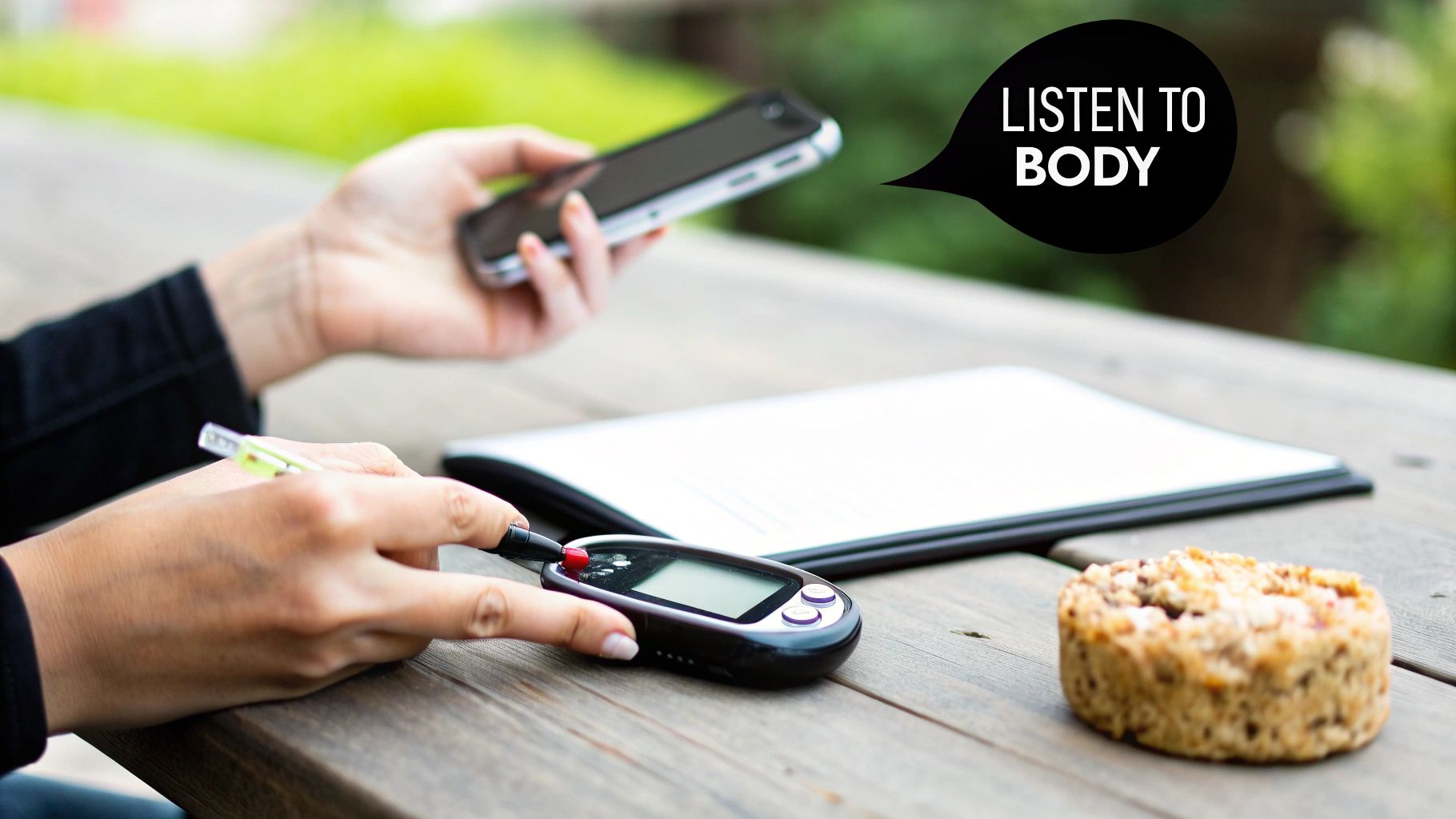
Managing diabetes is a deeply personal journey, and your snacking strategy should be, too. While the principles in this guide are a great starting point, real life is messy. You've got workouts, parties, and sudden cravings to deal with. The key to long-term success is learning how to adapt and, most importantly, listening to what your own body is telling you.
Your best friend in this process? Your blood glucose meter. Think of it as your body’s own feedback system. By testing your blood sugar before a snack and then again about two hours later, you can see exactly how a specific food impacts you. A snack that works wonders for one person might cause a frustrating spike in another.
This personalized data is gold. It helps you move beyond generic advice and build a snacking plan that's perfectly tuned to your metabolism. You're not just guessing; you're building your own curated list of the best low-carb snacks for your body.
Handling Real-World Scenarios
Life doesn’t happen in a bubble. Knowing how to handle these common situations will give you the confidence to stay on track, no matter what your day throws at you.
- Snacking Around Exercise: Physical activity can lower blood sugar. A small, low-carb snack that includes some protein about an hour before a workout can provide steady energy. Always check your levels to make sure you don't dip too low.
- Eating Out: A social gathering doesn't have to be a minefield. Scan the menu for simple wins like a side of olives, a cheese plate, or a veggie platter with a healthy dip.
- Managing Cravings: When that urge for something sweet or starchy hits, be ready with a satisfying alternative. Sometimes, a rich and flavorful low-carb option, like a handful of seasoned nuts or a surprisingly tasty cookie like a Rip Van Romeo, is all it takes to scratch that itch.
Thankfully, finding great-tasting, healthy snacks is easier than ever. The market is projected to skyrocket from USD 107.5 billion to an incredible USD 199.6 billion by 2035, all thanks to people demanding better low-sugar, high-fiber options. This explosion in growth means more brands are creating snacks that actually help with blood glucose control. Rip Van's cookies and wafers, for instance, are a perfect example, packing in fiber while keeping sugar under 3g. Find more details on the healthy snack market growth.
When to Seek Professional Guidance
While this guide offers a solid education, it’s no substitute for professional medical advice. Think of your health as a team sport, with you and your healthcare providers as the star players.
It's crucial to talk with a healthcare professional or a registered dietitian before making any big changes to your diet. They can help you create a personalized plan that accounts for your specific health needs, medications, and lifestyle. They are your expert partners on this journey, ready to help you navigate the path to better health with confidence.
Got Questions About Diabetic Snacking? We've Got Answers.
When you're managing diabetes, figuring out the snack situation can feel like a full-time job. A lot of questions come up, and getting straightforward, real-world answers is crucial. Let's tackle some of the most common ones so you can snack with confidence.
Can I Still Eat Fruit as a Low-Carb Snack?
Yes, you absolutely can! The trick is to be smart about it. While fruit has natural sugar, it's also loaded with fiber, vitamins, and minerals your body needs. It’s all about choosing the right fruits and watching your portions.
Think small servings of lower-sugar options. A small handful of berries, a few tart cherries, or a small apple are fantastic choices. To really steady your blood sugar, never let fruit go solo—always pair it with a protein or healthy fat. Try apple slices with a spoonful of almond butter or a few pieces of cheese. That simple combo slows down how quickly your body absorbs the sugar and keeps you feeling full way longer.
Are Keto Snacks Automatically a Good Choice for Diabetics?
Not always. While the low-carb nature of keto snacks is a great starting point for blood sugar management, you have to look beyond that one number. The "keto" label doesn't guarantee a snack is healthy. Some packaged keto products are packed with unhealthy saturated fats, loaded with sodium, or full of artificial ingredients without offering much real nutrition.
Stick to keto-friendly snacks made from whole foods whenever you can—think nuts, seeds, and avocados. If you're grabbing a packaged keto snack, flip it over and read the label. Look for quality ingredients, high fiber content, and be wary of sugar alcohols that can cause digestive upset. The keto label can help you filter, but your focus should always be on nutrient-dense foods that support your overall health.
How Can I Deal With Late-Night Snack Cravings?
This is a big one. Late-night cravings can easily derail your blood sugar control overnight, so it's important to have a plan. First, ask yourself: am I actually hungry? Or am I just bored, stressed, or eating out of habit?
If it’s genuine hunger, reach for something small, protein-forward, and very low in carbs.
- A handful of almonds
- One hard-boiled egg
- A slice of lean turkey
These options will satisfy you without sending your glucose on a rollercoaster. Steer clear of classic high-carb comfort foods like crackers, chips, or cookies, which will almost certainly disrupt your levels overnight.
If you realize the craving is more about habit than hunger, try sipping a warm cup of herbal tea or a glass of water first. Sometimes just planning for a small, approved snack in your daily meal plan can prevent you from making a poor choice when that late-night urge hits. Being intentional is your best defense.
Ready to fill your pantry with snacks that taste amazing and fit your health goals? At Rip Van, we craft delicious cookies and wafels that are low in sugar, high in fiber, and perfect for a satisfying bite anytime. Find your new favorite and feel great about your choice. Explore the Rip Van collection today at https://ripvan.com.
0 comments