

When you hear "high-fiber, low-carb snacks," think of them as the ultimate nutritional power couple. They're specifically designed to keep you feeling full and energized, but without the rollercoaster blood sugar spikes you get from most other snacks.
This winning formula works by pairing the long-lasting fullness you get from fiber with the steady energy that comes from a low-carbohydrate approach. It’s a smart combination that fits seamlessly into all sorts of health-conscious lifestyles.
The Power Couple of Nutrition: High Fiber and Low Carbs
Imagine a typical sugary snack. It’s like a flash of gunpowder—you get a quick, explosive burst of energy, but it’s followed almost immediately by a hard crash. Not very helpful for getting through the day.
Now, picture a high-fiber, low-carb snack. It’s more like a slow-burning log in a fireplace. It provides a steady, sustained warmth and energy that keeps you going for hours.
The magic happens because fiber physically slows down your digestion. By doing this, it prevents the rapid absorption of sugars into your bloodstream, which is what keeps your energy levels stable and hunger locked away. This one simple mechanism can be a total game-changer for anyone trying to beat that dreaded afternoon slump.
Unlocking Key Health Benefits
By making a conscious choice to grab snacks that feature both of these nutrients, you’re doing more than just taming a grumbling stomach. You're actually tackling several key health goals at once.
- Sustained Energy and Fullness: Fiber literally swells in your stomach, creating a genuine feeling of fullness that naturally helps you avoid overeating.
- Stable Blood Sugar: By putting the brakes on sugar absorption, these snacks help you dodge the sharp energy spikes and crashes that so often lead to more cravings and fatigue.
- Gut Health Support: Many types of fiber are also prebiotics, which is just a fancy way of saying they feed the good bacteria in your gut. A happy gut means a healthier you.
- Weight Management Aid: When you feel full and keep your blood sugar stable, controlling your appetite becomes a whole lot easier. For a deeper dive, check out our guide to healthy snacks for weight loss.
This strategic pairing of high fiber and low carbs is the secret to unlocking snacks that are both deeply satisfying and genuinely good for you.
To make it even clearer, let's look at how these two elements work together to support your health goals.
How High Fiber and Low Carb Snacks Work Together
| Benefit | How It Works |
|---|---|
| Appetite Control | Fiber creates a feeling of fullness, while low carbs prevent the blood sugar crashes that trigger cravings. |
| Stable Energy | Fiber slows down digestion for a gradual release of energy, preventing the typical afternoon energy slump. |
| Better Digestion | Prebiotic fiber feeds beneficial gut bacteria, promoting a healthy and balanced digestive system. |
| Metabolic Health | Keeping blood sugar stable helps improve insulin sensitivity and supports long-term metabolic function. |
Ultimately, this combination creates a snack that works with your body, not against it, making it easier to stick to your health goals.
A Growing Trend in Healthy Eating
The move toward smarter snacking isn't just a fleeting trend—it points to a real shift in how people think about food. We’re all getting more savvy, actively looking for foods that do more for our bodies than just fill a temporary craving.
The numbers don't lie. Recent market trends show a huge demand, with 53% of consumers actively trying to eat more fiber and 47% aiming to cut back on carbs. This powerful consumer movement is exactly why the low-carb snacks market is projected to skyrocket to USD 17.2 billion by 2033.
By combining high fiber and low carbs, you get a snack that’s not only incredibly satisfying but also perfectly aligns with modern keto, low-sugar, and gluten-free diets.
How to Decode Food Labels for Smarter Snacking
Walking through the grocery store can feel like you're being tested on nutrition. Brands love to slap flashy "healthy" claims on the front of their packages, but the real story is always on the back, tucked away in the nutrition label. Learning to read these labels is your secret weapon for finding snacks that are genuinely high in fiber and low in carbs.
The most important skill to learn is how to figure out the net carbs. This number tells you how many carbohydrates your body actually digests and converts to energy, giving you a much more accurate picture than the "Total Carbohydrates" line alone. It’s the key to sticking with a low-carb or keto diet without the guesswork.
Calculating Net Carbs: The Simple Formula
You don’t need a fancy calculator to find the net carbs in a snack, just a little bit of subtraction. It's all about taking the total carbs and removing the ones your body doesn't digest.
Here’s how it works:
Total Carbohydrates – Dietary Fiber – Sugar Alcohols = Net Carbs
Let's say a snack has 20g of total carbs, 8g of fiber, and 5g of sugar alcohols (like erythritol or xylitol). The math would look like this: 20g - 8g - 5g = 7g of net carbs. This simple calculation lets you see past the marketing hype and focus on what really matters for your goals.
Getting comfortable with the net carb calculation is the single most effective way to know if a snack truly fits your low-carb lifestyle. It cuts through the noise and gives you the facts.
This quick look shows just how much choosing the right snacks can benefit your entire system.
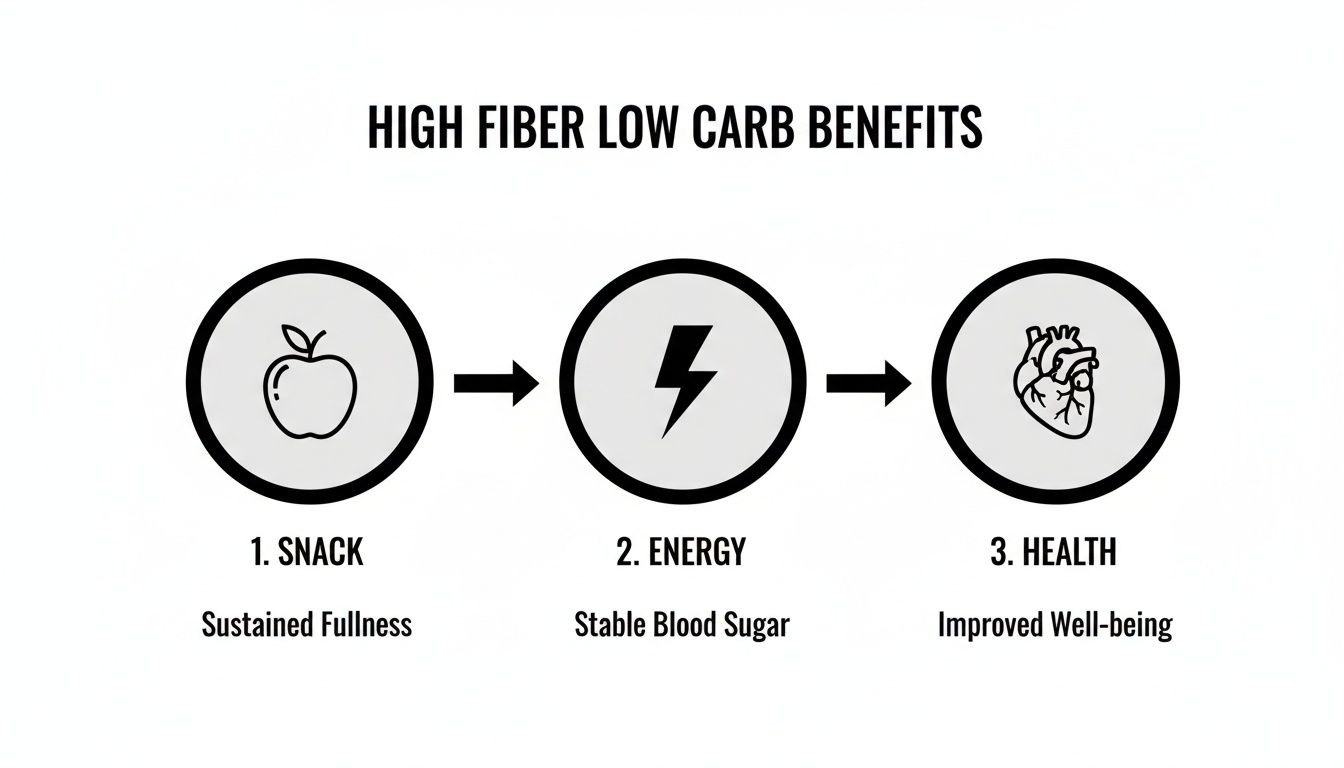
As you can see, it's a clear path from making a smart snack choice to feeling better all day, all thanks to the power of fiber and fewer carbs.
What to Look For and What to Avoid
Beyond just the numbers, the ingredient list tells its own critical story. For a truly great high-fiber, low-carb snack, you want to see whole foods and good fiber sources right at the top of that list.
Green Flags (Look for these):
- Whole Food Ingredients: Nuts like almonds, seeds like chia or flax, and vegetable-based ingredients should be front and center.
- Quality Fiber Sources: Look for ingredients like chicory root fiber, psyllium husk, or acacia fiber. They make you feel full without adding carbs your body digests.
- Natural Sweeteners: Monk fruit, stevia, and erythritol are your friends. They add a touch of sweetness without messing with your blood sugar.
Red Flags (Avoid these):
- Hidden Sugars: Be on the lookout for sneaky terms like corn syrup, dextrose, or maltodextrin. They're all just sugar in disguise.
- Refined Flours: Ingredients like enriched wheat flour or plain white flour are carb-heavy and offer almost no nutritional benefits. For a deeper dive into better alternatives, check out our guide on low-sugar snack bars.
- Artificial Additives: A long list of artificial colors, flavors, and preservatives is usually a sign of a highly processed product that won’t help you reach your health goals.
Keeping these simple guidelines in mind will help you confidently pick out snacks that actually nourish your body and line up perfectly with your low-carb, high-fiber lifestyle.
Building Your High-Fiber, Low-Carb Pantry
The real secret to sticking with any healthy eating plan isn't just about reading labels at the store; it's about what you do when you get home. Setting up your kitchen to support your goals is the single most effective way to make good choices feel automatic. Think of your pantry as your first line of defense against those sudden, not-so-healthy cravings. When the right ingredients are already there, reaching for something smart becomes the easiest option.
This isn't just a personal strategy—it's part of a huge shift in how we eat. The healthy snacks market is already massive, hitting USD 107.5 billion globally, and it’s expected to blow past USD 199.6 billion by 2035. What’s driving that growth? A huge piece of the pie—37.8% of it, in fact—comes from snacks made with nuts and seeds, which shows just how much people want fiber-rich, whole-food options. If you're curious about these consumer trends, you can dig deeper into the market data on FactMr.com. By stocking your pantry this way, you're not just making a smart choice for yourself; you're joining a powerful movement toward better eating.
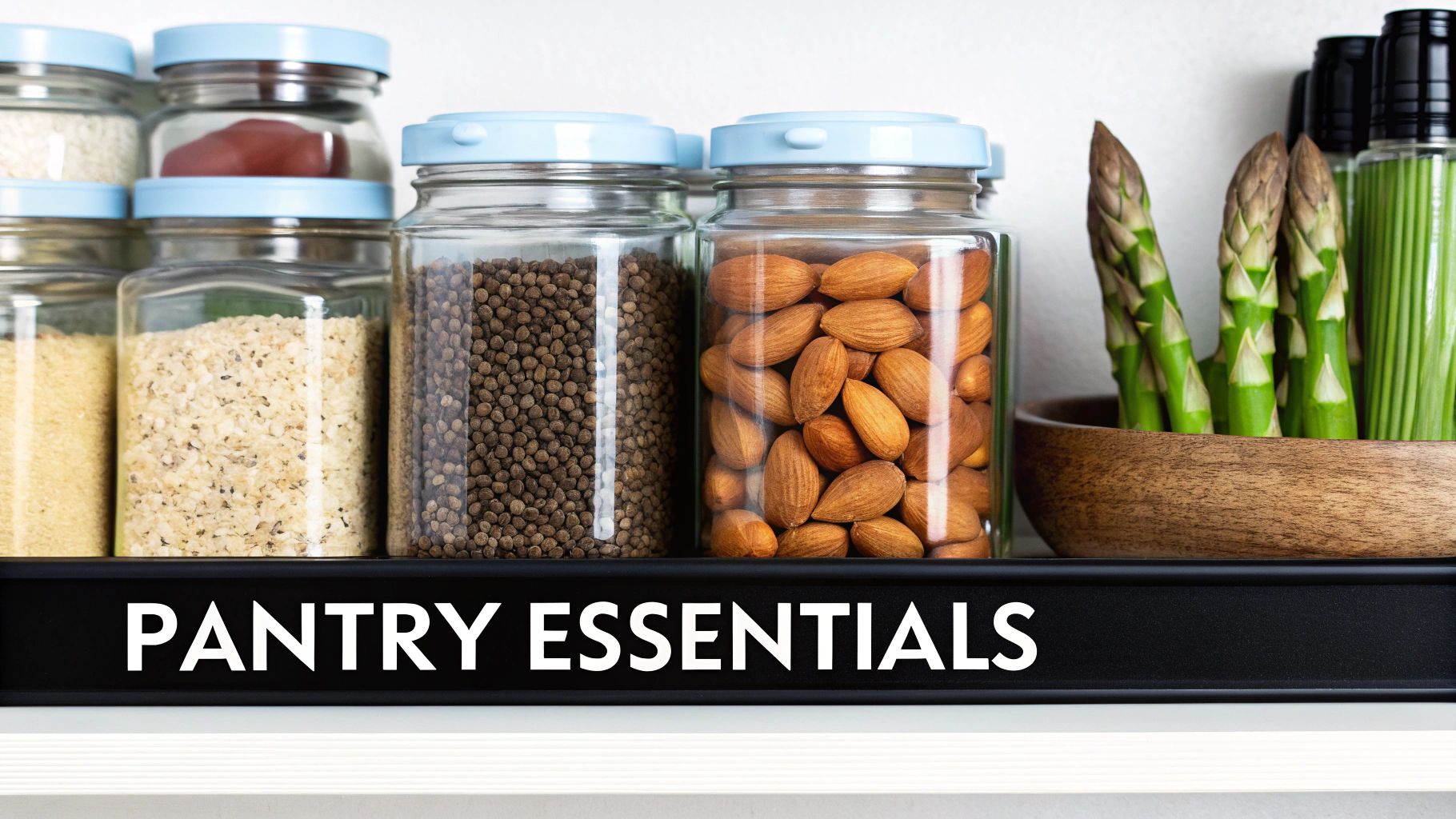
Must-Have Nuts and Seeds
When it comes to building a low-carb, high-fiber pantry, nuts and seeds are the undisputed champions. They are absolute powerhouses of nutrients, healthy fats, and, most importantly, the fiber that keeps you feeling satisfied for hours.
- Almonds: These are a fantastic go-to. A single one-ounce handful gives you about 3.5 grams of fiber plus a nice dose of protein and vitamin E, all for just a few net carbs.
- Chia Seeds: Don’t let their size fool you—these little guys are fiber giants. Just two tablespoons contain a whopping 10 grams of fiber! They also swell up and form a gel in liquids, which really helps you feel full.
- Flaxseeds: Much like chia seeds, flaxseeds are loaded with soluble fiber. They're also a great source of omega-3 fatty acids, which is great news for your heart and digestive system.
- Walnuts: Famous for their brain-boosting omega-3s, walnuts also deliver a solid punch of fiber and antioxidants.
Keeping these staples in airtight containers on your shelf means they’ll stay fresh and ready to grab for a quick snack, sprinkle over yogurt, or blend into a smoothie.
A pantry filled with fiber-rich whole foods is your secret weapon. When a craving hits, you're already prepared with options that support your goals, not derail them.
Stocking Up On Non-Starchy Vegetables
Fresh produce is always ideal, but having some reliable non-starchy vegetables on hand makes whipping up a quick snack incredibly simple. These veggies are naturally low in calories and carbs but high in water and nutrients.
A few of the best options to keep stocked in your fridge are:
- Bell peppers (in every color!)
- Cucumbers
- Celery
- Broccoli florets
- Cauliflower
These are perfect for dipping into guacamole or a creamy low-carb veggie dip. One of the best time-saving tricks is to pre-chop them at the beginning of the week. That way, a healthy, crunchy snack is always just seconds away.
Your High Fiber Low Carb Shopping List
To make things even easier, here's a quick-reference guide. Think of this as your cheat sheet for prioritizing the good stuff and knowing what to steer clear of when you're at the grocery store.
| Ingredient Category | Excellent Choices (Prioritize) | Use in Moderation | Ingredients to Avoid |
|---|---|---|---|
| Nuts & Seeds | Almonds, chia seeds, flaxseeds, walnuts, pecans, pumpkin seeds | Cashews, pistachios (slightly higher in carbs) | Candied nuts, heavily salted or flavored nuts |
| Vegetables | Leafy greens, broccoli, cauliflower, bell peppers, celery, cucumbers | Carrots, beets, onions (contain more natural sugars) | Corn, potatoes, peas (starchy vegetables) |
| Healthy Fats | Avocado oil, olive oil, coconut oil, avocados, olives | Butter, ghee | Vegetable oils (soy, corn), hydrogenated oils |
| Fiber Boosters | Psyllium husk, chicory root fiber, acacia fiber | Inulin (can cause bloating for some people) | Maltodextrin, artificial fiber additives |
| Sweeteners | Monk fruit, stevia, erythritol | Allulose, xylitol (can have a laxative effect) | Sugar, high-fructose corn syrup, agave, honey |
| Flours | Almond flour, coconut flour, flax meal | Oat fiber | White flour, wheat flour, cornstarch |
Building a pantry around the "Excellent Choices" column will set you up for effortless success. The "Ingredients to Avoid" are the ones that can sneak in hidden sugars and refined carbs, working directly against your health goals.
By focusing on whole foods and knowing which processed ingredients to leave on the shelf, you’ll create a kitchen environment that makes healthy, satisfying snacking an easy and delicious part of your daily routine.
Delicious and Simple Snack Recipes to Try Today
Alright, you've learned how to read a nutrition label and stock your pantry with the good stuff. Now for the fun part: putting that knowledge to work with some simple, tasty recipes that prove high fiber low carb snacks can be genuinely satisfying and a breeze to make.
The ideas below range from grab-and-go options for those crazy busy days to quick recipes you can whip up in just a few minutes. Every single one is designed to deliver on flavor and nutrition, helping you stick to your goals without ever feeling deprived.
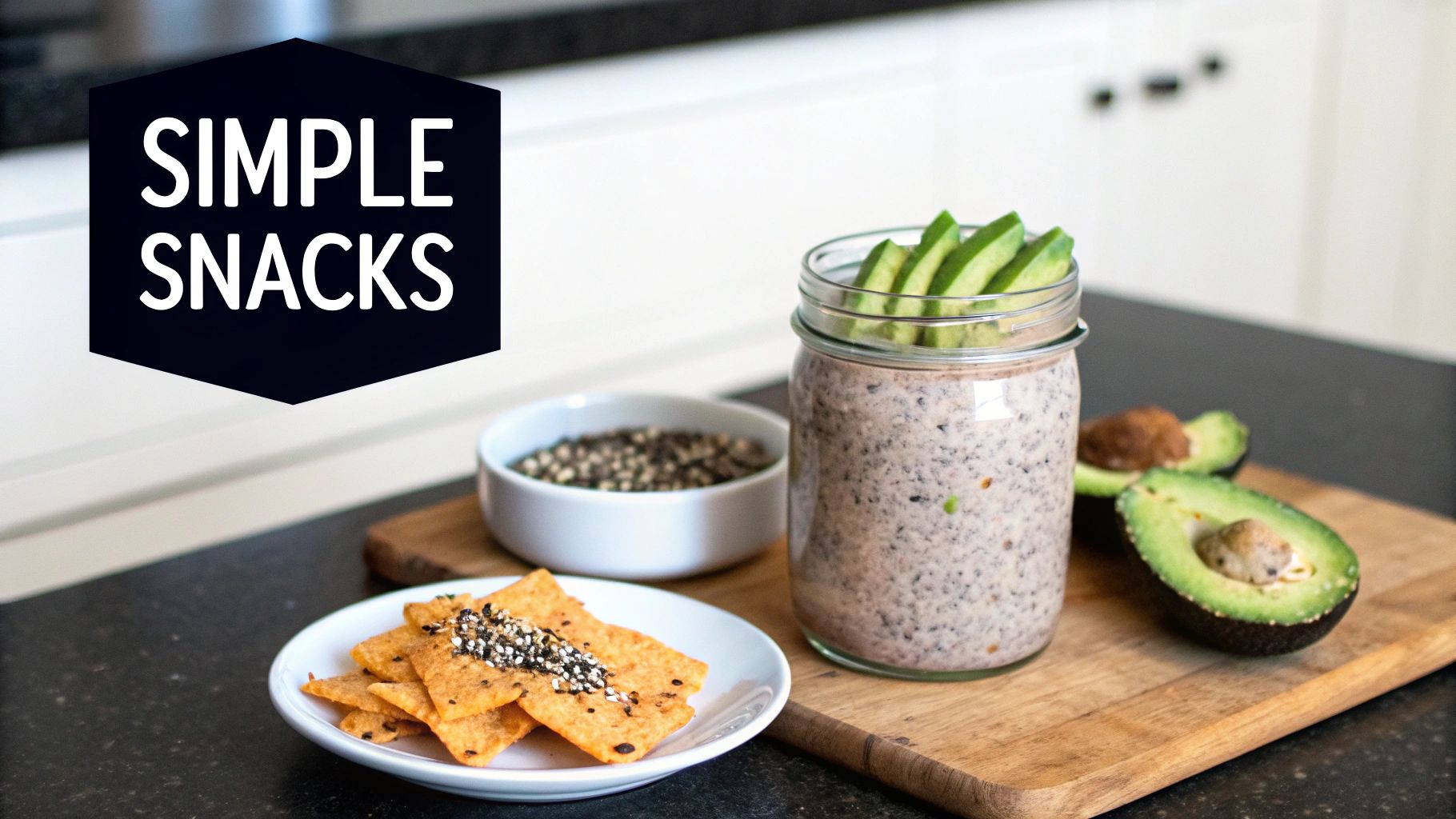
Quick No-Cook Snack Ideas
When you're short on time, you need something that's ready in seconds. These no-cook snacks require zero prep but are loaded with the fiber and healthy fats you need to stay full and focused.
- Avocado with Sea Salt: Just slice an avocado in half and sprinkle it with some flaky sea salt and a pinch of chili flakes. That's it. You're getting around 7 grams of fiber plus healthy monounsaturated fats.
- Celery Sticks with Almond Butter: It’s a classic for a good reason. A couple of tablespoons of almond butter give you protein and fiber, and the celery delivers that satisfying crunch with barely any carbs.
- A Handful of Walnuts and Berries: Mix a small handful of walnuts with a quarter-cup of raspberries. It’s the perfect combination of healthy fats from the nuts and a fiber-and-antioxidant punch from the berries.
These simple pairings prove you don't need a complex recipe to snack smart. They're perfect for grabbing on your way out the door or for beating that afternoon slump at your desk.
The best snacks are often the simplest. Focusing on whole-food combinations ensures you get a nutrient-dense bite that supports your energy levels and keeps cravings away without any time in the kitchen.
Simple Recipes for Delicious Snacks
Got a few extra minutes? These easy recipes can be made ahead of time, so you’ll always have a healthy option on hand when hunger strikes.
Creamy Chia Seed Pudding
This recipe is a true fiber powerhouse. Chia seeds are amazing—they soak up liquid and create a thick, creamy pudding that you can customize with all sorts of low-carb toppings.
- Combine Ingredients: Grab a jar or bowl and mix 3 tablespoons of chia seeds with 1 cup of unsweetened almond milk. Add a few drops of stevia or monk fruit sweetener if you like.
- Stir Well: Whisk it all together really well to make sure no clumps form.
- Chill and Thicken: Let it sit for at least 30 minutes (or pop it in the fridge overnight) until it gets that perfect pudding consistency.
- Add Toppings: Before you dig in, top it with a few fresh berries, a sprinkle of cinnamon, or some chopped nuts.
Just one serving of this pudding can deliver over 10 grams of fiber, making it one of the most effective high fiber low carb snacks you can make at home.
Baked Veggie Chips
Step away from the processed potato chips. These homemade veggie chips are crunchy, full of flavor, and packed with nutrients. Zucchini and kale are fantastic for this.
- Prep Your Veggies: Slice zucchini as thinly as you can or tear kale into bite-sized pieces.
- Season Generously: Toss the veggies with a tablespoon of olive oil, sea salt, garlic powder, and a bit of paprika.
- Bake Until Crispy: Spread them out in a single layer on a baking sheet. Bake at 375°F (190°C) for 10-15 minutes, or until they're golden and perfectly crisp.
These chips are an amazing way to crush a craving for something salty and crunchy while getting a solid dose of fiber and vitamins. If you're hungry for more, this guide has over 50+ low carb high protein snack ideas to keep you fueled and satisfied.
Finding Convenient On-The-Go Snacking Options
Let's be realistic—while making your own snacks is ideal for controlling every ingredient, life gets incredibly busy. Sometimes you just need something you can grab on the way out the door without derailing your health goals.
Fortunately, the demand for healthier, convenient food is completely changing what’s available in the snack aisle. The market for high-fiber snacks was already valued at USD 28.4 billion in 2024 and is expected to explode to USD 76.3 billion by 2035. This massive growth is all thanks to health-aware people like you who need ready-to-eat options that actually fit their lifestyle.
This consumer-driven shift is pushing brands to innovate, creating products that are genuinely better for you by packing in fiber while keeping net carbs low.
Smart Choices for a Busy Lifestyle
When you're short on time and looking for convenient high fiber low carb snacks, the trick is to find brands you can really trust. Look for companies that build their products around quality ingredients, like chicory root fiber, and steer clear of cheap fillers and mountains of sugar.
Rip Van is a perfect example of this. Their low-sugar wafels are specifically designed to give you that comforting, delicious snack experience without the dreaded sugar crash. By using smart, purposeful ingredients, they've created a treat that fits right into a low-carb or keto-friendly diet. For those who need durable, travel-friendly options, exploring a variety of vegan shelf stable protein snacks can also be a game-changer.
The best on-the-go snacks don't force you to choose between convenience and your health goals. They prove you can have both.
Think about how a simple swap can totally reshape your day. A standard sugary granola bar can easily pack 20 grams of sugar with barely any fiber, setting you up for that all-too-familiar energy slump an hour later.
Now, compare that to a Rip Van wafel:
- Low Sugar: It contains just a few grams of sugar, helping you avoid sharp blood sugar spikes.
- High Fiber: It's loaded with fiber to help you feel full and satisfied much longer.
- Clean Ingredients: You won't find any artificial sweeteners or high-fructose corn syrup here.
This side-by-side shows what a 'better-for-you' choice really looks like. Keeping options like these in your pantry, car, or desk drawer means you're always prepared with a smart snack that supports, rather than sabotages, your goals. If you're on a keto plan specifically, you can find more great ideas in our guide to snack foods you can eat on keto.
Got Questions About High-Fiber, Low-Carb Eating? We've Got Answers.
Let’s be honest, changing the way you eat can feel a little confusing at first. When you start exploring high-fiber, low-carb snacks, you're bound to have a few questions about how it all works in the real world. That’s what this section is for.
Think of it as a conversation with a nutritionist. We’ll walk through the most common questions that pop up, giving you clear, practical answers so you can feel confident in your food choices.
Can You Actually Eat Too Much Fiber on a Low-Carb Diet?
You absolutely can. Fiber is fantastic for your body, but jumping from a little to a lot overnight can be a shock to your system. If you suddenly ramp up your intake, you might notice some temporary digestive issues like bloating or gas while your gut microbiome gets used to the change.
The trick is to ease into it. Start by adding just one high-fiber snack to your day and see how your body responds. And don't forget to drink plenty of water! Water is crucial for helping soluble fiber move smoothly through your digestive system. Aim for the general recommendation of 25-38 grams of fiber per day, but listen to your body—it will tell you what feels right.
Are All Keto Snacks Automatically High in Fiber?
That's a surprisingly common myth, but the answer is a hard no. A lot of go-to keto snacks are great for keeping carbs down and fat up, but they can be a total dead-end for fiber. Things like pork rinds, cheese crisps, and bacon fit keto macros perfectly but offer zero of the digestive and fullness benefits that fiber brings to the table.
To really nail this, you have to be a bit more strategic.
- Read the nutrition label: Make a habit of scanning for the "Dietary Fiber" line. It's the only way to know for sure.
- Lean into whole foods: Snacks based on nuts, seeds, and low-carb veggies are always a safe bet for getting natural fiber.
- Spot the smart additions: Many newer packaged snacks are formulated with added fiber, like chicory root fiber, which bumps up the nutritional value without piling on the net carbs.
Will High-Fiber, Low-Carb Snacks Actually Help with Weight Loss?
They can be a game-changer for weight management, and it comes down to a powerful one-two punch against hunger and cravings. First, the fiber physically swells in your stomach, helping you feel full and satisfied for much longer. This simple effect often leads to you naturally eating fewer calories without feeling like you're starving.
At the same time, keeping carbs low helps stabilize your blood sugar levels. You get to avoid those wild energy spikes and crashes that usually send you scrambling for the nearest sugary treat.
By keeping you full and your energy steady, these snacks make sticking to a calorie deficit feel less like a battle. As part of an overall healthy diet, they're a brilliant tool for supporting your weight management goals.
How Can I Squeeze These Snacks into a Hectic Schedule?
Making healthy choices shouldn't be another source of stress, especially when you're busy. A little prep work goes a long way. Take an hour on a Sunday to wash and chop some bell peppers, portion out baggies of almonds, or make a few jars of chia seed pudding for the week ahead.
And for those days when even that feels like too much, having reliable grab-and-go options is your secret weapon. This is where finding a few trustworthy, pre-packaged snacks can save the day. Tossing a couple in your work bag, your car, or your desk drawer means you're never caught off guard when hunger hits.
For a seriously delicious and convenient option that nails this combo, Rip Van makes low-sugar, high-fiber wafels that make smart snacking feel like a treat. Check them out and find your new favorite on-the-go snack at https://ripvan.com.
0 comments