

When you're searching for the best low sugar snacks, a good rule of thumb is to look for products with 5g of sugar or less per serving. But it’s not just about what's left out; it's also about what's included. The best options also pack in plenty of fiber and protein to keep you full and energized.
Think nuts, seeds, certain yogurts, and even thoughtfully crafted treats like Rip Van wafels. These are the kinds of snacks that crush cravings without sending you on a sugar-fueled roller coaster. This guide is here to show you exactly how to find them.
Your Guide to Smarter Snacking Starts Here
Ever grabbed a granola bar thinking you were making a healthy choice, only to glance at the label later and realize it has more sugar than a cookie? It’s a frustratingly common experience. Supermarket aisles are a minefield of snacks disguised as health food, but they're often just sugar bombs waiting to tank your energy levels.
This guide is your map through that minefield. We’re not just handing you a shopping list. We're going to give you the skills to become a savvy, confident snack detective. You'll learn how to read nutrition labels, spot those sneaky hidden sugars, and understand what really makes a snack a good choice for your body.
Master Mindful Indulgence
The idea isn’t to wage war on all your favorite treats. It’s about shifting your mindset toward mindful indulgence—satisfying a craving in a way that actually nourishes you. A truly fantastic low-sugar snack doesn't just have less sugar; it offers something more, like fiber and protein, to keep you feeling full and your energy steady.
Here’s what you’ll be able to do after reading this guide:
- Define "Low Sugar": You’ll finally get the real story on natural versus added sugars.
- Decode Nutrition Labels: Learn to see past the marketing hype and identify what’s really inside.
- Find Your Perfect Match: We'll help you find snacks that fit your life, whether you're on a keto diet or packing a lunchbox for your kids.
By the end of this, you'll be able to pick out delicious, satisfying snacks that support your goals, not sabotage them. This is all about making smarter choices without giving up the joy of a good snack.
As you dive into smarter snacking, it’s also useful to think about making healthier choices in other areas, like exploring healthier baking options like using applesauce as an oil substitute. It's all part of the same philosophy that brands like Rip Van embrace: you shouldn't have to sacrifice taste for your health. Let's get started.
What Exactly Qualifies as a Low Sugar Snack?
Trying to eat healthy can feel like learning a whole new language, and the term "low sugar" is easily one of its most confusing phrases.
Think of sugar like fuel for your car. A small, steady amount helps you run efficiently. But pour in too much at once, and you get that messy overflow—the dreaded sugar crash. So, how much is the right amount?
The 5-Gram Rule of Thumb
The term "low sugar" isn't just marketing fluff; there are some solid guidelines to follow. While the FDA hasn't set an official definition, the general consensus among health experts is to look for snacks with 5 grams of sugar or less per serving.
This simple rule is a great first step, helping you quickly weed out the products that are basically candy in disguise. For a deeper look at this, you can check out our comprehensive guide on what makes a snack truly low in sugar.
But the total sugar on the label is just part of the picture. To really know what you're eating, you have to understand the difference between the two main types of sugar.
Natural Sugars vs. Added Sugars
Let's be clear: not all sugar is the enemy. The real distinction is between sugars that occur naturally in whole foods and the ones that are dumped in during processing.
-
Naturally Occurring Sugars: You'll find these in things like fruit (as fructose) and dairy (as lactose). They come bundled with other good stuff like fiber, vitamins, and water, all of which help your body process the sugar more slowly. This is why an apple, despite its natural sugar, gives you a steady stream of energy instead of a nasty spike.
-
Added Sugars: This is the stuff you really need to watch. We're talking about sugars and syrups—like high-fructose corn syrup, cane juice, or dextrose—that are added to foods during manufacturing. They pack a caloric punch but bring zero nutritional value to the table, which is why they cause those rapid energy spikes followed by a hard crash.
The American Heart Association advises that most women should have no more than 25 grams of added sugar a day, and most men no more than 36 grams. A single sugary snack can easily wipe out a huge chunk of that daily budget.
This growing awareness is shaking up the food industry. The global healthy snacks market, valued at USD 107.5 billion in 2025, is expected to hit USD 199.6 billion by 2035. And within that massive market, products with low or no sugar claims already hold a commanding 39.0% share. People are actively seeking out better options.
You can dig into more of these healthy snack market trends on factmr.com. This data makes it clear that choosing a good low-sugar snack isn't just a personal health goal—it's part of a huge global movement.
The Balancing Act: Fiber and Protein
A truly great low-sugar snack does more than just cut the sweet stuff; it adds back real nutritional value with two key players: fiber and protein.
Why are they so important? Because they slow down digestion.
Think of your digestive system as a busy highway. A sugary snack without any fiber is like a sports car hitting an open road—it flies through your system, causes a traffic jam (that's your blood sugar spike), and then runs out of gas just as quickly.
Now, a snack with fiber and protein is like a steady, controlled flow of traffic. It provides sustained energy without causing chaos.
This is also where the idea of net carbs comes in, which is a big deal for anyone on a keto or low-carb diet. Net carbs are simply the total carbohydrates minus fiber and certain sugar alcohols. Since your body doesn't absorb and digest fiber in the same way, it doesn't mess with your blood sugar. That makes it a critical ingredient for creating a satisfying snack that keeps you full and your energy levels stable.
Becoming A Sugar Detective: How To Read Nutrition Labels
Walking down the snack aisle can feel like an interrogation. A product’s packaging might shout "all-natural" or "healthy," but flip it over, and the nutrition label often tells a much different story. To find genuinely great low-sugar snacks, you have to look past the flashy front-of-box claims and learn to read the fine print.
Your first and most important clue is the Added Sugars line. This little number is a game-changer because it separates the sugars that naturally occur in whole foods (like the fructose in an apple) from the sugars dumped in during manufacturing. A truly smart snack will keep this number as low as possible—ideally under 5 grams per serving.
But don't stop there. The ingredient list is where the real detective work begins.
Uncovering Sugar's Many Disguises
Food companies have gotten incredibly creative with how they list sugar, often using dozens of different names to disguise how much is really in there. Think of it like a spy with a bunch of fake passports. Sugar can show up as a syrup, a crystal, or a concentrate, and the higher it appears on that list, the more of it you're eating.
This quick guide will help you spot some of sugar's most common aliases on an ingredient list.
| Decoding Sneaky Sugar Names on Ingredient Lists | ||
|---|---|---|
| Common Name on Label | What It Is | Why It Matters |
| High-Fructose Corn Syrup | A highly processed liquid sweetener made from corn. | It's cheap, incredibly sweet, and metabolizes differently than regular sugar, which can be tough on your liver. |
| Cane Juice / Evaporated Cane Juice | This is just a less-processed version of table sugar. | Don't let the word "juice" fool you; it's still added sugar and has the same impact on your body. |
| Agave Nectar / Brown Rice Syrup | Plant-based syrups often marketed as "natural." | While they might sound healthier, your body treats them just like any other added sugar. |
| Dextrose, Fructose, Maltose | Words ending in "-ose" are almost always sugar. | These are just the scientific names for different types of sugar molecules. |
When you see several of these scattered throughout an ingredient list, it’s a huge red flag. Even if each one is in a small amount, they add up quickly, turning a seemingly innocent snack into a sugar bomb.
The key takeaway is this: Total Sugars tells you part of the story, but Added Sugars and the ingredient list reveal the full truth. Always check all three to make an informed decision.
The Special Case Of Sugar Alcohols
As you search for low-sugar and keto-friendly snacks, you’ll start seeing names like erythritol, xylitol, and maltitol. These are sugar alcohols—a unique type of carbohydrate that tastes sweet but isn't fully digested by the body. This is a big deal because it means they have a minimal impact on your blood sugar levels.
This quality makes them a go-to for many of the best low-sugar snack bars, since they add sweetness without the dreaded sugar crash. It's worth noting, though, that some people can experience a bit of digestive upset from certain sugar alcohols, especially in large quantities. Of the bunch, erythritol is generally the easiest on the stomach.
This simple decision tree can help you quickly sort the good from the not-so-good.
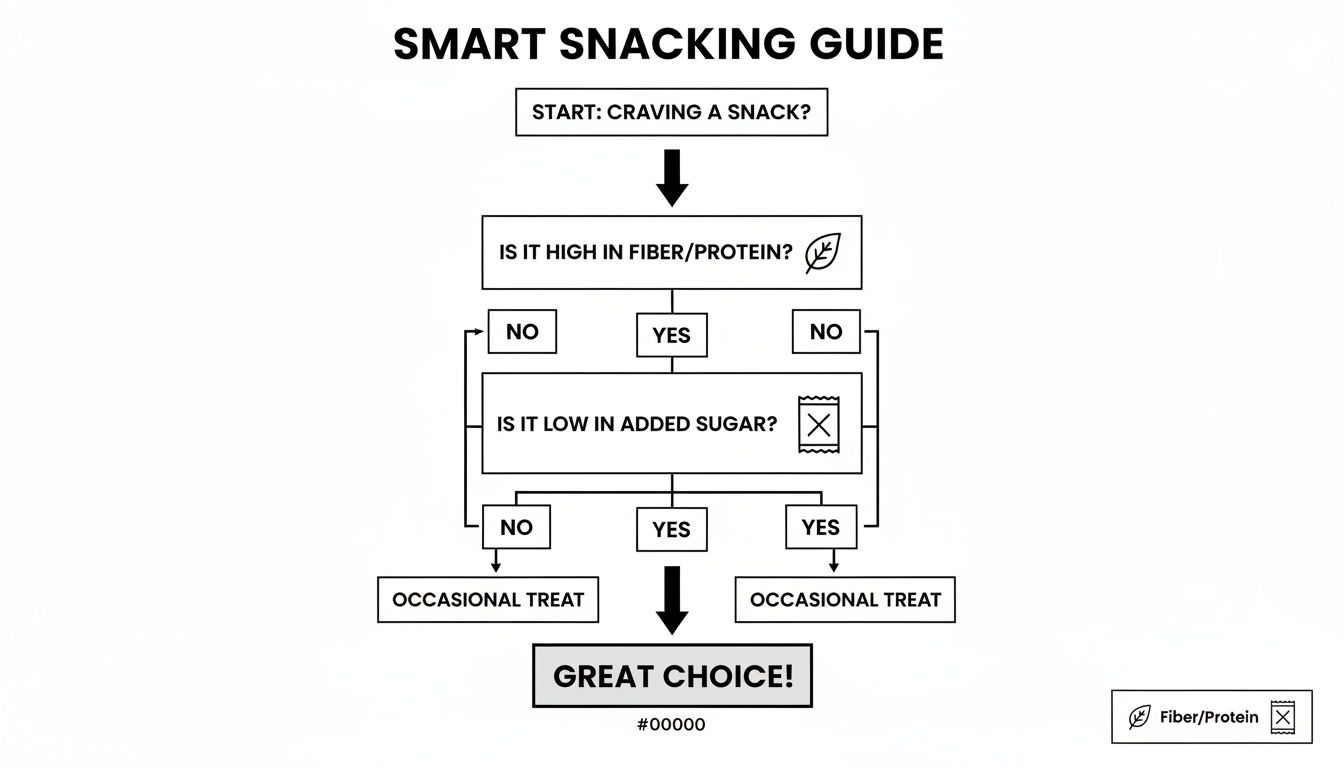
As you can see, the sweet spot is finding a snack that pairs low added sugar with a solid dose of fiber or protein. That’s the winning combination for satisfaction and lasting energy.
A Tale Of Two Snack Bars
Let's put your new skills to the test. Imagine you're looking at two snack bars on the shelf.
- Snack Bar A: The box proudly states "Made with Real Fruit." But the label shows 15g Total Sugars and 12g Added Sugars. A quick scan of the ingredients reveals high-fructose corn syrup and fruit juice concentrate are some of the first things listed.
- Snack Bar B: This one advertises "Only 3g of Sugar." The label confirms 6g Total Sugars and just 3g Added Sugars. Its sweetness comes from a blend of chicory root fiber and monk fruit extract.
Before, you might have thought both were decent options. But now, you can see Snack Bar B is the clear winner. It delivers a satisfying taste without the heavy dose of processed sugar weighing down Snack Bar A.
Once you know what to look for, you're no longer just a shopper—you're an expert, fully equipped to choose snacks that actually fuel your body and your day.
Finding Your Perfect Low Sugar Snack for Any Occasion
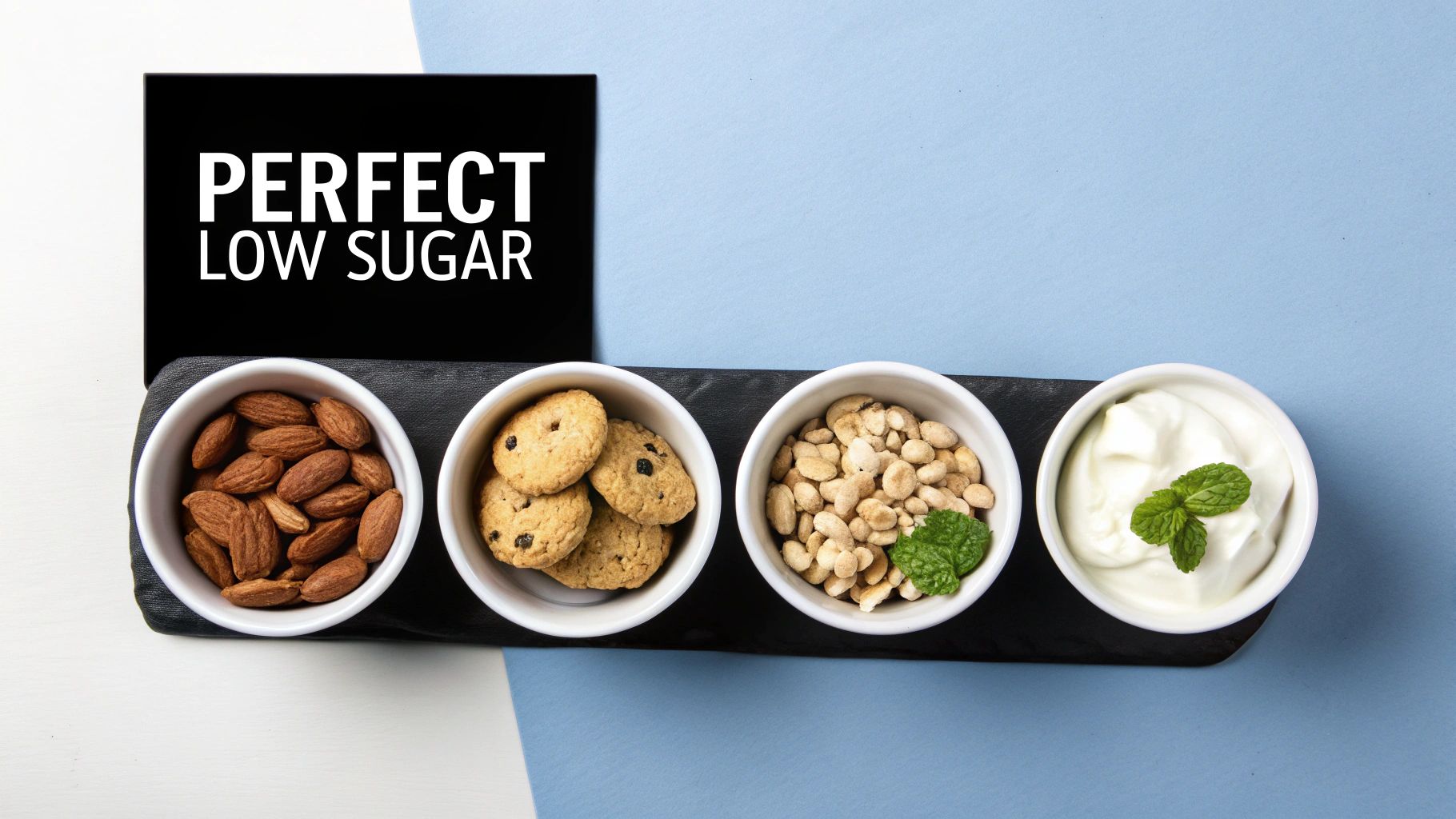
Knowing how to spot hidden sugars is a great first step. But the real art of smart snacking is matching the right low-sugar option to the right moment. After all, the best snack isn't just about what's on the nutrition label; it’s about convenience, purpose, and whether it fits your life.
A snack that makes sense for a quiet afternoon at home probably won’t work during a chaotic morning commute. What you grab after a workout is going to be totally different from what your kid needs in their lunchbox.
Let's break down some of the best choices for whatever your day throws at you.
For the Busy Professional on the Go
When you're bouncing between meetings, you need something that's easy to eat, won't make a mess, and gives you sustained energy. The last thing you want is a quick sugar spike followed by that dreaded midafternoon crash. The goal here is portability—something you can toss in a desk drawer, laptop bag, or your car.
Look for individually wrapped snacks that pack a punch with protein and fiber to keep you feeling full and focused.
- Nuts and Seeds: A simple handful of almonds, walnuts, or pumpkin seeds is a powerhouse of healthy fats and protein.
- Low Sugar Protein Bars: You'll have to be a label detective here, but a good bar with minimal added sugar can be a real lifesaver.
- Rip Van Wafels: These were practically made for this. With just a few grams of sugar and a healthy dose of fiber, they’re a satisfying, crunchy treat that goes perfectly with your coffee and won't weigh you down.
For Kids' Lunchboxes and After-School Fuel
Let's be honest: finding a snack that kids will actually eat and parents feel good about is the ultimate challenge. The trick is to find options that feel like a treat but are secretly built with better stuff. Think whole grains and minimal added sugar, not high-fructose corn syrup and artificial colors.
A recent global survey found a huge shift in snacking, with two in five consumers reaching for healthier snacks more often. With 35% of people snacking between 2 and 5 PM, the demand for wholesome, convenient options—especially for that critical after-school window—is soaring.
Here are a few kid-approved choices:
- Greek Yogurt Tubes: Look for plain or lightly sweetened versions. You can even freeze them for a fun, slushy texture that kids love.
- Cheese Sticks: It doesn't get much simpler. They're a fantastic source of protein and calcium.
- Rip Van Cookies: With way less sugar than the classics, options like LEOS deliver that familiar sandwich cookie experience without the crazy sugar rush. They’re a parent-approved win.
For the Keto Dieter and Low-Carb Lifestyle
If you're on a ketogenic diet, you know how strict it is. You have to keep carbs and sugar to an absolute minimum while loading up on healthy fats and protein. The best keto snacks help you stay in ketosis without feeling like you're missing out on flavor. This is where ingredients like high-fiber alternatives and sugar alcohols really shine.
Just as someone considering meat alternatives has to think about protein and ingredient swaps, finding a great keto-friendly treat is all about balancing your macros effectively.
Some ideal keto snacks include:
- Avocado: A fantastic source of healthy fats and fiber.
- Pork Rinds: The ultimate crunchy, savory, zero-carb snack.
- Keto-Friendly Treats: Rip Van’s keto line was designed for this. Their wafels and cookies use ingredients like chicory root fiber and monk fruit to get that sweet taste with very low net carbs, making them a perfect guilt-free indulgence. You can check out their whole curated low sugar snacks selection.
For Post-Workout Recovery
After a good workout, your body is calling out for fuel to replenish energy and repair muscle tissue. The perfect post-workout snack combines high-quality protein with a small amount of carbohydrates to kickstart that recovery. While you still want to avoid a sugar bomb, a little bit of natural sugar can actually be a good thing here.
Your best bets for refueling after exercise are:
- A Banana with Peanut Butter: This classic combo delivers on both carbs and protein.
- Hard-Boiled Eggs: An easy, portable, and excellent source of high-quality protein.
- Greek Yogurt with Berries: This gives you a great mix of protein from the yogurt and essential micronutrients from the berries.
By matching the right snack to the right occasion, you’re no longer just avoiding sugar—you’re using food as a tool to fuel your life more effectively.
Beyond the Label: The Rip Van Difference
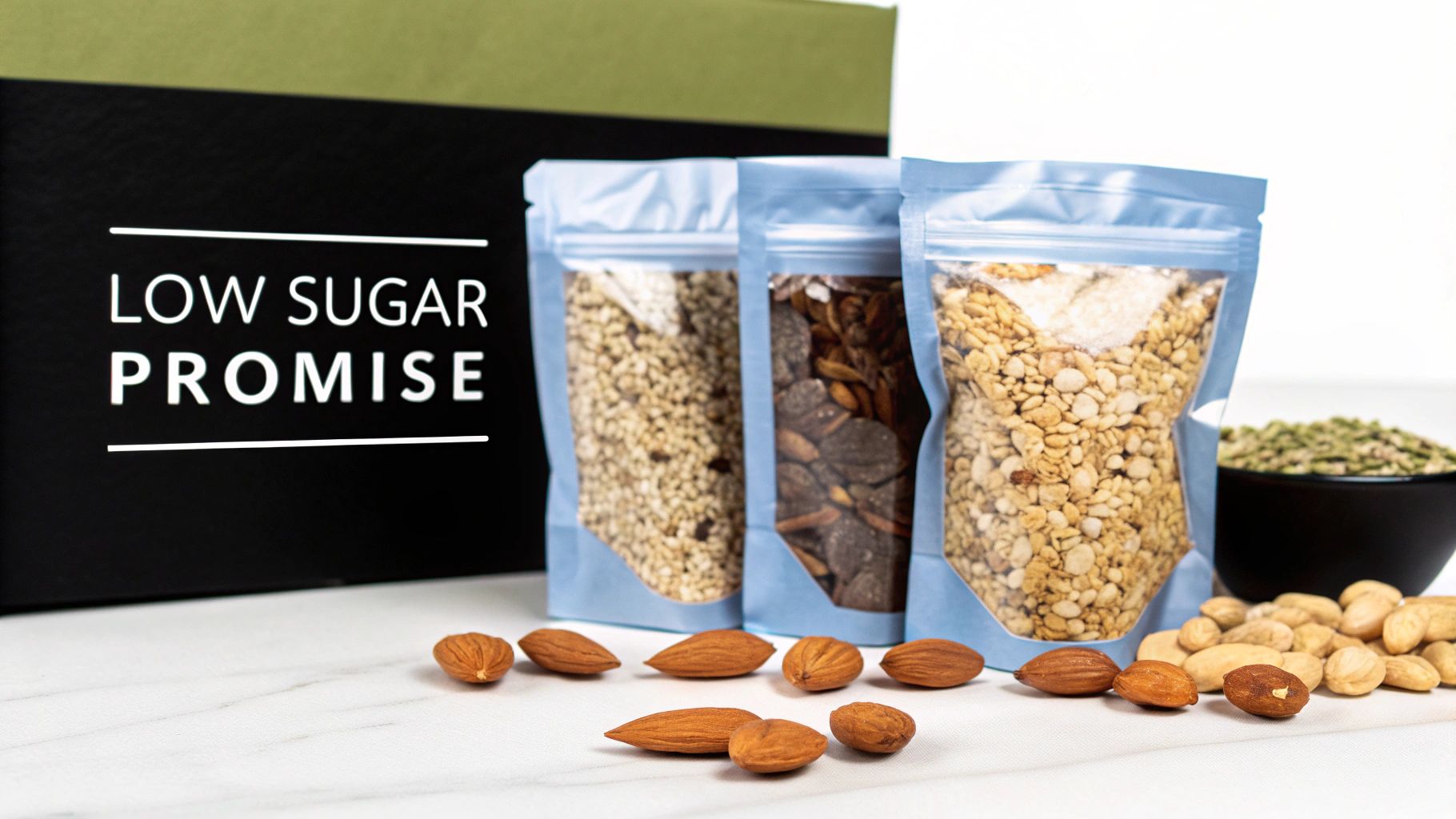
It’s one thing to understand labels and snack categories in theory. It’s another to see it all come together in a real product you can actually enjoy. That’s where Rip Van comes in. The company started with a simple, powerful idea: you shouldn’t have to pick between a tasty, satisfying snack and one that’s good for you. This belief is the engine behind every product they make.
At the heart of it, the Rip Van difference is a deep commitment to what goes inside the snacks—and what’s left out. Every single item is built on a foundation of low sugar, high fiber, and clean ingredients. You’ll never see high-fructose corn syrup or weird artificial sweeteners on their labels, which directly answers the call from people everywhere who just want honest, better-for-you food.
And it’s clear this is what people want. The market for low-sugar fruit snacks alone grew from USD 1.54 billion in 2024 to USD 1.67 billion in 2025. It’s expected to hit USD 3.01 billion by 2032. That kind of growth shows a massive shift in what we’re all looking for. To see the full picture, you can explore the full low sugar snack market forecast.
A Snack for Every Craving
Rip Van doesn't just talk the talk; they've built a whole lineup of snacks that proves you can have your treat and eat it too. Each product is designed for a specific kind of craving, all without breaking those core rules of low sugar and high fiber.
- Wafels: This is where it all started. These are thin, crispy Dutch-style wafels with a soft, chewy caramel center. They’re the perfect sidekick for your morning coffee, giving you that little moment of indulgence with only 3-5 grams of sugar and a solid hit of fiber.
- Wafers: Think of those light, layered cream wafers from your childhood, but completely reimagined for today. They’ve got that satisfying crunch and come in classic flavors like vanilla and chocolate, all while keeping the sugar content incredibly low.
- LEOS: For anyone who loves a classic sandwich cookie, LEOS are a revelation. They deliver that iconic chocolate-and-cream taste you know and love, but with a tiny fraction of the sugar found in the big-name brands. They’ve become a total favorite for parents.
Rip Van’s strategy is brilliant in its simplicity: they deconstruct a beloved snack, figure out what makes it so irresistible, and then rebuild it from the ground up using smarter ingredients like chicory root fiber and monk fruit.
More Than Just a Product
Beyond the snacks themselves, Rip Van has focused on building a brand you can actually trust. They’ve made the whole experience seamless, turning them from just another option on the shelf into a reliable partner in your quest for healthier snacking.
It’s a commitment you can see in a few key areas:
- The Royal Guarantee: This is a no-nonsense, 100% satisfaction guarantee. It shows they stand behind their products and put their customers first, period.
- Easy Online Access: Their website is super easy to use. You can quickly browse all their snacks, filter for what you need—like keto or gluten-free options—and place an order in a couple of minutes.
- Customer-Friendly Perks: They offer free shipping on U.S. orders over $45. It’s a small thing, but it removes one of the biggest annoyances of online shopping and makes it easy to stock up.
By pairing thoughtfully made products with a real dedication to their customers, Rip Van shows what a modern, health-focused brand can be. They prove that finding great low-sugar snacks doesn’t mean you have to sacrifice anything—it just means finding a company committed to doing things a little differently.
Your Low Sugar Snacking Questions Answered
Let's be honest, navigating the world of low-sugar snacks can feel like you need a secret decoder ring. Even after you get the hang of reading labels and picking the right snack for the moment, a few tricky questions always seem to pop up. This is where we clear up any lingering confusion with straightforward answers to the questions we hear most often.
Think of this as the final piece of your smart-snacking puzzle. We'll get into the weeds on specific label claims, talk about what's really going on with ingredients like sugar alcohols, and give you practical advice that fits your life—whether you're doing keto or just trying to find something healthy for your kids.
Let’s get these questions sorted so you can snack with total confidence.
Are 'No Sugar Added' Snacks a Good Choice?
Seeing "No Sugar Added" on a package can feel like you've struck gold. It’s a great sign, but it doesn't automatically mean the snack is a healthy one. That label just means the manufacturer didn't pour in any extra sugar—like cane sugar or high-fructose corn syrup—while making the product.
The catch? The food itself could still be packed with naturally occurring sugars. A great example is fruit juice concentrate. Technically, it has no "added" sugar, but it's an incredibly dense source of natural sugar that can send your blood glucose on a rollercoaster ride.
To get the real story, you still have to play detective. Flip that package over and look at the Total Sugars line on the nutrition panel. A truly great low-sugar snack will be low in both added and total sugars. The best ones will also have a good amount of fiber to help your body process everything nice and slow.
How Do Sugar Alcohols Affect a Keto Diet?
For anyone on a keto diet, sugar alcohols can seem like a magic trick. Sweeteners like erythritol, xylitol, and maltitol are staples in keto-friendly products because they deliver sweetness without making a big impact on your blood sugar and insulin. This is why they’re often subtracted from the total carbs to calculate that all-important "net carb" count.
But here's the thing: not all sugar alcohols are created equal.
- Erythritol: This one is pretty much the gold standard. Your body absorbs most of it and then just gets rid of it, so it causes very little digestive drama for most people.
- Maltitol and Xylitol: While they work well as sweeteners, these can sometimes cause bloating or an upset stomach, especially if you have a lot. They also have a slightly higher glycemic impact than erythritol.
The best way to figure out what works for you is to start with a small amount and see how your body feels. Choosing products from a keto-friendly line like Rip Van’s, which uses well-tolerated sweeteners, is a smart way to enjoy a treat without worrying about digestive issues or getting kicked out of ketosis.
What Is a Good Daily Target for Added Sugar?
Having a clear number in your head for added sugar can be a powerful tool for making better food choices every day. The American Heart Association (AHA) has some simple, easy-to-remember guidelines on this.
The AHA recommends that you limit added sugar to no more than:
- 25 grams (that’s about 6 teaspoons) per day for most women.
- 36 grams (about 9 teaspoons) per day for most men.
When you're on the hunt for the best low sugar snacks, a good rule of thumb is to look for options with 5 grams of added sugar or less per serving. This way, your snacks are only a small part of your daily limit, leaving plenty of room for your actual meals. If you can find a snack that also has plenty of fiber and protein, you’ll stay full and satisfied, making it even easier to stick to those healthy limits.
How Can I Find Healthy Low Sugar Snacks for Kids?
Finding a snack that your kids will actually eat and that you feel good about giving them can feel like an impossible task. The secret is to find options that taste like a treat but are secretly built on a foundation of good-for-you ingredients. The same rules you use for yourself apply here, just with a bigger focus on kid-friendly tastes and textures.
Start by reading those labels and looking for whole-food ingredients. Prioritize snacks that have some fiber and protein—they're key for keeping kids feeling full, focused, and energized for school and play. It’s also a great idea to steer clear of snacks loaded with artificial colors, flavors, and preservatives.
Here are a few kid-approved ideas that check all the boxes:
- Whole fruit with nut butter: A classic for a reason. It delivers natural sweetness, fiber, and protein all in one.
- Cheese sticks or cubes: An easy, no-mess source of calcium and protein that most kids love.
- Better-for-you cookies: Brands like Rip Van have completely rethought childhood favorites, creating cookies that nail the taste and fun with way less sugar than the traditional stuff.
Getting your kids involved in picking and even preparing snacks can make healthy eating feel more like a fun activity than a chore. By making a few smart swaps, you can stock your pantry with delicious options that support their well-being without the dreaded sugar crash.
Ready to stock up on snacks that are both delicious and smart? The team at Rip Van has perfected the art of creating indulgent treats with minimal sugar and high fiber. Explore the full collection and find your new favorite today!
0 comments