

Low-sugar snack bars are a simple concept: portable, satisfying snacks built to give you energy without all the sugar. Instead of packing in the sweet stuff, they typically rely on smart ingredients like fiber and alternative sweeteners to deliver great taste without sending your blood sugar on a roller coaster. This isn't just a minor tweak; it’s a total reimagining of what a snack bar can be, moving it from a glorified candy bar to a functional, health-first option.
Why Better Snack Bars Are Everywhere
Ever find yourself standing in the snack aisle, just trying to find something that's quick, easy, and won't leave you feeling sluggish an hour later? It’s a familiar feeling. We've all grabbed a bar that looked healthy, only to scan the label and realize it's basically a candy bar in disguise, packed with hidden sugars that set you up for that dreaded energy crash.
This exact frustration is what’s fueling a huge shift in what people want from their snacks. We're getting smarter about what we eat, and it shows.
The numbers don't lie. The US snack bar market was valued at USD 9.8 billion in 2025 and is on track to more than double, hitting a projected USD 23.3 billion by 2035. That kind of growth isn't just a trend; it's a clear signal that people are actively seeking out food that does more than just quiet a rumbling stomach.
Defining the Low-Sugar Standard
So, what actually makes a snack bar "low-sugar"? There isn't an official, government-stamped definition, but a good rule of thumb is to look for bars with 5 grams of sugar or less per serving.
Even more important is knowing the type of sugar. The real goal is to minimize added sugars—those are the syrups and sweeteners mixed in during production, not the naturally occurring sugars you'd find in a piece of fruit.
That distinction is everything. A bar can have "all-natural" plastered on the front, but if the ingredients list is full of different syrups, it's not doing you any favors. The best low-sugar options are built differently. They prioritize:
- Sustained Energy: They’re made with complex carbs, protein, and healthy fats that your body burns through slowly and steadily. No quick spike, no sudden crash.
- Feeling Full and Satisfied: A high fiber content is key. It helps you feel genuinely full, which keeps you from reaching for another snack 20 minutes later.
- Clean Ingredients: Brands like Rip Van are all about using ingredients you can actually recognize, steering clear of things like high-fructose corn syrup and artificial sweeteners.
Becoming a Smarter Snacker
Choosing the right bar isn't about finding a "perfect" food; it's about becoming a more informed shopper. It means learning to see past the flashy marketing claims on the front of the box and getting good at reading the nutrition label on the back.
Whether you're looking for healthy snacks for studying or just need something to get you through a busy afternoon, knowing how to spot hidden sugars and understand the role of fiber is a total game-changer. This guide will give you the tools you need to do just that. It's time to start snacking smarter, not harder.
How to Read Nutrition Labels Like a Pro
The front of a snack bar box is pure marketing—it’s all about flashy colors, big promises, and buzzwords designed to grab your attention. The real story, however, is on the back. If you want to find genuinely healthy low-sugar snack bars, learning to decode the nutrition label and ingredient list is the single most important skill you can have.
Think of the nutrition facts panel as the bar's resume. It can't hide its qualifications or fudge the numbers. Your job is to become the hiring manager who knows exactly what to look for.
This skill is only getting more valuable. Consumers and regulators are pushing for more transparency, and low-sugar snacks are perfectly positioned for this shift. In Canada, the market is growing at an impressive 11.51% CAGR through 2030, partly because of a 2026 mandate for front-of-package labels that call out high sugar, sodium, and fat. We’re seeing similar trends in the US, where 23% of consumers are actively seeking products with no artificial ingredients, which is driving the popularity of natural, high-fiber bars.
The Sugar Showdown: Total vs. Added
When you pick up a bar, flip it over and let your eyes go straight to the sugar section. You’ll see two key lines: Total Sugars and Added Sugars. The difference between them is everything.
- Total Sugars: This number lumps together all the sugar in the product. That includes sugars that are naturally there—like fructose from fruit or lactose from milk—plus any sugars that were tossed in during manufacturing.
- Added Sugars: This is the one to watch. It isolates the sweeteners put in specifically to make the bar taste sweet, like cane sugar, corn syrup, or honey. These are the culprits that add empty calories and often lead to that dreaded afternoon energy crash.
Your Goal: Zero in on the "Added Sugars" line. You should be looking for a bar with 5 grams or less of added sugar per serving. A bar with 10 grams of total sugar but only 2 grams of added sugar is a far better choice than one where all 10 grams are added.
To help you get the hang of this, here’s a quick-glance table for your next shopping trip.
Decoding Sugars and Fibers on a Nutrition Label
| Nutrient | What to Look For | Ideal Target Per Serving |
|---|---|---|
| Added Sugars | The lower, the better. This is sugar added for sweetness, not naturally occurring. | Under 5 grams |
| Dietary Fiber | The higher, the better. Fiber helps you feel full and supports stable energy. | At least 3-5 grams |
| Total Carbohydrates | A moderate amount, balanced by high fiber content. | Under 20-25 grams |
| Protein | Look for a decent amount to help with satiety and muscle maintenance. | 5 grams or more |
Think of these numbers as your cheat sheet for making smarter, faster decisions in the snack aisle.
Beyond Sugar: The Fiber Factor
Right under the carbohydrates line, you'll find Dietary Fiber. This is the unsung hero of any great low-sugar snack bar. Why? Because fiber slows down digestion, helps keep your blood sugar from spiking, and gives you that lasting feeling of fullness.
A healthy dose of fiber works to counteract the effects of any sugar that is in the bar, giving you more sustained energy instead of a quick rush. Aim for bars with at least 3-5 grams of fiber per serving. The combination of low added sugar and high fiber is the true winning formula. If you’re curious about how different nutrients work together, it’s helpful to know how to calculate calories in a recipe by ingredient.
Decoding the Ingredient List
Okay, you've checked the numbers. Now it’s time to scan the ingredient list. The ingredients are always listed by weight, from most to least, which gives you an honest look at what the bar is truly made of.
What to look for:
- Whole Foods First: You want to see real-deal ingredients like oats, nuts, seeds, or whole grains right at the top of the list. That tells you the bar has a solid, nutritious foundation.
- Identify Hidden Sugars: Food manufacturers get sneaky. They often use several different sweeteners so that "sugar" doesn't have to be the first ingredient. Keep an eye out for dextrose, maltose, rice syrup, and fruit juice concentrate—they're all just different names for added sugar. You can find more details in our guide on what makes a low sugar snack.
- Short and Simple Wins: As a general rule, a shorter ingredient list full of things you can actually recognize is a very good sign. If it reads like a chemistry textbook, you might want to put that bar back on the shelf.
Understanding Modern Sweeteners
So, how can a snack bar taste sweet and indulgent without being packed with sugar? The secret is in a new generation of sweeteners that deliver all the flavor you crave without the blood sugar rollercoaster or empty calories. Getting to know these ingredients is the first step toward picking a low-sugar bar with confidence.
Think of it like this: table sugar is a fast, messy fuel for your body that almost always leads to a crash. These modern alternatives are more like a clean-burning energy source, giving you that sweet taste without the messy side effects. They typically fall into two main camps: high-intensity natural sweeteners and sugar alcohols.
Innovative brands carefully choose and combine these to hit that perfect sweet spot of taste, texture, and nutrition. It’s what lets them create genuinely delicious snacks that actually fit into a healthy lifestyle.
Natural Sweeteners Like Monk Fruit and Stevia
First up, we have plant-based, high-intensity sweeteners. These are compounds pulled from plants that are hundreds of times sweeter than regular sugar, which means a little goes a very long way.
- Stevia: This popular zero-calorie sweetener comes from the leaves of the Stevia rebaudiana plant and has no effect on blood sugar levels. You've probably seen it in everything from diet sodas to protein powders.
- Monk Fruit: Sourced from a small green gourd in Southeast Asia, monk fruit gets its incredible sweetness from antioxidants called mogrosides. Just like stevia, it’s calorie-free and won’t spike your glucose.
Because they are so incredibly potent, you’ll often see these blended with other ingredients to make sure their sweetness is spread evenly throughout the bar. They’re a fantastic choice for anyone looking for a clean ingredient list that doesn’t sacrifice flavor.
This diagram shows you what to look for when you're scanning a nutrition label.
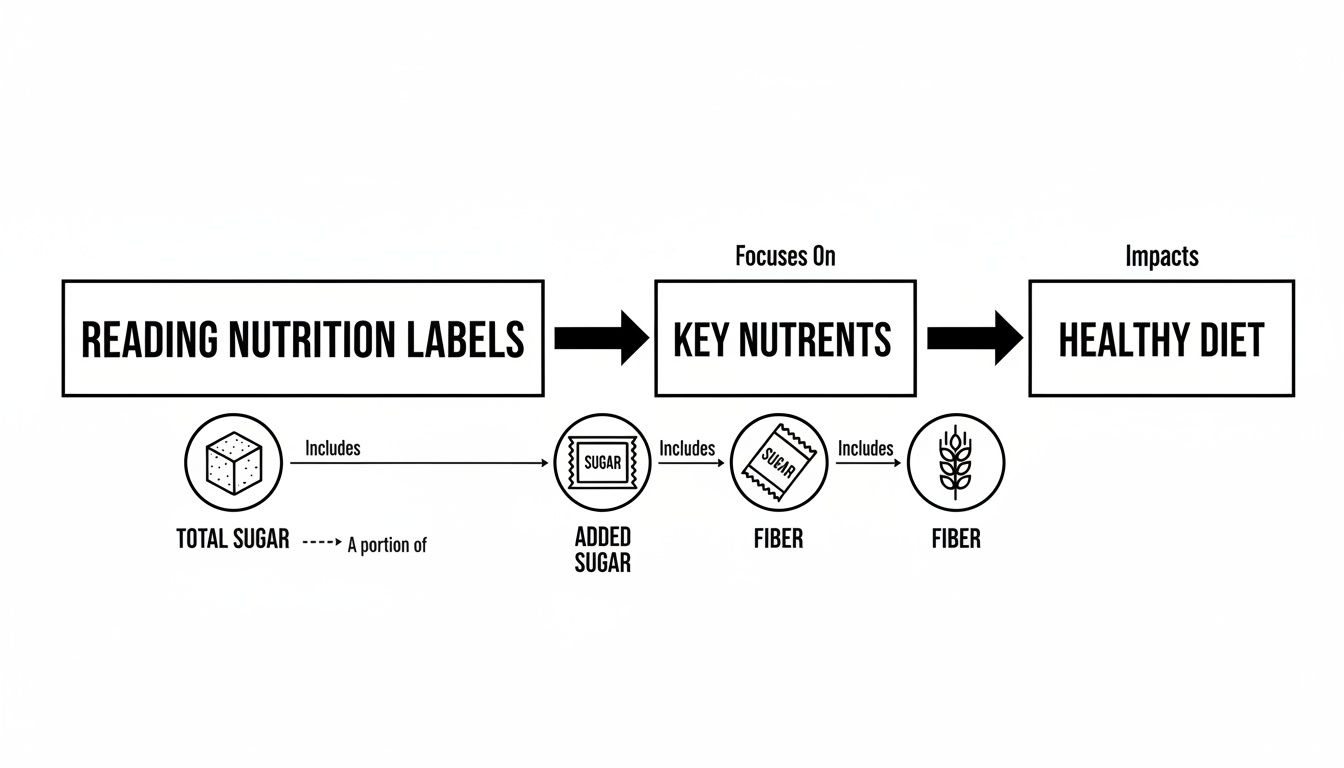
As you can see, the sweet spot is finding a bar where low added sugar meets high dietary fiber. That's the combo for a snack that truly keeps you full and satisfied.
The Role of Sugar Alcohols
The other big category you'll see is sugar alcohols. Don't let the name fool you—they don't contain table sugar or the kind of alcohol you'd find in a cocktail. They’re a unique type of carbohydrate that our bodies don’t completely absorb. This means fewer calories and a much smaller impact on blood sugar.
You can usually spot them on an ingredient list because their names end in "-ol." Here are a few common ones:
- Erythritol: Probably the most popular of the bunch, erythritol has almost zero calories. It’s mostly absorbed into your bloodstream and then passes out through your urine, which is why most people find it much easier to digest than other sugar alcohols.
- Xylitol: With a sweetness very similar to sugar, xylitol is the go-to for most sugar-free gums and mints.
- Maltitol: While it’s an effective sweetener, maltitol can raise blood sugar more than erythritol and is more likely to cause digestive upset for some folks.
The main thing to keep in mind with sugar alcohols is digestive tolerance. Since they aren't fully broken down in the small intestine, they can ferment in the large intestine. For some people, this can lead to bloating or gas, especially if you eat a lot at once.
This is exactly why many people lean toward snacks made with natural sweeteners like monk fruit or those that use gentler sugar alcohols like erythritol. Learning about these ingredients is helpful well beyond just snack bars, too. Beverage companies, for instance, are also using them, with some great guides delving into sugar-free syrups and how they create flavor without the sugar load.
Ultimately, navigating the world of modern sweeteners is all about finding what feels best for your body. Once you do, you can enjoy a sweet treat without derailing your health goals.
The Role of Fiber in a Satisfying Snack
When you're looking for a great low-sugar snack bar, what a company takes out is only half the story. The real secret to a snack that actually keeps you full and energized lies in what they put in. And when it comes to satisfaction, fiber is the undisputed champion. It’s the unsung hero that turns a simple snack into a powerhouse treat.
Think of fiber as a sponge in your stomach. As it absorbs water, it expands. This simple physical process takes up space, sending signals to your brain that you're getting full. It's a remarkably effective way to curb those between-meal hunger pangs.
But that "sponge" effect does more than just fill you up. It also helps manage your energy by slowing down how quickly your body absorbs any sugar in the food. This is key to preventing the dreaded sugar crash. Instead of a sharp spike and a sudden drop, you get smooth, sustained energy to carry you through your day.
Why Fiber Is a Non-Negotiable Ingredient
The demand for snacks that are low in sugar and high in fiber is completely changing the game. People are reading labels more than ever, looking for snacks that deliver on both taste and real nutritional value. You can see this shift happening in real-time market trends.
A full 28% of shoppers are actively looking for low, less, or no sugar options. This puts it right on par with the demand for high protein and high fiber, both of which are a priority for 27% of consumers. This focus is hitting the bottom line, too. Nutritional bars are booming with $5.1 billion in sales and 5.3% growth, while traditional granola bars have seen a 5.6% dip. You can dive deeper into these industry shifts by checking out the state of the healthy snack market.
The message is loud and clear: a snack bar needs to do more than just taste good. It needs to work for you. The combination of low sugar and high fiber has become the gold standard for a truly satisfying snack that supports your well-being.
A great low-sugar snack bar isn’t just about avoiding a negative (sugar); it's about embracing a positive (fiber). This simple shift in perspective can guide you to much healthier and more satisfying choices.
Common Fiber Sources to Look For
Once you start scanning ingredient lists, you'll see a few superstar fiber sources pop up again and again. These are chosen for a reason—they excel at promoting fullness and supporting digestive health. Knowing what they are will help you spot a genuinely high-quality bar.
-
Chicory Root Fiber: Often listed as inulin, this is one of the most popular fibers in modern snacks. It’s also a prebiotic, which means it feeds the good bacteria in your gut. A win-win for fullness and digestive health.
-
Soluble Corn Fiber: This ingredient adds bulk and texture without a lot of extra calories. Because it digests slowly, it plays a big part in that prolonged feeling of satisfaction and helps keep blood sugar levels steady.
-
Oats and Nuts: Let's not forget the classics! Whole foods like rolled oats, almonds, and other nuts bring their own natural fiber to the party, along with healthy fats and protein for a more complete nutritional package.
Brands like Rip Van, which deliberately use ingredients like these, are creating snacks that go beyond just being low in sugar. They’re packed with the functional benefits of fiber. By choosing a bar rich in these components, you’re not just satisfying a craving—you’re making a smart investment in your energy and long-term health.
Choosing the Right Snack Bar for Your Lifestyle
Let's be honest: not all low-sugar snack bars are the same. The "perfect" bar for your gym buddy might be a terrible choice for you. Why? Because the best snack bar is the one that fits your unique goals, routine, and dietary needs.
Finding your match is less about discovering one holy-grail product and more about aligning a bar’s nutritional profile with your life. Think of it like picking the right tool for a job. A high-protein bar built for post-workout recovery serves a totally different purpose than a light, high-fiber snack meant to get you through back-to-back meetings.
When you know what you need your snack to do for you, the overwhelming options on the shelf suddenly become much clearer. You can confidently pick a winner every single time.
For the Busy Professional on the Go
You’re constantly running between meetings, facing deadlines, and trying to beat that dreaded 3 p.m. slump. You need a reliable source of clean, sustained energy that you can grab from your desk or bag without a second thought. The goal is balance.
- Protein: Look for at least 5-10 grams. This is the sweet spot for feeling full and keeping hunger away until your next meal.
- Fiber: Aim for 3-5 grams or more. Fiber slows down digestion, giving you that steady release of energy instead of a quick spike and crash.
- Calories: A snack in the 180-250 calorie range is usually perfect for refueling without overdoing it.
A bar that hits these numbers will keep you sharp and focused, steering you clear of the sugary office donuts. If weight management is also on your mind, our guide to healthy snacks for weight loss has even more tips.
For Parents Packing Healthier Lunchboxes
You're on a mission: find a snack your kids will actually eat that you can also feel great about giving them. This is a tough balance. You need something that tastes like a treat but doesn't pack a sugary punch. Simplicity and taste are everything here.
Look for bars with short, recognizable ingredient lists. If you can pronounce everything on the label and the first few ingredients are whole foods like oats or nuts, you’re on the right track.
Here’s what to prioritize:
- Low Added Sugar: This is a big one. Stick to bars with under 5 grams of added sugar to help your kids avoid that hyperactive burst followed by an energy crash.
- No Artificial Ingredients: Skip anything with artificial colors, flavors, or sweeteners. Natural options like monk fruit or stevia are much better alternatives.
- Great Taste and Texture: Let's face it, kids are the toughest critics. A bar with a satisfying crunch or a familiar flavor like chocolate chip or Dutch caramel is far more likely to get eaten.
For the Fitness Enthusiast Tracking Macros
Whether you're refueling after a tough workout or sticking to a specific diet like keto, your snack bar has to meet precise nutritional demands. You’re the person who reads labels carefully because every single gram of protein, fat, and carbohydrate counts.
- High Protein: For muscle recovery and repair, you’ll want a bar with 15-20 grams of protein. Great sources include whey, egg whites, or plant-based proteins.
- Low Net Carbs (for Keto): If you're on a ketogenic diet, net carbs are what matter most. To stay in ketosis, look for bars with 5 grams of net carbs or fewer.
- Healthy Fats: Ingredients like nuts, seeds, and coconut oil are your friends. They provide valuable, long-lasting energy and help keep you full.
By matching the bar to your needs—whether for quick energy, kid-friendly fuel, or fitness performance—you ensure your snack is always working for you, not against you.
To make it even easier, here's a quick cheat sheet to help you find your ideal snack bar based on your lifestyle.
Which Low Sugar Snack Bar Is Right for You?
| Lifestyle/Goal | Key Features to Look For | Example Rip Van Option |
|---|---|---|
| On-the-Go Professional | Balanced protein & fiber (5g+), moderate calories (180-250), portable, clean ingredients. | A Rip Van Wafel with 3g of sugar and 6g of fiber. |
| Parent & Kids | Low added sugar (<5g), no artificial ingredients, whole-food base (like oats), kid-approved taste and texture. | Rip Van Wafers with 1-2g of sugar and familiar flavors. |
| Keto/Low-Carb Diet | Very low net carbs (<5g), high in healthy fats (nuts, seeds), moderate protein, and sweetened with keto-friendly sweeteners. | The Keto Wafel, specifically designed for this dietary approach. |
| Pre/Post-Workout Fuel | High protein (15-20g) for muscle recovery, simple carbs for quick energy (pre-workout), complex carbs for replenishment (post). | Look for a protein-focused bar to complement your workout routine. |
Finding the right bar isn't complicated once you know what to look for. It's all about aligning the label with your life.
Putting It All Together: Your Guide to Smarter Snacking
You’ve made it this far, which means you’re ready to turn your new knowledge into action. Finding the right low-sugar snack bar isn’t about some complex formula; it’s about making your snack breaks a genuinely positive, mindful part of your day instead of just a mindless habit.
This isn’t about restriction. It's about freedom—the freedom to grab something delicious that actually works with your body, not against it. It all boils down to a few powerful habits: read the label, look for fiber, and know exactly what's making that bar taste sweet.
The Smart Snacking Checklist
Before you toss a bar into your cart or bag, run it through this quick mental checklist. It’s simple, but it makes all the difference.
- Added Sugar Check: Is it 5 grams or less? This is your golden rule for dodging empty calories and that dreaded afternoon slump.
- Fiber Finder: Does it pack at least 3-5 grams of fiber? Fiber is what will keep you feeling full, satisfied, and powered up for hours.
- Sweetener Smarts: Are natural sweeteners like monk fruit or gentler sugar alcohols like erythritol on the ingredient list, instead of a cocktail of artificial stuff or sugary syrups?
- Goal Alignment: Does this bar fit your life? Whether you need post-workout protein, a keto-friendly bite, or a treat for the kids' lunchboxes, make sure the nutritionals match your goals.
Choosing a low-sugar snack is one of the best proactive moves you can make for your well-being. It's about finding food that satisfies your cravings while supporting your energy and health, proving you never have to choose between smart nutrition and great flavor.
Every one of these small, informed choices builds on the last. When you consistently reach for low-sugar, high-fiber options, you're doing more than just avoiding a sugar crash. You're setting yourself up for stable energy, better digestion, and long-term wellness. Now you have the tools to walk down any snack aisle with confidence and find the options that help you feel and perform your best.
Your Low-Sugar Snack Questions, Answered
Diving into the world of low-sugar snacks can feel like learning a new language. Once you start looking past the flashy marketing on the front of the box and get good at reading the fine print, new questions always seem to pop up.
We get it. That's why we've put together answers to some of the most common questions we hear. Think of this as your quick guide to snacking smarter and with total confidence.
Are "Low Sugar" and "No Sugar Added" the Same Thing?
Nope, they're not the same, and knowing the difference is one of the most important things you can learn for making healthier choices. It all comes down to what the label is actually telling you.
- Low Sugar: This is about the final amount of sugar in the bar. While the FDA doesn't have a strict definition for this claim, a great rule of thumb for a snack bar is 5 grams of total sugar or less per serving.
- No Sugar Added: This just means the company didn't add any extra sugar, like cane sugar or corn syrup, during production. The catch? The ingredients themselves, like fruit pastes or juice concentrates, can be naturally packed with sugar.
Here’s the key takeaway: a "no sugar added" bar can easily have more total sugar than a "low sugar" one. Your best bet is to always ignore the front of the box and check the "Total Sugars" and "Added Sugars" lines on the nutrition label. That's where the real story is.
Can Low-Sugar Snack Bars Actually Help with Weight Management?
They can absolutely be a powerful ally in a weight management plan. When you swap a typical high-sugar, high-calorie snack for a low-sugar, high-fiber option, you're making a much smarter nutritional trade. The fiber is the secret weapon here—it helps you feel full and satisfied.
That feeling of fullness is what helps stop you from overeating or reaching for another snack an hour later. A good low-sugar bar gives you steady, lasting energy, which helps you avoid the blood sugar crashes that send you running for the nearest vending machine.
Of course, it’s important to see them for what they are: one piece of a much larger puzzle. There's no magic bullet, and portion control within a balanced diet is still what matters most for long-term success.
Are Sugar Alcohols Bad for You?
Sugar alcohols like erythritol and xylitol aren't inherently "bad." In fact, they're a big reason why so many low sugar snack bars can taste great. They deliver sweetness with far fewer calories and don't spike your blood sugar the way regular sugar does.
The main thing to be aware of is how your own body handles them. Since they aren't fully digested, they can cause some digestive rumbling—like bloating or gas—for some people, especially if you eat a lot at once. Everyone's tolerance is different, but most people find that erythritol is one of the easiest on the stomach.
What Are "Net Carbs" and Why Do Keto Dieters Care So Much?
"Net carbs" is a simple calculation that's super important for anyone on a ketogenic (keto) or other very low-carb diet. The math looks like this:
Total Carbohydrates - Dietary Fiber - Sugar Alcohols = Net Carbs
Why does this matter so much? Because fiber and most sugar alcohols don't really affect blood sugar or insulin levels. For keto followers, that means they don't "count" against the strict daily carb limit required to stay in ketosis (the state where your body burns fat for fuel instead of carbs).
So, a genuinely keto-friendly snack bar needs to have a very low net carb count, typically under 5 grams, to ensure it won't kick you out of that fat-burning state.
Ready to find a delicious snack that fits your healthy lifestyle? Rip Van offers a variety of low-sugar, high-fiber wafels and cookies that taste indulgent without the guilt. Explore our collection of better-for-you snacks today!
Article created using Outrank
0 comments