

Let’s be honest, walking into a convenience store hungry can feel like a nutritional trap. It’s a blur of candy bars, salty chips, and sugary drinks. But with a little know-how, you can absolutely find some solid, healthy options to get you through the day. The trick is to focus on real, whole foods—things like fruit, nuts, and yogurt—or minimally processed snacks that are low in added junk.
How to Find Healthy Snacks in Any Convenience Store
It's easy to feel overwhelmed by the sheer volume of choices, most of which are designed to hit every bliss point of sugar, salt, and fat. But you can learn to spot the good stuff pretty quickly. It’s not about finding the perfect health food; it's about making a better choice in the moment to fuel your body and keep your energy levels steady.
Thankfully, this is getting easier. As more people become health-conscious, stores are responding. The global snack food market is expected to hit a staggering $311.69 billion by 2029, and a big part of that growth comes from shoppers like us who want better options. With around 60% of consumers paying more attention to their health, convenience stores are finally stocking more of what we're looking for. You can dig into the numbers in the full snack food market report.
Your Quick-Check Shopping Method
You don't have time to stand in the aisle reading every single label. You need a fast, effective way to vet snacks. I use a couple of simple mental shortcuts that work wonders.
First, try the Rule of Five. Take a quick peek at the ingredient list. If it has five or fewer ingredients and you actually recognize what they are, it's probably a decent choice. A bag of almonds is a perfect example: the only ingredients should be almonds and maybe a little salt.
Next, I use a mental benchmark I call the 5-10-5 Rule when I glance at the nutrition label:
- Sugar: Look for 5 grams or less of added sugar.
- Protein: Aim for at least 10 grams to help you feel full and satisfied.
- Fiber: Try to get a minimum of 5 grams to aid digestion and keep hunger at bay.
This simple three-step process is a great way to approach it.
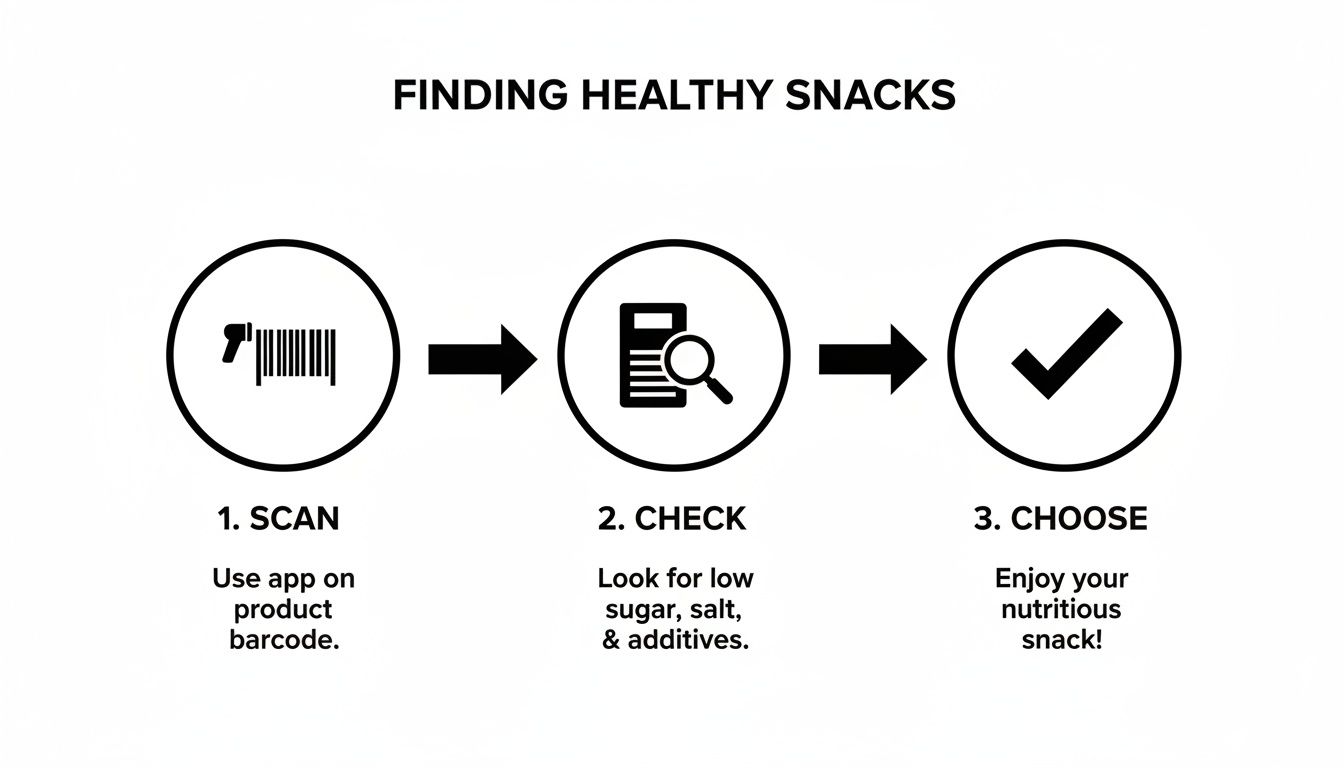
Thinking "scan, check, choose" makes the whole thing less of a chore and more of a quick, confident decision.
When you're short on time, a quick reference table can make all the difference. I've put together this simple guide to help you make split-second decisions without getting lost in the details of every label.
Quick-Check Guide for Healthier Snacks
Use these simple rules to quickly evaluate if a convenience store snack is a better choice.
| Nutrient or Ingredient | What to Look For | What to Avoid |
|---|---|---|
| Sugar | 5g or less of added sugar per serving. | High-fructose corn syrup, cane sugar, dextrose. |
| Protein | At least 10g per serving for satiety. | Highly processed meats with nitrates. |
| Fiber | A minimum of 5g to keep you full. | Refined flours and "empty" carbs. |
| Ingredients List | Short, recognizable, whole-food ingredients. | Long lists with chemical-sounding names. |
| Fats | Healthy fats from nuts, seeds, or avocados. | Hydrogenated or partially hydrogenated oils. |
Keep these benchmarks in mind, and you'll find it's much easier to filter out the junk and zero in on the snacks that will actually serve you well.
A little shift in perspective can make a huge difference. Instead of just trying to avoid bad stuff, focus on what you're looking for—protein, fiber, and real ingredients. It turns the choice from one of restriction into one of empowerment. You're adding something good to your day.
One last tip: don't fall for the marketing buzzwords on the front of the package. Claims like "all-natural" or "made with real fruit" can be seriously misleading. The real story is always on the back, in the nutrition facts and the ingredient list. Trust that, not the flashy design.
Reading Nutrition Labels Like an Expert
The front of a snack package is pure marketing. It's designed to grab your attention with tempting claims like "all-natural," "low-fat," or "made with real fruit." While those sound great, the real story is always on the back. To find genuinely healthy convenience store snacks, you have to get comfortable flipping the package over and looking at the nutrition facts and ingredient list.
Don't let the small print and all the numbers intimidate you. You don't need to dissect every single detail. Just focus on a few key areas, and you'll know everything you need to make a smart choice in seconds.
The Power Trio: Protein, Fiber, and Sugar
When you’re in a rush, just zero in on three things: protein, fiber, and sugar. Calories are part of the story, of course, but these three give you a much clearer picture of how a snack will actually make you feel.
- Protein: This is your key to feeling full and getting sustained energy. I always look for snacks with at least a few grams of protein to sidestep that dreaded energy crash an hour later.
- Fiber: Think of fiber as the brakes on your digestion. It slows things down, which keeps you feeling satisfied longer and helps prevent blood sugar spikes. It’s a huge player in avoiding those post-snack hunger pangs.
- Sugar: The most important line to check is "Added Sugars." This tells you exactly how much sugar was dumped in during processing, not the sugars that occur naturally in fruit or milk. Your goal? As close to zero as you can get.
A lot of so-called "healthy" snack bars are total sugar bombs in disguise. Learning how to spot them is a game-changer. For a deeper dive, check out our guide on choosing the best low-sugar snack bars.
Decoding the Ingredient List
After the numbers, the ingredient list is your best friend. Ingredients are listed by weight, so whatever you see first is what you’re eating the most of. If sugar (or some form of it) or refined flour is in the top three, that’s a big red flag.
Another pro tip I’ve learned is to watch out for sugar's many aliases. Food manufacturers use dozens of different names for it to make products seem healthier.
Don't let the scientific-sounding names fool you. Dextrose, maltodextrin, high-fructose corn syrup, cane juice—it’s all just sugar. A shorter ingredient list with words you can actually recognize is almost always a better sign.
Let's put this into practice. A typical candy bar lists sugar and corn syrup right at the top, with almost no protein or fiber. On the other hand, a smarter choice like a handful of almonds might just list "almonds" and maybe salt. The difference in how your body feels an hour later will be night and day.
A Practical Label Showdown
Picture this: you're standing in front of the cooler, deciding between two yogurts.
- Yogurt A: It’s labeled "low-fat" and has a picture of a strawberry on it. The nutrition panel shows 18 grams of added sugar, 2 grams of fiber, and 6 grams of protein.
- Yogurt B: This one is plain Greek yogurt. The panel shows 0 grams of added sugar, 0 grams of fiber, and a whopping 15 grams of protein.
Yogurt B is the hands-down winner here. That huge protein boost will keep you full for hours, and the lack of added sugar means you won't get that awful spike-and-crash feeling. This simple comparison shows how looking past the flashy marketing and focusing on the facts empowers you to make a genuinely better choice.
The Best Healthy Snacks You Can Find Aisle by Aisle
Trying to find a healthy snack at a convenience store can feel like a mission impossible, but it doesn't have to be a scavenger hunt. Once you know where to look, you can build a mental map of go-to options that won't derail your day.
The convenience store market is a behemoth, valued at over $722 billion globally, and food and drinks are a massive part of that. The good news? More and more of that growth comes from people like us demanding healthier, grab-and-go choices, which means stores are finally starting to stock better stuff.
The Refrigerated Case Power Plays
Your first stop should almost always be the cold case. This is where you'll find the most nutrient-dense snacks, usually with less processing and more of the protein you need to actually feel full.
Here are a few of my top picks:
- Plain Greek Yogurt: An absolute protein powerhouse. Stick with the plain varieties to dodge the shocking amount of sugar packed into the flavored ones. If you need a little sweetness, see if they have a banana near the register you can mash in.
- Hard-Boiled Eggs: It doesn’t get much simpler or more effective than this. A hard-boiled egg delivers high-quality protein and healthy fats, making it one of the best ways to crush hunger pangs fast.
- String Cheese or Cheese Wheels: Perfectly portioned, easy to eat on the run, and full of protein and calcium. It’s a great savory option to tide you over until your next meal.
While you're browsing the cold drinks, you might spot some pre-made matcha lattes. If you're curious about this trendy option, this guide explains What Is a Matcha Latte and Why Is It a Cafe Must-Have.
Navigating the Snack and Grocery Aisles
This is where the real minefield is. The snack aisle has the most variety, but it’s also full of temptation. The goal here is to find things made from whole foods with as little processing as possible.
Start with nuts and seeds. Single-serving bags of raw or lightly salted almonds, walnuts, or pistachios are fantastic choices. They offer a great balance of protein, fiber, and healthy fats that will keep you energized. Just make sure you steer clear of the candied, honey-roasted, or heavily salted versions.
Next, have a look at the jerky. Beef, turkey, or even salmon jerky can be a great high-protein, low-carb snack. The trick is to flip the bag over and read the label. Look for brands with minimal sugar and no added nitrates or nitrites.
A great rule of thumb for the snack aisle is to stick to the basics. If a snack’s main ingredients are things you could find in your own pantry—like nuts, dried fruit, or whole grains—you're on the right track.
And don't forget some of the simpler things that might be hiding in plain sight:
- Fruit Cups: Just check that they're packed in their own juice or water, not that super-sweet heavy syrup.
- Single-Serving Olives or Pickles: These give you that salty, savory fix you might be craving, without all the unhealthy fats you'd get from a bag of chips.
- Whole Grain Crackers: Grab these and pair them with the string cheese from the refrigerated section for a solid mini-meal.
Knowing which aisles hold the best healthy convenience store snacks means you can walk in with a plan and walk out with fuel that actually makes you feel good.
Finding Snacks for Keto, Low-Sugar, and Other Diets
Being on a specific diet doesn't mean convenience stores are off-limits. Far from it. You just need a game plan to navigate the aisles and find options that keep you on track, even when you’re crunched for time. It's all about knowing what to look for and, just as importantly, what to walk right past.
For anyone following a keto or low-carb lifestyle, your mission is simple: find protein and healthy fats, and keep carbs to an absolute minimum. This is actually easier than it sounds in a typical convenience store, as long as you know where to look.
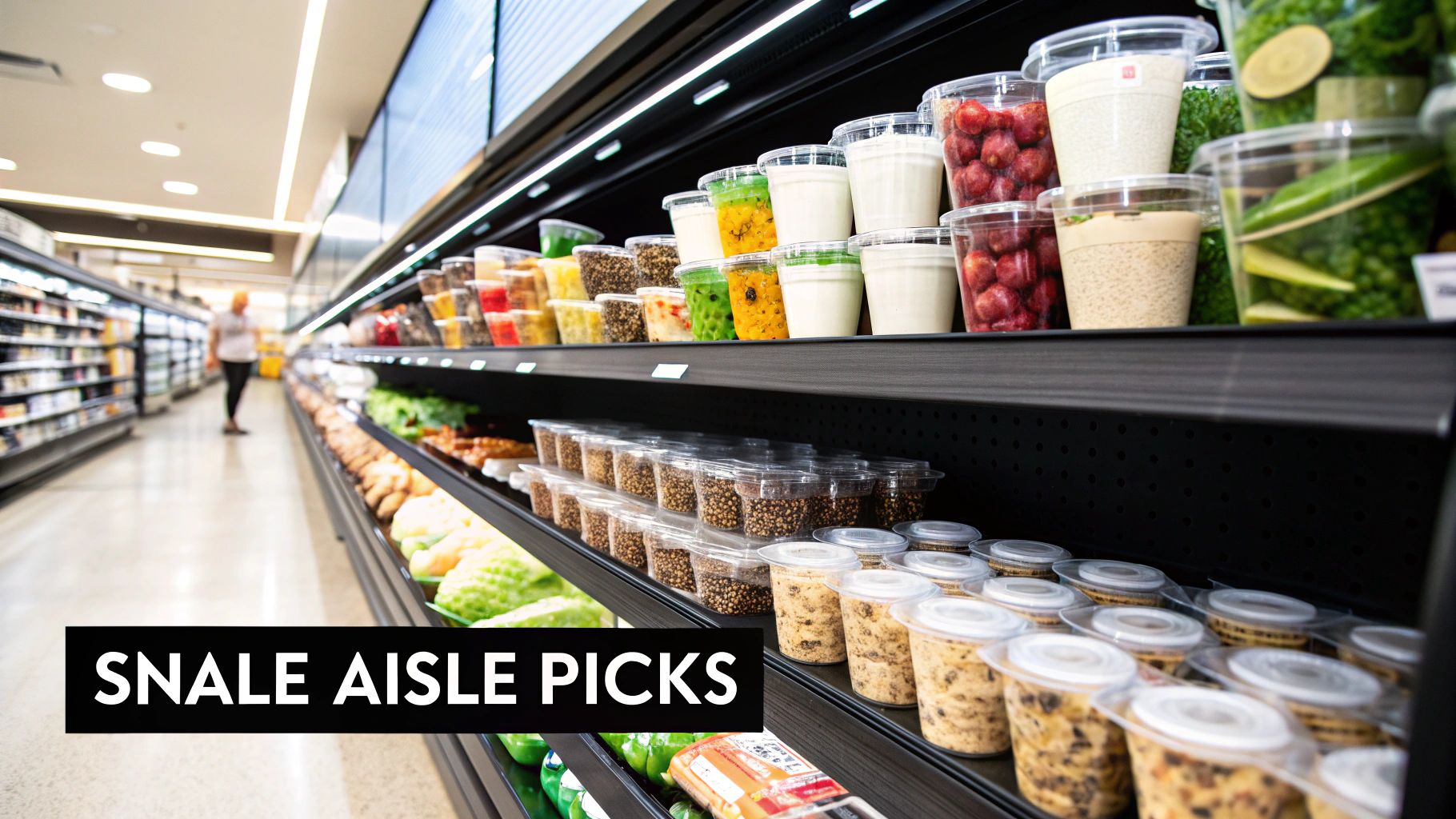
Keto and Low-Carb Convenience Store Finds
When you're keto on the go, you have to get good at spotting hidden sugars and sneaky carbs. The best stuff is usually in the refrigerated section or hiding among the savory, protein-heavy snacks.
Here are some of my go-to choices:
- Pork Rinds: Sometimes called "chicharrones," these are the perfect zero-carb, crunchy swap for potato chips.
- Cheese: Grab a single-serving string cheese, a cheese wheel, or a small block of cheddar. They’re all packed with the fat and protein you need.
- Nuts and Seeds: Your best bet is to stick with raw or lightly salted almonds, macadamia nuts, and pecans since they're naturally lower in carbs. Be careful with nut mixes—some include higher-carb options like cashews, so always check the label.
- Meat Sticks and Jerky: This is where label reading is critical. Look for brands with 0-1 gram of sugar per serving. It's shocking how many popular jerky brands are loaded with sugar.
Finding snacks that are truly keto-friendly can feel like a treasure hunt, but it gets easier once you know what to look for. For a deeper dive, check out our guide on what snack foods you can eat on keto.
Navigating Low-Sugar and Other Dietary Needs
If you’re just trying to keep your sugar intake down but aren't strictly low-carb, your world of options opens up considerably. Here, the goal is to sidestep added sugars while still getting a snack that actually tastes good.
Look for snacks that are naturally sweet. A banana or an apple is a classic, no-fail choice. When you're browsing the aisles, prioritize snacks that have a good amount of fiber and protein to help balance out any natural sugars.
A classic trap is reaching for a "low-fat" snack, only to realize it's loaded with sugar to make up for the missing flavor. The "Added Sugars" line on the nutrition panel is your best friend—it tells the real story.
Convenience stores are also getting much better at catering to other dietary needs.
- Gluten-Free: Keep an eye out for certified gluten-free protein bars, rice cakes, and some brands of popcorn or veggie sticks. Hard-boiled eggs and cheese are naturally safe bets, too.
- Plant-Based: Your best options here are usually fruit, nuts, and seeds. You can also find some protein bars made with plant-based ingredients like peas or brown rice. Hummus cups with pretzels or veggie packs are also popping up more often.
Once you know your goals, you can scan the aisles and quickly pinpoint the healthy convenience store snacks that work for you. A potential pitfall can easily become a successful pit stop.
How to Build the Perfect On-the-Go Snack Pack
Grabbing just one thing from the convenience store is fine, but if you really want to stay full and keep your energy up, the trick is to build a "snack pack." Think of it as creating your own mini-meal.
By combining a few different healthy convenience store snacks, you can make a surprisingly balanced and satisfying kit that will keep you going for hours. The secret is to think about the different jobs food does for your body.
When you pair a protein, a smart carb, and a healthy fat, you get a powerful combination. The protein and fat slow down how quickly your body processes the carbohydrates, which means you avoid that awful sugar rush followed by an energy crash. It's a simple move that takes your snack from a quick fix to a seriously smart choice.
This strategy is more important than ever. The U.S. snacks market is already valued at $115.2 billion and it's still growing. People want snacks that are easy to grab but also fit their health goals. You can see the full trend in this in-depth analysis of the U.S. snacks market.
Assembling Your Snack Pack
Think of it like putting together a small team where every member has a key role. You can find everything you need right there in the store aisles.
- Protein Power: This is what keeps you feeling full. Grab a hard-boiled egg, a stick of string cheese, a cup of plain Greek yogurt, or some low-sugar beef jerky.
- Carbs for Energy: You need this for an immediate lift. An apple or a banana is perfect. A small bag of whole-grain crackers or a fruit cup (the kind packed in its own juice, not syrup) are also great choices.
- Healthy Fats for Staying Power: This is what gives your snack longevity. A single-serving bag of raw almonds, walnuts, or pistachios is exactly what you’re looking for.
Putting these three together creates a powerhouse snack that’s got your back, whether you're about to walk into a long meeting or just trying to survive a frantic afternoon. For more ideas, check out our guide to healthy snacks for work.
The goal isn’t to eat a full meal, but to give your body a balanced mix of fuel. A simple trio like string cheese (protein), an apple (carb), and a handful of almonds (fat) is a classic combination that never fails.
Three Snack Pack Scenarios
Let’s get practical. Here are a few real-world examples you can put together entirely from what you find at a convenience store.
- The Pre-Workout Energizer: Need a quick boost before hitting the gym? A banana gives you fast-acting carbs for energy, and a hard-boiled egg provides protein to fuel your muscles without making you feel heavy or bloated.
- The Long Meeting Survivor: To stay sharp and focused, you need sustained energy. Try pairing a plain Greek yogurt (protein) with a handful of walnuts (healthy fats) and a low-sugar stroopwafel for a steady release of energy that won't leave you crashing.
- The Kid-Friendly Lifesaver: When the kids are getting hangry, you need something fast and effective. A mozzarella cheese stick, a small box of raisins, and a bag of apple slices is the perfect trio. It's easy for little hands to hold and provides the balanced nutrition they need.
Answering Your Top Snacking Questions
Even when you know what to look for, that moment of decision in the snack aisle can be tough. Let's walk through some of the most common questions that pop up, so you can feel good about what you’re grabbing.
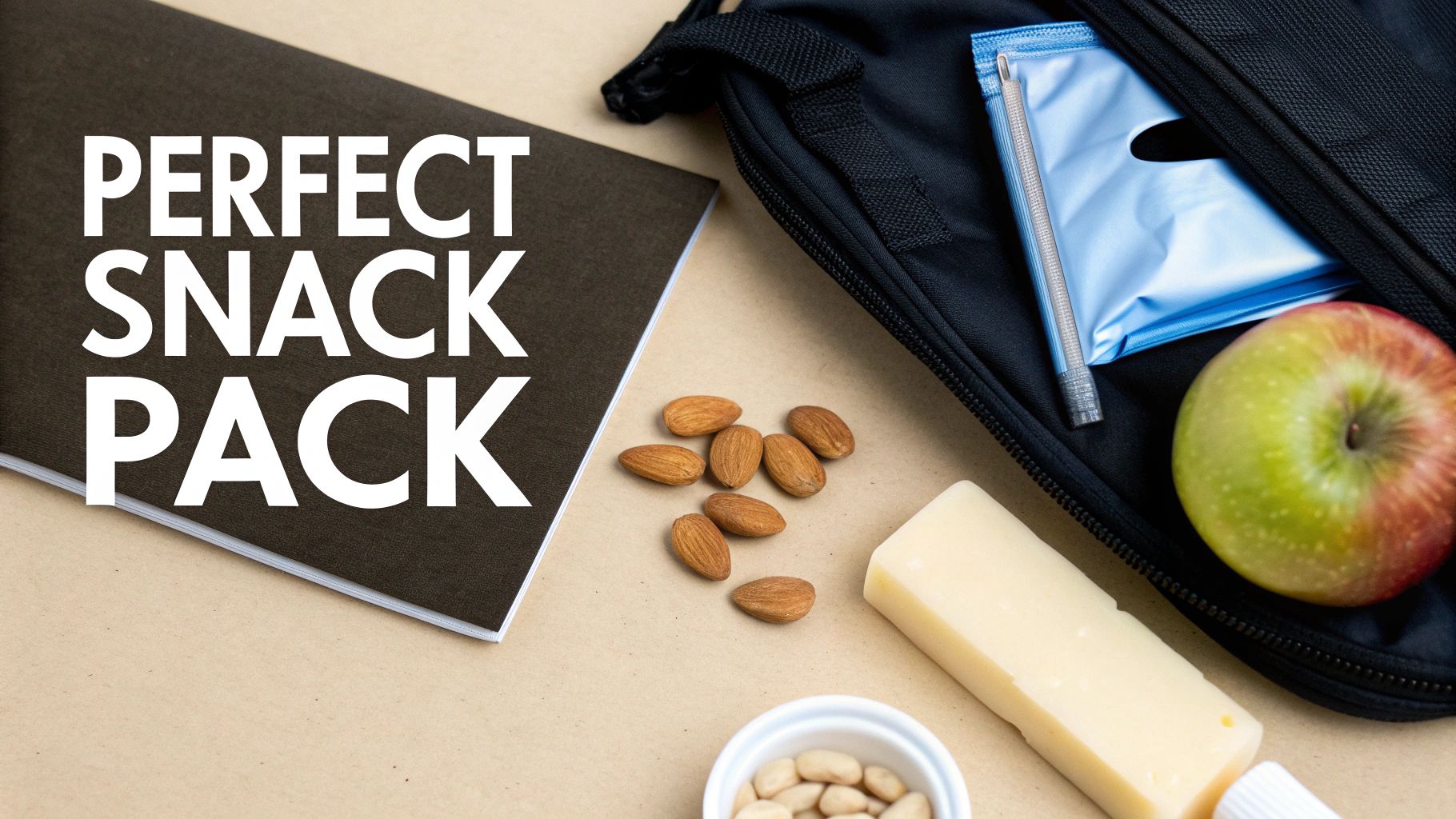
Mastering these common dilemmas is the final step to becoming a pro at convenience store snacking.
Are Protein Bars Always a Healthy Choice?
This is a tricky one. I’ve seen some protein bars that are basically candy bars with a protein-packed disguise, loaded with sugar, weird sweeteners, and a laundry list of fillers. A genuinely healthy protein bar should have a simple list of ingredients you can actually recognize.
As a quick rule of thumb, here's what I look for:
- Protein Power: It needs at least 10 grams of protein. Anything less just won't keep you full.
- The Fiber-Sugar Flip: Check the label. You want to see more grams of fiber than grams of sugar. This is a game-changer for avoiding a sugar crash.
- Real Food First: The best bars are made with ingredients like nuts, seeds, and whole grains at the top of the list.
How Can I Satisfy a Sweet Craving Without Candy?
That 3 p.m. sugar craving is real, and it’s all too easy to grab the first candy bar you see. My advice? Look for something with natural sweetness that also brings some nutrition to the table. That way, you avoid the inevitable energy dive that follows a pure sugar rush.
A simple piece of fruit, like a banana or an apple, is always a winning choice. Fruit cups are another good option, as long as you make sure they’re packed in their own juice, not heavy syrup. If you need something that feels a bit more like a treat, a low-sugar yogurt or a snack bar built with more fiber than sugar can do the trick.
The secret to handling a sweet tooth is finding a snack that gives you both sweetness and substance. Protein and fiber are your best friends here—they slow down how your body absorbs sugar, giving you steady energy instead of a sharp spike and a sudden crash.
What Is the Best Drink to Grab?
It's so easy to grab a healthy snack and then completely cancel it out with a sugary drink. The coolers are a minefield of sodas, sugar-loaded "fruit" juices, and energy drinks that can pack a shocking amount of empty calories.
Honestly, the best choice is the simplest: water.
If you need a little more flavor, unsweetened iced tea, black coffee, or sparkling water are great zero-calorie alternatives. They hydrate you without weighing you down. Think of your drink as a supporting cast member—your healthy snack should be the star of the show.
Ready to find a snack that satisfies your sweet tooth without the sugar crash? Rip Van makes delicious low-sugar, high-fiber stroopwafels and cookies that are perfect for when you're on the move. Find your new favorite treat at https://ripvan.com.
0 comments