

Finding a genuinely great-tasting, healthy snack with fiber is way easier than you might think. We need to ditch the old myth that high-fiber equals bland or boring. Instead, let's explore a world of delicious, easy options that will boost your energy and your long-term health. Think of it as upgrading your daily fuel from standard to premium.
Your Guide to Smarter Snacking With Fiber
 Let's get straight to the point. This guide is here to help you find snacks that don't just taste great but make you feel even better. We'll cut through the confusion and show you how the right choices can genuinely transform your daily well-being.
Fiber often gets a bad rap, unfairly pigeonholed as a nutrient just for "regularity." But the truth is, its benefits are so much broader than that. Consider this your go-to manual for upgrading your snack game for good.
The Growing Demand for Better Snacks
If you're looking for healthier options, you're in good company. The high-fiber snacks market has absolutely exploded. This isn't just a trend; it's a global shift towards more mindful eating, especially among busy professionals, parents, and even keto dieters.
This huge consumer demand for convenient, low-sugar alternatives is fueling major industry growth. The market, currently valued at USD 28.4 billion, is on track to hit a staggering USD 76.3 billion by 2035. You can explore more about this market shift and its projections to see just how big this movement has become.
This guide will show you how to navigate this growing landscape. We’ll also introduce Rip Van’s whole philosophy: making indulgent treats that are actually good for you. It's an approach centered on low sugar and high fiber, but without ever compromising on flavor.
Forget bland, bulky foods. The new wave of high-fiber snacking is about combining delicious taste with powerful nutritional benefits, making it easier than ever to fuel your body intelligently between meals.
We'll cover everything you need to know, from deciphering nutrition labels to building snack plans that actually fit your life. By the end, you'll have the confidence and knowledge to pick snacks that support your health goals—without taking the joy out of eating.
Why Fiber Is Your Secret Weapon for All-Day Energy
Let's be honest, fiber isn't exactly the most glamorous nutrient. It's often overshadowed by protein and carbs, but it's the unsung hero working behind the scenes to keep you feeling fantastic. Think of it as your secret weapon for maintaining steady, all-day energy and finally kicking that dreaded afternoon slump to the curb.
When you reach for a snack, you're looking for more than just a quick bite. You want sustained fuel. That's where fiber shines. Imagine it as an internal traffic controller for your bloodstream. When you eat, your body breaks down food into sugar (glucose) for energy. Without fiber, that sugar can flood your system all at once, giving you a jarring energy spike followed by an even harder crash.
Fiber steps in to slow that whole process down. It ensures a gradual, controlled release of sugar, providing you with consistent fuel that lasts. This steady supply is a game-changer for focus and productivity. Instead of riding an energy rollercoaster, you get stable power to help you think clearly. This makes fiber-rich snacks an especially smart choice for getting through a tough workday or a long study session. For more ideas, check out our guide on the best healthy snacks for studying.
Meet the Two Types of Fiber
Fiber isn't a monolith; it comes in two distinct forms. Each one plays a unique, complementary role in your body. Getting to know both will help you build a much more effective snacking strategy.
1. Soluble Fiber: The Sponge
This type of fiber dissolves in water and creates a gel-like substance as it moves through your digestive tract. The best analogy is a sponge—it soaks up water, cholesterol, and excess sugars, which slows down digestion and helps you feel full longer.
- Its Job: Helps keep blood sugar stable, can lower cholesterol, and keeps you feeling satisfied.
- Find It In: Oats, apples, carrots, beans, and citrus fruits.
2. Insoluble Fiber: The Broom
Unlike its counterpart, insoluble fiber doesn't dissolve in water. It acts more like a broom, adding bulk and sweeping everything through your digestive system more efficiently.
- Its Job: Promotes regularity and helps prevent constipation, which is fundamental for good gut health.
- Find It In: Nuts, seeds, whole grains, and vegetables like cauliflower and green beans.
Hitting Your Daily Fiber Goals
So, what's the magic number? Health experts recommend that adult women aim for around 25 grams of fiber per day, while men should shoot for about 38 grams. The reality? Most of us are only getting about half that.
The good news is you don’t need to completely overhaul your diet overnight. Simply focusing on adding high-fiber snacks is a powerful and surprisingly easy way to start closing that gap.
Small, consistent changes are what truly count. Swapping just one low-fiber snack for a smarter option can easily add an extra 5-10 grams of fiber to your day. That’s a huge step toward your goal, and it doesn't feel like a chore at all.
How to Become a Fiber Detective on Nutrition Labels
Navigating the grocery store for genuinely healthy snacks can feel like a mission. Products will shout about their health benefits from the front of the box, but the real story is always hiding on the back. To find snacks that are actually high in fiber, you have to put on your detective hat and look past the flashy marketing to the nutrition label.
Your first stop should always be the Dietary Fiber line. This number gives you the hard facts—exactly how many grams of fiber are packed into a single serving. It’s your most direct clue. But a number without context doesn’t mean much, so let's figure out what makes a snack truly fiber-rich.
The 5/20 Rule for Fiber
This is a fantastic little trick for judging a snack’s fiber content at a glance. Just look at the Percent Daily Value (% DV) next to the dietary fiber amount.
- 5% DV or less is considered a low source of fiber.
- 20% DV or more is considered a high source of fiber.
Think of this as your quick-reference guide. If a snack hits that 20% mark, you've found a winner. Anything between 5% and 20% is still a good source, but aiming for that top tier will help you crush your daily fiber goals much faster.
A product labeled a "good source of fiber" must legally contain at least 10% of the Daily Value (that's about 2.8 grams per serving). An "excellent source" has to provide 20% or more.
While the numbers tell one part of the story, the ingredients list reveals the quality of that fiber. Reading it helps you understand exactly where all that goodness is coming from.
Scanning for High-Quality Ingredients
Look for whole-food ingredients listed near the top, since they're ordered by weight. Certain words are dead giveaways for a high-quality, fiber-rich product. Keep an eye out for these:
- Whole Grains: Terms like "whole wheat," "oats," or "brown rice" are great signs.
- Legumes: Ingredients like chickpeas, lentils, or black beans are fiber powerhouses.
- Nuts and Seeds: Almonds, chia seeds, and flaxseeds are always a win.
- Added Fibers: Ingredients like chicory root fiber or inulin are often used in products like low-sugar snack bars to boost fiber without adding a ton of sugar.
Think about how different fiber sources work. Some, like oats, absorb water and slow things down, while others, like nuts, help keep things moving.
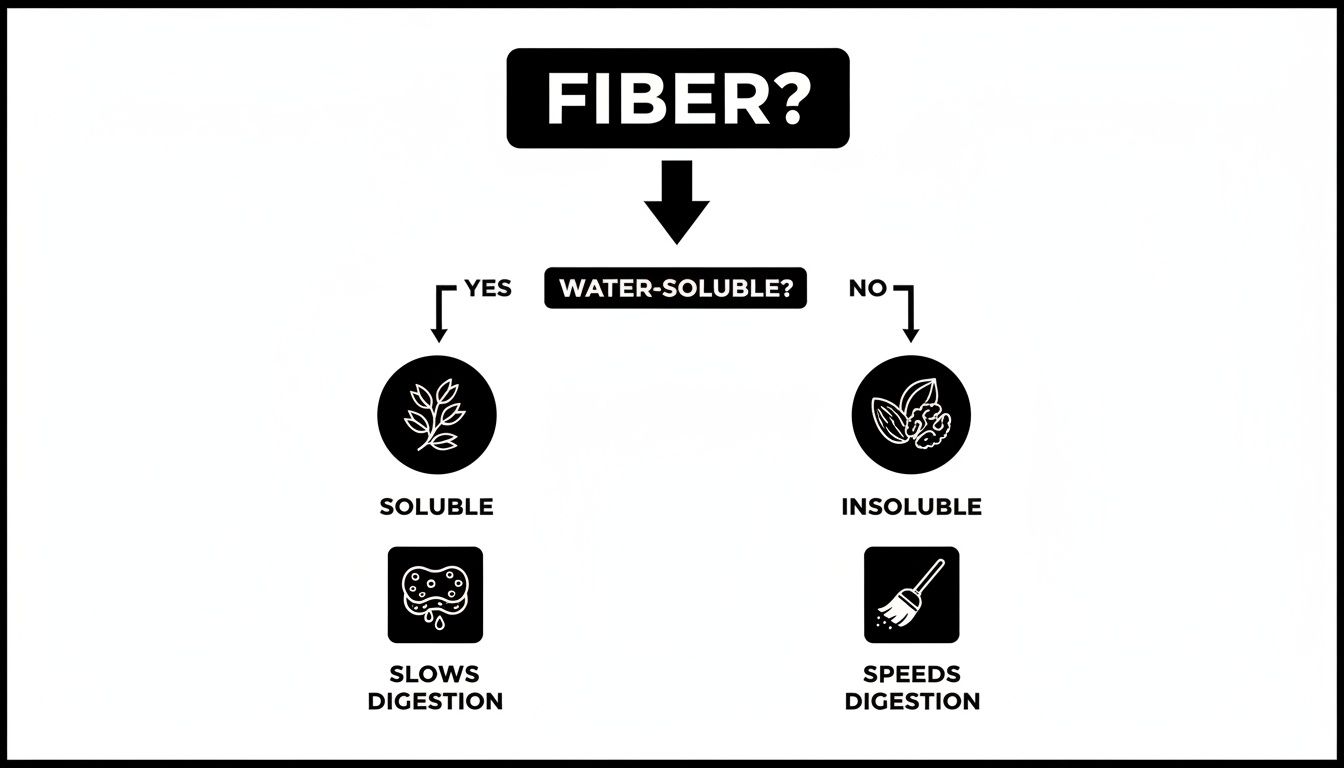
As you can see, soluble fiber acts like a sponge, while insoluble fiber works more like a broom for your digestive system. That’s why getting a mix of both is so important for feeling your best.
Let's see this in action by comparing a typical snack with a high-fiber option.
Low-Fiber Snack vs. High-Fiber Snack: A Label Showdown
| Nutrient | Typical Snack Cookie | Rip Van Wafel |
|---|---|---|
| Dietary Fiber | 1g (4% DV) | 9g (32% DV) |
| Total Sugar | 12g | 3g |
| First Ingredient | Enriched Flour | Chicory Root Fiber |
| Other Ingredients | High Fructose Corn Syrup, Palm Oil | Wheat Flour, Palm Fruit Oil |
See the difference? The Rip Van Wafel delivers 8 more grams of fiber and has 75% less sugar. Plus, its first ingredient is a quality fiber source, not refined flour.
By combining the hard numbers from the nutrition panel with the quality cues from the ingredients list, you can confidently pick out snacks that are both delicious and genuinely good for you.
Delicious and Convenient High-Fiber Snack Ideas
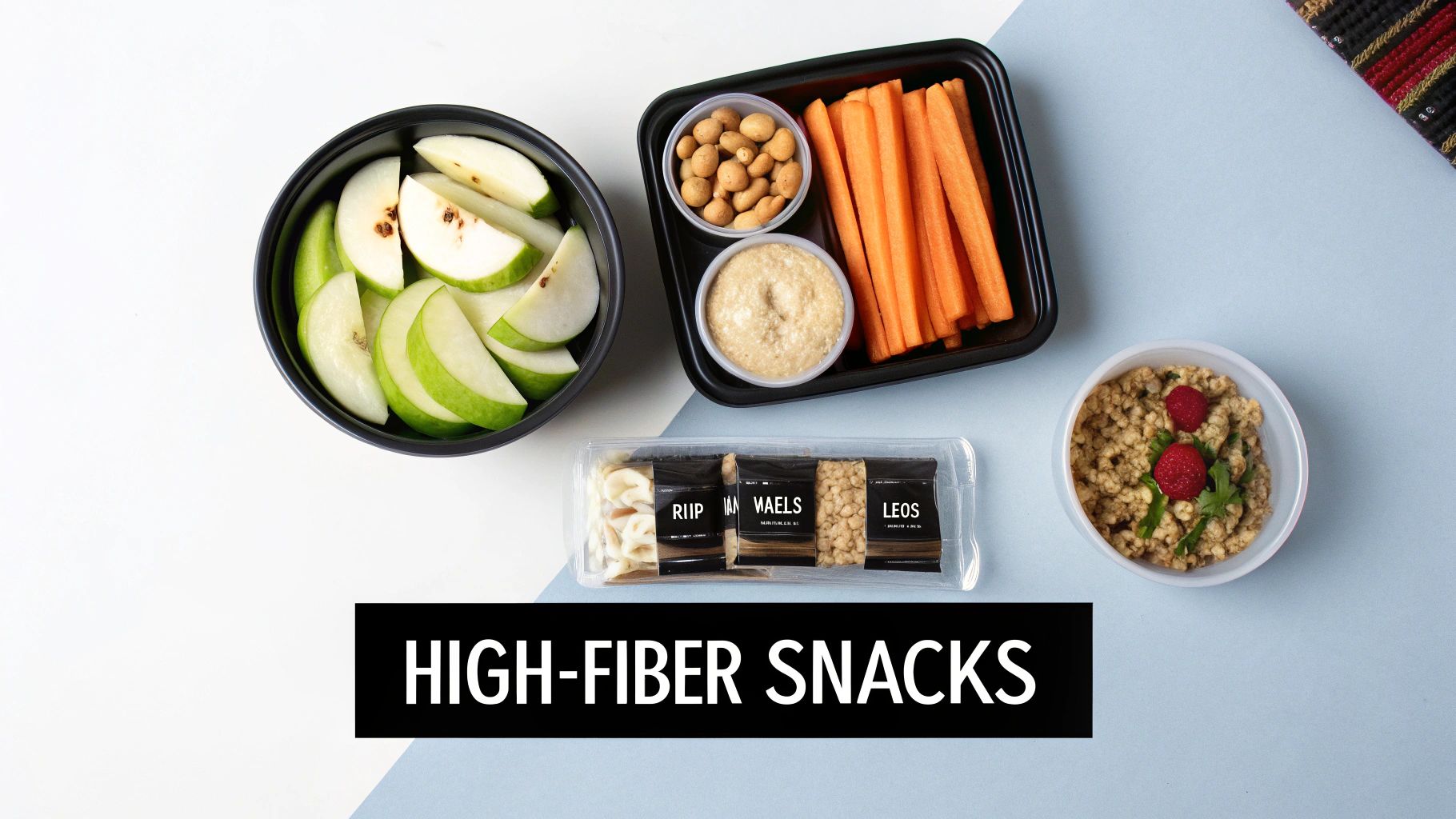
Let's be honest: finding snacks that are high in fiber, genuinely tasty, and easy to grab can feel like searching for a unicorn. But the good news is, your options are way more exciting than a sad bag of baby carrots.
Building a high-fiber snacking routine isn't about deprivation. It's about adding powerhouse foods that actually keep you full, energized, and satisfied. The trick is to strike a smart balance between fresh whole foods and convenient, well-made packaged options for those crazy busy days.
Whole Food Snack Powerhouses
When it comes to fiber, whole foods are your best friend. They're nature's original fast food—minimally processed and loaded with the good stuff your body is actually looking for. Best of all, they're wonderfully simple.
Here are a few of my go-to, fiber-rich ideas:
- Apples with Nut Butter: A classic for a reason. An apple with the skin on gives you about 4.5 grams of fiber. Add a spoonful of almond or peanut butter, and you've got healthy fats and protein to keep you going for hours.
- Carrots and Hummus: A cup of baby carrots brings a solid dose of fiber. Dunk them in hummus, which is made from fiber-packed chickpeas, and you get a savory, crunchy snack that really hits the spot.
- A Handful of Mixed Nuts: Almonds, walnuts, pistachios—take your pick. They're all great sources of fiber and heart-healthy fats. A simple one-ounce serving is all you need to beat that afternoon slump.
- Edamame: This one’s a real powerhouse. Just one cup of shelled edamame can pack a whopping 8 grams of fiber and a hefty serving of plant-based protein.
Making these snacks a regular part of your week is much easier with a little planning. Embracing some simple meal prep for weight loss can make all the difference.
Smart Packaged Snacks for Life on the Go
While whole foods are fantastic, sometimes life demands something you can just toss in your bag. Thankfully, the market has finally caught up, and there are more great options than ever before.
This isn't just a feeling; the numbers back it up. The global market for high-fiber snacks hit USD 5,803.9 million and is expected to climb to USD 8,624.5 million by 2033. People are actively seeking out better-for-you snacks, and brands are listening.
This is exactly where Rip Van fits in. We were founded on the belief that you shouldn't have to choose between a delicious treat and a smart snack. Our goal is to give you that indulgent, satisfying experience with way less sugar and a meaningful boost of fiber.
Our Rip Van Wafels are the perfect example. A single Dutch Caramel & Vanilla Wafel has only 3 grams of sugar but delivers an incredible 9 grams of fiber. It’s a treat that helps you feel full, not guilty.
If you’re craving something crunchy and chocolatey, our LEOS cookies are another fantastic choice. They're a much smarter way to satisfy a sweet tooth, giving you a fiber kick that you'd never find in a traditional cookie. These snacks prove that convenience and great taste can absolutely go hand-in-hand.
Building Your High-Fiber Snack Plan for Any Lifestyle
Knowing which snacks are high in fiber is one thing, but actually fitting them into your busy life? That's the real challenge. The secret isn't a rigid, complicated meal prep routine; it's about having a simple, flexible game plan that works for you.
Forget the one-size-fits-all approach. Let's look at a few practical snack frameworks tailored for different needs. These ideas blend grab-and-go convenience with whole-food nutrition, proving that a high-fiber snack can be easy and delicious, no matter what your day throws at you.
For the Busy Professional
When you're bouncing between meetings and deadlines, you need snacks that are quick, clean, and deliver steady energy to keep you focused. The goal here is to sidestep the vending machine and kill that afternoon slump before it starts. For more ideas, explore our guide on other great healthy snacks for work.
- The Desk Drawer Duo: Keep a stash of Rip Van Wafels and single-serving nut packets. A wafel paired with a handful of almonds gives you a fantastic mix of fiber, protein, and healthy fats in under a minute.
- Ready-to-Go Freshness: Pack a small container of shelled edamame or a bag of crunchy roasted chickpeas. Both offer a savory, satisfying fix that’s packed with fiber.
- The 5-Minute Prep: Before you dash out the door, grab a Greek yogurt cup and a small apple. It’s a classic pairing for a reason—it’s full of great textures and nutrients.
For the Parent with Kids
Let’s be honest, getting kids to eat high-fiber snacks can sometimes feel like a negotiation. The trick is to make them fun, familiar, and tasty. You want to offer combinations that pack a nutritional punch without them even noticing.
A great dietitian-approved strategy for kids is the "P+P" approach: pair a source of protein with produce (fruit or veggies). This provides both fiber and protein to keep them full, focused, and energized between meals.
- The Lunchbox Hero: Rip Van LEOS are a perfect cookie swap. They have that treat-like taste kids love but also happen to be a good source of fiber. It's a true win-win.
- Fun with Dippers: "Ants on a log"—celery sticks with peanut butter and raisins—is a classic for a reason! You can also try bell pepper strips with hummus for a colorful and crunchy alternative.
- Sweet and Simple: A small bowl of berries with a cheese stick is an easy after-school favorite that delivers natural sweetness alongside filling protein.
For the Keto Dieter
Sticking to a ketogenic diet means carbs are off-limits, which can make it tough to get enough fiber. The key is to lean into non-starchy veggies, nuts, seeds, and smartly formulated keto-friendly packaged snacks.
- Avocado Power: Slice an avocado in half and sprinkle it with salt and everything bagel seasoning. It's creamy, incredibly satisfying, and loaded with healthy fats and over 6 grams of fiber.
- Crunchy and Convenient: A handful of pecans or macadamia nuts paired with a few olives delivers that perfect combo of fat and fiber without the carb load.
- The Keto-Friendly Treat: Many Rip Van products, like our keto wafers, are specifically designed to fit this lifestyle. They offer a sweet indulgence that won't kick you out of ketosis.
Ready to Start Your Fiber Journey?
Jumping into the world of high-fiber snacks is one of the simplest, most effective ways to upgrade your health. Forget about a complete diet overhaul; this is about making small, tasty changes that pay off big, from keeping you energized all day to supporting a happy gut. When you choose your snacks with a little intention, you're taking a real step toward feeling fantastic.
As you get started, keep a few things in mind to make the transition a breeze:
- Go Slow at First: Don't rush it. Give your digestive system a little time to get used to the new normal.
- Water is Your Best Friend: Fiber needs water to work its magic, so make sure you're sipping throughout the day.
- Tune In to Your Body: Pay attention to how you feel. Your body is the ultimate guide, so adjust your intake as you go.
The big idea is this: you don't have to pick between a snack you crave and a snack that's good for you. With the right fiber-forward options, you really can have both.
This isn't just a fleeting trend—it's a fundamental shift in how we think about food. The demand for snacks that actually do something for us is booming, with the high-fiber snack market expected to grow from USD 39.39 billion to a whopping USD 70.85 billion by 2035. People want snacks that keep them full and support their digestion, and the market is responding. You can read more about the high-fiber snack market to see just how big this movement is.
Ready to find the perfect snack to kick things off? Check out Rip Van’s lineup of delicious, high-fiber, low-sugar snacks and find your new favorite today.
Got Questions About High Fiber Snacks? We’ve Got Answers.
Making a change to how you eat always brings up a few questions. That's a good thing! Let's tackle some of the most common ones about high-fiber snacking so you can feel totally confident about the foods you choose.
What Does "Good Source of Fiber" Actually Mean on a Label?
Food labels can feel like they're written in another language, but terms like "good source" actually have a very specific, regulated meaning. When a snack label says it's a "good source of fiber," it's legally required to contain at least 10% of your Daily Value (DV) for fiber. That works out to about 2.8 grams per serving.
See a package that says "excellent source of fiber" or "high in fiber"? That's even better. It means the product packs in 20% or more of your Daily Value, which is at least 5.6 grams of fiber per serving. Knowing these numbers gives you a quick and easy way to spot the snacks that will make a real difference.
We get a huge chunk of our daily calories from snacks—sometimes up to a third of them! Making sure those snacks are a good or excellent source of fiber is a smart way to make every calorie work for you.
Can I Just Eat High-Fiber Snacks to Hit My Goal?
It's a tempting thought, but trying to get all your daily fiber from snacks alone isn't the best game plan. Snacks are fantastic, but they’re designed to be a supplement to your diet, not the main event.
Your breakfast, lunch, and dinner are where the heavy lifting should happen. These meals should be built around naturally fiber-rich foods like fruits, vegetables, beans, and whole grains.
Think of healthy snacks with fiber as the perfect backup singers. They fill the gaps between meals, keep you from hitting that 3 PM slump, and help push you over the finish line to hit your daily goal—that’s 25 grams for women and 38 grams for men. When you use them this way, you get all the benefits without making one type of food do all the work.
Are High-Fiber Snacks Okay on a Keto Diet?
You bet they are. A ketogenic diet might be low-carb, but fiber is still incredibly important for feeling your best. The trick is to find snacks that get their fiber from keto-friendly ingredients.
On a keto diet, most people track net carbs, which you find by subtracting the grams of fiber and sugar alcohols from the total carbohydrates. Why? Because your body doesn't digest and absorb fiber like it does other carbs, so it generally won’t kick you out of ketosis or spike your blood sugar.
Just look for snacks with fiber from sources like:
- Nuts and seeds (think almonds, pecans, and chia seeds).
- Low-carb veggies like avocado or bell peppers.
- Added fibers, like the chicory root fiber found in many fantastic keto-friendly products.
With the right choices, you can absolutely enjoy a satisfying, high-fiber snack that keeps you in ketosis and on track with your health goals.
Ready to find snacks that make hitting your fiber goals easy and delicious? Rip Van offers a variety of low-sugar, high-fiber wafels, cookies, and wafers that fit perfectly into any healthy lifestyle.
Explore our full collection and find your new favorite snack!