

If you're looking for sustained energy, better digestion, and more stable blood sugar levels, focusing on low carb high fiber foods is one of the smartest moves you can make. This isn't about deprivation; it's about choosing nutrient-packed options like leafy greens, avocados, nuts, and seeds that keep you feeling full and energized, without the rollercoaster crash that comes from simple carbs.
The Unbeatable Power of Low Carb High Fiber Foods
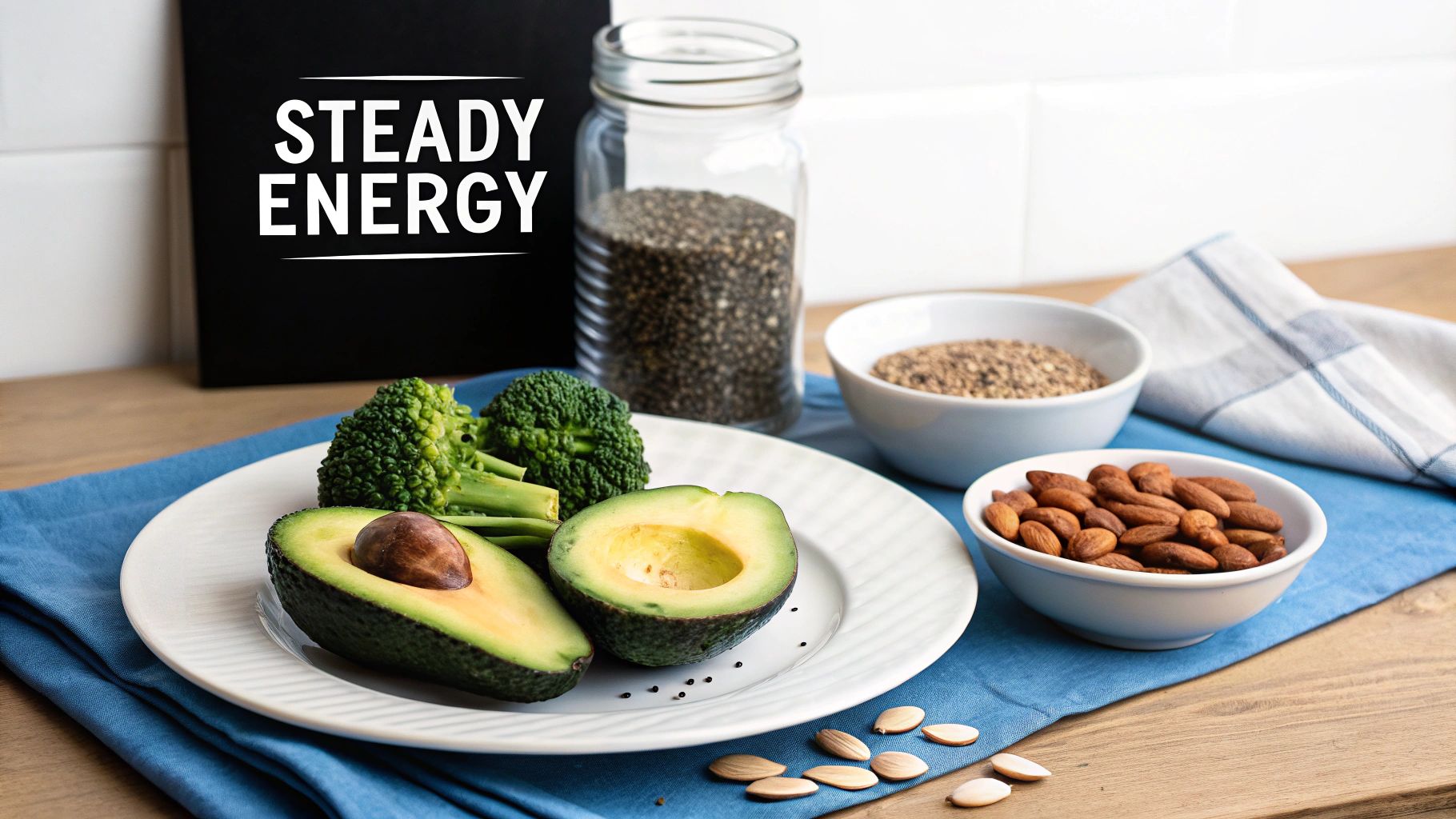
Pairing a low-carb diet with plenty of fiber isn't just another trend—it's a scientifically-backed way to fuel your body for the long haul.
Think of it like building a campfire. Sugary, simple carbs are like the kindling. They catch fire in a flash, giving you a quick burst of heat (or energy), but they burn out just as quickly. Before you know it, the fire is gone, and you're left feeling hungry and looking for more fuel.
Fiber, on the other hand, is the solid, slow-burning log. It provides steady, consistent energy that keeps your internal fire going for hours. This is exactly why a meal packed with fiber leaves you feeling full and satisfied, helping you power through your day and avoid those dreaded afternoon slumps.
How This Combination Benefits Your Health
When you make low-carb, high-fiber foods the star of your plate, you start to see some incredible health benefits. This dynamic duo works together to support your wellness from a few different angles.
- Better Blood Sugar Control: Fiber is a game-changer for blood sugar. It slows down how quickly sugar is absorbed into your bloodstream, which helps prevent the sharp spikes and subsequent crashes that leave you feeling tired and irritable.
- Keeps You Feeling Full: High-fiber foods take up more space in your stomach and take longer to digest. This sends a signal to your brain that you're full, which naturally helps you manage portions and reduce overall calorie intake without feeling like you're starving.
- A Happy, Healthy Gut: Your digestive system loves fiber. It keeps things moving regularly and, just as importantly, acts as fuel for the good bacteria in your gut. A healthy gut microbiome is linked to everything from better immunity to improved mood.
To give you a quick snapshot of these benefits, here’s a simple breakdown.
Low Carb High Fiber Benefits at a Glance
| Key Benefit | How It Helps You | Top Food Sources |
|---|---|---|
| Steady Energy | Prevents blood sugar spikes and crashes, providing sustained fuel. | Non-starchy vegetables, nuts, seeds |
| Appetite Control | Increases feelings of fullness, helping you manage hunger. | Avocados, berries, chia seeds |
| Digestive Health | Promotes regularity and feeds beneficial gut bacteria. | Leafy greens, broccoli, flax seeds |
This powerful combination ensures you're not just cutting carbs, but replacing them with nutrients that truly fuel your body.
Understanding Net Carbs
To really master a low-carb lifestyle, you need to get familiar with the concept of net carbs. It’s a simple calculation that opens up a whole new world of delicious, nutrient-dense foods.
The formula is incredibly simple: Total Carbohydrates - Dietary Fiber = Net Carbs.
Why does this work? Because your body doesn't digest fiber and turn it into sugar (glucose) like it does with other carbs. So, you can subtract those fiber grams from the total carb count to get a more accurate picture of what will impact your blood sugar.
For example, a food with 15 grams of total carbs but 10 grams of fiber only has 5 grams of net carbs. This makes fiber your best friend on a low-carb plan, allowing you to enjoy satisfying foods while keeping your net carbs in check. It's why exploring healthy snacks with fiber is such a great strategy for staying on track without feeling restricted.
Why Fiber Is Your Secret Weapon on a Low-Carb Diet
When people jump into a low-carb lifestyle, they usually fixate on everything they have to cut out. But in doing so, they often miss the one thing that can truly make or break their success: fiber.
It’s easy to think of fiber as just filler, but it’s the unsung hero of any low-carb plan. Without enough of it, you’re likely to hit the common roadblocks that make the diet feel like a chore instead of a sustainable choice.
Take Sarah, for example. She started a low-carb diet to get her energy back. The first week was all protein and fats, but she forgot about fiber-rich veggies. Predictably, she ended up feeling sluggish, bloated, and just plain frustrated. The diet felt impossible until she started prioritizing low-carb high-fiber foods like avocados, leafy greens, and chia seeds. The change was almost immediate—her energy leveled out, and her digestive troubles disappeared.
More Than Just Regularity
Sure, keeping your digestive system on track is a huge perk, but fiber's job goes much deeper, especially when you're cutting carbs. One of its most important roles is to act as a prebiotic, feeding the good bacteria that live in your gut. A thriving gut microbiome is tied to just about everything, from a stronger immune system to better mental clarity.
When you consistently fuel your body with fiber, you're not just avoiding discomfort; you're actively cultivating a healthier internal ecosystem that supports overall wellness from the inside out.
This isn't just a niche health trend anymore. In a recent survey, 59% of global consumers said they believe gut health is highly important for their well-being. It’s a clear sign that people are connecting the dots between what they eat and how they feel. You can learn more about these evolving nutrition trends and consumer priorities.
Enhancing Satiety and Balancing Blood Sugar
Fiber is also a game-changer for managing hunger and cravings—something anyone on a diet knows is key for sticking with it long-term. Soluble fiber, the kind you find in Brussels sprouts and avocados, forms a gel-like substance in your stomach. This simple action slows down digestion, which is why you feel fuller for much longer after a meal.
This same process also slows the absorption of sugar into your bloodstream. By preventing those dramatic spikes and crashes in blood glucose, fiber helps keep your energy levels steady all day long. That means fewer afternoon slumps and less temptation to grab a sugary snack. Understanding these broader benefits, which include its critical role in digestive health, can be explored in guides that detail things like 5 foods for hemorrhoids that actually work.
Ultimately, making fiber a priority is what turns a restrictive low-carb diet into a lifestyle you can actually enjoy and maintain.
Calculating Net Carbs And Setting Your Daily Fiber Goals
To really make a low-carb, high-fiber lifestyle stick, you have to get specific. It’s not just about eating "better"; it’s about understanding the numbers that drive results so you can make confident, informed choices every day.
First things first, let’s talk about a daily fiber goal. For women, the general recommendation is to aim for at least 25 grams of fiber per day. Men should shoot for a bit more, right around 38 grams. Hitting these targets is a game-changer for feeling full, keeping your digestive system happy, and avoiding those dreaded blood sugar spikes.
Next, you need to set your carb limit. This is personal and depends on your goals, but a standard low-carb diet usually lands between 50 and 130 grams of total carbs daily. If you're following a stricter ketogenic diet, that number drops way down, typically below 50 grams, and sometimes as low as 20 grams.
Mastering The Net Carb Formula
Now for the secret weapon in your low-carb arsenal: calculating net carbs. This simple formula is what lets you enjoy a wide variety of low carb high fiber foods without knocking yourself out of ketosis or stalling your progress.
The calculation is surprisingly simple: Total Carbohydrates – Dietary Fiber = Net Carbs.
So, why does this work? Think of fiber as a type of carb that gets a free pass. Your body doesn't really digest it or turn it into glucose, so it doesn’t impact your blood sugar like starches and sugars do. By subtracting the fiber, you get a true picture of the carbohydrates that actually "count" against your daily limit. It's also worth noting that some people also subtract certain sugar alcohols from the total carb count, which you can learn more about in our guide to sugar alcohols.
Let's break it down with a quick example. Say you find a snack with 20 grams of total carbs on the label, but it’s packed with 12 grams of dietary fiber.
- 20g (Total Carbs) - 12g (Fiber) = 8g (Net Carbs)
Just like that, you see the snack has a much smaller impact than you first thought. It’s an excellent fit for your plan, all thanks to that glorious fiber.
This approach creates a powerful ripple effect across your health, boosting your gut, heart, and sense of fullness.
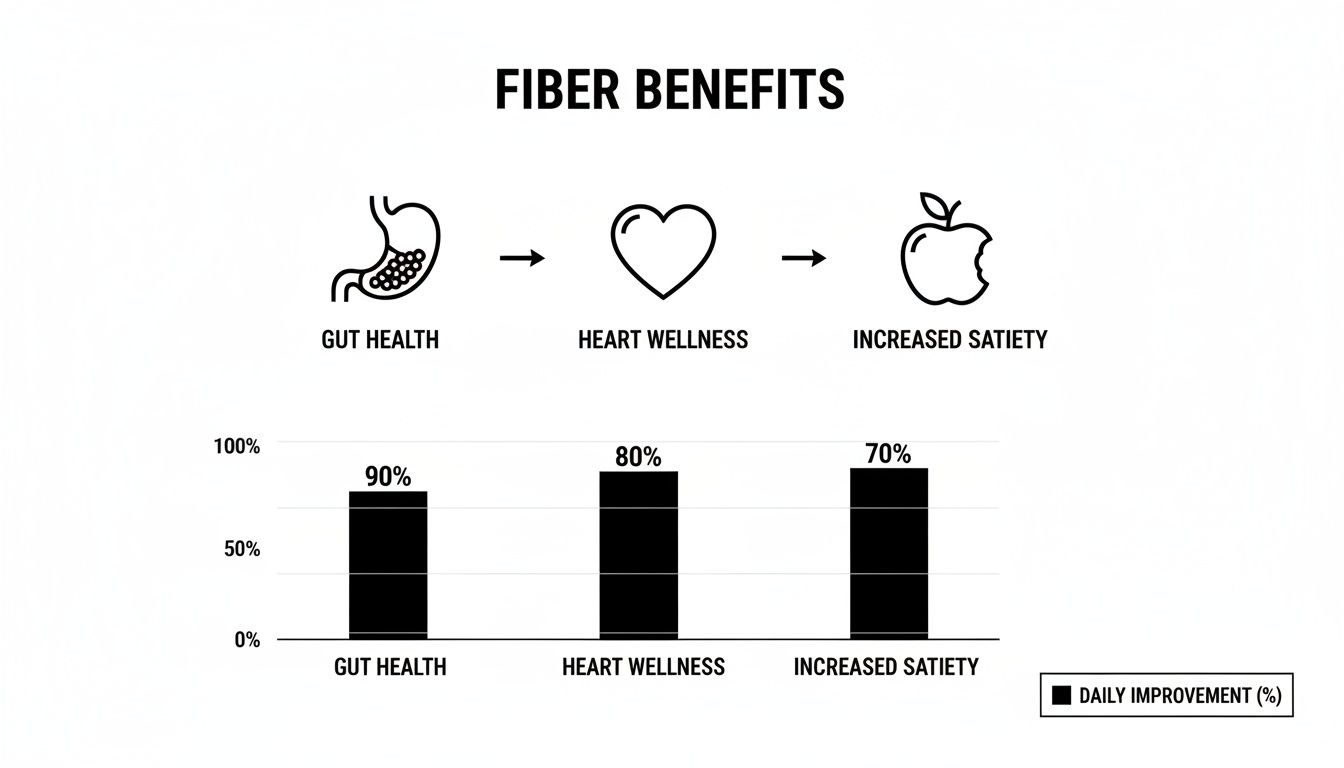
When you focus on fiber, you’re not just managing carbs—you’re investing in your long-term wellness from multiple angles at once.
Smart Food Swaps To Lower Net Carbs And Boost Fiber
See the powerful impact of smart food choices with this side-by-side comparison of common high-carb foods and their superior low-carb, high-fiber alternatives.
| Common Food (1 cup) | Total Carbs | Fiber | Net Carbs | Low-Carb Swap (1 cup) | Net Carbs in Swap |
|---|---|---|---|---|---|
| White Rice | 45g | 0.6g | 44.4g | Cauliflower Rice | 3g |
| Mashed Potatoes | 35g | 3.2g | 31.8g | Mashed Cauliflower | 5g |
| Spaghetti | 43g | 2.5g | 40.5g | Zucchini Noodles | 6g |
| Breakfast Cereal | 25g | 2g | 23g | Chia Seed Pudding | 2g |
As you can see, a simple swap completely transforms the nutritional profile of your meal. You dramatically lower your net carb intake while boosting your fiber, making it so much easier to stay on track and feel great.
Your Ultimate Low-Carb, High-Fiber Shopping List
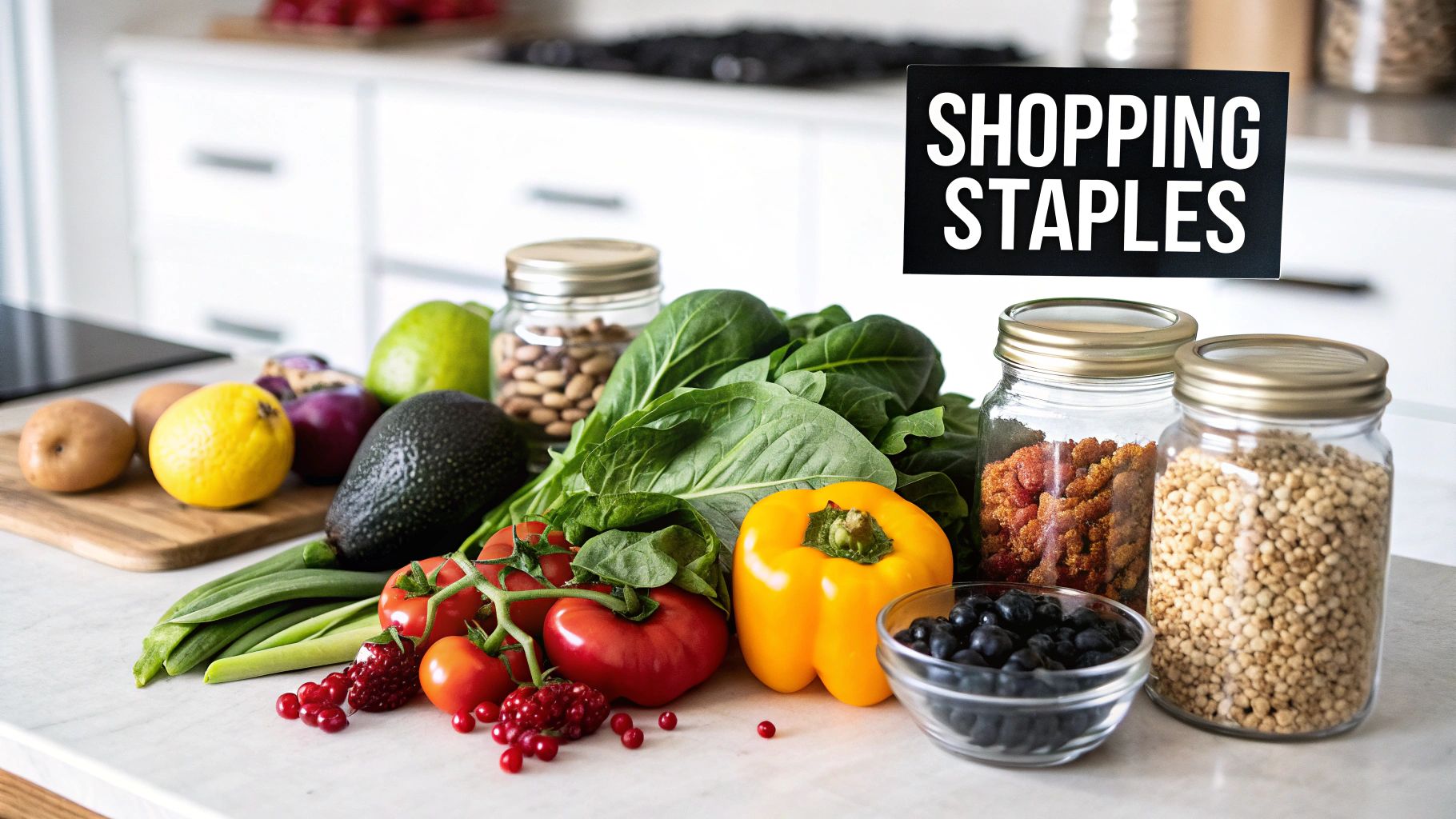
A well-stocked kitchen is your secret weapon, and it all begins with a great shopping list. This isn't about what you can't eat. It's about loading your cart with vibrant, flavorful foods that make a low-carb, high-fiber lifestyle feel anything but restrictive.
Let’s walk through the grocery store aisles together, category by category. Think of this as your toolkit for building delicious meals. When you have these staples on hand, a satisfying, nutrient-dense meal that aligns with your goals is always just minutes away.
Non-Starchy Vegetables
These should be the bedrock of your plate. Non-starchy vegetables are incredibly low in net carbs but overflowing with essential vitamins, minerals, and of course, fiber. They're also culinary chameleons—you can roast, steam, sauté, or eat them raw.
- Leafy Greens: Spinach, kale, and arugula are your go-to fiber powerhouses. Just one cup of cooked spinach packs over 4 grams of fiber.
- Cruciferous Veggies: Broccoli and cauliflower are your best friends on this journey. They offer a hefty dose of fiber and can be mashed, riced, or even turned into a pizza crust.
- Bell Peppers: Vibrant and crunchy, all colors are excellent choices. They give you a pop of vitamin C and fiber with very few net carbs.
- Zucchini: This is your secret weapon against pasta cravings. "Zoodles" are a fantastic, low-calorie way to add satisfying bulk and fiber to any meal.
When non-starchy vegetables are the star of the show, you're getting a huge nutritional bang for your buck with almost no carb impact. They physically fill up your plate and your stomach, which is key to feeling full and satisfied.
Low-Sugar Fruits
Fruit can be tricky on a low-carb diet, but you don't have to avoid it entirely. The secret is to pick fruits where the fiber content is high enough to slow down the absorption of their natural sugars.
- Avocado: Believe it or not, it’s a fruit! Avocados are the undisputed champs here. A single medium avocado can have around 10 grams of fiber with barely any net carbs.
- Berries: Raspberries, blackberries, and strawberries should be at the top of your list. A cup of raspberries delivers an incredible 8 grams of fiber.
- Tomatoes: Often mistaken for a veggie, tomatoes are another fantastic fruit choice, offering fiber and antioxidants with a low carb count.
Nuts and Seeds
Think of nuts and seeds as tiny nutritional powerhouses. They're a fantastic source of healthy fats, a bit of protein, and a whole lot of dietary fiber. They're perfect for snacking, sprinkling on salads, or blending into smoothies.
- Chia Seeds: These little seeds are ridiculously effective. Just two tablespoons deliver a massive 10 grams of fiber, making them an easy way to hit your daily goal.
- Flax Seeds: Another fiber superstar. Keep ground flaxseed on hand to stir into yogurt or add a nutritional boost to low-carb baked goods.
- Almonds: A one-ounce serving (that’s about 23 almonds) gives you around 3.5 grams of fiber. They make for a perfectly crunchy and satisfying snack.
- Walnuts: Not only do they bring fiber to the table, but they're also packed with heart-healthy omega-3 fatty acids.
By keeping your pantry stocked with these low carb high fiber foods, you’re setting yourself up for success. You'll have everything you need to build incredible meals that keep you full, energized, and right on track.
Delicious Meal and Snack Ideas to Get You Started
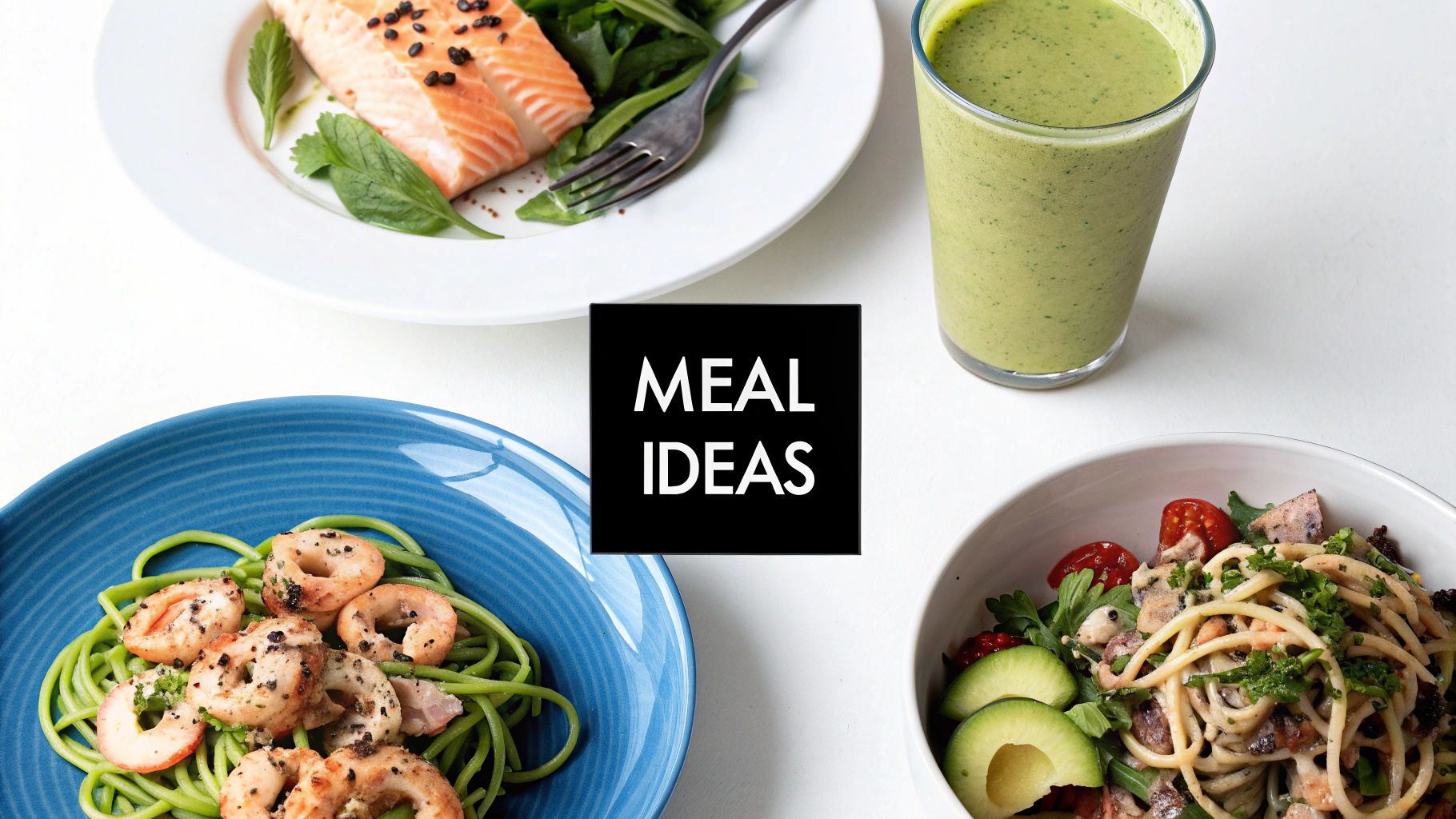
Knowing which low-carb high-fiber foods to buy is one thing, but turning that knowledge into delicious, satisfying meals is where the real magic happens. The good news? It doesn't have to be complicated. With a few simple ideas, you can build a daily routine that keeps you energized and on track.
You could kick off your day with a creamy avocado smoothie blended with a handful of spinach and a spoonful of chia seeds. This packs in a powerful dose of fiber and healthy fats, keeping you full for hours and heading off those mid-morning snack attacks.
For lunch, a loaded salad is an easy win. Start with a bed of leafy greens and pile on grilled chicken or fish, plenty of non-starchy veggies, and a sprinkle of sunflower seeds for extra crunch and fiber. Learning to whip up a perfect pan-seared salmon is also a fantastic skill for adding a quick, protein-rich element to any meal.
Simple and Satisfying Meal Structures
Dinner can be just as flavorful and straightforward. Instead of relying on traditional high-carb sides, get creative with swaps that deliver big on taste without the carb load.
- Zucchini "Zoodles": Grab a spiralizer and turn zucchini into pasta. Toss it with a rich meat sauce or your favorite pesto for a surprisingly hearty dish.
- Cauliflower Rice Bowls: Use riced cauliflower as the base for a stir-fry loaded with broccoli, bell peppers, and your protein of choice.
- Hearty Lettuce Wraps: Ditch the tortillas and use large, crisp lettuce leaves to wrap up seasoned ground turkey or chicken.
These simple adjustments let you enjoy familiar meal formats while sticking to your goals. The key is to always focus on nutrient density and flavor.
Conquering Snack Time with Smart Choices
Let's be honest—snack time is often the biggest hurdle. This is where having convenient, smart options ready to go makes all the difference. When cravings hit, having a well-crafted snack on hand is crucial for avoiding those sugary impulse grabs.
Choosing a snack isn’t just about curbing hunger—it's an opportunity to get another serving of fiber and nutrients, pushing you closer to your daily goals instead of further away.
This is exactly why thoughtfully formulated products can be such a game-changer. Imagine enjoying a satisfying cookie or wafel that actually supports your fiber intake instead of derailing your progress. For more on this, check out our guide to finding great high-fiber snack bars that fit this lifestyle perfectly.
This shift toward healthier, functional foods isn't just a trend; it's a major movement. The global market for fiber and specialty carbohydrates, valued at $15.43 billion in 2026, is projected to soar to $21.34 billion by 2030. That's a clear signal that people everywhere are prioritizing better ingredients, and the market is responding with delicious options for when hunger inevitably strikes.
Answering Your Top Questions About Low-Carb, High-Fiber Eating
Changing how you eat is a big step, and it's totally normal to have questions. When you're stepping into the world of low-carb, high-fiber foods, you're bound to have a few things you're curious about. Let's tackle some of the most common questions so you can feel confident and ready to go.
We've pulled together the things people ask most often about this powerful way of eating. Think of this as your go-to guide for clear, simple answers that will help you navigate your new lifestyle, solve common hiccups, and stay on track.
Can I Really Get Enough Fiber on a Strict Keto Diet?
You absolutely can. It’s a common misconception that going keto means giving up on fiber, but that couldn’t be further from the truth. The trick is simply knowing which foods to reach for.
Your best friends on a high-fiber keto plan are non-starchy vegetables. We're talking about loading up your plate with spinach, kale, broccoli, and cauliflower. Another superstar is the avocado—it’s full of healthy fats and an impressive amount of fiber. To really boost your intake without kicking up your carb count, throw in some nuts and seeds like chia, flax, and almonds. A big, satisfying salad packed with greens, avocado, and a sprinkle of seeds can knock out a huge portion of your daily fiber goals.
What’s the Real Difference Between Soluble and Insoluble Fiber?
Think of them as a dynamic duo for your digestive health. They work together, but each has its own special job to do.
- Soluble Fiber: This is the kind you'll find in avocados, nuts, and Brussels sprouts. It dissolves in water and creates a sort of gel. This gel is a game-changer because it slows down digestion, which helps you feel full for much longer and keeps your blood sugar from spiking after a meal.
- Insoluble Fiber: Found in things like leafy greens and cauliflower, this type doesn’t dissolve. Instead, it acts like a broom for your digestive system, adding bulk and helping everything move along smoothly. This is what keeps you regular.
The great news is that you don't have to overthink it. Most whole foods that are high in fiber contain a good mix of both, so as long as you're eating a variety of them, you'll get the benefits of the full team.
How Do I Add More Fiber Without Feeling Bloated?
This is a big one for a lot of people, but it’s easy to manage if you just remember two simple rules: start slow and drink plenty of water. If your system isn't used to a lot of fiber, jumping in headfirst can cause some temporary bloating and discomfort.
Instead of a complete overhaul overnight, try adding just one new high-fiber food or an extra serving each day. As you slowly ramp up your fiber, you need to ramp up your water intake right alongside it. Fiber needs water to do its job properly, so staying hydrated is key to avoiding any unwanted side effects.
A good goal is to aim for at least eight glasses of water a day. Just listen to your body—a slow and steady approach gives your digestive system time to adjust, making the transition a comfortable one.
Are High-Fiber Snacks a Good Idea for Kids?
Yes, they can be an amazing alternative to the sugary, processed snacks so often aimed at kids. Finding snacks that are designed to be low in sugar but still deliver on fiber can do wonders for their digestive health and give them more stable, sustained energy. No more crazy sugar rush followed by a crash.
Of course, when you're introducing more fiber into your kids' diets, the "start slow" rule still applies. Make sure they’re getting plenty of water, too. It’s a fantastic way to satisfy their sweet tooth while giving them something genuinely nourishing.
Ready to conquer snack time with delicious, convenient options that fit your low-carb, high-fiber goals? Rip Van offers a variety of low-sugar, high-fiber wafels and cookies perfect for satisfying your cravings without compromise. Find your new favorite snack today at Ripvan.com.