

If you've ever glanced at the label on a "sugar-free" snack, you’ve probably noticed the term sugar alcohol. So, what are they?
In short, they're a special class of sweeteners that give you the taste of sugar but without all the calories or the big spike in blood sugar. And despite the confusing name, they contain neither table sugar (sucrose) nor the type of alcohol you'd find in a cocktail.
What Exactly Are Sugar Alcohols Anyway?
Let's clear this up right away. Think of sugar alcohols as a unique kind of carbohydrate. Their chemical structure is a sort of hybrid, with parts that resemble sugar and parts that resemble alcohol, but they're truly in a category all their own.
Their magic lies in how our bodies handle them. Unlike regular sugar, which your body absorbs quickly and completely, sugar alcohols are only partially digested. This simple fact is the key to all their benefits.
The Scenic Route Analogy
Imagine your digestive system is a busy highway, and calories are the fuel you burn. Regular sugar is like taking the direct, high-speed interstate. It gets into your system fast, delivering a full tank of fuel (calories) and causing a rush hour traffic jam (a blood sugar spike).
Sugar alcohols, on the other hand, take the scenic route. They meander through your system, and because the path is indirect, your body only absorbs a fraction of the fuel. You still get to enjoy the sweet "scenery," but with far fewer calories and no major traffic backups on your blood sugar highway.
This unique metabolic detour is precisely why they've become a go-to ingredient for so many healthier products. They offer a sweet taste without the baggage of traditional sugar. Here’s a quick rundown of why they’re so popular:
- Fewer Calories: Because they aren't fully absorbed, they provide sweetness with a significant calorie discount. For instance, regular table sugar has 4 calories per gram, while a common sugar alcohol like erythritol has just 0.24 calories per gram.
- Lower Glycemic Impact: They cause a much gentler, smaller rise in blood glucose and insulin levels compared to sugar. This makes them a great option for anyone keeping a close eye on their blood sugar.
- Better for Your Teeth: The bacteria in your mouth that cause cavities can't feed on sugar alcohols, which means they don't contribute to tooth decay.
Understanding this foundation helps explain why sugar alcohols are a game-changer for creating delicious snacks that fit a healthier lifestyle.
Meet the Most Common Sugar Alcohols
Once you start looking at ingredient labels, you'll see sugar alcohols popping up everywhere, from chewing gum to your go-to keto snacks. They all fall under the scientific umbrella of "polyols," but don't let the technical term throw you off.
Think of each one as having its own unique personality. They differ in sweetness, calorie count, and how they behave in a recipe, which is why a food scientist might pick one over another.
Common Sugar Alcohols at a Glance
To make sense of it all, it helps to see a direct comparison. Here's a quick rundown of the most common sugar alcohols you'll find on nutrition labels, showing just how different they can be.
| Sugar Alcohol | Sweetness (vs. Sugar) | Calories (per gram) | Glycemic Index |
|---|---|---|---|
| Erythritol | 70% | 0.24 | 0 |
| Xylitol | 100% | 2.4 | 12 |
| Sorbitol | 60% | 2.6 | 9 |
| Maltitol | 90% | 2.1 | 35 |
This table really highlights the variety. You can see why erythritol is a keto favorite with zero impact on blood sugar, while maltitol, despite being very sweet, has a much higher glycemic index.
The Big Four on Ingredient Labels
While dozens of sugar alcohols exist, you’ll mainly run into four of them in low-sugar or sugar-free foods. Getting to know these is your first step to becoming a pro at reading labels.
-
Erythritol: This is the undisputed star of the keto and low-carb world. It’s about 70% as sweet as sugar but has virtually no calories (0.24 per gram). Better yet, its glycemic index is zero, so it won’t spike your blood sugar at all.
-
Xylitol: Just as sweet as regular sugar, xylitol is a champion for dental health. It’s famous for helping to prevent tooth decay, which is why you'll always find it in sugar-free gum, mints, and even some types of toothpaste with xylitol and fluoride.
-
Sorbitol: Found naturally in fruits like apples and pears, sorbitol is around 60% as sweet as sugar. It also acts as a humectant, which is a fancy way of saying it keeps food moist and fresh.
-
Maltitol: At 90% the sweetness of sugar, maltitol is a popular choice for sugar-free chocolates and hard candies because it provides a wonderfully creamy texture. The trade-off? It has a higher glycemic index than its cousins, so it can have a small but noticeable effect on blood sugar levels.
This chart is a great way to visualize how sugar alcohols are a unique hybrid, borrowing traits from both sugars and alcohols but standing in a category all their own.
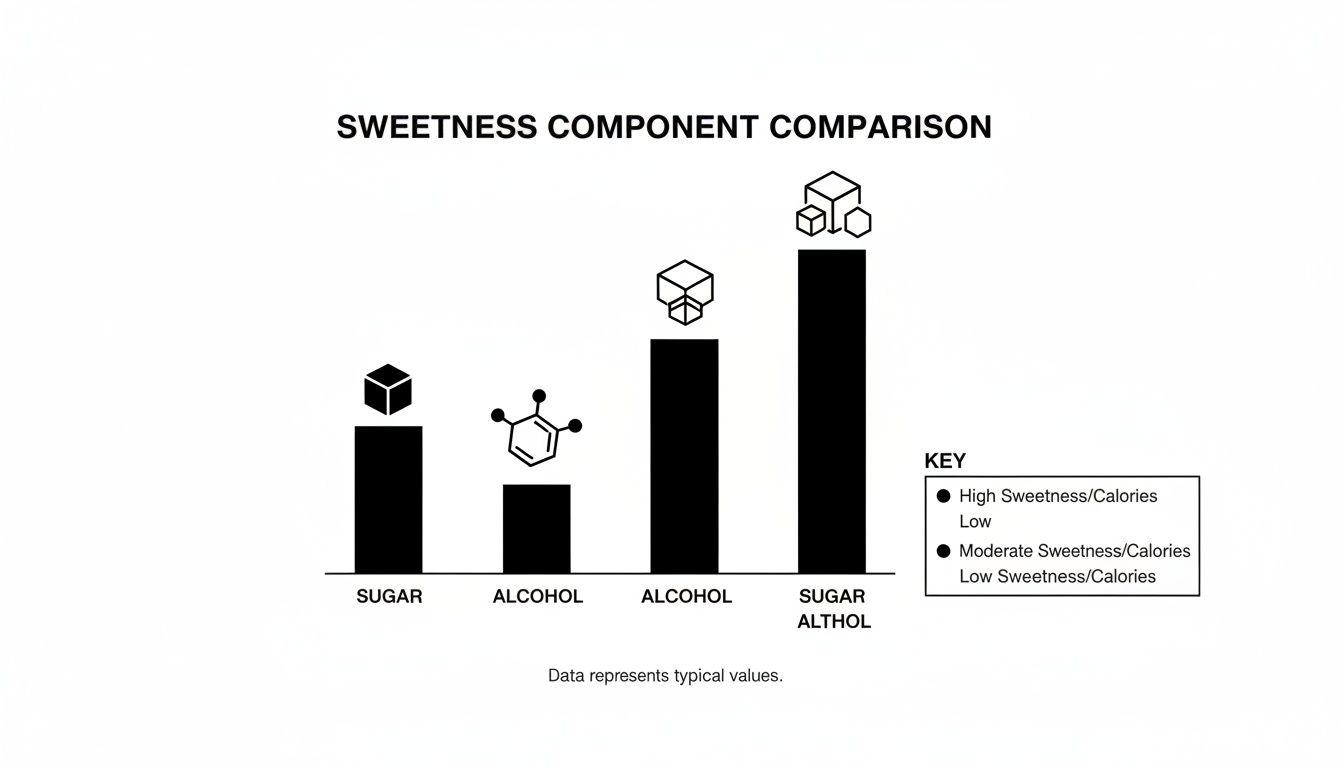
As you can see, they aren't quite sugar and they aren't the kind of alcohol you drink. They occupy a special middle ground that makes them incredibly useful.
More Than Just Sweeteners
Sugar alcohols are true multi-taskers in the food world. Beyond adding sweetness, they help create texture and retain moisture, which are key to making a snack with a great mouthfeel and a decent shelf life.
For example, an ingredient like sorbitol is a secret weapon in bakeries because it keeps products soft and stops them from drying out. This versatility makes sugar alcohols invaluable for creating top-tier snacks that don't compromise on quality.
The choice of a specific sugar alcohol always comes down to the desired outcome. A manufacturer might choose erythritol for a keto cookie to keep net carbs minimal, while another might select sorbitol for a chewy granola bar to ensure it stays perfectly moist.
This kind of smart, strategic ingredient selection is exactly how brands like Rip Van can craft delicious snacks that deliver on both taste and health goals.
How Sugar Alcohols Stack Up Against Other Sweeteners
Walking down the sweetener aisle can feel like a pop quiz you didn't study for. You’ve got table sugar, artificial sweeteners, and then this other category: sugar alcohols. So, where do they actually fit in? Knowing how they differ is the key to making smarter choices for your health.
The main difference isn't just taste—it's their basic chemical structure and the way our bodies handle them. Sugar alcohols are a unique kind of carbohydrate. They aren't a sugar, and they aren't a man-made chemical. This is the foundation for all their distinct qualities.
Sugar Alcohols vs. Table Sugar
Put a sugar alcohol next to good old sucrose (table sugar), and the differences become immediately clear, especially when it comes to your health.
-
Calorie Count: Regular sugar is calorically dense, packing 4 calories per gram. Sugar alcohols give you a serious discount. Erythritol, for example, has just 0.24 calories per gram, which is a huge help if you're managing your calorie intake.
-
Blood Sugar Impact: This is the big one. Sugar sends your blood glucose on a rollercoaster. Because sugar alcohols aren't fully absorbed by the body, their impact is much gentler, leading to a slower, smaller rise in blood sugar that's far easier to manage.
-
Dental Health: The bacteria in our mouths that cause cavities absolutely thrive on sugar. But here's the cool part: those same bacteria can't digest sugar alcohols. This means sugar alcohols don't contribute to tooth decay—a clear win for your smile.
Sugar Alcohols vs. Artificial Sweeteners
Then you have the artificial sweeteners—think aspartame, sucralose, and saccharin. They're a popular alternative, but they play by a completely different set of rules than sugar alcohols.
The real contrast boils down to two things: where they come from and how sweet they are. Most sugar alcohols are derived from natural sources like fruits and vegetables, while artificial sweeteners are synthetic compounds created in a lab.
Artificial sweeteners are also incredibly potent, often 200 to 700 times sweeter than sugar. You only need a tiny pinch, but this intensity can leave behind a distinct chemical aftertaste that many people find off-putting.
Sugar alcohols, on the other hand, tend to provide a clean sweetness that’s much closer to actual sugar, just a bit less intense. This natural profile and familiar taste are why many people prefer them over the synthetic feel of artificial options. Once you understand what sugar alcohol is in food, you start to see why it offers such a balanced approach to sweetness.
What Do Sugar Alcohols Mean for Your Health and Digestion?
When you’re trying to figure out what sugar alcohols in food mean for your body, it’s really a tale of two different stories. On one hand, the benefits for your blood sugar and dental health are overwhelmingly positive. On the other, there's a digestive component that requires a bit more personal awareness.
Let's break down what's happening inside.
The biggest win here is their gentle impact on blood sugar. Since our bodies don’t fully absorb them, they sidestep the sharp glucose and insulin spikes you get from regular sugar. This quality makes them an incredible tool for anyone managing diabetes or simply trying to follow a low-glycemic diet.
This benefit is a huge reason why you see them in so many snacks nowadays. Consider the global health trends: experts estimate that diabetes cases could soar to nearly 700 million worldwide by 2045. As more people actively look for diabetic-friendly options, ingredients like erythritol—which doesn't need insulin to be metabolized—have become staples in creating a healthier snack aisle.
The Good News for Your Smile
Here's another clear advantage: sugar alcohols are great for your teeth. The nasty bacteria in your mouth that love to feast on sugar and cause cavities can't really do anything with sugar alcohols.
This tooth-friendly quality is exactly why you'll often find them in products like:
- Sugar-free gum and mints: Xylitol is the star player here, as it's been shown to actively help prevent tooth decay.
- Children's snacks and candies: They offer a way to get that sweet taste without contributing to a mouthful of dental problems down the road.
The Digestive Side of the Story
Now, let's talk about digestion. Because sugar alcohols aren't completely absorbed in the small intestine, they continue their journey into the large intestine. There, they get fermented by your gut bacteria, which can draw extra water into your gut.
For some people, this process can lead to some uncomfortable side effects, especially if you eat a lot at once. Think bloating, gas, or even a laxative effect. It’s not unlike what might happen if you suddenly eat a massive bowl of a high-fiber food your body isn't used to.
It's crucial to remember that digestive tolerance is highly individual. What affects one person might not bother another at all. Your personal sensitivity often comes down to the specific type of sugar alcohol and how much of it you eat.
For example, erythritol is widely considered the easiest on the digestive system. Most of it gets absorbed into the bloodstream and then simply excreted, bypassing the gut fermentation party altogether. On the other end of the spectrum, sugar alcohols like sorbitol and maltitol are more likely to cause some rumbling in sensitive individuals.
Ultimately, the key is moderation and listening to your body. If you're new to sugar alcohols, start with small amounts to see how you feel and pay attention to which types agree with you most. Understanding this balance lets you enjoy the perks of lower sugar without any unwanted surprises. If you're managing diabetes, you might also find our guide to finding delicious low-sugar cookies helpful.
How to Spot Sugar Alcohols on a Nutrition Label
Getting the hang of reading nutrition labels is simpler than you might think. If you're wondering what sugar alcohol is in your food, you just need to know where to look. They aren't exactly hidden, but they do have their own dedicated spot on the nutrition facts panel.
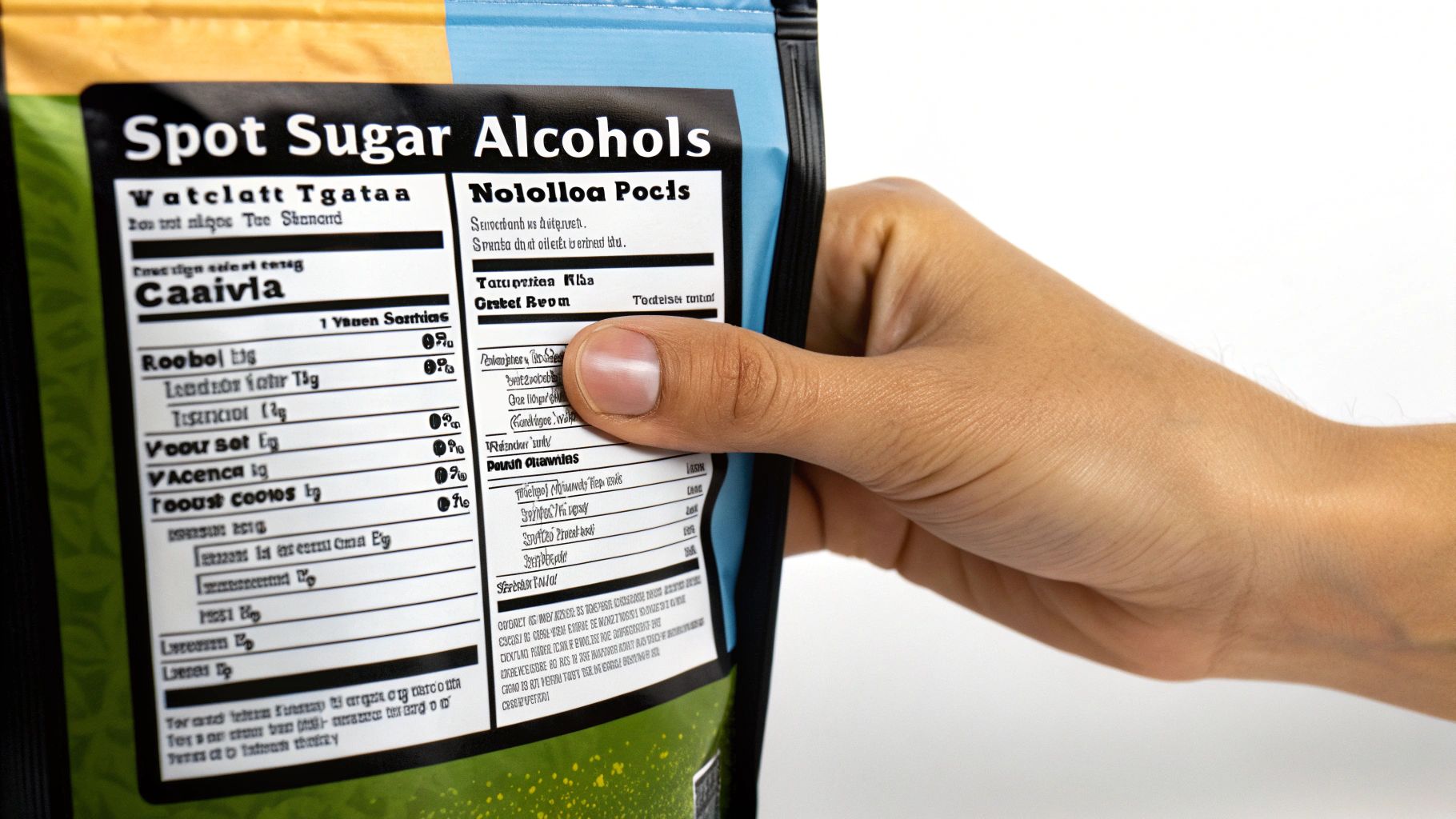
You’ll find sugar alcohols listed as a separate line item, tucked right under Total Carbohydrates. This isn't by accident. Because they are a type of carbohydrate but don't act like regular sugar in the body, the FDA requires them to be called out separately. This way, you can make a more informed choice.
But the nutrition panel only gives you part of the picture. For the full story, flip the package over and scan the ingredients list. This is where you'll find the specific names of the sugar alcohols used, like erythritol, sorbitol, or xylitol.
Calculating Net Carbs: A Keto Essential
For anyone on a keto or low-carb diet, the concept of "net carbs" is everything. When you're scanning labels on products marketed as 'sugar-free' or 'low-carb,' having a practical guide to understanding net carbs is a game-changer, since sugar alcohols get special treatment in the carb-counting world.
Put simply, net carbs are just the carbohydrates your body actually digests and turns into glucose. Since most sugar alcohols are only partially absorbed, you can often subtract them from the total carb count to get a more accurate picture.
The Net Carb Formula: Total Carbohydrates - Dietary Fiber - Sugar Alcohols = Net Carbs
Let's break it down with a quick, real-world example. Say you pick up a snack bar and the label says:
- Total Carbohydrates: 20g
- Dietary Fiber: 5g
- Sugar Alcohols: 10g
Using the formula, the math is straightforward: 20g (Total Carbs) - 5g (Fiber) - 10g (Sugar Alcohols) = 5g Net Carbs. Suddenly, a snack that looked like a carb-bomb is actually a perfect fit for a low-carb day. If you're looking for more treats that fit the bill, we've got a great guide to delicious low-sugar snack bars.
Once you master this simple trick, you can confidently look past the flashy marketing on the front of the box. You'll know exactly how a food will impact your body, which makes navigating the grocery store a whole lot less confusing.
Making Smart Choices in the Snack Aisle
Now that you're armed with the facts about sugar alcohols, you can walk down the snack aisle with a whole new level of confidence. These sweeteners are a fantastic way to slash your sugar intake without giving up the simple pleasure of a satisfyingly sweet treat. It all comes down to making smart choices that actually fit your health goals.
Whether you're deep into a keto lifestyle, carefully managing your blood sugar, or just trying to eat less sugar, the nutrition label is your best friend. Don't fall for the flashy claims on the front of the box. Flip it over and play detective with the ingredients list. This is where the real story is—you'll see exactly which sugar alcohols are being used and can decide if it's the right product for you.
Your Quick Snack-Evaluation Checklist
Next time a snack catches your eye, run it through this quick mental checklist. It’ll help you figure out if it's a good fit.
- Check the Sugar Alcohol Type: Are you looking at something with erythritol, known for its gentle impact on digestion and blood sugar? Or is it maltitol, which can have a more noticeable effect? Knowing the difference is key.
- Calculate the Net Carbs: This is the magic number for anyone on a low-carb or keto diet. Just remember the simple formula: Total Carbs - Fiber - Sugar Alcohols = Net Carbs.
- Review the Serving Size: Pay attention to how much you're actually eating. A single cookie might sit perfectly fine, but downing three or four could be a different story for your digestive system.
This kind of informed decision-making is changing the food industry for the better. Sugar alcohols are now a cornerstone of the booming "better-for-you" snack market, driven by people like you demanding smarter, low-glycemic alternatives to sugar. And this isn't just a trend; the market is expected to keep growing as more of us put our health first. You can dig into the numbers and see just how big this shift is in the global sugar alcohol market report on StraitsResearch.com.
The goal isn't just to find a low-sugar snack; it's to find one that's genuinely delicious and truly better for you. When you look past the marketing hype and read the label for yourself, you can pick treats that actually support your well-being.
Making smart choices doesn't mean you have to give up the snacks you love. It just means choosing better versions of them. For a deeper dive, check out our guide on what makes a great low-sugar snack.
Frequently Asked Questions About Sugar Alcohols
Even after getting the basics down, a few specific questions about sugar alcohols always seem to pop up. Let's tackle some of the most common ones so you can feel completely confident when you're reading those ingredient labels.
Are Sugar Alcohols Safe for Children and Pets?
For kids, the answer is generally yes, but with a big dose of "in moderation." Because their bodies are smaller, children can be more sensitive to the digestive side effects we talked about earlier. If you're introducing snacks with sugar alcohols, it's a good idea to start slow and see how they tolerate them.
For pets, it's a completely different and much more serious story. Xylitol is extremely toxic to dogs. It can trigger a sudden, dangerous drop in their blood sugar and can even lead to liver failure. You should never, ever share food containing xylitol with your dog—always double-check the ingredients on any "sugar-free" product before it gets anywhere near them.
Do Sugar Alcohols Kick You Out of Ketosis?
This is the big question for anyone on a keto diet, and the good news is that most sugar alcohols won't interfere with ketosis. Since your body doesn't absorb all the carbs from them, they usually have a very small impact on blood sugar and insulin.
Erythritol is the rockstar of the keto world because it has a glycemic index of zero. But keep an eye out for others like maltitol, which has a higher glycemic index and could nudge your blood sugar a bit more. It really pays to know which specific sugar alcohol you're eating.
Why Do Some Sugar-Free Products Taste So Sweet?
It all comes down to a bit of culinary science. Sugar alcohols aren't all created equal when it comes to sweetness. Erythritol, for example, is only about 70% as sweet as table sugar, while xylitol is a dead ringer with a one-to-one sweetness match.
To get that satisfying, sugar-like taste without any weird aftertaste, food creators often blend different types of sugar alcohols. They might also pair them with other natural, zero-calorie sweeteners like stevia or monk fruit. This careful balancing act is how they nail that perfectly sweet flavor we all crave.
Finding snacks that master this sweet science can make all the difference. At Rip Van, we carefully select our ingredients to create delicious, low-sugar treats that satisfy your cravings without compromise. Explore our collection of better-for-you snacks at https://ripvan.com.
0 comments