

Trying to find a truly healthy snack bar can feel like you're on a wild goose chase. But here's the secret: the best ones keep it simple. They focus on low sugar, high fiber, and a short list of ingredients you can actually recognize. The goal is sustained energy, not a sugar rush followed by a crash.
Navigating the Modern Snack Aisle
Walking down the snack aisle these days is overwhelming. The bright packaging and bold health claims can be dizzying. Every box seems to shout "all-natural," "high-protein," or "gluten-free," but these buzzwords often mask a less-than-healthy reality. Your search for a genuinely good-for-you snack is a modern-day treasure hunt, and you need a map to find the prize.
Think of the nutrition label and ingredient list as your map. The key landmarks—like sugar content, fiber grams, and the first few ingredients—are the clues that will lead you in the right direction. Without knowing how to read them, it's all too easy to get lost.
Why Health Claims Can Be Misleading
Let's be honest: many popular snack bars are just candy bars in clever disguises. A bar might brag that it's "made with real fruit," but a quick look at the ingredients shows high-fructose corn syrup is listed first. Another might highlight its protein content while conveniently forgetting to mention it also packs over 20 grams of added sugar. This is exactly why you have to learn to see past the flashy marketing.
The demand for better options is exploding. The global healthy snacks market was valued at USD 95.56 billion and is on track to hit USD 122.18 billion by 2032. This growth is fueled by busy professionals and health-conscious families who need convenient nutrition that doesn't compromise on taste. You can discover more insights on the expanding healthy snack market and what it means for shoppers.
Your goal is simple: find a snack that fuels your body and satisfies your craving without the hidden downsides. This means becoming an ingredient detective and a sugar sleuth.
The Core Principles of a Healthy Bar
To find the best options, you need to shift your focus from the flashy claims on the front of the box to the hard facts on the back. The core principles are refreshingly straightforward and will empower you to make much smarter choices.
Focus on these three pillars:
- Low Sugar: Aim for bars with as little added sugar as possible. This helps you dodge those dreaded energy spikes and crashes.
- High Fiber: Look for at least 3-5 grams of fiber. Fiber helps you feel full longer and is fantastic for your digestive health.
- Whole Ingredients: The ingredient list should be short and sweet, featuring real foods you know, like nuts, seeds, and whole grains.
Once you get these fundamentals down, you can walk into any grocery store and confidently pick a bar that actually supports your health. This guide will give you the tools you need to do just that.
What Actually Makes a Snack Bar Healthy?
Trying to figure out what makes a snack bar genuinely healthy can feel like you’re decoding a secret language. Flashy labels will promise you everything from "all-natural" goodness to "guilt-free" indulgence, but the real story is always hiding on the back of the package. A truly healthy bar isn’t defined by marketing buzzwords; it's defined by the quality and balance of what’s inside.
To find the best options, you have to become a bit of an ingredient detective. Think of it like building a campfire. You need the right kind of fuel to create sustained energy—not a quick flash that burns out in an instant. This means we need to look closely at five key elements: sugar, fiber, protein, healthy fats, and the overall ingredient list itself.
Sugar: The Quick-Burning Kindling
Sugar is the simplest form of energy your body can use, but it's basically kindling for your internal fire. You get a big, fast flame—that familiar sugar rush—but it vanishes just as quickly, leaving you with an energy crash. Unfortunately, many snack bars are absolutely loaded with added sugars like high-fructose corn syrup or cane sugar, which makes them more like candy bars in disguise.
A genuinely healthy snack bar keeps added sugar to a minimum. A good rule of thumb is to aim for bars with under 10 grams of total sugar, and ideally, less than 5 grams of added sugar. This ensures you're getting a nice energy boost without the inevitable slump that follows a sugar bomb.
Fiber: The Slow-Burning Log
If sugar is the kindling, then fiber is the slow-burning log. It’s what provides that steady, long-lasting energy that keeps you feeling full and satisfied for hours. Fiber slows down digestion, which is crucial for stabilizing blood sugar levels and preventing those sharp energy spikes and crashes.
When you're scanning labels, look for bars that contain at least 3-5 grams of dietary fiber. Fiber is a powerhouse for digestive health and a clear signal that the bar is made from whole-food ingredients like nuts, seeds, oats, or chicory root. A high-fiber content is one of the most reliable clues you’ve found a great snack.
A simple rule of thumb: The fiber content should be a significant fraction of the carbohydrate content. This balance is key to ensuring the bar provides sustained energy rather than a quick sugar hit.
This guide is a simple map for navigating the key nutritional landmarks to look for when choosing your next snack.
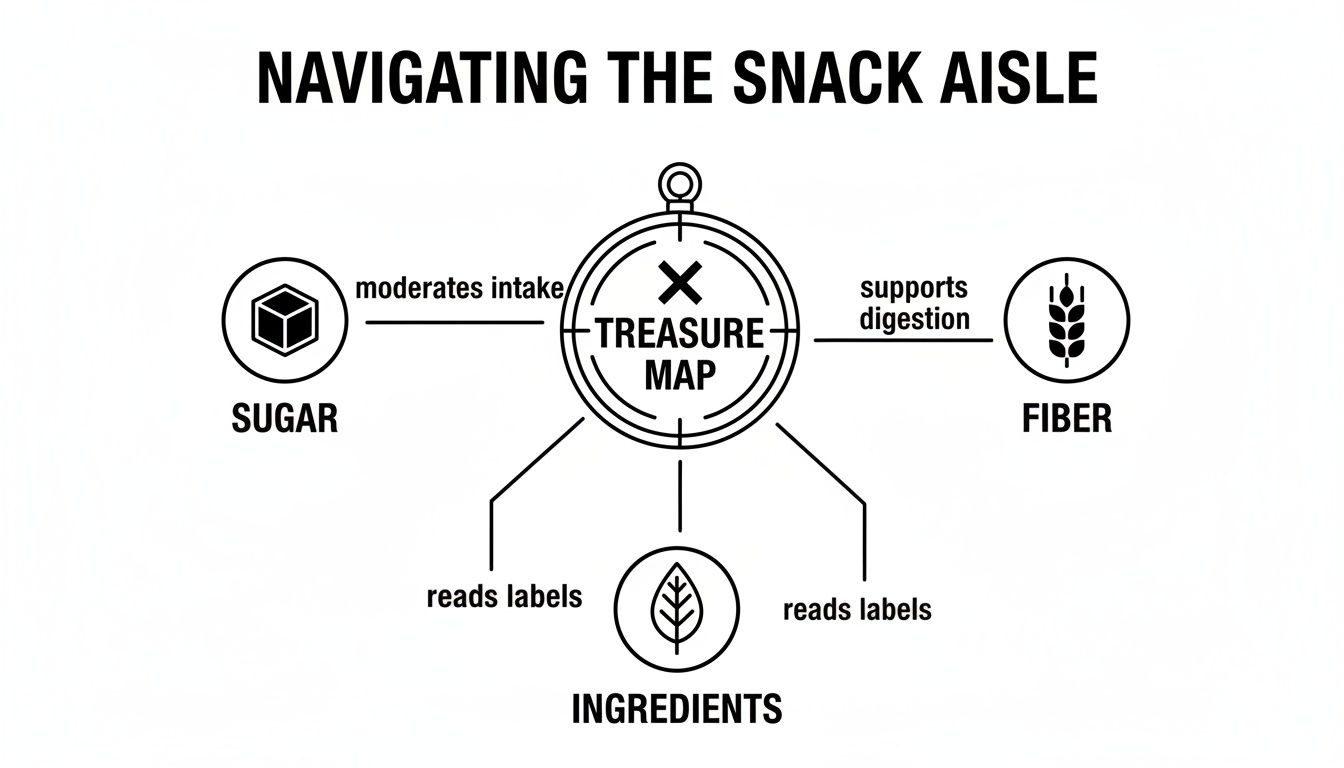
As you can see, prioritizing fiber and whole ingredients while keeping an eye on sugar is the most direct path to finding a truly nutritious option.
Protein and Fats: The Foundation for Fullness
Protein and healthy fats are the other critical pieces of the satiety puzzle. They work right alongside fiber to help you feel full and keep hunger from creeping back in. Protein is also essential for muscle repair, making it a valuable component if you're grabbing a bar after a workout.
Don’t be afraid of fats, as long as they come from healthy sources like nuts and seeds. These provide long-term energy and support your overall health.
- Protein: Aim for at least 5-10 grams of protein to help keep you satisfied.
- Fats: Look for whole-food sources like almonds, cashews, or sunflower seeds. These are the good guys.
This powerful trio—protein, fat, and fiber—is what separates a snack that actually tides you over from one that leaves you rummaging through the pantry thirty minutes later.
The All-Important Ingredient List
Finally, we get to the ingredient list—the ultimate source of truth. A shorter list is almost always better, especially when you can recognize and actually pronounce everything on it. If the very first ingredient is a type of sugar or a processed syrup, put it back on the shelf.
The best healthy snack bars lead with whole foods like nuts, oats, or seeds. You'll want to steer clear of bars with a long list of artificial sweeteners, preservatives, and unpronounceable chemicals. It’s also worth remembering that a snack bar's health benefits depend on its overall product integrity, which ensures its quality is maintained from the factory to your hands. By prioritizing clean, simple ingredients, you can be confident you’re fueling your body with real food, not a science experiment.
To make this even easier, here’s a quick-glance table to help you spot the good from the not-so-good when you’re in the snack aisle.
Healthy Snack Bar Nutritional Checklist
| Nutrient | What to Look For (The Ideal) | What to Avoid (The Red Flag) |
|---|---|---|
| Total Sugar | < 10g | 15g+ (especially from added sources) |
| Added Sugar | < 5g | First or second ingredient is sugar/syrup |
| Fiber | 3-5g or more | Less than 2g |
| Protein | 5-10g or more | Minimal protein, relying only on carbs |
| Fats | Sourced from nuts, seeds, and whole foods | High in saturated or trans fats |
| Ingredients | Short, recognizable, whole-food list | Long list with artificial additives/preservatives |
Keep these targets in mind, and you'll have no trouble separating the truly healthy options from the candy bars in clever packaging.
Reading Nutrition Labels Like an Expert
Alright, you know what to look for in a healthy snack bar in theory. But how do you apply that knowledge in the wild, standing in the middle of a grocery aisle? The secret is learning how to decode the nutrition facts panel—it's the only way to know the real story behind a snack's flashy packaging.
Think of it like learning to read a secret code. Once you get the hang of it, no clever marketing slogan can fool you.
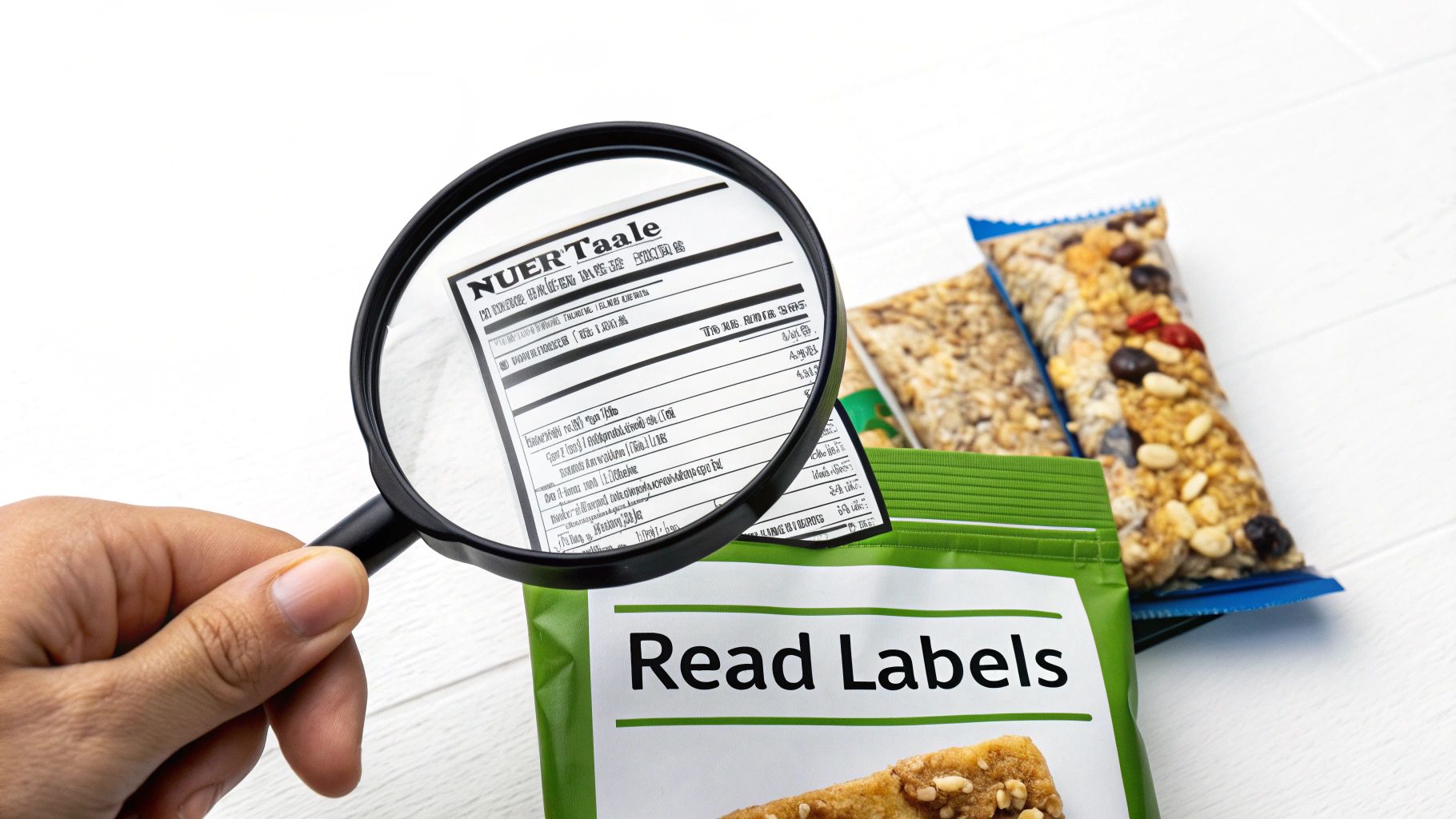
The label has a ton of information, but you don't need to get bogged down in every detail. If you focus on just a few key spots, you can quickly tell if a bar is a genuinely good choice or just a candy bar wearing a health halo. Let’s break it down into a simple, three-step process.
Step 1 Start with Serving Size
Before you even think about calories, look straight at the serving size. This is where food companies can get a little sneaky. That bar might look like a single-serving snack, but the label could tell you it's actually meant to be two.
For instance, a bar might proudly state it has only 10 grams of sugar. Sounds pretty good, right? But if the serving size is "half a bar," you'll actually be eating 20 grams of sugar if you finish the whole thing. Always check this first to make sure you’re looking at numbers that reflect what you'll actually eat.
Step 2 Scan for Sugar and Fiber
With the real serving size in mind, your next stop is to find two of the most revealing numbers on the panel: Added Sugars and Dietary Fiber. These two metrics tell you almost everything you need to know about how that bar is going to make you feel.
- Added Sugars: This specific line is your best friend. It separates the natural sugars found in whole foods (like dates or apples) from the refined stuff dumped in during production. Aim for a bar with less than 5 grams of added sugar.
- Dietary Fiber: Now, find the fiber. You want to see at least 3 grams, but honestly, the more the better. Fiber is what slows down digestion and keeps you from feeling hungry again 30 minutes later.
A truly healthy bar will always have a low number for added sugar and a high number for dietary fiber. This simple ratio is a powerful indicator of a bar that provides sustained energy rather than a quick, fleeting rush.
Just by comparing these two values, you get an immediate sense of the bar's quality. This quick check helps you find the best healthy snack bars without getting lost in the weeds.
Step 3 Scrutinize the Ingredient List
Last but not least, flip the package over and find the ingredient list. Think of this as the bar's biography—it tells you exactly what it's made of, in order from the most prominent ingredient to the least.
If sugar, corn syrup, or one of its many disguises (like dextrose, fructose, or agave nectar) is listed in the top three spots, put it back. That's a huge red flag. The best bars will have whole foods like nuts, oats, or seeds right at the top of the list.
Look for a list that is short, simple, and full of words you can actually pronounce. This kind of transparency is a great sign of a brand that cares about quality. For example, Rip Van is all about transparent labeling, proudly showcasing a commitment to low sugar and no artificial sweeteners. If you want to dive deeper, you can learn more about finding great low-sugar snack bars that still taste amazing.
By following these three simple steps—check the serving size, compare sugar to fiber, and read the ingredients—you'll be able to read any nutrition label with confidence. You'll be empowered to see right past the marketing fluff and choose a snack that truly fuels your body well.
Finding the Right Bar for Your Diet
Let's be honest, choosing the "best" healthy snack bar isn't a one-size-fits-all deal. What works for a marathon runner gearing up for a race is going to be completely different from what someone on a keto diet needs. The perfect bar for you depends entirely on your personal health goals and dietary needs.
Think of your diet as the ultimate filter. When you align your snack choice with your lifestyle, it becomes a tool that helps you move forward, not a temptation that sets you back. Whether you're counting carbs, ditching gluten, or sticking to plant-based foods, there’s a bar out there that fits the bill. The trick is knowing what to look for on that crowded shelf.
This need for specialized nutrition isn't just a niche trend; it's reshaping the entire market. The snack bar industry was already a massive USD 29.59 billion business globally and is projected to hit USD 44.25 billion by 2030. What’s driving that explosive growth? It's people like you, demanding convenient, nutrient-packed options that cater to specific ways of eating. You can read more about the snack bar market's impressive trajectory to see just how much consumer preferences are shaking things up.
Low-Carb and Keto-Friendly Bars
If you’re following a ketogenic or low-carb lifestyle, your main goal is to keep carbs to a minimum so your body starts burning fat for fuel. This means you have to become a bit of a label detective, looking beyond just the "total carbohydrates" line. The number you really care about is net carbs.
Net carbs are the ones your body actually digests and converts into energy. The calculation is pretty straightforward: just subtract the fiber and sugar alcohols from the total carb count.
Net Carb Calculation:
Total Carbohydrates - Dietary Fiber - Sugar Alcohols = Net Carbs
For a bar to be truly keto-friendly, you’ll want to see 5 grams of net carbs or less. The ingredient list is just as important. The best options are built on a foundation of healthy fats and quality protein from sources like nuts, seeds, and clean protein powders.
Be on the lookout for bars that contain:
- Hidden sugars like maltodextrin that can mess with your blood sugar.
- High-carb fillers such as oats, dates, or tapioca starch.
- Too much protein without enough fat, which can actually kick you out of ketosis.
For instance, Rip Van’s Keto Wafels were made with exactly this in mind. They clock in at only 3g of net carbs, giving you that sweet, crispy treat you crave without wrecking your progress.
Gluten-Free Snacking Solutions
For anyone avoiding gluten—whether due to celiac disease, a sensitivity, or just personal preference—vetting ingredients is non-negotiable. Gluten is a protein found in wheat, barley, and rye, and it has a sneaky way of showing up in binders, coatings, and flavorings.
Your first line of defense is a certified "Gluten-Free" seal on the package. This is your assurance that the product has been tested and meets strict government standards. It’s a real peace-of-mind thing.
Beyond that certification, a truly great gluten-free bar will be made from whole-food ingredients that are naturally gluten-free anyway.
- Look For: A simple list of ingredients like nuts, seeds, certified gluten-free oats, quinoa, and fruit. These provide the fiber, protein, and healthy fats you want.
- Watch Out For: Vague terms like "starches" or "natural flavors" that could be hiding gluten. A clear, transparent label is your best friend here.
Plant-Based and Vegan Bars
If you're living a plant-based or vegan lifestyle, you're looking for bars that contain absolutely no animal-derived ingredients. That means no obvious dairy or meat, but also none of the less-obvious stuff like honey, collagen, or certain proteins.
The protein source is usually the dead giveaway. A good vegan bar will use high-quality, plant-derived proteins to keep you full and energized.
- Excellent Plant Protein Sources: Pea protein, brown rice protein, hemp protein, and of course, protein from whole nuts and seeds.
- Ingredients to Avoid: Whey and casein (which come from dairy), collagen, and honey.
A well-made vegan bar proves you don't need animal products to get a solid dose of protein and fiber. Many of Rip Van’s products, like their Dutch-style wafels and cookies, are vegetarian and made without any artificial junk, making them a solid choice for anyone focused on clean, plant-forward ingredients. For more tips, check out our guide on high-fiber, low-carb snacks that can work for all sorts of eating plans.
Why Rip Van Offers a Smarter Snacking Experience
Once you know how to read the labels and navigate the snack aisle, the final step is finding a brand that actually delivers. You want a company whose entire philosophy matches your health goals, so you don't have to second-guess every purchase. This is where Rip Van comes in. They aren't just another product on the shelf; they were created to solve this exact problem.
Rip Van was founded on a simple but powerful idea: you shouldn’t have to choose between a satisfying treat and a healthy snack. They’ve built their entire company around creating snacks that feel indulgent but are intelligently crafted, striking a balance that most brands miss.
A Commitment to Clean Ingredients
At the heart of it all is a deep respect for clean, simple ingredients you can actually recognize. Forget the chemistry experiments. Instead of loading their products with high-fructose corn syrup or a laundry list of artificial additives, they stick to natural, non-GMO components. It’s a clean-label approach that gives you all the flavor without any of the junk.
This matters more than ever. The global demand for healthier snacks is exploding—the market was valued at USD 102.1 billion and is expected to hit USD 163.96 billion by 2032. This isn't a fluke; it's driven by people just like you. In fact, over 60% of consumers are actively looking for better-for-you options that don't compromise on taste. You can see for yourself how healthy snack market trends are reshaping the food industry.
The Rip Van promise is straightforward: create snacks with significantly less sugar and a good dose of fiber, so you can enjoy a delicious treat that works with your body, not against it.
This dedication to quality is just the start of what makes their snacks so different.
Low Sugar and High Fiber by Design
Let’s be honest, most snack bars are just candy bars in disguise. They’re packed with sugar and have barely any fiber, which is the perfect recipe for an energy spike followed by a hard crash. Rip Van deliberately flipped this formula on its head. Their snacks are designed from the ground up to be incredibly low in sugar—often with just 3 grams—while still being a good source of fiber.
This isn't a happy accident; it's the core of their entire product design.
- No Artificial Sweeteners: They manage to create a satisfyingly sweet taste without resorting to artificial sweeteners and their potential side effects.
- No Corn Syrup: You will never find high-fructose corn syrup on their ingredient lists. Period.
- Fiber for Fullness: The added fiber is key. It slows down digestion, giving you sustained energy and helping you feel full and satisfied for longer.
This thoughtful nutritional profile is what makes Rip Van a truly smarter choice for anyone trying to maintain stable energy levels throughout their busy day. You can learn more about the Rip Van mission and see how this guiding principle shapes everything they create.
A Customer-First Snacking Partner
Finally, Rip Van proves they're serious by making the whole experience easy and trustworthy. They get that finding the right snack is personal, which is why they stand behind their products with a 100% satisfaction 'Royal Guarantee.' If you don’t absolutely love what you ordered, they’ll make it right.
To make things even better, they offer free shipping on qualifying U.S. orders, removing any hassle from stocking up on your favorites. This kind of customer-first thinking shows they’re not just trying to sell a product. They’re building a relationship with people who want and deserve better options, making them a reliable partner in your journey toward healthier snacking.
Common Questions About Healthy Snack Bars
Even when you know what to look for, the snack aisle can be a confusing place. It's packed with flashy labels and clever marketing designed to make you think you're making a healthy choice. Let's tackle some of the most common questions that come up so you can feel confident in your decisions.
Think of this as your final check-in before you shop. We'll clear up any lingering doubts and make sure you’re ready to pick a snack bar that genuinely fits your health goals.
Are Granola Bars Actually Healthy?
This is probably the biggest trap in the entire snack aisle. Many traditional granola bars are little more than candy bars in disguise, packed with as much sugar and refined carbs as a dessert. The word "granola" itself has a "health halo" that often misleads people.
The only way to know for sure is to ignore the claims on the front of the box and flip it over. Look at the "Added Sugars" line—that's your first clue. A truly good-for-you bar will also have at least 3-5 grams of fiber and list a whole food, like oats or nuts, as the very first ingredient. If sugar, corn syrup, or rice flour is near the top of the list, put it back.
How Much Sugar Is Too Much for a Snack Bar?
When it comes to sugar, less is always better. As a general rule, try to stick to bars with under 10 grams of total sugar. But the most important number to watch is the "Added Sugar"—ideally, this should be less than 5 grams.
There's a big difference between the natural sugars from ingredients like dates and the added sugars from high-fructose corn syrup or cane sugar. Some bars on the market have a shocking 20+ grams of sugar, which will send your energy levels on a rollercoaster ride. This is where brands like Rip Van really get it right, keeping sugar as low as 3 grams without resorting to artificial sweeteners.
Remember: A healthy snack is supposed to give you steady, sustained energy. A sugar bomb does the opposite, causing a quick spike followed by a crash that leaves you feeling hungry again almost immediately.
What Should I Look For in a Bar for Weight Loss?
If weight loss is your goal, your snack bar has one primary job: to keep you feeling full and satisfied. This feeling, known as satiety, is crucial for preventing overeating later in the day. You aren't just looking for low calories; you're looking for a snack that works for you.
The key is finding a bar with a powerful combination of fiber and protein. This duo slows down digestion and keeps hunger pangs away.
- Target Fiber: Look for at least 3-5 grams of fiber.
- Target Protein: Aim for 5-10 grams of protein.
Of course, calories still matter. A good snack should fall somewhere between 150-250 calories. Steer clear of bars that are high in calories but low in fiber and protein—those are just "empty" calories that won't do you any favors.
Can I Use a Protein Bar as a Meal Replacement?
It might be tempting to grab a bar and call it lunch, but this usually isn't a great idea. Most snack and protein bars simply aren't designed to provide the complete nutrition your body needs from a proper meal.
A true meal replacement bar is specifically formulated with a balanced mix of protein, carbs, and fats, and it's often fortified with a wide range of vitamins and minerals. They’re also much higher in calories, usually in the 300-400 calorie range, to actually stand in for a meal.
A healthy snack bar is meant to be just that—a snack to bridge the gap between meals. Relying on one to replace breakfast, lunch, or dinner could leave you with nutritional gaps and, frankly, feeling hungry pretty quickly. Whenever you can, stick to whole, balanced meals.
With these answers in hand, you’re ready to conquer the snack aisle. For a smarter snacking experience that consistently delivers on low sugar, high fiber, and delicious taste, explore the options from Rip Van.