

When you think of a "high-fiber snack," what comes to mind? If it's something bland or boring, it's time for a new perspective. The best healthy snacks with fiber are delicious, grab-and-go options made from whole foods. They’re designed to boost your daily fiber intake, which does wonders for your digestion and helps you feel satisfied for hours.
Think of them as your secret weapon for all-day energy. Instead of reaching for a sugary, empty-calorie snack that will leave you crashing later, you get a nutrient-dense choice that actually supports your body and your goals.
Why High-Fiber Snacks Are Your Secret Weapon for Health
Let's get real about fiber. It’s not just some dry number on a nutrition label; it's more like your digestive system’s personal trainer, working quietly in the background to keep you feeling fantastic. Once you understand why these snacks are so powerful, you’ll be able to make smarter, more satisfying choices that truly fuel your day.
The real magic of fiber comes from its two different types—a dynamic duo working in tandem for your health.
The Two Types of Essential Fiber
First up is soluble fiber. Imagine it as a gel-like sponge. When it encounters water in your stomach, it swells up and slows down the whole digestive process. This is the key to feeling full and satisfied long after you've eaten, which is a game-changer for managing hunger and weight.
Then you have insoluble fiber. Picture this one as a gentle broom for your digestive tract. It doesn't dissolve in water. Instead, it adds bulk to help move everything along smoothly, promoting regularity and keeping your gut environment happy.
A truly effective high-fiber snack has a healthy mix of both, ensuring you reap all the rewards. It's this powerful combination that makes these snacks so good at stopping that dreaded afternoon energy crash in its tracks.
By slowing down digestion and the absorption of sugar, fiber gives you a steady, sustained release of energy. That means you can finally say goodbye to the sharp energy spikes and miserable crashes that come from sugary, low-fiber snacks.
The Real-World Benefits You Can Feel
Bringing more high-fiber snacks into your routine isn’t just about hitting a nutritional target—it’s about making a noticeable difference in how you feel every single day. People are catching on, too. The global market for high-fiber snacks was valued at a whopping USD 28.4 billion and is expected to climb to USD 76.3 billion by 2035. This huge jump shows that busy people everywhere are looking for convenient options that don't force them to sacrifice their health.
Here’s a look at what you can expect when you make the switch.
Key Benefits of High Fiber Snacking at a Glance
The advantages of adding more fiber to your snack time are tangible and far-reaching. This table breaks down the core benefits in a simple way.
| Benefit | How Fiber Helps | Real-World Example |
|---|---|---|
| Sustained Energy | Slows sugar absorption, preventing sharp spikes and crashes in blood glucose. | Eating a high-fiber stroopwafel helps you power through the 3 p.m. slump at work. |
| Weight Management | Makes you feel full and satisfied for longer, reducing the urge to overeat or snack mindlessly. | A handful of almonds keeps you from raiding the vending machine between meals. |
| Improved Gut Health | Promotes regularity and feeds the good bacteria in your gut, supporting overall wellness. | Snacking on berries with yogurt helps maintain a healthy and balanced digestive system. |
Ultimately, choosing snacks with a good fiber content is a simple yet powerful way to invest in your long-term health and daily well-being.
Brands like Rip Van have absolutely nailed this formula, creating incredibly tasty and convenient snacks that are loaded with fiber but surprisingly low in sugar. They’re a perfect example of how you can satisfy a craving while making a choice your body will thank you for. This simple swap is one of the easiest and most effective ways to support your health goals.
How to Become a High-Fiber Snack Detective
Stepping into the snack aisle can feel overwhelming. With flashy packaging and bold health claims everywhere, how do you find the snacks that are genuinely good for you? The secret is to ignore the marketing on the front and get straight to the facts on the back.
Think of yourself as a detective, and the nutrition label is your main clue. It's a skill that's easier to master than you think. Once you know the three key things to look for, you'll be able to spot the real winners in seconds.
Step 1: Pinpoint the Fiber Content
First things first, find the "Dietary Fiber" line on the nutrition label. This is your most important number. As a good rule of thumb, look for snacks that offer at least 3 grams of fiber per serving.
If you really want a snack that makes a difference, aim for 5 grams or more. That's what qualifies it as an "excellent source" of fiber, ensuring it will actually help keep you full and contribute meaningfully to your daily goal.
Step 2: Check the Added Sugar
Your eyes should immediately jump from fiber to "Added Sugars." This is where many so-called healthy snacks show their true colors. A high fiber count is great, but it can easily be canceled out by a ton of sugar, setting you up for an energy crash.
The goal here is to keep added sugar as low as possible—ideally in the single digits. Some of the smartest snacks on the shelf, like Rip Van wafels, are specifically formulated to be low in sugar while staying high in fiber. It’s the best of both worlds.
Here’s a quick mental shortcut for the grocery aisle: look for snacks where the grams of dietary fiber are greater than or equal to the grams of added sugar. This simple check is a powerful way to make sure you're getting more of the good stuff and less of what you're trying to avoid.
Step 3: Scan the Ingredients for Whole Foods
Finally, give the ingredients list a quick scan. The best, most nourishing snacks are made from things you can actually recognize. Since ingredients are listed by weight, the first few items tell you what the snack is mostly made of.
Look for ingredients like:
- Whole Grains: Think oats, quinoa, or whole wheat.
- Nuts and Seeds: Almonds, chia seeds, flaxseeds, and pumpkin seeds are all great signs.
- Legumes: Chickpeas and beans are fantastic fiber sources often found in savory snacks.
- Fruits and Vegetables: Whether they're dried or in their whole form.
This flowchart gives you a simple decision-making map for the next time a craving strikes.
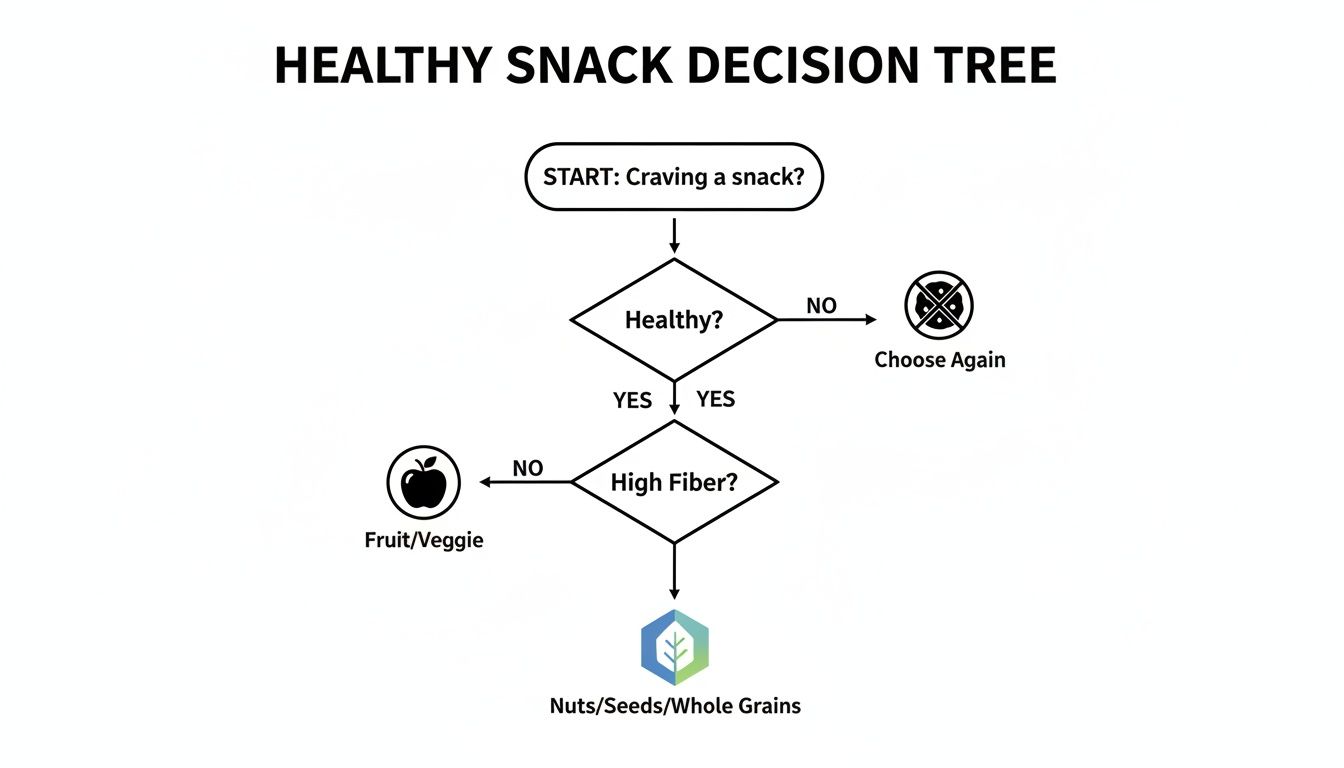
When you see ingredients like chicory root fiber or inulin, that's often a good sign. These are natural, plant-based prebiotic fibers that smart brands use to boost the fiber count without piling on sugar or calories. It shows the product was formulated with your health in mind.
Follow these three simple steps, and you can confidently pick out snacks that taste good and actually fuel your body the right way.
Finding the Perfect High Fiber Snack for Your Diet
One of the best things about focusing on high-fiber snacks is that it’s not a rigid, one-size-fits-all plan. It’s actually an incredibly flexible way of eating that you can adapt to pretty much any lifestyle or dietary need. The only trick is knowing which ingredients and products fit your specific goals.
Whether you're keto, gluten-free, or plant-based, there are plenty of delicious and convenient options out there. This variety is a big reason why the high-fiber snack market is booming. It hit USD 24.1 billion in 2022 and is on track to more than double by 2032, with North America making up over a third of that market. This isn’t just a trend; it's a reflection of a real shift in awareness. Nearly 70% of Americans are now actively trying to eat more fiber, a habit that’s linked to a 15-30% lower risk of heart disease.
This section will walk you through some go-to snack ideas for three of the most popular diets, proving that you don't have to compromise on your health goals to get your fiber fix.
Keto-Friendly High Fiber Snacks
The ketogenic diet’s strict carb limit can make getting enough fiber feel like a challenge, but it’s entirely doable. With the right food choices, you can hit your fiber targets and stay comfortably in ketosis. The secret is to lean into non-starchy vegetables, nuts, and seeds.
Here are a few fantastic keto-friendly ideas to get you started:
- Avocado with Hemp Seeds: This is a true powerhouse of healthy fats and fiber. Half an avocado sprinkled with a tablespoon of hemp seeds is deeply satisfying and loaded with nutrients.
- Chia Seed Pudding: When made with unsweetened almond milk and a keto-friendly sweetener, this creamy treat becomes a soluble fiber superstar.
- Low-Carb Veggies with Nut Butter: Think celery sticks or sliced bell peppers dipped in a natural, sugar-free almond or peanut butter. Simple, crunchy, and effective.
For those times you just need to grab something and go, packaged snacks can be a lifesaver. Products like Rip Van's Keto wafels are made for exactly this purpose, giving you a tasty treat that serves up fiber without kicking you out of ketosis. You can find more ideas in our guide to high-fiber, low-carb snacks.
Gluten-Free High Fiber Snacks
Going gluten-free doesn’t mean you have to give up on fiber. You might be avoiding wheat, barley, and rye, but there's a whole world of other whole foods that are naturally gluten-free and packed with this key nutrient.
Try to work these kinds of foods into your snack rotation:
- Fruits and Vegetables: Berries, apples, and pears are all excellent choices. You can get creative with ingredients like wild berries to make all sorts of delicious berry-based treats.
- Nuts and Seeds: A simple handful of almonds, walnuts, or sunflower seeds is about as easy as it gets for a high-fiber, gluten-free snack.
- Legumes: Roasted chickpeas or a small bowl of edamame are savory, crunchy, and full of both fiber and plant-based protein.

Today, countless packaged snacks are certified gluten-free, which makes finding safe options much easier. Just remember to look for the "Certified Gluten-Free" seal on the package to be sure you're avoiding cross-contamination.
A common pitfall with packaged gluten-free snacks is that some brands replace wheat with low-fiber starches like rice or potato flour. Always double-check the nutrition panel to ensure your choice still delivers a solid fiber count.
Plant-Based High Fiber Snacks
A well-planned plant-based or vegan diet is often naturally high in fiber since it’s built on a foundation of fruits, veggies, whole grains, and legumes. This makes finding a great high-fiber snack incredibly easy.
Here are a few simple and effective plant-based ideas:
- Hummus with Whole-Grain Crackers: This classic combo delivers a fantastic one-two punch of fiber from both the chickpeas and the whole grains.
- Apple Slices with Peanut Butter: It's a timeless snack for a reason. You get a great mix of soluble fiber from the apple and satisfying protein from the peanut butter.
- A Small Bowl of Oatmeal: Oats are one of the best sources of beta-glucan, a special type of soluble fiber celebrated for its heart-health benefits.
When you're looking at packaged plant-based snacks, the same rules apply. You want to see whole-food ingredients and low amounts of added sugar. Many of Rip Van's products are vegetarian, offering a super convenient way to boost your fiber without straying from your dietary commitments.
No matter how you eat, a little bit of planning is all it takes to make fiber-rich snacking a delicious and effortless part of your routine.
Easy High Fiber Recipes You Can Make in Minutes
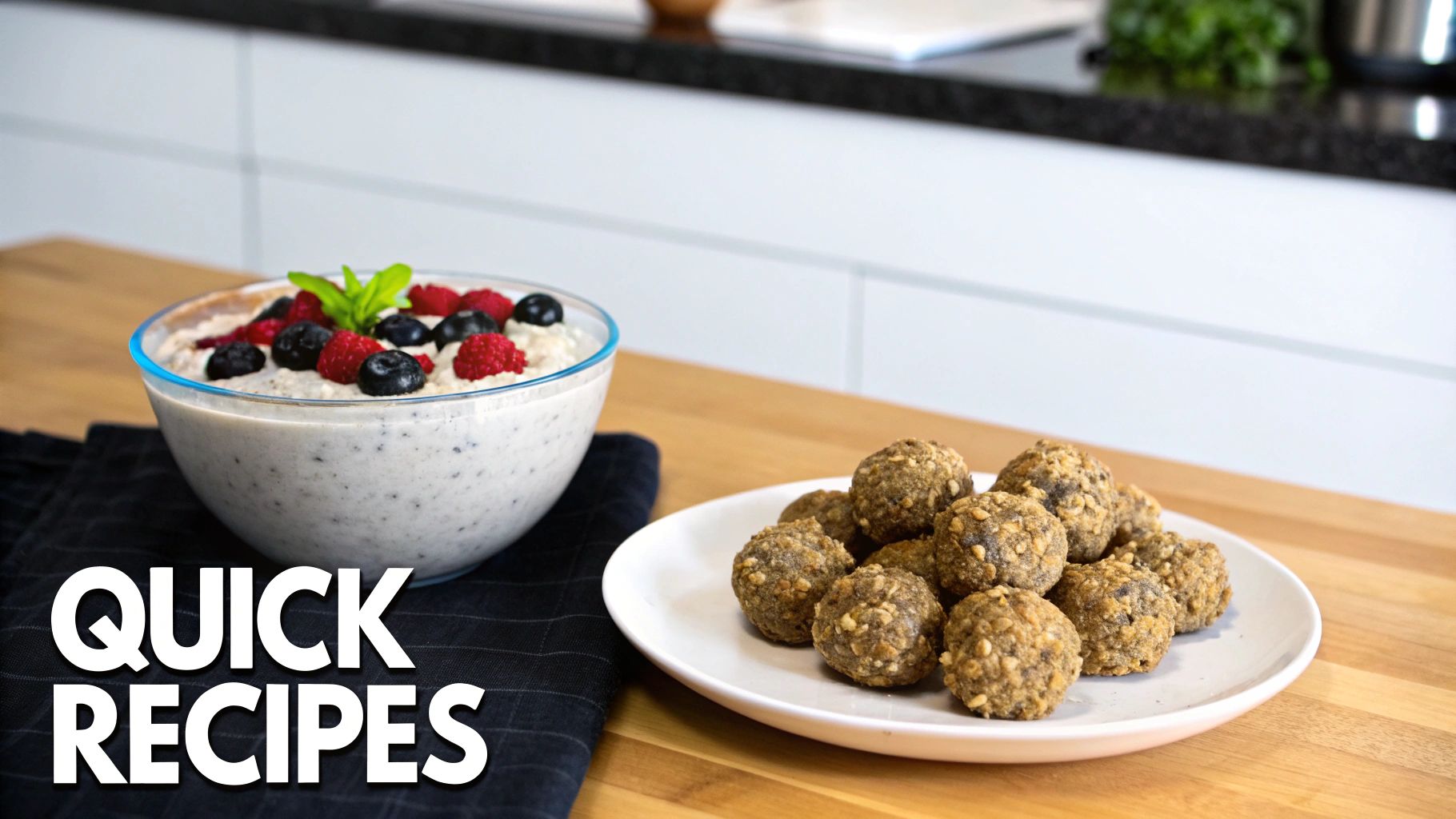
Knowing which foods are high in fiber is one thing, but actually making them part of your daily routine is where the real magic happens. Let's be honest, healthy eating can feel like a chore, but it doesn't have to be.
These recipes are proof that you can whip up something delicious, satisfying, and packed with fiber in just a few minutes. No complex instructions or laundry list of ingredients here—just simple, flavorful snacks that work for your real life.
No-Bake Fiber Power Bites
I call these the ultimate grab-and-go snack. They’re a lifesaver when you need a quick energy boost. Best of all, there's zero cooking involved, and they keep perfectly in the fridge for a week of easy snacking.
What You'll Need:
- 1 cup old-fashioned rolled oats
- ½ cup ground flaxseed
- 2 tablespoons chia seeds
- ½ cup natural nut butter (almond and peanut are great)
- ⅓ cup honey or maple syrup
- 1 teaspoon vanilla extract
- Optional: ¼ cup dark chocolate chips or dried fruit
How to Make Them:
- In a medium bowl, mix together the oats, flaxseed, and chia seeds.
- Add the nut butter, honey or syrup, and vanilla. Stir everything together until it forms a sticky, dough-like consistency.
- Fold in your chocolate chips or dried fruit if you're using them.
- Roll the mixture into small, one-inch balls and set them on a baking sheet lined with parchment paper.
- Pop them in the fridge for at least 30 minutes to let them firm up. Done!
Spicy Roasted Chickpeas
When that craving for something salty and crunchy hits, reach for these instead of a bag of chips. Roasted chickpeas give you that satisfying crunch along with a fantastic hit of plant-based protein and fiber.
What You'll Need:
- 1 can (15 ounces) chickpeas, rinsed and patted very dry
- 1 tablespoon olive oil
- ½ teaspoon smoked paprika
- ¼ teaspoon garlic powder
- ¼ teaspoon chili powder
- A pinch of salt and pepper
How to Make Them:
- Preheat your oven to 400°F (200°C).
- Toss your super-dry chickpeas with olive oil in a bowl until they're lightly coated.
- Sprinkle on all the spices—paprika, garlic powder, chili powder, salt, and pepper—and toss again to make sure they’re evenly seasoned.
- Spread the chickpeas out in a single layer on a baking sheet.
- Roast for 20-25 minutes, giving the pan a good shake halfway through, until they’re golden and crispy. Let them cool for a few minutes before diving in; that’s when they get extra crunchy.
These recipes show a simple but powerful principle: combine whole foods for a bigger impact. The fiber comes from the oats, seeds, and chickpeas, while the healthy fats and protein from nut butter and olive oil work to keep you feeling full and satisfied for hours.
Upgraded Greek Yogurt Parfait
Sometimes you just need a packaged snack, and that’s okay! But it's easy to take something simple and elevate it into a more complete, nutrient-dense mini-meal. This parfait is a perfect example, layering a few key ingredients for a boost of fiber, protein, and flavor.
We’re using a Rip Van Wafel here to add a satisfying, low-sugar crunch that pairs beautifully with the creamy yogurt.
What You'll Need:
- 1 cup plain Greek yogurt
- ½ cup mixed berries (fresh or frozen both work)
- 1 Rip Van Wafel, crumbled up
- Optional: A little drizzle of honey or a sprinkle of cinnamon
How to Make It:
- Grab a glass or a small bowl and start with a layer of Greek yogurt.
- Top that with a layer of your mixed berries.
- Sprinkle about half of the crumbled Rip Van Wafel over the berries.
- Repeat the layers one more time.
- Finish with the rest of the crumbled wafel and your optional toppings. For the best crunch, serve it right away
How to Time Your Snacks for Peak Performance
It’s not just what you eat that matters—it's also when you eat. Think of your body's energy levels like a campfire. A big meal is a large log, providing slow, steady heat. A well-timed, high-fiber snack is like adding a smaller piece of wood just as the flames start to dip, keeping your fire burning bright and consistent.
Getting this rhythm right can completely change how you feel throughout the day. Smart snacking helps you dodge that dreaded mid-afternoon slump, keeps you from showing up to dinner absolutely starving, and gives you the perfect fuel for a workout. This isn't about mindless grazing; it's about mindful timing that works with your body’s natural energy patterns.
The 3 PM Energy Lifesaver
We’ve all been there. It’s the middle of the afternoon, your focus has vanished, and the urge to grab something sugary is getting intense. This is the perfect moment for a high-fiber snack. Because fiber slows down how your body absorbs sugar, it delivers a gentle, sustained energy lift instead of a jarring spike followed by a crash.
Instead of reaching for a candy bar, try one of these:
- A handful of almonds and a few dried apricots: This combo gives you fiber, healthy fats, and just enough natural sweetness to power you through the rest of the workday.
- One Rip Van wafel: It's already portioned out, low in sugar, and high in fiber, making it the ideal fix to satisfy a craving without derailing your energy.
The Pre-Meal Hunger Tamer
Ever sit down for dinner so hungry you could eat everything on the table and then some? A small, fiber-rich snack about 60-90 minutes before a big meal can be a total game-changer. It just takes the edge off your hunger, so you can make more mindful, balanced choices when you finally sit down to eat.
This simple bit of planning helps prevent overeating and can even support better digestion. It’s all about taking back control of your hunger cues instead of letting them control you.
A well-timed snack recalibrates your appetite. The goal isn't to feel full, but simply to curb that extreme hunger so you can approach your meal with intention, not desperation.
The Pre-Workout Fuel-Up
When you exercise, your body needs energy that's ready to go. Eating a snack rich in complex carbs and fiber about 30-60 minutes before a workout provides the sustained fuel your muscles need to perform at their best. This is especially crucial for endurance activities like running or cycling. To really get the most out of your energy, it's worth digging into the best pre-run fueling strategies to understand what and when to eat.
A small bowl of oatmeal or a piece of fruit with some nut butter are fantastic choices. They give you that necessary energy boost without weighing you down, helping you feel strong from your first step to your last. Proper timing turns your snack from a simple treat into a true performance tool.
Building a Pantry Stocked for Success
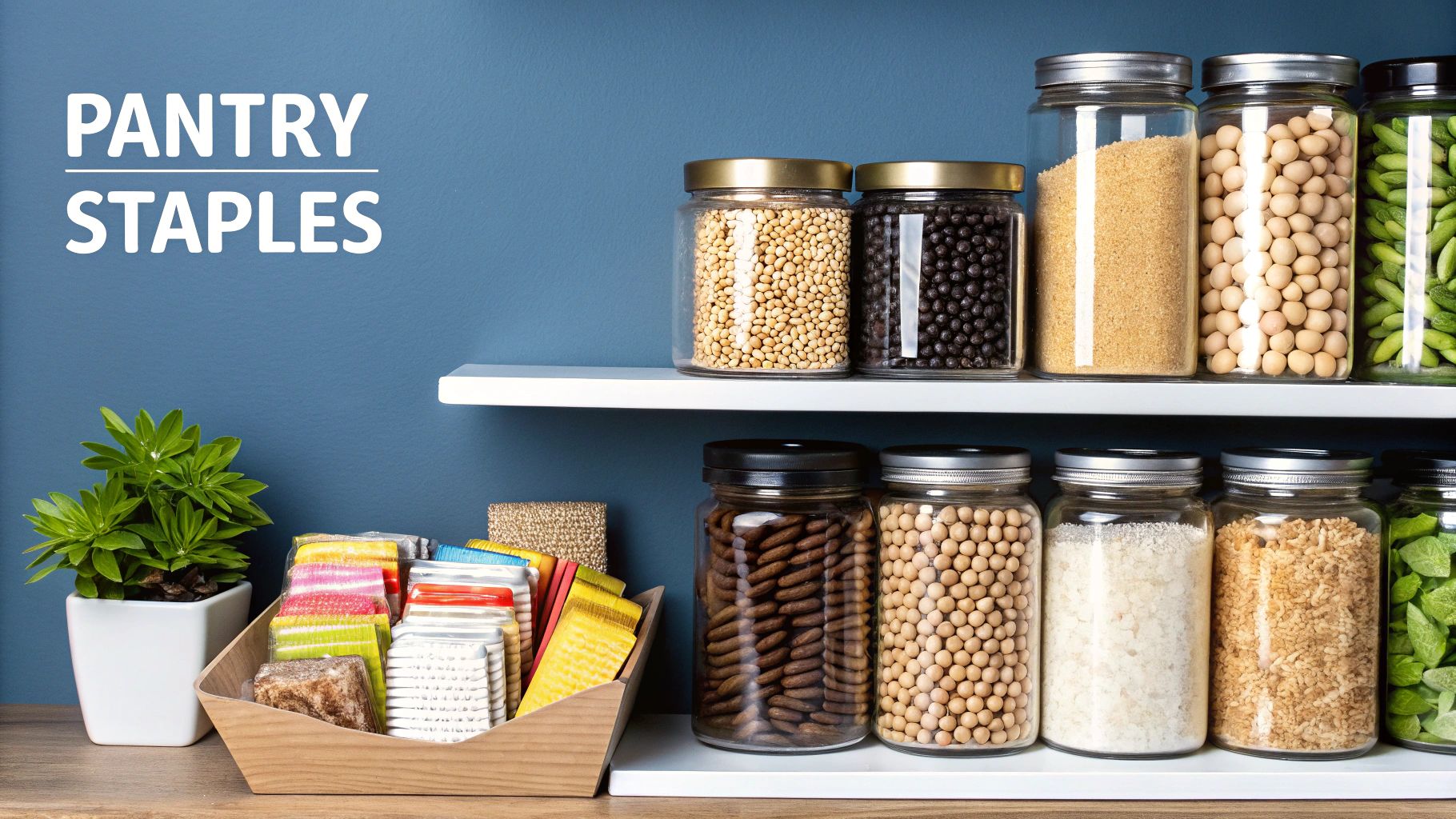
The secret to consistently eating high-fiber snacks has less to do with willpower and everything to do with preparation. When your kitchen is already set up for success, making a smart choice is simply the easiest choice. You're designing your environment to do the heavy lifting for you.
Having the right ingredients on hand removes that moment of hesitation and decision fatigue that so often leads us to grab something less than ideal. Think of it as creating a system where healthy snacking is your default setting.
Your High-Fiber Shopping Checklist
To make this easy, let's break down your shopping list into five core categories. If you keep a few items from each group stocked, you'll always have what you need to throw together a satisfying, fiber-rich snack.
1. Versatile Whole Grains These are the slow-release energy workhorses of your pantry, perfect for building a snack that keeps you full for hours.
- Rolled Oats: The foundation for overnight oats, homemade energy bites, or a quick bowl of oatmeal.
- Quinoa: Great for prepping small, snack-sized salads or as a base for savory bowls.
- Whole-Grain Crackers: Look for brands with at least 3 grams of fiber per serving.
2. Powerful Legumes Legumes are a pantry must-have. They’re incredibly affordable and packed with both fiber and plant-based protein.
- Canned Chickpeas: Essential for whipping up hummus or roasting for a crunchy, savory snack.
- Lentils: Cook a batch to keep in the fridge and add a quick fiber boost to mini-meals or salads.
Nuts, Seeds, and Smart Snacks
This next group delivers healthy fats, a satisfying crunch, and unbeatable convenience, making them key players in any smart snacking strategy.
3. Nutrient-Dense Nuts and Seeds A little goes a long way with these fiber-packed powerhouses.
- Almonds and Walnuts: A simple handful is one of the easiest high-fiber snacks out there.
- Chia and Flax Seeds: Stir a spoonful into yogurt, smoothies, or oatmeal for an instant fiber upgrade.
4. Fresh Fruits and Veggies Keep these on hand for a natural boost of vitamins, hydration, and, of course, fiber.
- Berries: Loaded with fiber and antioxidants, they’re perfect with yogurt or on their own.
- Avocados: A fantastic source of fiber and healthy fats that crush cravings.
- Apples and Pears: The classic grab-and-go options that always deliver a satisfying crunch.
Keeping these items visible is the trick. Store nuts in clear jars on the counter and keep a full fruit bowl in plain sight. When hunger strikes, you'll see the good stuff first.
5. Smart Packaged Snacks Let's be realistic—life gets busy, and sometimes you need a zero-prep option. Having smart packaged snacks ready to go ensures you’re prepared for those moments. For a deeper dive, check out our guide to finding delicious low-sugar snack bars.
For ultimate convenience, Rip Van wafels are designed to be the perfect grab-and-go solution. They deliver that sweet, satisfying taste with a high fiber count and very little sugar, making them an ideal pantry staple for busy days.
This trend toward convenient, healthy options is a global one. The market for high-fiber snacks is projected to grow from USD 39.39 billion to a staggering USD 70.85 billion by 2035, largely driven by health-conscious consumers in fast-growing regions like Asia-Pacific. You can read more about the growth of the healthy snacks market on grandviewresearch.com.
Got Questions About High Fiber Snacks? We’ve Got Answers.
Jumping into the world of high-fiber snacks usually brings up a few questions. Once you start paying closer attention to what's on the label, it's totally normal to wonder about the finer details. We've heard a lot of these questions before, so we put together this section to clear up the confusion.
Think of this as your go-to guide for making fiber a simple, effective part of your day. Let's dig into what you're probably wondering.
Can You Actually Eat Too Much Fiber?
Believe it or not, you can have too much of a good thing. While most of us aren't getting nearly enough fiber, making a huge jump overnight can lead to some temporary bloating, gas, or general discomfort. This isn't a red flag about fiber itself—it's just your digestive system asking for a little time to catch up.
The key is to go slow. Introduce more fiber-rich foods into your diet gradually over a couple of weeks to give your gut time to adapt. And don't forget to drink plenty of water! Fiber works best when it's well-hydrated. Aiming for the daily recommendation of around 25 grams for women and 38 grams for men is the perfect sweet spot for getting all the benefits without going overboard.
Are All High-Fiber Snacks Good for Losing Weight?
Not necessarily. Fiber is a fantastic ally for weight management because it helps you feel full and satisfied, which naturally helps control your appetite. But the snack's other stats—like total calories and sugar—are just as important. A snack could be packed with fiber but also loaded with sugar or unhealthy fats, which can easily cancel out the benefits.
This is where you need to put on your "snack detective" hat and read the entire nutrition label. A truly helpful snack for weight management will be high in fiber while also being low in calories and added sugar. That's the winning combination.
How Do High-Fiber Snacks Help Control Blood Sugar?
High-fiber snacks, especially those with plenty of soluble fiber, are champions of blood sugar balance. Imagine soluble fiber as a gel-like substance in your stomach that slows everything down.
This gentle braking action means the sugar from your food gets absorbed into your bloodstream much more gradually. You avoid those sudden, sharp spikes that lead to energy crashes and cravings. By giving you a steady, even release of energy, low-sugar, high-fiber snacks are perfect for keeping you on an even keel all day long.
What’s the Secret Behind Low-Sugar, High-Fiber Snacks?
So how do snack brands pack in fiber without adding tons of sugar? The answer often lies in clever, plant-based ingredients. One of the stars of the show is chicory root fiber.
This natural, prebiotic fiber is a game-changer. It adds a hefty dose of dietary fiber while also providing a hint of natural sweetness. This means companies don't need to load up their products with refined sugar or artificial sweeteners to make them taste great. It’s exactly this kind of smart formulation that allows brands like Rip Van to create delicious treats that fit perfectly into a healthy lifestyle.
At Rip Van, we don't think you should have to pick between a tasty treat and a healthy choice. Our low-sugar, high-fiber wafels are designed to give you both, making it easy to snack smarter without giving up the flavors you love. Find your new go-to by exploring our delicious options at https://ripvan.com.