

The real secret to finding snack bars that actually help with weight loss isn't complicated. It comes down to a simple formula: high in fiber, rich in quality protein, and low in sugar.
So many bars out there are just candy bars in a clever disguise, loaded with hidden sugars and calories that do you no favors. A genuinely good snack bar works for you. It helps manage hunger, keeps your energy steady, and supports your metabolism, making it a smart tool in your toolkit, not a setback.
Your Guide to Smarter Snacking for Weight Loss
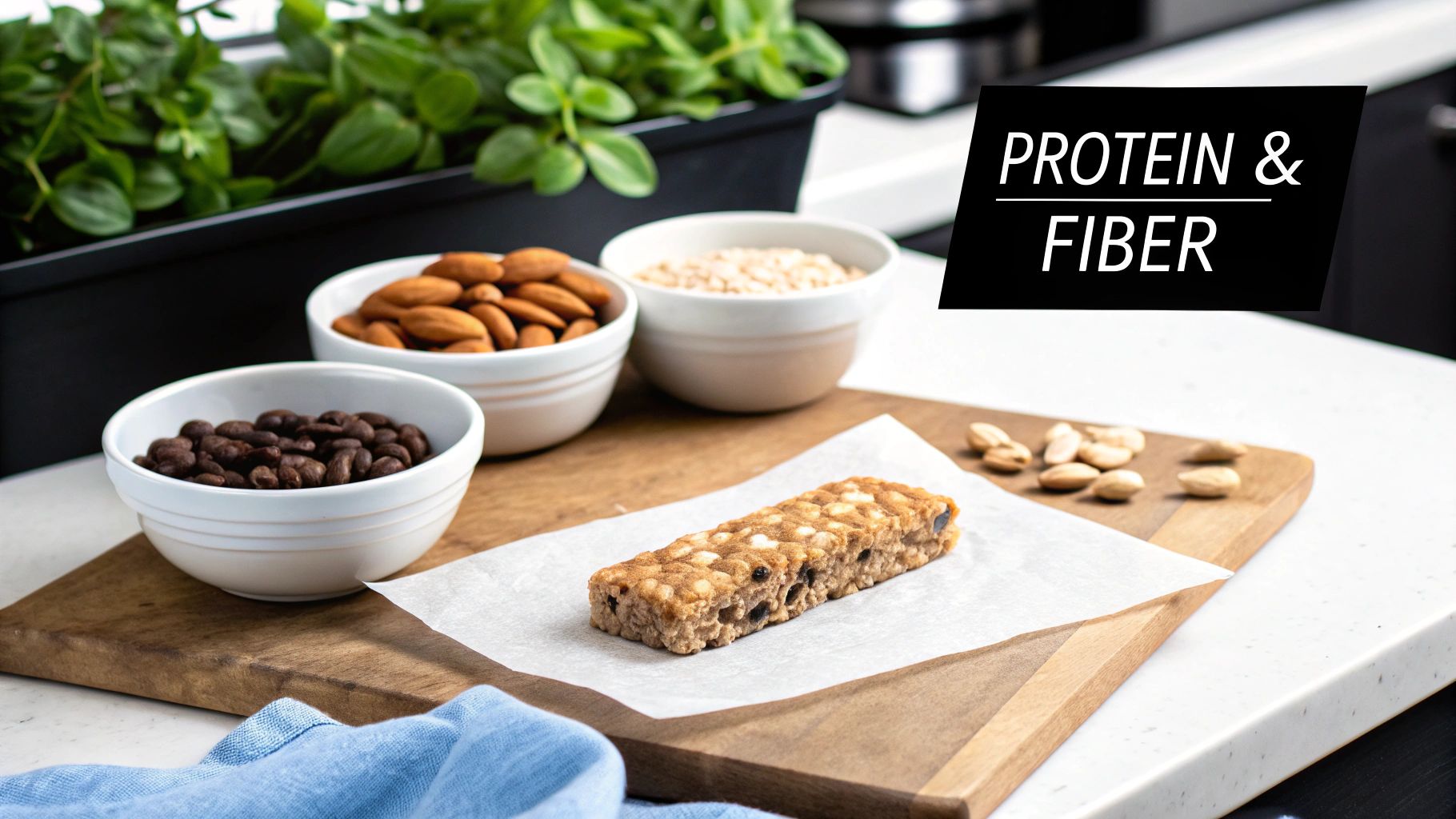
Walking down the snack aisle can be seriously overwhelming. Every bright wrapper seems to scream about being "low-calorie" or "high-protein," but flip it over, and the nutrition label often tells a very different story. My goal here is to help you cut through all that marketing noise and give you a clear, simple way to pick bars that will genuinely support your weight loss goals.
Think of a great snack bar as a bridge. It’s there to get you from one meal to the next without giving in to hunger pangs, energy crashes, or that sudden urge to grab the first thing you see. The wrong bar, though, is a bridge to nowhere—it'll spike your blood sugar and can leave you feeling even hungrier than when you started.
The Foundation of a Healthy Snack Bar
A snack bar's power to help with weight loss really comes down to three key players. Each one has a specific job to do in keeping you full, focused, and on track with your goals.
-
Protein Power: Protein is your best friend when it comes to feeling full and satisfied. It digests more slowly than carbs, which helps keep hunger at bay and crushes cravings. Plus, it's crucial for maintaining muscle, which keeps your metabolism humming along.
-
Fiber First: Fiber is the unsung hero of blood sugar stability. By slowing down digestion, it prevents those jarring energy spikes and crashes that make you want to snack again. It also adds bulk, which helps you feel physically full.
-
Low Sugar Logic: This one is straightforward. Too much sugar means empty calories, and it can completely derail your progress by causing energy dips and making you crave even more sweets.
The right snack bar isn't a "cheat." It's a strategic tool used to manage appetite, fuel your body between meals, and prevent the overeating that can derail your progress.
Once you start looking for these core elements, navigating that crowded snack aisle becomes a whole lot easier. This guide will walk you through exactly how to read labels, spot good ingredients, and make choices that feel great and align perfectly with your health goals. Let's turn snack time into one of your biggest assets.
How to Read a Nutrition Label Like a Pro
Let's be honest, flipping over a snack bar to read the nutrition label can feel like you're trying to crack a code. All those numbers and percentages can be overwhelming. But what if I told you the secret is just knowing where to look?
Forget obsessing over the total calorie count for a second. The real story of whether a bar will help or hinder your weight loss goals lies in three key players: protein, carbs, and fats. These are your macronutrients.
Think of them as the building blocks of the bar. Getting the right balance is what separates a genuinely helpful snack from a candy bar in disguise. This is especially important now, with the U.S. healthy snacks market hitting a massive $31.90 billion in 2024. A huge chunk of that—22% of the entire food bar market—is specifically for weight management. That means a lot of options, and you need to know how to choose the right one.
Master the Macronutrients for Weight Loss
When you're trying to lose weight, the most important relationship to look for on that label is between protein, fiber, and sugar. This simple trio tells you almost everything you need to know.
-
Protein: The Satiety Superstar: Protein is your best friend when it comes to feeling full and satisfied. It digests slowly, which keeps your blood sugar stable and kicks hunger cravings to the curb. For a bar to have real staying power, look for one with at least 10-15 grams of protein. Anything less, and you’ll likely be hungry again in an hour.
-
Carbohydrates: The Energy Source: Not all carbs are bad—you just need the right kind. Think of sugar and fiber as two different types of fuel. Sugar is like throwing gasoline on a fire: you get a big, fast flare-up of energy, followed by a quick crash. Fiber, on the other hand, is like a slow-burning log. It provides steady, sustained energy that keeps you going without the spike and drop.
The goal is simple: find a bar where the fiber grams are high and the sugar grams are low. That’s the magic formula for lasting energy and fullness, helping you avoid that afternoon slump that sends you running for another snack.
Putting It All Together: A Quick Checklist
Next time you’re in the snack aisle, use this quick mental checklist to make a smart choice in seconds.
- Check the Protein: Does it hit that 10-gram mark? The more, the better for keeping you full.
- Compare Fiber to Sugar: This is the big one. Are there more grams of fiber than grams of sugar? If so, you've found a winner. Check out our guide on low-sugar snack bars for a deeper dive.
- Scan the Serving Size: This is a classic trick! Make sure the nutrition info is for the whole bar, not just half of it.
Once you get the hang of this, you’ll be able to walk down any grocery aisle and instantly spot the bars that will actually support your goals. No more guesswork, just smart, informed choices that work for you.
Looking Beyond the Numbers at the Ingredient List
A great-looking nutrition label can sometimes be a clever disguise. While the macros—protein, carbs, and fat—are a huge piece of the puzzle, what a bar is made of is just as critical for real, sustainable weight loss.
Think of it like building a house. You want it built with solid bricks and sturdy timber (whole foods), not cheap particleboard that looks okay on the surface but won't hold up over time. Peeking at the ingredient list is how you check the quality of the building materials.
It’s about shifting your mindset from just counting numbers to truly understanding the quality of what you're eating. This is what separates a genuinely healthy snack from a glorified candy bar.
This visual helps break down how each of the main macros plays a role in your goals.
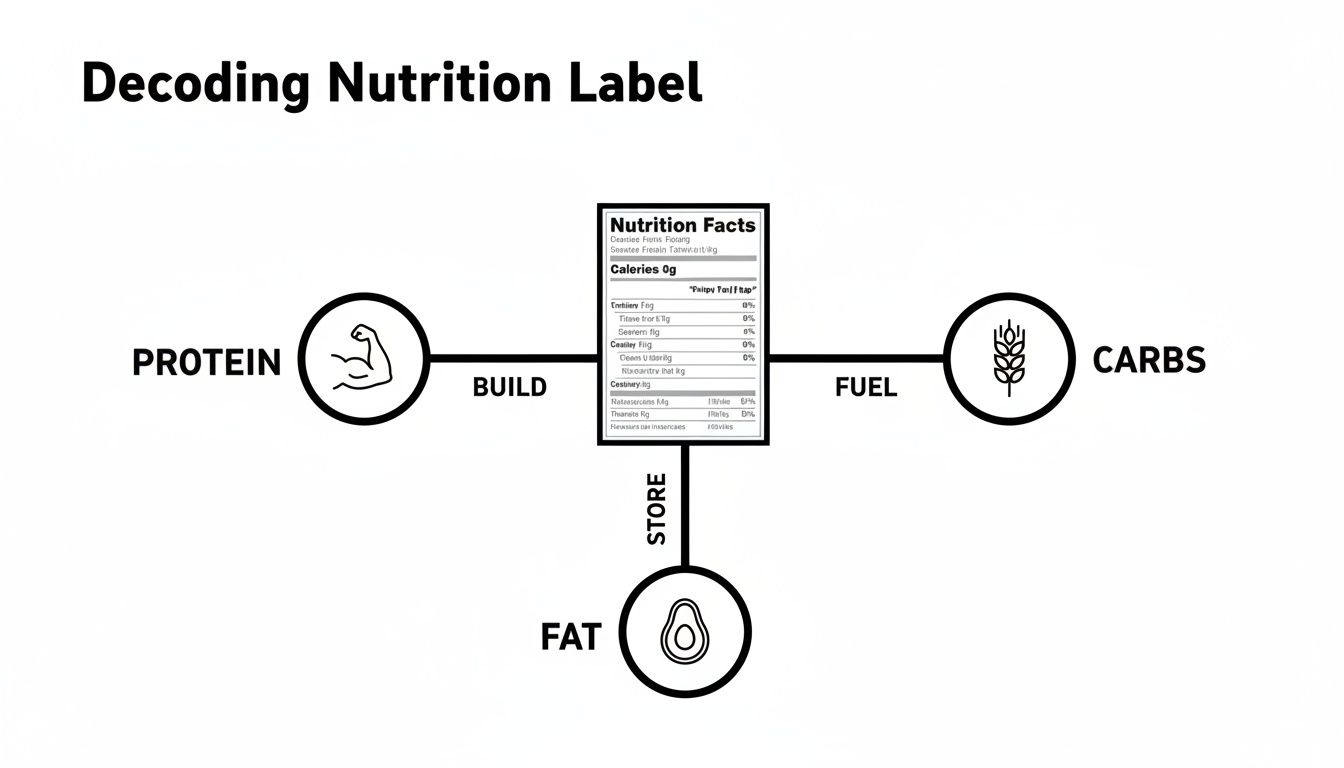
As you can see, it’s all about balance. A good bar uses protein to support muscle, the right carbs for lasting energy, and healthy fats to keep you feeling full and satisfied.
Becoming an Ingredient Detective
Here’s a simple rule I always follow: the shorter the ingredient list, the better. Ingredients are listed by weight, so you want to see things you recognize right at the top. Think nuts, seeds, whole oats, or maybe a simple protein source like egg whites. These are excellent, whole-food foundations.
On the flip side, a long, winding list full of scientific-sounding names and multiple types of syrups is a huge red flag. Those are usually cheap fillers, additives, and preservatives that offer zero nutritional value and can sometimes leave you feeling bloated or uncomfortable.
Here are a few specific things to keep an eye out for:
- Hidden Sugars: Bar makers are clever. They often use several different sweeteners to keep any single "sugar" from being the first ingredient. Be on the lookout for dextrose, maltodextrin, high-fructose corn syrup, and brown rice syrup. It's all just sugar.
- Artificial Sweeteners: While they don't have calories, things like sucralose, aspartame, and acesulfame potassium can cause digestive issues for some people and may even trigger more sweet cravings.
- Sugar Alcohols: You'll see erythritol, sorbitol, and maltitol in a lot of "low-sugar" or "keto" bars. They're a better option than regular sugar, but be warned: they can cause gas and bloating, especially if you're not used to them.
- Highly Processed Proteins: Soy protein isolate is a common one. It’s a cheap way to bump up the protein grams, but it's far from a whole-food source and lacks the extra nutrients you’d get from something like whey, nuts, or seeds.
My rule of thumb is this: If you can't pronounce half the stuff on the label, put it back on the shelf. A truly healthy snack bar for weight loss shouldn't require a chemistry degree to understand.
When you prioritize bars with clean, simple ingredients, you're not just hitting your macro targets—you're fueling your body with quality nutrients. It’s an approach that supports your overall health, making your entire weight loss journey feel a whole lot better.
When and How to Eat Snack Bars for Best Results
Picking the right snack bar is half the battle. The other half? Knowing exactly when to eat it to get the best results. A healthy bar isn't just a random snack; it's a strategic tool. When you time it right, you can sidestep those energy crashes, stop yourself from overeating at your next meal, and keep your metabolism humming along.
Think of a good snack bar as a bridge. It gets you from one meal to the next without letting you get so ravenously hungry that you reach for the first thing you see—which is rarely the healthiest option. A well-timed, nutrient-dense bar is your safety net, making sure your weight loss plan stays on track.
This smart-snacking mindset is catching on. The U.S. snack bar market is already worth $8.9 billion, and it's set to grow as more people use bars to manage their hunger. In fact, weight management bars make up 22% of that market already. It's a strategy particularly favored by women, who account for 63% of buyers, looking for that feeling of fullness to support their goals. You can dive deeper into these snack bar market trends on mintel.com.
Smart Snacking Scenarios
Working a snack bar into your day isn’t just about quieting a rumbling stomach. It's about fine-tuning your body's performance and supporting your fitness journey. Different moments call for different tactics.
Here are a few scenarios where a healthy snack bar can be your secret weapon:
- The 3 PM Slump Buster: We’ve all been there. Your energy plummets, and the office donuts start calling your name. This is the perfect time for a high-fiber, moderate-protein bar. It’ll give you a steady stream of energy to carry you through the afternoon without that awful sugar crash. You can also check out other ideas for healthy snacks for work to keep your energy up.
- The Pre-Workout Energizer: Headed to the gym? Grabbing a bar with a solid mix of carbs and protein about 30 to 60 minutes before you start can give you the fuel you need to perform your best. It helps you avoid feeling sluggish and ensures you get the most out of every single rep.
- The Post-Workout Recovery Aid: After you’ve put in the work, your muscles are primed for repair. A protein-rich bar helps kickstart that recovery, refilling your energy stores and supporting the growth of lean muscle—a key part of a healthy metabolism.
Are Snack Bars a Meal Replacement?
On a crazy-busy day, it's easy to think about swapping a whole meal for a convenient bar. While it might work in a pinch, this should be the exception, not the rule. Most snack bars, even the really good ones, just don't have the volume or the complete nutritional range of a proper meal built from whole foods.
Think of a snack bar as a high-quality supplement to your diet, not a substitute for it. Use it to prevent extreme hunger between meals, not to replace them entirely.
If you get into the habit of replacing meals with bars, you’ll likely end up feeling unsatisfied and could even develop nutritional gaps down the road. The best strategy is to build your diet around real, whole foods and use healthy snack bars as a smart, targeted tool to keep you consistent and moving toward your goals.
Finding a Snack Bar That Fits Your Diet
Let’s be honest: there’s no single “best” diet that works for everyone. The right approach is the one you can stick with, and that means your snacks need to align with your personal health plan.
Walking down the snack aisle can feel overwhelming, especially when you’re trying to stick to a Keto, low-carb, or gluten-free lifestyle. But once you know the rules of the road for your specific diet, picking out the perfect bar gets a whole lot easier. A good snack bar should work with your diet, not against it.
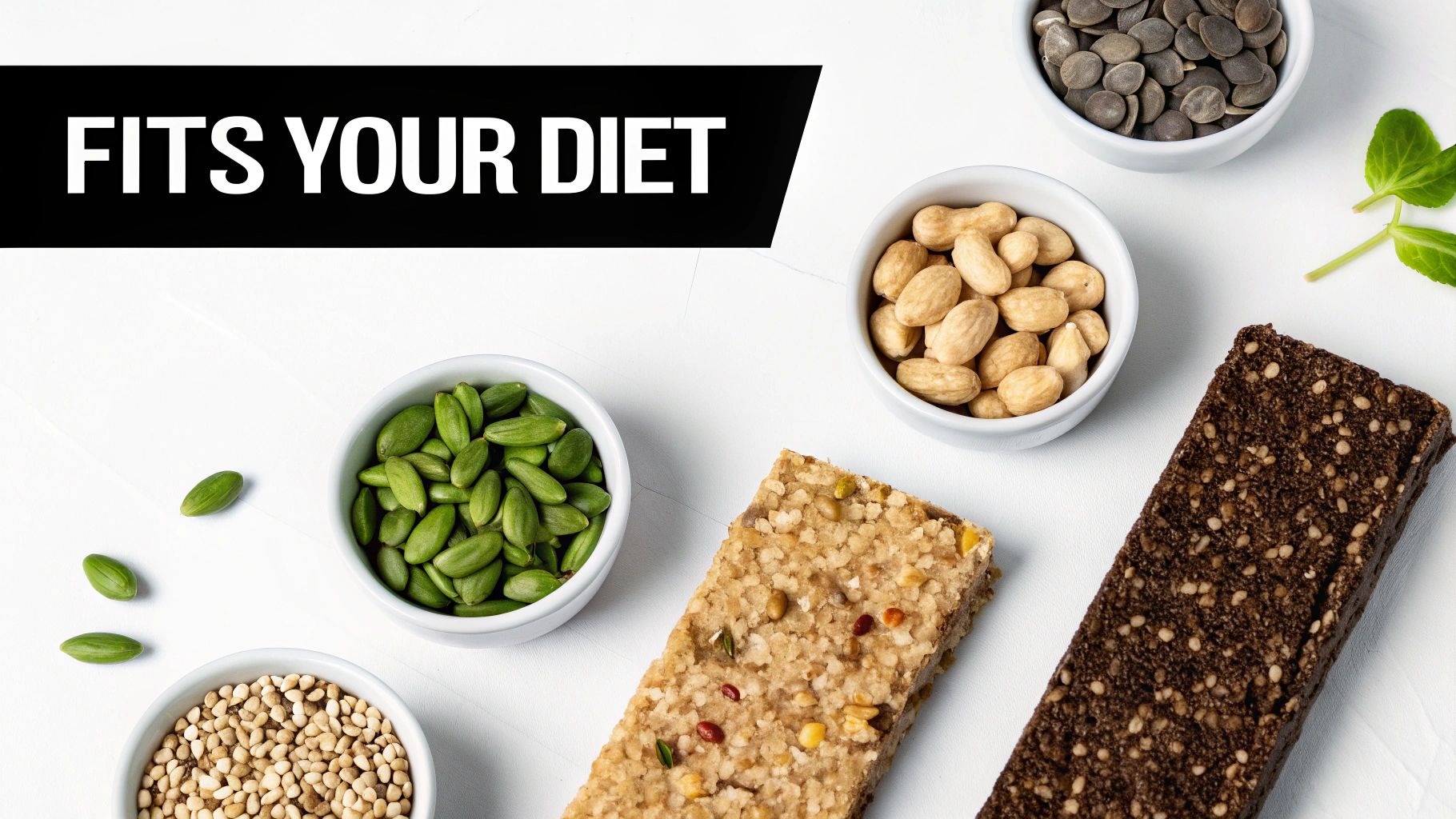
Matching a Bar to Your Lifestyle
Different diets focus on different things. A great bar for someone avoiding gluten might be a total disaster for a person on a strict Keto plan. It all comes down to knowing what to look for.
Let's break it down based on a few popular eating styles.
-
For the Keto Dieter: Your entire goal is keeping carbs incredibly low to stay in ketosis. This means you need to become an expert at calculating net carbs—that’s just the total carbs minus fiber and specific sugar alcohols. You’ll want to hunt for bars with 5g or fewer net carbs, plenty of healthy fats (from nuts and seeds), and a moderate amount of protein.
-
For the Low-Carb Follower: This is a bit more flexible than Keto, but you’re still keeping a close eye on your carbohydrate intake. A solid low-carb bar should ideally have under 15g of total carbs. Just as important, it needs to be packed with fiber and protein to actually keep you feeling full between meals. You can find all sorts of great high-fiber, low-carb snacks that fit this profile.
-
For the Gluten-Free Individual: If you have celiac disease or a gluten sensitivity, avoiding wheat, barley, and rye is non-negotiable. Don’t just look for a "gluten-free" claim on the front of the box. Your best bet is to find bars that are explicitly labeled "Certified Gluten-Free." This certification is a guarantee that the product has been tested to prevent cross-contamination, giving you true peace of mind.
No matter which diet you follow, the fundamental rules don't change. Always aim for whole-food ingredients, keep the sugar content as low as possible, and make sure there’s enough protein and fiber to keep you satisfied.
When you know what your diet requires, you can see right past the flashy marketing claims and choose a snack bar that genuinely supports your weight loss journey. This targeted thinking makes it so much easier to stay on track and hit your goals.
Finding a Snack That Fits Your Goals
Let's be honest, knowing what makes a snack bar "healthy" is half the battle. The other half is actually finding one on the shelf that checks all the right boxes without tasting like cardboard. It can feel like searching for a needle in a haystack.
But the good news is, some brands are finally getting it right. They're built on the philosophy that you shouldn't have to choose between a delicious, satisfying treat and your weight loss goals. This shift is a big reason the snack bar market has grown to $10.1 billion—people are tired of the sugar-laden junk and are actively looking for smarter options to grab on the go. You can see more on these evolving snack bar industry trends on snackandbakery.com.
How a Great Snack Bar Comes Together
When a company is truly committed to this idea, their products naturally align with what we’ve been talking about. Take a brand like Rip Van, for example. They’re a perfect case study in how thoughtful ingredient selection creates a treat that works with your body, not against it.
- Tackling the Sugar Problem: Their signature Dutch-style wafels are a great example. They’re specifically made to be low in sugar while still tasting like an indulgent treat. This helps you dodge the nasty blood sugar roller coaster that so often leads to energy crashes and even more cravings.
- Making Fiber a Star Player: Look at their LEOS cookies, and you'll see they pack in way more fiber than the typical cookie. That's not an accident. Prioritizing fiber is a deliberate choice to help you feel fuller for longer and keep your digestive system happy.
- Keeping Ingredients Clean: You won't find a laundry list of artificial colors, mystery flavors, or high-fructose corn syrup here. Sticking to non-GMO, simple ingredients means you can actually recognize what you're eating.
The takeaway is simple: when you find a brand that obsesses over quality ingredients and balanced nutrition, you can stop worrying about every little detail. You can just enjoy a genuinely tasty snack that fits right into your healthier lifestyle.
This is what smarter snacking looks like. It’s about finally being able to satisfy that sweet tooth without feeling like you've derailed your entire day.
Answering Your Top Questions About Snack Bars and Weight Loss
When you're trying to lose weight, the snack aisle can feel like a minefield. It's totally normal to have questions about where snack bars fit in. Let's tackle some of the most common ones so you can feel confident in your choices.
Can I Really Eat a Snack Bar Every Day and Still Lose Weight?
You absolutely can. The trick is to see a snack bar for what it is: a helpful tool in your toolbox, not the whole toolbox itself. Think of it this way—your diet should be built on a strong foundation of whole foods like veggies, lean protein, and healthy fats.
A good snack bar is there to fill in the gaps. It’s perfect for that 3 PM slump when you're tempted by the vending machine, or as a quick pre-workout bite. As long as it's supplementing an already solid diet, a daily bar can easily fit into a successful weight-loss plan.
Are All "Keto" or "Low-Sugar" Bars a Good Choice?
Not always, and this is where a little label-reading savvy comes in handy. Seeing "keto-friendly" or "low-sugar" on the front is a good start, but it doesn't automatically mean the bar is healthy. Many companies hit those low-sugar targets by loading their bars with artificial sweeteners, weird fillers, and other highly processed ingredients.
My rule of thumb: Always flip the bar over. A short list of ingredients you can actually recognize is a much better sign of quality than a flashy claim on the front backed by a novel's worth of chemicals on the back.
How Much Protein Should I Look For?
For a snack bar that's truly going to help with weight loss, aim for something in the 10-15 gram range. That’s the sweet spot for keeping you full and satisfied, which helps curb cravings later on.
But don't just stop at the protein number. The real magic is in the protein-to-sugar ratio. A bar with 15 grams of protein that also packs 20 grams of sugar is basically a candy bar in disguise. You want high protein and genuinely low sugar—that’s the combination that works with your goals, not against them.
Ready to find a snack that fits your goals without the compromise? Explore the delicious, low-sugar, high-fiber options from Rip Van and discover a smarter way to satisfy your sweet tooth. Find your new favorite snack at ripvan.com.