

If you're on the hunt for low sugar snacks for toddlers, you can't go wrong with whole foods. Things like fresh fruit, crunchy veggies, plain yogurt, and cheese are your best friends. They give your little one natural energy without the sneaky added sugars that hide in so many packaged snacks, and you'll be setting them up for healthy eating habits that can last a lifetime.
Why Low Sugar Is a Game Changer for Toddlers
Walking down the snack aisle can feel overwhelming. Every box is brightly colored and seems to shout about its health benefits, making it tough to figure out what's actually good for your toddler. This is why more and more parents are cutting through the noise and focusing on one simple thing: low sugar. This isn't just another passing trend—it's a real shift in how we think about a child's early nutrition and its impact down the road.
Think of your toddler's taste buds like a blank slate. Every new food they try helps shape what they'll like in the future. Snacks loaded with added sugar are like a blast of intense sweetness that can make it harder for them to enjoy the natural, subtle flavors of a juicy strawberry or a slice of cheese. By consistently offering low sugar snacks for toddlers, you help them build a more balanced palate that's open to all kinds of foods.
The Two Types of Sugar
It’s easy to think all sugar is the same, but it's not that simple. Your toddler will run into two main kinds, and knowing the difference is key.
- Natural Sugars: You'll find these in whole foods. Think fructose in fruits and lactose in milk and yogurt. The great thing is, they come bundled with fiber, vitamins, and other nutrients that help your toddler's body process the sugar slowly while getting the good stuff they need.
- Added Sugars: These are the ones to watch out for. They're sugars and syrups—like high-fructose corn syrup, cane juice, or dextrose—that are thrown into foods during processing. They offer zero nutritional value, just empty calories, and they're the main culprit we want to limit in a toddler's diet.
Cutting back on added sugars is one of the simplest and most effective things you can do for your child's long-term health. It helps prevent cavities, supports a healthy weight, and has a huge impact on their overall well-being.
This isn't just a hunch parents have; the market is reflecting it, too. The global baby and toddler snacks market, valued at USD 12.56 billion in 2024, is seeing a major boom in demand for snacks with cleaner labels and less sugar. Parents are speaking with their wallets. This focus on better snacks is a key part of bigger strategies to reduce childhood obesity and give our kids the healthiest start possible.
For a quick reference, here's a simple breakdown of the sugar guidelines for toddlers.
Quick Guide to Toddler Sugar Intake
This table summarizes the key recommendations from the American Heart Association (AHA) to help you make informed choices without getting bogged down in the details.
| Guideline | Recommended Limit (AHA) | Why It Matters for Toddlers |
|---|---|---|
| Kids Under 2 | Zero added sugar | Their small bodies and high nutritional needs mean there's no room for empty calories. This helps develop a preference for whole foods. |
| Kids Over 2 | Less than 25 grams (6 teaspoons) per day | This limit helps prevent health issues like cavities and unhealthy weight gain while teaching balanced eating habits. |
Sticking to these guidelines helps train your toddler's palate to appreciate foods that aren't overly sweet, setting a strong foundation for their future relationship with food.
How to Become a Sugar Detective on Nutrition Labels
Let's be honest—the snack aisle can be overwhelming. Every colorful package seems to shout about how healthy it is, but a closer look often tells a different story. The good news is, you don't need a nutrition degree to see past the marketing hype. By learning to scan a few key spots on the nutrition label, you can quickly sort the genuinely good options from the sugar bombs in disguise.
Your first and most important stop is the "Added Sugars" line. This little number is your truth-teller. While "Total Sugars" lumps everything together (including natural sugars from fruit or milk), "Added Sugars" shows you exactly how much sweetener was dumped in during processing. You want this number to be as close to zero as you can get it.
Here’s a helpful way to picture it: one sugar cube is roughly 4 grams of sugar. So, if that tiny toddler granola bar has 8g of Added Sugars, you're essentially handing your child two sugar cubes. Visualizing it that way really puts those numbers into perspective, doesn't it?
Uncovering Sugar's Sneaky Aliases
Food manufacturers have gotten pretty clever about hiding sugar on the ingredients list. It goes by dozens of different names, making it easy to miss if you're not looking for it. That's why checking the ingredients is your second mission as a sugar detective.
A big red flag is seeing sugar—or one of its many aliases—listed as one of the first few ingredients. That means it’s a primary component of the food. Be on the lookout for these common culprits:
- High-fructose corn syrup
- Cane juice or cane syrup
- Dextrose or maltodextrin
- Fruit juice concentrate
- Brown rice syrup
- Agave nectar
Thankfully, parents are catching on, and the market is responding. The demand for healthier toddler snacks is surging, with a projected market volume of USD 15.5 billion in the U.S. by 2025. This push for better options follows a 28% increase in low-sugar snack sales between 2021 and 2024, as more families look for ways to build healthier habits from the start.
Looking Beyond the Sugar Content
A great toddler snack isn't just about what it doesn't have; it's also about what it does have. Once you've confirmed the added sugar is low, your final step is to look for the good stuff: protein and fiber. These are the power players that will actually keep your little one feeling full and energized, preventing that pre-dinner meltdown we all know so well.
Think of it like this simple checklist every time you pick up a new snack.
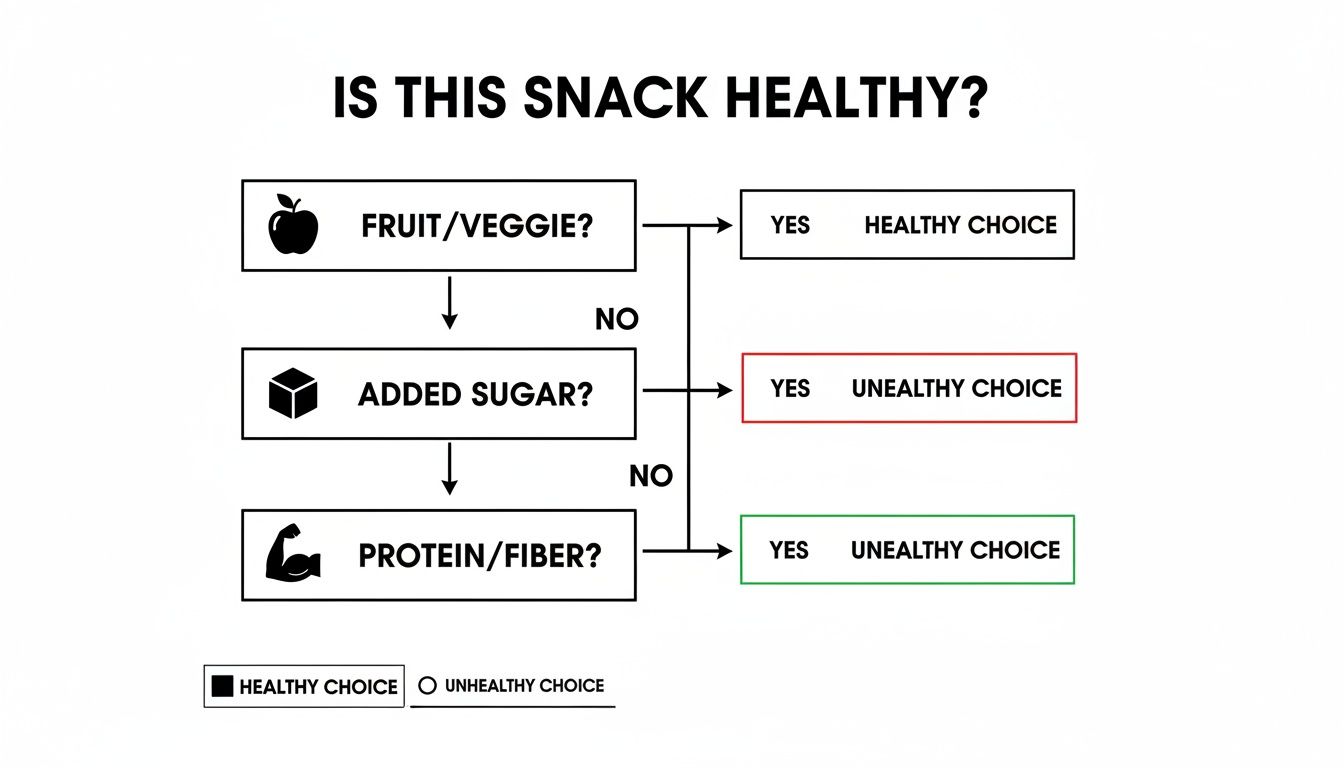
This quick mental scan helps you prioritize snacks made from whole foods that deliver real nutrition, not just empty calories.
When a snack has a good mix of protein and fiber, it helps keep blood sugar levels stable. No more wild energy spikes followed by a dramatic crash. For instance, pairing something convenient like one of Rip Van's low sugar snack bars with a cheese stick gives your toddler fiber from the bar and protein from the cheese. It’s a balanced, satisfying combination that keeps them on an even keel.
Building a Healthy and Happy Snack Routine
Choosing the right low sugar snacks for toddlers is a fantastic start, but it's only half the story. The when and how you offer those snacks are just as critical. A consistent, predictable snack routine does more than just fill a little belly—it creates a sense of security and helps your child learn to listen to their own body.
Think of a toddler’s stomach as a tiny fuel tank. It can’t hold as much as an adult’s, so it needs smaller, more frequent refills to keep them energized and happy. Without a plan, it's easy for snacking to become an all-day grazing session, often with less-than-ideal foods, which can throw off their appetite for real meals.
When your toddler knows a snack is coming at a regular time, they learn to recognize their own hunger cues instead of constantly asking for food. This little bit of structure can dramatically reduce those mealtime power struggles every parent knows so well.
The Blueprint for a Positive Snack Time
So, what does this look like in real life? It's actually pretty simple. The main idea is to set specific times for meals and snacks, usually with about two to three hours in between.
A typical day might flow something like this:
- 7:30 AM: Breakfast
- 10:00 AM: Morning Snack
- 12:30 PM: Lunch
- 3:30 PM: Afternoon Snack
- 6:00 PM: Dinner
This rhythm teaches your toddler that there are times for eating and times for playing. It shifts the dynamic from a constant back-and-forth over treats to a reliable pattern they can depend on.
Remember, a snack isn't supposed to be a mini-meal that spoils dinner. It’s a nutritious bridge to the next meal. A small handful of berries with a few cubes of cheese is often just the right amount to provide that sustained energy.
This approach also makes it easier to manage hydration. With set eating times, you can make water the go-to drink in between. This simple habit keeps them from filling up on juice or too much milk, which can easily curb their appetite for the good stuff.
Ultimately, a solid snack routine is about more than just food. It offers comfort and predictability in a world that can feel pretty big and chaotic to a little person. You're not just managing their nutrition; you're giving them the tools for mindful eating and self-regulation—a foundation for healthy habits that can last a lifetime.
Easy and Delicious Low Sugar Snack Ideas
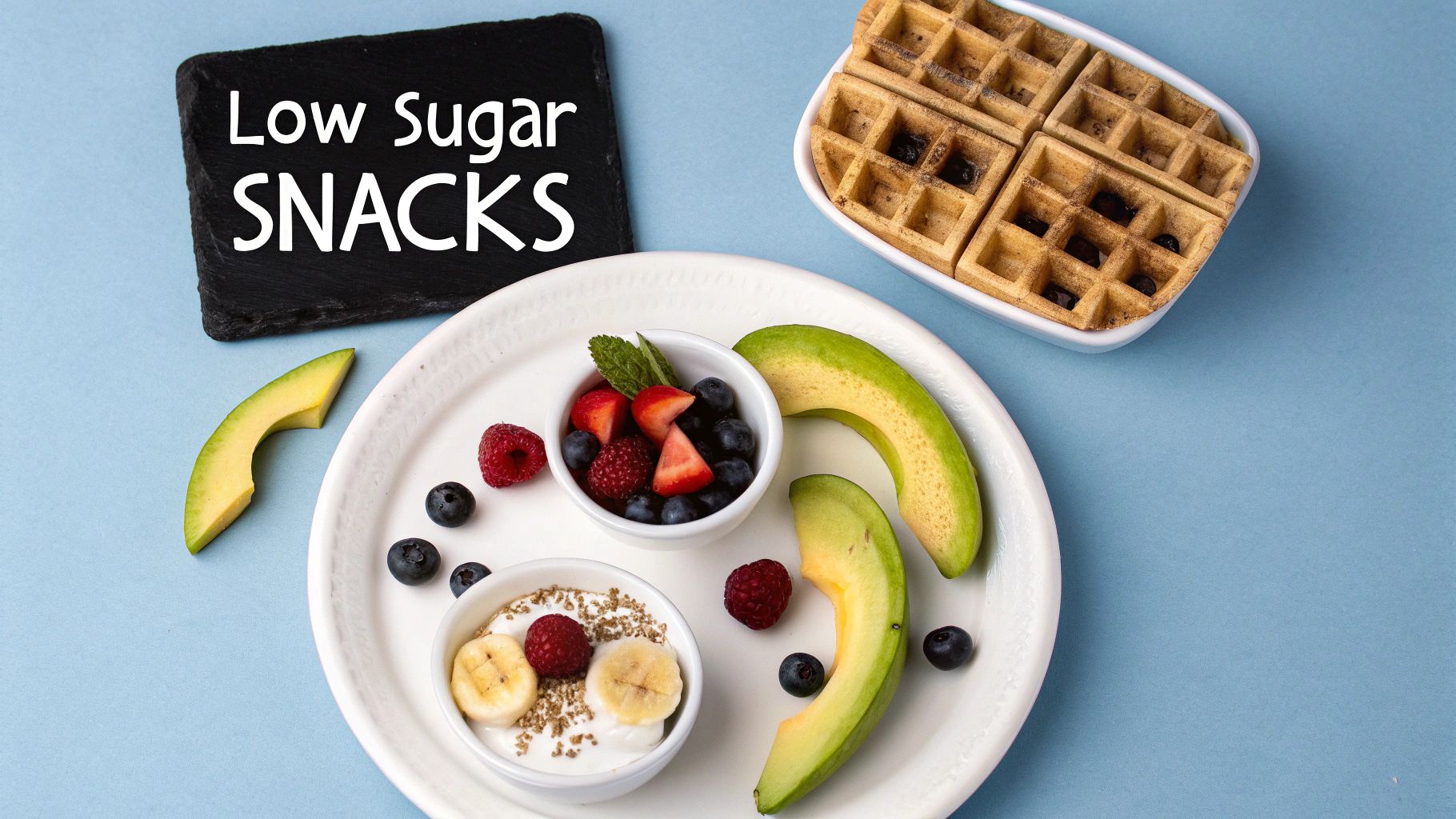
Knowing how to read a nutrition label is a great start, but let's be real—having a list of go-to, toddler-approved low sugar snacks is what really saves the day. My best advice? Stick with simple, whole foods. They’re naturally delicious and already packed with the nutrients your little one needs to power through their day.
I've put together some of my favorite ideas, broken down into categories to give you plenty of inspiration. Whether you’ve got two minutes or twenty, the goal here is to make healthy snacking feel easy, not like another chore on your list.
Quick and Fresh Bites
When you’re in a rush, these single-ingredient powerhouses are your best friends. They need almost no prep but deliver big on nutrition.
- Avocado Spears: Full of the healthy fats that are so crucial for brain development.
- Cheese Cubes: A fantastic source of protein and calcium for building strong bones.
- Plain Full-Fat Greek Yogurt: It’s creamy, satisfying, and loaded with both protein and gut-friendly probiotics.
- Berries: Naturally sweet, which toddlers love, and packed with fiber and antioxidants.
These options are as clean as it gets and help toddlers learn to love the taste of real food. Think of them as the building blocks for a lifetime of healthy snacking. And when you're out and about, finding some good mess-free snack ideas for toddlers can be a total game-changer.
Simple Homemade Creations
Making your own snacks means you have total control over every single ingredient—no hidden sugars or weird preservatives. These ideas are incredibly easy and perfect for making ahead in batches.
- Two-Ingredient Oatmeal Cookies: Just mash one ripe banana with a half-cup of rolled oats, form them into little cookies, and bake until they're golden. They’re naturally sweet and full of fiber!
- Hard-Boiled Eggs: A classic for a reason. They’re packed with protein that keeps toddlers feeling full and energized.
- Mini Muffins with Hidden Veggies: I love adding finely shredded zucchini or carrots to a basic muffin recipe. It’s an easy nutrient boost they’ll never suspect.
Going homemade is not only healthier but also a fantastic way to introduce your toddler to new textures and flavors in a form they already recognize and love.
Smart Store-Bought Swaps
Let’s get realistic—life gets busy, and sometimes you just need a convenient, pre-packaged option. The trick is just to choose wisely. This is where making a few smart swaps can seriously cut down on your toddler's daily sugar intake.
It’s not just us, either. Parents everywhere are getting smarter about snacks. Research showed that by 2014, over 40% of young children in some areas were regularly eating sugary snacks. That awareness is driving a huge shift, with the global baby snacks market now projected to hit US$3.38 billion.
To help you build satisfying snacks, here’s a simple mix-and-match table. The goal is to combine a protein or fat with a fruit or veggie and a complex carb to create a snack that provides steady energy, not a sugar rush.
Mix and Match Low Sugar Snack Combos
| Protein or Fat Source | Fruit or Veggie Source | Complex Carb and Fiber Source |
|---|---|---|
| Full-fat Greek yogurt | Sliced strawberries | A few whole-grain crackers |
| Hard-boiled egg | Cucumber spears | A mini whole-wheat pita |
| A thin layer of sun butter | Mashed banana | Rip Van Low Sugar Wafel |
| Cubes of mild cheddar cheese | Steamed carrot sticks | A small handful of Cheerios |
By picking one item from each column, you're building a mini-meal that will keep them full and happy until their next proper meal.
For those moments when you need convenience without compromise, a smart pairing is everything.
A balanced snack should offer more than just empty calories—it should provide sustained energy.
That’s where a low-sugar, high-fiber option like a Rip Van Wafel really shines. When you pair it with a protein or fat source, like a cheese stick or a thin smear of nut butter, it becomes a balanced, satisfying snack. Your toddler gets the fun of a treat with the solid nutrition they need.
For even more ideas on how to build the perfect snack, check out our guide on the best low sugar snacks.
Keeping Snack Time Safe for Your Toddler
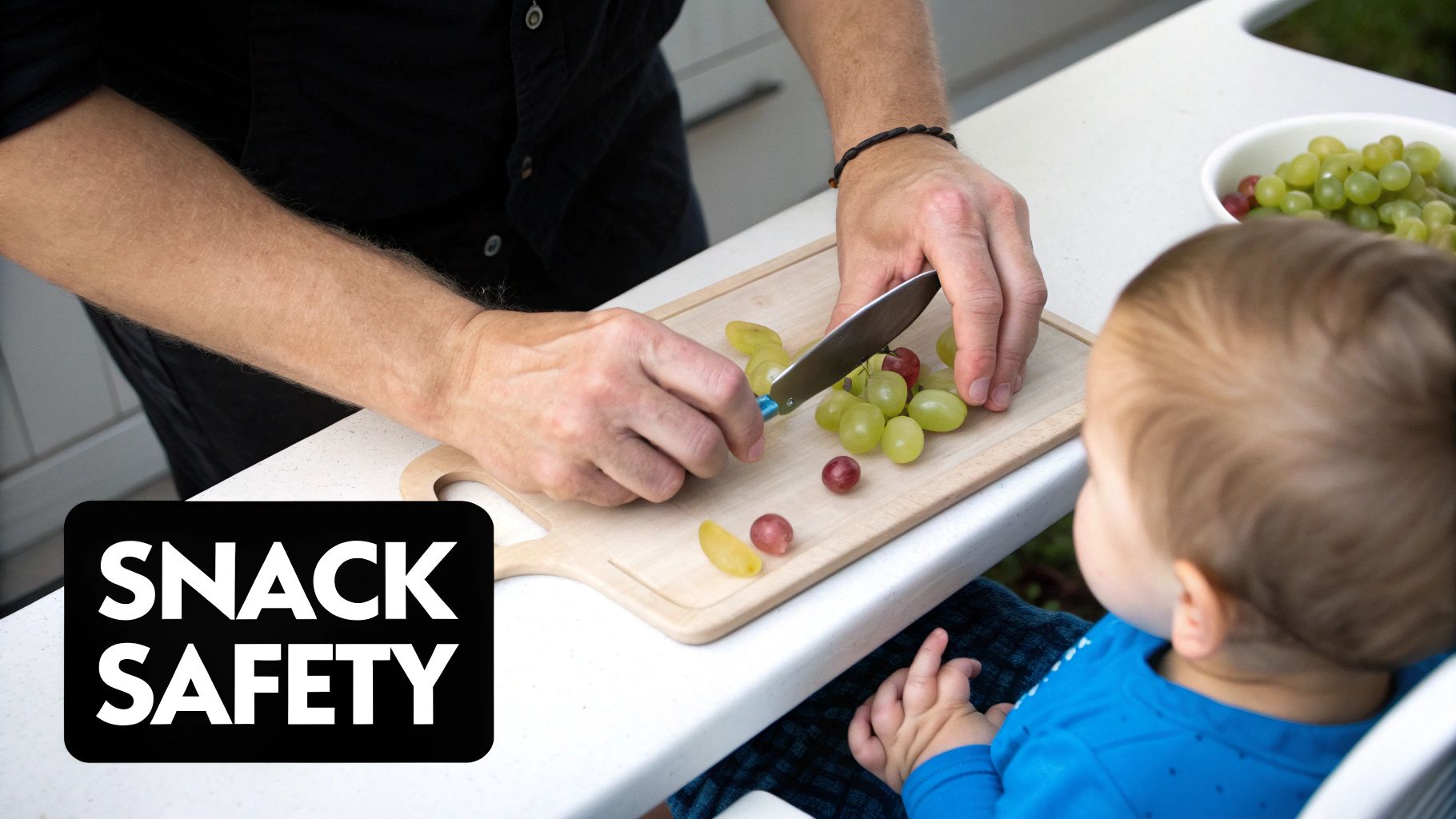
Once you’ve found some great low sugar snacks for toddlers, the next step is making sure they’re served safely. It’s a simple truth: nutrition and safety go hand-in-hand. Toddlers are still getting the hang of chewing and swallowing, so some foods can be tricky if they aren’t prepped the right way.
But this isn't about banning foods. It's about smart preparation. With a few simple tweaks, you can turn a potential hazard into a safe, delicious bite your toddler will love, giving you total peace of mind.
Preventing Choking Hazards
So many healthy snacks are perfect for toddlers, as long as you adjust their size, shape, or texture. The main idea is to avoid anything small, round, and hard—or anything overly sticky—that could get stuck in a little one's tiny airway.
Here are a few go-to prep tips for common snack foods:
- Grapes, Berries, and Cherry Tomatoes: These should never be served whole. The trick is to cut them lengthwise into quarters. This gets rid of that dangerous round shape.
- Hot Dogs or Sausages: If these are on the menu, slice them lengthwise first before chopping them into small, half-moon pieces. Avoid coin-shaped slices.
- Nuts and Seeds: Whole nuts and seeds are a no-go for kids under four. A much safer way to introduce them is by spreading a very thin layer of smooth nut butter on a cracker.
- Hard Fruits and Veggies: Think raw carrots or apples. These need to be softened up. Shredding them or steaming them until tender works perfectly.
A great rule of thumb is to cut food into pieces no larger than half an inch. Making this a habit dramatically lowers the choking risk and makes snack time much less stressful for everyone involved.
For even more great ideas on building a safe and healthy snack routine, check out these snacking tips for your family.
Watching for Allergies
Besides choking, being mindful of potential food allergies is a huge part of snack time safety. When you’re introducing a new food—especially a common allergen like peanuts, tree nuts, eggs, dairy, or soy—it's best to offer it by itself.
Give it three to five days before you introduce another new food. This little waiting period makes it so much easier to pinpoint the cause if your child has a reaction. Be on the lookout for symptoms like hives, swelling, vomiting, or trouble breathing, and call your pediatrician right away if you see anything concerning. This careful method lets you safely expand your toddler's menu of low sugar snacks for toddlers.
Answering Your Top Questions About Low-Sugar Snacks
Stepping into the world of toddler nutrition can feel like navigating a maze. As you start focusing on low-sugar snacks for toddlers, it's only natural for questions to pop up. You might be dealing with a picky eater, or maybe you're just wondering if those convenient store-bought options are as healthy as they claim.
Let's clear up some of the most common concerns parents face. Here are some simple, practical answers to help you feel confident about snack time.
Are Fruit Snacks a Healthy Low-Sugar Option?
This one is tough because the name itself feels like a trick. The reality is, most of those colorful, gummy fruit snacks are basically candy. They're often loaded with added sugars like corn syrup and fruit juice concentrate and have none of the fiber that real fruit offers. Without that fiber, you're looking at a big blood sugar spike.
For a truly healthy choice, you can't beat whole, fresh fruit. A small bowl of blueberries or a few apple slices delivers natural sweetness, vitamins, and that all-important fiber. If you really need a convenient, on-the-go option, look for pouches made from 100% fruit puree and double-check that the label shows no added sugars.
How Can I Encourage My Picky Eater to Try Healthy Snacks?
When it comes to picky eaters, patience and a no-pressure attitude are your superpowers. It's totally normal for toddlers to be suspicious of new foods. In fact, it can sometimes take a dozen or more times seeing a new food on their plate before they even consider taking a bite.
Here are a few gentle strategies that can help:
- Pair the New with the Known: Serve something new, like bell pepper strips, alongside a dip they already love, like hummus or yogurt. The familiar food makes the new one seem less intimidating.
- Make It Fun: A little creativity goes a long way. Use small cookie cutters to make fun shapes out of cheese or thin slices of melon. Even serving snacks on a special plate with dividers can make a difference.
- Lead by Example: This is the most powerful tool you have. Let your toddler see you eating and genuinely enjoying the same healthy snacks. When they see you crunching on carrots, they're more likely to try them, too.
My Toddler Only Wants Sugary Snacks. What Can I Do?
First off, know that you are not alone—this is an incredibly common challenge. The goal is to gradually shift their palate and your home environment without turning every meal into a power struggle. Start by slowly reducing the number of high-sugar snacks in the pantry. If they aren't there, they can't be a point of contention.
A predictable meal and snack schedule is also a game-changer. When kids know that a planned snack is coming, they are less likely to graze or demand treats out of boredom.
Give your toddler a sense of control by offering two healthy choices. You could ask, "Would you like a banana or some yogurt with berries for your snack?" This empowers them to make a decision while you ensure both options are nutritious.
Are Pre-Packaged Snacks Like Rip Van Good for Toddlers?
Let’s be real, pre-packaged snacks can be a lifesaver for busy parents. The key is simply to choose the right ones. Brands like Rip Van are designed to be smarter alternatives to traditional cookies and crackers because they're specifically made to be low in sugar while also containing fiber.
A great way to use them for toddlers is to think of them as part of a snack duo. For instance, you could serve a small piece of a Rip Van Wafel with some fresh berries or a cheese stick. This combo creates a more balanced snack with fiber, protein, and a variety of nutrients to keep them full and happy. Just like with any food, always make sure the texture is safe and appropriate for your child's age and chewing skills.
Looking for delicious, convenient snacks that fit a low-sugar lifestyle? Explore the options from Rip Van. You'll find a variety of wafels and cookies designed to be both satisfying and smart. Find your new family favorite at https://ripvan.com.
0 comments