

When you’re trying to lose weight, snacking often feels like a trap. But it doesn't have to be. The right low sugar snacks for weight loss can actually be one of your most powerful tools, not a setback. The trick is choosing snacks that combine fiber and protein to keep you feeling full and your energy stable, sidestepping those crashes that send you running for the nearest sugary treat.
How Smart Snacking Can Accelerate Your Weight Loss
A lot of us have been told that to lose weight, you have to cut out snacks completely. But that all-or-nothing mindset usually backfires, leaving you ravenous by your next meal and more likely to overeat. The real secret isn't to stop snacking—it's to start snacking smarter.
Think of your body's energy like a campfire. A high-sugar snack is like tossing a handful of dry leaves on it. You get a big, bright flash of flame that dies out almost immediately, leaving you right back where you started. That’s the classic sugar rush and crash cycle.
Sustained Energy for Lasting Fullness
Now, imagine using a solid, slow-burning log instead. That’s what a low-sugar, high-fiber snack does. It provides a steady, consistent release of energy that keeps you going for hours. This keeps your blood sugar levels from spiking and crashing, which in turn helps you dodge those intense cravings that can derail your progress.
This isn’t just a hunch; it’s a massive shift in how we eat. The healthy snacks market is on track to hit USD 199.6 billion by 2035, and low-sugar options are a huge piece of that pie, making up 39.0% of the category. Research backs this up, too. Studies have shown that swapping out sugary snacks for high-fiber alternatives helps with weight loss by improving how your body handles insulin and taming your hunger hormones.
When you master smart snacking, you can:
- Control Hunger: You’ll avoid that desperate, I-need-to-eat-now feeling that leads to bad choices.
- Maintain Energy: Say goodbye to that dreaded afternoon slump.
- Reduce Calorie Intake: Feel satisfied on fewer calories, making it easier to maintain a calorie deficit.
Choosing snacks with a balance of nutrients is key. A good snack isn't just about what it lacks (sugar) but also what it provides, such as fiber and protein, to support your goals.
Making Smart Choices Consistently
Knowing what to do is one thing; doing it consistently is another. Technology can be a huge help here. To keep track of your snack choices and overall diet, explore the best food tracking app options and find one that works for you.
And if you’re looking for convenient and tasty ideas that fit this philosophy, our guide on high-fiber, low-carb snacks is a great place to start.
Understanding the Sugar and Weight Gain Connection
To really nail down the best low sugar snacks for weight loss, it helps to know what’s actually happening inside your body when you eat something sweet. Picture your energy levels like a car. A sugary snack is like slamming your foot on the gas pedal—you get a massive, immediate jolt of speed, but it burns through fuel like crazy and is impossible to maintain.
That initial surge is your blood glucose spiking. In response, your body releases a flood of insulin, a hormone that hustles all that sugar out of your bloodstream and into your cells for energy. The problem is, this process is often a bit too aggressive. Your body overcorrects, and your blood sugar plummets just as fast as it shot up.
The Blood Sugar Rollercoaster
This up-and-down experience is what many people call the "blood sugar rollercoaster." And after that big peak comes the inevitable crash. You're left feeling tired, mentally foggy, and, worst of all, hungry again. Your body is screaming for another quick fix, which usually means reaching for... you guessed it, more sugar. This kicks off a frustrating cycle of spikes, crashes, and cravings that can make it feel impossible to manage your appetite.
What’s more, this cycle messes directly with your hunger hormones. When your energy crashes, your body can ramp up its production of ghrelin, the hormone that tells your brain you're hungry. Suddenly, you feel famished even if you've eaten enough calories, setting the stage for overeating later in the day.
This vicious cycle is a major barrier to weight loss. By causing intense cravings and disrupting natural hunger signals, high-sugar snacks can subtly encourage you to consume more calories than your body actually needs.
Finding a Smoother Ride with Low Sugar Snacks
Let’s go back to that car analogy. A low-sugar snack, especially one with fiber and protein, is like setting your car to cruise control. Instead of flooring it and then slamming on the brakes, you get a slow, steady, and efficient release of energy.
This gentle delivery of fuel prevents those dramatic blood sugar spikes and the crashes that follow. Here’s why that’s a game-changer for your weight loss efforts:
- Stable Energy: You can say goodbye to that dreaded afternoon slump and stay focused.
- Better Appetite Control: With no crash, ghrelin levels stay in check, which helps keep cravings from taking over.
- Reduced Calorie Intake: When you feel full and satisfied for longer, you’re far less likely to grab extra snacks or overdo it at your next meal.
If you want to dig deeper into the long-term impact of sugar on your body, a great place to start is understanding your HbA1c levels, which is a key measure of your average blood sugar. Choosing snacks that keep your glucose stable isn't just a short-term trick; it's a core strategy for sustainable weight loss and better metabolic health for the long haul.
How to Read Nutrition Labels Like a Pro
Walking down the snack aisle can feel overwhelming, with every package screaming "healthy!" at you. But marketers are clever, and the real truth is always on the back. Learning to read the nutrition label is your single best skill for finding genuinely good low sugar snacks for weight loss.
Think of the nutrition facts as your cheat sheet. Forget the flashy claims on the front—the real story is in the numbers. Once you know what to look for, you can cut through the noise and find what actually works for your body.
Zero in on Added Sugars
Your first stop should always be the sugar section. You'll see two lines: Total Sugars and Added Sugars. Pay closest attention to Added Sugars. This number tells you exactly how much sugar was tossed in during manufacturing, like cane sugar, corn syrup, or agave.
These are the culprits behind that blood sugar spike-and-crash cycle that leaves you feeling drained and hungry again. Natural sugars in whole fruit are different because they're paired with fiber, which slows everything down. A great target is to find snacks with 5 grams of added sugar or less per serving.
Prioritize Dietary Fiber
Right after checking the sugar, your eyes should find Dietary Fiber. Fiber is your best friend when it comes to weight loss. It's what makes you feel full and satisfied, which is critical for preventing overeating later. It also helps manage blood sugar, giving you steady, reliable energy.
Look for snacks that pack at least 3 grams of fiber per serving. When you find a snack that’s low in added sugar and gives you a solid hit of fiber, you've found a winner. That's the magic formula for a treat that hits the spot without throwing off your goals. For a deeper look, you can learn more about what truly defines a low sugar snack in our detailed guide.
Scan the Ingredients List
Last but not least, always glance at the ingredients list. This tells you what the food is actually made of, listed in order from most to least by weight. You want to see real, whole foods—like oats, nuts, or seeds—right at the top.
Be a detective and watch out for hidden sugars in disguise. Manufacturers use over 50 different names for sugar, hoping you won't notice.
This is where you spot the sneaky stuff. Keep an eye out for these common sugar aliases that might not be obvious at first glance:
- Dextrose
- Maltose
- Corn syrup or high-fructose corn syrup
- Barley malt
- Rice syrup
- Sucrose
Here’s a quick reference table to make it even easier next time you're at the store.
Decoding the Nutrition Label for Weight Loss Snacks
Use this handy guide to quickly evaluate if a snack will help or hinder your weight loss efforts.
| Nutrient/Component | What to Look For (Ideal) | What to Avoid (Red Flags) |
|---|---|---|
| Added Sugars | 5g or less per serving | Double-digit numbers; sugar listed in the first 3 ingredients |
| Dietary Fiber | 3g or more per serving | 0g or 1g of fiber, especially if sugar is high |
| Protein | 5g or more per serving | Very low protein (less than 2g) |
| Serving Size | A realistic portion you'd actually eat | Tiny serving sizes that make the numbers look deceptively low |
| Ingredients List | Whole foods at the top (nuts, seeds, whole grains) | Long lists of unpronounceable chemicals, multiple types of sugar |
By focusing on these key areas—keeping added sugar low, getting enough fiber, and sticking to real ingredients—you can confidently pick snacks that truly support you.
Your Ultimate Low-Sugar Snack Shopping List
Knowing what to look for on a label is one thing, but turning that knowledge into a shopping list full of satisfying snacks is where the real magic happens. The best low-sugar snacks for weight loss don't just check a nutritional box—they have to taste great, fit into your busy life, and be made with ingredients you can actually feel good about.
This list is designed to give you a smart, tasty option for whatever craving hits, so you always have something on hand that supports your goals.
When You're Craving Something Sweet
We all get that urge for something sweet. Instead of reaching for a sugary treat that will send you on a blood sugar rollercoaster, try one of these options. They satisfy your sweet tooth while packing a high-fiber punch to keep you feeling full and energized.
- High-Fiber Cookies or Wafers: Look for treats specifically made to be low in sugar but high in fiber. A single cookie or a couple of thin wafels can deliver that sweet, satisfying texture you're after without the dreaded sugar crash. For more ideas, check out our guide to the best low sugar snack bars.
- Greek Yogurt with Berries: A half-cup of plain Greek yogurt gives you a fantastic protein boost. Top it with a handful of raspberries or blueberries for a touch of natural sweetness and a good dose of fiber.
- Dark Chocolate: Yes, chocolate! A single square (~1 ounce) of dark chocolate (70% cacao or higher) is packed with antioxidants and can kick a craving to the curb with very little sugar.
For That Salty, Crunchy Fix
Sometimes, nothing hits the spot like something salty and crunchy. But instead of greasy chips that are full of empty calories, go for snacks that deliver that satisfying crunch along with some real nutrition like protein and healthy fats.
- Roasted Chickpeas: A quarter-cup of roasted chickpeas, seasoned with a little sea salt and smoked paprika, provides an incredible crunch plus a healthy serving of fiber and plant-based protein.
- Nuts and Seeds: A small handful (about 1/4 cup) of almonds, walnuts, or pumpkin seeds is a powerhouse combo of healthy fats, protein, and fiber that keeps you feeling full for hours.
- Veggies with Hummus: It’s a classic for a reason. Crunchy bell pepper strips, cucumber slices, or carrots dipped in two tablespoons of hummus make for a refreshing, nutrient-packed snack.
A snack's success hinges on its ability to satisfy your craving while providing nutritional value. The goal isn't deprivation; it's making a smarter swap that keeps you on track.
To Get a Solid Protein Punch
Protein is your best friend when it comes to feeling full and maintaining muscle while you're losing weight. These snacks are perfect for getting you through that dreaded afternoon slump or holding you over between meals.
- Hard-Boiled Eggs: One or two hard-boiled eggs are a portable powerhouse of protein and healthy fats. They’re incredibly simple and do an amazing job of keeping hunger at bay.
- Low-Fat Cheese Stick: A single cheese stick is a quick, easy, and mess-free way to get a dose of protein and calcium when you're on the move.
- Edamame: A half-cup of steamed and lightly salted edamame is not only fun to eat but also offers a great balance of protein and fiber.
This simple process flow shows the three key areas to check on any nutrition label before adding a snack to your cart.
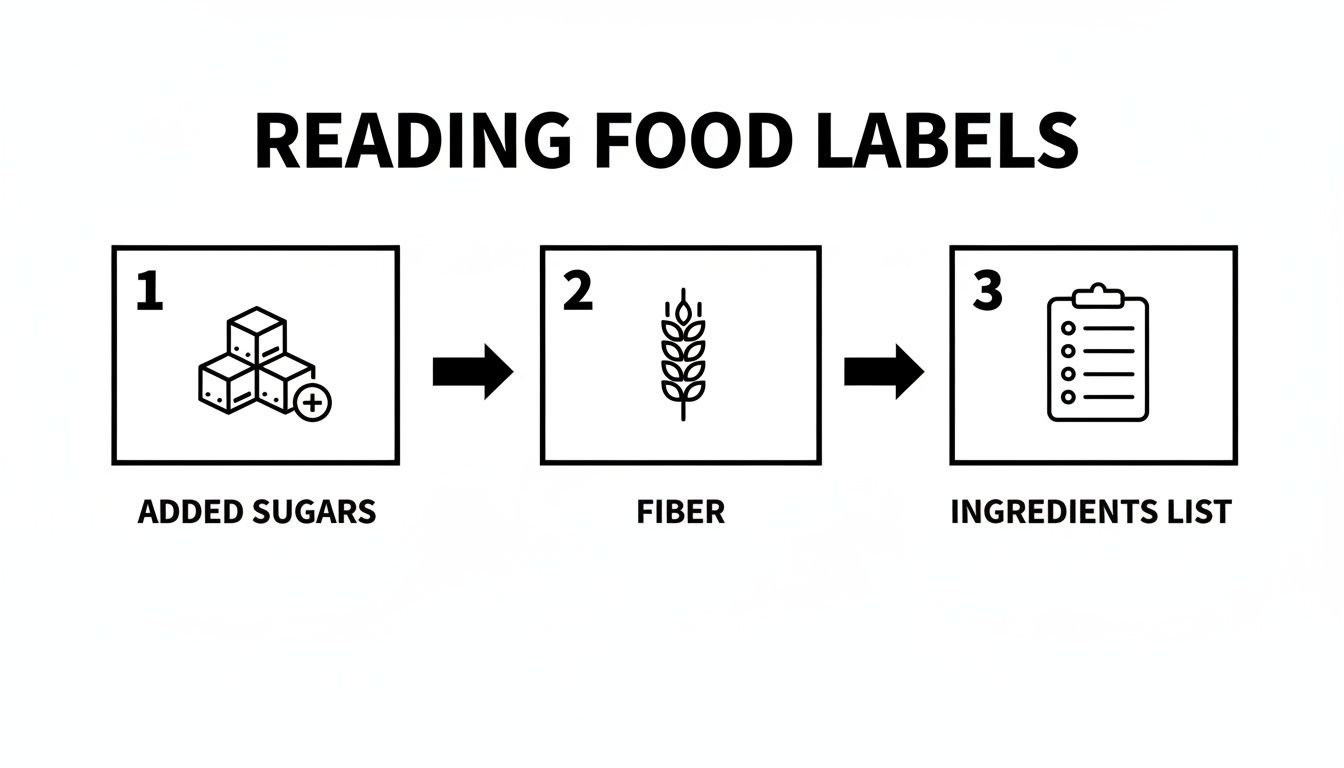
By focusing on low added sugars, high fiber, and a clean ingredient list, you can be confident you're choosing a snack that truly supports your weight loss journey.
Timing Your Snacks for Better Weight Loss Results
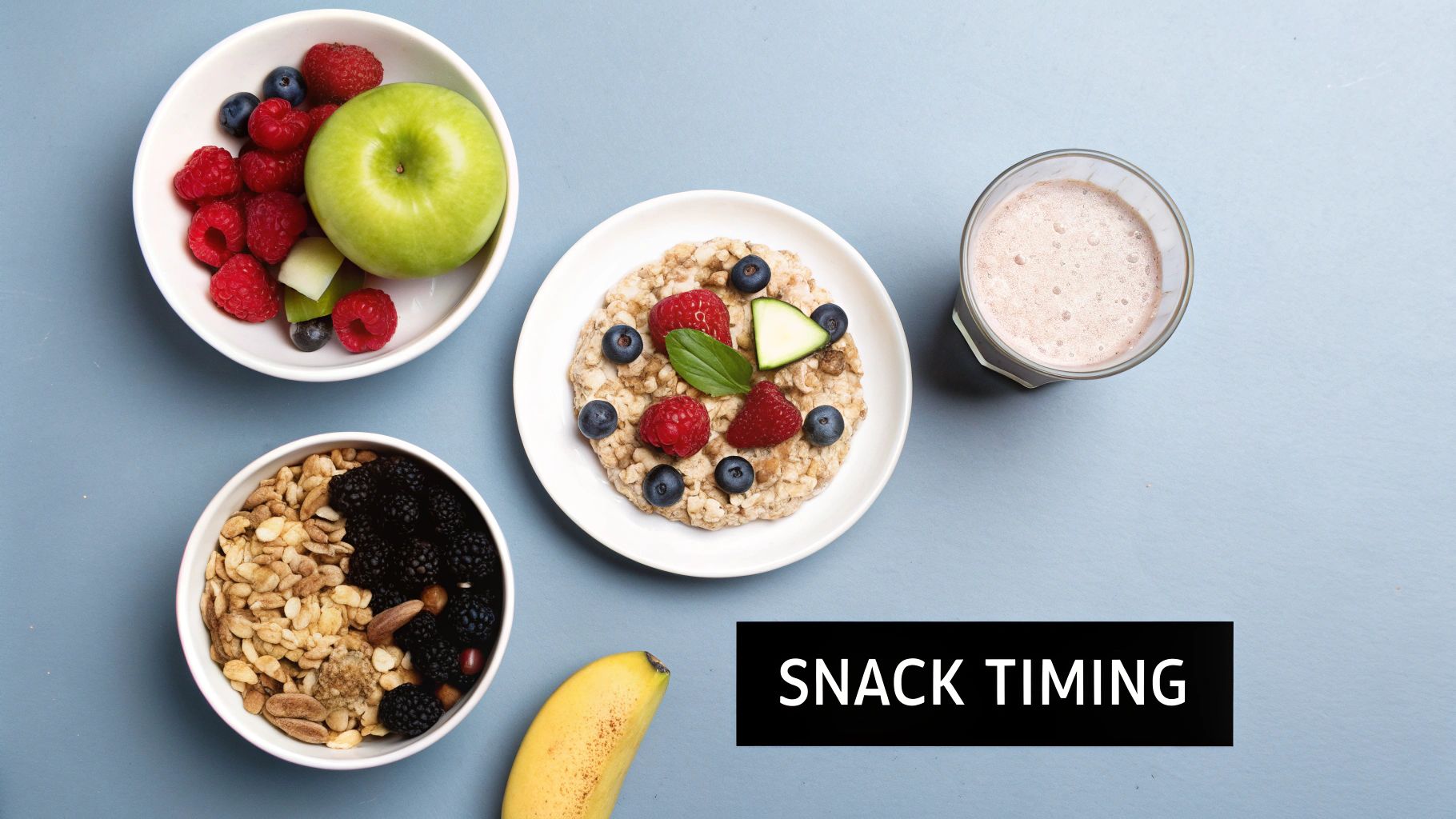
Knowing what to snack on is just one piece of the puzzle. The real secret weapon for weight loss is knowing when to snack. It’s not about giving in to every little craving; it’s about strategically using snacks to manage hunger, keep your energy levels from tanking, and prevent you from overeating at your main meals.
Think of it as staying one step ahead of your hunger. When you plan your snacks around your body's natural rhythms and daily schedule, you’re in control. This proactive approach means you never reach that point of being so hungry you'll grab anything, making your low sugar snacks for weight loss truly effective.
The Mid-Morning Bridge
We’ve all been there. That long, slow crawl from breakfast to lunch when your focus starts to wander and your stomach starts to rumble. A smart mid-morning snack is the perfect bridge to get you through.
- When to Eat: Aim for around 10 or 10:30 AM, or whenever you notice the effects of breakfast starting to fade.
- What to Eat: You want something light that won't ruin your lunch. A piece of fruit with a small handful of almonds is great, or a single low-sugar wafer can deliver just enough energy to keep you going.
Beating the Afternoon Slump
Ah, the 3 PM crash. It's a classic for a reason. Your energy nosedives, your willpower follows, and suddenly those office donuts look irresistible. This is where a planned afternoon snack saves the day.
This is arguably the most important snack of the day for preventing overeating at dinner. A balanced choice here can make all the difference in your evening meal choices.
For this time slot, you need a snack with some serious staying power. The goal is to combine protein and fiber for long-lasting satisfaction. Think Greek yogurt, a handful of roasted chickpeas, or a satisfyingly crunchy, high-fiber cookie that won’t send your blood sugar on a wild ride.
Fueling Your Fitness
Your workout schedule changes everything. Eating the right thing at the right time can make a huge difference in your performance and how quickly you recover.
- Pre-Workout (30-60 minutes before): Your body needs quick, easily digestible carbs for immediate energy. A small banana or a light, low-sugar crispy wafer is perfect.
- Post-Workout (within an hour after): Now the focus shifts to protein for muscle repair, plus a few carbs to restock your energy stores. A protein shake or a simple hard-boiled egg are fantastic choices to help your body bounce back.
Common Snacking Pitfalls and How to Sidestep Them
Let's be honest, navigating the snack aisle can feel like a trap. It's a minefield of misleading claims and clever marketing designed to make you think you're making a healthy choice. Even with the best intentions, it's easy to get derailed. Knowing what these common mistakes are is the first step to picking snacks that actually help, not hinder, your weight loss.
One of the biggest traps is what I call the "health halo" effect. You see a package plastered with words like "natural," "organic," or "gluten-free," and your brain instantly thinks, "this must be good for me." But those labels don't tell you anything about the sugar content. A gluten-free cookie can easily pack more sugar than its conventional counterpart.
Don't Get Fooled by the Front of the Box
Another classic mistake is overlooking the serving size. A snack might look low in sugar on paper, but then you realize the listed serving is just three tiny crackers. Who eats just three crackers? Before you know it, you've eaten double or triple the amount of sugar you planned on. Always, always check the serving size to get the real story.
And then there's the "fat-free" myth. When manufacturers take out the fat, they have to add something back in to make the product taste good. That "something" is almost always sugar, corn syrup, or other sweeteners. What looks like a smart choice can quickly turn into a sugar bomb that completely works against your goals.
The real skill to develop here is critical thinking. Learn to ignore the flashy promises on the front of the box and become a detective who gets the facts from the nutrition label on the back.
Finally, be wary of relying too heavily on artificial sweeteners. While they are calorie-free, some studies suggest they can keep your sweet tooth fired up, making it tougher to break the craving cycle and appreciate the subtle, natural sweetness of real food.
It's clear people are catching on. The demand for genuinely better options is exploding, with the low sugar fruit snacks market expected to jump from USD 2.84 billion in 2024 to USD 4.82 billion by 2030. This isn't surprising when you consider the 2.4 billion overweight adults globally who are becoming more aware of sugar's impact. Consumers are actively seeking out snacks with clean, simple ingredients, and you can explore more market insights to see just how much this trend is shaping the future of food.
Got Questions About Low-Sugar Snacking? We've Got Answers.
When you're trying to dial in your nutrition for weight loss, it's natural for a few questions to pop up. Getting straight answers is key to feeling confident in your choices. Let's tackle some of the most common ones.
How Many Low-Sugar Snacks Should I Have Each Day?
There's no magic number, but for most people, one to two well-timed, low-sugar snacks is a great sweet spot. The real goal here is to manage hunger and keep your energy steady, not to graze from sunup to sundown.
Think of snacks as a bridge between meals. A mid-morning or mid-afternoon snack can be just what you need to prevent that ravenous feeling that leads to overeating later. The most important thing is to listen to your body’s actual hunger signals.
What About Fruit? Isn't it Full of Sugar?
Yes, whole fruits are an fantastic choice! It's a common hang-up, but the sugar in fruit (fructose) is bundled with fiber, water, and tons of nutrients. This natural packaging completely changes how your body processes it.
The fiber dramatically slows down sugar absorption, preventing the spikes and crashes you get from processed sweets. Berries, apples, and pears are great low-sugar options. For an even better blood-sugar-balancing effect, pair your fruit with some protein or healthy fat—think apple slices with a handful of almonds or a cheese stick.
It's a huge misconception that all sugar is created equal. The natural sugar in a whole apple behaves entirely differently in your body than the added sugar in a candy bar, thanks to its fiber and water content.
Is it Okay to Eat Low-Sugar Snacks at Night?
This is a tricky one. Generally, it's wise to stop eating a few hours before bed, as your metabolism slows down while you sleep. Your body is meant to be resting, not digesting.
However, if you're truly hungry—not just bored or craving something—going to bed with a rumbling stomach isn't the answer either. In that case, a small, light, low-sugar snack is a much better choice than tossing and turning all night. Stick with something easy to digest that has a bit of protein, like a small serving of Greek yogurt.
Ready to make smart snacking simple and delicious? See what it's like to enjoy a satisfying, guilt-free treat. Explore the full range of high-fiber, low-sugar cookies and wafers from Rip Van and find your new favorite at https://ripvan.com.
0 comments