

When you're managing diabetes, the idea of enjoying a cookie can feel like a distant dream. But I'm here to tell you that it's absolutely possible. The secret isn't about finding a cookie with zero sugar, but rather finding one that's built on smarter science—a cookie designed to have a gentler impact on your blood sugar.
Finding a Cookie That Works for You
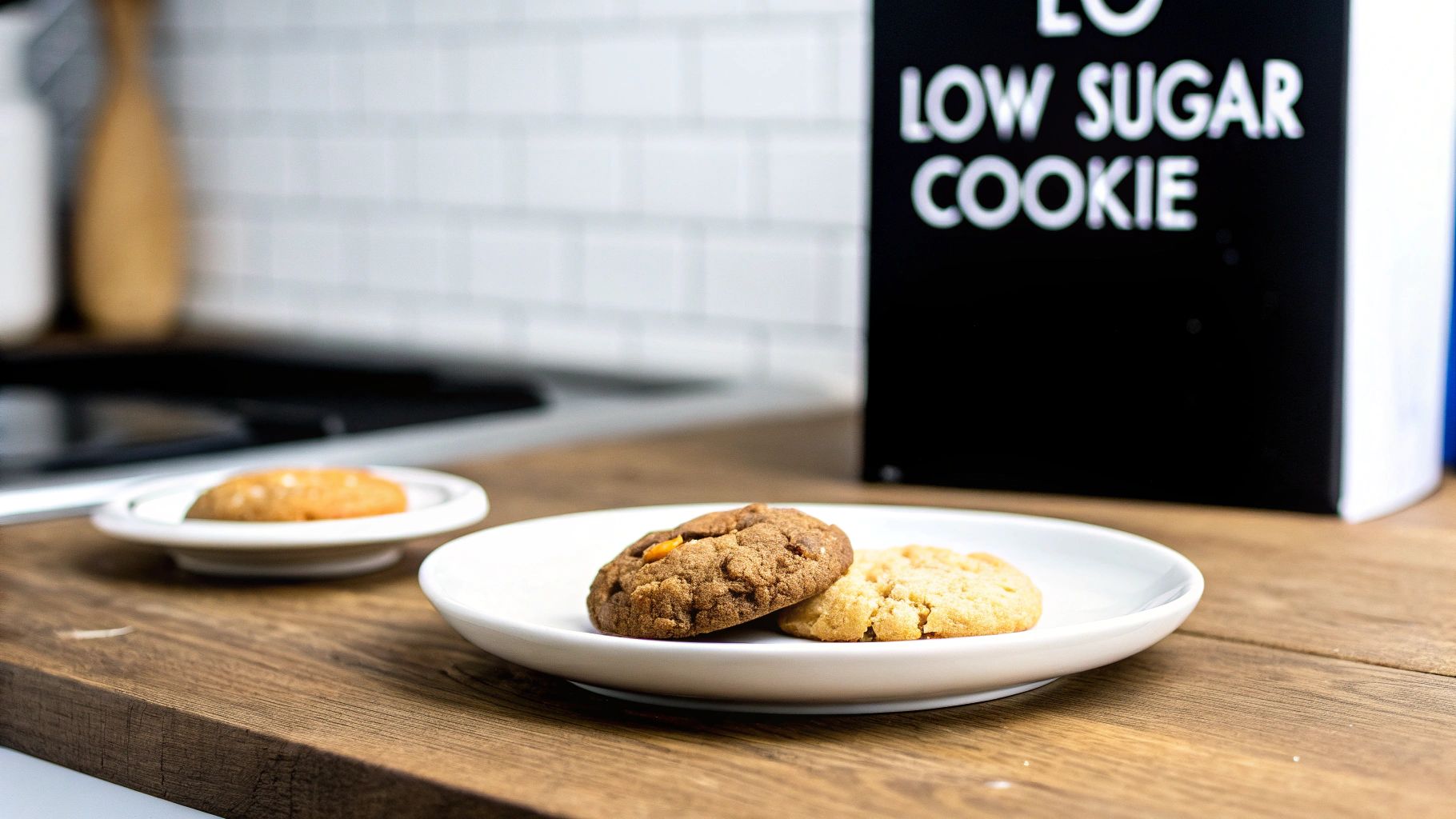
The search for a truly diabetic-friendly cookie is all about understanding how different ingredients interact. A typical store-bought cookie, packed with refined white flour and sugar, hits your system like a bolt of lightning—a sudden, sharp spike in blood glucose that inevitably leads to a crash.
That rollercoaster is exactly what we want to avoid. The real goal is to find a treat that delivers on satisfaction without sending your blood sugar on a wild ride.
The Slow-Burn Approach to Snacking
A well-made low sugar cookie takes a completely different path. Imagine it as a slow-burning log in a fireplace, providing steady, gentle warmth over time. That’s what we want from a snack. This slow-and-steady effect comes from a smart combination of ingredients that work together to slow down how quickly your body absorbs carbohydrates.
Here’s what makes that possible:
- High Dietary Fiber: Fiber is your best friend here. It essentially puts the brakes on digestion, slowing down the release of sugar into your bloodstream and helping you avoid those sharp spikes.
- Smart Sweeteners: Natural, low-glycemic sweeteners like allulose or monk fruit offer that familiar sweet taste without affecting blood glucose the way regular table sugar does.
- Healthy Fats and Proteins: Using ingredients like almond flour is a double win. It lowers the overall carb count while adding healthy fats and protein, which help you feel full and further stabilize your blood sugar.
This powerful trio of ingredients effectively lowers the cookie's "net carbs"—the total carbohydrates minus the fiber and certain sugar alcohols. It’s this net carb number that gives you a much more accurate idea of how a food will actually affect your blood sugar levels.
A truly diabetic-friendly snack isn't about deprivation; it's about intelligent formulation. The right cookie can be both a delicious indulgence and a mindful choice that supports your health goals.
Indulgence Without the Impact
This thoughtful formulation means you don’t have to swear off the simple joy of a good cookie forever. It’s about being empowered to enjoy a treat responsibly, knowing it was designed to work with your body, not against it.
Brands like Rip Van have really nailed this balance, creating snacks that are big on flavor and texture while keeping sugar low and fiber high. By using innovative ingredients, they’ve crafted indulgent but mindful options, proving that low sugar cookies for diabetics can absolutely be a delicious part of a balanced lifestyle.
Why Healthier Cookies Are a Global Trend
The search for a great low sugar cookie for diabetics isn't happening in a vacuum. It's actually part of a huge, worldwide shift in how we all think about food, health, and what it means to have a treat. What used to be a tiny niche market is now a full-blown movement, with more and more people and families looking for better-for-you options.
This goes way beyond managing a specific health condition. It’s about a shared desire for snacks that don't force us to choose between enjoying something sweet and feeling good afterward. People everywhere want to know what’s in their food, whether they have diabetes or are just trying to cut back on sugar. This massive shift in consumer thinking is pushing the entire food industry to innovate.
A Response to Urgent Health Needs
A huge driver of this trend is the growing number of people living with diabetes worldwide. As diagnoses increase, the need for safe, satisfying foods that don’t wreak havoc on blood sugar has become critical. The market for sugar-free cookies, for instance, has exploded right alongside the global diabetes epidemic, making low-sugar treats a necessity for millions.
The numbers are pretty stark. According to the International Diabetes Federation (IDF), around 537 million adults (aged 20-79) were living with diabetes back in 2021. That number is expected to hit 643 million by 2030 and a jaw-dropping 783 million by 2045. You can find more details on this trend in this report on the sugar-free cookie market.
These aren't just statistics; they represent millions of people who need and deserve delicious snack options that support their health journey. This reality has lit a fire under the food industry, forcing it to change.
The move toward healthier snacks isn't a fad. It's a direct response to a global health need, pushing brands to create products that are both delicious and genuinely better for us.
How Food Innovation Is Meeting the Challenge
In response, some really smart food brands are stepping up. They're ditching the old-school formulas packed with refined sugar and empty calories and instead focusing on clean labels and ingredients that actually do something for your body.
This new approach to making snacks prioritizes a few key things:
- Natural Sweeteners: High-fructose corn syrup and weird-tasting artificial sweeteners are out. In their place, you’ll find plant-based options like allulose, monk fruit, and stevia, which give you that sweet taste without the blood sugar spike.
- Functional Ingredients: Fiber is the new hero ingredient. It slows down how quickly your body absorbs sugar, is great for your gut, and helps you feel fuller, making a small treat feel much more satisfying.
- Better-for-You Flours: Instead of refined white flour, you'll see more almond, coconut, and other nut flours. These offer fewer carbs and add healthy fats and a bit of protein into the mix.
This focus on quality ingredients and smarter recipes means that finding a genuinely good, well-made cookie is easier than ever. The best brands are showing that you don't have to give up flavor for health. By using better ingredients and a little food science, they’re creating indulgent snacks that fit perfectly into a modern, health-conscious lifestyle. It's this commitment that makes finding a delicious, diabetic-friendly cookie a reality today.
How to Read a Nutrition Label Like an Expert
When you're managing diabetes, the nutrition label on a package of cookies is your best friend. But let's be honest, it can also feel like you need a secret decoder ring to understand it. The trick is knowing exactly where to look and which numbers really matter for your blood sugar.
Most people’s eyes go straight to the "Sugars" line. While that's an important piece of the puzzle, it doesn’t give you the full story. To truly manage your blood sugar effectively, you need to shift your focus to two other critical values: Total Carbohydrates and Dietary Fiber.
The Real Story Is in the Total Carbs
Think of Total Carbohydrates as the big picture. This single number includes everything—starches, sugars, and fiber. All of these eventually break down into glucose, but the key is that they do it at very different speeds. This number is your starting point for figuring out how a cookie might affect you.
A cookie could be low in added sugar but packed with refined starches from white flour, which can still send your blood sugar soaring. That's exactly why just looking at the sugar line can be so misleading when you're searching for genuinely diabetic-friendly cookies.
The demand for better options isn't happening in a vacuum. As global health awareness grows, people are pushing food companies to innovate and create healthier products.
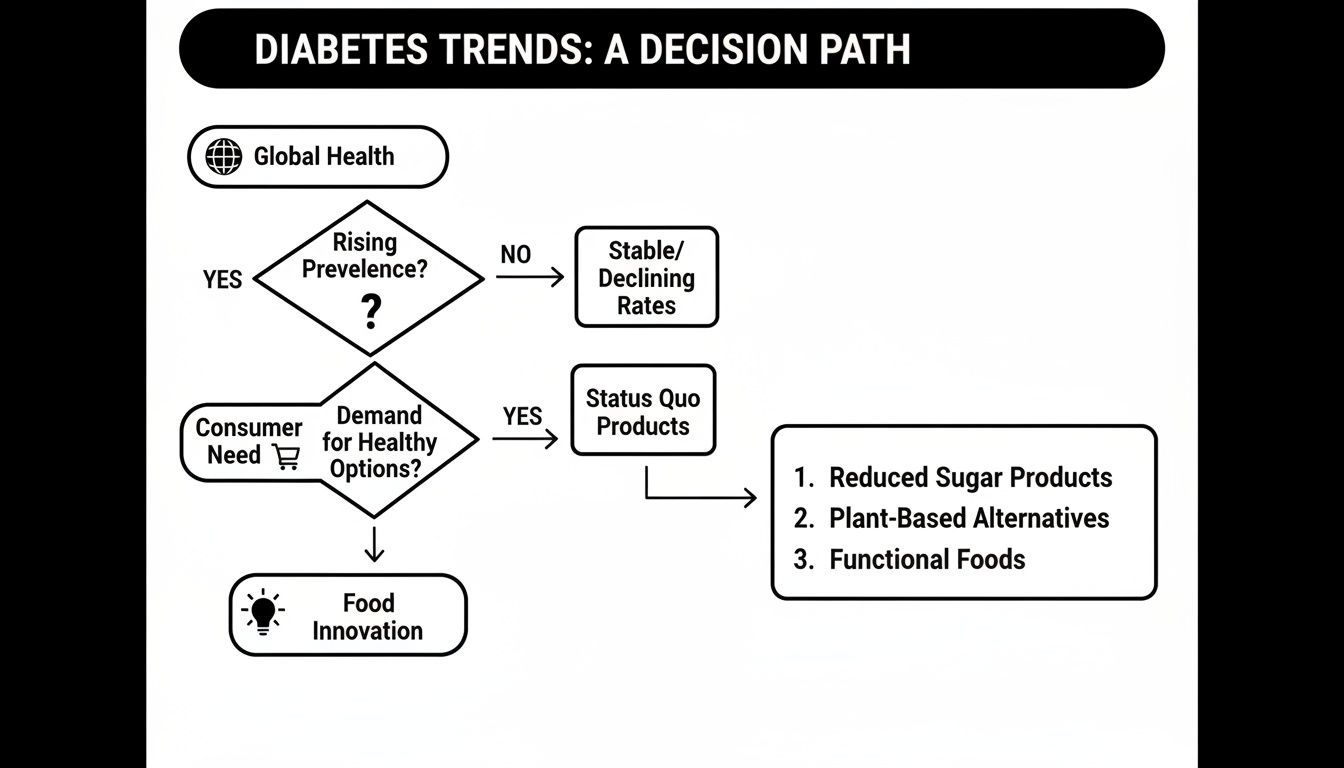
This flowchart really shows how your personal health needs are driving a bigger movement toward more thoughtful, well-crafted food for everyone.
Fiber: The Blood Sugar Brake
Now, for the unsung hero of the nutrition label: Dietary Fiber. If total carbs are the gas pedal for your blood sugar, think of fiber as the brake. It's a special type of carb that your body can't digest, which means it doesn't raise blood sugar levels on its own.
Better yet, fiber slows down how quickly your body absorbs the other carbs in the cookie. This helps you get a much more gradual release of glucose into your bloodstream, preventing those harsh spikes and dreaded crashes you get from typical sugary snacks.
By subtracting the grams of Dietary Fiber from the grams of Total Carbohydrates, you get a far more accurate idea of how a snack will impact your blood sugar. This simple calculation gives you the "net carbs."
This little bit of math is a total game-changer. It lets you see right past the flashy marketing claims on the front of the box and make a decision based on the data that actually affects your health.
To help you put this into practice, here’s a quick breakdown of what to look for on a typical cookie label.
Decoding a Diabetic-Friendly Cookie Label
| Label Component | What to Look For | Why It Matters for Diabetics |
|---|---|---|
| Serving Size | The very first line. Is it one cookie or half a cookie? Be realistic about how much you'll eat. | All the numbers below are based on this amount. Eating more means you have to multiply everything. |
| Total Carbohydrates | Your starting point. This is the total amount of carbs that can potentially affect blood sugar. | This gives you the "big picture" impact before accounting for fiber. |
| Dietary Fiber | Higher is better! Look for cookies with at least 3-5g of fiber per serving. | Fiber slows sugar absorption and reduces the net carb count, leading to better blood sugar stability. |
| Total Sugars | Lower is always better. Pay attention to "Includes Added Sugars." Aim for less than 5g. | Added sugars offer no nutritional value and cause rapid blood sugar spikes. |
| Sugar Alcohols | Found in many sugar-free products (e.g., erythritol, xylitol). | These have a minimal impact on blood sugar, but some people are sensitive to them. |
| Protein | A nice bonus. 2-3g or more per cookie is a great sign. | Protein also helps slow digestion and can increase feelings of fullness, preventing overeating. |
Reading a label this way helps you build a complete picture of the cookie, not just a single snapshot.
Calculating Net Carbs: A Practical Example
Let's walk through a real-world scenario. You pick up a cookie, and the label for one serving says:
- Total Carbohydrates: 15g
- Dietary Fiber: 6g
To figure out the net carbs, you just do the quick subtraction: 15g (Total Carbs) - 6g (Fiber) = 9g Net Carbs. That 9g number is a much more realistic indicator of the cookie's actual impact on your blood sugar than the 15g alone. A high fiber count is always a win. To get a better handle on this, check out our guide on what is a low sugar snack.
Decoding the Ingredient List
After you’ve checked the numbers, flip the package over and scan the ingredient list. This tells you the quality of those carbs. Ingredients are always listed by weight, so the first few items on the list are what make up most of the cookie.
Here are a few signs you've found a well-made, diabetic-friendly treat:
- Whole Food Flours: Look for things like almond flour, coconut flour, or whole oat flour instead of "enriched wheat flour." These bring more fiber and healthy fats to the table.
- Smart Sweeteners: See names like allulose, monk fruit, stevia, or erythritol? These are natural sweeteners or sugar alcohols that have little to no impact on blood sugar.
- Avoid Hidden Sugars: Keep an eye out for sneaky sugars in disguise, like high-fructose corn syrup, dextrose, maltose, or fruit juice concentrate.
It's also interesting to understand how these labels are physically made; learning about the process of food labels printing can give you a new appreciation for the transparency they provide. By mastering both the nutrition facts and the ingredient list, you can confidently pick a delicious cookie that fits perfectly into your healthy lifestyle.
Choosing the Best Ingredients for Low Sugar Baking
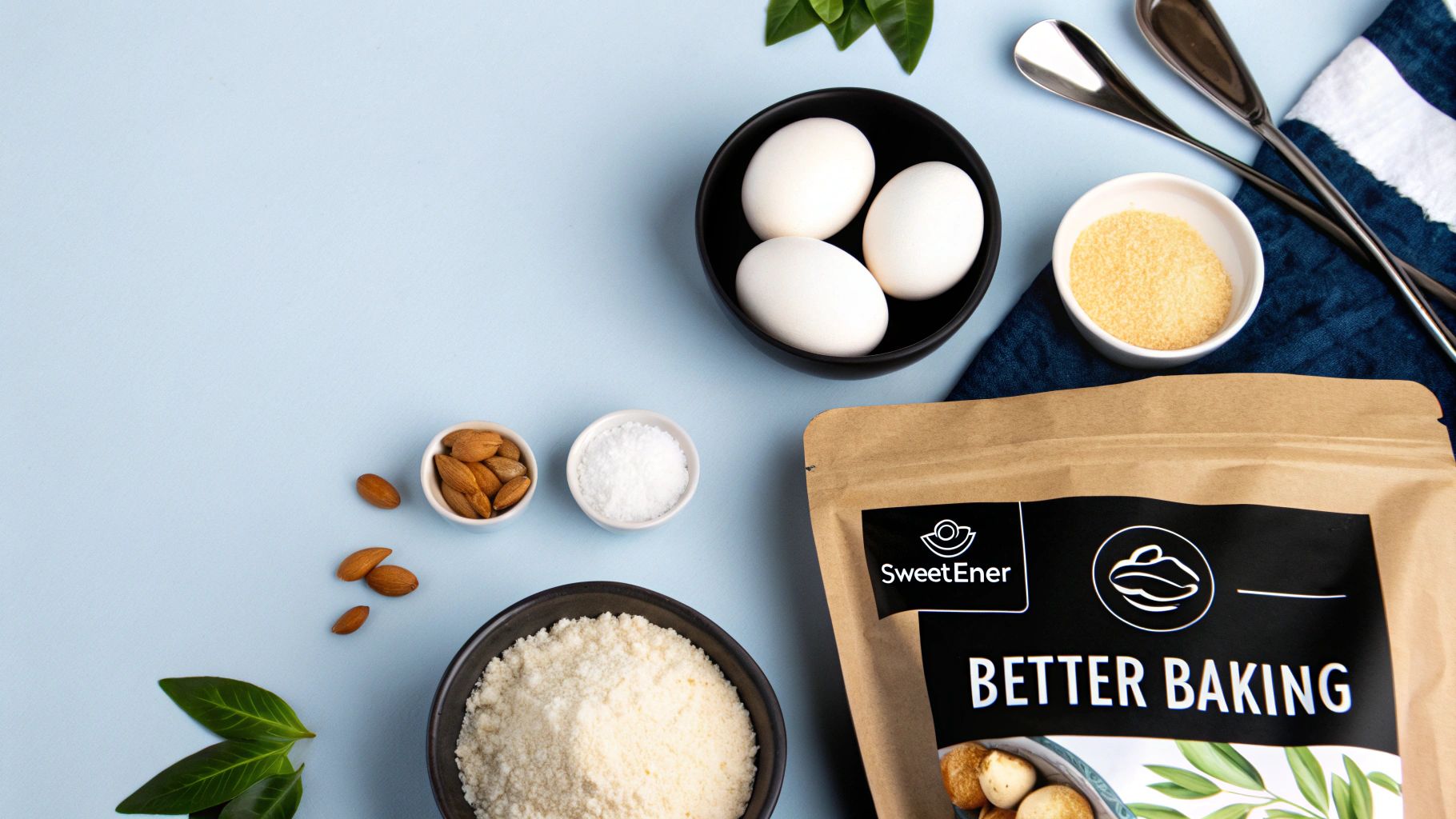
If you love the smell of freshly baked cookies, a diabetes diagnosis doesn't mean you have to hang up your apron for good. The real secret to creating amazing, diabetic-friendly treats is simply knowing which ingredients work for you instead of against you. It's all about making a few smart swaps.
By choosing the right ingredients, you can bring down a cookie's glycemic impact in a big way—without giving up the flavor or texture you crave. This isn't about restriction. It's about getting creative in the kitchen and understanding the science behind a better bake.
This push for healthier options is changing the whole market. In 2023, U.S. sales for traditional cookies shot up by 26.7% to $833 million, and iced varieties saw a 30.4% jump to $142 million. What’s driving this? A huge demand for functional cookies with benefits like a low glycemic index and extra fiber. This trend perfectly explains why products like Rip Van’s high-fiber snacks are becoming so popular.
Rethinking Your Flour Foundation
The foundation of any cookie is the flour, and this is where you can make one of the biggest differences. Your standard all-purpose white flour is highly refined, meaning it's been stripped of its fiber and nutrients. This makes it convert to glucose very quickly in your body, which can lead to a sharp blood sugar spike.
Instead, start thinking of flour as an opportunity to add nutrition back in. Flours made from nuts and seeds are fantastic alternatives. They're naturally lower in carbs and loaded with healthy fats, protein, and that all-important fiber. All these things work together to slow down digestion and help keep your blood sugar much more stable.
Here are some of the best flour swaps to try:
- Almond Flour: This is a fan favorite for a reason. It’s low in carbs, high in protein, and gives baked goods a wonderfully moist, dense texture.
- Coconut Flour: A little of this high-fiber flour goes a long, long way. It’s super absorbent, so you won’t need to use as much, and it adds a hint of natural sweetness.
- Oat Fiber or Fine Oat Flour: Made from pure, insoluble fiber, oat fiber adds bulk to your bake without adding carbs. Finely ground oat flour (from whole oats) provides complex carbs that digest much more slowly.
Finding the Right Sweet Spot
Sugar is obviously the next major hurdle. Thankfully, the days of relying on sweeteners with a funky, artificial aftertaste are pretty much over. Today’s natural, plant-based sugar substitutes deliver the sweetness you want without the blood sugar consequences.
The goal is to find a sweetener that gives you a clean, sugar-like taste without any bitterness or a big glycemic hit. This is the key to creating a genuinely satisfying low-sugar cookie.
Here’s a quick guide to some of the best modern sweeteners for diabetic-friendly baking:
- Monk Fruit: This is a natural, zero-calorie sweetener that comes from a small fruit and doesn't raise blood sugar levels at all. It's super concentrated, so you only need a tiny bit.
- Allulose: Found naturally in foods like figs and raisins, allulose has the taste and texture of sugar but with about 90% fewer calories and almost no effect on blood glucose.
- Erythritol: As a sugar alcohol, erythritol mostly passes through your body undigested, so it won’t impact your blood sugar. It's a great choice for getting that crystalline texture you're used to from table sugar.
As you start to upgrade your ingredients, it's also worth thinking about your tools. Opting for something like a non-toxic bread maker for healthy baking can really complement your efforts to build a truly health-conscious kitchen from the ground up.
Forward-thinking brands are already using these principles. They choose ingredients like chicory root fiber for fiber and natural sweeteners like allulose to create products that feel indulgent without any of the compromise. It’s this thoughtful approach that makes it possible to enjoy delicious treats that fit perfectly into a diabetic-friendly lifestyle.
Mastering Portion Control and Smart Snacking
Even the most perfectly formulated low-sugar cookie requires one final, crucial ingredient: your own awareness. This is where portion control comes in, and for anyone managing diabetes, it’s not just a good idea—it’s a non-negotiable strategy. A single diabetic-friendly cookie is designed to be gentle on your blood sugar, but eating several in one sitting will still add up.
Think of your daily carb intake like a budget. You have a certain amount to "spend" each day, and you get to decide how to allocate it. A well-made cookie can absolutely fit into that budget as a satisfying treat, but you have to account for it.
Building a Smarter, More Satisfying Snack
Here’s a great trick I always recommend: never eat a cookie alone. Pairing your treat with other foods can slow down digestion, turning a simple snack into a more balanced and satisfying mini-meal that’s much kinder to your glucose levels.
Try eating your cookie alongside a source of protein or healthy fat. This powerful combination helps stabilize blood sugar by slowing down how quickly your body absorbs the carbohydrates.
- A handful of almonds or walnuts: These are packed with healthy fats, fiber, and protein.
- A small piece of cheese: Protein and fat are a fantastic team for slowing carb absorption.
- A spoonful of unsweetened peanut or almond butter: This adds a delicious boost of flavor, fat, and protein.
This simple habit makes your snack more filling, helping you feel satisfied with a smaller portion and curbing the urge to reach for another.
Don’t think of portion control as restriction. Think of it as empowerment. It gives you the control to enjoy the foods you love while staying true to your health goals, which is the key to a sustainable and enjoyable diet.
The Power of Pre-Portioned Convenience
Let's be honest—life is busy. Carefully counting carbs and weighing out portions can feel like a full-time job, especially when you’re on the move. This is exactly why conveniently portion-controlled snacks are such a game-changer. Individually wrapped low sugar cookies for diabetics take all the guesswork out of the equation.
When a cookie is already portioned for you, the temptation to grab "just one more" from the box simply isn't there. It’s a built-in structure that supports your goals without requiring constant willpower. The growing demand for these thoughtful products reflects a massive shift in how we approach snacking.
Globally, people are seeking out healthier, more convenient options. WHO data from 2021 showed that nearly 60% of Europeans were dealing with obesity, a figure that highlights the same trends seen in North America, where the market for portion-controlled, clean-label cookies is booming. And as you can see from the growing sugar-free cookie market on marketresearchfuture.com, this isn't a niche interest anymore—it's mainstream.
Ultimately, smart snacking is all about building simple, repeatable habits that work for you. Whether that means pairing your cookie with a handful of nuts or choosing an easy, grab-and-go option, these small strategies make a world of difference. For even more ideas, check out our guide to snacking tips.
How Rip Van Delivers on Diabetic-Friendly Snacking
Knowing how to read labels, check ingredients, and manage portions is one thing. But finding a brand that actually puts all those principles into practice can feel like searching for a needle in a haystack.
This is where a company like Rip Van comes in. We've talked a lot about the theory of what makes a good diabetic-friendly snack. Now, let’s look at how their products are a real-world example of getting it right. They’ve built their entire philosophy around making treats that are both delicious and mindful, so you never have to choose between flavor and your health goals.
The Rip Van Formula in Action
Take their popular Dutch-style wafels and LEOS cookies. They aren't just "low sugar" snacks by chance; they are intentionally designed from the ground up to help support stable blood sugar.
It all comes down to a smart combination of ingredients working together:
- Seriously Low Sugar: Every single snack is made to have way less sugar than the mainstream alternatives. Their wafels, for instance, can have as little as 3g of sugar. Compare that to the 15g, 20g, or even more you'd find in a typical cookie or granola bar.
- A High-Fiber Advantage: They pack their snacks with ingredients like chicory root fiber, often getting up to 6g per serving. As we discussed, that fiber is your best friend for slowing down sugar absorption and preventing those sharp glucose spikes.
- No High-Fructose Corn Syrup, Ever: Rip Van is all about clean labels. You won't find any high-fructose corn syrup or other cheap, processed sweeteners hiding in their ingredient lists.
This commitment makes Rip Van a brand you can actually trust. You know that when you grab one of their snacks, it was created with your specific health needs at the forefront.
It's More Than Just the Numbers
A truly great low sugar cookie for diabetics is about the quality of the ingredients, not just the stats on the nutrition panel. Rip Van’s promise goes further, using non-GMO ingredients, natural flavors, and zero artificial colors.
Snacking with diabetes shouldn't feel like a compromise. It should be a moment of genuine enjoyment, free from worry about hidden ingredients or a subsequent blood sugar spike.
This focus on clean ingredients takes a huge mental load off your shoulders. You don't have to second-guess what you're eating. Instead of scrutinizing every word on the package, you can just relax and enjoy your treat. They prove that you can make incredibly satisfying cookies using smarter, better-for-you ingredients like allulose.
Plus, the individually wrapped portions make portion control completely effortless. It's a built-in system that helps you stick to your carb count, which is especially helpful on those busy days when you need something quick and reliable.
To see exactly how their products fit into this lifestyle, you can learn more about Rip Van's approach to diabetic-friendly options on their website. At the end of the day, Rip Van delivers more than just a snack—they deliver peace of mind.
A Few Common Questions, Answered
When you're managing diabetes, trying to figure out the world of snacks can feel a bit overwhelming. Let's clear up some of the most common questions about low-sugar cookies so you can feel good about your choices.
Can I Eat Any Cookie Labeled "Sugar-Free"?
Here’s the thing: "sugar-free" doesn't automatically mean "good for my blood sugar." A lot of these cookies swap out sugar but are still packed with refined white flour, which your body treats a lot like sugar, leading to a quick spike.
The real story is on the nutrition label. Always look at the Total Carbohydrates and Dietary Fiber. A cookie that's genuinely diabetic-friendly will be low in net carbs, not just sugar.
What About Artificial Sweeteners? Are They Safe?
Most modern low-sugar snacks have moved away from the old-school artificial stuff. Instead, they use natural, plant-based sweeteners like monk fruit, allulose, and stevia, or sugar alcohols like erythritol. For most people with diabetes, these are great because they have very little, if any, effect on blood glucose.
The most important thing is to listen to your own body. While these sweeteners are fantastic alternatives, some people find that sugar alcohols can cause a bit of digestive upset if they have too much.
When you try a new snack, just pay attention to how you feel. It's the best way to know what works for you.
So, How Many of These Cookies Can I Actually Eat?
This is where portion size becomes your best friend. Even the most perfectly crafted low-sugar cookie will affect your blood sugar if you go overboard. The right number for you really depends on your personal carb goals for the day and what else you're eating.
A smart move is to start with the serving size listed on the package—it's there for a reason! If you want to make it an even more satisfying and blood-sugar-friendly snack, try pairing your cookie with some protein or healthy fat, like a small handful of almonds. This can help keep your glucose levels steady.
Does High Fiber Really Matter That Much?
It makes a huge difference. Think of fiber as the built-in braking system for carbohydrates. It slows everything down, so the carbs are absorbed much more gradually into your bloodstream.
Instead of the sharp, fast spike you’d get from a typical sugary, low-fiber cookie, you get a much gentler curve. More fiber means a steadier, safer, and more satisfying treat all around.
Ready for a delicious snack that was created with your health goals in mind? Rip Van makes incredible low-sugar, high-fiber wafels and cookies that taste amazing without any of the worry. Check out the entire Rip Van collection and find your new favorite.
0 comments