

You’re probably standing in your yard with a tape measure, looking at a patio that feels “pretty big,” and wondering whether an 8 person patio table will fit. On paper, it seems simple. Count eight seats, find a table you like, click buy.
Then real life shows up.
Chairs need to slide back. Someone carries a platter from the grill. Kids cut behind a seat instead of walking around the long way. A table that fit perfectly on the product page suddenly makes the whole patio feel like an obstacle course. That’s the mistake first-time buyers make most often. They shop for the tabletop, not the full dining zone.
A large outdoor table isn’t just furniture. It becomes the place where birthdays drift into late evenings, weeknight dinners move outside, and visiting relatives all have a seat at once. That’s why this decision deserves more than a quick guess. If you’re still narrowing down styles, it helps to find durable outdoor living sets that show how full patio collections work together in real spaces.
The good news is that buying the right table is much easier when you think like a designer instead of a shopper. Measure the invisible space first. Match the shape to the layout. Choose materials based on your weather, not just the finish photo. Then build the set around how you host.
Your Guide to Finding the Perfect 8 Person Patio Table
The best outdoor dining areas feel easy. Nobody squeezes sideways between chairs. Nobody asks where to set the serving bowl. Nobody feels stuck at the end of a table that’s too tight for elbows and plates.
That ease usually starts long before the table arrives.
I’ve watched plenty of homeowners choose a beautiful large table because the listed dimensions looked reasonable, only to realize later that “fits” and “works well” are not the same thing. A table can physically sit on a patio and still ruin the space around it. That’s especially true once all eight chairs are in place and people are using them.
A good patio dining set should leave room for movement, not just seating.
An 8 person patio table makes sense when your outdoor space already acts like a social hub, or when you want it to. Maybe you host family dinners, have neighbors over on weekends, or just want one table big enough that no one has to grab a spare folding chair. The larger size can be a great choice, but only if it supports the way people move, sit, serve, and linger.
Three things decide whether the purchase feels smart a year from now:
- Space reality: Your patio needs room for the table plus the space people use around it.
- Shape fit: The right shape changes traffic flow and the tone of conversation.
- Material match: Outdoor furniture has to deal with sun, moisture, mess, and long idle stretches between gatherings.
If you get those three right, the rest becomes easier.
Sizing Beyond the Tabletop The Ghost Footprint
Most buyers start with the product dimensions. That’s understandable, but it’s only half the story.
The better number to plan around is what I call the ghost footprint. That’s the invisible zone your dining set occupies once chairs are pulled out and people need space to move around them. Imagine parking a car in a garage. The car may technically fit between the walls, but if you can’t open the doors, the space doesn’t really work.
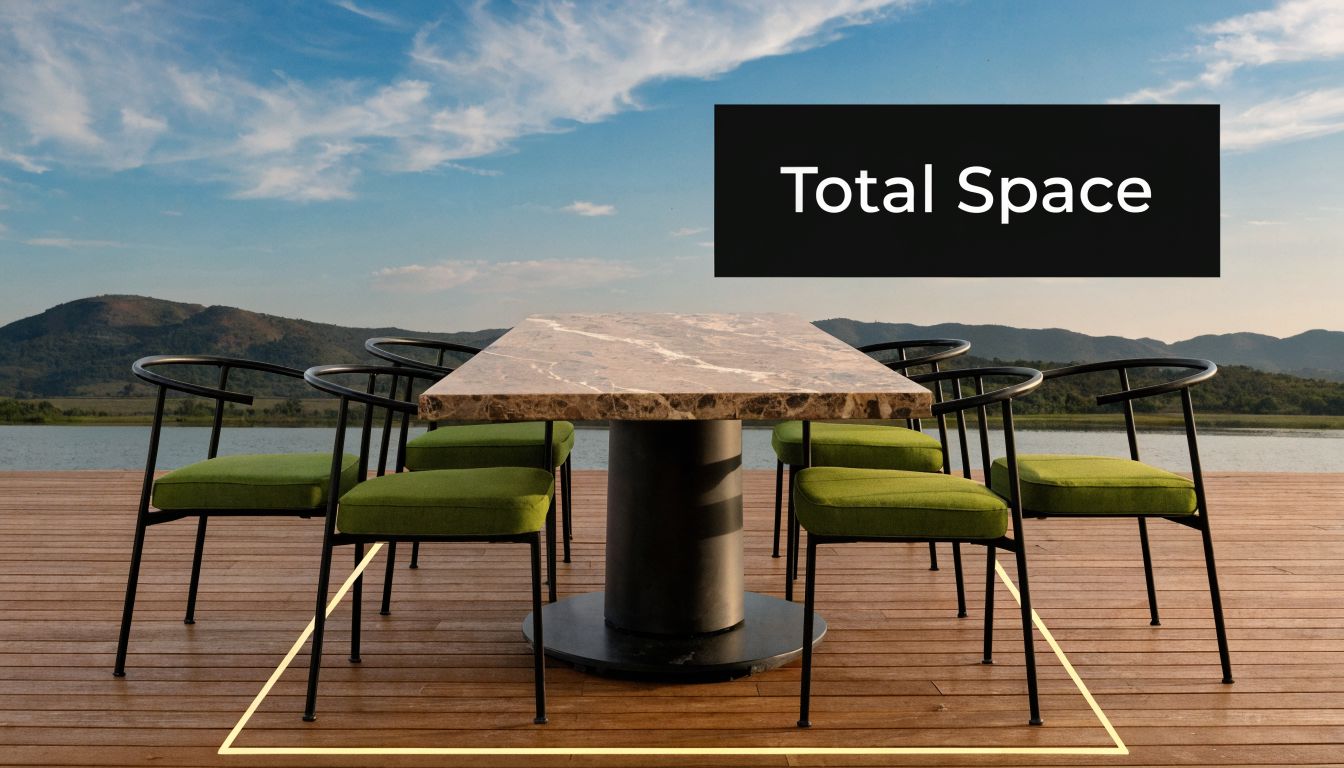
Start with the table size
A standard rectangular 8-person patio table typically falls in the range of 200-240 cm (78.7-94.5 inches) long according to these 8-seater outdoor table dimensions. That sounds manageable until you account for chair movement.
The same source notes that you should allow 60-75 cm (24-30 inches) of clearance around all sides for chair pull-out and circulation, which expands the total area to about 300-350 cm long x 180-220 cm wide. That larger number is the one that matters when you’re deciding if the set will feel comfortable.
If you want a second point of reference for proportion and seat planning, this 8-seater dining table dimensions guide can help you compare indoor-style seat spacing logic to outdoor layouts.
How to calculate the ghost footprint
Use a simple formula:
- Measure the tabletop length
- Measure the tabletop width
- Add clearance on both sides
- Check the remaining walking space around that full zone
For example, if you choose a long rectangular table near the upper end of the standard range, the important question isn’t “Can the tabletop sit there?” It’s “Can someone pull out a chair and still leave a comfortable path behind it?”
That’s where many patios fail. Homeowners measure edge to edge, then forget that the dining area expands the moment chairs move.
Practical rule: Tape the ghost footprint on the ground before you buy. Include the pulled-back chair zone, not just the table outline.
Why this matters in daily use
A cramped patio changes behavior. People stop using the far seats. Chairs scrape against walls or planters. Guests stay seated because moving around the table feels awkward. The dining set becomes something you tolerate instead of enjoy.
The ghost footprint solves that by treating the table as an activity zone, not an object.
Here’s what to check when you map yours:
- Chair pull-out: Each seat needs room to slide back without hitting a railing, wall, grill, or planter.
- Walk-by space: Someone should be able to pass behind a seated guest without forcing that person to tuck in.
- Service routes: Think about where food, drinks, and trays will travel from the house or outdoor kitchen.
- Door swings: A back door opening into the dining zone can create a constant conflict point.
A simple patio test
Painter’s tape works well, but even old boxes can help. Lay out the outer edge of the ghost footprint and walk it as if dinner were already happening.
Try these movements:
- Pull out an imaginary chair.
- Walk behind it carrying a bowl.
- Stand at the head of the table and picture someone serving food.
- Check whether guests can reach seats without bumping other chairs.
That test often answers the buying question faster than any product listing.
If the layout feels crowded while it’s still just tape on the ground, it won’t improve once the furniture arrives. If it feels open and natural, you’re probably shopping in the right size range.
Choosing Your Table Shape for Flow and Conversation
A table can fit your patio and still make the space feel awkward. Shape is often the reason. Two sets with the same seating capacity can leave very different paths around chairs, different sightlines across the table, and a very different mood once dinner starts.
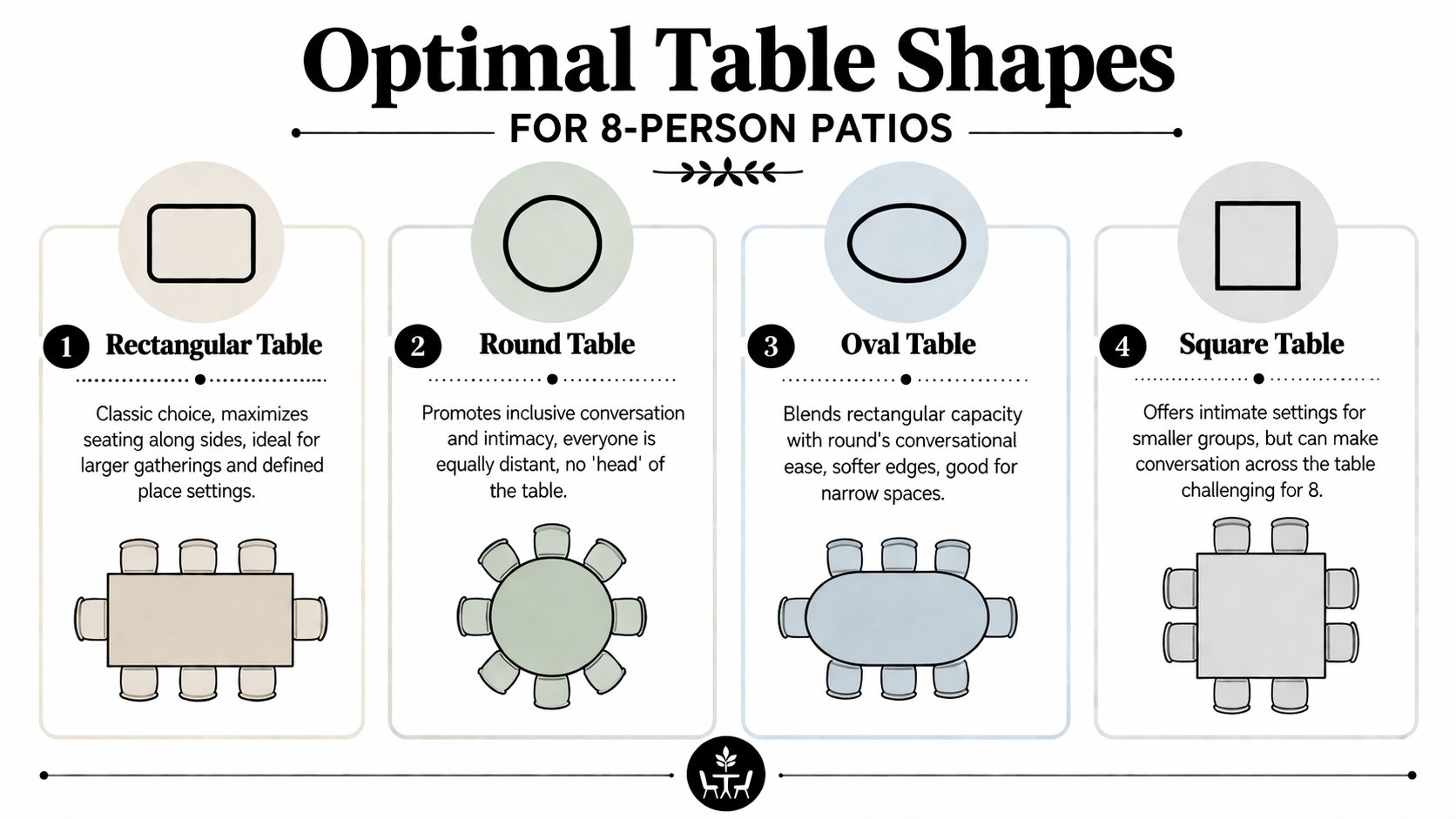
The easiest way to judge shape is to picture the ghost footprint you mapped in the last step. The tabletop is only the center. A key question is how the pulled-out chairs and walk-by space spread around it. A shape that looks efficient in a product photo can waste room at the corners or crowd a doorway in real life.
Rectangular tables
Rectangular tables are usually the safest choice for long patios. They follow the shape of the space instead of fighting it, so traffic tends to move along the long sides in a predictable way.
They also create a clear hosting structure. If you like more defined place settings, serving from the ends, or a layout that feels organized, a rectangle does that well. The trade-off is conversation distance. Guests at the far ends can feel a little detached from the middle, especially at a larger 8 person size.
Their ghost footprint is also directional. You need more total length once chairs are occupied, but the width often stays easier to manage than with a square or large round table.
Round tables
Round tables usually feel the most social. Everyone turns toward the center, and no one gets stuck at a sharp corner or at a short side that feels like an afterthought.
They also handle movement differently. Since there are no corners, the traffic line around the table feels more natural, almost like water flowing around a stone instead of catching on edges. That can make a square patio feel calmer and easier to use.
The catch is diameter. A round table for eight can claim a broad circle of space, so its ghost footprint spreads evenly in every direction. That works well in open, balanced layouts. It works less well when one side of the dining area sits close to a wall, grill, or door.
Round tables often use space more gracefully, but they ask for that space in all directions at once.
Square tables
Square tables create a very balanced seating pattern. Everyone has a similar position, and the setup can look clean and intentional in a modern patio.
For eight people, though, square tables get big fast. That extra bulk is easy to underestimate because the shape looks tidy on paper. In use, the corners enlarge the ghost footprint, and the distance across the table can make conversation feel more formal than relaxed.
A square shape usually works best when the patio is fully open around all four sides, not just technically large enough.
Oval tables
Oval tables sit between rectangle and round. They keep the long-table capacity many buyers need, but the softened ends reduce the hard stop you get with a rectangle.
That matters more than it sounds. The curved ends can make it easier to slip past a chair, especially in patios where every few inches count. If your layout is a little narrow but you do not want the full circle of a round table, an oval often solves the problem neatly.
8-Person Table Shape Comparison
| Shape | Typical Dimensions | How the Ghost Footprint Behaves | Best For |
|---|---|---|---|
| Rectangular | Long and relatively narrow | Grows mostly in length, stays more controlled in width | Long patios, defined dining zones, more formal seating |
| Round | Large single diameter | Expands evenly on all sides, with smoother circulation around edges | Square patios, conversation-focused meals, open layouts |
| Oval | Similar overall length to a rectangle | Preserves length but softens traffic at the ends | Narrower spaces that still need easier movement |
| Square | Large equal-sided form | Spreads wide in both directions and can feel bulky with chairs out | Open square patios, symmetrical layouts, modern designs |
If you feel stuck between two shapes, use a simple tie-breaker. Choose the shape that leaves the cleanest walking path after chairs are pulled out, not the one that only looks best from above. That one decision usually has more effect on daily comfort than the tabletop style itself.
Decoding Materials for Durability and Style
Material choice decides how your table ages, how much upkeep it asks from you, and whether you’ll still like it after a few hard seasons outdoors. Consequently, patio furniture separates into two groups: pieces that look outdoor-ready, and pieces that are built for outdoor life.

Aluminum and steel frames
Metal frames are common for a reason. They can look clean and sleek, they work with many styles, and they’re usually easier to wipe down than textured natural materials.
Not all metal frames are equal, though. The finish matters as much as the frame itself. Heavy-duty steel or aluminum frames with multi-layer coatings such as E-coating plus powder finish can withstand over 5,000 hours of salt spray testing and offer 10-15 years of outdoor longevity in humid or coastal environments, according to this Summit Living product specification.
That sounds technical, so here’s the simple version. Think of E-coating like the layer that gets into the hard-to-reach parts, and powder coating like the tougher outer shell. Together, they act like a raincoat over the frame.
When aluminum makes sense
Aluminum is usually the easiest recommendation for first-time buyers. It’s lighter to move than steel, generally easier to live with, and often suits both modern and classic outdoor styles.
It works well for people who:
- want lower day-to-day upkeep
- may rearrange furniture seasonally
- live where moisture is a regular concern
When steel makes sense
Steel usually feels more anchored. If your patio is exposed and windy, that extra heft can feel reassuring. The caution is simple. If the protective finish is poor or gets damaged and ignored, steel can become a higher-maintenance choice.
Designer’s shortcut: Don’t judge metal furniture by color alone. Ask how the finish was applied and how the frame is protected underneath.
Wood and wood-look surfaces
Wood appeals to people who want warmth. It softens a patio, pairs well with gardens, and feels less industrial than metal. A big wooden outdoor table often becomes the emotional center of the yard because it looks relaxed even when the setting is simple.
The trade-off is care. Natural materials ask for more attention over time. Some buyers enjoy that ritual. Others quickly realize they wanted the look of wood more than the maintenance of wood.
That’s where wood-look materials enter the conversation.
Some outdoor tables use faux-wood HDPE tops rather than natural wood. In plain terms, that means you get a wood-inspired appearance with a surface designed for lower maintenance. For many households, that’s the sweet spot. It captures some of the warmth of wood without asking you to babysit the finish.
A quick visual guide can help when you start comparing frame construction and surface choices:
HDPE and synthetic surfaces
HDPE and similar synthetics are practical materials. They usually appeal to shoppers who care less about tradition and more about easy ownership.
These surfaces tend to be:
- simple to clean after meals
- less fussy in mixed weather
- a good fit for busy households that use the patio often
They can also work well with metal bases because the overall look stays sleek.
Matching material to climate and lifestyle
Instead of asking “What’s the best material?” ask two better questions.
First, what does your climate do to furniture? Salt air, steady humidity, intense sun, and freeze-thaw cycles all age materials differently.
Second, how patient are you really? Some owners are happy to maintain wood because they love its character. Others want to wipe a table down and move on. Neither is wrong, but they lead to different choices.
What quality looks like up close
When you shop in person or inspect listing photos, focus on construction clues:
- Finish consistency: Blotchy color or rough coating can signal weaker protection.
- Joint confidence: Large tables need solid joinery because longer spans create more stress.
- Base design: Wide, well-braced bases usually feel steadier than decorative ones with little support.
- Surface practicality: Slatted and textured tops can look great, but think about cleaning crumbs, pollen, and spills.
A durable 8 person patio table should feel calm under pressure. No flex when you lean on it. No wobble on a slightly imperfect surface. No finish that makes you nervous about the first rainy week.
Completing Your Set With Chairs and Cushions
The table gets the attention, but the chairs decide whether people stay for dessert or head inside early. For an eight-seat setup, chair choice also affects how roomy the whole area feels.
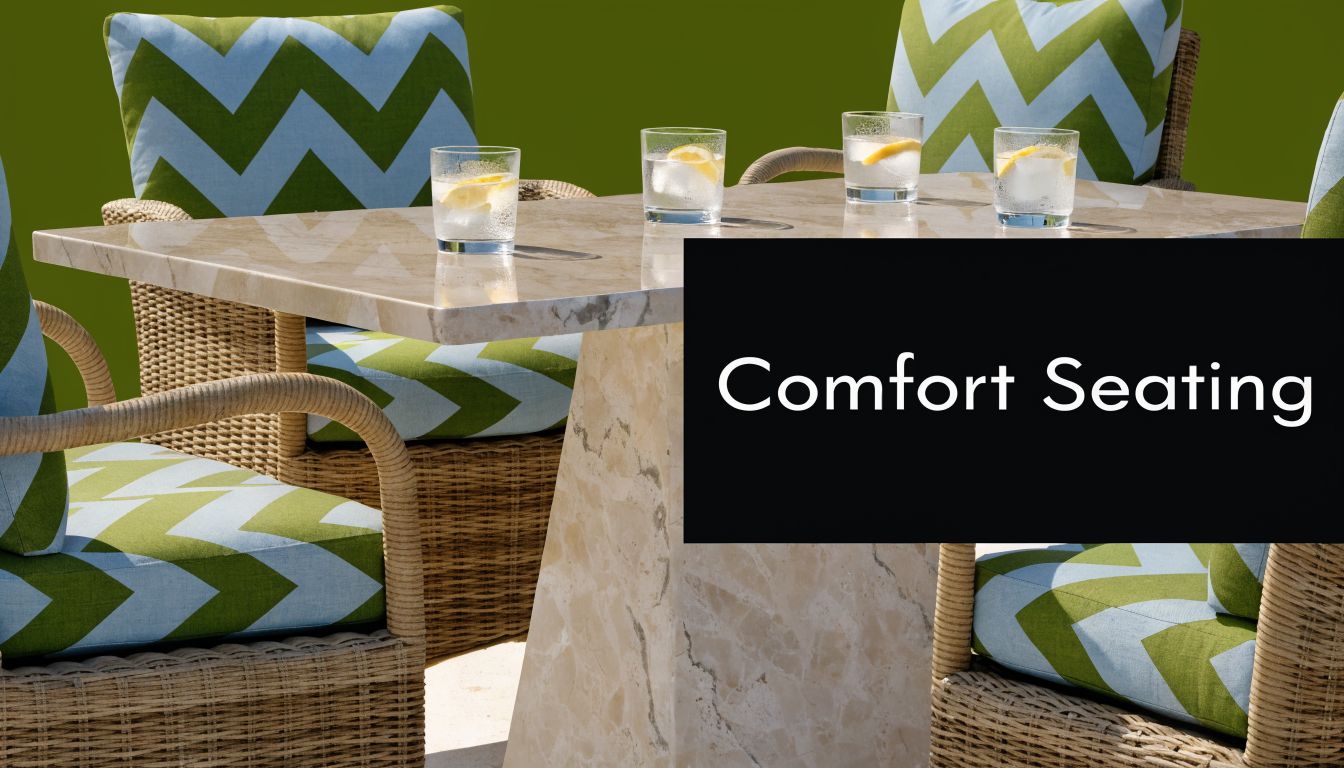
Arms or no arms
Armed chairs feel generous. They support long meals and create a lounge-like mood, especially if your patio doubles as an evening hangout spot.
Armless chairs are usually easier to tuck in and easier to fit around larger tables. If your dining area is close to a wall, railing, or door, armless seats often make the whole setup feel less crowded.
A simple rule helps here. If comfort for lingering matters most, lean toward arms. If fitting eight seats cleanly matters most, armless chairs deserve a serious look.
Mixed materials can work well
A metal table with woven or sling-style chairs often feels less stiff than an all-metal set. Likewise, a wood-look table can pair nicely with simpler chair frames so the whole area doesn’t become visually heavy.
You don’t need perfect matching. You need balance.
Choose chairs that echo the table’s style without duplicating every material and detail.
Cushions that make sense outdoors
Good outdoor cushions should feel easy to live with. Look for practical details rather than just softness in the showroom. Removable covers, quick-drying fills, and fabrics that don’t show every speck of pollen or sauce are usually the smartest choices.
When comparing chairs, think through these questions:
- Will the seats dry reasonably well after weather exposure?
- Can you clean the covers without turning maintenance into a project?
- Do the cushion colors hide normal outdoor mess?
- Will the chair shape still feel comfortable if cushions are stored away for part of the year?
Storage and flexibility
Eight chairs take up real space. If you expect to reconfigure your patio often, stackable or lighter chairs may serve you better than bulky statement seats.
That matters more than many buyers expect. The prettiest chair in the store can become a nuisance if moving even two of them feels like work. For families who host often, practical mobility is part of comfort.
Planning for Practical Features and Add-Ons
The little features are what turn a good-looking table into one that serves your routine. These details rarely drive the first click, but they often drive long-term satisfaction.
Umbrella holes and shade planning
If your patio gets strong sun, an umbrella hole can be one of the most useful features on the table. It gives you a straightforward shade option without requiring a separate base location that competes with foot space.
A plug matters too. When you’re not using an umbrella, the table should still feel finished rather than incomplete.
If you’re planning a full backyard layout and not just a dining set, broader shade and structure ideas can help. These essential patio design ideas for DFW show how dining areas, cover options, and traffic paths can work together in a more complete outdoor setup.
Extendable tops
Some households need a table for everyday use that occasionally grows for company. That’s where extendable designs earn their keep.
An extension feature can make a lot of sense if you usually seat fewer people but still want one table that handles holidays or neighborhood dinners. The mechanism should feel simple and sturdy. If opening the table feels awkward, heavy, or fiddly, you probably won’t use it much.
Leg design and seat comfort
Many people overlook the base until chairs start bumping into it. That’s a mistake.
Corner legs can define seating positions clearly, but they can also interfere with chair placement near the corners. Pedestal-style bases remove that issue and often make it easier to slide in and out, though the overall support has to be sturdy enough for a large top.
Small details that improve daily use
Look for features that make ownership easier:
- Leveling feet: Helpful on patios that aren’t perfectly even.
- Easy-clean surfaces: Better for weeknight meals and less stressful when guests bring sauces and drinks.
- Simple assembly logic: Large outdoor sets are much more pleasant when the setup process is straightforward.
The best add-ons aren’t flashy. They unobtrusively remove friction.
Your Pre-Purchase Checklist for a Confident Decision
A confident purchase usually comes from asking better questions, not from reading more product descriptions. Before you buy an 8 person patio table, pause and test the decision against your actual patio, your weather, and your habits.
Ask the fit questions first
Start with the space itself. Not the style, not the finish, not the sale.
Use this checklist:
- Have you mapped the ghost footprint? If you only measured the tabletop area, you’re not done.
- Can chairs pull out without hitting something fixed? Walls, rails, planters, grills, and door swings all matter.
- Can someone walk behind a seated guest comfortably? This is what separates a usable patio from a cramped one.
- Does the shape suit the patio? A round table may solve flow issues a rectangle creates, especially in a more square layout.
If any of those answers are uncertain, stop shopping and measure again.
Then ask ownership questions
Short-term excitement can conceal long-term annoyance. A table that looks perfect in a staged photo may be wrong for your climate or your patience level.
Think through these points:
- What does your weather do most often? Moisture, sun, and seasonal swings all affect material choice.
- How much maintenance will you do? Be honest, not aspirational.
- Will the surface be easy to clean after normal outdoor meals?
- Are the chairs practical to move, stack, or store if needed?
Many guides say a material is “weather-resistant” and stop there. That isn’t enough to help you decide. According to AllModern’s outdoor dining category notes, powder-coated aluminum resists corrosion 5x better than wicker in 80% humidity but may require an annual sealant costing $50-100, which matters when you think about the full cost of owning the set, not just buying it.
A lower-maintenance table often costs more up front because it asks less from you later.
Check the social fit
A large patio set should match how you gather, not just how you want the patio to photograph.
Ask yourself:
- Do you host full meals or mostly drinks and snacks?
- Do guests linger for long stretches?
- Do kids move in and out constantly?
- Do you want a formal dining feel or a relaxed, mixed-use hangout area?
Those answers affect everything from chair style to whether you need an umbrella hole, an extendable top, or a more conversational table shape.
Inspect the details that reveal quality
Before committing, look closely at the parts buyers often skip:
- Finish quality: Smooth, even, and well-applied beats flashy color every time.
- Frame confidence: A large table should feel structurally settled, not delicate.
- Chair comfort without perfect styling: If a chair only feels good with a thick cushion, think twice.
- Hardware and assembly logic: Outdoor furniture should feel engineered for use, not just display.
A final store or showroom routine
If you’re shopping in person, don’t just tap the tabletop and move on. Sit in multiple seats. Pull the chair out as if someone were already seated beside you. Stand up from the side seat and from an end seat. Try to imagine passing food, not just admiring the finish.
If you’re buying online, compare listing photos with your taped floor plan. The floor plan tells the truth more often than the styled image does.
The decision that usually ages best
For most first-time buyers, the smartest 8 person patio table isn’t the largest one they can squeeze into the space. It’s the one that leaves enough room for the patio to still work like a patio.
That means choosing a size with breathing room, a shape that supports movement, and a material you won’t resent maintaining. If the setup makes everyday outdoor meals easier, you’ll use it far more often than the dramatic oversized table that looked exciting at checkout.
Buy for function first. Let style ride along with it.
A well-planned patio table makes outdoor meals easier. Pair that space with snacks that are simple to enjoy outside, whether you’re hosting friends or stepping out for a quick afternoon break. Rip Van offers better-for-you treats with low sugar options, convenient portable formats, and choices for lifestyles like keto, gluten free, and vegetarian, so it’s easy to keep something satisfying on hand for the patio.
0 comments