

Your midday break has started to feel predictable. There's tea in the cupboard, a few snacks in the pantry, and perhaps a special gathering on the calendar, but the traditional spread can seem too sweet, too heavy, or too complicated to prepare. These afternoon tea ideas keep the ceremony while making room for dietary preferences, practical schedules, and better-for-you indulgence.
Afternoon tea has always suited small, elegant foods. The ritual emerged in Britain around 1840, when Anna Maria Russell, the seventh Duchess of Bedford, requested tea and light food to bridge the long gap between lunch and dinner, according to the British Museum's history of Victorian afternoon tea. That makes wafels, wafer bars, cookies, fruit, sandwiches, and carefully brewed tea natural partners rather than forced substitutions.
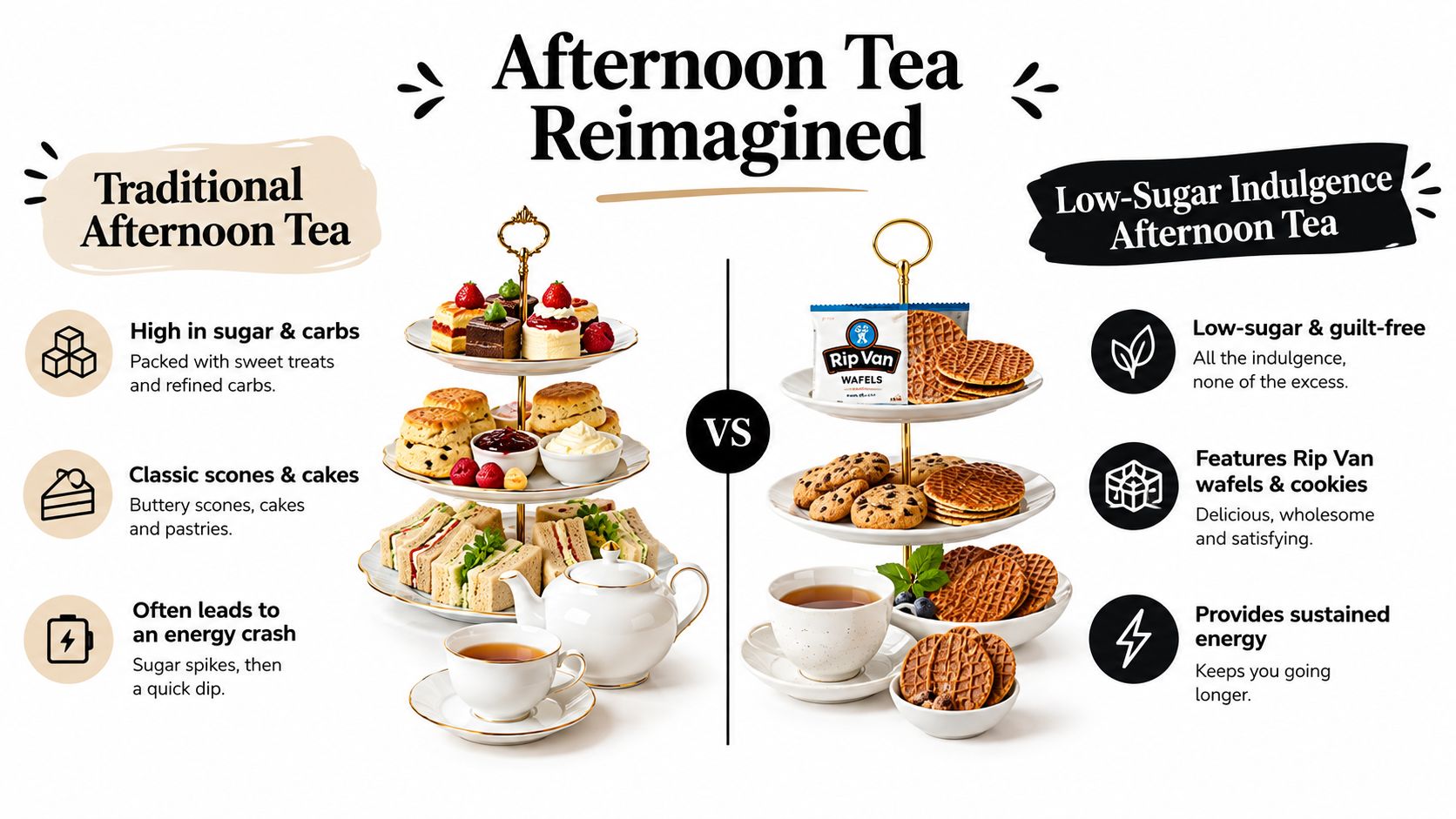
Choose one theme, prepare the items that can be made ahead, and let presentation do much of the work. A striped teapot can enhance your tea service, while Rip Van snacks provide portable, portion-conscious additions that work at home, in a venue, or on the move.
1. Low-Sugar Indulgence Afternoon Tea
A low-sugar tea should feel polished, not apologetic. Build the table around Rip Van Dutch-style wafels, wafer bars, and cookies, then use fine china, glass cake stands, and small plates to create the visual language of a luxury service. The point isn't to remove pleasure. It's to make each sweet bite feel deliberate.
Pair chocolate-forward snacks with a fragrant oolong, a crisp green tea, or a naturally aromatic herbal infusion. A cinnamon or vanilla note can complement a wafel, while peppermint or citrus herbal tea can keep the finish fresh. Rip Van emphasizes low sugar, no corn syrup or artificial sweeteners, natural flavors, no artificial colors, and non-GMO ingredients across its portfolio. Guests can review the brand's approach in its guide to low-sugar sweet snacks.
Make the service feel premium
Place each snack on its own tier rather than leaving packages on the table. Add fresh berries, unsweetened yogurt, or thinly sliced pear for color and contrast, but label every accompaniment clearly so guests understand what they're choosing.
A wellness resort could serve this menu after a treatment, while a luxury hotel might offer it as a lighter alternative to a conventional pastry-heavy tea. For corporate wellness catering, add small recipe cards with ingredient information and suggested tea pairings. Prepare the display pieces and cards the day before, then plate the snacks shortly before guests arrive.
Practical rule: Let the china, glassware, tea quality, and pacing communicate luxury. Don't rely on extra sugar to make the occasion feel special.
2. Keto and Low-Carb Friendly Tea Menu
Traditional scones, jam, and clotted cream can make a keto tea difficult to manage. A more workable menu treats Rip Van keto-friendly products as the sweet center, then balances them with savory foods that naturally suit a low-carb pattern. Serve wafer bars or cookies in small portions alongside aged cheese, olives, pepperoni, cucumber, radishes, and a few fresh berries.
This menu needs transparent labeling. Display the relevant carbohydrate information from the product packaging, and keep sweetened spreads or unclear sauces off the main table. Guests following keto plans may have different personal targets, so avoid presenting one menu as suitable for everyone.
For a café, a divided slate board works well. Place savory items in one section, Rip Van snacks in another, and tea sachets or loose-leaf labels at the back. A wellness center can include a printed ingredient and carb-tracking guide, while an online keto community could turn the same format into a virtual tasting box. Rip Van's easy keto snack ideas can provide further pairing inspiration.
Avoid the common service mistake
Don't call a menu “keto” based only on one snack. Check every accompaniment, beverage, garnish, and condiment. Brew black, green, or unsweetened herbal tea, and offer milk separately so guests can make their own choices.
For an Austin, Los Angeles, or Miami café, the format could become a dedicated afternoon menu. For home hosting, prepare the savory board in advance and open packaged snacks just before serving to preserve texture.
3. Family-Friendly Healthy Tea Party
Children don't need a miniature version of a formal hotel tea. They need food that's easy to hold, drinks that aren't too hot, and a table that invites participation. Arrange Rip Van cookies and wafels beside strawberries, blueberries, cucumber rounds, small sandwiches, and colorful fruit infusions. Use honest, simple ingredient language, such as “lower-sugar snack” or “contains fiber,” rather than turning the party into a nutrition lecture.
Choose sturdy cups and plates for younger guests, especially outdoors. Chamomile, diluted fruit infusions, warm milk, or a cocoa-style drink without excessive sweetness can stand in for strong hot tea. Serve beverages lukewarm when appropriate, and keep a clearly marked water station within reach.
Add an activity to slow the meal down
A decorating station can turn the food into part of the entertainment. Children might arrange fruit around a cookie, make paper napkin rings, or decorate take-home bags. Keep the activity separate from the main serving area so craft materials don't touch food.
A birthday venue could offer a “build your own tea tray,” while a school fundraiser might use individually packed Rip Van snacks to simplify distribution. At home, prepare the table in the morning and assemble fruit shortly before guests arrive.
The video below can help families create a playful tea-party atmosphere without making the menu complicated.

Send each child home with a labeled treat bag, but check allergies first. A family tea succeeds when parents can relax and children can participate safely.
4. Plant-Based and Vegan Afternoon Tea
Plant-based service works best when it feels abundant rather than like a series of omissions. Use Rip Van vegetarian wafers, wafels, and cookies with fruit, nut or seed spreads, vegetable tea sandwiches, hummus, dairy-free scones, and plant-based cream alternatives. A mix of textures matters. Crisp wafers, soft fruit, seeded bread, and creamy dips make the tray feel complete.
Pair the food with chamomile, jasmine green tea, mint, or a lightly spiced chai made with oat or soy milk. Check every ingredient and preparation surface, especially if the venue also serves dairy or eggs. A vegan guest shouldn't have to guess whether a garnish, spread, or biscuit is suitable.
The brand's plant-based snack guidance can help hosts think through pairings and ingredient communication.
Build a sourcing story
A plant-based tea gives venues a natural opportunity to explain where complementary foods come from. A sustainability-focused event might feature local vegan bakery items, seasonal fruit, and clearly described ingredient sourcing. Keep the story specific. Name the producer, identify the item, and avoid broad environmental promises that the menu can't substantiate.
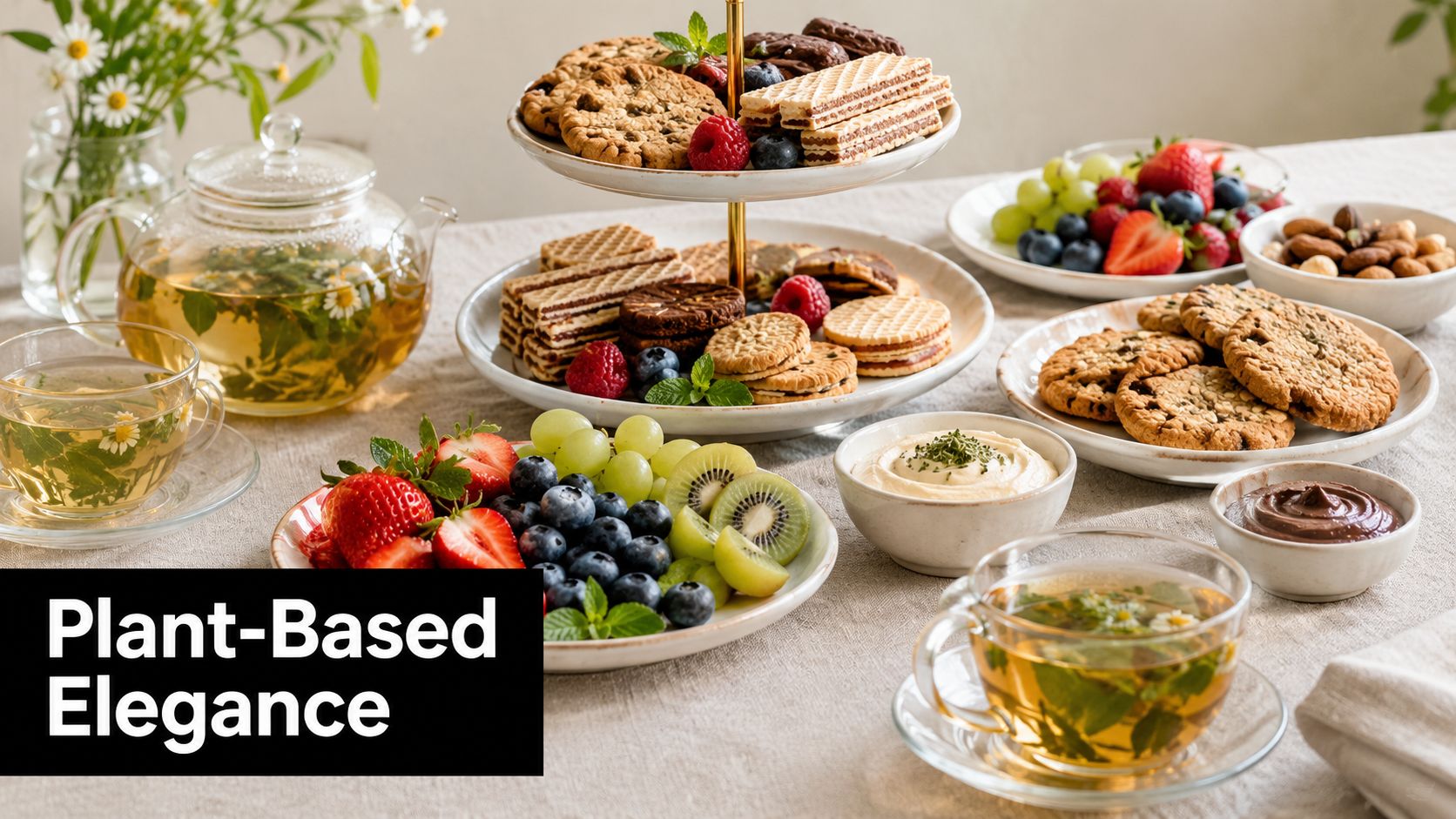
For a restaurant in London, New York, Los Angeles, or Toronto, a plant-based tea can sit comfortably beside existing seasonal programming. At home, serve everything family-style and label any item containing nuts or soy. Prepare sandwiches and dips earlier in the day, but add crisp snacks at the last moment.
5. On-the-Go Power Tea Experience
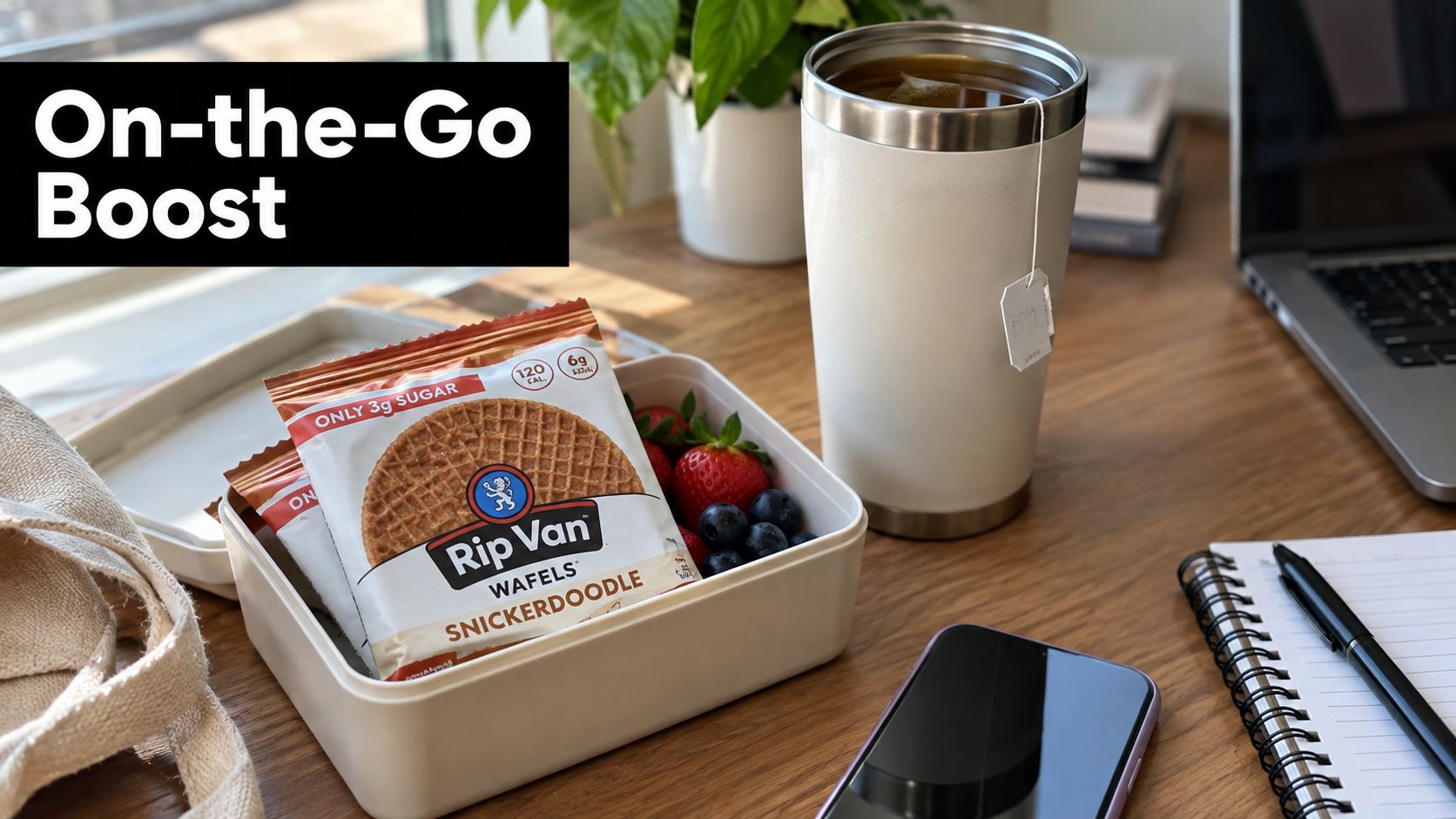
Afternoon tea doesn't require a dining room. A well-designed snack box can preserve the ritual for commuters, students, travelers, and employees moving between meetings. Pack a Rip Van wafel, wafer bar, or cookie with fruit, a savory bite, a tea bag, and a reusable or recyclable tumbler. Keep wet ingredients separate from crisp snacks so the texture survives transport.
The strongest version has a clear eating order. A guest might begin with the savory item, enjoy fruit next, and finish with a wafel dipped into hot tea. That dipping format connects convenience with traditional tea behavior without requiring a full place setting.
Design the box around the clock
A corporate wellness box can include a small card suggesting an afternoon pause, while an airport retailer might pair each snack with a tea blend suited to travel. Subscription services can rotate flavors and include preparation notes. Use compartments, paper wraps, or recyclable sleeves that protect the food without creating unnecessary layers.
A portable tea service should feel organized, not overpacked. Give every item a purpose, and leave enough room for the guest to handle the box comfortably.
Prepare shelf-stable boxes ahead of time, then add fruit or chilled components on the day of delivery. For students, offer a compact format that fits in a backpack. For offices, place boxes at a shared tea station with hot water and clear allergen information.
The snack-break setting below shows how a simple box can create a recognizable tea moment away from a formal table.
6. Gluten-Free Celebration Tea
A gluten-free tea requires more than swapping one biscuit. For guests with celiac disease or significant sensitivity, preparation, storage, serving utensils, and labeling all matter. Keep gluten-free foods sealed until service, use separate tongs, and train staff to prevent crumbs from moving between platters.
Rip Van's gluten-free range can anchor the sweet tier, but the venue should verify current packaging and certification before advertising a dedicated menu. Display ingredient and allergen information beside every item rather than relying on a single menu card.
Protect the occasion as well as the food
A gluten-free guest shouldn't receive a bare plate while everyone else gets a decorated stand. Use the same tiered presentation, edible flowers where appropriate, seasonal fruit, and elegant napkins. Offer gluten-free finger sandwiches, carefully sourced spreads, and a suitable scone or pastry from a specialist bakery.
A medical center might host a community tea in partnership with a celiac organization. A specialized bakery could offer pre-booked celebration boxes, while a wellness facility could keep a documented supplier file for every component.
Prepare sealed sweet items in advance, but assemble sandwiches in a controlled area on the day. Ask guests about cross-contact requirements when they book. If a kitchen can't guarantee separation, say so clearly and offer a packaged alternative instead of making an unsafe promise.
7. Seasonal and Local Pairing Menu Series
Seasonal afternoon tea works because the table changes without abandoning its identity. Keep a few dependable elements, such as a Rip Van wafel or cookie, then rotate fruit, savory fillings, tea blends, and garnishes with local availability. Spring might bring strawberries and floral tea. Autumn could use apple, pear, warming spices, and roasted vegetables.
A farm-to-table venue can name each partner directly on the menu. A botanical garden might serve a garden-inspired tea outdoors, while a restaurant can create a limited seasonal tray that encourages repeat visits. The local element should affect the flavor, not just the marketing copy.
Plan the calendar before the menu
Speak with farms, dairies, tea suppliers, and artisan producers before committing to a launch date. Announce each new menu several weeks ahead so guests can reserve, but keep substitutions possible when harvests or deliveries change. A printed insert is often more practical than reprinting an entire menu.
For each season, choose one visual cue. Fresh herbs, edible flowers, colored napkins, or a fruit preserve can make the tray recognizable in photographs. Avoid adding too many components. A crowded plate makes service harder and hides the snacks you want guests to notice.
Prepare sauces, preserves, and printed materials early. Buy delicate produce closer to service, and plate crisp Rip Van items shortly before guests sit down. This approach gives operators variety without rebuilding the entire afternoon tea program every few months.
8. Wellness and Nutrition-Focused Educational Tea
Turn the tea into a guided tasting rather than a lecture. A registered dietitian or qualified nutrition professional can explain how guests might read ingredient lists, compare snack formats, and combine sweet foods with fruit, protein, or unsweetened tea. Rip Van wafels, wafers, and cookies can serve as tasting examples, while the educator keeps the discussion factual and avoids promising health outcomes.
Use visual cards that show ingredients, fiber information, allergen notes, and suggested pairings. Don't describe a snack as appropriate for a medical condition unless the labeling and professional guidance support that statement. Guests should leave better informed, not pressured into a particular eating pattern.
Give every course a question
Ask guests to notice sweetness, texture, aroma, and satiety. Invite them to compare a snack dipped into tea with the same snack eaten alone. This creates participation without requiring complicated equipment.
A dietitian-led event at a wellness center could include a short introduction, a tasting flight, and an open discussion. A university health fair might use small sample portions and printed resources. A corporate program could focus on building a satisfying afternoon break during a busy workday.
Prepare presentation cards and confirm all claims with the professional before printing. Keep tea service relaxed, with plenty of water available. The educational element should support enjoyment, not interrupt it.
9. Luxury Spa and Wellness Retreat Integration
A spa tea should extend the feeling of care that begins with the treatment. Serve Rip Van snacks after yoga, meditation, a fitness class, or a massage, alongside herbal tea, water, and fresh fruit. Use natural textures such as linen, ceramic, pale wood, and stoneware instead of ornate decorations that compete with the calm setting.
The menu can be small. A single wafel with tea and fruit may suit a post-treatment pause better than a large multi-tiered spread. Guests who've just exercised may prefer savory accompaniments, while those finishing a relaxation treatment may appreciate a gently flavored herbal tea and a crisp cookie.
Match the service to the guest journey
Place the tea in a quiet lounge rather than at the reception desk. Offer it as a scheduled part of a retreat or as an optional upgrade after a class. A luxury facility in Scottsdale could build a desert botanical theme, while a yoga retreat in Hawaii or California might use local fruit and calming tea blends.
Avoid medical language such as “detox” or unverified recovery promises. Say what the menu contains and describe the experience accurately. Exclusive partner packaging can make the offering feel distinctive, but it should still provide clear ingredient and allergen information.
Prepare snack trays before the class begins, then add fresh garnishes after guests arrive. Staff should know which items are vegan, gluten-free, low-sugar, or contain common allergens. That knowledge makes the service feel thoughtful rather than scripted.
10. Sustainable and Conscious Consumption Tea Ritual
A conscious tea ritual begins with decisions guests can see. Use reusable china, cloth napkins, second-life serving pieces, and compostable materials only where reuse isn't practical. Serve snacks from larger boxes or protected trays instead of placing unnecessary individual packaging on every plate, while retaining packaging information for allergens and dietary requirements.
Rip Van products can fit a better-for-you tea menu built around low sugar, natural flavors, no artificial colors, and non-GMO ingredients. If a venue makes broader sustainability claims, it should document them through supplier records, packaging information, or recognized third-party certifications. Don't use “zero waste” unless the operation can substantiate that description.
Make responsibility tangible
A zero-waste café could pair the tea with a take-home reusable napkin. An environmental organization might use the event as a fundraiser, with the beneficiary named clearly on the menu. A company with environmental, social, and governance commitments could host the service with transparent sourcing notes and a clear donation arrangement.
Choose seasonal fruit, local bakery partners, and tea suppliers who can explain their packaging. Train staff to separate compostable, recyclable, and landfill materials correctly. The back-of-house system matters as much as the beautiful table.
Prepare the serviceware and signage in advance, then check waste stations before guests arrive. A conscious tea should feel generous and refined. Guests shouldn't have to sacrifice comfort or clarity to support responsible choices.
10-Item Afternoon Tea Comparison
| Concept | 🔄 Implementation Complexity | 💡 Resource Requirements | 📊 Expected Outcomes | ⚡ Ideal Use Cases | ⭐ Key Advantages |
|---|---|---|---|---|---|
| Low-Sugar Indulgence Afternoon Tea | 🔄🔄🔄 Upscale venue partnerships, formal service | 💡 Fine china, trained staff, higher Opex | 📊 Premium positioning, higher AOV, social visibility | ⚡ Luxury hotels, wellness resorts, premium catering | ⭐ Positions Rip Van as a premium lifestyle brand |
| Keto & Low-Carb Friendly Tea Menu | 🔄🔄 Nutritional labeling and macro tracking | 💡 Nutrition documentation, possible certification | 📊 Loyalty from keto community, clearer trust signals | ⚡ Keto cafes, wellness centers, online keto communities | ⭐ Nutritional transparency for a growing demographic |
| Family-Friendly Healthy Tea Party | 🔄🔄 Child-safe setup, activity coordination | 💡 Kid-friendly supplies, modest staffing, decor | 📊 Early brand loyalty, shareable family content | ⚡ Birthday parties, school fundraisers, family weekends | ⭐ Builds trust with parents; child-focused appeal |
| Plant-Based & Vegan Afternoon Tea | 🔄🔄🔄 Sourcing vegan alternatives, reimagined menu | 💡 Dairy-free suppliers, clear vegan communication | 📊 Differentiation; appeal to vegan/environmental consumers | ⚡ Vegan restaurants, plant-forward events, city venues | ⭐ Aligns with vegan market and sustainability values |
| On-the-Go Power Tea Experience | 🔄🔄 Packaging design and logistics focus | 💡 Reusable/compostable packaging, fulfillment systems | 📊 Subscription/retail growth; convenience sales uplift | ⚡ Corporate wellness, travel retail, commuter retail | ⭐ Captures busy consumers; strong convenience margins |
| Gluten-Free Celebration Tea | 🔄🔄🔄 Rigorous safety protocols and dedicated prep | 💡 GF certification, staff training, separate prep areas | 📊 High trust and loyalty from medically-driven market | ⚡ Gluten-free cafes, medical/wellness events, fundraisers | ⭐ Inclusive, safety-first positioning for GF consumers |
| Seasonal & Local Pairing Menu Series | 🔄🔄 Quarterly menu updates and coordination | 💡 Local supplier relationships, menu R&D, marketing | 📊 Repeat visitation, local partnerships, content fuel | ⚡ Farm-to-table restaurants, pop-ups, botanical events | ⭐ Encourages repeat visits and local brand partnerships |
| Wellness & Nutrition-Focused Educational Tea | 🔄🔄🔄 Expert coordination and compliance needs | 💡 Registered dietitians, educational materials, compliance | 📊 Increased credibility, educated consumers, premium pricing | ⚡ Wellness centers, corporate seminars, hospitals | ⭐ Positions Rip Van as science-backed and transparent |
| Luxury Spa & Wellness Retreat Integration | 🔄🔄🔄 High-touch partnerships and bespoke integration | 💡 Resort relationships, premium presentation, exclusivity | 📊 High margins, loyal affluent clientele, multi-day revenue | ⚡ Luxury spas, destination retreats, high-end wellness resorts | ⭐ Strong premium positioning and elevated margins |
| Sustainable & Conscious Consumption Tea Ritual | 🔄🔄🔄 Authentic sustainability practices and verification | 💡 Certifications, eco packaging, supply-chain transparency | 📊 Values alignment, social buzz, premium value perception | ⚡ ESG events, zero-waste cafes, sustainability campaigns | ⭐ Appeals to conscious consumers; strong brand story |
Bring Your Tea Party to Life
The best afternoon tea ideas don't treat wellness as a restriction. They use the familiar structure of tea, small plates, conversation, and careful presentation to make better-for-you choices feel natural. A low-sugar hotel service, a family birthday table, a keto tasting board, and a portable office box can all share the same foundations: good tea, clear labeling, appealing textures, and food that's easy to enjoy.
Start with the guest, then choose the format. Families need safe service and participation. Keto and gluten-free guests need accurate information and controlled preparation. Spa visitors may prefer a smaller, calmer offering, while corporate clients may value packaging and reliable delivery. Seasonal and plant-based menus benefit from local partnerships, but they still need a dependable core so the experience remains recognizable.
Tea quality deserves attention. Britons drink over 100 million cups of tea each day, roughly two cups per adult, according to Guide London's history of afternoon tea in England. That habit gives hosts a strong reason to treat the beverage as part of the menu rather than an afterthought. Offer at least one black tea, one herbal infusion, and one green or oolong option, then describe why each pairing works.
The occasion also has commercial potential. A UK survey reported that 28% of the population goes out for afternoon tea at least once a month, with the figure reaching 52% in London and 35% in the North East, as reported by Tea & Coffee Trade Journal. The same survey found that 57% prefer hotels, restaurants, and cafés for the experience, while others choose to enjoy it at home. That split supports both polished venue service and carefully packed DIY formats.
For operators, spend is another reason to refine rather than overcomplicate the menu. UK foodservice commentary reports average afternoon tea spend at over £20 per head, up £5 since 2021, with the category recording the strongest spend uplift among mealtimes in 2023 after the evening meal, according to Creed Foodservice. Premium additions such as sparkling wine can suit celebrations, but they aren't essential. A well-paired tea, attractive platter, and thoughtful dietary options can create the same sense of occasion without making the service feel excessive.
Choose one concept, test it with a small group, and note what guests reach for. Prepare shelf-stable items early, protect crisp textures, label dietary information, and keep the table visually calm. If you need furniture, tableware, or event equipment for a larger gathering, Vancouver event rentals can help you build a practical setup around the menu.
Rip Van offers Dutch-style wafels, wafer bars, wafers, and cookies that can add low-sugar, better-for-you options to an afternoon tea spread, whether you're hosting at home, building a catering menu, or packing a portable tea break. Explore the range and dietary categories at Rip Van, then choose the snacks and pairings that fit your guests.
0 comments