

You open the pantry at 3 p.m. and the same three choices are staring back at you, a cookie, chips, or whatever snack bar looked healthy in the checkout lane. That moment feels small, but repeated every day it can shape how your gut feels, how steady your energy is, and how often you end up hungry again an hour later. The best snacks for gut health aren't a niche wellness trend, they're a smarter answer to a very normal habit.
Snacking already plays a big role in U.S. eating patterns, which is why this topic matters so much. In the 2020 Food & Health Survey cited by 1MD, 25% of Americans reported snacking multiple times a day and 40% said they occasionally replace meals with snacks. The same survey found that common snacks include cookies, chips, candy, popcorn, soft drinks, crackers, fruit, and yogurt, which shows how often ultra-processed defaults win by convenience alone. 1MD's summary of the 2020 Food & Health Survey makes the pattern hard to ignore.
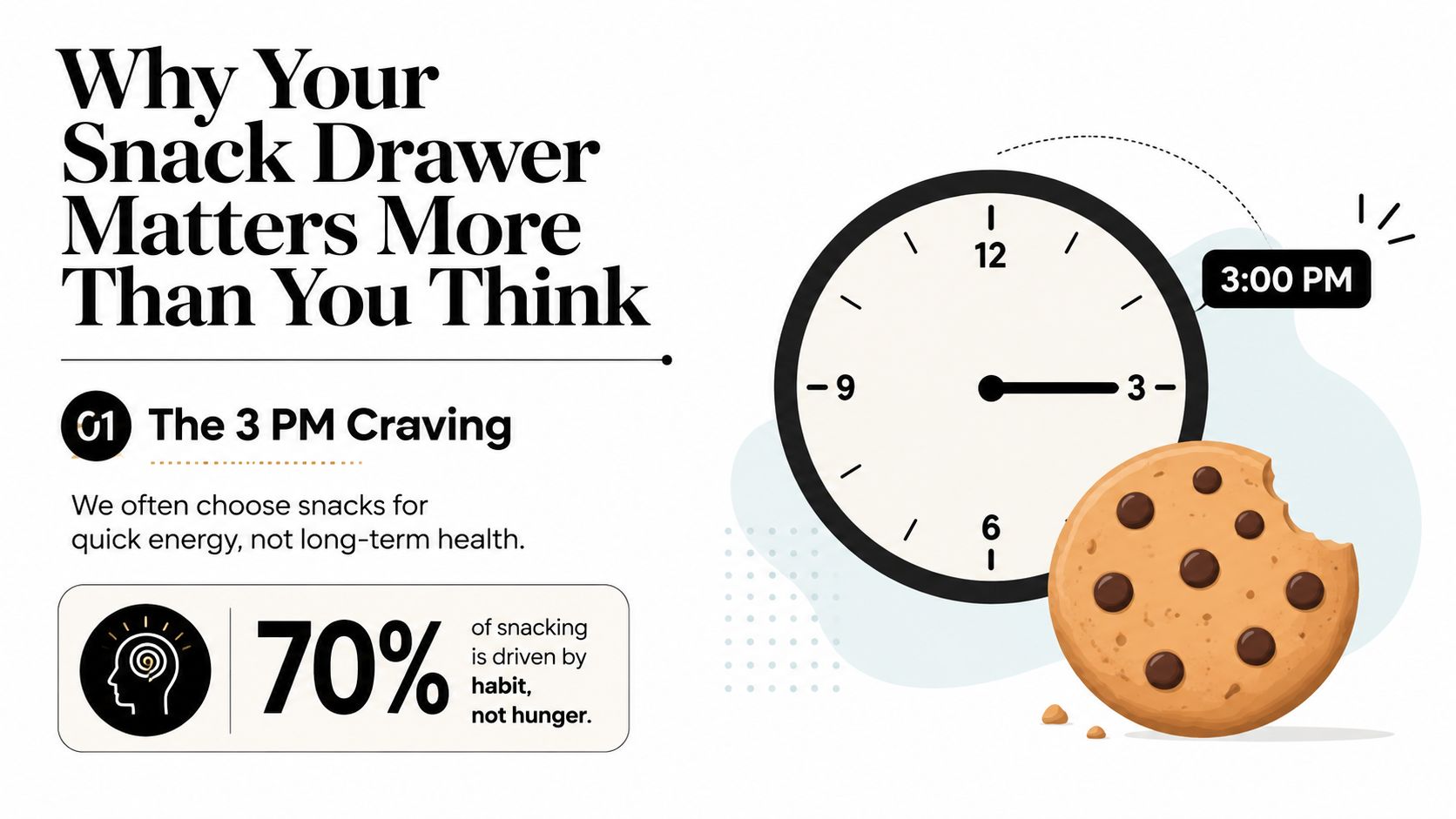
Practical rule: if your snack choice is mostly about speed, it probably needs a better plan than willpower.
Why Your Snack Drawer Matters More Than You Think
The choice sitting in your snack drawer often happens on autopilot. That matters because autopilot usually leads to whatever is closest, sweetest, saltiest, or easiest to eat with one hand. Over time, those small choices shape the overall pattern your gut sees, and the microbiome responds to that pattern more than to one perfect yogurt or one “healthy” bar.
That is why best snacks for gut health is really a question about snack patterns, not a search for a single magic food. You are asking what kind of snack routine supports digestion when snacking is already part of daily life. The U.S. survey data mentioned earlier shows that snacking has become routine, and routine is where nutrition habits either help or work against you. 1MD's breakdown helps connect that habit to the foods people reach for, like chips, cookies, and yogurt.
The snack drawer test
If the first thing you grab is low in fiber and high in sugar, your gut does not have much to work with. Fiber-rich plant foods and fermented foods give gut bacteria something useful to ferment or metabolize, like putting real fuel into an engine instead of a splash of sugar water. That is why a snack can do more than quiet hunger for a moment.
The practical shift is simple. Start treating snacks as micro-meals that can either feed beneficial bacteria or keep the craving cycle going.
A person dealing with bloating may do better with a snack that is lower in added sugar and easier to digest, while someone who feels backed up often needs more fiber in portable form. A sensitive stomach usually needs a different balance again, which is why a one-size-fits-all snack rule misses the point. That is also where the difference between soluble and insoluble fiber matters, and this guide to soluble and insoluble fiber is a useful reference if you want the basics broken down clearly. For people who need extra support, a prebiotic fiber supplement guide can also help explain how targeted fiber fits into a broader routine.
A snack does not need to be perfect. It just needs to be better than the default you would otherwise grab.
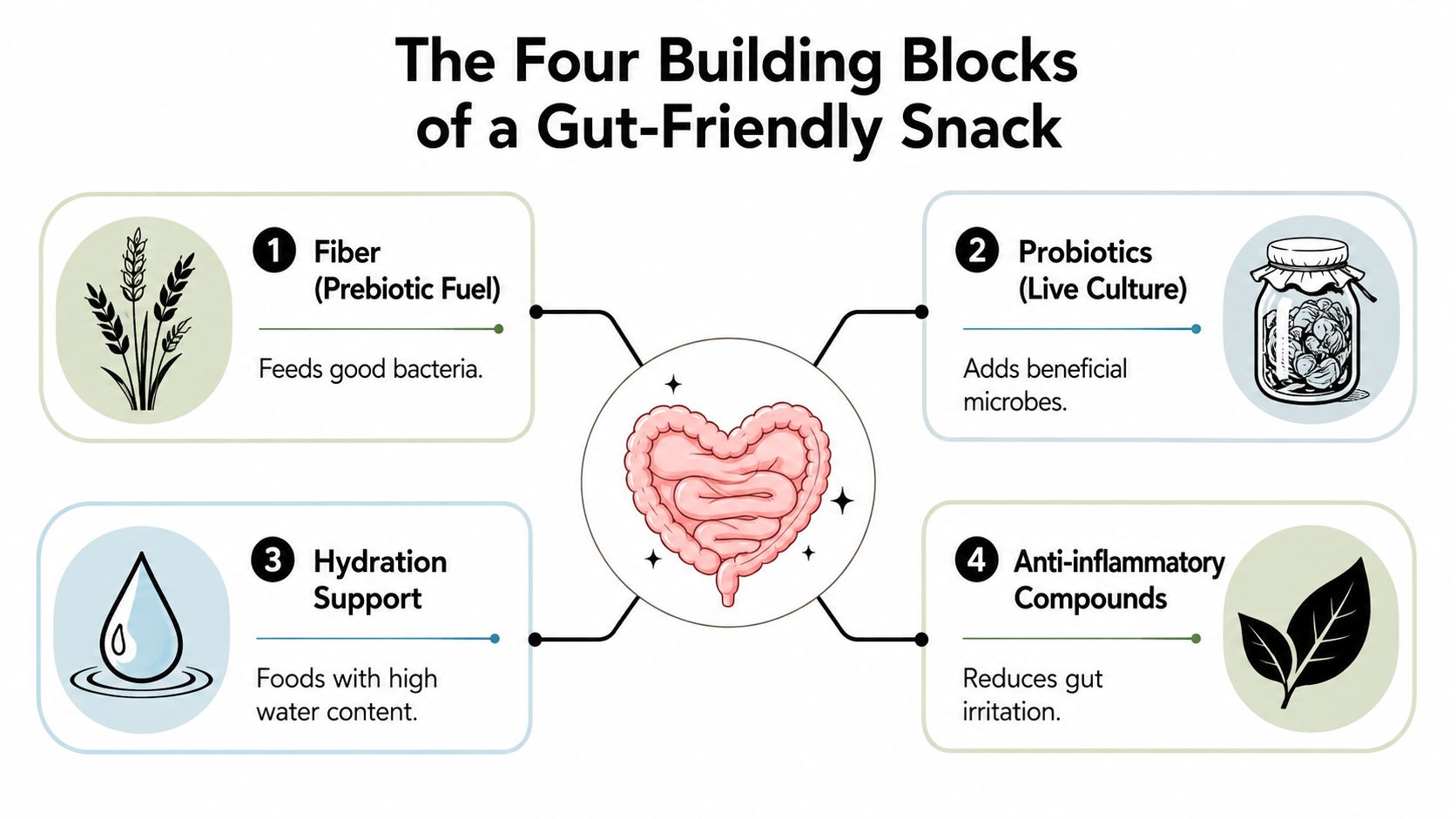
The Four Building Blocks of a Gut-Friendly Snack
A snack drawer can work like a small daily habit loop. If the first thing you reach for is mostly refined starch and sugar, your gut bacteria do not get much useful material to work with. If the snack includes the right mix of ingredients, it can support digestion between meals instead of only filling the gap until the next one.
The four building blocks are fiber, fermented foods with live cultures, hydration support, and low added sugar. A peer-reviewed review in PMC notes that diet strongly shapes gut microbial composition, and that foods rich in fiber and fermentable carbohydrates help produce short-chain fatty acids linked with gut and metabolic health. That review is a useful reminder that the microbiome responds to what you feed it over time, not just to a single smart choice.
Fiber does the heavy lifting
Fiber is the part of plant food your body does not fully digest, which leaves more material for the microbes lower in the digestive tract. That is why fiber often matters more than a flashy label on the package. A snack built around nuts, edamame, hummus with vegetables, kefir, or yogurt gives you more than quick energy, it adds structure, plant fuel, or fermentation in a form that is easy to carry.
The type of fiber matters too. Some fibers dissolve and form a gel-like texture, while others add bulk and help move things through, so different symptoms can call for different snacks. A soluble and insoluble fiber guide can help make that distinction clearer if you want to compare those roles side by side.
Probiotics are only one piece
Probiotics can help, but a snack does not become gut-friendly just because the package says live cultures. A yogurt cup with no fiber and a lot of added sugar is still a narrow solution, especially if the rest of the day is short on plant foods.
That is why food pattern matters more than a single buzzword. For readers who want to see how targeted fiber fits into a broader routine, this prebiotic fiber supplement guide is a useful reference point when comparing food-first choices with supplement options.
Hydration and sugar shape how the snack feels
Hydration support sounds simple, but it changes how a snack sits in the body. Foods with some water content, like fruit, yogurt, or vegetables paired with dip, can feel gentler and more satisfying than dry, salty snacks alone.
Low added sugar matters for the same reason. It keeps the snack from acting like dessert in disguise, and it helps the useful parts of the snack do their job instead of getting crowded out by sweetness. For someone dealing with bloating, a lower-sugar snack may feel calmer. For someone who feels backed up, the same snack still needs enough fiber to matter.
Bottom line: a strong snack does two jobs at once, it feeds you and it gives gut microbes something useful to work with.
How to Spot a Gut-Friendly Snack on the Shelf
The front of the package is often the least useful place to start. The nutrition facts panel and the ingredient list tell you whether a snack is built for steadier digestion or just dressed up to look healthy.
Start with fiber grams per serving. A practical benchmark is 3 g or more, because that usually signals the snack is doing more than delivering refined starch and flavor. Then check added sugar. If a snack leans on corn syrup, honey, fruit concentrate, or similar sweeteners, it can stop being very gut-friendly very quickly, especially for people who notice bloating after sweeter snacks.
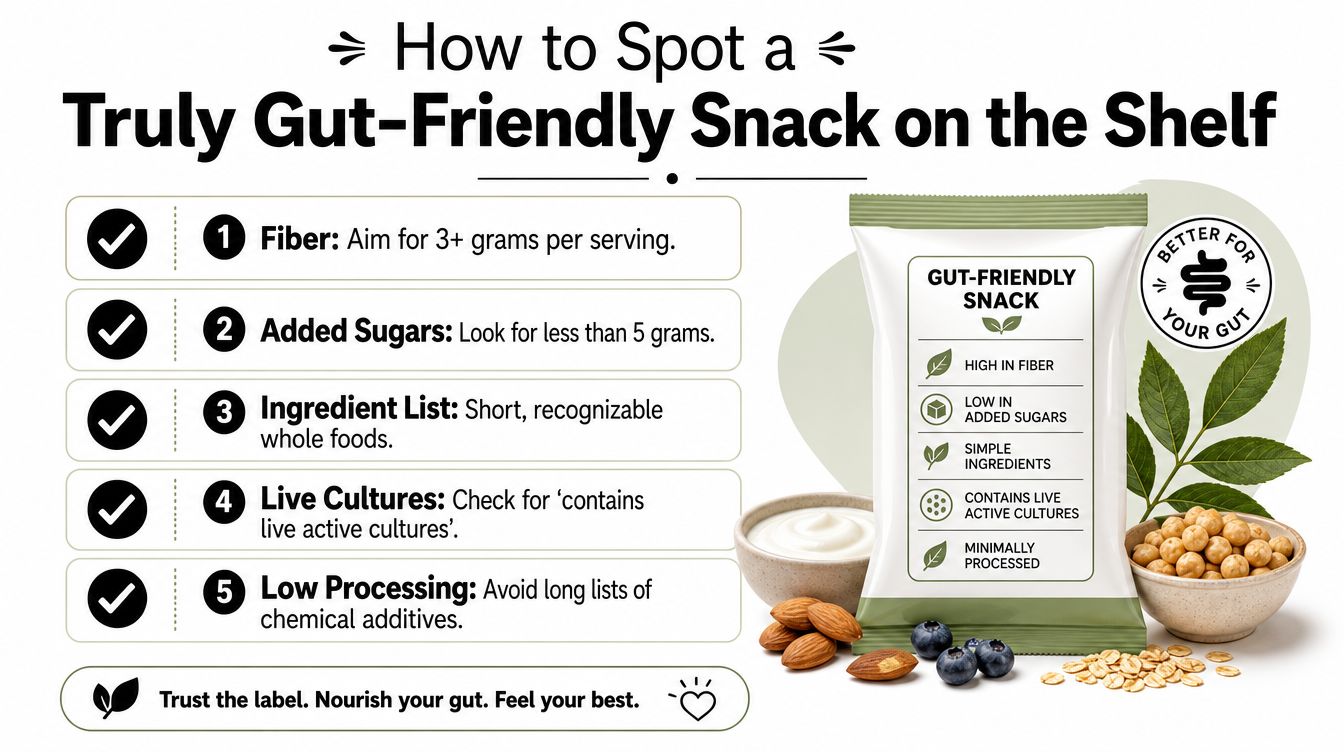
A five-point shelf check
- Fiber count: Aim for 3 g or more per serving, because that usually points to a snack with some structural benefit rather than empty crunch.
- Sugar sources: Watch for sweeteners that hide in plain sight, including fruit concentrates and syrup forms.
- Fermented ingredients: Look for yogurt, kefir, or wording that clearly signals live cultures, while remembering that probiotics are only one part of the picture.
- Ingredient list length: Shorter lists built from recognizable foods are easier to trust than long lists full of additives.
- Portability: If it cannot survive your commute, desk drawer, or backpack, you probably will not eat it when you need it.
A label can also help you match the snack to the symptom you are trying to calm. Someone dealing with constipation often does better with a snack that brings fiber and fluid, while a sensitive stomach may do better with a simpler ingredient list and less added sugar. That is one reason a portable, lower-sugar option can sometimes do more useful work than a probiotic product alone.
If you want a quick refresher on reading the panel with more confidence, this guide breaks down the basics in a practical way. For readers comparing food-first options with the Guiding Growth SCD diet guide, the same habits apply, because the label still tells you whether the snack fits the way you want to feel after eating it.
Best Snack Picks for Every Diet and Situation
Different guts need different snack styles. A child who wants something soft and familiar, a keto eater who wants low sugar, and a commuter who needs a shelf-stable option are not looking for the same thing, so a one-size-fits-all list misses the point.
| Lane | Examples | Why It Helps |
|---|---|---|
| Kid-friendly | Yogurt tubes, fruit with nut butter, softer baked snacks | Easier texture, familiar flavor, and better odds of being actually eaten |
| Keto or low-carb | Nuts, roasted edamame, cheese crisps, seed-based crackers | Lower sugar and more portable protein or fat balance |
| On-the-go | Kefir drinks, trail mix, shelf-stable bars | Convenient when you need something fast and don't want a vending-machine fallback |
Kefir deserves special mention because verywellhealth reports that about 150 milliliters, or roughly 1/2 cup, daily has been linked with changes in gut bacteria and increased short-chain fatty acid production. That makes it one of the few portable snack-format foods with a direct, easy-to-use serving cue. Nuts are another strong portable option, and a meta-analysis in PMC found shifts in specific bacterial genera after nut intake, including increases in Clostridium and Dialister, and a decrease in Parabacteroides, even though overall diversity didn't change in a broad way. That review supports a more precise view of what nut snacks can do.
For people following a more structured eating pattern, the SCD diet food list can be a useful reference for seeing how snacks are often organized around symptom tolerance rather than hype.
Portability matters just as much as ingredient quality. A snack can be technically ideal and still fail if you never reach for it.
The snack you'll eat consistently beats the snack that looks perfect in theory.
If you want a broader roundup of fiber-forward ideas, this high-fiber snack guide fits neatly with the framework here.
Reading the Label Like a Detective
Package claims are designed to make you stop thinking. Your job is to keep thinking for another ten seconds. That small pause is often enough to separate a useful snack from one that just sounds wellness-adjacent.
One common trap is vague wording like natural flavors. Another is a front label that says low sugar without telling you that the serving size is tiny or that the snack still lands in a sweet range per package. The same goes for whole grain claims that can hide refined flour in a longer ingredient list.
What to scan in 30 seconds
- Sweetener language: “Natural” doesn't automatically mean gut-friendly, and it can still mean a snack is built around added sweetness.
- Fiber type: Total fiber helps, but fermentable fiber is the part that interacts with microbes in a meaningful way.
- Serving size: Check whether the listed amount matches how much you'd really eat.
- Protein plus fiber: A snack that pairs both usually holds up better between meals.
- Probiotic detail: If a product leans on probiotic marketing, look for specifics rather than vague claims.
Washington University researchers reported that snacks formulated with specifically selected fiber types changed microbiome functions involved in fiber metabolism, and those shifts were linked to blood-protein biomarkers that regulate metabolism and physiology in two pilot human studies of overweight adults. Their report is important because it shows why the type of fiber matters, not just the presence of fiber on the label.
If you need a simple rule, use this one. Readable ingredients plus fermentable fiber beats marketing language every time.
For shoppers who also need to think about allergens, the nut allergy reaction guide is worth having open before you buy anything that leans on nuts as a gut-friendly ingredient.
Where Rip Van Fits Into Your Snack Rotation
Rip Van fits the framework as a lower-sugar, higher-fiber portable snack option that lines up with the shelf-check habits above. The brand says its snacks use no corn syrup or artificial sweeteners, include natural flavors, avoid artificial colors, and use non-GMO ingredients, which makes them easier to slot into a label-first routine instead of a treat-first routine.
That matters because many gut-friendly snack lists stop at yogurt and plain nuts. Rip Van's lineup gives you another lane, especially when you want something sweet without defaulting to a sugar-heavy cookie. Its Dutch-style wafels, crispy wafers and wafer bars, LEOS and Romeos cookies, plus Crispy Dunes and Crispy Choco varieties can map to different situations without changing the basic snack strategy.
How the formats fit real life
- Dutch-style wafels: A kid-friendly or afternoon treat option when you want familiar texture.
- Crispy wafers and wafer bars: A portable choice for desks, bags, and commute snacks.
- Cookies and crisp varieties: A better-for-you option for sharing, dessert moments, or evening cravings.
Rip Van also supports the practical side of buying, with a 100% satisfaction guarantee, free U.S. shipping on orders over $45, and access through retail partners, wholesale, and iHerb. If you're building a repeatable snack rotation, that convenience layer matters almost as much as the nutrition profile.
The important point is simple. Rip Van isn't a magic gut-health product, and it doesn't need to be. It works as one option that fits a lower-sugar, higher-fiber snack pattern when you're trying to move away from ultra-processed defaults.
A One-Week Starter Plan and Common Pitfalls to Avoid
A good starter plan doesn't need to be fancy. Day one can be kefir or yogurt with something crunchy. Day two can be nuts. Day three can be fruit with nut butter. Day four can be a shelf-stable bar at the office, and day five or six can be a portable lower-sugar baked snack like a Rip Van wafer or wafel. The point is repetition, not novelty.
Three mistakes show up over and over. First, low fat doesn't automatically mean gut-friendly, because low fat often just means the product added more sugar. Second, probiotic hype can distract people from the basics, because microbes still need fiber to thrive. Third, too much fiber too fast can backfire, especially if you're already bloated or sensitive.
Keep the first week boring on purpose. Your gut usually responds better to a steady pattern than to a dramatic overhaul. If you build the habit around a few snack anchors you like, you'll make better choices without thinking about it all day.
If you want a snack routine that's easier to stick with, start with options that balance lower sugar, more fiber, and real portability. Rip Van offers wafer bars, wafels, and cookies that fit that kind of everyday rotation, and you can browse the full lineup at Rip Van when you're ready to swap a few of your usual snack defaults for something more gut-aware.
0 comments