

You're standing in the cookie aisle with two nut-heavy packages in hand. One promises a chewy oatmeal cookie with visible pieces, while the other is a crisp sandwich cookie built around peanut butter. Both suggest “double nut,” yet they may deliver very different flavors, textures, nutrition profiles, and allergen considerations.
That ambiguity makes double nut cookies more interesting than a simple recipe category. At home, the phrase usually means a cookie built with two distinct nuts. In packaged food, it's a flexible description that can refer to two nut varieties, a nut paired with nut butter, or a nut-forward dough supported by oats and other grains. The label deserves as much attention as the flavor.
What Double Nut Cookies Actually Are
At its simplest, a double nut cookie contains two nut components. A home baker might combine almond flour with chopped pecans, fold walnuts and macadamias into a brown-sugar dough, or pair peanut butter with roasted cashews. The nuts can appear in different forms, and that form changes the finished cookie.
One idea, two settings
In a homemade recipe, “double nut” is usually a practical baking concept. The baker chooses two nuts for contrast, then decides whether each one belongs in the dough, the filling, or the mix-ins. Almond flour can provide structure and a tender crumb, while toasted pecans add pieces that stay noticeable after baking.
On a supermarket package, the phrase is looser. Brands use nut-forward wording to signal richness, crunch, or a more indulgent profile, but the name doesn't establish one universal formula. A product might combine almonds and pecans, or it might use peanuts plus peanut butter. Another may emphasize oats and a nut filling rather than two separate whole nuts.
The ingredient panel matters more than the front image. A photograph showing several nuts doesn't tell you whether those nuts are present as flour, paste, chopped pieces, or decorative topping. It also doesn't answer whether the product was made around other nuts or on shared equipment.
Practical rule: Treat “double nut” as a flavor clue, not a complete ingredient statement.
Why the distinction matters
The meaning affects what you should expect. Two visible nuts usually suggest more textural contrast. A nut-and-butter cookie tends to taste smoother and more concentrated. A nut-and-oat formula may be chewier and more substantial, but it can still contain a conventional amount of sugar.
That last point is important. More nuts don't automatically make a cookie a health food. A packaged example can still be a rich bakery-style treat, while a reformulated cookie may reduce sugar or increase fiber through its flour and sweetener choices. The rest of this guide connects those differences to baking technique, label reading, and buying decisions.
The Different Meanings of Double Nut on a Package
Walk down a cookie aisle and you'll find that “double nut” has at least three practical meanings. The wording isn't a reliable technical category, so shoppers need to translate the name into ingredients and texture.
| Interpretation | Example Product | What You Get |
|---|---|---|
| Two visible nut varieties | Kirkland Signature Double Nut Oatmeal Raisin Choc Chunk cookies | A large bakery-style cookie with multiple inclusions, oats, raisins, chocolate, and featured nuts |
| One nut plus nut butter | Nabisco Nutter Butter Double Nutty Peanut Butter Sandwich Cookies | A shelf-stable sandwich cookie with a concentrated peanut-butter flavor and portioned format |
| Nut plus grain | Nut-forward oatmeal cookies | A softer, chewier profile in which oats provide body and the nut supplies richness or crunch |
Two distinct nuts in one dough
The clearest interpretation uses two different nuts as pieces or flour. Kirkland Signature's Double Nut Oatmeal Raisin Choc Chunk cookies illustrate how a large retail cookie can combine cashews and macadamia nuts in one variety pack. The product was sold as part of a variety three-pack with 24 cookies total, priced at $9.99, and the reported nutrition per cookie was 220 calories, 12 grams of fat, 28 grams of carbohydrates, 1 gram of fiber, 17 grams of sugar, and 3 grams of protein (Costco Kirkland Signature Double Nut Oatmeal Raisin Choc Chunk Cookies review).
That combination points toward a rich, bakery-style experience. Expect visible pieces, a fuller bite, and sweetness from more than the nuts alone.
Nut plus peanut butter
The second interpretation uses a whole nut or peanut ingredient alongside a spreadable nut component. Nabisco's Nutter Butter Double Nutty Peanut Butter Sandwich Cookies show this mainstream format. A two-cookie serving contains 180 calories, 8 grams of fat, 130 milligrams of sodium, 24 grams of carbohydrates, 11 grams of total and added sugar, and 3 grams of protein, with 12 servings listed for the 15.27-ounce package (Nabisco Nutter Butter Double Nutty Peanut Butter Sandwich Cookies).
The result is less about two contrasting nut pieces and more about amplified nut flavor. The filling also changes the eating experience, making the cookie smoother, sweeter, and easier to portion.
Nut plus grain
Oats create a third path. In this version, “double nut” may describe a nut-rich dough paired with a grain base rather than two clearly visible nut varieties. Oats can soften the bite and support a thicker, chewier cookie, while chopped nuts supply contrast.
Before buying, check whether the named nuts appear in the ingredient list and allergen statement. Front-of-package language creates an expectation, but only the full label tells you what the product contains.
Ingredients and Flavor Profile Behind the Name
Two nuts change more than the aroma. They also change the dough's fat balance, moisture behavior, browning, and bite.
Walnuts and almonds are both naturally fat-rich ingredients. Adding them in flour, butter, or chopped form can make a cookie feel shorter and more crumbly, especially if the formula lacks enough water-binding ingredients. Nut flour behaves differently from chopped nuts, and nut butter behaves differently again.
Three nut formats, three jobs
Nut flour distributes flavor throughout the dough and can replace part of the wheat flour. It tends to create a tender, dense crumb rather than a stretchy one. A peer-reviewed reformulation study found that replacing wheat flour and butter with ingredients such as almond, walnut, chia, or poppy seed increased protein, fat, and fiber while lowering carbohydrate content in the tested cookies (nut and seed cookie reformulation study).
Nut butter adds concentrated flavor and a smooth fat phase. Peanut butter creates a roasted, savory note, while cashew butter tends to taste milder and creamier. Because nut butter brings both solids and fat, it can make dough feel soft before baking and rich after cooling.
Chopped nuts supply the crunch that tells your palate the cookie contains something substantial. Toasting them first deepens that flavor, but it also means you should watch the bake closely because the pieces can darken before the center finishes.
Why spread can surprise you
Cookie spread depends heavily on the relationship between fat, sugar, flour, and water. Research on sugar-snap cookies found that fat amount, rather than fat type alone, played the larger role in spread, while sugar affected spread especially in non-creamed systems. A baking-technology review likewise reported that increasing sugar or fat increases diameter while reducing height, creating a thinner, crisper cookie (cookie spread research).
That explains why a nut-heavy dough can flatten unexpectedly. The nut ingredients add their own fat, so a recipe designed for plain wheat flour may need adjustment.
Flavor pairing gives you another useful guide:
- Almond and hazelnut lean buttery and marzipan-like.
- Pecan and walnut create a deeper roasted profile with almost maple-like associations.
- Peanut and cashew balance savory toastiness with a softer, creamy sweetness.
Sugar also contributes more than sweetness. In a nut-rich dough, it supports browning and helps develop darker, toasted notes. The goal isn't to add more nuts. It's to balance their oils with enough flour, egg, or other moisture-bearing ingredients to keep the cookie from becoming greasy or fragile.
Baking Double Nut Cookies at Home
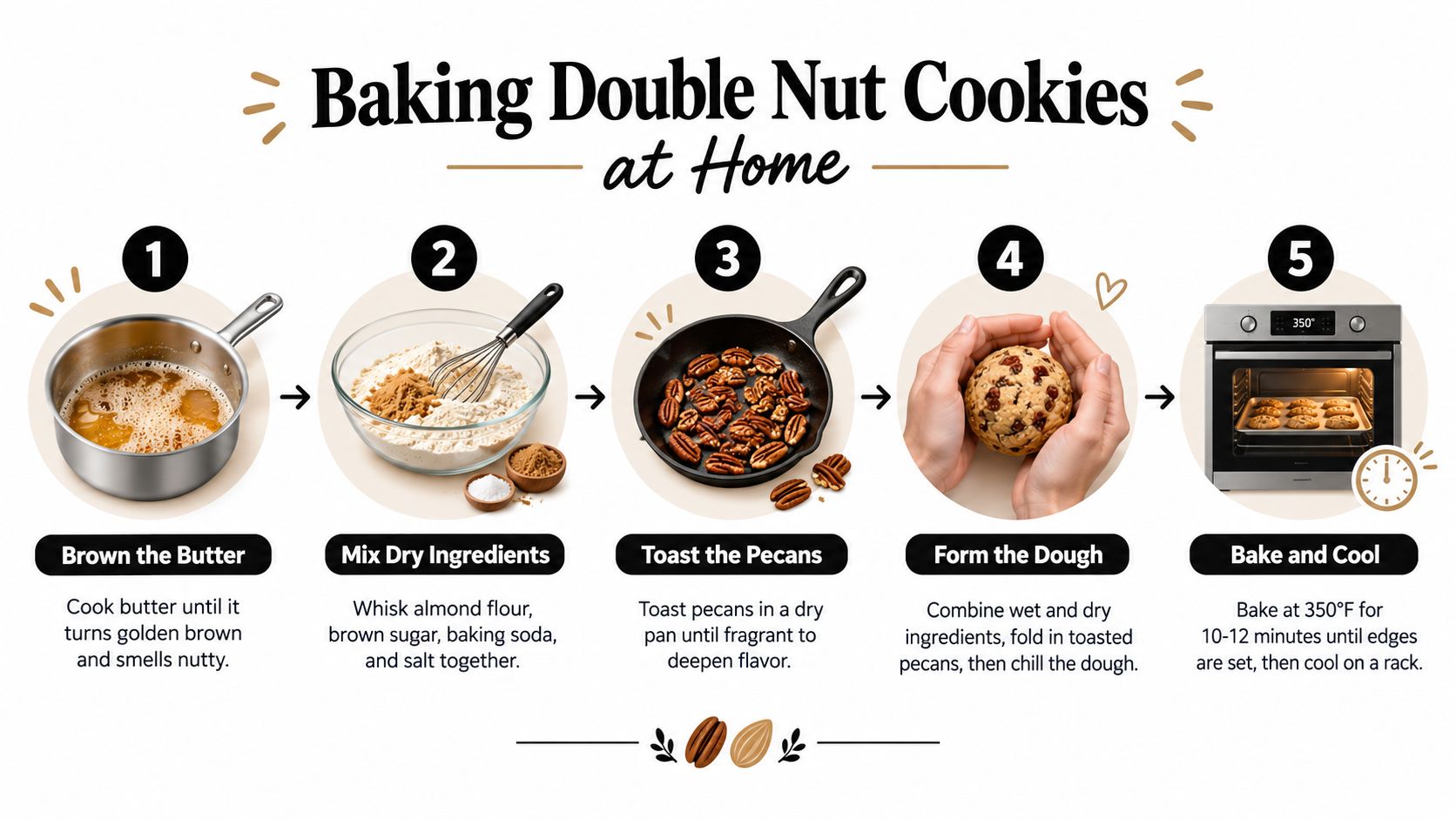
A dependable homemade version starts with one nut for structure and another for contrast. Almond flour and toasted pecans make a useful pair because the almond flour creates a tender base while the pecans remain distinct in the finished cookie.
Build the dough
Use almond flour, chopped pecans, butter, eggs, brown sugar, baking soda, and salt. Brown the butter first if you want a deeper toasted flavor, then let it cool until warm rather than hot. Hot butter can soften the dough too aggressively and interfere with the egg.
Cream the butter and brown sugar until the mixture looks cohesive, then beat in the eggs. Whisk the almond flour, baking soda, and salt separately. Fold the dry ingredients into the wet mixture, then add the pecans. Stop mixing as soon as the dough comes together.
The dough should be soft but scoopable. Chill it for at least 30 minutes. That pause gives the fat time to firm up and reduces the chance of a thin, greasy cookie.
Bake by appearance
Scoop the chilled dough onto parchment-lined sheets, leaving room for the cookies to spread. Bake at 350°F for 10 to 12 minutes, watching the edges rather than waiting for the centers to look completely firm.
High-fat dough continues cooking after it leaves the oven. Pulling the cookies when the edges are set but the centers still look slightly soft usually produces a better texture than waiting for the entire surface to become dry.
For another useful visual reference, this double nut cookie baking video demonstrates the general flow from dough preparation through baking.
Fix the common failures
- Flat cookies: Chill the dough longer, or reduce the butter slightly. Too much available fat encourages spread.
- Dry cookies: Underbake gently and consider adding a tablespoon of milk to the dough.
- Greasy cookies: Reduce one nut-based fat source or add an extra tablespoon of flour.
- Weak flavor: Toast the chopped nuts in a dry pan before mixing them in.
- Uneven texture: Chop the nuts consistently so large pieces don't create fragile spots.
Try walnut and macadamia for a buttery, soft crunch, or pistachio and cashew for a milder, creamy combination. Store cooled cookies in an airtight container for up to a week.
Lower Sugar and Higher Fiber Alternatives Worth Trying
A double nut cookie can contain appealing ingredients and still function mainly as a dessert. The nuts may improve richness and texture, but they don't erase the effects of sugar, refined flour, or portion size.
A better comparison starts with the whole formula. Nut flour can replace part of the refined flour. Oats and seeds can add structure and fiber. A portion-controlled packaged snack can reduce sweetness without asking you to bake a separate batch.
Three reformulation styles
Nut-flour cookies use almond or hazelnut meal to replace some refined white flour. They often taste denser and more aromatic, with a softer crumble. Bakers working with whole wheat should also account for its extra absorption and stronger flavor, so these whole wheat flour baking tips can help when adapting a nut-forward dough.
Oat and seed cookies combine rolled oats with ingredients such as flax or chia. That approach can produce a more substantial chew and a higher-fiber profile, although the cookie may feel less delicate than a classic butter cookie.
Lower-sugar packaged options focus on sweetness control and portion size. Rip Van's portfolio includes Dutch-style wafers, wafer bars, and cookies, including chocolate hazelnut wafer cookies and Low Sugar Leos. Its product information describes an emphasis on low sugar, no corn syrup or artificial sweeteners, natural flavors, no artificial colors, and non-GMO ingredients. Readers comparing higher-fiber packaged snacks can also consult this guide to high-fiber cookies to buy.
| Cookie Type | Sugar (per serving) | Fiber (per serving) | Key Ingredients |
|---|---|---|---|
| Kirkland Signature Double Nut Oatmeal Raisin Choc Chunk cookie | 17 g | 1 g | Oats, raisins, chocolate, cashews, macadamia nuts |
| Nabisco Nutter Butter Double Nutty, two-cookie serving | 11 g | Not provided in the verified listing | Peanut-forward sandwich cookie components |
| Nut-flour reformulation | Varies by recipe | Varies by recipe | Almond, walnut, chia, or poppy seed ingredients |
| Lower-sugar packaged alternative | Check current package | Check current package | Nut or hazelnut components, wafers, or cookie layers |
The tradeoff is straightforward. Lower-sugar cookies may taste less immediately sweet, and higher-fiber formulas can be denser. Read the ingredients for sugar alcohols or allulose if those don't suit you, and compare the nutrition panel with the serving size rather than relying on front-label claims.
Allergens, Labels, and What Double Nut Really Means for Safety
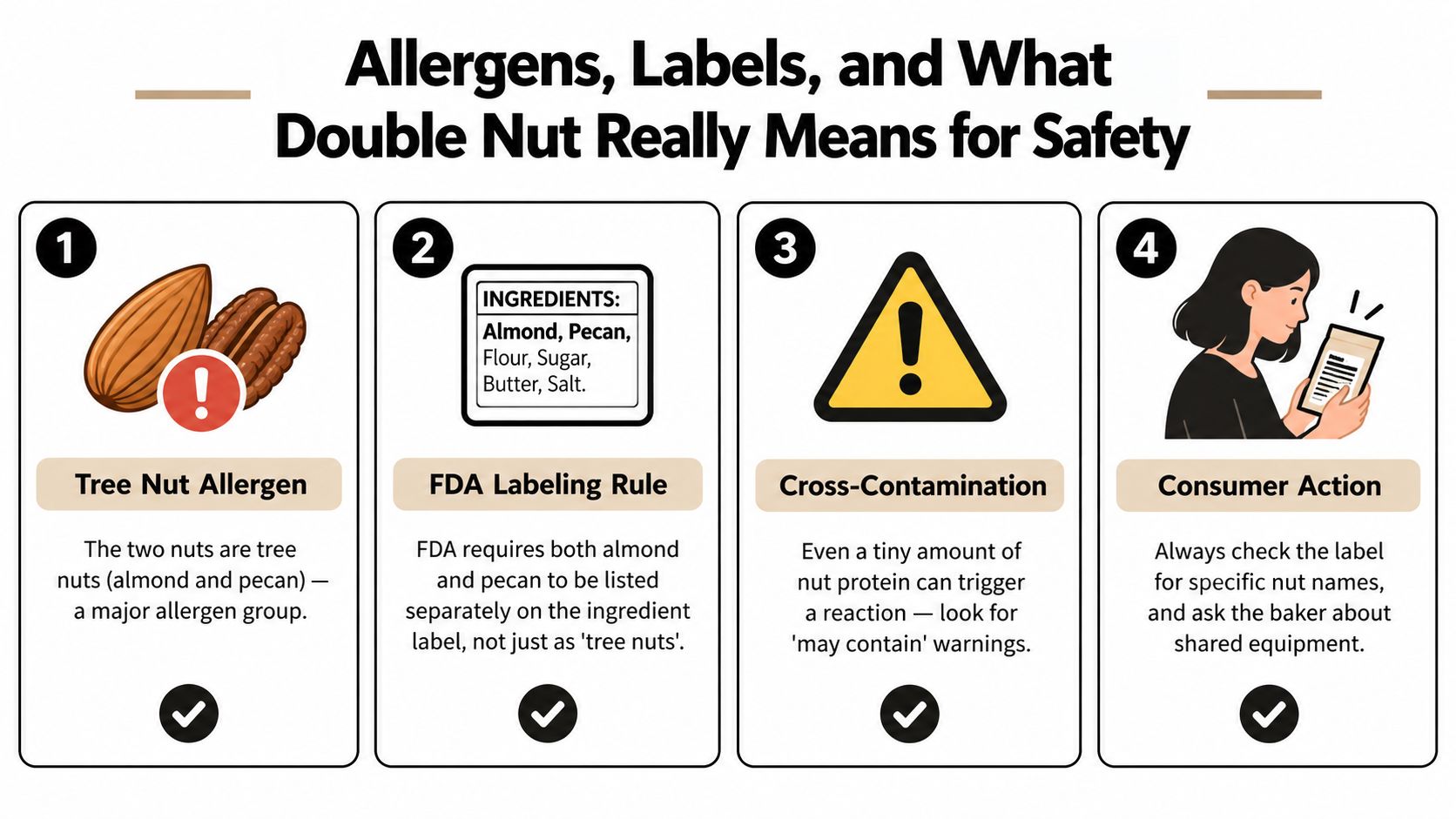
“Double nut” is not a safety shortcut. It may identify two separate nuts, but it can also describe a peanut-butter formulation or a product made around shared equipment.
For shoppers with allergies, the specific nut names matter. The verified retail examples show why: one product identifies cashews and macadamias, while another centers on peanuts. A cookie can be appealingly nut-rich and still be unsuitable for someone who reacts to one ingredient hidden in a filling, flour blend, or secondary inclusion.
Read the entire allergen picture
Scan the ingredient list for named nuts, not just the marketing phrase. Look for almonds, pecans, walnuts, cashews, pistachios, hazelnuts, macadamias, Brazil nuts, and peanuts where relevant to the product and jurisdiction.
Then inspect advisory language about shared facilities or shared equipment. Those warnings address possible cross-contact and can matter even when the nut you're avoiding isn't part of the recipe itself.
Regulatory language also differs across markets. The FDA notes that tree nuts outside its defined list shouldn't be added to a “Contains” statement even when they're used as ingredients, which means the same cookie can be labelled differently by jurisdiction. Codex adopted new guidance in 2025 recommending that precautionary allergen statements follow scientific risk assessment after good manufacturing controls, while FAO described the global movement toward science-based thresholds in 2026 (FAO coverage of Codex allergen-label guidance).
A practical label checklist
- Name the nuts: Identify every nut in the ingredient list and allergen declaration.
- Check fillings: Peanut butter, praline, hazelnut cream, and chocolate layers may contain the relevant allergen.
- Read advisory statements: Look for shared-equipment or “may contain” wording.
- Confirm the market: Imported products may use different allergen conventions.
- Ask a bakery directly: For unpackaged cookies, ask whether the same mixers, trays, or counters handle other nuts.
For more help with serving sizes, ingredient lists, and allergen language, use this guide to reading nutrition labels. People with severe allergies should follow their clinician's advice and avoid relying on the phrase “double nut” as a complete risk assessment.
A Quick Buying Guide for Better-for-You Nut Cookies
Start with your priority, then judge the cookie against it. A parent buying lunchbox snacks needs a different label strategy from a baker looking for a rich weekend treat.
| Shopper Priority | Sugar Target | Fiber Target | Key Label Clues | Watch-Outs |
|---|---|---|---|---|
| Sugar-conscious | Under 8 g added sugar | Any stated amount | Nuts or seeds appear early in the ingredient list | Refined flour and syrups may still dominate |
| Fiber-seeking | Compare with serving size | At least 3 g per serving | Oats, chicory root, seeds, or nut flour | Added fibers can change texture and tolerance |
| Parent-friendly | Lower is preferable | A stated amount | Recognizable ingredients and convenient portions | Sodium, allergens, and oversized servings |
| Allergen-aware | Not the main filter | Not the main filter | Specific nut names and facility statements | A nut pairing may mean peanut butter plus another ingredient |
Match the claim to the formula
“Made with real nuts” confirms very little about the rest of the cookie. Refined flour, sugar, chocolate, and fillings may still make up most of the formula. “Oat-based” doesn't automatically mean high fiber, and “protein” language doesn't establish that a cookie fits a particular diet.
Rip Van offers a range of low-sugar wafers, wafer bars, and cookies, with dietary browsing options that include gluten free, low sugar, keto, and vegetarian products. For a broader comparison of packaged options, see this guide to healthy cookie brands.
Use three quick rules at the shelf:
- Read the first three ingredients. They reveal what the cookie is built around.
- Divide sugar grams by cookie count. A serving can contain more than one small cookie.
- Compare fiber with sugar. A cookie with a little fiber and a great deal of sugar may still be an indulgent treat, regardless of its nut imagery.
Where Double Nut Cookies Are Headed Next
The next wave of double nut cookies will likely be defined by formulation rather than by the phrase printed on the front of the package. Shoppers increasingly want a cookie that tastes indulgent but provides clearer information about sugar, fiber, ingredients, and allergens.
One direction is sugar reformulation. Brands may use ingredients such as monk fruit, allulose, or date paste to change sweetness and texture, but each choice brings its own baking behavior. Date paste adds moisture and body. Allulose can affect browning. Monk fruit generally works as a sweetness tool rather than a one-for-one structural replacement.
Another direction is the movement of nut flours into more mainstream products. Almond and hazelnut flours can reduce reliance on refined wheat flour and create a denser, more aromatic crumb. They also require clearer allergen communication because the nut is no longer merely a garnish. It becomes part of the cookie's structure.
Flavor development will continue to broaden. Pistachio with pecan, cashew with macadamia, and tahini with walnut all offer distinct combinations of toastiness, creaminess, and bitterness. But every new pairing creates another label question, especially for shoppers who need to avoid specific nuts or shared equipment.
The useful standard is simple: a better cookie should earn its positioning through its ingredient balance, not just a premium name. Homemade bakers can control the nut varieties, sweetness, and bake time. Packaged-cookie shoppers can compare serving sizes, fiber, sugars, and allergen statements. Rip Van's low-sugar wafer and cookie formats show one route for combining a treat-like experience with a lower-sugar positioning, while other brands may take different approaches.
If you want a convenient alternative to a traditional double nut cookie, explore Rip Van's range of Dutch-style wafers and cookies, including nut-forward flavors and low-sugar options. Visit Rip Van to compare products, dietary filters, and ways to order.
0 comments