

You've bought the gluten-free mix, followed the package directions, and opened the waffle iron to find pale tops, a gummy center, and edges that tear before they reach the plate. Then comes the second disappointment: the label says gluten-free, but the waffle still behaves like a refined, sweet breakfast food rather than a satisfying meal.
That's the problem with treating healthy waffles gluten free as one task. Gluten-free answers the question of what the waffle excludes. It doesn't automatically answer whether the batter has enough protein, fiber, structure, or staying power. A Canadian food-composition analysis found that gluten-free waffles averaged 251 kcal, 42.0 g carbohydrate, 5.0 g protein, 1.0 g fat, 4.2 g sugars, and 1.6 g fiber per 100 g across five products, which makes the formulation more important than the front-of-pack claim. The Canadian food-composition reference also helps explain why “gluten-free” and “balanced” shouldn't be treated as synonyms.
The recipe below starts with a dependable batter, then adjusts texture, flour choice, sweetness, and meal composition separately. If you want more ideas beyond waffles, you can also find gluten free breakfast recipes at Just, but keep the same rule in mind: judge the whole breakfast, not just the absence of wheat.
Why Gluten Free Waffles Often Disappoint
A waffle can leave the iron golden, crisp, and still fail at the center. Gluten provides a structural network in wheat batter, trapping steam, supporting the risen crumb, and helping the waffle hold together when lifted. Gluten-free batter needs a different system for those jobs.
A direct flour swap rarely delivers it. Rice-heavy blends may form a crisp shell around a fragile interior. Excess starch can brown before the center sets. Too little liquid produces dry, cracked edges, while too much leaves excess steam trapped inside.
The practical reframing: gluten-free is a texture constraint, not a health claim.
Nutrition makes the distinction clear. A Spanish food-composition analysis listed a “pancakes or waffles” category averaging 237.9 kcal, 36.5 g carbohydrate, 6.5 g protein, 1.7 g fiber, and 0.8 g salt per 100 g. The Spanish food-composition analysis indicates that waffle-style products can remain carbohydrate-dominant with limited fiber unless the formula deliberately includes ingredients such as oats, seeds, or legumes.
What the label doesn't tell you
“Gluten-free” can still describe a waffle built mainly from refined rice flour, added sugar, and starches chosen for lightness rather than fullness. The result may be convenient and crisp, yet offer little protein or fiber to balance the meal. Gluten-free and healthy require separate decisions about batter structure, sweetness, and what goes on the plate.
Okara shows the trade-off clearly. A controlled study of okara-enriched gluten-free waffles found that a 30% okara substitution gave the strongest balance of nutrition and eating quality, with sensory liking at 7.43 out of 9. Higher inclusion improved batter structure but raised moisture by about 2.7% and reduced spread ratio by as much as 45% at 40% okara. The okara waffle study demonstrates why adding fiber alone can produce a denser, less crisp waffle if the batter cannot release moisture.
The practical fix is deliberate formulation. Give each ingredient a job, then judge the finished breakfast by its protein, fiber, sweetness, texture, and toppings. For ideas beyond waffles, find gluten free breakfast recipes at Just, while applying the same standard to the complete meal.
The Base Gluten Free Waffle Batter
Start with a stable template before making substitutions. This batch uses a flour blend that already contains xanthan gum, or you can add the amount listed below if it doesn't.
Ingredients and method
Whisk the dry ingredients in a large bowl:
- Gluten-free flour blend: 1 1/2 cups
- Coconut sugar or granulated sweetener: 2 tablespoons
- Baking powder: 1 tablespoon
- Fine salt: 1/2 teaspoon
- Xanthan gum: 1/2 teaspoon
In a second bowl, beat together:
- Large eggs: 2
- Buttermilk: 1 3/4 cups, or milk mixed with 1 tablespoon lemon juice
- Melted unsalted butter or neutral oil: 1/2 cup
- Vanilla: 1 teaspoon
Pour the wet mixture into the dry ingredients. Stir only until no dry streaks remain. A few lumps are harmless, but aggressive mixing is not. Gluten-free flour doesn't need gluten development, and overmixing can still create a heavy, tight batter once starches hydrate.
Let the batter rest for 5 to 10 minutes. This pause allows the flour and starches to absorb liquid before they meet the hot iron, which usually does more for cohesion than another round of stirring.
Why each ingredient matters
The flour blend supplies bulk and flavor. Baking powder produces lift. Xanthan gum contributes elasticity, eggs set the protein structure, and fat tenderizes the crumb while helping the outside brown. Buttermilk adds tang and acidity, which works with the leavener and gives the waffle a fuller flavor than plain water-based batter.
Preheat and grease the waffle iron thoroughly. Add enough batter to fill the pattern without forcing the lid shut. Cook until the steam slows and the lid lifts cleanly, usually 3 to 5 minutes depending on the machine. That timing varies by appliance, so the visual cues matter more than the clock.
For a useful visual benchmark while you adjust color and crispness, compare your finished result with this golden waffle photo from IFM Gourmet Food Store. A waffle that releases intact but looks pale usually needs more iron heat or cooking time, not necessarily more sugar.

Choosing the Right Flour Blend
The bag matters less than the blend inside it. No single gluten-free flour gives you crispness, tenderness, flavor, protein, and binding strength at the same time, so the most reliable batter combines ingredients with different strengths.
Rice flour is neutral and tends to crisp well, but it's low in protein and doesn't hold a waffle together on its own. A batter made entirely from rice flour often breaks at the edges. Oat flour contributes a mild sweetness, more body, and useful moisture retention. It can become dense, however, if the batter lacks enough leavening or is overloaded with liquid.
Almond flour adds protein, fat, and a tender crumb. It also browns quickly, so a very hot iron can darken the exterior before the middle sets. Buckwheat brings a pronounced earthy taste and works particularly well with savory toppings, berries, and yogurt, but its flavor can dominate a delicate vanilla waffle.
A practical blend
An everyday starting point is roughly 40% rice flour, 30% oat flour, 20% almond flour, and 10% tapioca starch. Rice provides the crisp shell, oat supplies body, almond brings richness, and tapioca adds chew and browning. The percentages are a blending framework rather than a reason to chase laboratory precision. If you measure by volume, use the same measuring method each time. A kitchen scale gives more repeatable results.
For a nut-free kitchen, replace almond flour with sorghum or millet flour. Sorghum has a mild, rounded flavor, while millet can taste slightly more pronounced and dry if used heavily. Keep the rice and oat components in place so the batter doesn't lose its crispness and moisture balance.
| Flour | Protein per 1/4 cup | Fiber | Flavor | Binding strength | Best use in blend |
|---|---|---|---|---|---|
| Rice | Varies by product | Varies by product | Neutral | Low | Crispness and lightness |
| Oat | Varies by product | Varies by product | Mild and nutty | Moderate | Body and moisture |
| Almond | Varies by product | Varies by product | Rich and tender | Moderate | Fat, protein, and tenderness |
| Buckwheat | Varies by product | Varies by product | Earthy | Moderate | Savory or robust waffles |
Treat those nutrition columns as label-checking prompts rather than fixed values. Flour processing differs across brands, and the nutrition panel on your package is the accurate source for that product. Also check cross-contamination statements if the waffles are for someone with celiac disease, and watch for added starches because they can change hydration and crispness. For a packaged blend comparison, this all-purpose baking mix guide offers another reference point for thinking about blend design rather than relying on a single flour.
Low Sugar and Keto Variations
Lowering sugar is straightforward. Keeping the waffle tender and recognizable is the harder part.
For a low-sugar version, replace the coconut sugar or granulated sugar with a monk fruit and allulose blend in equal volume. Erythritol works too, but use about 70% of the sugar's weight if you're converting by weight, since too much can create a cooling sensation and a dry finish. Sweetener choice changes browning, so a very pale waffle may need more cooking time even when the center is done.
The keto version needs a more substantial flour change. Replace the cup of all-purpose gluten-free blend in the base formula with 1/2 cup almond flour, 1/4 cup coconut flour, and 1/4 cup unflavored whey protein isolate. Coconut flour absorbs much more liquid than wheat flour, so don't judge the batter immediately. Let it rest for 5 minutes longer, then add liquid gradually if it has become spoonable rather than pourable.
Full-fat cottage cheese or Greek yogurt can replace part of the milk when you want a thicker, more protein-forward batter. Blend cottage cheese first if you want a smooth crumb. Greek yogurt gives more tang and can make the waffle softer, so cook until the surface is set before opening the iron.
| Ingredient | Classic GF waffle | Low-sugar waffle | Keto waffle |
|---|---|---|---|
| Flour base | Gluten-free blend | Same blend | Almond flour, coconut flour, whey isolate |
| Sweetener | Coconut sugar or granulated sugar | Monk fruit and allulose blend | Monk fruit and allulose blend |
| Dairy | Buttermilk or milk | Buttermilk or Greek yogurt | Cottage cheese or Greek yogurt |
| Main nutrition focus | General gluten-free structure | Reduced added sugar | Lower carbohydrate load |
| Texture risk | Fragile if underbound | Less browning | Dryness from coconut flour |
Don't promise yourself that gluten-free alone will reduce blood-sugar impact. A Riceberry waffle study reported a glycemic index of 94.73 ± 7.60, statistically similar to a wheat-flour waffle at 91.96 ± 6.93, despite the gluten-free formulation. The study also found 0.5% xanthan gum optimal for quality, because it helped retain moisture and form a viscoelastic network. The Riceberry waffle research makes the key point: sugar replacement, starch digestibility, and structure are separate decisions. For more ideas on reduced-sugar treats, browse these gluten-free keto desserts, then inspect the full nutrition panel rather than assuming the dietary label tells the whole story.
Binding and Texture Tips That Actually Work
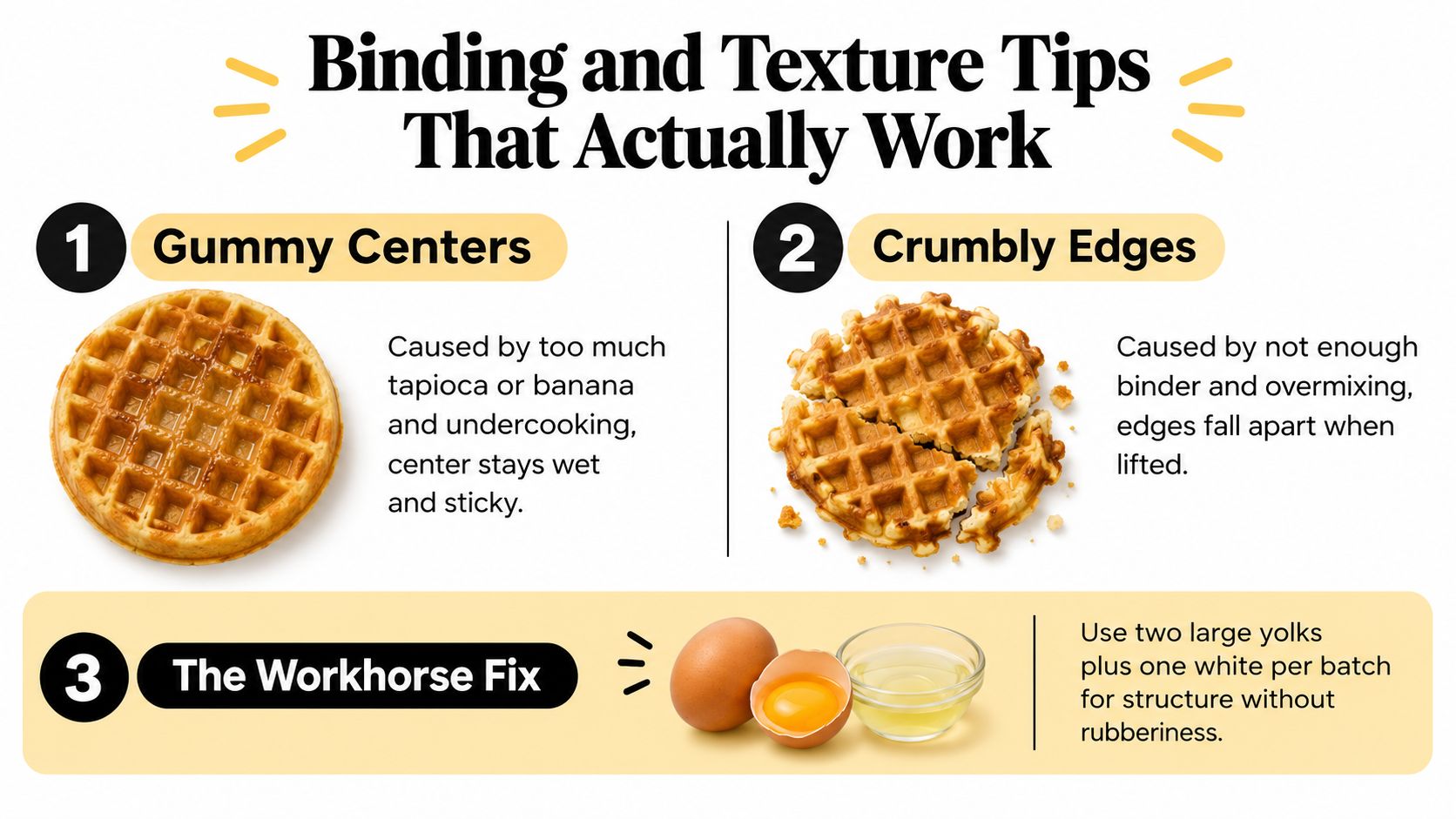
Gluten-free waffles usually fail in one of two directions. A gummy center comes from excess moisture, too much tapioca or banana, or stopping the cook too early. Crumbly edges usually mean the batter lacks a binder, the flour is too dry, or the mixture was stirred until it lost its ability to hold together.
Eggs are the most dependable rescue. For a batch this size, use two large yolks plus one white when you want structure without a rubbery result. The yolks contribute fat and emulsification, while the white sets into a light protein network. Beat the eggs well before adding them, especially if you're working with a dense flour blend.
Xanthan gum provides elastic strength. A practical starting point is 1/2 teaspoon per cup of flour blend. Psyllium husk is another option, adding chew and soluble fiber, but it absorbs water quickly. Use 1 tablespoon per cup of flour blend only when the rest of the recipe has enough liquid to support it, and expect a thicker batter.
Let the finished batter sit for 15 minutes when you're using oat flour, psyllium, or coconut flour. Starches and fibers need time to hydrate, and pouring too soon gives you a batter that changes thickness inside the iron.
The small details that protect crispness
Don't press down on a standard waffle iron. Steam needs a route out, and a heavy hand compresses the crumb before the exterior has finished setting. Brush the plates lightly with melted ghee when needed. Cooking spray can accumulate on nonstick surfaces and leave a gummy film over time.
Use the same approach with fiber-rich additions. Chicory root fiber guidance is useful background when you're evaluating fiber-focused ingredients, but added fiber still needs liquid and heat control. If you add too much at once, the waffle may become nutritionally denser while eating worse.
For a visual demonstration of technique, watch the following waffle-making video:
Serving Ideas for a Balanced Breakfast
A waffle works better as the base of breakfast than as the entire breakfast. Many packaged gluten-free waffles provide modest protein and fiber, and nutrition databases show broad variation across products, with examples ranging from about 105 to 260 calories per serving, fiber around 0.5 g to 3 g, and protein around 0.5 g to 3 g. The nutrition listings for waffles show why the topping strategy matters as much as the freezer aisle choice.
For the classic batter, add Greek yogurt, macerated berries, and a spoonful of chia jam. The yogurt supplies protein, berries bring acidity and texture, and chia contributes seed-based thickness without requiring a heavy pour of syrup. Keep the fruit whole or lightly crushed rather than turning the plate into a sugar-heavy sauce.
The keto waffle benefits from savory toppings. Smoked salmon, avocado, and scrambled eggs create contrast between crisp waffle, creamy fat, and soft protein. Season with lemon, black pepper, or chives instead of relying on a sweet topping to make a lower-sugar waffle feel complete.
Match the topping to the batter
An oat-forward waffle pairs naturally with almond butter, sliced banana, and hemp hearts. The banana adds sweetness and softness, while the nut or seed topping prevents the meal from feeling like plain starch. If you're serving children, offer toppings separately so they can assemble a plate without turning every waffle into a syrup delivery system.
A simple portion rule is one part waffle, one part protein, and one-half part fruit. It isn't a medical formula, but it's a useful plate-building habit. The protein might be yogurt, eggs, cottage cheese, salmon, or tofu. The fruit can be berries, banana, or apple, depending on the batter's flavor.
The question “Are gluten-free waffles better for people without celiac disease or gluten sensitivity?” deserves a direct answer. Not automatically. Independent guidance notes that they can still contain refined flours, added sugars, and less desirable fats, so compare products by protein, fiber, sugar, and ingredient quality instead of assuming the gluten-free label settles the decision. This gluten-free waffle health overview supports the more useful conclusion: a gluten-free waffle becomes a balanced breakfast when the complete plate improves satiety and variety.
Storage, Reheating, and Troubleshooting
Waffles reward batch cooking, but only if you manage moisture from the moment they leave the iron. Cool them on a wire rack rather than stacking them while hot. Steam trapped between warm waffles softens the crust, and the same moisture will make frozen waffles reheat limp.
For the refrigerator, line a 1-quart container with paper towel and place the fully cooled waffles inside. Keep the lid closed and use them within three days. Replace the paper towel if it becomes damp. This method works for a short holding period, but the waffles will gradually lose crispness as they reabsorb moisture.
For the freezer, separate each waffle with parchment paper, then place the stack in a labeled zip pouch with the preparation date. Use within three months for the best texture. Freeze the waffles only after they've cooled completely, and don't seal warm waffles in the bag.
Reheating by texture
- Crisp exterior: Heat in a 350°F oven for 8 minutes. Place the waffles directly on a rack or a preheated tray so hot air reaches the surface.
- Single portion: Use a toaster on medium for 3 to 4 minutes, checking early if the waffle is thin or contains almond flour.
- Soft finish: Microwave in 20-second bursts at 70% power. This warms the center but won't restore a crisp shell.
Frozen waffles often need longer heating than refrigerated ones. If you know you'll freeze a batch, cook them a shade lighter than the waffles you'll eat immediately. Toasting finishes the exterior without over-drying the center.
Troubleshooting at a glance
| Problem | Likely cause | Quick fix |
|---|---|---|
| Sticking | Iron isn't fully preheated or the surface lacks suitable fat | Preheat completely and brush lightly with avocado oil |
| Pale interiors | Batter is too thick from overmeasured flour | Thin with buttermilk by tablespoons |
| Dense crumb | Eggs are underbeaten or leavening has weakened | Whip whites separately and check the baking powder date |
| Soggy tops | Steam is trapped under the lid or between stacked waffles | Cool uncovered on a wire rack before stacking |
Butter can burn when the iron runs hot, so avocado oil is a safer brushing choice for the sticking problem. If the batter looks thick before cooking, don't add a large splash all at once. Small additions preserve the flour-to-liquid balance and make it easier to stop before the batter turns runny.
Freezer rule: cook for immediate eating until properly golden, but cook make-ahead waffles slightly lighter so the toaster can finish the color later.
The same diagnosis applies to store-bought waffles. A product may toast neatly yet remain low in fiber and modest in protein, while another may have a more substantial ingredient profile but need gentler reheating to avoid dryness. Read the serving panel, check the flour and sweetener order, and decide whether the waffle is a meal component or a convenient snack.
For a convenient option alongside homemade healthy gluten-free waffles, explore Rip Van, which offers gluten-free Dutch-style Wafels in flavors including Dutch Caramel & Vanilla and Snickerdoodle, with a low-sugar, fiber-focused positioning. Compare the package nutrition with your breakfast goals, then keep a box available for mornings when the waffle iron stays cold.
0 comments