

“Whole wheat” on the front of a cracker box isn't a health guarantee. It can signal a useful whole-grain ingredient, but it can also sit beside added sugar, substantial sodium, and a serving size smaller than the portion you'll eat. Healthy wheat crackers are chosen from the nutrition panel and ingredient list, not from the brown color of the cracker or a wholesome-looking package.
A practical rule makes shopping easier: look for 100% whole-grain wheat, meaningful fiber, modest sugar, controlled sodium, and an ingredient list you can understand. The details matter because packaged crackers vary widely, even within the same category.
The Health Halo Trap in the Snack Aisle
The popular advice is simple: choose whole-wheat crackers instead of regular crackers and move on. That advice is incomplete. A whole-wheat label may offer more fiber than a refined-flour product, but it doesn't erase the rest of the formulation.
A typical 1-ounce, or 28-gram, serving of whole-wheat crackers contains about 120 calories, 19.5 grams of carbohydrate, 2.9 grams of fiber, 3 grams of protein, and 0 grams of cholesterol, according to University Hospitals' nutrition data for whole-wheat crackers. That's a reasonable foundation for a snack, and the fiber can represent about 10% of the Daily Value in some nutrition databases. But the same serving is still calorie-dense, so eating several portions casually changes the nutritional picture.
Why the front of the box misleads
“Whole wheat,” “whole grain,” and “multigrain” aren't interchangeable promises. A product can feature whole-grain language while also including refined flour, sweeteners, oils, and flavoring ingredients. Multigrain means multiple grains, not necessarily that the product is made primarily from whole grains.
Sugar and sodium create another blind spot. One leading whole-grain cracker label lists 140 calories per 16 crackers, 3 grams of fiber, 5 grams of total sugar, 4 grams of added sugar, and 200 milligrams of sodium, as shown on the Wheat Thins Original Whole Grain product listing. That product may fit some eating patterns, but it is not a low-sugar or low-sodium choice just because it contains whole grain.
Practical rule: Treat “whole wheat” as an ingredient clue, not a complete nutrition verdict.
Replace the health halo with label discipline
Start with the serving size. If the label defines a serving as a small number of crackers, compare that amount with what you normally eat. Then check added sugars, sodium, fiber, and the first ingredient. The box's claims are secondary.
The category has also changed. Crackers that once resembled simple crispbreads now include highly formulated snack products with sweet and savory flavor systems. Recent cracker-launch coverage found that GMO-free and no additives or preservatives claims were among the most common natural claims in 2026, a sign that shoppers are looking beyond whole wheat alone for ingredient simplicity, as reported by Snack & Bakery's 2026 cracker industry coverage.
The right question isn't “Does this say whole wheat?” Ask instead: Does this cracker give me enough fiber for its calories, without unnecessary sugar or excessive sodium?
What Makes a Wheat Cracker Healthy
A wheat cracker earns its health claim from the grain and the nutrition panel, not from wheat imagery on the box. 100% whole-grain wheat retains the bran and germ, while refined wheat flour removes much of the grain's structure and fiber. Consumer Reports explains this distinction in its guide to choosing a healthy cracker: crackers made with 100% whole grains provide more fiber than those made with refined white flour.
Check the ingredient list for “whole wheat flour” or another clearly named whole grain near the beginning. “Wheat flour” alone does not establish that the flour is whole grain. A wheat illustration, brown color, or natural-sounding front label cannot replace that check.
The core nutrition benchmarks
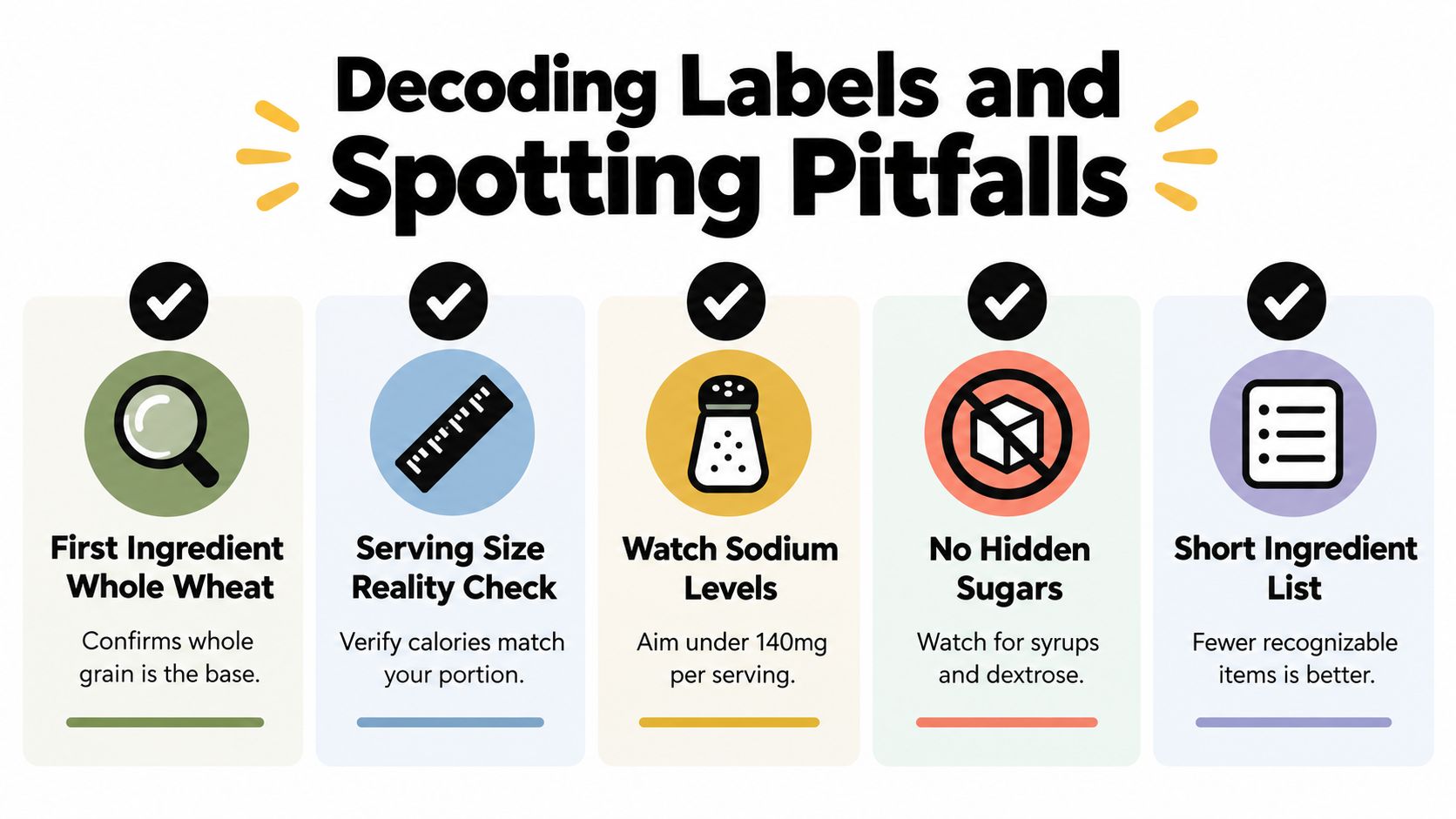
Use the nutrition panel to confirm that the whole grain delivers useful nutrition.
- Fiber should be visible, not implied. A 1-ounce serving commonly provides about 2.9 grams of fiber, or roughly 3 grams. That is a modest contribution, but it is more useful than the fiber supplied by comparable refined crackers.
- Calories need context. About 120 calories per 28-gram serving is a realistic reference point for whole-wheat crackers. The number matters alongside your portion, not in isolation.
- Protein helps, but crackers are not a major protein food. A reference serving provides about 3 grams of protein, enough to complement a topping but not enough to carry the snack alone.
- Cholesterol is rarely the deciding factor. The reference serving contains 0 grams of cholesterol. Give greater attention to grain quality, fiber, sodium, added sugar, and the full ingredient list.
Sodium requires its own check because recipes vary widely. Consumer Reports' examples include whole-grain wheat crackers with 3 grams of fiber per serving and sodium ranging from 50 to 200 milligrams, depending on the product. Do not assume that whole grain means low sodium.
The serving-size test
A label can make a small portion look impressive. Count the crackers in the listed serving, then compare that number with the handful you would eat at your desk, in the car, or in front of the television. If your usual portion is twice the listed serving, double the calories, carbohydrate, sugar, and sodium before you judge the product.
Formulation matters more than the category name. A crispbread-style whole-grain cracker may provide 40 calories, 0 grams of sugar, 3 grams of fiber, and 50 milligrams of sodium per slice, while another whole-wheat product provides 70 calories, 120 milligrams of sodium, and 2 grams of added sugar for 5 crackers. Choose the label with the lower sugar and sodium burden when the products otherwise fit your needs.
For a brand-specific explanation of whole-grain cracker criteria, consult Rip Van's guide to 100% whole-grain crackers. Apply the same standards to every box, including products that make no prominent health claim.
Decoding Labels and Spotting Ingredient Pitfalls
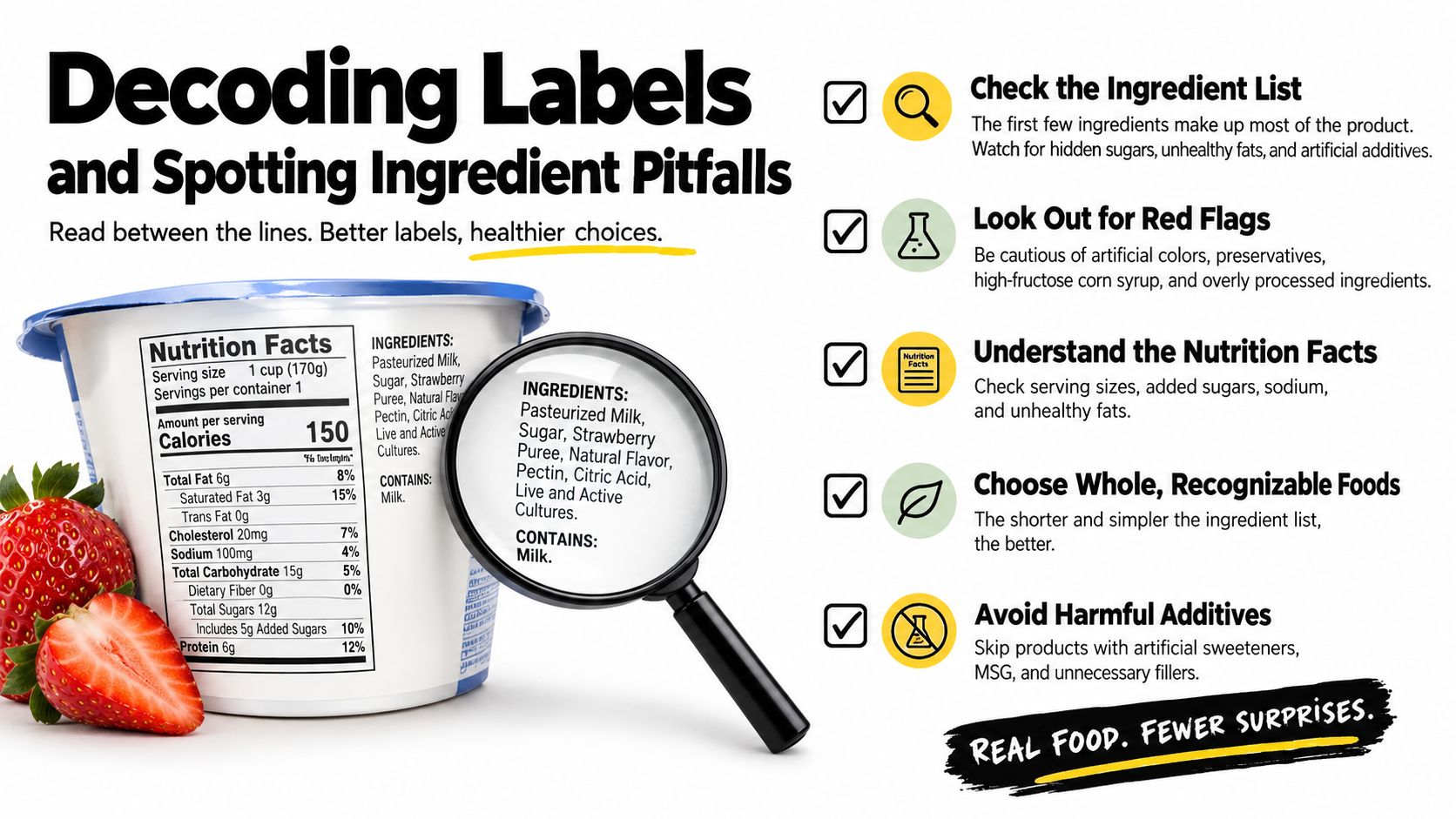
Healthy-looking packaging can hide a sugary, salty formula. Read the back of the box in a fixed order, then let the evidence, not the front-panel claim, decide.
Start with the ingredient list
The first ingredient appears in the greatest amount by weight. Look for a clearly named whole grain near the beginning, ideally 100% whole-wheat flour or another explicitly identified whole grain. A vague “wheat” reference does not tell you whether the product is predominantly whole grain.
Next, find the sweeteners. Added sugar can appear as sugar, syrup, corn syrup, honey, molasses, malt syrup, dextrose, or another sweetening ingredient. The label name changes, but the shopping question stays the same: Is this cracker meant to taste like a savory grain food, or is it carrying dessert-style sweetness?
A low sugar number does not guarantee a straightforward recipe. Intense sweeteners can preserve a sweet taste without adding much sugar. Decide whether that approach fits your preferences and dietary goals, rather than treating a low sugar claim as the whole story.
Use the nutrition panel as a verification tool
Check the panel after the ingredients. This order keeps a low calorie count or bold fiber claim from winning your approval before you examine the formula.
- Serving size: Compare the listed portion with the amount you eat.
- Added sugar: Choose little or none for a savory, everyday cracker.
- Sodium: Compare products side by side. A crispbread-style cracker may sit near the lower end per slice, while a seasoned whole-grain cracker can reach the higher end per serving. Do not trust the whole-grain label to predict salt content.
- Fiber: Look for a meaningful amount, not merely “contains whole grains” on the front.
- Ingredient simplicity: When nutrition panels are similar, favor recognizable ingredients.
A cracker can contain whole wheat and still deliver too much sweetness or salt for your snack routine. One consumer guidance example describes a whole-grain cracker with a full teaspoon of added sugar per 1-ounce serving alongside 200 milligrams of sodium. Whole grain is a starting point, not a final verdict.
Watch the portions you don't count
Crackers disappear quickly when you eat from the package. Put your portion on a plate, add a protein- or fat-rich topping, and close the box before you start snacking.
For a practical explanation of serving sizes, added sugars, and ingredient order, read Rip Van's guide to reading nutrition labels. Use the same routine on every box: read the back before the front earns your trust.
Mass Market Wheat Crackers Versus Better For You Alternatives
The whole-wheat label can create a health halo while the formula still leans on sugar, heavy seasoning, and refined flour. Mass-market wheat crackers are built for broad appeal, consistent texture, and long shelf life. That often means a sweeter taste, more sodium, and a longer ingredient list. Better-for-you alternatives start with a narrower goal: deliver crunch and satisfaction without unnecessary sweeteners or an overloaded formula.
Rip Van fits that alternative category because its snack range highlights low sugar, no corn syrup or artificial sweeteners, natural flavors, no artificial colors, and non-GMO ingredients. Its products are also organized around preferences such as gluten-free, low sugar, keto, and vegetarian. Treat those statements as screening information, not a free pass. Check the exact package, serving size, nutrition panel, and ingredient list before buying.
Compare the formulation, not the halo
| Feature | Mass-Market Wheat Crackers | Better-For-You Alternatives |
|---|---|---|
| Grain positioning | Often combines whole-grain claims with refined flour or a sweeter recipe | Usually states the grain, fiber, or dietary purpose more clearly |
| Added sugar | Can contain added sugar even when the package emphasizes whole grains | Typically targets lower sugar, but verify the amount per serving |
| Sodium | Seasoned varieties can carry a substantial sodium load | Typically publishes a lower sodium figure than seasoned mass-market crackers, verify per product |
| Sweeteners | May use sugar, syrups, or other sweetening ingredients | Some brands avoid corn syrup and artificial sweeteners |
| Ingredient approach | Prioritizes familiar flavor, uniform texture, and shelf stability | More often emphasizes simpler ingredients or a defined dietary filter |
| Consumer use | A familiar snack that is easy to eat by the handful | Suits shoppers looking for a specific nutrition attribute |
The stronger choice depends on the label and your purpose. A conventional cracker is reasonable if its complete formula fits your needs. A newer product is not automatically healthy because its package uses clean-sounding language. Compare the actual sugar, sodium, fiber, serving size, and ingredients.
Why the category is changing
Cracker launches increasingly respond to shoppers who want more than a whole-wheat claim. GMO-free and no additives or preservatives claims were among the most common natural claims in cracker launches in 2026, reflecting stronger interest in ingredient standards and simpler formulas. Those claims do not establish nutritional superiority. They show why buyers should evaluate the entire package instead of relying on one front-of-box message.
Choose a mass-market wheat cracker when you prefer its flavor and the label works for your routine. Choose a better-for-you alternative when its formulation addresses a clear need, such as lower sugar, no corn syrup, or a more focused ingredient list. Rip Van can be a practical option for shoppers seeking a low-sugar snack, but verify the specific product rather than assuming every item has the same profile.
Do not pay for a claim you will not use. Select the cracker that performs better on the nutrients and ingredients that matter to you.
Navigating Dietary Filters and Specific Needs
Dietary filters can make the phrase “healthy wheat crackers” misleading. Wheat contains gluten, so a conventional wheat cracker generally won't meet a gluten-free requirement. If you need to avoid gluten, look for a clearly labeled gluten-free cracker made from alternatives such as rice, corn, seeds, or other grains, and check the package for the certification or manufacturing information relevant to your needs.
Gluten-free choices
Don't assume “whole grain” means gluten-free. A whole-grain wheat cracker is still a wheat product. Seed-based crispbreads can provide crunch without wheat, but you still need to inspect sodium, fiber, oils, and added sugars.
For people with celiac disease or medically necessary gluten avoidance, ingredient screening is only part of the job. Use products with a reliable gluten-free label and follow the guidance provided by your clinician or dietitian about cross-contact.
Low-carb and keto choices
Wheat crackers are carbohydrate foods, so keto compatibility requires more than a “high fiber” claim. Check total carbohydrate and fiber on the nutrition panel, then calculate net carbohydrate according to the method you use. A product can contain whole grains and still deliver too much carbohydrate for your personal target.
Keto shoppers should also check hidden sweeteners and serving size. A cracker that looks low-carb per serving may become less compatible when the serving is small and the actual portion is larger.
Vegetarian and ingredient-sensitive shopping
Vegetarian shoppers should scan seasoning blends, cheese flavors, fats, and flavor carriers rather than relying only on the word “vegetarian.” Some products may use dairy ingredients, while others may be vegan. Choose according to your own boundary, whether that means vegetarian, vegan, dairy-free, or just avoiding particular additives.
Diet filter rule: Start with the restriction you cannot compromise on, then compare fiber, sugar, sodium, and taste within the products that qualify.
Families also need a practical standard. A cracker that meets one dietary filter but tastes unsatisfying may encourage repeated grazing or sugary pairings. Texture, portability, and compatibility with a filling topping matter as much as the claim on the front.
Smart Snack Pairings and Simple Recipes
A cracker becomes a better snack when it carries something more satisfying than air and seasoning. Pair it with protein, produce, or a source of fat so the snack has structure rather than becoming an open-ended handful.
Three combinations that work
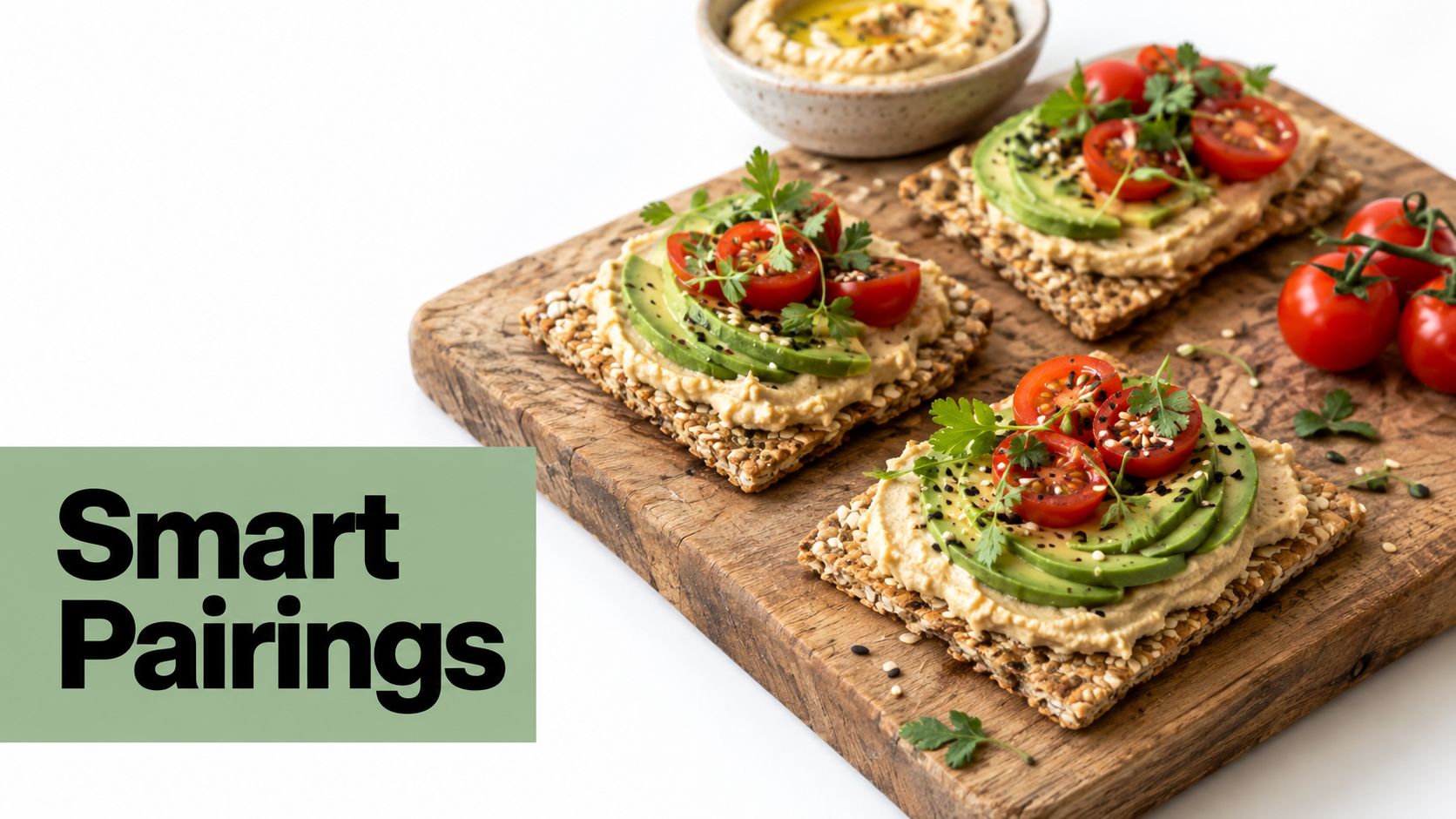
Hummus and vegetables is the easiest starting point. Spread hummus on a whole-grain cracker, then add cucumber, tomato, or pepper. The vegetables add freshness and crunch, while the hummus gives the snack a more substantial center.
Avocado and savory seasoning turns crackers into a quick open-faced bite. Mash avocado with lemon juice, add black pepper, and use a modest portion as the topping. If your cracker is already salty, skip extra salt.
Cheese and fruit creates a useful sweet-savory contrast. Pair a small amount of cheese with apple or pear slices, then use the crackers as the crunchy base. For more ideas using cheese with whole-grain crackers, see Rip Van's whole-grain crackers with cheese guide.
A busy professional can assemble hummus, crackers, and sliced vegetables in a container before leaving home. A student can use nut or seed butter with sliced banana, provided the cracker's own sweetness doesn't turn the snack into a sugar-heavy combination. A parent can make a small plate of crackers, cheese, vegetables, and fruit instead of handing over the box.
For a visual serving idea, this recipe video shows how simple toppings can make crackers more appealing and varied.
Keep the topping honest
Avoid automatically pairing a “healthy” cracker with a sweet dip, sugary spread, or heavily processed topping. The cracker doesn't need to carry the entire nutrition burden, but the combination should support the reason you chose it.
A useful formula is whole-grain cracker plus one satisfying topping plus one fresh food. It's flexible enough for breakfast, a desk snack, or a light lunch, and it keeps the cracker in its proper role, a base rather than the whole meal.
Your Final Buyer Checklist for Healthy Snacking
The best grocery-store decision takes less than a minute once you know what to check. Ignore the color of the box, the lifestyle photography, and the oversized “whole grain” message until the back label earns your attention.
The aisle-side checklist
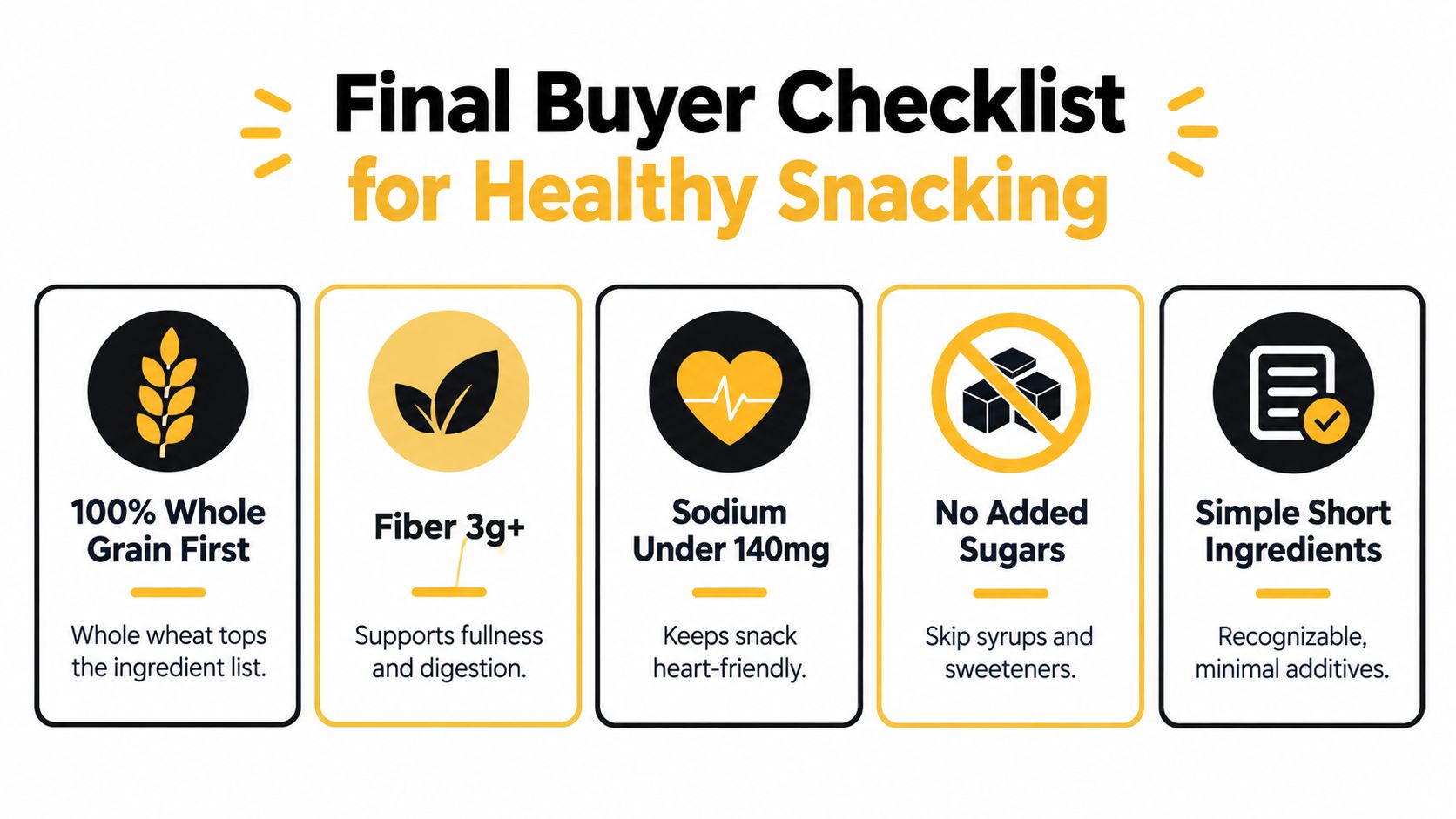
- Confirm the first ingredient. Choose a product that names whole wheat or another whole grain clearly at the top of the ingredient list. “Wheat” by itself isn't a sufficient guarantee.
- Check the fiber. A serving near 3 grams of fiber is a useful benchmark supported by the verified whole-wheat cracker examples from Consumer Reports. Compare fiber with the serving size, not with the marketing copy.
- Inspect added sugar. Don't assume a savory-looking cracker is sugar-free. Scan for sugar, syrups, dextrose, and other sweetening ingredients.
- Compare sodium. Product formulations vary substantially, with verified examples ranging from 50 milligrams to 200 milligrams per serving, so check the panel every time.
- Read the whole ingredient list. Prefer recognizable ingredients when the nutrition profiles are otherwise similar, and decide whether claims such as non-GMO or no additives match your priorities.
The serving-size check is the safeguard that ties everything together. A product can look reasonable on paper, but if you eat several listed servings without noticing, the calories, sugar, and sodium rise with every additional portion.
Your standard should be simple: whole grain first, useful fiber, little added sugar, controlled sodium, and a portion you can actually respect.
Healthy wheat crackers don't need to be perfect. They need to fit your eating pattern and make sense beside the food you put on top. If a product is sweet, salty, and easy to overeat, treat it as an occasional snack even if the package uses whole-grain language. If it delivers a clear whole-grain base and works with hummus, avocado, cheese, vegetables, or another satisfying topping, it has a more useful place in your pantry.
Rip Van offers low-sugar snacks across Dutch-style wafels, crispy wafers and wafer bars, cookies, and crispy varieties, with options organized around preferences such as gluten-free, keto, and vegetarian. Visit Rip Van to compare the specific product labels and choose a portable snack that fits your sugar, ingredient, and dietary priorities.
0 comments