

You're standing in the kitchen with a hungry toddler tugging at your leg. The snack cupboard offers crackers, the fruit is still hard, and the usual list of “high-fiber foods” seems to include popcorn, nuts, seeds, or raw vegetables. Those suggestions may work for older children, but they can create an uncomfortable question for parents of very young toddlers: how do you add fiber without adding unnecessary choking risk?
The answer isn't to chase the highest fiber number on a food label. It's to choose soft, manageable, age-appropriate foods, prepare them carefully, and spread small amounts across the day. The most useful high fiber snacks for toddlers are often simple foods already in your kitchen, from oatmeal and ripe pear to mashed beans and soft-cooked vegetables.
The Toddler Snack Dilemma - Fiber vs. Safety
A parent might begin with good intentions, searching for a snack that keeps a toddler satisfied between meals. One article recommends popcorn. Another suggests trail mix with nuts and seeds. A third promotes dried fruit or crisp raw vegetables. The advice sounds nutritious, yet pediatric safety guidance warns against giving nuts, raisins, popcorn, or seeds to children under 3 because of choking risk, as outlined by Children's Hospital guidance on high-fiber foods.
That mismatch is where many snack decisions become stressful. A food can be rich in fiber and still be the wrong texture, shape, or hardness for a young child. Nutrition matters, but a toddler's chewing ability, oral-motor development, supervision, and the way a food is served matter just as much.
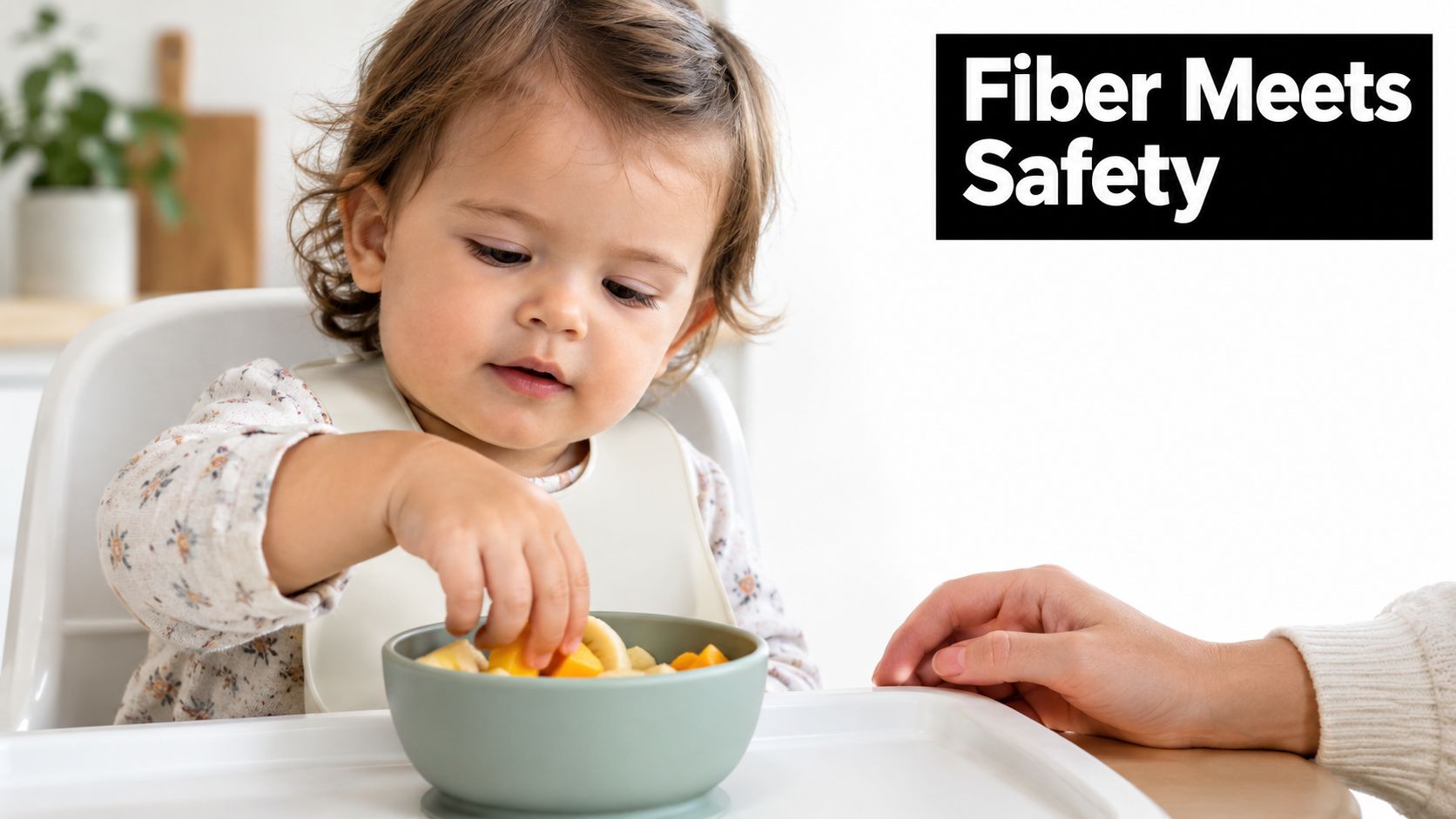
Why the highest-fiber food isn't always the best snack
Parents sometimes treat fiber like a competition. If one food contains more fiber on paper, it must be the better choice. For toddlers, that logic misses the practical test: will the child be able to chew it safely and comfortably?
A hard cracker may contribute fiber, but a softer whole-grain cracker that dissolves more easily may be a more realistic option. A raw vegetable may look wholesome, but a well-cooked version can offer a safer texture. Oatmeal, mashed avocado, soft pear, and blended bean spreads may not look as impressive as a bowl of nuts, yet they fit the needs of a young eater more effectively.
Practical rule: Choose the safest texture first, then improve the fiber content within that texture.
Snack planning also becomes easier when parents stop expecting one food to solve the whole day's nutrition. A toddler can have fruit in the morning, oatmeal later, and a soft vegetable or whole-grain snack in the afternoon. For broader ideas about reducing mealtime pressure and supporting selective eaters, this mealtime guide from Happy Tree Academy offers useful context.
Understanding Toddler Fiber Needs
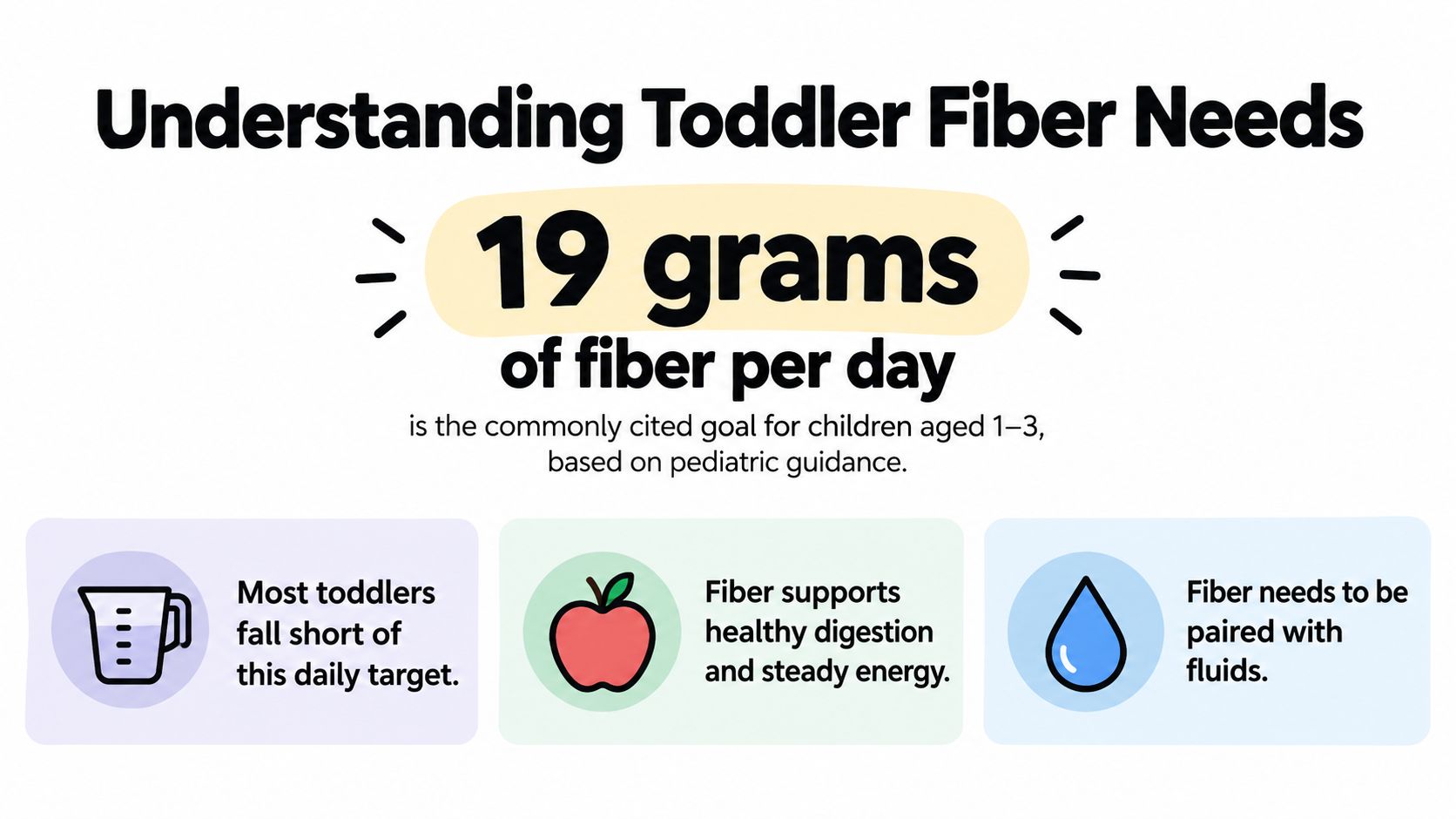
A toddler may eat well at one meal and barely touch food at the next. Fiber targets therefore work best as planning guidance, not as a daily scorecard. Pediatric guidance commonly places fiber needs for children ages 1 to 3 at about 19 grams per day, while the practical “age plus 5” rule after age 2 gives a different estimate. Under that rule, a 2-year-old may be targeted at roughly 7 grams daily. Broader nutrition guidance also uses 14 grams per 1,000 calories as a density target. These figures differ because one is an age-based rule of thumb and the other connects fiber with energy intake. The pediatric fiber overview from Children's Nebraska explains why parents may see both approaches.
The useful goal is steady exposure to fiber-rich foods in portions a toddler can manage. Changing appetites, small stomach capacity, and food preferences make exact daily totals difficult to maintain.
Why snacks deserve attention
The gap between recommendations and typical intake makes snack planning useful. In the 2016 Feeding Infants and Toddlers Study, only 3.2% of children aged 12 to 23.9 months, 9.1% of children aged 24 to 35.9 months, and 7.5% of children aged 36 to 47.9 months met the adequate intake for dietary fiber. Mean intake was about 10.0 grams per day for children aged 12 to 23.9 months and 12.0 grams per day for children aged 24 to 47.9 months, compared with the commonly cited 19-gram benchmark for ages 1 to 3. These findings are summarized in this pediatric nutrition review on fiber intake.
A snack can add fruit, whole grains, vegetables, or legumes without requiring a large sitting or a pressured meal. The same review found that snacks can contribute about 25.7% of daily dietary fiber in young children. That figure supports offering fiber regularly, not making every snack oversized or heavily fortified.
Soluble and insoluble fiber in everyday foods
Fiber has different effects in food and in the digestive system. Soluble fiber absorbs water and can create a softer, thicker texture in foods such as oats, fruit, and beans. Insoluble fiber adds bulk to stool and commonly comes from whole grains and plant skins. This explanation of the difference between soluble and insoluble fiber provides useful background.
For toddlers, texture and tolerance matter more than labeling every bite by fiber type. Offer plant foods across meals and snacks, adjust preparation to the child's chewing skills, and observe how the child responds. Soft oatmeal, ripe fruit, or mashed legumes can build a consistent fiber pattern while avoiding the common mismatch between adult high-fiber suggestions, such as popcorn and nuts, and toddler safety needs.
Safe High-Fiber Food Choices for Toddlers
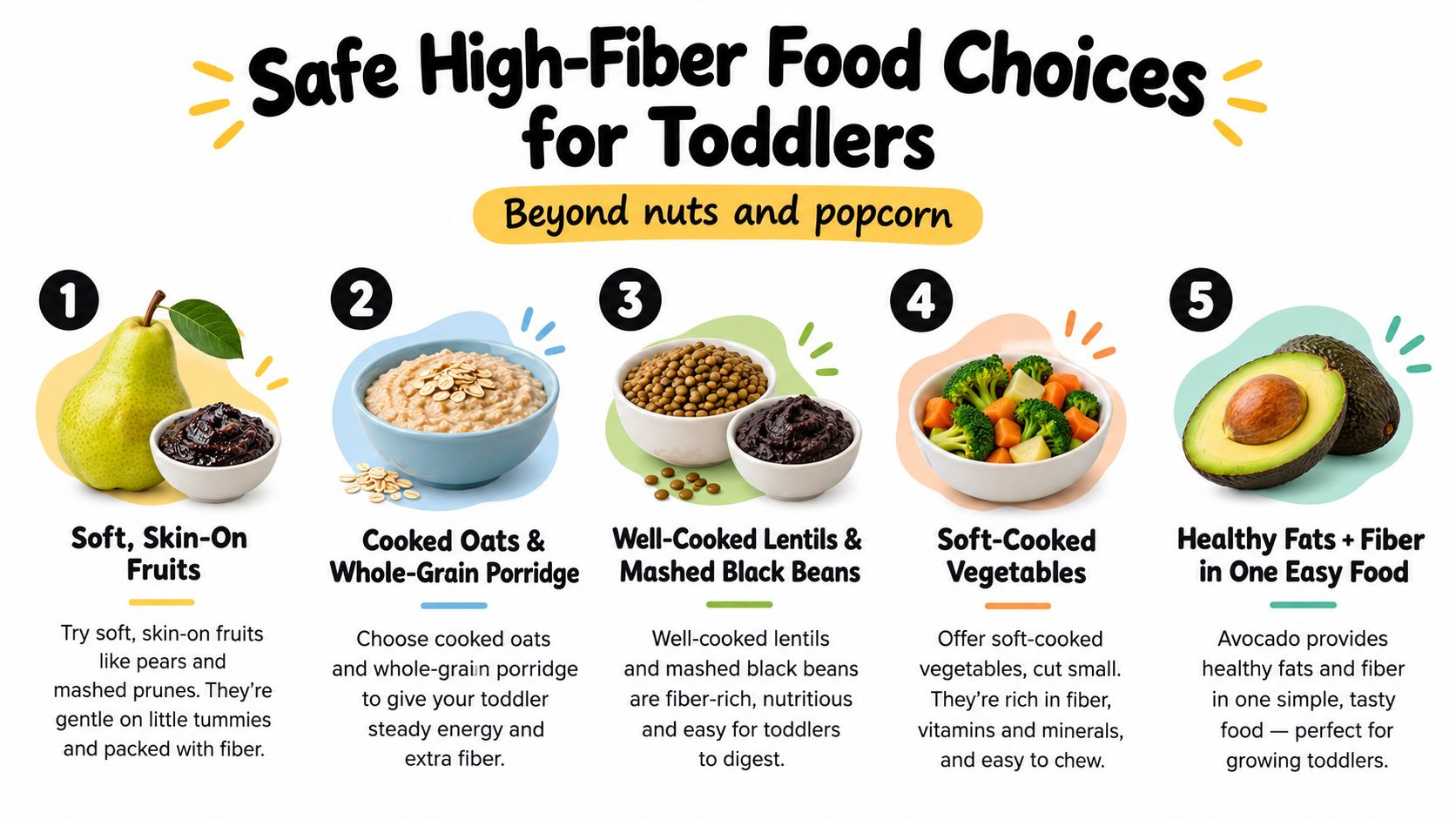
The safest high-fiber snack is usually soft enough to mash easily, cut into a manageable shape, and familiar enough that a toddler will eat it. Preparation changes the risk profile of many foods. Cooking, mashing, thinning, peeling, or combining ingredients can turn a difficult texture into a practical snack.
Start with soft fruit
Ripe pear is a useful choice because it can be served soft, peeled if the skin is tough, and cut into thin, manageable pieces. Very soft banana, mashed prunes, and tender fruit mixed into yogurt can also fit a toddler's snack routine. Check each piece with your fingers before serving. If it feels firm or difficult to mash, it may need more ripening or a different preparation.
Whole fruit is preferable to relying on sweetened fruit snacks. A toddler can explore the taste and texture of the actual food, while the parent controls the serving form.
Cook grains until tender
Oatmeal and whole-grain porridge are dependable options because cooking softens the grains. Let the food cool before serving, and adjust the consistency with milk, yogurt, or water if it's too thick. Whole-grain crackers can work for children who manage them comfortably, but choose a texture that isn't hard, dense, or difficult to break apart.
Mash legumes and avocado
Well-cooked lentils and mashed black beans add a soft source of plant fiber. Spread them thinly on a soft whole-grain base, stir them into a familiar puree, or offer them by spoon. Avocado adds a creamy texture and combines fiber with fat, making it easy to mash onto toast or mix into a dip.
Soften vegetables
Steam or roast vegetables until they're tender, then cut them into small, manageable pieces. Soft broccoli florets, cooked peas that have been gently flattened, tender sweet potato, and well-cooked carrots are more appropriate than hard raw pieces for many young toddlers. Always follow your child's individual feeding guidance and supervise them while they eat.
For parents weighing preparation time against convenience, this practical comparison of homemade versus store-bought stage 3 baby food can help clarify where prepared foods fit into a family routine.
A useful snack rotation might include oatmeal one day, mashed avocado on whole-grain toast another day, and soft pear with yogurt later in the week. Variety matters more than forcing a single “perfect” food.
Incorporating Better-for-You Packaged Snacks
Homemade snacks offer control over ingredients and texture, but they aren't always available when a toddler needs food in the car, at childcare, or between errands. Packaged snacks can fill that practical gap if parents treat the label and texture as part of the decision, not as an afterthought.
A better-for-you packaged snack should fit three checks:
- Read the ingredients: Look for recognizable ingredients and consider whether the product contains added sweeteners, artificial colors, or flavors your family prefers to avoid.
- Check the fiber line: Dietary fiber appears on the Nutrition Facts label. Compare products within the same category rather than assuming every cookie, wafer, or bar provides a meaningful amount.
- Test the texture: A product marketed as a toddler snack still needs adult judgment. Break it into an appropriate size, check whether it softens easily, and don't serve a hard or crumbly product just because the label sounds nutritious.
Where wafels, cookies, and bars can fit
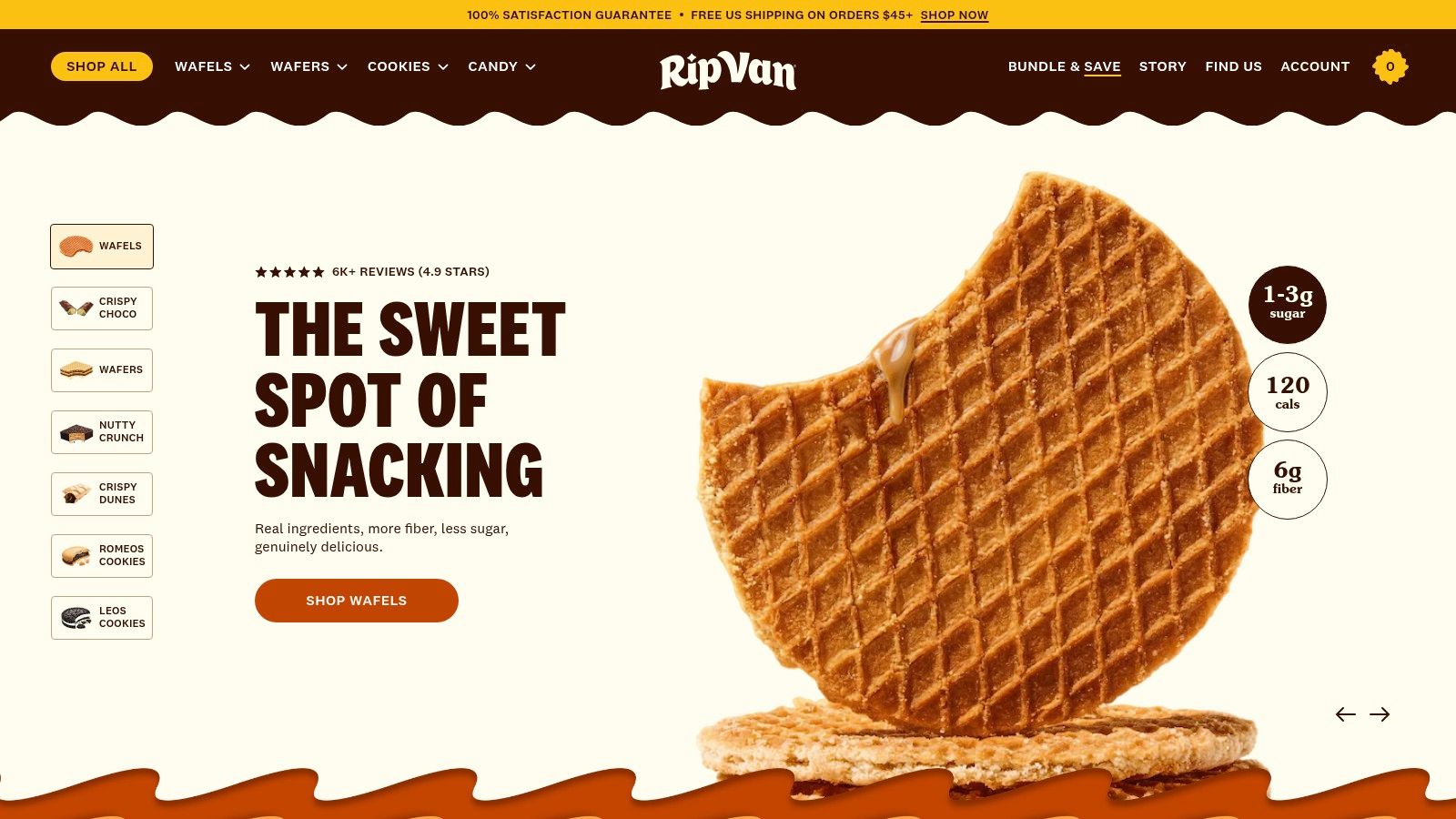
Dutch-style wafels, wafer bars, and cookies can be useful as part of a balanced snack, especially when paired with foods that contribute additional fiber or nutrients. A wafer with berries, for example, creates a different snack from a wafer served alone. Soft fruit, yogurt, cheese, or mashed avocado can make the overall offering more satisfying without asking the packaged item to carry the entire nutritional load.
The brand's published range emphasizes lower sugar, no corn syrup or artificial sweeteners, natural flavors, no artificial colors, and non-GMO ingredients. Those features may matter to a family's shopping criteria, but they don't automatically determine whether a specific product is suitable for a particular toddler. Parents still need to consider allergens, portion size, chewing ability, and supervision.
A snack table and chair setup can also influence how calmly a toddler eats. This toddler table guide from Ocodile offers ideas for creating a consistent eating space rather than letting every snack happen while walking or playing.
For a closer look at choosing packaged options with fiber in mind, see this guide to healthy snack bars for toddlers. Use its label-reading principles alongside your own child's developmental needs, and remember that packaged convenience should support, not replace, a varied diet of whole foods.
Preparing and Serving Toddler Snacks Safely
Preparation is where a good ingredient becomes a sensible toddler snack. A ripe pear served in large, firm chunks isn't the same experience as a soft pear cut into manageable pieces. A carrot cooked until tender isn't equivalent to a hard raw carrot stick. Parents should assess the food in the form it will be eaten.
Homemade and packaged options side by side
Homemade snacks usually offer more control. You can cook vegetables longer, thin a bean spread, adjust the texture of oatmeal, and serve exactly what your child handles well. The trade-off is time, storage, and planning. A batch of soft sweet potato or lentils can save effort later, but it still requires preparation.
Packaged snacks offer portability and predictable serving formats. They're useful for travel and busy afternoons, but labels can't tell you whether your toddler will manage the texture safely. A packaged wafer may be easier to carry than mashed avocado, while oatmeal or soft fruit may be easier for a child who struggles with dry, crisp foods.
| Snack approach | Main advantage | Practical limitation |
|---|---|---|
| Homemade oatmeal or porridge | Texture is easy to adjust | Requires preparation and cooling |
| Soft fruit | Minimal preparation when ripe | Firm or under-ripe pieces may be unsuitable |
| Mashed beans or avocado | Soft and spreadable | Needs a container and clean serving surface |
| Packaged wafers or bars | Portable and convenient | Texture and ingredients require label checking |
Make the eating environment predictable
Seat your toddler upright, stay close, and keep attention on the meal rather than offering food during active play. Cut, mash, or soften food before it reaches the table. Remove hard pieces, tough skins, and anything your child can't comfortably break apart.
Portions should remain modest. Toddlers have small gastric capacity and variable appetites, so a large serving can overwhelm them or create pressure to finish. Offer a small amount, let the child ask for more, and provide water with a fiber-rich snack.
For a playful snack format, the ants on a log recipe can inspire the familiar celery-and-spread idea, but toddlers may need a softer adaptation. Use a tender base, a smooth spread, and omit raisins or seeds for children under 3 because of the choking guidance described earlier.
Building Healthy Fiber Habits Gradually
A toddler who usually eats refined, soft snacks may push away a sudden plate of whole grains, beans, or vegetables. Start with familiar flavors and textures, then make small changes. Acceptance often improves when the child can adjust gradually.
Pediatric guidance recommends increasing fiber by about 2 to 5 grams per day and offering adequate fluids, as explained in this pediatric review on fiber and fluid intake. A rapid increase without enough fluid can contribute to constipation. Add one change at a time, serve water with the snack, and watch for bloating or harder stools.
A workable progression
Begin with foods your toddler already accepts. Move from banana to ripe pear, or from toast to a thin layer of mashed avocado or beans. If yogurt is familiar, mix in soft fruit or cooled oatmeal. These bridge foods make new textures less abrupt.
Keep offering without pressure. A child may touch, smell, lick, or take one bite before eating more another day. Offer two suitable choices, such as pear or oatmeal, and let the toddler decide how much to eat.
Small improvements count: A safe, soft fiber food offered consistently is more useful than an ambitious snack your toddler refuses.
Build the habit across the day. Include plant foods with meals, make one snack fiber-forward, and offer fluids regularly. If constipation lasts more than a few days despite extra fluids and softer fiber foods, or if your child gags or coughs during snacks, book a pediatric appointment rather than continuing to adjust the diet alone.
Rip Van offers portable wafels, wafer bars, cookies, and other lower-sugar snacks that can accompany soft fruit, yogurt, or another fiber-rich toddler food. Visit Rip Van to review packaged options for your family's snack routine.
0 comments