

Low-carb snacks typically contain under 5 grams of net carbs per serving, while true zero-sugar snacks contain no added sugars and rely on natural ingredients or zero-calorie sweeteners rather than sugar alcohols when possible. The most satisfying choices also bring protein and fiber, because removing sugar alone doesn't guarantee lasting fullness.
But if a snack has almost no sugar, can it still leave you hungry an hour later? Absolutely. A zero-sugar label answers one question, but it doesn't tell you whether the snack will carry you through a busy afternoon, support steady energy, or trigger another craving.
This guide uses a practical Satiety Equation to evaluate low carb zero sugar snacks: fiber + protein + low net carbs. You'll learn how to read the label, recognize useful ingredients, compare homemade and packaged options, and build combinations that feel like real food rather than a temporary workaround.
Defining Low Carb and Zero Sugar Snacks
You know the feeling. It's mid-afternoon, your stomach is rumbling, and the easiest option nearby is a sweet bar or cookie. The package says “sugar-free,” but the nutrition panel looks confusing and the ingredient list is long.
Start with two simple definitions:
- Low carb: A practical snack target is under 5 grams of net carbohydrates per serving. Net carbs are the carbohydrates left after subtracting dietary fiber and, where appropriate, certain sugar alcohols.
- Zero sugar: A snack contains no added sugars. It may use naturally occurring ingredients or zero-calorie sweeteners, but “zero sugar” doesn't automatically mean low calorie, high fiber, or filling.
The distinction matters because sugar is only one type of carbohydrate. Starches, refined flours, and concentrated fruit ingredients can raise total carbohydrates even when the front of the package emphasizes “no added sugar.” Conversely, a snack can contain a modest amount of natural carbohydrate and still fit a low-carb eating pattern if its fiber content is substantial.
A useful label mindset
Think of the front of the package as an invitation and the back as the evidence. “Keto,” “sugar-free,” and “low sugar” are helpful starting points, not complete nutritional profiles. Check the serving size, total carbohydrate, dietary fiber, protein, and ingredient list before deciding whether a product fits your needs.
Public-health guidance gives the broader context. The NHS guidance on reducing sugar explains why added and free sugars deserve attention, while also reminding readers that a balanced diet involves more than one nutrient.
If you enjoy a calming drink alongside a snack, a loose chamomile detox blend can provide a sugar-free alternative to sweetened beverages. For a deeper look at how “low sugar” differs from “sugar-free,” read this practical guide to what makes a low-sugar snack.
The Science Behind Sustainable Satiety
A snack can be low in sugar and still be nutritionally flimsy. If it digests quickly and provides little protein or fiber, your body may treat it like a brief spark rather than a dependable bridge to the next meal.
The Satiety Equation offers a better way to judge it:
Satiety = meaningful protein + useful fiber + low net carbs, with enough flavor and texture to make the snack satisfying.
Protein and soluble fiber work through different but complementary pathways. Controlled human studies found that higher-protein snacks delayed the next meal and increased feelings of fullness, while fiber-enriched biscuits reduced the desire to eat compared with control biscuits (controlled satiety research).
How the three parts work together
Fiber acts like a speed regulator. Soluble fiber absorbs water and creates a more gradual digestive process. It doesn't make a snack magically calorie-free, but it can help slow the movement and absorption of food through the digestive system.
Protein acts like structural support. It gives a snack more staying power than a refined carbohydrate alone. Protein-rich foods also tend to produce stronger fullness signals, which helps explain why a cheese crisp, egg, or protein-containing bar may feel more substantial than a similarly sized sweet.
Low net carbs reduce the rapidly digested portion. Subtracting fiber from total carbohydrates helps you estimate the carbohydrate that remains available for digestion. This calculation isn't a complete measure of metabolic response, but it gives low-carb shoppers a more useful starting point than total sugar alone.
Research on plant protein and soluble fiber found that these components produced higher satiety than a high-carbohydrate comparison after 2 and 3 hours, with plant protein showing the most prolonged effect (protein and fiber formulation study). The practical lesson isn't to chase a perfect formula. It's to avoid treating “zero sugar” as the whole nutritional goal.
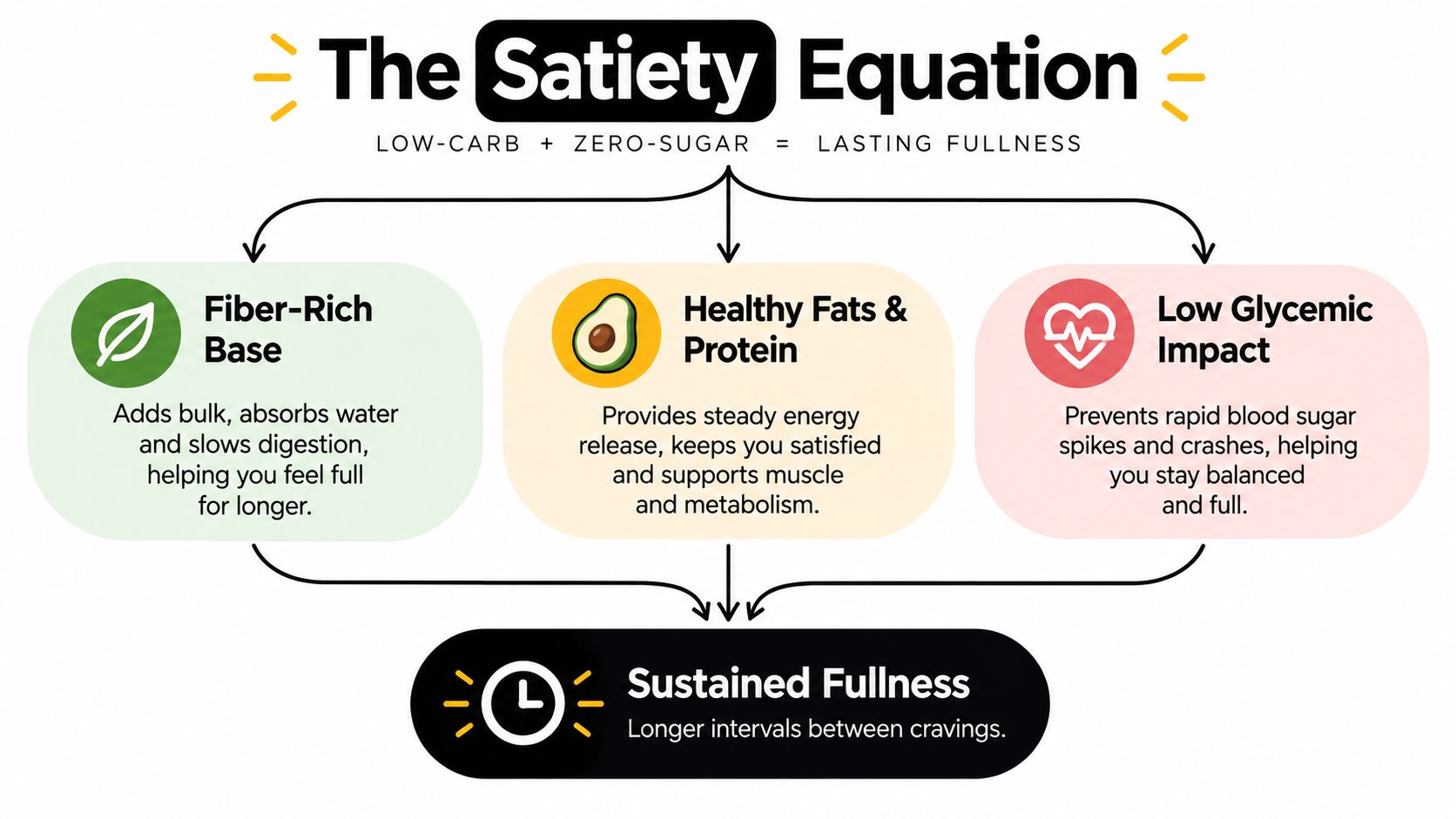
A snack with protein but no fiber may be filling yet repetitive. A high-fiber snack with little protein may not last. Pairing both creates a slower-burning option, especially when healthy fats add texture and flavor. For more ideas centered on a gentler carbohydrate response, explore these low-glycemic snack ideas.
Decoding Nutrition Labels for Smart Choices
Nutrition labels become much easier when you read them in a fixed order. Don't start with the marketing claim. Start with the serving size, then move through the numbers and ingredients.
Use this label sequence
- Confirm the serving size. A package may contain multiple servings, and the listed carbohydrate and sugar values apply only to the stated amount.
- Read total carbohydrates. This includes sugars, starches, and fiber.
- Find dietary fiber. Fiber is included in total carbohydrates but isn't digested in the same way as starch or sugar.
- Calculate net carbs. Use: total carbohydrates minus dietary fiber minus eligible sugar alcohols. Don't subtract every unfamiliar ingredient automatically, because sugar alcohols differ in how they're digested and tolerated.
- Check added sugars. A product can contain little or no added sugar while still containing other carbohydrate sources.
- Scan the ingredient list. Ingredients appear in descending order by weight, so the first few entries tell you what the product is built around.
Hidden carbohydrate clues
Look carefully for maltodextrin, dextrose, corn syrup, rice syrup, cane sugar, honey, and concentrated fruit juice. These names can appear in small quantities, coatings, fillings, or flavor systems. “Fruit-based” doesn't automatically mean low carb, and “natural” doesn't automatically mean unsweetened.
Sugar alcohols deserve their own caution. Some people tolerate them well, while others experience bloating or digestive discomfort. If you want a snack without sugar alcohols, choose a product that gets sweetness from its base ingredients or from a zero-calorie sweetener you personally tolerate.
A label-reading guide such as how to read nutrition labels can help you practice the process. The goal isn't to fear every unfamiliar ingredient. It's to understand what you're buying and whether the full formula supports your appetite, dietary preferences, and daily routine.
Classifying the Best Snack Alternatives
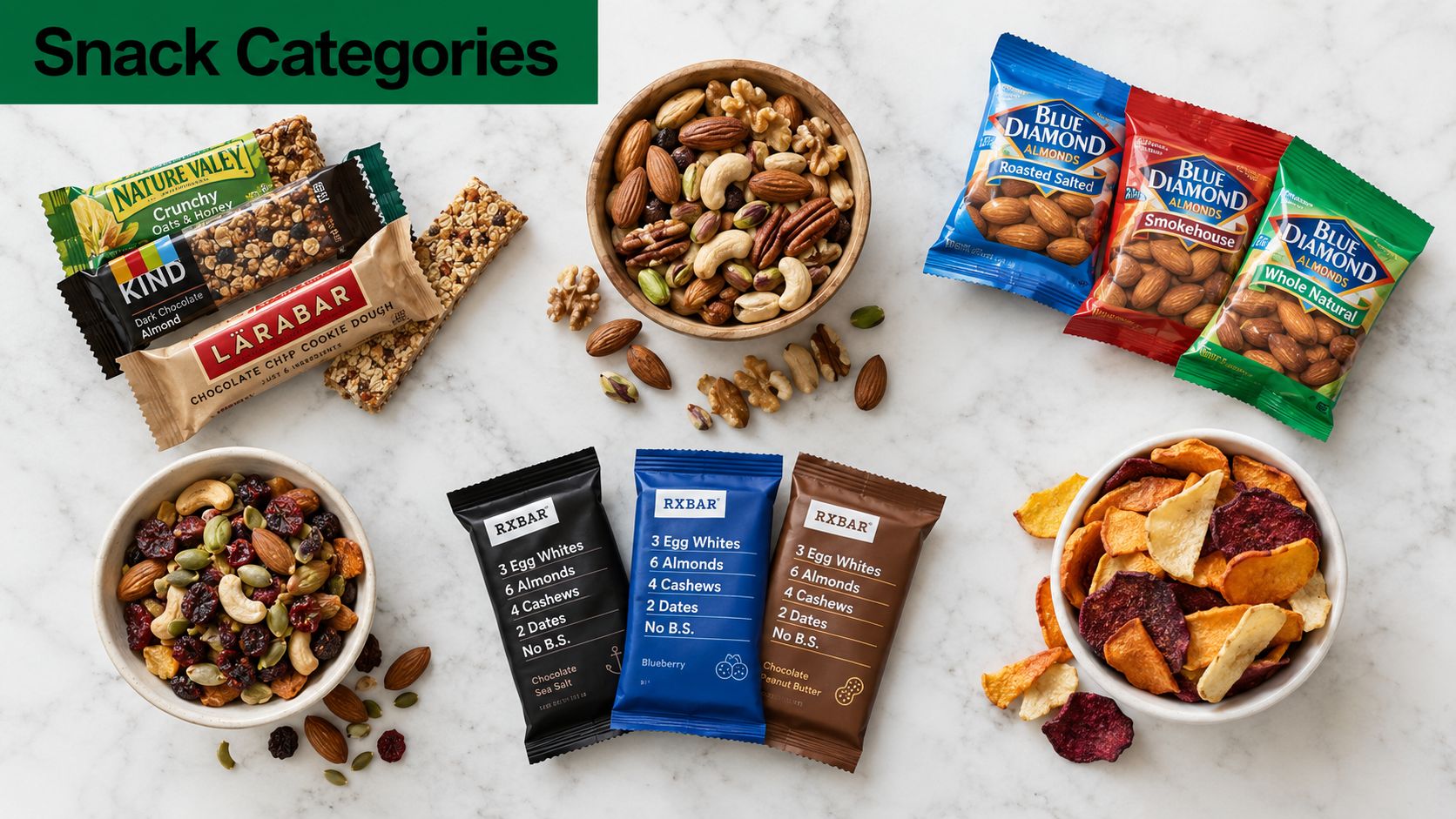
The best low carb zero sugar snacks don't all look alike. Some are fresh and homemade, some are shelf-stable, and others are designed to reproduce the texture of a cookie or wafer while changing the nutritional balance.
Whole-food crunch
Nuts and seeds offer fat, fiber, and some protein in a compact format. Almonds, walnuts, pumpkin seeds, and chia-based preparations can work well at a desk or in a travel container. Their main drawback is portion drift. A small bowl can become several servings, so pre-portioning helps.
Non-starchy vegetables bring water, crunch, and volume. Cucumber, celery, leafy greens, and bell peppers work with a dip or a protein filling. They're a good choice when you want something refreshing rather than dense.
Savory protein formats
Eggs, cheese crisps, canned fish, and lettuce roll-ups are useful when hunger feels physical and immediate. They usually provide more protein than a fruit-flavored snack, but they may offer little fiber. Add vegetables, seeds, or a fiber-rich side when you want the full Satiety Equation.
Formulated sweet snacks
A purpose-built bar, cookie, wafer, or wafel can fit a low-carb routine when the label shows low net carbs, no added sugar, useful fiber, and a tolerable sweetener system. This option is especially practical for commutes, school bags, and situations where refrigeration isn't available.
Homemade snacks give you maximum control over ingredients. Packaged snacks give you consistency and convenience. Neither category wins automatically. The better choice is the one whose label and portion match your goals and whose taste makes it easier to maintain your routine.
Creating Delicious and Satisfying Pairings
A snack becomes more useful when you design it for the moment you're in. Someone rushing through a morning meeting needs a portable option. Someone eating after exercise may want more protein. Someone craving dessert may need sweetness and texture, not another savory plate.
Consider these combinations:
- Morning bridge: Pair a low-sugar, high-fiber wafer-style snack with plain Greek yogurt or a small serving of cottage cheese. The creamy protein component balances the crisp texture and makes the bite feel more substantial.
- Office afternoon: Combine cheese crisps with cucumber slices and a handful of pumpkin seeds. You get salt, crunch, fat, fiber, and protein without relying on a sweet flavor.
- Travel option: Pack a protein-forward snack with olives or a small nut portion. The combination travels well and gives you two different textures, which can make a modest serving feel more complete.
- Evening dessert: Try unsweetened chia pudding with cinnamon and a few crushed nuts. If you need more crunch, add a low-sugar packaged treat and check its label rather than assuming the word “keto” tells you everything.
A realistic day in practice
Maya works from home and often reaches for sweets after back-to-back calls. Instead of keeping only “sugar-free” candies nearby, she prepares cucumber slices, a protein dip, and a shelf-stable fiber-focused snack. On a demanding day, she combines two of those components rather than eating straight from a large bag.
The point isn't that one pairing works for everyone. It's that a snack should match the hunger problem. Light nibbling calls for volume and crunch. Strong hunger calls for protein. A dessert craving calls for flavor satisfaction. Adding fiber and keeping net carbs low can improve the structure, but enjoyment still matters.
Practical rule: Build the snack around one anchor, then add a contrasting texture. Protein plus crunch, or fiber plus creaminess, is often more satisfying than repeating the same ingredient.
Why Rip Van Fits Your Healthy Lifestyle
Convenience matters because the snack you can carry is often the snack you'll eat. A product can fit your goals on paper and still fail in daily life if it melts, crumbles, requires refrigeration, or tastes so different from the food you want that you stop using it.
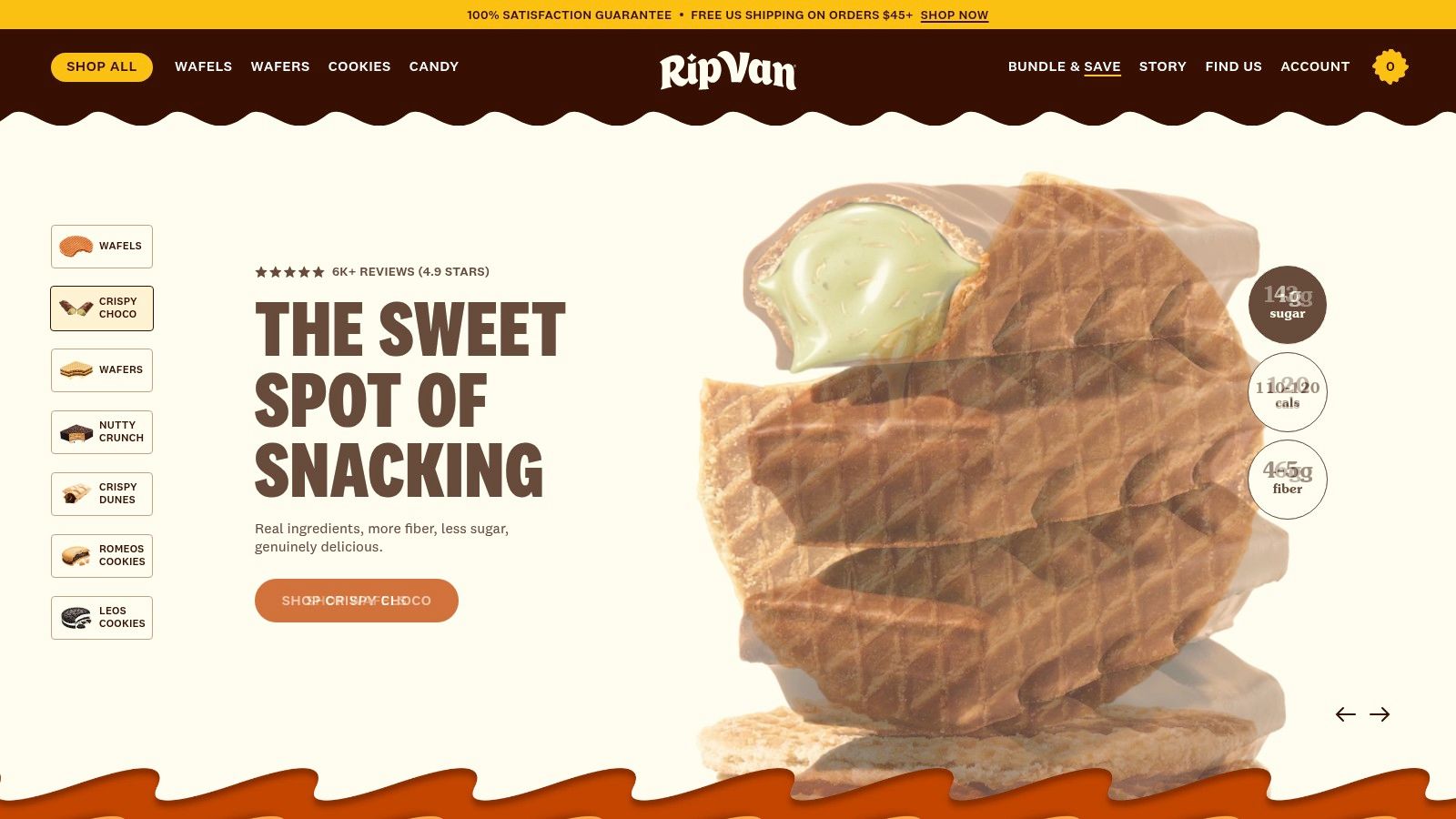
Rip Van's range includes Dutch-style wafels, crispy wafers and wafer bars, LEOS and Romeos cookies, Crispy Dunes, and Crispy Choco varieties. The brand positions these products around low sugar, no corn syrup, no artificial sweeteners, natural flavors, no artificial colors, and non-GMO ingredients, with some products listed for dietary preferences such as low carb, keto, gluten free, or vegetarian.
How to use a packaged treat well
Don't ask a sweet snack to do the job of a complete meal. Instead, use it as one part of a planned pairing:
- At breakfast: Add a fiber-focused wafel or wafer to yogurt and seeds when you need something quick but don't want a pastry alone.
- At lunch: Keep a packaged treat for the end of a meal, rather than using it as the only food during a long gap.
- After work: Pair a cookie-style snack with a protein-rich food if you're really hungry, or enjoy it on its own when the craving is primarily for sweetness.
- In a bag or desk drawer: Keep individual portions available, then read the product label to confirm the serving size, sugar, fiber, and net-carb calculation.
The Satiety Equation becomes practical here. The packaged item supplies convenience and indulgent texture. The companion food supplies protein, fiber, or volume. Check the current package because formulations and nutrition panels can change, even when the product category remains the same.
Navigating Common Snacking Challenges
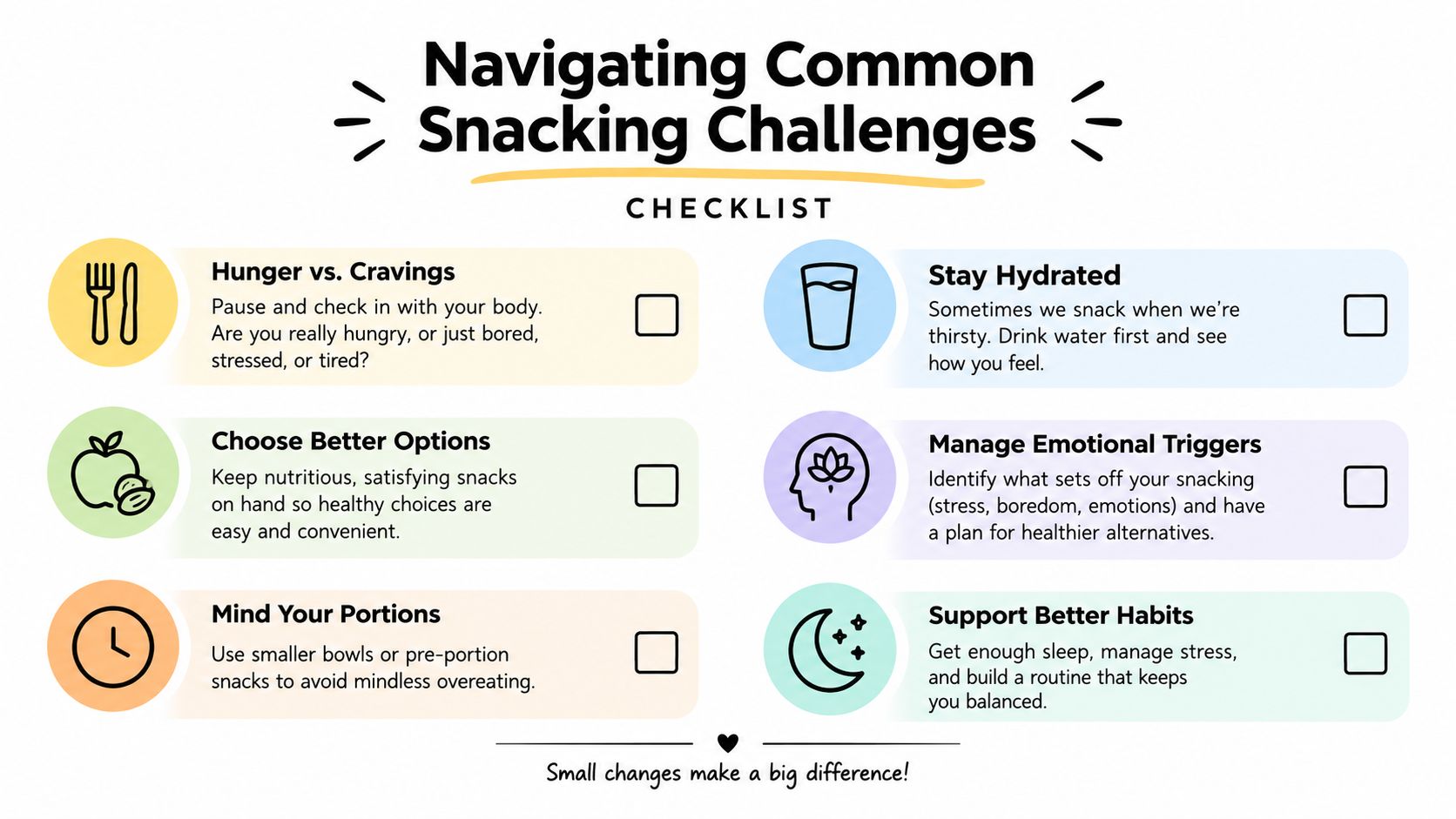
Changing your snack routine can expose problems that have nothing to do with willpower. You may be under-eating at meals, keeping trigger foods within reach, or increasing fiber faster than your digestion can comfortably handle.
When cravings stay strong
A “zero sugar” candy may satisfy sweetness for a moment without addressing hunger. Try asking which need is present:
- Physical hunger: Add protein and fiber.
- Need for crunch: Choose vegetables, seeds, or a crisp snack with a clear label.
- Need for sweetness: Choose a portioned treat and eat it slowly, without treating it as a failure.
- Habit or fatigue: Drink water, change rooms, or delay the decision briefly before reaching for food.
If you increase fiber sharply, digestive discomfort can occur. Add fiber-containing foods gradually and drink enough fluid for your body to handle the change. Sugar alcohols can also cause discomfort for some people, which is one reason a lower-sugar product that doesn't depend on them may be preferable.
Social eating and imperfect days
Parties and travel rarely offer a perfect nutrition label. Before leaving, eat a balanced meal or carry a reliable snack. At the event, choose the option that best matches your priorities, then return to your usual pattern at the next meal instead of turning one choice into an all-day detour.
Industry demand is moving beyond sugar reduction alone. A FoodNavigator report cites 46% of consumers and 70% of nutritionists as planning to reduce added sugars and sugar alcohols in 2025 (2025 snack formulation coverage). That shift reflects a useful consumer question: does the snack taste good, support fullness, and feel comfortable to eat?
Watch this short visual guide for another practical reminder about navigating snack decisions.
The category itself is no longer niche. One market estimate values the global low-sugar snacks market at $11.2 billion in 2025, with a projection of $18.8 billion by 2034 and a 6.8% CAGR; bars held 34.2% of the market and cookies and biscuits represented 22.1% in 2025 (low-sugar snacks market estimate). Those figures don't tell you which snack belongs in your pantry, but they do show why shoppers now have more formats to compare.
Rip Van offers portable wafels, wafers, cookies, and other lower-sugar treats designed for convenient snacking with added attention to fiber and ingredient choices. Visit Rip Van to browse the current low-carb collection and choose an option to pair with protein or fiber for a more satisfying snack routine.
0 comments