
Standard soda crackers are not a healthy default snack. A typical serving gives you about 60 to 80 calories, 13 to 15 g of refined carbohydrates, 0 to 1 g of fiber, and about 100 to 200 mg of sodium, which means they're more useful for short-term digestive comfort than for regular healthy eating.
That answer surprises people because soda crackers still carry a health halo. They seem light, bland, and controlled. Many patients I've worked with assume that if a food is commonly used for an upset stomach, it must also be a smart everyday snack. That logic falls apart fast once you look at what soda crackers were designed to do.
They were built for simplicity, shelf life, and easy digestion, not for satiety or nutrient density. That distinction matters. If you're nauseated, dealing with reflux, or trying to tolerate something plain, soda crackers can be practical. If you want a snack that supports fullness, steadier energy, and better overall nutrition, they usually miss the mark.
What Soda Crackers Actually Are
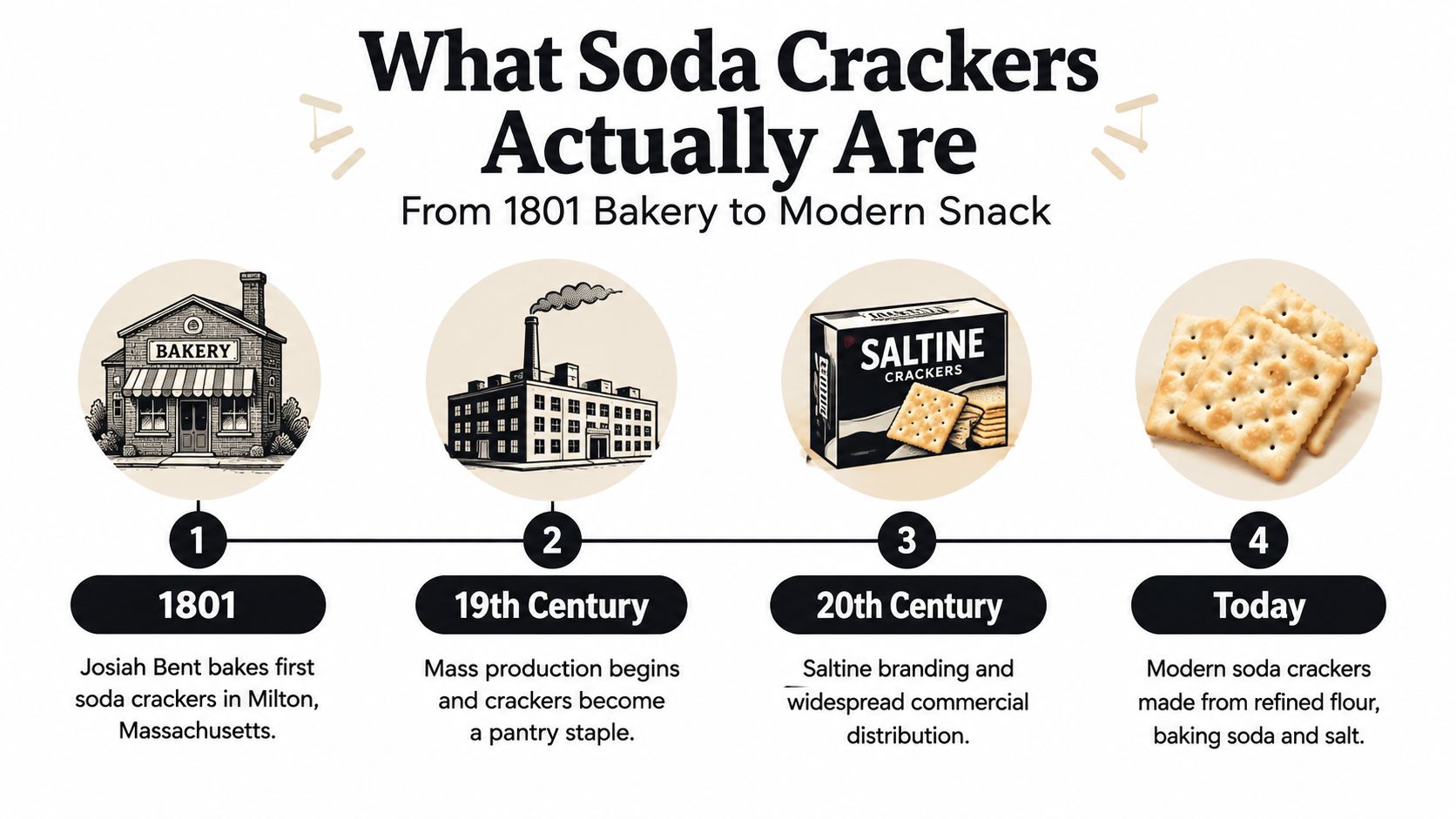
Soda crackers were built for convenience, shelf life, and easy tolerance. That history matters, because people still judge them as if they were designed to be a healthy staple.
Soda crackers trace back to 1801 and early pantry use, with roots in a style of cracker made to store well, travel well, and pair easily with simple foods. By the time saltines became a familiar pantry item, their role was already clear. They were practical, bland, and dependable.
Why their origin still matters
Foods carry a reputation long after their original purpose is forgotten. Soda crackers earned theirs because they were easy to keep on hand and easy to tolerate on off days, not because they offered much nutritionally.
That distinction gets missed all the time in practice. Patients often treat soda crackers as a smart everyday snack because they show up in sick-day routines, hospital trays, and soup bowls. Those are short-term use cases. They do not automatically translate into long-term quality.
Modern soda crackers are still usually made from refined flour with a small, plain ingredient list and a crisp, dry texture. That formula works well if the goal is blandness and predictability. It works much less well if the goal is fiber, staying power, or a stronger nutrient profile.
Soda crackers have a legitimate job. They just get asked to do more than they were built for.
What that means in real life
I draw a hard line here. A food can be useful during nausea, reflux, or a low-appetite day and still be a weak default snack the rest of the week.
If you want a cracker that fits regular snacking better, start with options made from intact or higher-quality grains, such as these 100% whole grain crackers. The better question is not whether a cracker feels light. It is whether it gives you anything beyond convenience.
What Soda Crackers Provide Nutritionally
Soda crackers earn an outsized health halo for a food that is usually just refined flour, a little fat, and salt. In practice, that means a snack that is light and bland, but also light on fiber, protein, and staying power.
A standard serving of about 5 to 6 crackers is modest in calories and mostly carbohydrate, with little fiber and a noticeable sodium contribution, based on this nutrition profile for saltines and soda crackers. That profile matters more than the calorie count alone. Patients often see a small serving and assume it must be a smart everyday choice. Usually, it is a small serving of refined starch.
What the label usually shows
The weak point is not one ingredient. It is the overall package.
- Low fiber: Soda crackers usually do little for fullness or digestive regularity.
- Low protein: They rarely help much with appetite control on their own.
- Refined flour base: They tend to work quickly, then wear off quickly.
- Easy to overeat: Their plain taste and light texture make them easy to keep grabbing by the sleeve.
That pattern is common in clinic. Someone eats a few crackers because they seem controlled and harmless, then feels hungry again soon after and adds another snack.
Why “light” does not mean nourishing
A food can be gentle on the stomach and still be a weak nutritional value for daily snacking. That is the line many people miss with soda crackers. They have a clear short-term role, but they do not offer much depth if the goal is satiety, blood sugar stability, or nutrient density.
Label reading helps cut through the health halo. Compare fiber, protein, and sodium before you let calories make the decision for you. This guide on how to read nutrition labels is useful because it puts the focus on what the food delivers, not what the front of the box implies.
Practical rule: If a cracker is mostly refined starch and salt, it is a convenience food first. Treat it that way.
How Soda Crackers Affect Your Blood Sugar
Soda crackers are one of the most overrated “safe” snacks for blood sugar. They are gentle in flavor, but they are still a refined starch that digests quickly for many people.
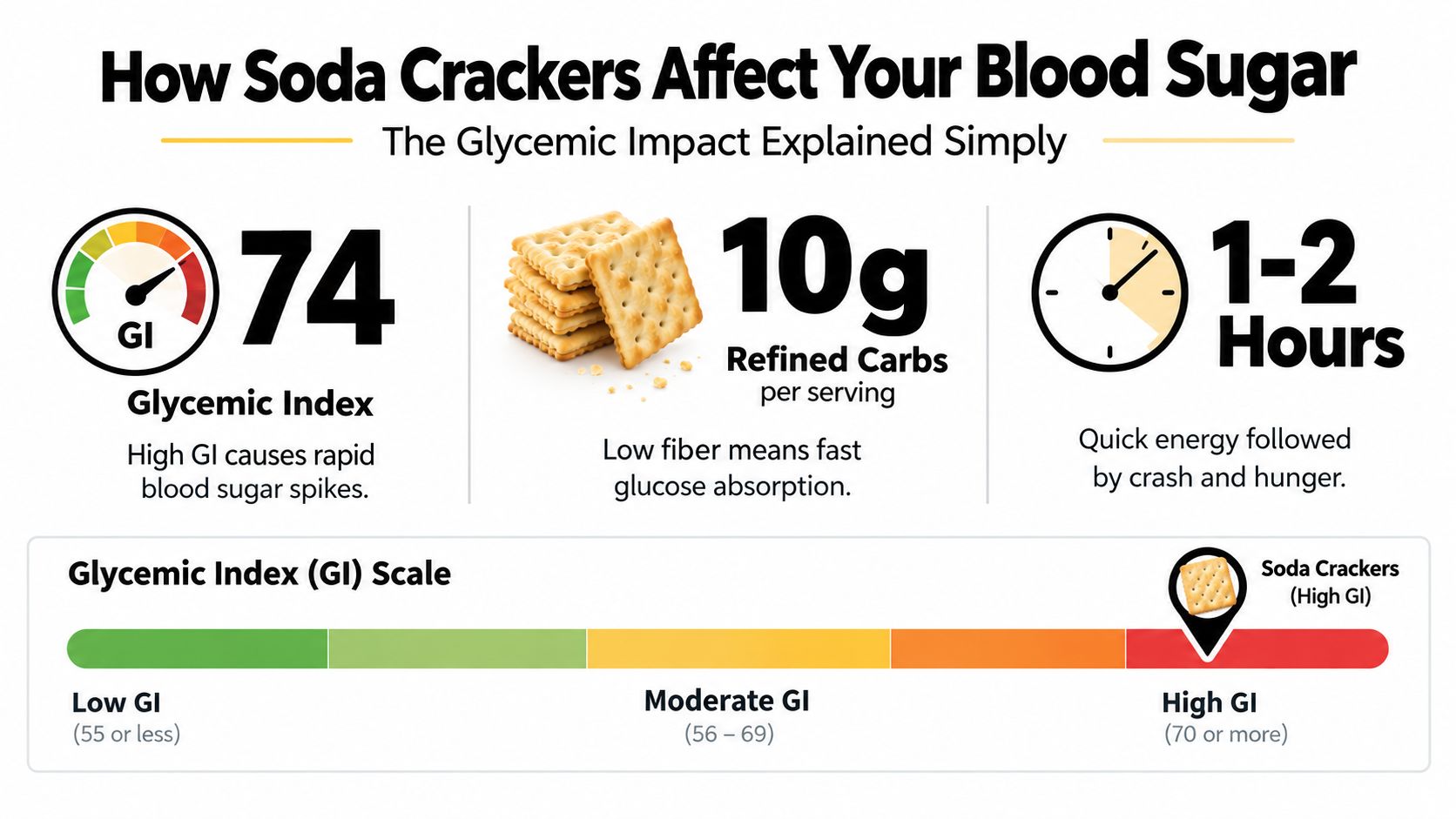
Soda crackers and similar white-flour crackers have published glycemic index values in the 63 to 78 range, with a reported soda-cracker GI around 74. That puts them closer to other fast-digesting refined carbs than many people expect.
In practice, this is the pattern I see. Someone eats a few crackers because they seem light and controlled, gets a quick lift, then feels hungry again sooner than expected. That does not happen because crackers are sugary. It happens because refined flour can move through the system quickly, especially when the snack is low in fiber, protein, and fat.
Why that matters
GI is not the only thing that affects glucose response, but it matters more with foods like soda crackers because there is not much else in the package to slow digestion.
That can be a problem if you:
- Monitor blood sugar closely: Plain soda crackers are usually a weak choice for steadier glucose control.
- Want a snack that lasts: Quick-digesting carbs often wear off fast.
- Use crackers as a daily default: Repeating that refined-carb pattern can work against better energy and appetite control.
If a lower-spike option is the goal, these low glycemic snacks for steadier energy are a better model than trying to force standard soda crackers into a role they do not fill well.
How to make them work better
Soda crackers make more sense as a vehicle than as a standalone snack. Pairing them with peanut butter, hummus, Greek yogurt dip, cheese, or tuna adds protein, fat, or both, which can help slow the blood sugar rise compared with eating the crackers alone. Harvard T.H. Chan School of Public Health explains that foods rich in protein, fat, and fiber slow digestion and help blunt sharp glucose swings in mixed meals.
That distinction matters. A few soda crackers during a stomach bug or a nausea day serve one purpose. Using them every afternoon as a “healthy” snack is a different habit, and usually not a very helpful one.
A short explainer can help if you want to see the concept visually:
The Sodium Problem Nobody Warns You About
Ask people what makes soda crackers questionable, and most will say refined flour. That's true, but it's only half the story. The more overlooked issue is sodium.
Standard 15 g servings commonly contain about 100 to 200 mg of sodium, while some examples cluster around 95 mg per serving and low-sodium versions can fall near 30 to 45 mg. One serving can represent roughly 4 to 9 percent of a daily value for sodium, depending on the formula used in the nutrition reference.
Why people miss it
Soda crackers don't taste aggressively salty. That's exactly why people underestimate them. They feel plain, so people don't mentally count them as a salty snack.
Then real life happens. A few with soup. A few with cheese. A few more during an afternoon slump. Sodium adds up quickly when the crackers are just the base for other salty foods.
Where the trouble usually starts
The issue isn't usually a single serving. It's the pattern around the serving.
Common pairings make the sodium load worse:
- Soup combinations: The crackers may be small, but they often ride along with already salty meals.
- Cheese and deli meat: A snack board built on soda crackers can become sodium-heavy fast.
- Mindless grazing: Because they seem harmless, people rarely portion them carefully.
If sodium is a concern, the topping often matters more than the cracker. But the cracker still counts.
Low-sodium versions can help, and they're worth checking if you keep crackers at home. But a lower-sodium soda cracker is still usually a refined-carb base with limited nutritional upside. It's a better version of the same category, not a total upgrade.
Soda Crackers in Keto, Low-Carb, and Low-Sugar Diets
Soda crackers are one of the easiest foods to mislabel as "safe" just because they are plain. In practice, they fit very differently in keto, low-carb, and low-sugar eating patterns, and for two of those three, the fit is usually weak.
The short verdict
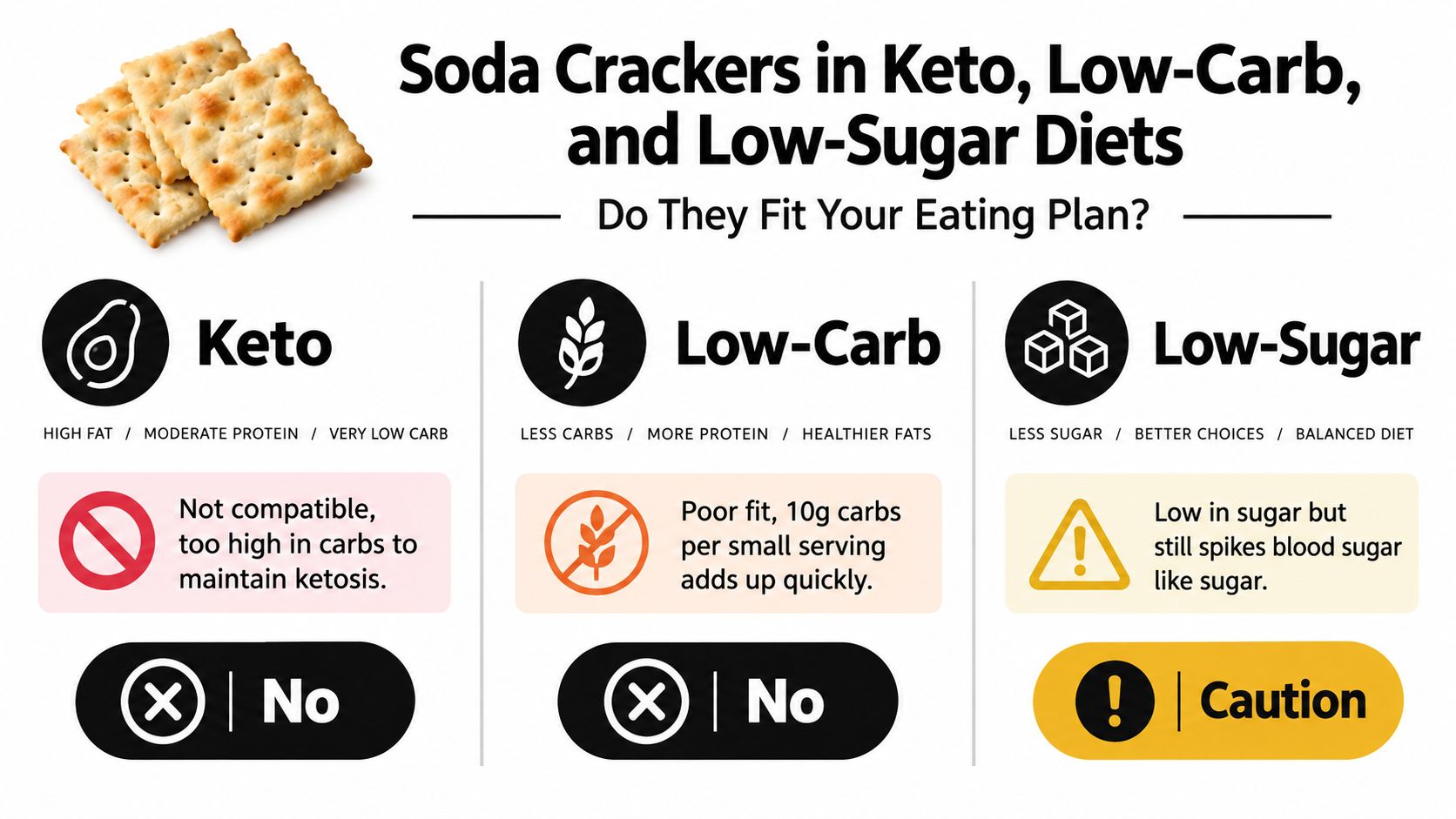
For keto, standard soda crackers are usually off the table.
For general low-carb eating, they tend to spend too much of your carb allowance on a food that does not bring much fiber, protein, or staying power.
For low-sugar eating, they can fit more easily. That still does not make them a strong everyday snack choice. Low sugar and low metabolic impact are not the same thing, especially with a refined flour product.
Soda Crackers Across Common Diet Frameworks
| Diet Framework | Carbs Per Serving | Sugar Content | Verdict |
|---|---|---|---|
| Keto | A typical serving is high enough in carbohydrate to make standard soda crackers hard to fit | Usually low in sugar, but still too starch-heavy for keto | Poor fit |
| Low-Carb | The carb load is still meaningful for a small serving, as noted earlier | Low sugar does not cancel out the refined-carb trade-off | Usually not worth it |
| Low-Sugar | Low sugar can make them look better on paper | Often easier to fit than sweets, but still a refined starch | Acceptable occasionally, not ideal routinely |
What works better in each case
Keto eaters usually need snacks that are much lower in total carbs and more satisfying per bite. Soda crackers do the opposite. They are easy to overeat, and they do not give much back nutritionally.
For low-carb eaters, I usually frame it as a budget question. If a snack takes a noticeable share of your carbs, it should at least help with fullness or offer better overall nutrition. Soda crackers rarely do either.
Low-sugar eaters have a little more flexibility, which is why this category causes confusion. A few crackers during nausea, recovery from a stomach bug, or a bland-food day can make sense. Using them as a routine "healthy" pantry snack is a different decision entirely.
A practical filter:
- For keto: choose options made to be low in carbs, not just low in sugar.
- For low-carb: use your carbs on foods with more fiber, protein, or a clearer nutrition payoff.
- For low-sugar: look past the sugar line on the label and check whether the snack is still mostly refined flour.
That distinction matters. Soda crackers can have a short-term job in gentle eating, but they are a weak long-term pick for anyone trying to control carbs with intention.
Better Snack Alternatives Worth Choosing Instead
The solution isn't to fear soda crackers. It's to stop expecting them to do a job they were never built to do.
An evidence-based patient guide on soda crackers makes the distinction clearly: people often reach for them during nausea, reflux, diarrhea, or sensitive digestion, yet that short-term use is different from long-term dietary value. The same guide notes that soda crackers are usually low in protein, fiber, vitamins, and minerals, and that many varieties are relatively high in sodium for their portion size. It also notes growing interest in low-sodium or whole-wheat versions, though those changes tend to offer only small gains.
Smarter swaps by need
Here's what I recommend instead, depending on why you were reaching for soda crackers in the first place:
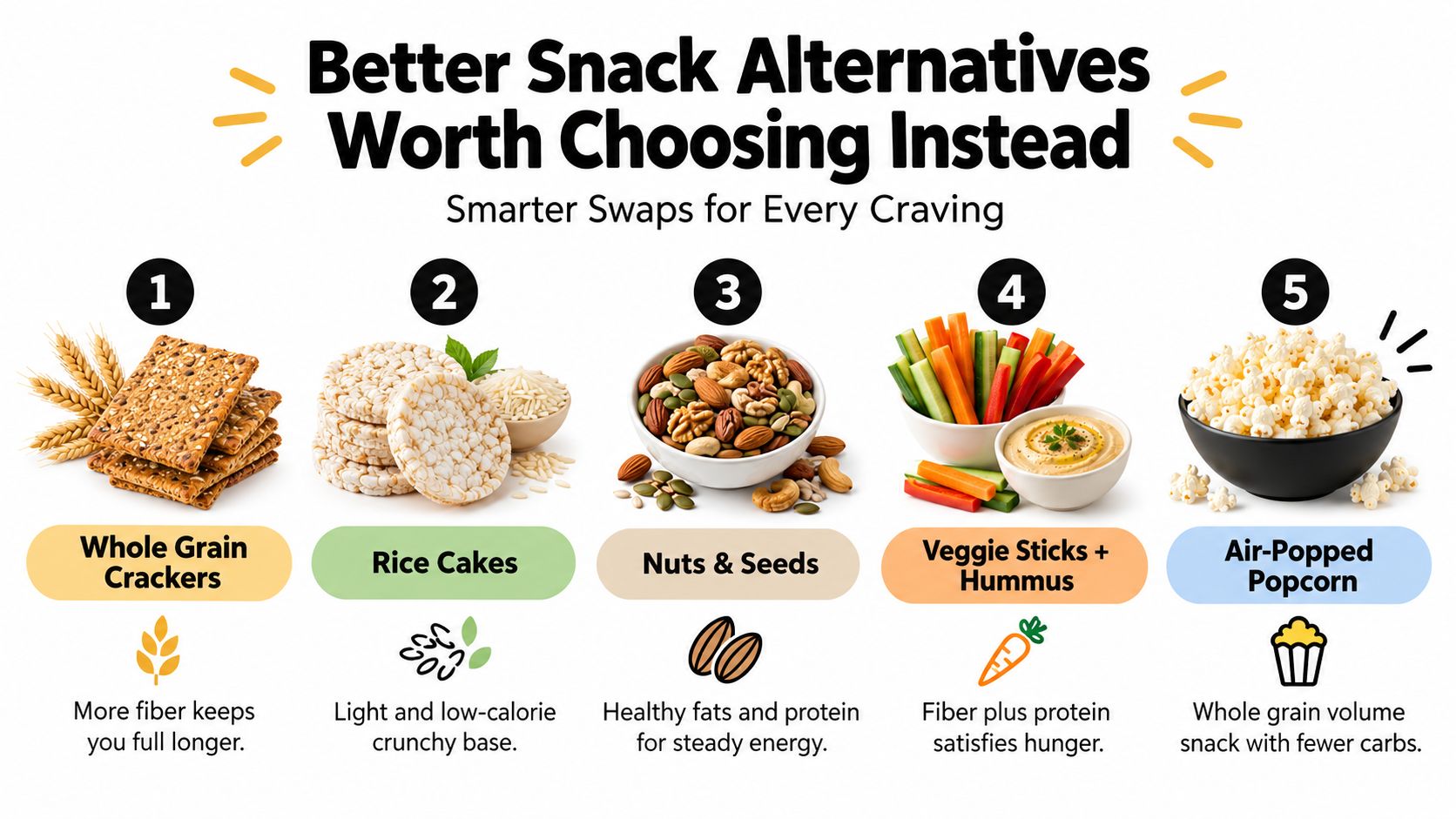
- If you want crunch: Choose whole grain crackers with more fiber and a shorter ingredient list.
- If you want something light: Plain rice cakes can work better as a neutral base, especially if you add a topping with protein or fat.
- If you want fullness: Nuts and seeds do more work because they bring healthy fats and protein.
- If you want a savory snack: Raw vegetables with hummus give you fiber plus staying power.
- If you want volume: Air-popped popcorn is often a better whole-grain option than a refined cracker.
Where better-for-you packaged snacks fit
Packaged snacks can still be useful. The key is choosing ones designed around the problems soda crackers have. That means looking for lower sugar, more fiber, and a better overall ingredient profile.
One example is Rip Van, which offers snacks such as wafels, wafers, and wafer bars positioned around low sugar, no corn syrup or artificial sweeteners, higher fiber than many common snack alternatives, natural flavors, no artificial colors, and non-GMO ingredients. The brand also lets shoppers filter for dietary needs such as gluten free, low sugar, keto, and vegetarian, which makes it easier to match the snack to the person instead of treating every “light” snack as equally healthy.
If you like savory seaweed snacks as another alternative, this guide to calories and iodine in seaweed is helpful because it adds context beyond just “seaweed is healthy.”
A better snack usually solves at least one of these problems: low fiber, low protein, high sodium, or poor satiety. Soda crackers often solve none of them.
When Soda Crackers Actually Make Sense
Soda crackers do have a real role. It's just narrower than many think.
They make sense when your stomach is unsettled, your appetite is low, or you need something plain and easy to tolerate for a short window. That use is consistent with their long history as bland-diet food. In those moments, “healthy” doesn't have to mean nutrient-dense. It can mean gentle enough to get something down.
The right way to think about them
I'd put soda crackers in the same category as other temporary comfort foods. They're tools, not foundations.
Use them when:
- Digestion is touchy: Nausea, reflux, diarrhea, or post-illness eating can call for very plain foods.
- You need convenience immediately: They travel well and don't require prep.
- You plan to move on: The goal is temporary tolerance, not building your whole snack routine around them.
Don't treat them as a smart everyday staple if your goal is better satiety, steadier energy, or more nutrient-dense snacking.
The honest bottom line
If you've been asking whether soda crackers are healthy, the most accurate answer is this: sometimes useful, rarely ideal.
They're reasonable for short-term digestive comfort. They're weak for regular healthy snacking. Once you separate those two jobs, the confusion disappears and the decision gets much easier.
If you want a snack that fits modern health goals better than standard soda crackers, Rip Van offers options built around lower sugar, more fiber, and dietary filters such as keto, gluten free, and vegetarian. That makes it easier to find something convenient that doesn't lean so heavily on refined flour and sodium alone. You can browse the full lineup at Rip Van.
0 comments