

You're standing in the snack aisle, looking at a chocolate wafer cookie, and it seems like the lighter choice. It's thin. It's airy. It doesn't look as rich as a dense brownie cookie or a frosted sandwich cookie. Then you get home, eat a few without thinking much about it, and realize wafers can be a little deceptive.
That's why wafer cookies chocolate are worth understanding as their own category. They're not just “cookies, but crispier.” Their layers, fillings, and coatings change almost everything about the experience. A plain wafer sheet feels dry and delicate. Add cream between layers and it becomes more snackable. Dip or coat it in chocolate and now you've changed the bite, the sweetness, and even how long it stays crisp.
The interesting part is that the word wafer often gives people the wrong idea. It suggests lightness, but the format matters far more than the label. A thin plain wafer, a chocolate-covered wafer, and a filled wafer bar may all look related, yet they can feel very different in your hand and in your day-to-day eating habits.
Introduction to Wafer Cookies Chocolate and Why They Stand Out
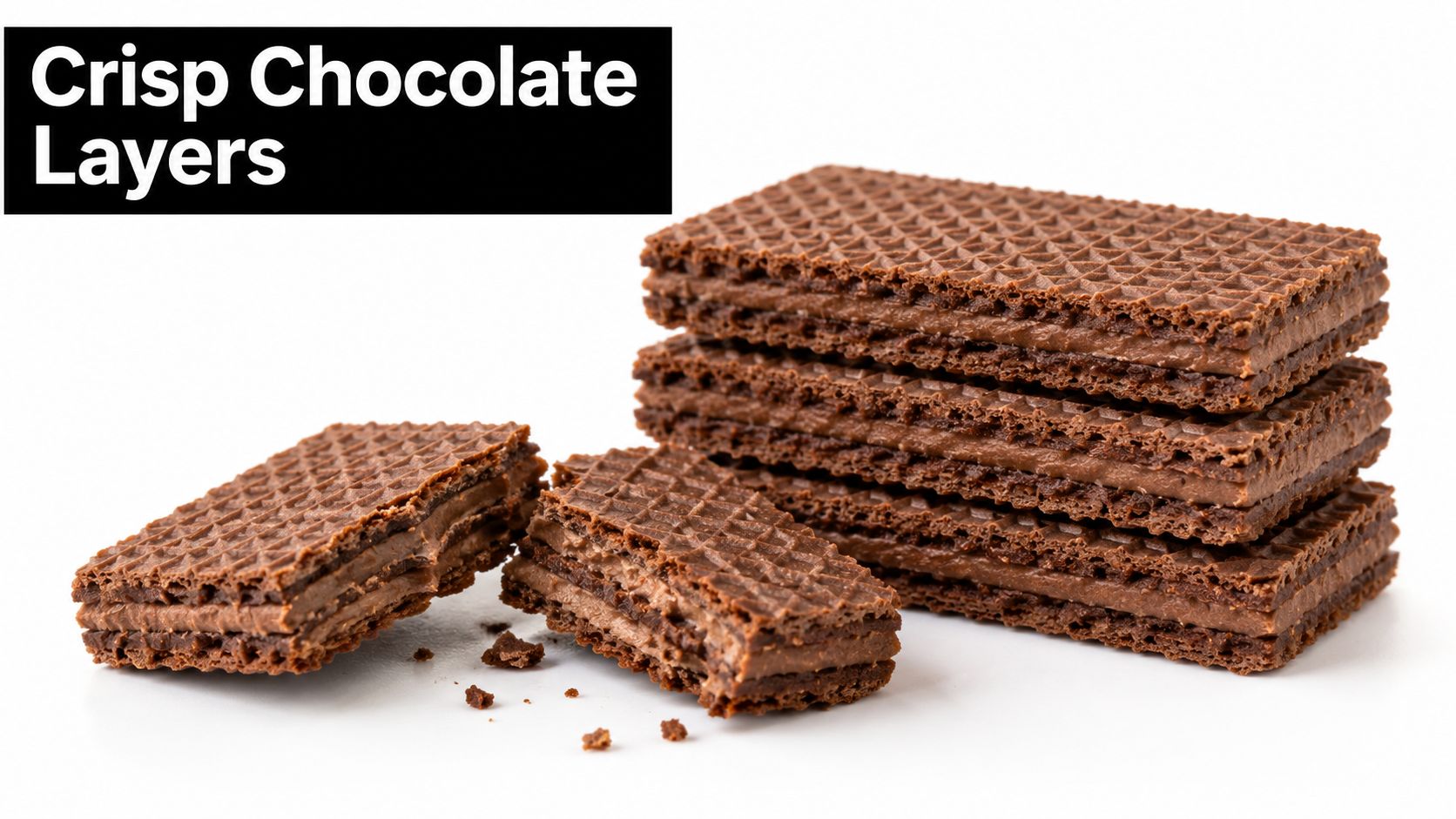
First notice chocolate wafer cookies because of the sound. You bite in and hear a dry, delicate crackle instead of the thicker crunch you get from a standard cookie. That texture is what makes wafers stand out. They feel light, but they don't eat the same way as a puffed snack or a crisp cracker. They're built in layers, and each layer changes how sweet, rich, and satisfying the cookie feels.
Why wafers feel different from other cookies
A regular cookie usually asks you to focus on one body of texture. Soft center, crisp edge, chewy middle. A wafer splits the experience into parts. You notice the brittle sheets first, then the creamy layer, then the chocolate if there's a coating or filling. That layered bite is why wafers often seem elegant or refined, even when they're sold as everyday snacks.
There's also a long commercial history behind them. Historical accounts note a major U.S. milestone in 1924, when the National Biscuit Company began selling chocolate wafers in tins alongside sugar wafers and ginger wafers, and some accounts trace earlier wafer development to 1898 production by Manner in Austria, linking the category to both European confectionery and American packaged snack history (historical overview of chocolate wafer cookie history).
Wafers have always lived in two worlds at once. They feel delicate like a confection, but they've long been part of the everyday packaged cookie shelf.
Why this matters when you shop
If you only judge a wafer by its shape, you'll miss the two big factors that define it: texture control and format-driven sweetness. Those are the details that explain why one wafer tastes balanced and crisp while another feels overly sweet or goes soft too fast after opening.
When people get confused, it's usually because they group all wafers together. But chocolate wafers come in several forms, and those forms affect everything from portion habits to freshness. Once you start noticing layers, coating, and filling, the category becomes much easier to read.
How Chocolate Wafer Cookies Get Their Signature Crisp and Layers
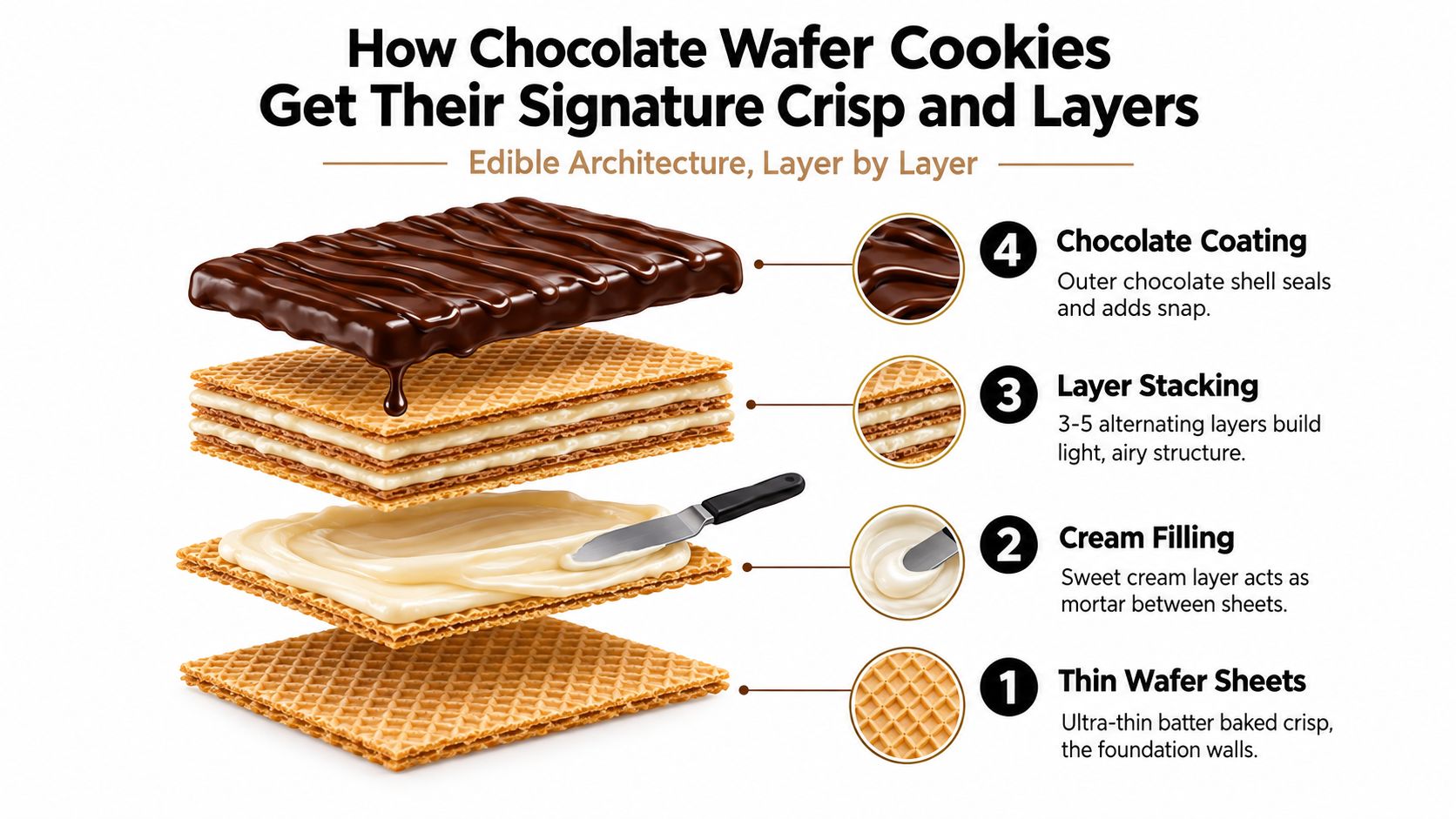
Think of a chocolate wafer cookie like edible architecture. It isn't one solid block. It's a structure made from thin parts that each do a specific job. The wafer sheets form the frame. The cream or chocolate filling holds the layers together. If there's an outer coating, that becomes the finishing shell.
The wafer sheet is the foundation
The first thing to understand is the wafer sheet itself. It's very thin, very dry, and intentionally fragile. That's not a flaw. It's the whole point. A wafer sheet is designed to break cleanly so the cookie feels crisp rather than heavy.
Wafers differ from cookies made with a chewier goal in mind. If you've ever read about why bread flour makes cookies chewy, you've seen the opposite idea in action. Chewy cookies rely on strength and stretch. Wafers rely on dryness and delicacy.
The filling changes more than flavor
The filling looks simple, but it does several jobs at once. It adds sweetness, creates contrast with the dry sheets, and helps the bite feel complete instead of dusty. A chocolate cream filling gives richness. A vanilla or hazelnut filling softens the bitter edge of dark cocoa notes. A thicker filling makes the cookie feel more dessert-like.
Practical rule: The more filling and coating a wafer has, the less it behaves like a plain crisp biscuit and the more it behaves like a confection.
The filling also controls pacing. A plain wafer sheet can disappear in a second. A layered wafer with filling slows the bite down because your mouth has more textures to work through.
Here's a quick visual aid before you compare products in the world:
The outer chocolate shell adds snap and richness
When manufacturers add a chocolate coating or partial dip, they aren't just adding flavor. They're changing the bite sequence. You first crack through chocolate, then hit the layered interior. That extra shell can make a wafer feel more substantial and more indulgent, even if the inside is still airy.
Three things usually shape the final experience:
- Thin layered wafers feel fast and crisp, with a clean break.
- Cream-filled stacks feel sweeter and softer in the middle.
- Chocolate-coated wafers feel richer because the shell adds a second snap before the inner crunch.
That's why two products can both be called chocolate wafers and still feel like completely different snacks.
Popular Types and Styles You Will Find on Shelves
The easiest way to understand chocolate wafer cookies is to stop treating them as one product. On shelves, they show up in several shapes and styles, and each one creates a different eating experience. Some are flat and layered. Some are rolled. Some are closer to candy bars than cookies.
The main shelf styles
Flat sandwich wafers are the classic form many people picture first. They use thin wafer sheets with sweet filling between them. These usually deliver the most direct wafer crunch.
Chocolate wafer bars tend to be thicker and more structured. They often stack several layers and may include a full chocolate coating, which makes them feel richer and more dessert-like.
Rolled wafer sticks lean delicate and playful. They're crisp and often lighter in feel, but they can also be easy to overeat because each piece seems small.
European-style wafers or wafels can be a source of confusion. Some are crisp layered wafers. Others are syrup-filled Dutch-style wafels, which are a different texture altogether. If you want a quick primer on that distinction, this overview of European wafer cookies is useful.
Chocolate Wafer Formats Compared
| Format | Structure | Texture and Chocolate Experience |
|---|---|---|
| Flat sandwich wafer | Thin sheets with filling between layers | Dry, crisp bite with sweetness spread evenly through the layers |
| Rolled wafer stick | Thin wafer rolled into a tube, sometimes filled | Very delicate crunch, lighter mouthfeel, often more about crispness than deep chocolate richness |
| Chocolate wafer bar | Multiple stacked wafer layers, often thicker | More substantial bite, stronger contrast between airy interior and dense chocolate notes |
| Fully coated wafer | Layered wafer covered in chocolate | Outer snap first, richer finish, often feels closer to candy than plain cookie |
How format changes your snack experience
A flat wafer works well when you want a quick, clean bite with little mess. A coated wafer bar fits better when you want a treat that feels more complete. Rolled wafers are easy to share, but they can also disappear quickly because each one feels small and light.
Shelf format tells you a lot before you ever read the label. Thin and exposed usually means drier and crisp-focused. Thick, filled, or coated usually means sweeter and more indulgent.
A good shopping habit is to ask one simple question: Am I buying this for crunch, for chocolate, or for both? That one question helps separate the styles fast.
What Keeps Wafers Crisp and Chocolate Snappy
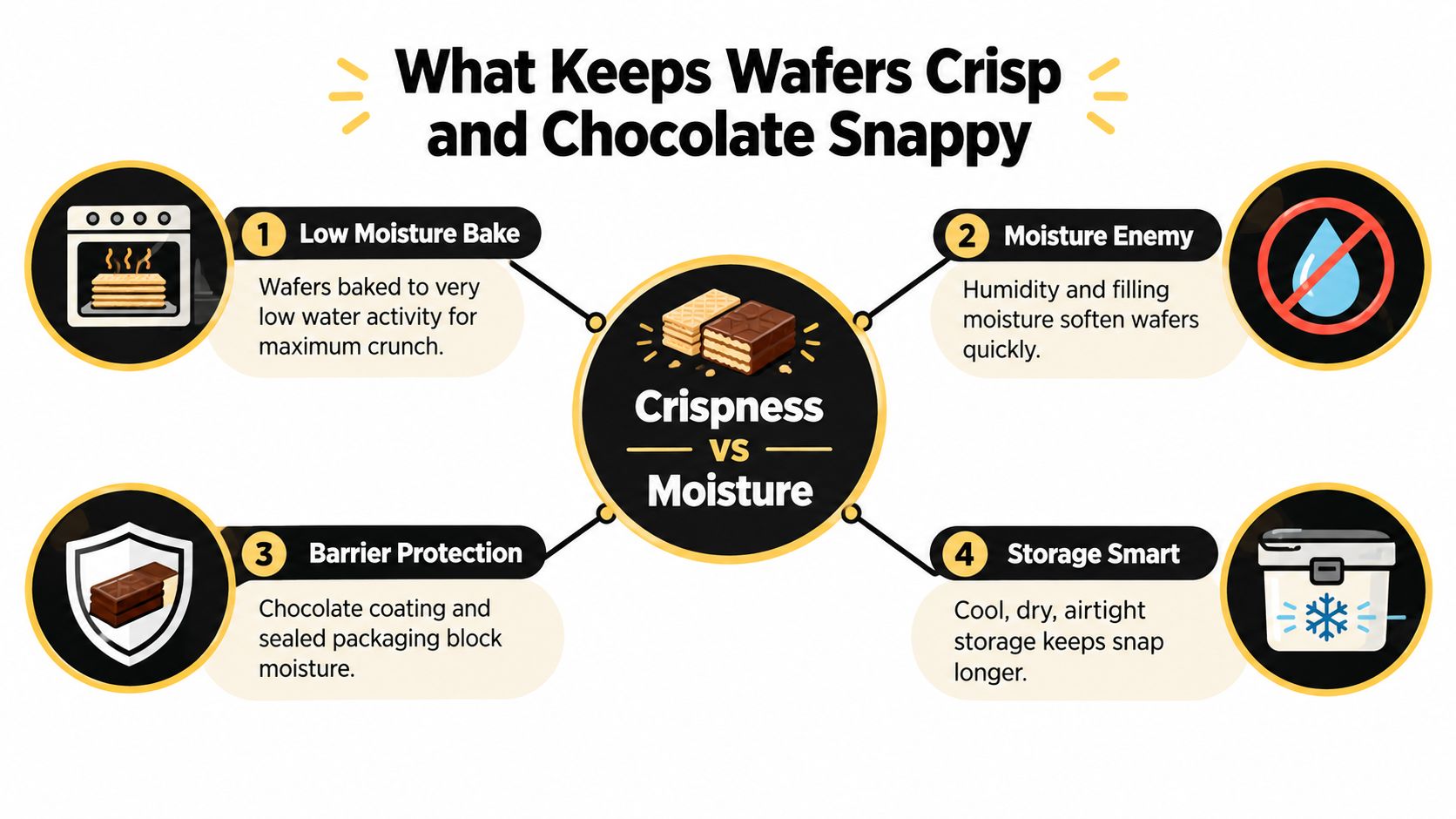
If you've ever left a wafer package open and come back later to a limp, disappointing bite, you've already seen the main enemy at work. It's moisture. Wafers depend on being dry enough to break cleanly. Once they absorb too much water from the air or from nearby components, the crispness starts to fade.
Why crispness is a moisture story
Wafer biscuits are made as very low-moisture systems. After baking, residual moisture is typically 0.8 to 1.5%, and the crisp texture is generally maintained up to about 5 to 6% moisture. Beyond that, wafers can turn tough, soft, or soggy. Guidance on wafer technology also notes that conditioning wafers to around 4.5% moisture can help reduce chocolate cracking in some coated products while preserving crispness (wafer biscuit moisture and texture guidance).
That sounds technical, but the everyday version is simple. A wafer has a narrow comfort zone. Too dry in the wrong context and coatings may crack. Too moist and the bite loses its snap.
Water activity is the invisible tug of war
Food scientists often talk about water activity, which is different from just total moisture. A product can contain some water, but what matters is how available that water is to move between parts of the food. In a chocolate wafer, that movement matters a lot.
A confectionery reference notes that in chocolate-enrobed cookies, coating increased product moisture from 2.04% to 2.82% and water activity from 0.32 to 0.41, enough to change texture and storage stability. The same guidance explains that low-water-activity wafers lose crispness when exposed to higher humidity, and harsher moisture imbalance can lead to hardness, toughness, shrinkage, or structural collapse (water activity in confectionery systems).
A wafer doesn't have to get obviously wet to feel stale. Even a small moisture shift can change the bite.
What helps at home
You don't need lab equipment to protect texture. You just need a few habits.
- Close packages tightly after opening. Air exposure is the fastest route to lost crispness.
- Store in a cool, dry spot instead of near the stove, dishwasher, or sunny window.
- Use an airtight container if the original wrapper doesn't reseal well.
- Keep coated wafers away from humidity so the chocolate stays firm and the wafer interior doesn't soften.
The main idea is simple. Crisp wafers stay crisp when you protect them from moisture migration, both from the room and from the product's own filling or coating.
Nutrition Realities and Low Sugar Alternatives That Still Satisfy
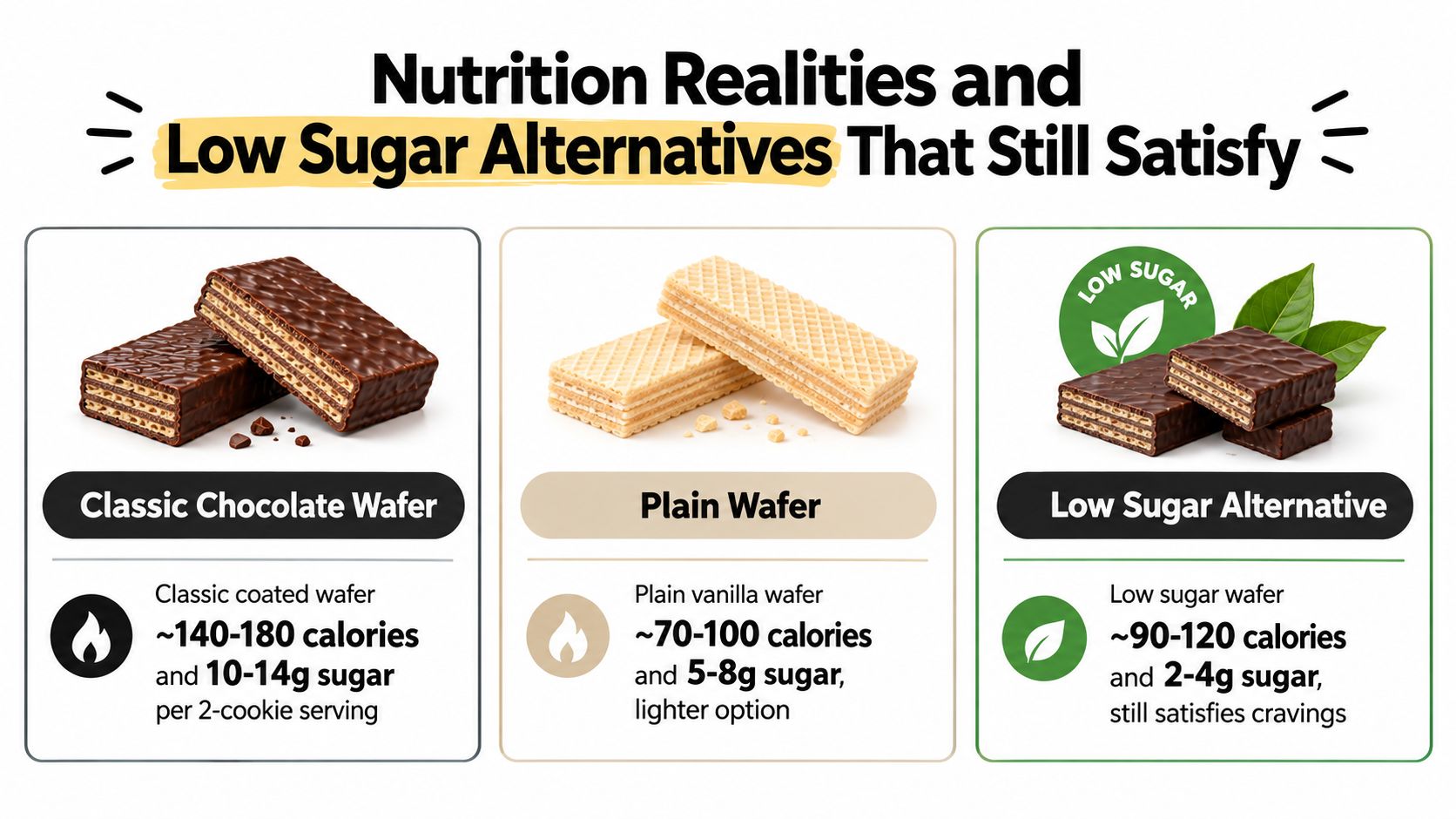
The “light snack” myth starts to fall apart. Wafers look airy, so many shoppers assume they're automatically a lighter chocolate option. Sometimes they are. Sometimes they aren't. The better question is not “Is it a wafer?” but “What kind of wafer is it?”
Wafer does not automatically mean lower sugar
Independent nutrition data shows a wide spread by format. One entry lists chocolate wafers at about 433 calories and 37.4 g sugar per 100 g, while chocolate-covered sugar wafers reach about 526 calories and 51.7 g sugar per 100 g (nutrition data for chocolate wafer formats).
That's the key lesson. The category name tells you less than the build of the product. A thin plain wafer may be one thing. Add chocolate coating, extra cream, or a richer filling, and the sugar density can climb quickly.
Why people underestimate wafers
Wafers create a portion trap because they feel light in the hand and break easily in the mouth. That can make them seem less substantial than denser cookies, even when the sweetness adds up fast. The snack doesn't feel heavy, so it's easy to keep reaching back into the pack.
Here are the features that usually push a wafer upward nutritionally:
- Full chocolate coating adds richness and usually more sweetness.
- Thicker cream layers make each bite taste rounder and more dessert-like.
- Bar format can encourage treating the product like a small candy bar rather than a plain biscuit.
- Large multi-piece packs make mindless eating easier.
Smart label check: Don't stop at the word wafer. Check whether it's plain, cream-filled, chocolate-coated, or all three.
What to look for in lower sugar options
If you want a better-for-you wafer cookie, focus on product design cues rather than marketing mood. Look for lower sugar positioning, higher fiber when available, shorter ingredient lists you're comfortable with, and a serving format that fits how you snack.
One example in this space is Rip Van's low-sugar wafer cookies, which are positioned around the idea that wafers can still feel satisfying without leaning on excess sugar. More broadly, the pattern to look for is balance: enough sweetness to feel like a treat, enough structure to satisfy the crunch craving, and ingredients that match your own goals.
You don't need a wafer that tastes “diet.” You need one whose format matches what you want from the snack.
How to Buy Store and Keep Chocolate Wafers Fresh Longer
Good wafers can disappoint fast if you buy a stale package or store them carelessly. Because texture matters so much here, freshness cues are more important than with some other snacks. A wafer that has lost its snap isn't just slightly worse. It can feel like a different product.
What to check before you buy
Start with the package itself. If the wrapper looks puffed, torn, poorly sealed, or crushed, move on. Wafer layers break easily, and broken wafers often signal rough handling that can also affect texture.
Then look at the product style. A fully coated wafer may hide broken layers better than an exposed sandwich wafer, but both still depend on intact packaging to keep moisture out.
A quick in-store checklist helps:
- Inspect the seal for tears, looseness, or signs the pack has been opened.
- Look for crushed corners because thin wafers fracture easily in transit.
- Choose practical pack sizes if you know you won't finish them quickly after opening.
- Read the product description so you know whether you're buying a plain wafer, filled wafer, or chocolate-coated wafer.
How to store them at home
Once opened, the rule is simple: protect wafers from air, humidity, heat, and odor transfer. Kitchens can be rough on crisp snacks because steam and temperature swings are common.
Use a tightly closed container if the bag or tray doesn't reseal well. If you pack wafers for work or school, small resealable snack bags can help limit repeated air exposure to the whole package.
Keep wafers away from the refrigerator unless the specific product needs chilling. Fridge humidity can work against crispness, and temperature swings can dull texture.
A few habits that preserve the bite
Some people store all cookies together in one tin. That's not ideal for wafers. Softer cookies can share moisture and aromas with crisp products, and wafers absorb that change quickly.
Try this instead:
- Open only what you expect to use soon.
- Reseal immediately after serving.
- Keep the container in a dry cupboard, not near heat or steam.
- Separate chocolate wafers from strongly scented foods like coffee or spices.
These small habits keep the wafer doing what it's supposed to do. Crack cleanly, taste fresh, and deliver that layered contrast you paid for.
Finding a Better For You Wafer Cookie You Will Actually Enjoy
A satisfying wafer cookie has to do two jobs at once. It has to deliver the crisp, layered bite people want from wafers, and it has to fit your real-life eating goals. If one side fails, the product usually doesn't last in your routine. Either it tastes thin and unsatisfying, or it feels too sugary for how you want to snack.
What balance looks like in practice
For many shoppers, a better-for-you wafer means looking for a few practical signals: lower sugar, no corn syrup or artificial sweeteners if those matter to you, fiber content that helps the snack feel more balanced, natural flavors, and portable formats that make portioning easier instead of harder.
That's why “better for you” is less about the category and more about the build. A wafer can still feel indulgent if the texture is right. You don't need a heavy, overly sweet coating to make chocolate satisfying. Sometimes a crisp layered format with a measured amount of sweetness does the job better.
Match the wafer to the moment
A lunchbox snack calls for something different than a late-night dessert bite. A commute snack needs portability. A family pantry snack needs broad appeal. Someone eating with low-sugar goals in mind may care most about sweetness level first, while someone shopping for kids may prioritize simple ingredients and manageable portions.
If you ever think about making or selling your own baked snacks, it's also useful to study how texture and packaging shape repeat purchases. This guide on how to start your home bakery is a practical example of how product format and customer experience matter beyond the recipe itself.
The best wafer for you is the one that gets the basics right. Crisp layers. Chocolate that tastes deliberate, not excessive. Sweetness that satisfies without taking over. A package you can use well.
If you want a wafer snack that fits the ideas in this guide, Rip Van offers low-sugar wafers, wafer bars, and chocolate-forward options made for people who want crisp texture and balanced sweetness in a portable format. You can explore the full lineup and see which style fits your snacking goals at Rip Van.
0 comments