

You're standing in the snack aisle with two packs of cream-filled wafers in your hands. One promises familiar chocolate crunch, the other advertises a lower-sugar recipe, but the front of both packages tells you almost nothing about how satisfying they'll be, how much added sugar you're getting, or whether the serving size matches the amount you'll likely eat.
That's why wafer cookies with cream filling deserve a closer look. The format can deliver a crisp bite and rich flavor in a compact snack, but products vary sharply in sugar, fiber, ingredients, and texture. Read the label like a detective, and you can keep the crunch and cream without treating every wafer as an equally smart choice.
Why Cream-Filled Wafers Are Worth a Second Look
A cream-filled wafer has an unusual advantage over many cookies. Its thin layers create plenty of crunch, while the filling supplies concentrated flavor, so a small portion can feel more substantial than its airy appearance suggests. That combination makes wafers useful for a planned afternoon snack, a coffee pairing, or a small dessert after lunch.
The category also has deeper roots than the modern supermarket shelf suggests. Food-history accounts describe wafer-like products in medieval Europe and earlier ritual settings. The modern layered cream wafer took shape later, with Josef Manner establishing a foundation for the format in Vienna in 1898, followed by Alfons Loacker's crisp filled wafers in Bolzano in 1925. The long progression from plain or ceremonial wafers to portable filled cookies explains why the format feels both traditional and highly engineered. This food-history overview traces that development, including early British use and a seventeenth-century reference to rolled wafers.
Today, filled wafers sit at the center of a substantial packaged-snack market. Filled varieties accounted for 60.22% of the wafer biscuits market in 2025, according to Mordor Intelligence's wafer biscuits market analysis. That dominance matters for shoppers because manufacturers now have a reason to compete on more than flavor. Lower-sugar recipes, added fiber, portioned packs, and different fat sources are giving the familiar sandwich format new options.
The practical takeaway: don't judge a wafer by its light texture or familiar branding. Judge the serving, sugar, fiber, and ingredient list together.
A better cream wafer isn't necessarily a diet product. It should still taste like a treat. The smarter choice is the one that meets your snack target while preserving the two things you bought it for, crispness and creaminess.
How a Cream-Filled Wafer Is Built
A cream-filled wafer is a laminated sandwich made from two very different components. The outer shell starts as a thin flour-and-water batter or slurry, baked between heated plates until it becomes light, dry, and brittle. The inner layer is usually a fat-and-sugar filling, sometimes flavored with cocoa, vanilla, fruit, or other ingredients.
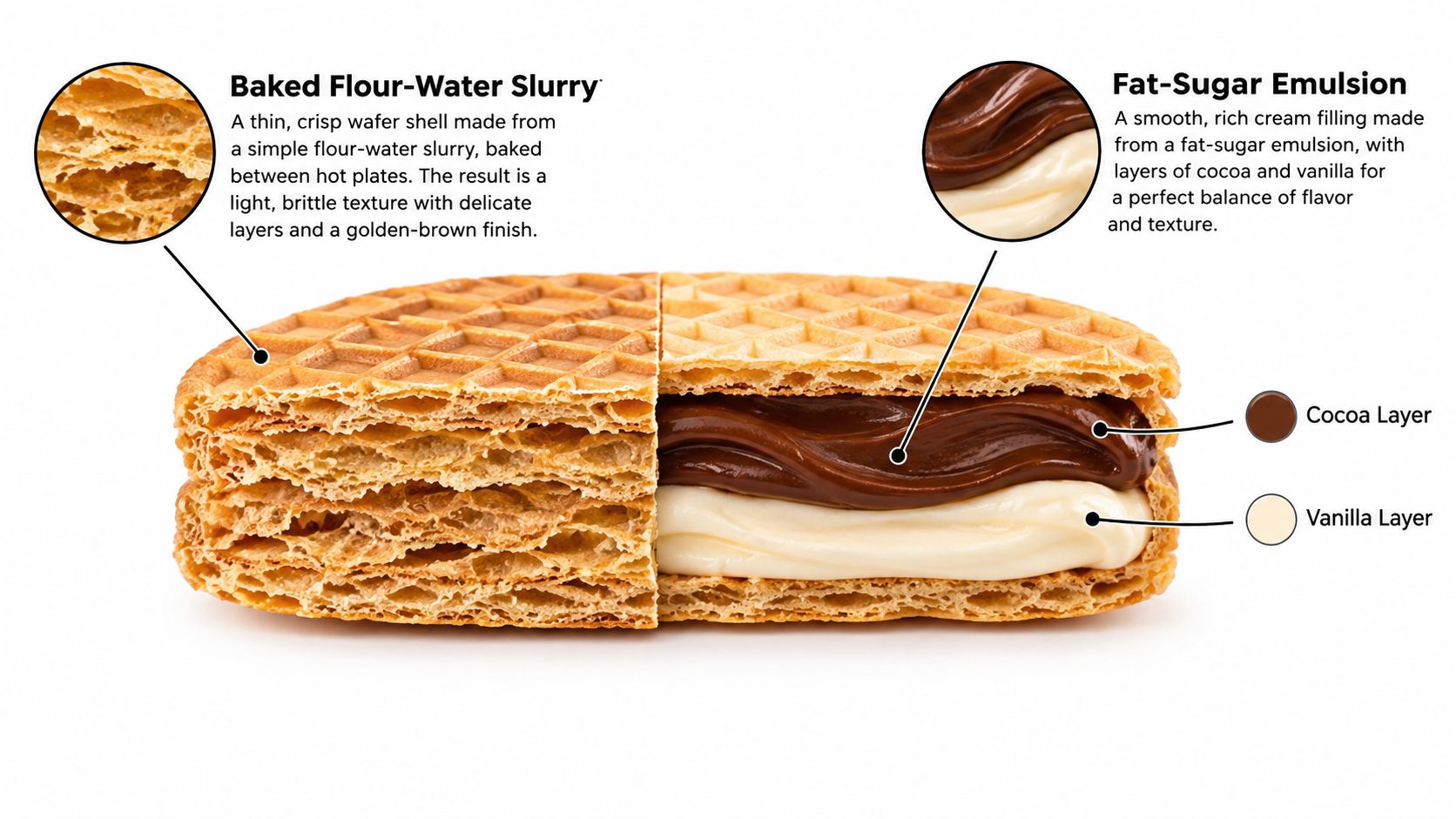
The wafer shell creates the snap
Baking removes much of the batter's moisture and sets a fragile grid-like structure. Industrial guidance places plain wafers at a maximum moisture level of about 4.5%, while sandwich or coated wafers commonly allow up to 6.0%. Technical information from the wafer-biscuit module published by INFLIBNET notes that crispness generally survives only within a narrow moisture range.
That dryness explains why wafers feel lighter than a dense, soft cookie. It also makes them vulnerable. The shell readily absorbs moisture from humid air or from a filling that contains too much available water.
The cream layer balances flavor and structure
The filling is not whipped cream in the refrigerator-dessert sense. Manufacturers typically build it as a low-water-activity fat-sugar phase, using fat for body and powdered sugar for sweetness and texture. Baking guidance recommends fillings below 0.68 water activity to reduce microbial risk and slow moisture movement, as explained in the American Society of Baking's filling guidance.
The finished wafer may contain several thin baked layers separated by cream. That construction spreads flavor across the bite, so the cookie can taste rich without having the dense chew of a traditional sandwich cookie. It also creates the product's main technical challenge: the shell and filling must remain stable together.
If the filling holds too much moisture, water migrates into the wafer and softens it. If the package allows humid air inside, the shell loses its snap from the outside. Good wafer production therefore depends on both formulation and packaging, not just on baking time or flavoring.
Ingredients and Allergens to Watch For
Turn the package over and read the ingredients in order. A typical cream wafer may begin with refined wheat flour, followed by sugar or powdered sugar, vegetable oil, cocoa or another flavoring, emulsifiers such as lecithin, salt, and leavening agents. The precise order varies, but the first few ingredients tell you whether you're buying a flour-and-sugar snack or a recipe that gives more room to fiber, nuts, or other substantial ingredients.
Refined flour creates the wafer's delicate structure, but it contributes little fiber. Palm oil or other vegetable fats give the cream layer a firm texture at room temperature. Hydrogenated oils deserve extra scrutiny, particularly if the label doesn't clearly explain the fat source. Sugar sweetens both the shell and filling, while lecithin helps ingredients that normally resist mixing form a stable texture.
Scan these ingredient categories
- Refined wheat flour: The usual structural base and a clear concern for anyone avoiding gluten.
- Palm or hydrogenated oils: Used for firmness and mouthfeel, but worth comparing across brands.
- Powdered sugar: Common in the filling and often paired with other sweeteners.
- Cocoa and flavorings: These create chocolate, vanilla, fruit, or cookie-style profiles.
- Lecithin and leavening agents: Functional ingredients that influence mixing, spread, and texture.
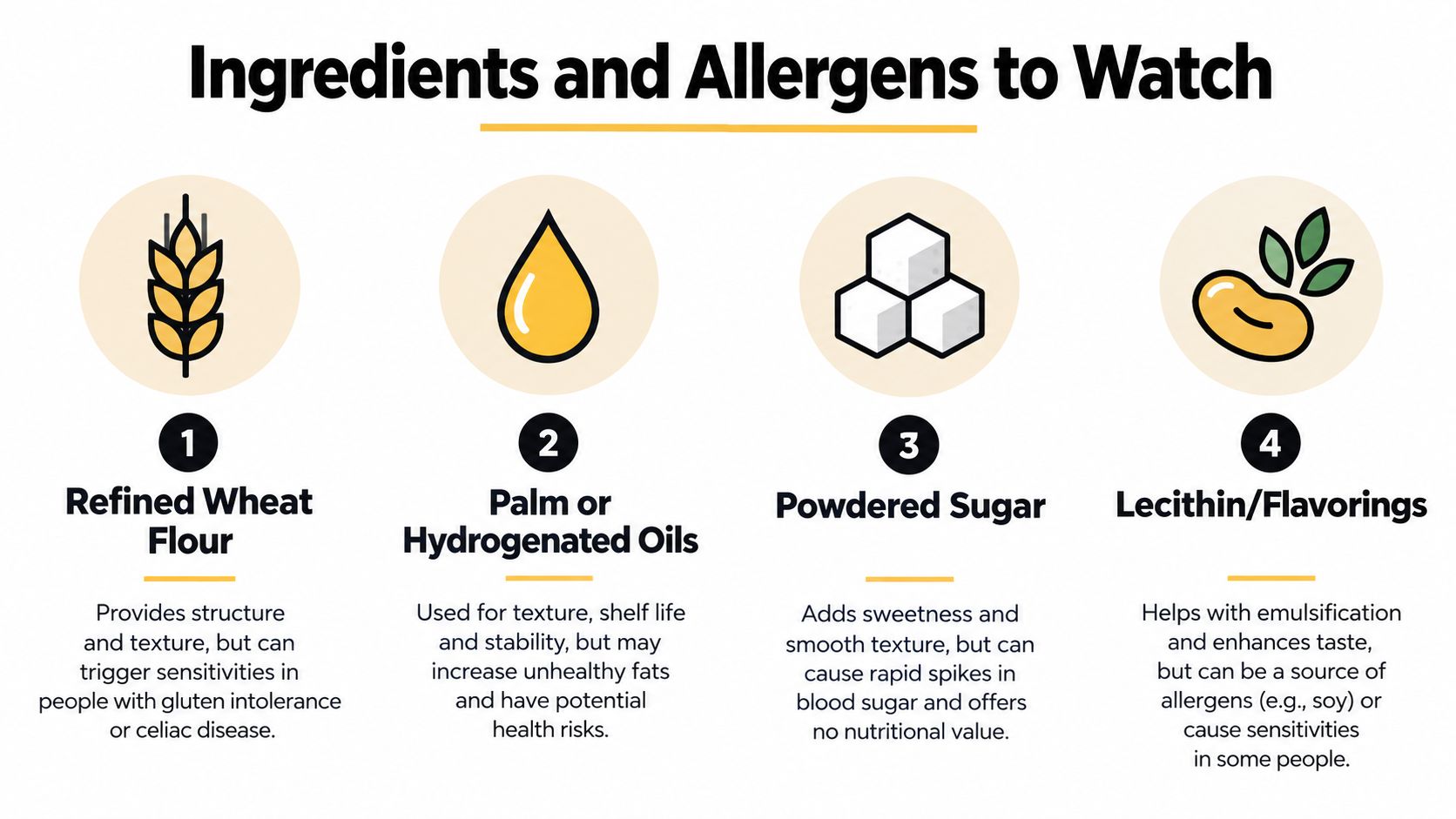
The major allergen check comes next. Wheat, milk, soy, eggs, and tree nuts can appear in the recipe or enter through shared equipment. A cream filling doesn't automatically mean the product contains dairy, and a chocolate flavor doesn't tell you whether soy lecithin or milk ingredients are present.
Parents buying for a child should read the allergen statement every time, even if the product looks familiar. People avoiding gluten can also use this guide to gluten-free wafer cookies as a starting point, then verify the specific package and facility statement before eating.
Artificial colors, artificial flavors, and high-fructose corn syrup may appear farther down the list, where shoppers often stop reading. They aren't the only factors that determine quality, but a short, recognizable ingredient list makes comparison easier.
Sugar, Fiber, and Calories Compared
The most useful comparison isn't “regular cookie versus healthy cookie.” It's serving size versus sugar versus fiber. One mainstream cream wafer listing provides 14 grams of sugar, 1 gram of fiber, and 22 grams of carbohydrates per four-wafer serving, according to the Nabisco Nilla Wafer product listing. Another basic wafer listing uses an eight-wafer serving and reports 10 grams of added sugar and 140 calories, showing why calorie counts can look deceptively reassuring when serving sizes differ.
The comparison below uses only the verified examples available here. It doesn't treat the products as identical, because they aren't. The point is to expose the questions a label must answer.
Mainstream vs. Lower-Sugar Wafer Cookies Compared
| Wafer Type | Serving Size | Calories | Added Sugar (g) | Fiber (g) | Net Carbs (g) |
|---|---|---|---|---|---|
| Mainstream cream wafer example | 4 wafers, 32 g | Not provided | Not separately provided, 14 g total sugar | 1 | Not provided |
| Basic wafer example | 8 wafers | 140 | 10 | Not provided | Not provided |
| Lower-sugar wafer or wafel | Check package | Check package | Check package | Check package | Calculate from the label |
The table exposes a common trap. A package can advertise a modest calorie count while offering little fiber and a serving that doesn't resemble your normal portion. Conversely, a product with a thicker or more substantial bite may feel more satisfying even if the package contains fewer individual pieces.
For everyday snacking, compare sugar and fiber first, then use calories as context. Fiber won't erase the sugar in a wafer, but a product with more fiber may fit a more satisfying snack pattern than one built almost entirely from refined flour and sweetener.
Don't calculate “net carbs” unless the label gives total carbohydrate and fiber clearly. If either figure is missing, the responsible answer is not to guess. It's to choose another product or treat the wafer as an occasional dessert rather than a routine snack.
How to Read a Wafer Label Like a Pro
Start at the back, not the front. Words such as “reduced sugar,” “natural,” or “better-for-you” are marketing prompts, not a complete nutrition assessment.
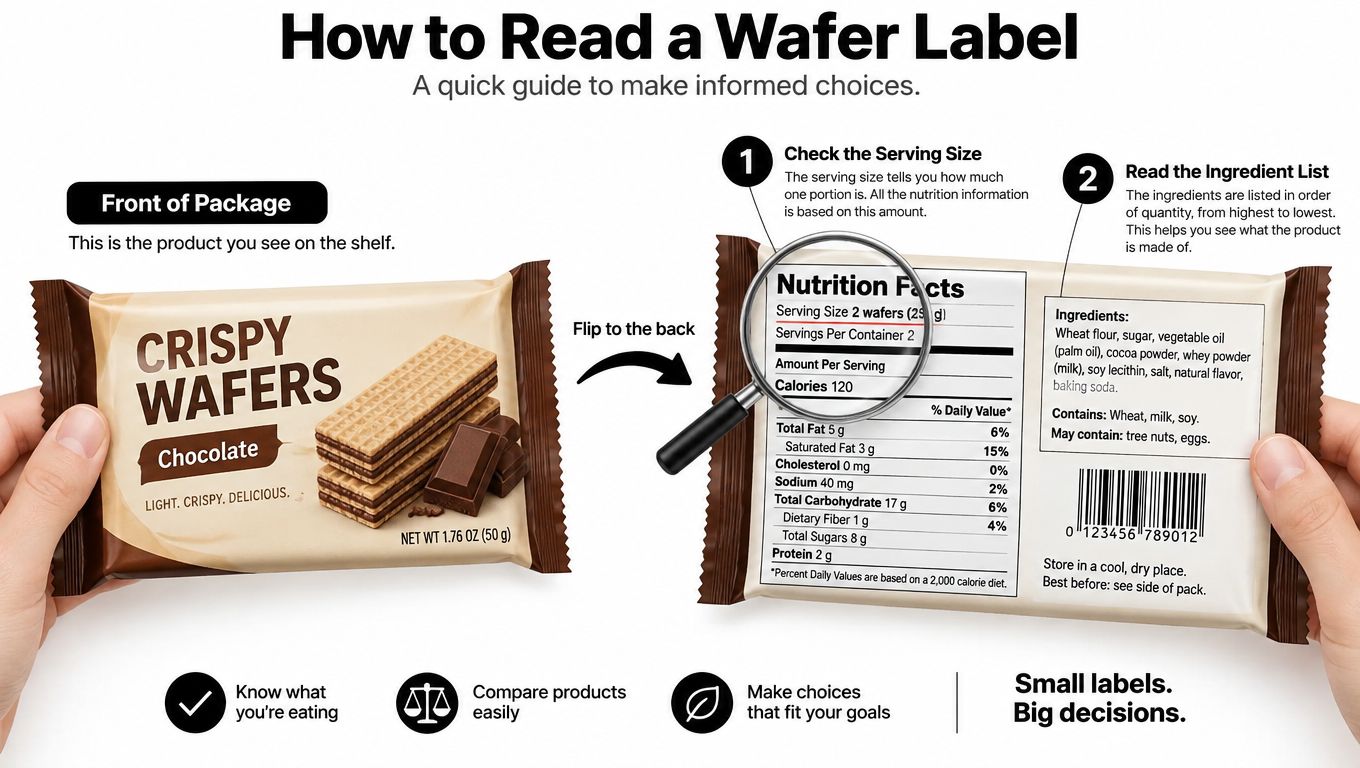
Use this five-part check
- Find the serving size. Count the pieces and compare them with the portion you expect to eat. If the label lists two wafers but you usually eat four, double the relevant nutrition values before deciding.
- Read added sugar. For a routine snack, I'd favor products at or below 6 grams of added sugar per serving. That is a practical filter, not a universal medical rule. If the serving is unusually small, apply the same skepticism you would to any other front-of-pack claim.
- Look for fiber. A product with 2 grams or more of fiber per serving has a better starting point for satiety than one with almost none. Fiber alone doesn't make a wafer nutritious, but it helps distinguish a more balanced formulation from a sugar-forward one.
- Read the first ingredients. Refined flour and sugar are common, but compare the fat source, fiber ingredients, and flavoring choices. Hydrogenated oils, artificial colors, or a long list of sweeteners may push a product down my shopping list.
- Confirm allergens. Check wheat, milk, soy, eggs, and tree nuts, including shared-facility warnings. For a broader compliance perspective, restaurant operators can consult this practical guide for restaurants on allergen laws, while shoppers should still rely on the package's current allergen statement.
My decision rule: choose the wafer that passes the serving-size check, stays within your sugar target, reaches your fiber target, and has an ingredient list you're comfortable eating.
For a deeper explanation of serving sizes, daily values, and ingredient order, this nutrition-label reading guide is a useful companion. The key is consistency. Use the same checks on every brand, and slogans lose much of their power.
Storage Tricks That Keep the Crunch
A cream-filled wafer usually goes soft for one reason: moisture moves where you don't want it. The wafer shell is dry and hygroscopic, while the filling contains ingredients that can release moisture. Once the package opens, humid air adds another route for water to reach the crisp layers.
Make the package harder for humidity to enter
Squeeze excess air from a partially opened bag before clipping it. Better still, move the wafers into a genuinely airtight glass or rigid plastic container, especially if the original wrapper doesn't reseal tightly. A small food-safe desiccant packet can help inside a sealed package, but it must remain intact and must never be eaten.
Keep the container in a cool, dry pantry away from the stove, dishwasher, sink, and direct sunlight. The refrigerator is usually a poor choice for ordinary wafers. Cold storage can expose the cookies to humid air during temperature changes and may encourage sugar bloom on the cream, leaving the surface dull or grainy.
Technical guidance places crispness near a moisture boundary of roughly 5% to 6%, with the practical limit around 0.5 to 0.55 water activity, as described in the INFLIBNET wafer technology reference. You don't need a moisture meter at home. You do need a tight seal and a dry storage spot.
For the best texture, buy packages you can finish promptly after opening. If the wafer already feels soft, don't assume refrigeration will restore the snap. Moisture control before the problem starts works far better than trying to reverse it later.
Smarter Wafer Picks Worth Trying
The better-for-you wafer category makes sense for one clear reason: it changes the tradeoff instead of pretending the treat isn't a treat. A product with lower sugar, meaningful fiber, recognizable fats, and a reasonable portion can satisfy a cream-cookie craving without making every snack feel like a sugar-heavy dessert.
I look for four attributes:
- Lower sugar per serving: The label should support your everyday snack target, not just advertise a vague reduction.
- Useful fiber: Fiber should appear clearly in the Nutrition Facts panel, not only in a marketing badge.
- Straightforward fats: Plant-based fats can work well in a wafer filling, but the ingredient list should make the source clear.
- A portion that feels complete: A thicker wafer or wafel can provide a more substantial bite than a stack of very thin pieces.
Rip Van offers Dutch-style wafels, crispy wafers, wafer bars, and other cookie formats built around lower-sugar positioning, fiber, and portable portions. Its product range includes cream-filled wafer options such as Cookies & Cream, Raspberry & Dark Chocolate, and Chocolate Hazelnut, alongside wafels with a thicker bite. Those formats are worth evaluating by the same label rules used for every other brand, rather than accepting the package claims on faith.
The distinction between a wafer and a wafel matters. Traditional wafer cookies are thin and delicate, while a wafel generally feels denser and more substantial. That doesn't automatically make one healthier, but the thicker format may be easier to portion because one piece can feel like a complete snack.
Use this overview of wafer cookie brands to understand the available formats, then verify the current nutrition panel before buying. Recipes and packaging can change.
The goal isn't to turn cream wafers into health food. It's to choose a version that delivers crisp texture and creamy flavor while fitting the way you eat.
Choosing the Right Wafer for Your Routine
Your best wafer depends on the job you want it to do. A coffee treat, a child's lunchbox snack, and a low-sugar desk snack shouldn't all use the same buying rule.
If sugar control comes first
Start with the Nutrition Facts panel and look for a serving that stays at or below your chosen sugar ceiling. The practical filter used earlier, 6 grams of added sugar or less per serving, is a sensible everyday target. Check that the serving isn't so small that you'll immediately eat two or three of them.
Pair the wafer with coffee, plain yogurt, or fruit if you want the snack to feel more complete. The pairing won't change the wafer's label, but it can keep the snack from becoming an unplanned trip back to the pantry.
If fiber and staying power matter
Choose a product that reaches 2 grams or more of fiber per serving, then look at the total carbohydrate line and portion size. Higher fiber can make a wafer more useful in a busy afternoon routine, but it doesn't override personal medical needs or a prescribed eating plan.
For keto or low-carb eating, don't rely on the word “wafer.” Verify total carbohydrate, fiber, sweeteners, and serving size on the exact product. If the label doesn't provide enough information to calculate a meaningful comparison, skip it.
If children will eat it
Prioritize clear allergen labeling, a manageable portion, and a flavor your child will finish. Avoid using “natural” or “better-for-you” as a substitute for reading the sugar and ingredient lines. A small pack can be more useful than a large bag because it creates a visible stopping point.
For office kitchens and vending programs, portability and portioning matter just as much as flavor. This practical roundup of best workplace snacks for vending can help buyers think through shelf-stable choices, while the wafer label still determines whether a particular product fits the workplace's nutrition goals.
If you simply want indulgence
Buy the wafer you genuinely enjoy, serve a deliberate portion, and protect its crunch with airtight storage. A lower-sugar option can fit this role too, but it shouldn't need to imitate a plain cracker. The smartest choice is the one that meets your personal sugar, fiber, allergen, and flavor requirements without turning a treat into a source of regret.
Rip Van offers crispy cream-filled wafers, Dutch-style wafels, and other portable treats designed around lower sugar and higher fiber than many conventional snack options. Use the label detective approach from this guide, then visit Rip Van to compare the current formats and choose the one that fits your routine.
0 comments