

Good news for pistachio lovers—plain, unadulterated pistachios are 100% gluten-free. In their natural state, fresh off the tree, they don't contain a speck of gluten. A raw pistachio is a whole food, just like a strawberry or an almond.
So, if the nut itself is safe, where does the problem come from? It all comes down to the journey a pistachio takes from the orchard to your kitchen.
The Simple Answer (With a Catch)
Pistachios are tree nuts, which means they have no biological relationship to gluten-containing grains like wheat, barley, or rye. This inherent quality is a big reason they've become such a popular snack worldwide.
In fact, the "gluten-free" claim has become a major selling point for nut products everywhere. It's a key driver in the global market, a trend you can see in the overseas use of pistachios and almonds.
The catch? That safe, gluten-free nut can come into contact with gluten after it's harvested. This is where cross-contamination during processing, flavoring, and packaging becomes the real concern for anyone with celiac disease or gluten sensitivity.
Pistachio Gluten Risk at a Glance
To make it easier to see where the risks lie, this table breaks down the most common types of pistachios you'll find at the store.
| Pistachio Type | Natural State | Potential Gluten Risk |
|---|---|---|
| Raw, In-Shell Pistachios | Naturally Gluten-Free | Low (Risk mainly from shared bulk bins) |
| Roasted & Salted Pistachios | Naturally Gluten-Free | Medium (Risk from shared roasting equipment) |
| Flavored & Coated Pistachios | Depends on Ingredients | High (Risk from coatings, seasonings, and binders) |
| Pistachio-Based Products | Depends on Ingredients | High (Flour, butters, and mixes can have added gluten) |
As you can see, the more processed a pistachio product is, the higher the chance for gluten to sneak in. Keeping this simple fact in mind is the key to safely enjoying these delicious nuts.
Why Plain Pistachios Are Naturally Gluten-Free
Let's get right to the heart of it. To figure out if pistachios are safe, you first need to know what gluten actually is. It's not some strange chemical; gluten is simply a type of protein found in grains like wheat, barley, and rye. It’s the stuff that gives bread its springy, chewy texture.
Pistachios, of course, are tree nuts. They grow on trees and are completely unrelated to those gluten-containing grains. Just like an apple or an avocado, a pistachio in its natural state is a whole food that simply doesn't contain gluten.
So, when someone asks, "are pistachios gluten free?" the answer for the plain, unadulterated nut is a resounding yes. The nut itself is never the problem.
More Than Just Safe—They're a Nutritional Powerhouse
The great thing about pistachios is that they aren’t just a "safe" snack; they're an incredibly healthy one. They're packed with an impressive combination of healthy fats, plant-based protein, and fiber.
That mix of healthy fat, protein, and fiber is the secret to why pistachios are so satisfying. It helps keep your blood sugar stable and makes you feel full longer, which is a huge advantage for warding off cravings for less healthy snacks.
This powerful nutritional profile makes them a perfect fit for several popular eating styles:
- Gluten-Free: They are inherently free from gluten, making them a worry-free choice.
- Low-Sugar: With very little natural sugar, they're great for anyone keeping an eye on their sugar intake.
- Keto-Friendly: Their high-fat, moderate-protein, and low-carb stats make them an ideal snack for a ketogenic diet.
When you stick to the simple, unprocessed nut, you're getting a snack that's not only safe but also exceptionally good for you.
How Cross-Contamination Can Introduce Gluten
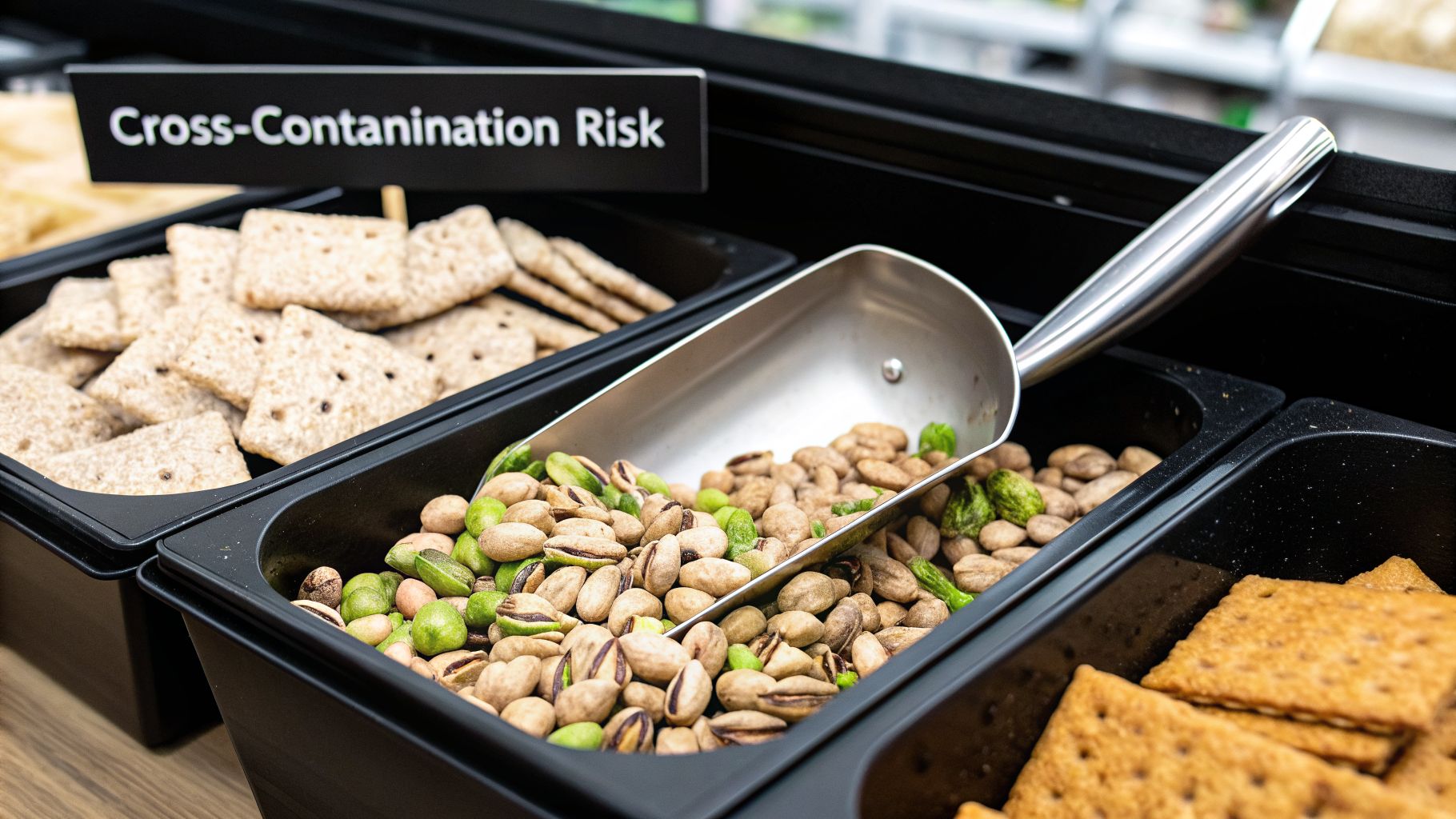
So, while a plain pistachio is naturally gluten-free, that’s not the whole story. A pistachio can be perfectly safe when it leaves the tree but pick up gluten before it ever gets to your kitchen. The culprit is cross-contamination, a sneaky process where trace amounts of gluten from other foods get transferred.
Think of it this way: you wouldn't use the same cutting board for bread and then for gluten-free vegetables without washing it. Cross-contamination in a food facility is the same idea, just on a massive scale.
For someone with celiac disease or a high gluten sensitivity, even a microscopic amount of gluten can be enough to cause a reaction. That’s why it’s so important to understand where the risks are hidden.
Where Gluten Hides in the Process
The problem isn't the nut itself, but what it comes into contact with. Gluten can find its way onto pistachios at almost any point, from processing and roasting to packaging. It usually comes down to shared equipment and shared spaces.
Many facilities are processing all sorts of snacks on the same machinery. Your bag of pistachios might have been roasted or packaged on equipment that was just used for:
- Pretzels or crackers made with wheat
- Snack mixes dusted with flour
- Cereals flavored with barley malt
Even if the lines are cleaned between runs, removing every last particle of gluten is incredibly difficult without following strict, certified gluten-free protocols.
Cross-contamination is really a game of chance. The more a gluten-free food is exposed to items with gluten, the higher the risk of an unsafe transfer. This is why being vigilant is a non-negotiable for anyone who needs to avoid gluten.
This is becoming a bigger deal as more people go gluten-free. With over 30 million Americans having some level of gluten sensitivity, the demand for safe snacks like pistachios is booming. You can see how market trends are impacting the pistachio industry, which makes strict processing standards more critical than ever.
Another huge risk? The bulk bin section at the grocery store. They might look like a great deal, but they are a minefield for cross-contamination. All it takes is for one person to use the scoop from the granola bin to get some pistachios, and suddenly the whole bin is compromised.
Reading Labels on Flavored and Coated Pistachios
While plain, unadorned pistachios are a safe bet, things get tricky once flavorings and coatings enter the picture. This is where you have to put on your detective hat, because seasonings are one of the most common places for gluten to hide in plain sight.
Think of it this way: a plain pistachio is a naturally gluten-free starting point. But the moment a company adds a crunchy coating or a savory spice blend, you have to investigate what’s in that "paint." The ingredient list on the back of the package is your best friend here.
Decoding the Ingredient List
Some gluten-containing additives are pretty obvious, but others can be sneaky. You might see a "trail mix" with wasabi peas, which almost always use wheat flour in their crispy shell. Other times, the gluten is a hidden component of the seasoning itself. If you're new to this, getting a handle on the basics can feel overwhelming, but our guide on how to read nutrition labels is a great place to start.
When you're checking out flavored pistachios, keep an eye out for these common gluten-containing ingredients:
- Malt Flavoring or Malt Extract: This is a big one. It's almost always made from barley, which is a primary gluten grain.
- Soy Sauce: Traditional soy sauce is brewed with wheat. If the package doesn't specifically mention "tamari" or "gluten-free soy sauce," it's best to be cautious.
- Modified Food Starch: This is a vague term. Unless the source is clearly listed (like corn, potato, or tapioca), it could potentially be derived from wheat.
- Brewer's Yeast: As a byproduct of making beer, this yeast contains gluten from the barley used in the brewing process.
- Flour or Binders: Sometimes, a little wheat flour is used to make seasonings stick to the nuts or to create a thicker, crunchier coating.
Beyond the ingredients themselves, always scan for allergen warnings. Phrases like “May contain wheat” or “Processed in a facility that also handles wheat” are critical alerts. This doesn't mean wheat is an ingredient, but it flags a high risk of cross-contamination. For anyone with celiac disease or a serious sensitivity, this warning is just as important as the ingredient list itself.
How to Confidently Purchase Gluten-Free Pistachios
Alright, you understand the risks. Now, let's turn that knowledge into action so you can enjoy pistachios without a second thought. When you’re standing in the snack aisle, your best friend is the "Certified Gluten-Free" seal.
This little symbol, often from a third-party group like the Gluten-Free Certification Organization (GFCO), is more than just marketing. It’s a guarantee. It means the product, and the facility it was made in, have gone through rigorous testing to be safe for those with celiac disease or serious gluten sensitivities.
A simple "gluten-free" claim on the bag is a decent starting point, but it doesn't carry the same weight. Certification means an independent auditor has scrutinized the entire supply chain—from the farm to the final package—to stamp out any chance of cross-contamination.
This flowchart breaks down the simple decision-making process for checking pistachio labels.
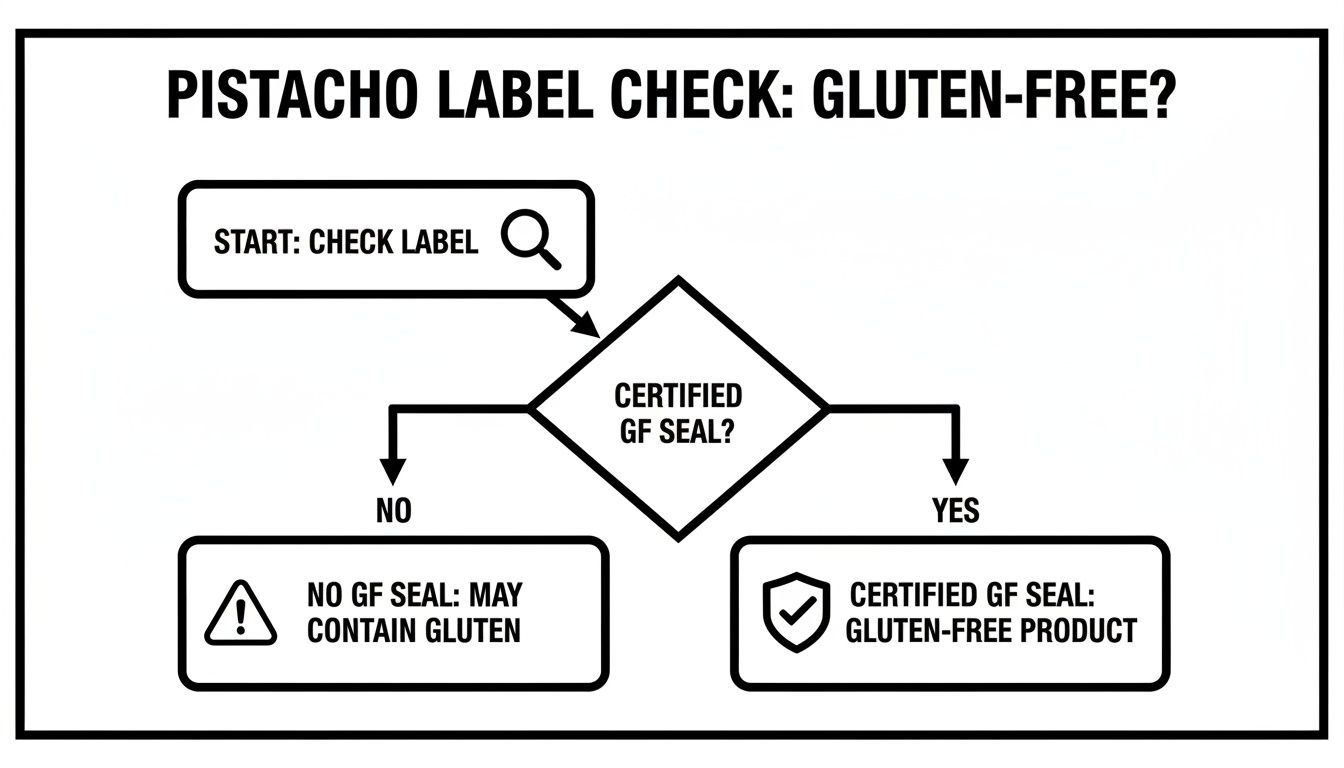
The takeaway is simple: a certified seal is your most reliable signal. If it's not there, you just need to be a bit more of a detective.
Smart Shopping Strategies
To bring your risk down to virtually zero, a few smart habits go a long way. Always opt for pistachios in sealed bags instead of the open bulk bins. Those bins are a notorious hotspot for cross-contamination from scoops and airborne flour dust. It's also wise to stick with brands known for their allergen-aware practices.
For extra reassurance, take a minute to check a company's website. Many will detail their food safety protocols, which can tell you a lot about how seriously they take this stuff.
With the global pistachio market expected to hit USD 8.3 billion by 2033, driven partly by the demand for gluten-free options, more brands are investing in certified supply chains to earn consumer trust. You can read more about these market dynamics and quality controls if you're curious.
By using these strategies, you can easily find pistachios that are both safe and delicious. And if you’re on the hunt for more vetted options, take a look at our guide to the best gluten-free snacks for other great ideas.
Pistachios in Keto and Low-Sugar Diets
So, we know pistachios are a safe bet if you're avoiding gluten, but their benefits don't stop there. They also happen to be a fantastic fit for anyone on a ketogenic or low-sugar diet. It’s pretty amazing how one simple nut can tick so many boxes for modern, health-conscious eating.
What makes them so great for these diets comes down to their low net carbohydrate count. Since net carbs are what your body actually processes for energy, keeping them low is key. For more ideas on what to munch on, you can check out our list of the best keto snacks to buy.
Pistachios are loaded with healthy monounsaturated fats and a good amount of fiber. This one-two punch is exactly what you need to help maintain ketosis, keep your blood sugar from spiking, and—most importantly—feel full and satisfied.
This blend of healthy fats, fiber, and low net carbs makes the pistachio a powerhouse snack. They’re the kind of treat that actually satisfies a craving without knocking you off track, whether your main concern is gluten or simply finding a delicious, low-sugar option. It just goes to show you don't have to trade flavor for healthy eating.
Common Questions About Pistachios and Gluten
Alright, let's tackle a few final questions that come up all the time. Getting these details right is key to enjoying pistachios safely, especially if you're particularly sensitive to gluten.
Is Pistachio Flour Gluten-Free?
In theory, yes. Pure pistachio flour made from 100% ground pistachios is naturally free of gluten and makes for a fantastic alternative in baking.
The problem is, flour is incredibly fine and goes everywhere. This makes cross-contamination a huge risk in any facility that also handles wheat. To be safe, you should only buy pistachio flour that has a clear "Certified Gluten-Free" seal on the package.
Can I Eat Pistachios if I Have Celiac Disease?
If you have celiac disease, the only way to eat pistachios without worry is to stick to brands that are explicitly "Certified Gluten-Free."
While the nuts themselves don't contain gluten, the potential for cross-contamination from processing and packaging on shared equipment is just too high to risk. It’s a classic "better safe than sorry" situation.
Your best defense is always a certified seal. It transforms the question from "are pistachios gluten free?" to "is this brand of pistachios gluten free?"—a much more important distinction for those with serious medical needs.
Does Roasting Pistachios Add Gluten?
The roasting process itself doesn't introduce gluten. The danger lies in where the roasting happens. Many large-scale facilities use the same industrial roasters for all sorts of snacks, including things like flour-dusted pretzels or seasoned mixes that contain wheat.
To sidestep this hidden risk, always reach for roasted pistachios that carry a certified gluten-free label.
For delicious, worry-free snacks that fit your health-conscious lifestyle, explore the amazing options at Rip Van. From low-sugar wafers to keto-friendly cookies, you can find the perfect treat to satisfy your cravings at https://ripvan.com.
0 comments