

Let's be real—finding the best gluten free cookies can feel like searching for a unicorn. We've all been there, grabbing a promising-looking package only to be met with a dry, gritty texture or a cookie so sugary it makes your teeth ache. It's a frustrating cycle.
This guide is here to end that disappointment for good.
Your Search for the Best Gluten Free Cookies Ends Here
The gluten-free aisle is littered with letdowns. Too often, you bite into a cookie expecting a delicious treat, and instead, it crumbles into a sad pile of dust or leaves a weird, chalky aftertaste. But it absolutely doesn't have to be this way.
Think of this guide as your new roadmap. We’re going to move past the sad, crumbly options and show you that a truly great gluten-free cookie isn’t defined by what’s missing, but by the quality of the ingredients that are thoughtfully put in its place. The secret isn't just removing gluten; it's about building a better, more satisfying cookie from the ground up with high-fiber, low-sugar ingredients.
Why the Gluten Free Market Is Exploding
If you’re on this quest, you're in good company. The demand for better-for-you, gluten-free options has completely reshaped the food industry.
The global market for gluten-free baked goods skyrocketed to $1.94 billion and is on track to hit a massive $4.57 billion by 2032. That’s an expansion of 11.32% every year, driven by people just like you who want snacks that are both indulgent and guilt-free. In fact, cookies make up a huge 38.13% of all gluten-free product revenue.
This boom means we have more choices than ever before, but it also creates a lot of noise. This guide is designed to help you cut right through it.
A superior gluten-free cookie doesn't just try to imitate a traditional recipe without wheat. It re-engineers the entire experience, using smart ingredients to create incredible flavor and texture from a completely new foundation.
What You Will Learn in This Guide
To help you find those truly exceptional cookies, we've put together this quick-reference table. It breaks down the key things to look for on any package.
Quick Guide to Identifying the Best Gluten Free Cookies
| Attribute | What to Look For | Why It Matters |
|---|---|---|
| Ingredient Quality | Whole-food flours like oat, almond, or chickpea flour. Avoid overly processed starches. | Higher-quality flours provide better flavor, texture, and nutritional value, avoiding the "cardboard" taste. |
| Sugar & Fiber | Less than 5g of sugar and at least 3g of fiber per serving. | This balance helps stabilize blood sugar, keeps you full longer, and avoids the dreaded sugar crash. |
| Allergen Info | Clear "Certified Gluten-Free" labels and mentions of dedicated facilities. | This ensures the product is safe for those with celiac disease or high sensitivity by minimizing cross-contamination risk. |
| Texture & Taste | Ingredients like chicory root fiber, which adds a soft, chewy texture without excess sugar. | The right ingredients create a satisfying mouthfeel—chewy, crispy, or soft—not dry or gritty. |
This table is your cheat sheet, but we're about to go much deeper. This guide is more than just a product list; it’s an educational journey to make you a gluten-free cookie expert.
You’ll learn how to:
- Decode ingredient lists to spot premium flours and binders from cheap fillers.
- Identify hidden sugars and understand why fiber is your best friend.
- Navigate allergen risks by understanding what certification labels really mean.
- Discover amazing options that deliver on both incredible taste and solid nutrition.
By the time you're done, you'll feel completely confident picking out snacks that satisfy your cravings without derailing your wellness goals. To get started, you can explore our collection of thoughtfully crafted gluten-free cookies.
What Really Makes a Gluten-Free Cookie Great?
Let's be honest: a truly fantastic gluten-free cookie is a rare find. It's so much more than a standard recipe with the wheat flour swapped out. Just pulling out the gluten is a surefire way to end up with a sad, crumbly hockey puck. The best ones are built completely differently, right from the ground up, with a single goal in mind: creating an amazing cookie, full stop.
Think of it like building a house. You can't just knock out a load-bearing wall and hope the roof stays up. You need to engineer a new support system. In baking, gluten is that wall—it provides structure, chew, and elasticity. To make a great gluten-free cookie, you have to intelligently rebuild that foundation using a smart blend of other ingredients.
The most important part of this new foundation? The flour blend. A single gluten-free flour just won't cut it. The real magic happens when bakers combine different flours to mimic what wheat does naturally, creating something that's both delicious and holds together beautifully.
The Foundation: The Gluten-Free Flour Blend
Every flour brings something unique to the party, and getting the combination right is what separates a forgettable cookie from an unforgettable one. It's a bit of a science, really, with each flour playing a specific role to nail that perfect balance of flavor, moisture, and structure.
Here are a few of the all-stars you'll often see on an ingredient list:
- Almond Flour: Made from finely ground almonds, this is a powerhouse for creating a moist, tender crumb and a rich, almost buttery flavor. It's the secret to a soft, chewy texture.
- Coconut Flour: This one is super absorbent and packed with fiber. It adds a hint of natural sweetness and a denser, almost cake-like quality. You don't need much of it, but it does wonders for keeping cookies soft.
- Oat Flour: With its comforting, slightly sweet taste, oat flour gives cookies that classic, satisfying chew you'd find in a traditional oatmeal cookie. Plus, it adds a nice dose of wholesome fiber.
By mixing and matching these, a skilled baker can dial in the exact texture they're aiming for. A blend might use almond flour for moisture, oat flour for chew, and maybe a little tapioca starch to get those perfectly crisp edges. This careful formulation is the true secret behind the best gluten-free cookies on the shelf.
The Unsung Heroes: Binders and Gums
So, with gluten out of the equation, what actually holds the cookie together? This is where binders come in. They’re the invisible glue that provides the elasticity and structure that gluten normally handles, preventing your cookie from dissolving into a pile of crumbs.
Without a good binder, a gluten-free cookie would be missing that essential "chew"—the very thing that makes a cookie so satisfying. It's the ingredient that turns a pile of flours into a cohesive, delicious treat.
The most common binder you'll run into is xanthan gum. It’s a plant-based thickener that works wonders. Just a tiny pinch provides the stretch needed to bind ingredients, trap air for a better rise, and create that classic chewy bite we all crave. You might also see other binders like guar gum or psyllium husk, which has the added benefit of a major fiber boost.
Beyond the Basics: Quality Is Everything
Once the structure is solid, the quality of the other ingredients is what takes a cookie from good to truly exceptional. This is where you can really see a brand's commitment. It’s about moving beyond just a functional recipe to using premium components.
Think about the difference these choices make:
- Non-GMO Ingredients: Starting with ingredients that haven't been genetically modified means you're getting a more natural product. It's a choice that resonates with anyone trying to eat cleaner.
- Natural Flavors: Using real vanilla extract, pure cocoa, or actual fruit essences instead of artificial lab-made flavors makes a world of difference. The taste is cleaner, more authentic, and has no weird chemical aftertaste.
- Smarter Sweeteners: The type of sweetener used has a huge impact. Reaching for natural options like chicory root fiber not only adds sweetness but also bumps up the fiber content, improving the cookie's entire nutritional profile.
At the end of the day, the best gluten-free cookies are a perfect blend of science and art. They demand a deep understanding of how these alternative ingredients work together to rebuild what was lost. When a brand nails this formula, the result isn't just "good for gluten-free"—it's a genuinely fantastic cookie, period.
How to Read Nutrition Labels Like a Pro
The front of a cookie package is prime real estate, designed to grab your attention with flashy claims like "all-natural" or "wholesome." While those phrases sound nice, the real story is always on the back. Learning to scan the nutrition facts and ingredient list is your superpower—it lets you see right past the marketing fluff and choose what’s genuinely best for you.
Think of the nutrition label as the cookie's honest autobiography. It can’t hide anything. This is where you shift from just trusting a brand's promises to actually verifying them, making sure the treat you pick truly fits your lifestyle.
This diagram nails down the three things that separate a fantastic gluten-free cookie from a forgettable one.
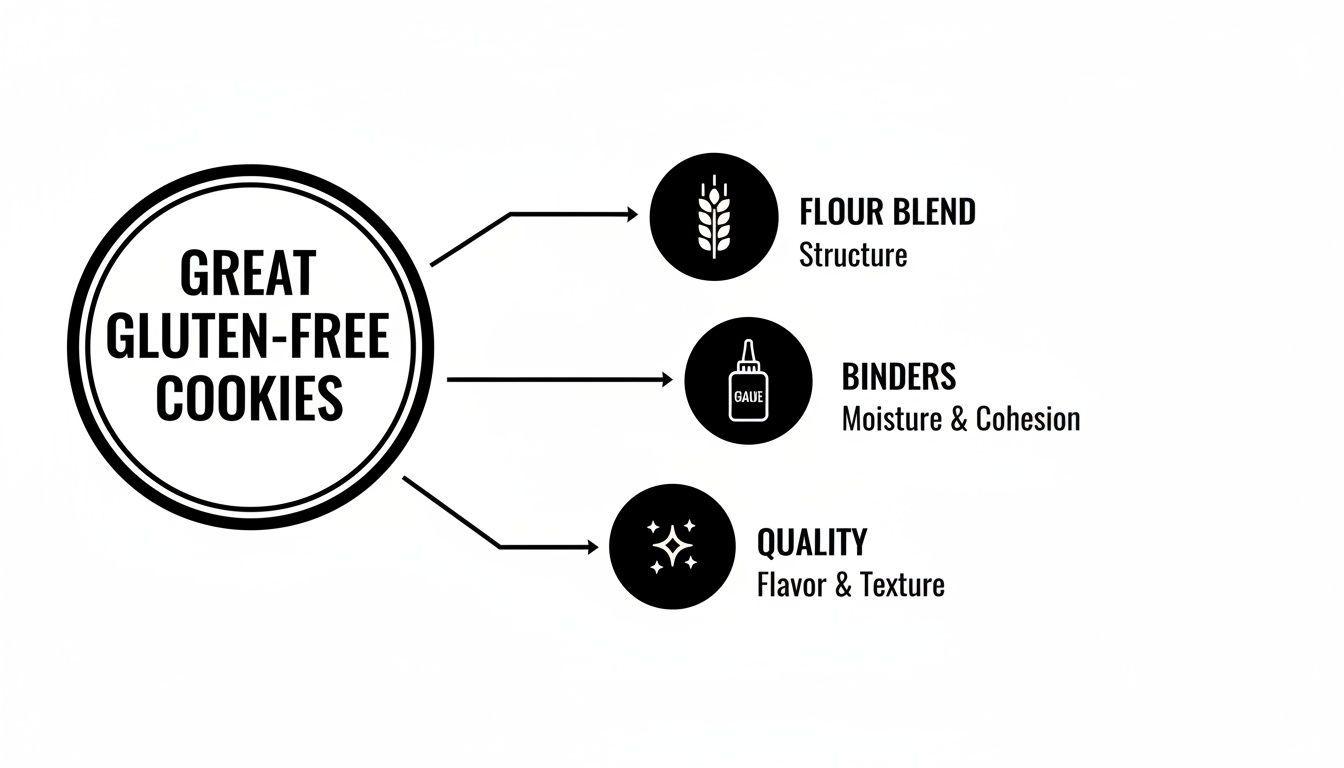
As you can see, it all comes down to a smart flour blend, the right binders to hold it all together, and top-notch ingredients.
Master the Macros: Sugar and Fiber
The very first place your eyes should land is on the sugar and fiber content. These two numbers tell you almost everything about how that cookie will impact your energy levels. A high sugar count often leads to that all-too-familiar spike-and-crash, while fiber slows everything down, giving you steady energy and helping you feel satisfied longer.
A good rule of thumb is to look for cookies with less than 5 grams of sugar and at least 3 grams of fiber per serving. This simple ratio is the sweet spot for a treat that feels like an indulgence without the guilt.
This demand for healthier options is reshaping the entire market. The gluten-free industry is projected to grow from $7.75 billion to a staggering $13.67 billion by 2030, and cookies are a huge part of that. Consumers want treats that are better for them, which is why clear labeling for low sugar and high fiber is more important than ever.
The Ingredient List Never Lies
Once you’ve glanced at the macros, your next stop is the ingredient list. Honestly, this is the most revealing part of the whole package. Ingredients are listed by weight, so whatever you see first is what you're getting the most of.
Here’s a quick cheat sheet for what to look for and what to run from:
- Short & Simple Wins: A short list of ingredients you can actually recognize is almost always a good sign. If it reads like a chemistry textbook, you might want to put it back on the shelf.
- Spot Hidden Sugars: Sugar goes by a lot of aliases. Keep an eye out for words like corn syrup, dextrose, fructose, maltodextrin, and cane juice. The higher up they are on that list, the more sugar is packed inside.
- Look for Quality Sweeteners: Better-for-you sweeteners like monk fruit, allulose, or chicory root fiber are great finds. They deliver sweetness without the baggage that comes with artificial options like aspartame or sucralose.
Paying attention to these little details makes it so much easier to find snacks that are both delicious and genuinely good for you. If you’re looking for more ideas, you can also check out our guide on the best gluten-free snacks.
When you become a label detective, you're back in control. You’ll be able to confidently sidestep the sugary, low-quality imposters and pick cookies that not only taste amazing but make you feel great, too. It’s a simple skill that pays off with every single delicious bite.
Navigating Allergens and Cross Contamination Risks
If you have celiac disease or a serious gluten sensitivity, you know that finding a safe cookie is about more than just checking for wheat flour. You have to become a bit of a food detective, hunting for hidden allergens and understanding the very real risk of cross-contamination.
Think of it like this: imagine a baker makes a batch of regular wheat-flour cookies, and then, without thoroughly cleaning the equipment, they make a "gluten-free" batch. Tiny, invisible particles of wheat flour can easily mix into the new dough. For someone highly sensitive, that’s enough to cause a reaction.
This is why a product made in a shared facility can be a gamble, even if the ingredients themselves are gluten-free.
Certified Gluten Free vs. Gluten-Free Claims
This brings us to a crucial distinction you'll see on packaging: the difference between a simple "gluten-free" claim and a "Certified Gluten-Free" seal. They sound almost the same, but they offer vastly different levels of assurance.
-
Gluten-Free Claim: This is basically the manufacturer saying, "We've made this product to the FDA's standard of less than 20 parts per million (ppm) of gluten." It's a good start, but it doesn't verify their manufacturing process is audited for cross-contamination.
-
Certified Gluten-Free Seal: This seal comes from an independent, third-party group like the Gluten-Free Certification Organization (GFCO). It means the product not only meets the under 20 ppm standard (and often a stricter 10 ppm one), but also that the facility has undergone rigorous audits to prove they prevent cross-contamination.
For someone with celiac disease, that Certified Gluten-Free seal is the gold standard. It’s peace of mind in a logo, showing the company has gone the extra mile to make their product truly safe.
Identifying Other Common Allergens
Gluten often doesn't travel alone. Many gluten-free products still contain other major allergens, so your detective work isn't quite done.
When you're looking at a package, your eyes should immediately go to the "Contains" statement, usually found in bold right below the ingredient list. This is where companies are required to list any of the most common allergens present, such as:
- Tree nuts (like almonds or pecans)
- Peanuts
- Soy
- Dairy (milk)
- Eggs
A cookie can be 100% gluten-free but made with almond flour, making it off-limits for someone with a nut allergy. It's also just as important to understand how to prevent cross-contamination in your kitchen at home.
Taking a few extra seconds to read the fine print empowers you to shop with confidence. It helps you find brands that are transparent and committed to safety, ensuring every cookie you enjoy is a delicious, worry-free treat.
So, Who Gets It Right? A Look at Rip Van's Approach
It’s one thing to know what makes a good gluten-free cookie in theory. It’s another thing entirely to find a brand that actually delivers on that promise every single time. That’s where Rip Van comes in. They've managed to turn the often frustrating hunt for a decent gluten-free snack into a simple, satisfying choice.
Instead of just taking gluten out, they’ve re-imagined the cookie from the ground up to be smarter, healthier, and genuinely delicious. Their LEOS and Romeos are a perfect example of this philosophy in action—they hit that sweet spot of flavor, texture, and nutrition we've been talking about. No grittiness, no sugar overload. Just a thoughtfully made treat.
And they’re tapping into a huge need. The market for gluten-free digestive cookies is projected to hit $1,200 million by 2025. This isn't just a niche trend; it's a response to a growing awareness of conditions like celiac disease, which affects roughly 1 in 100 people in North America. Health-conscious shoppers are looking for better options, and you can see the data on these gluten-free market trends for yourself.
Smart Nutrition by Design
At the core of Rip Van’s success is a simple, yet brilliant, nutritional strategy. While many brands just swap out wheat flour for starchy alternatives and then dump in sugar to hide the bland taste, Rip Van does the complete opposite. They build their cookies around low sugar and high fiber, creating a snack that actually works with your body.
Their not-so-secret weapon? Chicory root fiber. This prebiotic, plant-based powerhouse lets them do a few things really well:
- Slash the Sugar: Most of their cookies have just a few grams of sugar. That means you get a sweet treat without the dreaded sugar crash an hour later.
- Boost the Fiber: A good dose of fiber helps you feel full longer, making it a much more satisfying and sensible snack.
- Create Natural Sweetness and Texture: Chicory root adds a hint of sweetness and helps create that soft, chewy bite we all love, all without resorting to artificial sweeteners or piles of sugar.
This low-sugar, high-fiber approach makes Rip Van’s cookies a fantastic fit for almost anyone, whether you're a parent looking for better snacks or someone on a keto diet who refuses to give up treats.
Quality You Can Taste and Trust
Beyond the smart nutrition, Rip Van is all about quality ingredients. You can taste it. They use non-GMO ingredients and natural flavors, which means you get a clean, authentic cookie flavor without any weird, chemical aftertaste. A clean label is usually the first sign of a high-quality product.
This focus on better ingredients is also why they nail the texture. They’ve sidestepped the classic gluten-free pitfalls—no dry, crumbly messes or sandy mouthfeel here. Instead, they use a blend that creates a perfectly satisfying chewy or crispy cookie. One bite of their Gluten-Free Dutch Caramel & Vanilla Stroopwafels is all it takes to see that gluten-free doesn't have to mean compromising on texture.
The ultimate test of a great gluten-free cookie is when you completely forget it's gluten-free. It's just a great cookie. That's the bar Rip Van consistently clears.
The Royal Guarantee: A Promise of Satisfaction
If you need one final push, look no further than Rip Van's 100% satisfaction "Royal Guarantee." This isn't just clever marketing; it's a real promise. It tells you the company stands behind every single cookie they make, from its taste to its texture.
For anyone who's been burned by disappointing gluten-free products in the past, this guarantee takes all the risk out of trying something new. Rip Van is so confident you'll love their cookies that they're willing to bet on it, making them a no-brainer for anyone who refuses to settle for a subpar snack.
Your Gluten-Free Cookie Questions, Answered
If you're diving into the gluten-free world, you've probably got some questions. That's a good thing! Being an informed snacker is the best way to find treats you'll love. Let’s tackle some of the most common questions people have when searching for the perfect gluten-free cookie.
Are Gluten-Free Cookies Automatically Healthier?
This is probably the biggest myth out there. Seeing "gluten-free" on a package doesn't automatically make it a health food. It's a classic case of what I call the "health halo" effect.
Many brands simply swap out wheat flour for highly refined starches and then pump up the sugar and fat to get the taste right. The result? A cookie that might have even more empty calories than the original. The truly better cookies are the ones designed to be nutritious from the ground up. Think of brands like Rip Van, where the goal isn't just to remove gluten, but to create something with genuinely good ingredients—low sugar, high fiber, and nothing artificial.
How Should I Store Gluten-Free Cookies to Keep Them Fresh?
This is a great question, because gluten-free flours can be a little temperamental. They often lack the protein structure that keeps traditional baked goods soft, so they're more likely to dry out if you're not careful.
The golden rule here is simple: keep the air out. An airtight container on your countertop is perfect. This will usually keep them tasting fresh and maintaining their intended texture—whether chewy or crisp—for about a week.
Whatever you do, try to avoid the fridge! The cold air is the fastest way to turn a delicious cookie into a hard, crumbly disc. If you need to store them longer, the freezer is your friend. Tucked away in a sealed bag, they’ll stay fresh for up to three months.
Can I Eat Gluten-Free Cookies on a Keto Diet?
It's a definite "maybe." You really have to become a label detective here. Most off-the-shelf gluten-free cookies use flours made from rice, tapioca, or potato, all of which are loaded with carbs and are a hard pass for anyone on keto.
The good news is that there are more and more options designed specifically for the low-carb crowd. These will use keto-friendly ingredients like almond or coconut flour instead. The most important thing to look for is the net carb count on the nutrition panel. That little number (total carbs minus fiber) will tell you instantly if it fits into your daily goals.
What Does a Certified Gluten-Free Label Mean?
Seeing that "Certified Gluten-Free" seal is a big deal, especially if you have celiac disease or a serious sensitivity. It's a whole lot more trustworthy than a brand just printing "gluten-free" on its own box.
This certification means a third-party organization has come in and put the product through its paces. They verify two crucial things:
- The cookie contains an incredibly small amount of gluten, typically less than 10 to 20 parts per million (ppm).
- The factory itself has been inspected and has strict procedures to prevent cross-contamination from other products.
For anyone who needs to be absolutely certain a food is safe, that little seal is your best sign of assurance.
Ready to try a cookie that ticks all the boxes? Rip Van makes incredible low-sugar, high-fiber gluten-free cookies that seriously deliver on taste. Explore the full collection and find your new favorite snack today.
0 comments