

Original Cheez-It crackers aren't dairy-free because they contain 100% real cheese made from milk. So any “dairy-free Cheez-Its” you find is an alternative cracker, not a dairy-free reformulation of the original.
That distinction matters when you're standing in the snack aisle with a child asking for the familiar orange box, or when you're shopping around lactose intolerance, a vegan diet, or a diagnosed milk allergy. The cracker may look similar, but the safety question lives in the ingredient panel, the allergen statement, and the manufacturer's cross-contact information.
The useful way to approach dairy-free cheese crackers is to separate four questions:
- Does the cracker contain milk ingredients?
- Is it vegan, or does it avoid dairy?
- Could shared equipment matter for a milk allergy?
- Does the nutrition panel fit your goals, including low-sugar or keto eating?
Once you know how to answer those questions, you can compare packaged alternatives, understand why their texture differs, or bake a batch at home.
Why the Original Cheez-Its Are Not Dairy Free
The original Cheez-It recipe answers the first question plainly. Cheez-It crackers were first launched in 1921 and are made with 100% real cheese. The cheese is made from skim milk and includes whey protein, salt, cheese cultures, and enzymes, as shown in the brand's current Cheez-It ingredient and allergen information.
That means the conventional cracker isn't suitable for someone avoiding milk ingredients. It also contains wheat and soy, so shoppers managing several food restrictions need to review more than the dairy statement.
What the familiar orange box tells you
A product described informally as “dairy-free Cheez-Its” is therefore an alternative or imitation cracker, unless the manufacturer announces a reformulation. It might copy the square shape, toasted surface, salty finish, or cheese-like flavor, but it isn't the original branded product.
That difference prevents a common shopping mistake. A cheese-flavored appearance doesn't prove a cracker contains cheese, but the Cheez-It name and the established formulation do point to dairy. Read the actual package rather than assuming that a “plant-based,” “vegan-style,” or “cheddar-style” phrase applies to the original product.
Practical rule: Treat the brand name as a starting point, not as an allergen clearance. Ingredient lists and allergen statements make the decision.
For parents, the next step is to identify the reason for avoiding dairy. Someone with lactose intolerance may focus on lactose and digestive tolerance. A vegan shopper avoids animal-derived ingredients. A person with a milk allergy needs a more cautious review of milk proteins and potential cross-contact.
The rest of the label journey follows that order. First, identify what the package promises. Then check whether the ingredients support that promise. Finally, compare nutrition facts and texture, because removing cheese changes more than flavor.
Dairy Free, Vegan, and Milk Allergy Safe Explained
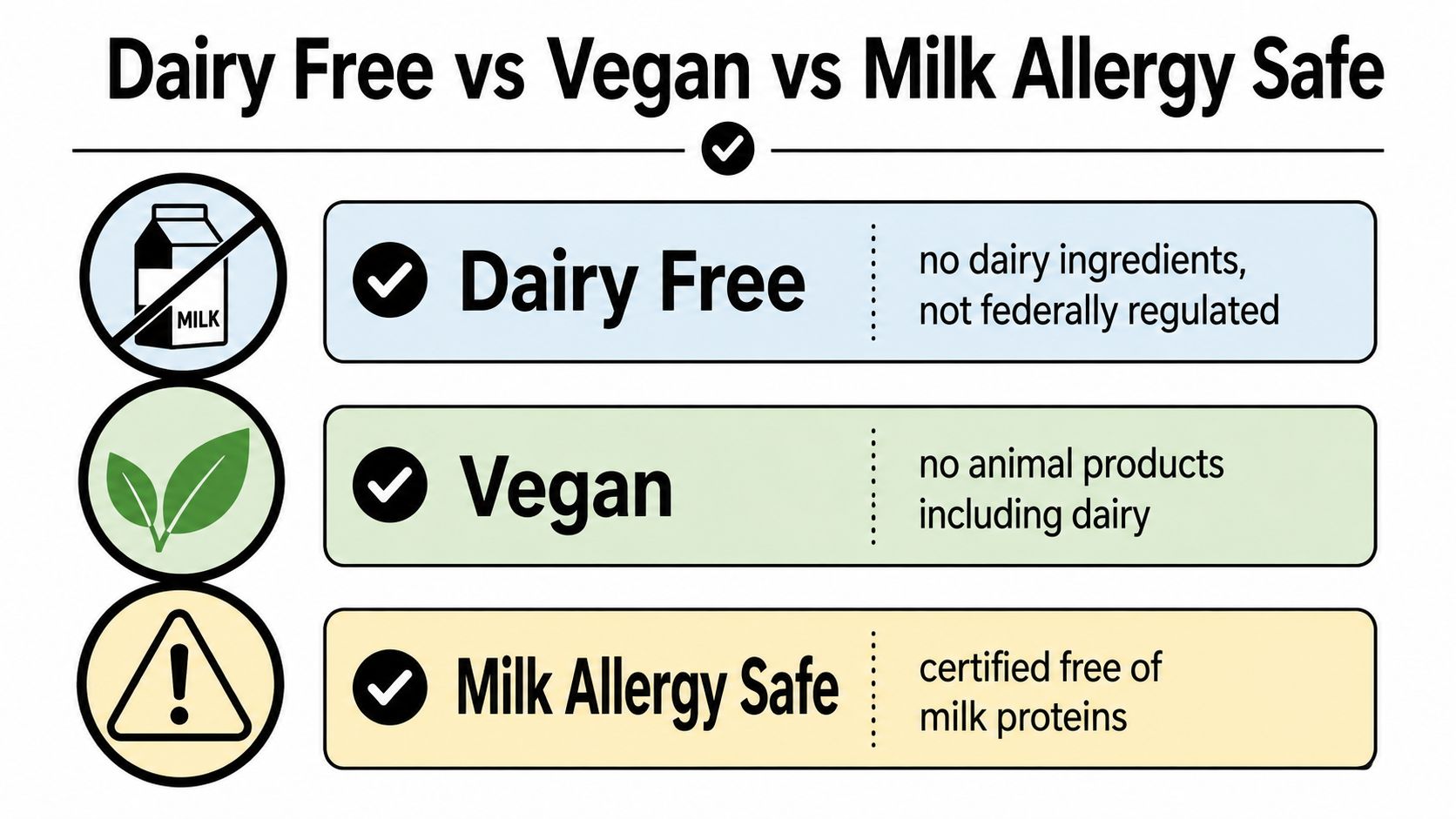
These three phrases overlap, but they don't make the same promise.
Dairy-free generally means the product is made without dairy ingredients, but the term has no FDA-regulated definition. FDA allergen rules do require packaged foods to identify milk when it's present as a major allergen. The agency's January 2025 guidance treats milk from cows, goats, sheep, and other ruminants as milk allergens, as explained in the FDA food allergen labeling guidance.
Vegan is an ingredient and lifestyle claim. It generally means the cracker contains no animal-derived ingredients, including milk, butter, cheese, or whey. It still doesn't automatically tell you how the product was manufactured.
Milk-allergy safe requires the most careful interpretation. A package should be checked for milk proteins and for voluntary cross-contact warnings. The absence of a “may contain milk” statement isn't the same as a certified guarantee that shared equipment was never used.
A one-minute ingredient scan
Look first for obvious milk ingredients:
- Whey or whey protein
- Casein or caseinates
- Milk solids or milk powder
- Butter or butterfat
- Cheese, cheese powder, or cream
Then slow down around less specific wording. “Natural flavor” doesn't tell you every carrier or processing aid on its own. If the package doesn't clarify the source, contact the manufacturer, especially when the product is for someone with a diagnosed allergy.
Also check the Contains statement and any voluntary advisory wording. A “may contain milk” notice deserves attention, but a package without that notice shouldn't be treated as a universal allergy certification.
For a broader look at plant-based snack ideas, the plant-based snacks guide can help you think beyond cheese-flavored crackers. The key habit is simple: match the label review to your reason for avoiding dairy. A preference, intolerance, vegan diet, and allergy aren't interchangeable.
How Plant Based Ingredients Stand In for Cheese Powder
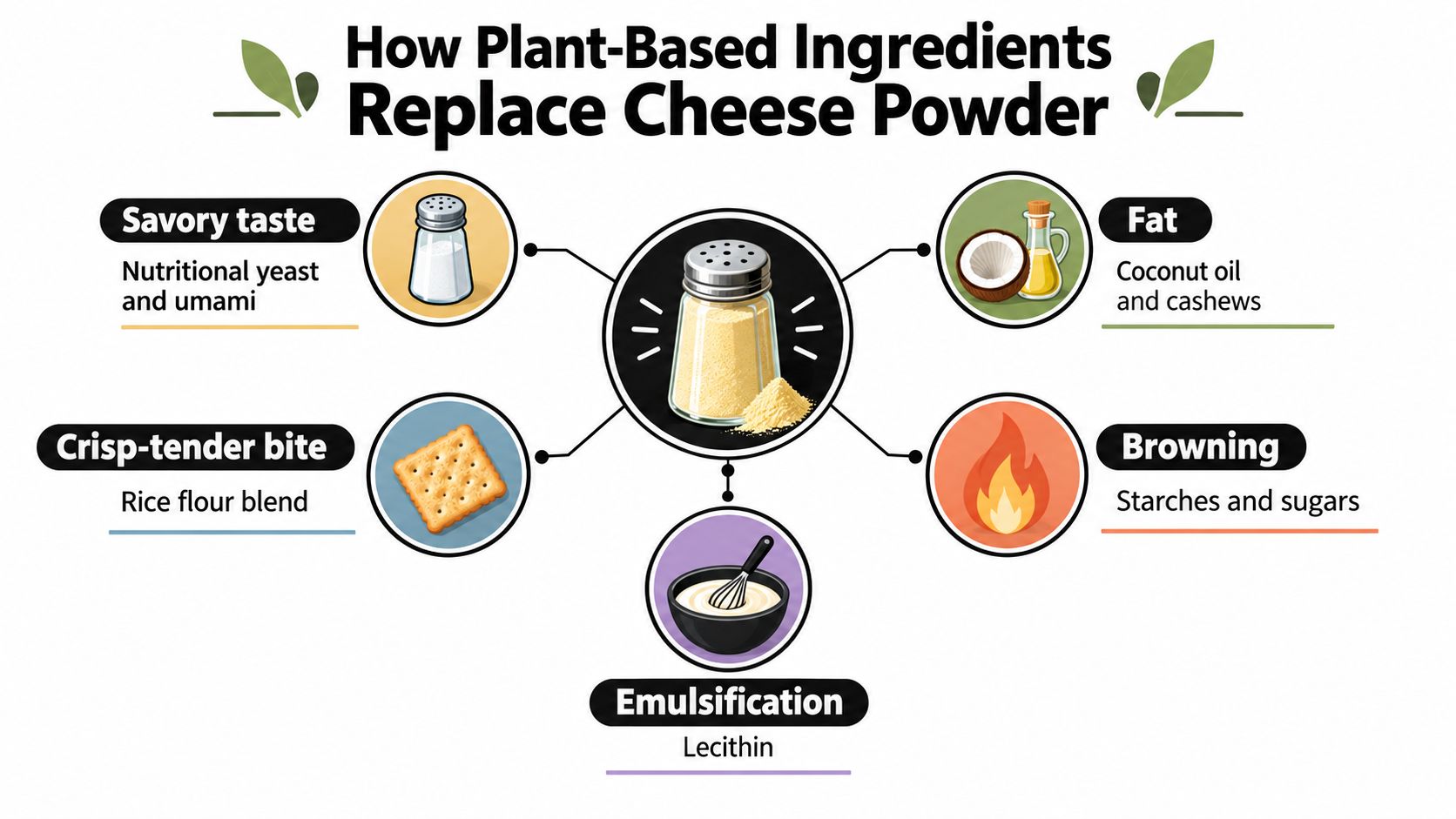
Cheese powder does several jobs at once. It brings savory flavor, fat, browning, emulsification, aroma, and the familiar crisp-but-tender bite. Removing it is less like deleting one ingredient and more like asking a small kitchen crew to cover several shifts.
That's why a successful plant-based cracker uses a coordinated system. Nutritional yeast or yeast extracts can add umami. Spices and carefully selected natural flavors can rebuild aroma. Plant fats contribute richness, while starches and proteins help control how the dough expands and breaks.
Four jobs, several substitutes
Savory depth comes from nutritional yeast, yeast extracts, salt, and spices. Nutritional yeast can provide a roasted, umami-rich note, while paprika adds color and warmth. The goal isn't to make the cracker taste like a spoonful of yeast. It's to create enough depth that the snack doesn't taste flat.
Richness comes from plant fats such as olive, avocado, or coconut oil, depending on the recipe. Fat carries aroma and softens the bite. Too little can make a cracker feel dry and brittle, while too much can prevent a clean snap.
Browning and aroma depend on the dough's starches, proteins, moisture, and baking conditions. A plant-based cracker may need different handling because it lacks the same milk-derived solids that help create familiar toasted notes.
Structure comes from the flour and starch blend. Rice flour can encourage a crisp break. Chickpea flour can add body and protein. The proportions matter because expansion, fracture, and storage crispness all depend on the dough's internal structure.
The guide to natural flavors and artificial flavors is useful background when a label lists flavoring without explaining the full sensory recipe.
The benchmark isn't merely “cheesy taste.” A good cracker should smell inviting, snap cleanly, stay crisp, and leave a balanced finish after storage.
The food-science principle is straightforward: no single plant ingredient replaces every function of cheese powder. A convincing result comes from matching each ingredient to a sensory job.
Reading the Nutrition Panel Like a Snack Pro
A dairy-free label says what the cracker leaves out. It doesn't tell you whether the snack is low in sugar, high in fiber, low in sodium, or suitable for keto eating.
Reformulation can shift the recipe toward starches, oils, salt, or concentrated flavorings. The FDA's guidance on plant-based milk and animal-food alternatives emphasizes clearer naming and labeling so shoppers can compare products on what they contain.
Start with the serving size, then inspect these five categories.
| Metric | What It Tells You | Watch Out For |
|---|---|---|
| Sodium | How salty the serving is and how quickly portions can add up | A small serving can make a very salty cracker look modest on paper |
| Saturated fat | The type of fat contributed by the recipe | Coconut-based or heavily oil-based formulas may vary considerably |
| Fiber | How much indigestible carbohydrate supports fullness and digestive regularity | A “plant-based” claim does not guarantee meaningful fiber |
| Protein | Whether the cracker contributes substantial protein or mainly starch and fat | Cheese-like flavor doesn't mean cheese-like protein |
| Total carbohydrate and added sugars | How the cracker fits low-carb or low-sugar goals | Dairy-free does not mean low-carb, and flavor coatings may add sugar |
What keto shoppers should calculate
For a low-carb plan, removing dairy doesn't establish keto compatibility. Check total carbohydrates and fiber, then calculate net carbohydrates as total carbohydrates minus fiber, using the serving size printed on the package. The result still needs to fit your own eating plan.
A cracker made from rice flour, tapioca starch, or another refined starch may be dairy-free while remaining carbohydrate-heavy. Conversely, a nut-flour formula may have a different balance of fat, fiber, and protein, but you still need to read the panel instead of assuming the flour makes it keto-friendly.
If you only have time for two checks, keto shoppers should start with total carbohydrates and fiber. Low-sugar shoppers should start with added sugars and total carbohydrates, then check serving size before comparing brands.
The practical shortcut is to compare similar serving sizes and ask whether the cracker earns its place in your snack routine. A lower-sugar product can still be salty or low in fiber. A higher-fiber option can still contribute more carbohydrates than your plan allows. “Dairy-free” is a filter, not a nutrition grade.
For a broader primer on serving sizes and label math, use this nutrition label reading guide.
Dairy Free Cheez Its Brands Worth Trying
A shopper staring at the cracker shelf usually wants three answers, not one. Is it dairy free, is it safe for a milk allergy, and does it fit a keto or lower-carb plan? Those are separate checks, and the label should answer each one on its own.
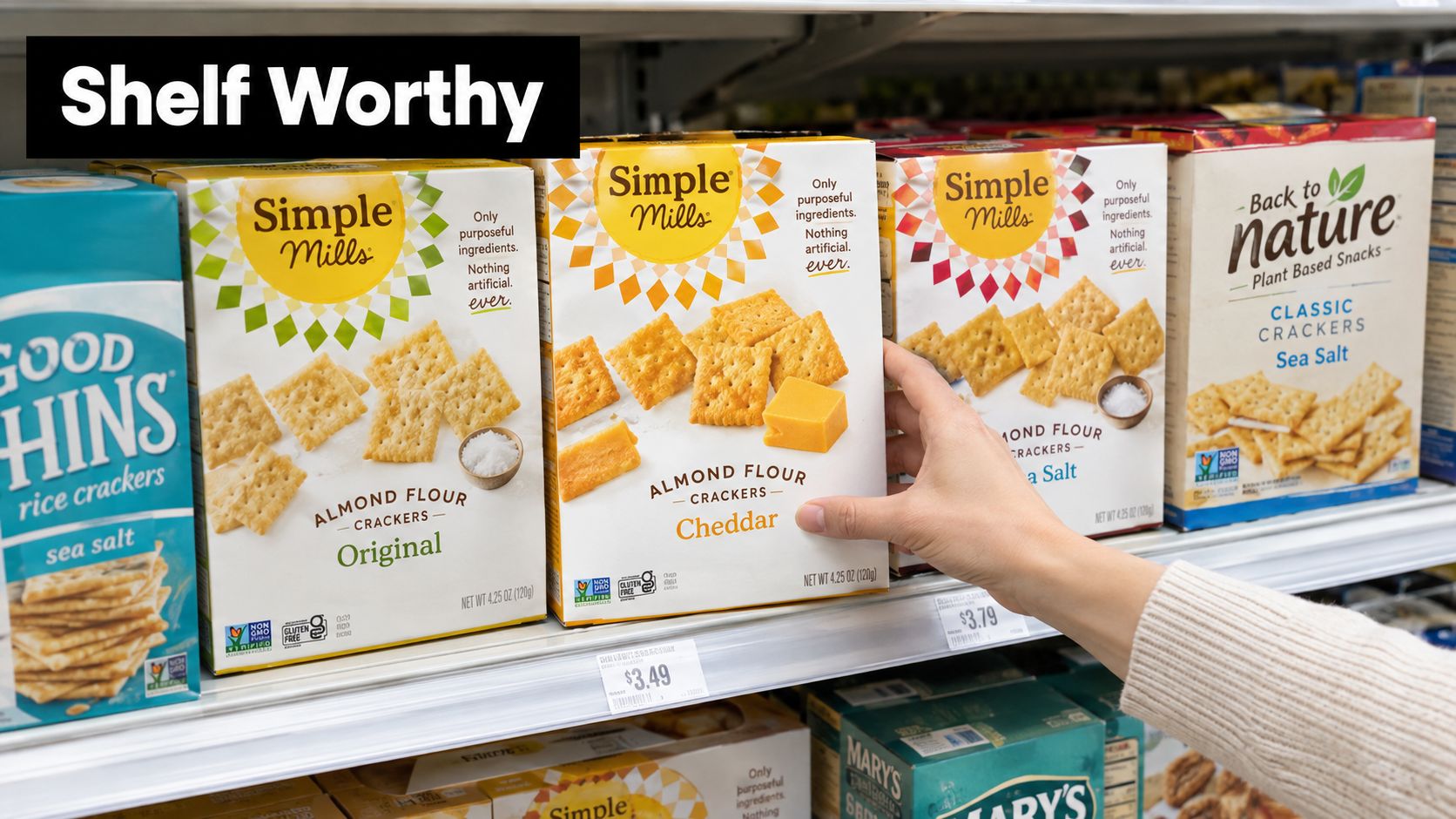
Start with brands that tell you something useful about the bite and the ingredients. Simple Mills Almond Flour Cheddar Crackers are a recognizable option, and their almond-flour base tends to give a firmer, nuttier crunch than a wheat-style cheese cracker. HU Kitchen Grain Free Crackers are another grain-free example worth looking at, especially if you want a more seed- and nut-forward profile. Mary's Gone Crackers Super Seed crackers go even further in that direction, with a texture and flavor that feel more toasted and earthy than cheesy.
Choose by the household's priority
For familiar snacking, look for a square shape, a salty edge, and a crisp snap. Almond-flour crackers often taste a little richer and more tender than the original, which can be a plus if you want comfort without a dairy ingredient list.
For low-carb eating, compare nut-flour and seed-based crackers first, then read total carbohydrates and fiber on the Nutrition Facts panel. “Grain-free” does not automatically mean keto-friendly, since a cracker can skip grains and still rely on starch.
For multiple restrictions, scan for milk, wheat, soy, and other allergens that matter in your home. A package can be dairy free and still fail another household rule, so the allergen statement needs the same attention as the flavor name.
Check natural-food chains and online marketplaces first, and confirm stock on the retailer's site before a dedicated trip, since dairy-free cracker lineups rotate seasonally. Brand websites and retailer listings help, but the package in your hand is the final authority. If a family is managing a diagnosed milk allergy, read the full ingredient list and allergen statement every time, even on a familiar box.
A Simple Homemade Dairy Free Cheez Its Recipe
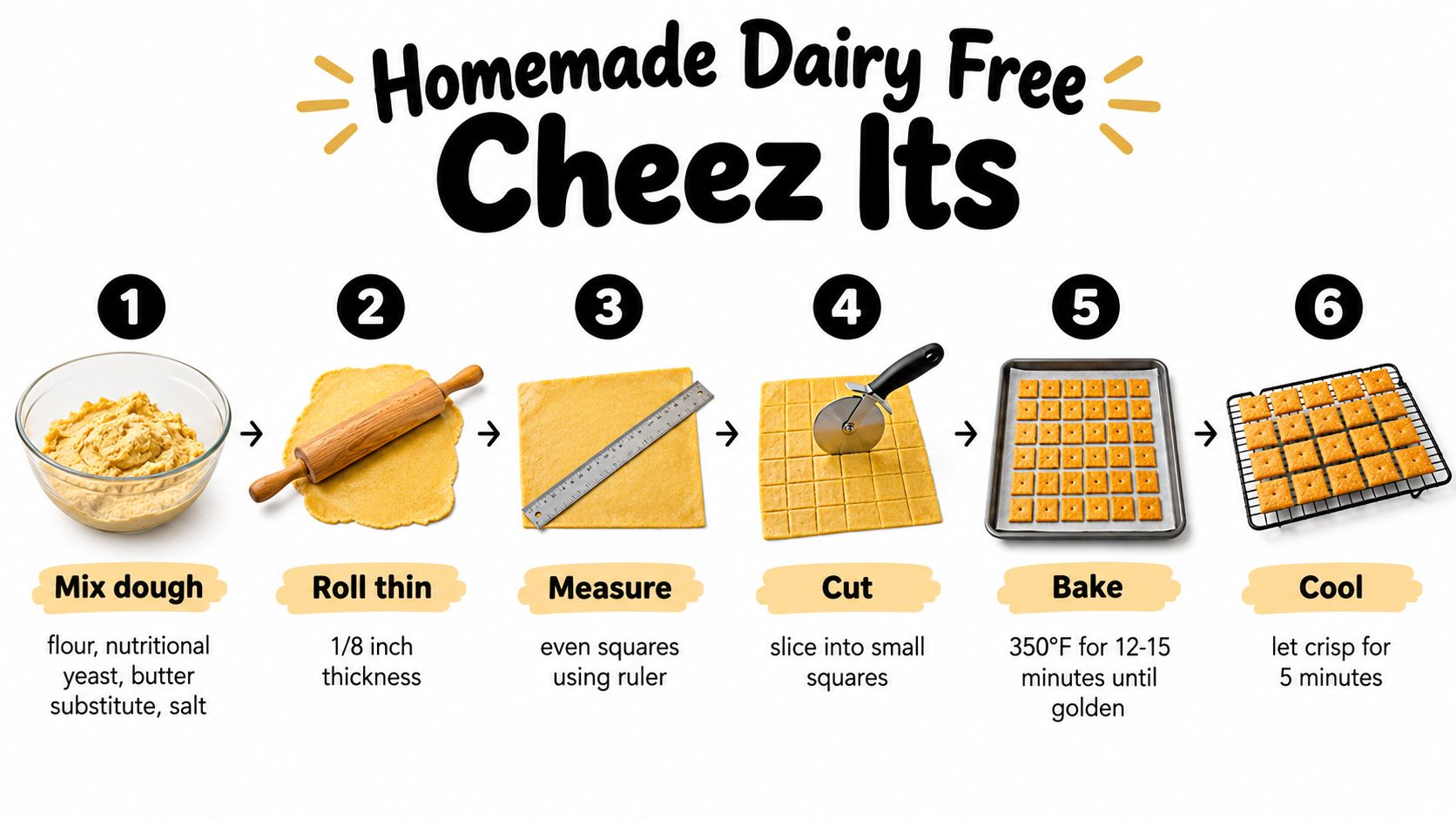
You'll need one mixing bowl, a rolling pin, parchment paper, a ruler, and either a small cookie cutter or pizza wheel. This version uses a plant-based butter substitute, nutritional yeast, and paprika for savory color.
Ingredients
- All-purpose flour: 125 grams, about 1 cup
- Nutritional yeast: 20 grams, about 3 tablespoons
- Plant-based butter: 60 grams, about 1/4 cup
- Fine salt: 3 grams, about 1/2 teaspoon
- Paprika: 2 grams, about 1 teaspoon
- Cold water: 30 to 45 grams, about 2 to 3 tablespoons
Check your plant-based butter and nutritional yeast labels if the crackers are for someone with a milk allergy. “Plant-based” can describe the main ingredient without answering every manufacturing question.
Method
- Mix the flour, nutritional yeast, salt, and paprika in a bowl. Rub in the cold plant-based butter until the mixture looks sandy.
- Add cold water gradually until the dough holds together. Stop as soon as it forms a ball.
- Flatten the dough, wrap it, and chill it until firm enough to roll cleanly.
- Roll it between parchment sheets to about 1/8 inch thick. Use a ruler to mark even squares, then cut with a pizza wheel or small cutter. Prick the centers with a skewer.
- Move the pieces to a lined baking sheet. Bake at 350°F for 12 to 15 minutes, watching for lightly golden edges.
- Cool the crackers completely. For a stronger finish, toss them with a little extra nutritional yeast, paprika, and salt while they're still slightly warm.
Three easy variations
- Chipotle-smoke: Add chipotle powder and smoked paprika for a deeper adult snack.
- Turmeric-garlic: Add turmeric and garlic powder, keeping the dough mild but aromatic.
- Kid-friendly: Skip the spices and use nutritional yeast with a small pinch of salt.
Puffed crackers usually need thinner rolling, more even thickness, or a few extra center pricks. If seasoning falls off, apply it while the crackers are warm and use a very light mist of oil as a binder. Store fully cooled crackers in an airtight container, and check their crispness before serving.
Smart Ways to Serve and Snack on Them
A good dairy-free cheese cracker can do more than sit beside a lunchbox sandwich.
For lunchboxes, portion crackers into a small container rather than sending the whole package. Pair them with fruit, sliced vegetables, hummus, or another filling snack that matches the child's dietary needs. This keeps the cracker as part of the meal instead of making it the entire meal.
For an easy snack board, combine the crackers with hummus, smashed avocado, tomato jam, or a plant-based dip. A sugar-free nut butter can work with a savory cracker if the combination suits your taste. If you use a yogurt-style dip, confirm that it fits the household's dairy requirements, since many yogurt products contain milk even when the rest of the board is dairy-free.
Crushed crackers also make a useful topping for soup or salad. Add them just before eating so they provide contrast instead of going soft in the bowl.
Cheese-flavored snacking no longer has to depend on actual cheese. That same better-for-you shelf includes products such as Rip Van's low-sugar wafels and wafers, showing how shoppers can look for snack satisfaction alongside specific nutrition goals.
Portion control still matters. Even a dairy-free, lower-sugar, or higher-fiber cracker can work against a low-carb plan if you eat straight from the sleeve. Pour a serving into a bowl, put the package away, and decide whether you want to buy an alternative tonight or bake your own batch.
The one label check never changes: look for milk ingredients and the allergen statement before you decide a product fits.
Frequently Asked Questions About Dairy Free Cheez Its
Can natural flavor contain dairy-derived ingredients?
It can be unclear from the phrase alone. If the product is for someone with a milk allergy, ask the manufacturer whether the flavor system and its carriers contain milk-derived ingredients. Store takeaway: unclear flavor wording deserves a manufacturer check.
Is shared equipment a real allergy concern?
It can be. Review any voluntary “may contain milk” or shared-equipment statement, and don't interpret its absence as a guarantee of zero cross-contact. Store takeaway: ingredient avoidance and allergy-risk management are separate checks.
Are dairy-free Cheez-It alternatives safe for a diagnosed milk allergy?
Not automatically. A dairy-free claim may address ingredients without documenting manufacturing controls, so a diagnosed allergy requires the full label, advisory statement, and, when needed, manufacturer confirmation. Store takeaway: choose documented information over appearance or marketing language.
Which option is best for low-sugar or keto households?
There isn't one universal winner. Compare serving size, added sugars, total carbohydrates, fiber, protein, and sodium, then select the option that fits your own limits. Store takeaway: dairy-free is not the same as keto or low-sugar.
If you want a different kind of better-for-you snack alongside your dairy-free cracker search, explore Rip Van's low-sugar wafels, wafers, cookies, and other portable treats. Visit Rip Van to browse options by dietary preference and find a snack that fits your routine.
0 comments