

When it comes down to natural versus artificial flavors, the biggest difference is simple: their origin. Natural flavors have to start with a plant or animal source, while artificial flavors are created in a lab from synthetic ingredients. But here's the catch—both end up being processed and purified by flavor scientists.
Understanding The Difference On Your Food Label
Seeing "natural flavor" on a food label probably makes you think of something pure and unprocessed, like juice squeezed right from a lemon. The truth is a lot more complex. The term simply tells you that the flavor’s chemical building blocks came from something that was once living—a fruit, a spice, meat, or even dairy. From there, it's a scientific process of extraction and distillation to isolate the exact compounds that create a specific taste.
Artificial flavors, on the other hand, are built from the ground up. Flavor chemists use synthetic materials (which can include things like petroleum) to construct a molecule that is an exact chemical copy of one found in nature. For example, vanillin is the chemical that gives vanilla its classic, creamy flavor. It can be extracted from a vanilla bean, making it a "natural flavor," or it can be created synthetically, making it an "artificial flavor." Your taste buds can't tell the difference because, chemically, they're identical.
Here's the most important thing to remember: Both natural and artificial flavors are engineered products designed to enhance how food tastes. The "natural" designation is all about the starting point, not a guarantee of the final product being healthier or less processed.
Natural Vs Artificial Flavors At A Glance
To break it all down, a quick side-by-side comparison can clear things up. Here’s a look at the core differences between these two common ingredients.
| Characteristic | Natural Flavors | Artificial Flavors |
|---|---|---|
| Source Material | Derived from plant or animal matter (e.g., fruit, spices, meat). | Created from synthetic, non-food chemical sources (e.g., petroleum). |
| Chemical Structure | Often chemically identical to the target flavor molecule. | Chemically identical to the natural version but created synthetically. |
| Cost | Generally more expensive due to sourcing and extraction costs. | More cost-effective and scalable for mass production. |
| Label Perception | Perceived by consumers as healthier or more trustworthy. | Often viewed with skepticism due to its synthetic origin. |
Understanding flavors is just one piece of the puzzle when reading food labels. These ingredients often work alongside others that can be just as confusing. If you're curious about other common additives, you might find it helpful to learn about what sugar alcohol is in food.
How Flavors Are Sourced and Created
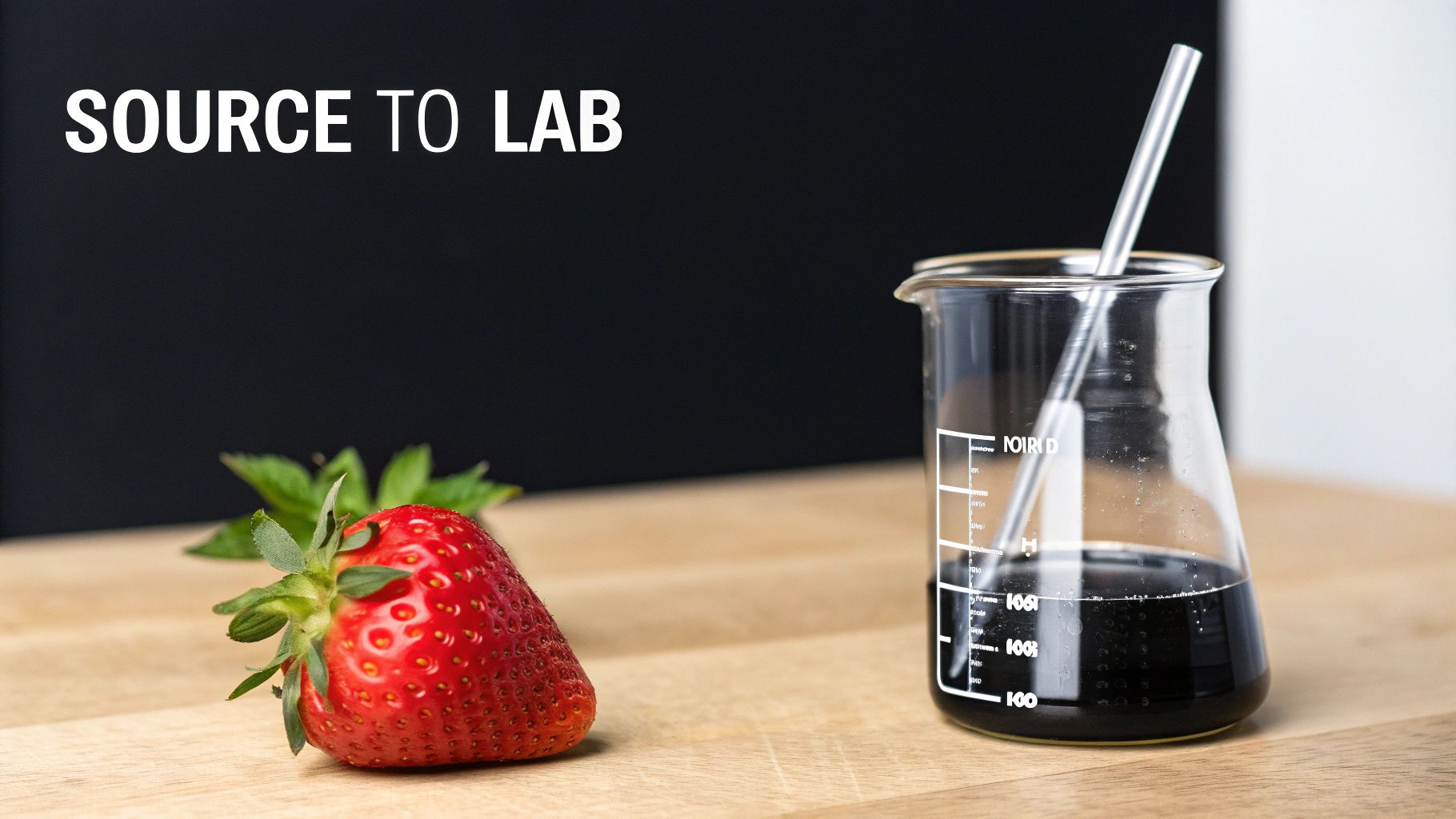
To really get to the bottom of the natural vs. artificial flavors debate, you have to look at how they’re made. Both are put together in a lab by highly skilled flavor chemists, but their journey starts in completely different places. The real difference is all about the raw materials.
Natural flavors always start with something you’d recognize: a fruit, a vegetable, an herb, meat, or even a dairy product. The entire goal is to pinpoint and capture a specific flavor molecule or a whole taste profile directly from that original source.
Artificial flavors, on the other hand, are built from the ground up using synthetic chemicals. Chemists figure out the exact molecular structure that creates a specific taste—like vanillin from a vanilla bean—and then they construct an identical molecule in the lab. The key is that the building blocks they use don't come from the original food.
The Path of a Natural Flavor
Making a natural flavor is all about isolation and concentration. Imagine a flavorist starting with a massive pile of fresh strawberries, all to produce just a tiny amount of concentrated strawberry flavor. It’s a process of extracting the very essence of the food.
Flavorists use a few trusted techniques to pull out these taste molecules:
- Extraction: This is a bit like making coffee. A solvent, often water or ethanol, is used to dissolve and pull the flavor compounds out of the source material.
- Distillation: A method that separates liquids based on their boiling points. It’s perfect for creating potent essential oils like peppermint oil, which are classified as natural flavors.
- Fermentation: This process uses microorganisms like yeast to transform a substance and create new, complex flavor compounds. For a deeper dive, you can explore understanding how specific flavors like liquid smoke are created from burning wood.
After extraction, the resulting concentrate gets purified and blended to create a consistent, powerful flavor that can be used in food products.
The Construction of an Artificial Flavor
Creating an artificial flavor is a feat of pure chemical synthesis. Instead of a strawberry, the chemist starts with inedible raw materials, which can even include things like petroleum derivatives. The job is to perfectly replicate the chemical structure of a flavor molecule found in nature.
A classic example is benzaldehyde, the chemical that gives almonds and cherries their distinct taste. When it’s extracted from almond pits, it’s a natural flavor. But when it's synthesized in a lab from chlorine and toluene (derived from petroleum), it becomes an artificial flavor.
The critical differentiator is the origin. A natural flavor is derived from a food source. An artificial flavor is synthesized to be identical to a molecule found in a food source, but it's made from non-food ingredients.
This chemical copy-and-paste job is incredibly precise. The final artificial flavor molecule is a mirror image of the one found in nature. To your taste buds, there's absolutely no difference because, chemically, they are the same thing. The decision to use one over the other usually boils down to cost, stability, and potency—factors we'll get into next.
Navigating FDA Rules and Label Loopholes
To really get to the bottom of the "natural vs. artificial flavors" debate, you have to start with the U.S. Food and Drug Administration (FDA). The official definitions are a bit dense, but they hinge on one surprisingly simple idea: it all comes down to the source.
The Code of Federal Regulations states that a natural flavor has to start its life as something from a plant or animal. Think spices, fruit, vegetables, meat, seafood, dairy—that kind of stuff. The flavor itself is pulled out using physical processes like heating, roasting, or fermentation.
An artificial flavor, then, is anything that doesn't fit that description. If the chemist didn't start with a plant or animal source to create the flavor molecule, it gets slapped with the "artificial" label. That's it. The FDA's distinction has nothing to do with chemical complexity, safety, or nutritional value.
The "Incidental Additives" Loophole
This is where things get a bit murky. A natural flavor has to originate from a natural source, but what ends up in your food is rarely just the pure flavor essence. These potent flavor concentrates are actually complex chemical cocktails that can legally contain synthetic ingredients—and you'd never know it from the label.
These are what the industry calls "incidental additives." This broad category can cover a lot of ground:
- Solvents: Chemicals used to coax the flavor out of its original source.
- Preservatives: Additives that keep the flavor from going bad on the shelf.
- Emulsifiers: Substances that ensure the flavor mixes smoothly into the food instead of separating.
Since these additives are considered part of the flavor manufacturing process and only exist in tiny amounts in the finished product, the FDA doesn't require them to be listed. So, that "natural flavor" on the ingredients list could be a vehicle for synthetic chemicals that health-conscious shoppers are specifically trying to avoid.
The term 'natural flavor' can act as a Trojan horse. The core flavor component is from a natural source, but it may be carried into your food by a host of synthetic, lab-created ingredients that remain undisclosed.
What This Means for Clean Labels
This regulatory gray area is a huge part of why the "clean label" movement has exploded. People are getting wise to these vague terms and are no longer taking them at face value. They want to know exactly what’s in their food, from the main ingredients all the way down to the flavorings.
For a growing number of shoppers, seeing the generic term "natural flavors" is a red flag. It signals a lack of transparency. The push is now for brands to get specific, listing ingredients people actually recognize, like "vanilla extract," "lemon oil," or "cinnamon." This demand for real clarity is forcing the food industry to fundamentally rethink how it makes and labels its products.
Brands that are truly committed to simple, understandable ingredients are ditching these catch-all terms. Instead of leaning on complex flavor systems with hidden components, they’re building taste from the ground up using whole-food ingredients. It all comes back to a simple consumer philosophy: if you can’t pronounce it or picture where it came from, you probably shouldn't be eating it. This shift is slowly but surely putting the power back where it belongs—in the hands of the shopper.
The Real Impact On Your Health And Wellness
When it comes down to it, the biggest question on everyone's mind is simple: are these flavors good or bad for me? Officially, regulatory bodies like the FDA consider both natural and artificial flavors to be generally safe in the amounts we typically eat. After all, the lab-made version of a flavor molecule is often chemically identical to the one found in nature, so your body treats them the same.
But the health conversation is rarely that black and white. The real issue isn't always the flavor molecule itself but the frustrating lack of transparency that comes with it, especially when you see the words "natural flavors" on a label.
Allergies And Sensitivities: The Hidden Risks
One of the most significant problems with that generic "natural flavors" label is its potential to hide common allergens. A single natural flavor isn't just one thing; it can be a complex cocktail of dozens of substances, and food companies aren't required to list every single one.
This is a huge deal for anyone with food sensitivities. A "natural berry flavor," for example, could easily contain derivatives from corn or soy—two widespread allergens. While the major allergens have to be declared, people with less common sensitivities are often left guessing, which can lead to unexpected and unpleasant reactions.
The core issue isn't that natural flavors are inherently dangerous. It’s that the vague labeling makes it impossible for you to make a fully informed choice. This is exactly why a simple, readable ingredient list brings so much peace of mind.
The Bigger Picture: Your Overall Diet
Obsessing over whether a flavor is natural or artificial can sometimes make us miss the forest for the trees. A food's real impact on your health comes from its total nutritional profile—the sugar, fiber, fat, and everything else in it—not just the source of its flavor.
Think about it: a sugary soda made with "natural flavors" is hardly a healthier choice than a diet soda with "artificial flavors" if your main goal is cutting back on sugar. To get a better handle on how different components affect your diet, it's useful to understand how to calculate calories in a recipe by ingredient. This knowledge helps you look past the marketing claims and see what you're truly eating.
Consumer Trust And The Clean Label Movement
There's a growing wave of consumer skepticism about artificial additives, and it's shaking up the food industry. Whether the health fears are scientifically proven or simply perceived, they are fueling explosive growth in the natural flavors market. Globally, the demand for food flavors is expected to jump from USD 16.70 billion in 2025 to a staggering USD 26.52 billion by 2034, with the natural segment leading the charge.
This trend is driven by a "clean-label" movement, where shoppers actively seek out products with organic, non-GMO, and plant-based ingredients they recognize. In North America especially, people are willing to pay a premium for that kind of transparency. This philosophy is at the heart of what brands like Rip Van do by focusing on natural, high-fiber, and non-GMO ingredients.
By reaching for snacks with clear, honest labels, you can enjoy a treat without wondering about hidden synthetic compounds. It’s a simple, practical step toward your wellness goals. If you're looking for snacks that fit this bill, our guide to healthy snacks for weight loss has some great ideas.
Ultimately, choosing between natural and artificial flavors is a personal decision based on your health priorities. If transparency and simple ingredients matter to you, the best path forward is to choose products that name their flavor sources (like "vanilla extract") or use ingredients you can actually picture. That way, you're always in control of your wellness journey.
Comparing Taste, Cost, And Environmental Footprint
When a food company decides between natural and artificial flavors, it’s not just about what sounds better on the label. They're juggling a complex trade-off between taste consistency, production cost, and environmental impact. For those of us reading the ingredients, understanding these factors helps pull back the curtain on why our favorite snacks are made the way they are.
Artificial flavors often get the nod for their consistency and punch. Because they’re created from the ground up in a lab, chemists can engineer a potent, predictable taste that’s identical every time. This kind of stability is a huge deal for mass-produced foods that have to survive high-heat processing and sit on a shelf for months without the flavor fading.
Natural flavors, on the other hand, can be a bit more finicky because they come from real sources. Think about how a strawberry’s taste changes depending on the season, soil, or weather—that same variability can show up in a natural strawberry flavor. While this often creates a more subtle and complex taste that many people love, it’s a real headache for brands that need every single product to taste exactly the same.
The Economic Equation of Flavor
Frankly, cost is probably the biggest reason artificial flavors are so common. Crafting a natural flavor is an expensive, resource-heavy endeavor. You need to grow, harvest, and process huge amounts of raw materials—like vanilla beans from Madagascar or lemons from Italy—just to extract a tiny amount of concentrated flavor.
By comparison, artificial flavors are dramatically cheaper to make. Synthesizing flavor molecules from common and inexpensive sources like petroleum is easy to scale up and costs a fraction of the price. This economic reality is why you’ll find them in so many affordable, everyday food products.
The infographic below breaks down some of the key things to keep in mind when looking at flavor labels.
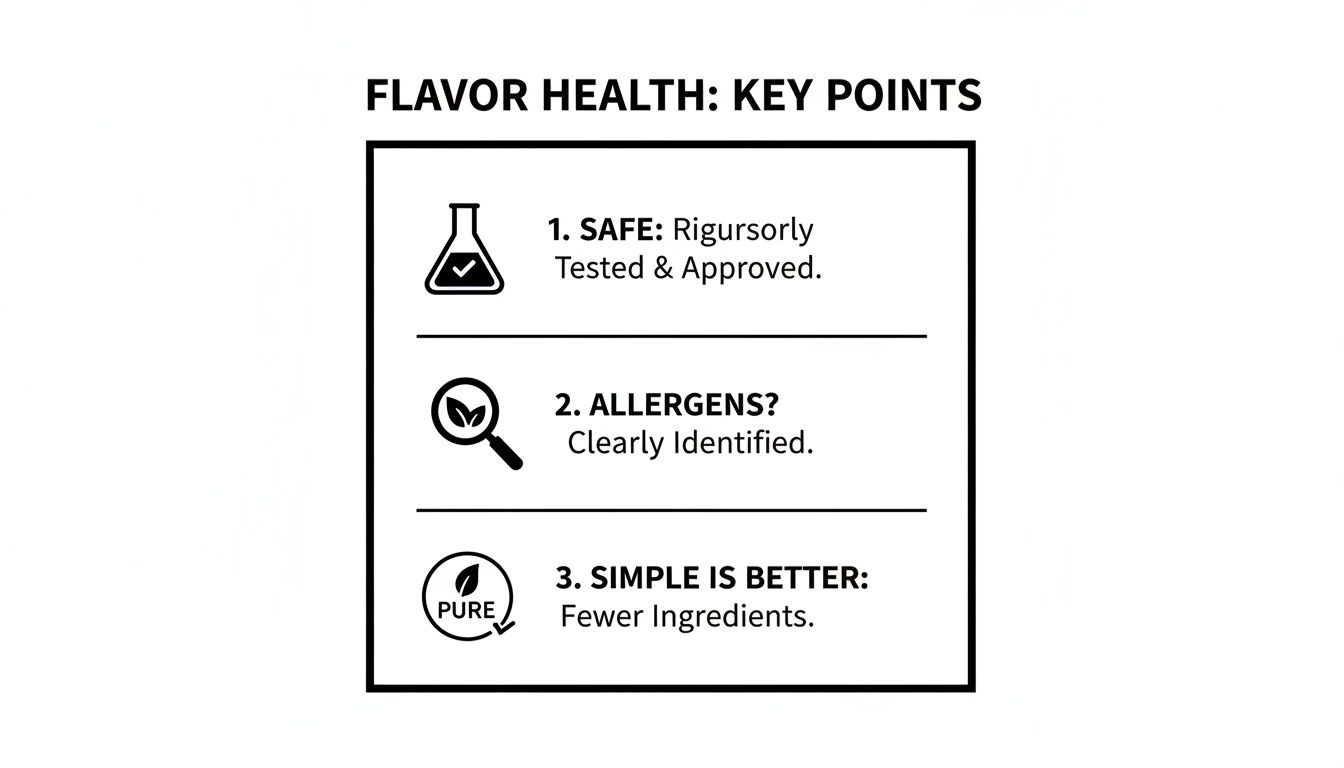
As the visual shows, even though both types of flavors are generally considered safe, there’s a growing movement toward simpler, more transparent ingredient lists, especially among health-conscious shoppers.
Analyzing The Environmental Footprint
The environmental impact isn't as black and white as you might think. Sourcing natural flavors can put a real strain on the planet. For example, the massive global demand for real vanilla has been linked to deforestation where the orchids grow. It also takes an enormous amount of water and land to cultivate acres of citrus fruit just to get their essential oils.
On the flip side, artificial flavors often start with non-renewable resources like petroleum, which carries its own environmental baggage from drilling and chemical processing. However, making a flavor in a lab can sometimes use far less water and land than traditional farming, creating a surprisingly complex environmental trade-off.
The choice isn't a simple case of "good" versus "bad." A lab-created flavor might have a smaller land and water footprint than a natural one, while a natural flavor avoids reliance on fossil fuels. The best option depends entirely on the specific flavor and the resources needed to create it.
Ultimately, what we, the consumers, want is what’s driving change. The growing demand for clean labels is pushing big companies to reformulate their products, which is exactly why brands like Rip Van have always prioritized natural ingredients in their low-sugar treats. The beverage industry is leading the charge here, with natural flavors projected to hold a 36.78% market share by 2025 as companies adapt to our health concerns and stricter regulations.
In Europe, for instance, new rules are forcing a shift to natural alternatives that can cost 3-5 times more than their artificial counterparts. It's a clear signal that for many brands and consumers, transparency is worth the price. You can dive deeper into these industry shifts in the full report on natural food flavors.
How To Make Informed Choices In The Grocery Aisle
Walking through the grocery store can feel like you're being quizzed on food science, especially when you're trying to figure out what natural flavors vs artificial flavors really means. But once you know what to look for, you can cut through the marketing noise and turn a confusing ingredient list into clear, simple information. The trick is to ignore the flashy claims on the front of the box and get straight to the facts on the nutrition panel.
The best tool you have is the ingredient list itself. A truly transparent brand won't just say "natural flavors"—it will tell you exactly what those flavors are. When you see terms like "real vanilla extract," "peppermint oil," or "lemon juice powder," that's a great sign. It means the company isn't using a vague, catch-all term to hide anything and is proud of the real ingredients that make their product taste great.
This push for clearer labeling isn't happening in a vacuum; it’s a direct result of consumer demand. Shoppers are getting smarter and are actively avoiding artificial additives, which has caused the clean-label market to explode. In 2025, the natural and organic flavors market is valued at USD 9.64 billion, and it's on track to hit USD 18.07 billion by 2032. This incredible growth shows a global shift in how we think about food, with more people seeking out products flavored with real plant extracts from fruits and herbs. You can dig into the numbers in this detailed industry report.
How To Read And Interpret Flavor Labels
You don't need a degree in chemistry to make better choices. Just use this quick, three-step scan on any product's ingredient list to find brands that match your health goals.
-
Look for Specifics, Not Vague Terms: Always go for products that name their flavor sources. "Cinnamon" is a whole lot more reassuring than "natural spice flavors."
-
Scan for Other Additives: Often, a product with "natural flavors" is also hiding artificial colors, preservatives, or high-fructose corn syrup. A real commitment to clean ingredients should be reflected across the entire label.
-
Find Brands That Share Your Values: Certifications like Non-GMO Project Verified or USDA Organic are good indicators. Brands like Rip Van, for example, stick to natural flavors and avoid artificial sweeteners or colors, making it easy to know what you're getting.
The real goal here is to shift from being a passive buyer to an informed shopper. Every time you pick a product with a clean, simple ingredient list, you're casting a vote for a more transparent food industry.
Building Your Better-For-You Snack Pantry
Once you know what to look for, filling your pantry with snacks you can feel good about is surprisingly simple. The key is to find products that deliver on both taste and nutrition without a long list of chemical-sounding ingredients. A great rule of thumb is to look for snacks higher in fiber and lower in sugar.
When you choose snacks with simple, recognizable ingredients, you get peace of mind—especially if you're shopping for a family or managing food sensitivities. It takes the guesswork out of the equation and ensures you’re fueling your body with quality stuff. If you need some ideas to get started, our guide to the best healthy packaged snacks has plenty of great options that meet these standards.
At the end of the day, you have the power to decide what "healthy" looks like for you. By demanding ingredient transparency, you can find snacks that are not only delicious and satisfying but also support your wellness journey without compromise.
Got Questions? We’ve Got Answers.
Even after breaking it all down, the whole natural vs. artificial flavors thing can still feel a bit murky. Let's clear up some of the most common questions that pop up so you can feel confident in your food choices.
Are Natural Flavors Actually Healthier Than Artificial Ones?
Honestly, not really. The "natural" label only tells you where the flavor started—as a plant or animal material. It doesn't say anything about its nutritional value or the lab processing it went through. At the end of the day, both are created by scientists and have virtually zero nutritional impact on the food you're eating.
A food's healthiness comes down to the big picture: its total sugar, fat, and fiber content. The type of flavor used is just a tiny piece of that puzzle.
If Everyone Wants "Natural," Why Do Companies Still Use Artificial Flavors?
It boils down to three things: cost, consistency, and stability. Artificial flavors are a lot cheaper to make, they hold up better under the intense heat of food processing, and they guarantee that every single bag of chips or box of cereal tastes exactly the same.
That kind of consistency is a huge deal in large-scale food production. It ensures a long shelf life and delivers the reliable taste people expect from their go-to brands, every single time.
This dependability makes artificial flavors the practical choice for many of the affordable, mass-produced foods on our shelves.
Can Someone Be Allergic To Natural Flavors?
Yes, it’s possible. Since food companies don't have to list every single source within their "natural flavor" blend, it could technically contain derivatives from common allergens like soy, dairy, or corn.
While the law requires the top major allergens to be clearly listed somewhere on the package, people with less common food sensitivities need to be careful. If you have a specific allergy concern, the best thing you can do is reach out to the company directly and ask for more details.
How Do I Find Products With Ingredients I Can Actually Understand?
Your best bet is to look for specifics on the ingredient label. Seeing terms like “vanilla extract” or “lemon oil” is a much better sign than the vague, catch-all phrase "natural flavors."
Try to stick with brands that are clearly proud of their clean labels and make a point of avoiding artificial colors, preservatives, and high-fructose corn syrup. That’s usually a strong signal that they care about the quality of their ingredients and aren't trying to hide anything.
At Rip Van, we think you deserve to know what you’re eating. That’s why our wafels, cookies, and wafers are made with natural flavors and have no artificial colors or sweeteners. You get an amazing, indulgent treat with an ingredient list that makes sense. Find your new favorite better-for-you snack at https://ripvan.com.
0 comments