

$45 is the line where delivery stops costing you on a Rip Van order. Orders of $45 or more ship free within the continental US, and subscriptions ship free. Below the line, postage applies.
Returns are common and costly enough that researchers study how free return policies shape order economics. Free shipping and free returns raise the same question: who pays, through which channel, and under what conditions?
Food sharpens it. An opened snack often can't go back into inventory, so padding a cart to clear the threshold can turn a saving into waste.
Why the Free Badge Changes the Order
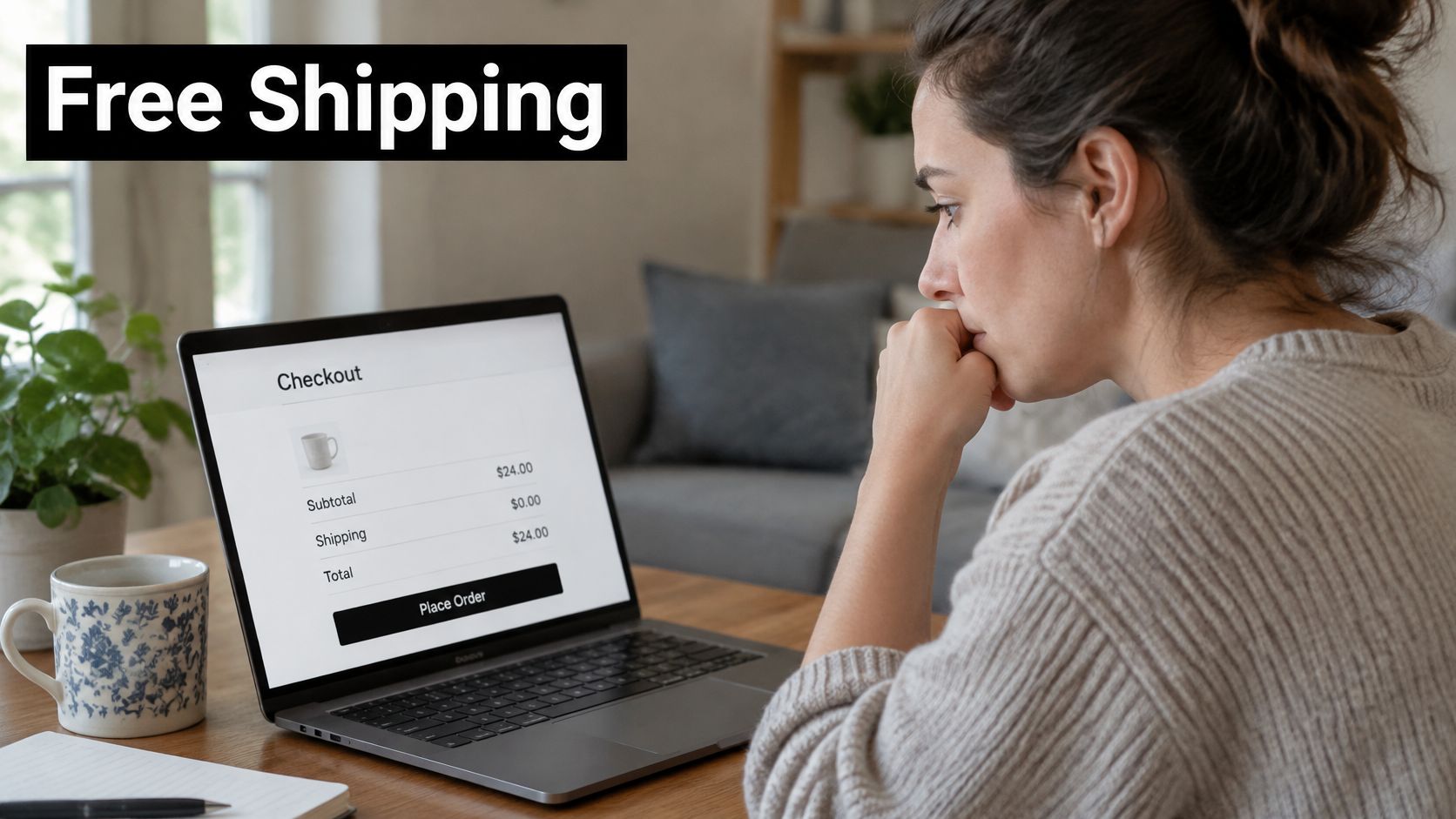
You've picked your snacks, the subtotal looks fine, and then checkout adds a delivery line you didn't plan for. That small surprise changes the whole order. You start scanning for a way to make the fee disappear, even if it means buying more.
That reaction is common. In 2025, 76% of U.S. consumers surveyed by Ryder identified free shipping as a leading motivator for holiday purchases, according to Ryder's 2025 E-commerce Study. Retailers know the fee sits in your head next to the product price, so the badge sits there too.
What Free Actually Means
Free shipping means the retailer pays the outbound carrier charge instead of passing it to you. Free returns means the retailer pays for, or reimburses, the trip back. Neither phrase means the carrier worked for nothing, and neither applies automatically to every order.
Think of a parking sign that says free after 6. The space is free only in that lot, during those hours, and for an allowed vehicle. Arrive early, park in the wrong lot, or stay past a limit, and you pay. Shipping offers work the same way, with conditions doing the heavy lifting.
A free offer is a set of conditions, not a slogan. Read the trigger first, then decide if the cart is worth changing.
Don't mix up nearby promises. Store credit is money held by the store, a restocking fee is a deduction from a return, and a satisfaction guarantee is a service promise handled through support. They're related, but they aren't the same thing, and they lead to different steps when something goes wrong.
Food makes the distinction matter more. A shirt with tags can often be inspected and resold, but an opened package of wafels or cookies usually can't. That's why consumables carry stricter return rules than apparel, and why you shouldn't assume a generous headline covers a half eaten box.
If you're comparing how different storefronts explain those promises, Fans Of Free's storefront support is a useful example of putting help and policy answers where shoppers can find them before they pay. At checkout, you usually have three choices: pay the shipping, add something you'll use, or leave the item for a later order.
Who Pays Under Each Kind of Free Offer
Start with the chart, then match the badge on the product page to one row. That match tells you who pays postage and which exclusion is most likely to bring a fee back.
Who pays under common free shipping and free returns offers
| Offer | Usual trigger | Who pays postage | Common exclusion | Check before buying |
|---|---|---|---|---|
| Free shipping over a minimum | Order total hits a stated threshold | Retailer pays standard outbound | Under the threshold, excluded ZIP codes, paid speed upgrades | Threshold, ship-to zone, and which speed is included |
| Always-free shipping | Membership or subscription on eligible items | Retailer pays standard outbound | Ineligible products or addresses outside the program | Which SKUs and addresses qualify |
| Mailed free returns | Inside the return window and condition rules | Retailer supplies the label | Final sale, opened consumables, missing parts | Window, condition, and whether original shipping is refunded |
| No-box or store drop-off | A partner location or label-free option | Retailer or its returns partner | Many direct brands have no drop-off network | Nearest location and refund speed |
| Satisfaction guarantee | Dissatisfaction handled case by case | Claim terms stated in the published policy | Abuse, or product already consumed past the rule | How to start the claim and the refund method |
| Restocking-fee return | Return accepted but not fully free | Shopper pays a fee or the label | Fee buried below a free-returns headline | Fee percent and whether outbound shipping comes back |
How to Read a Row Against Your Cart
Say your cart qualifies for free shipping over a minimum. The retailer pays for standard outbound delivery, not necessarily for overnight service. If you tap a faster speed at checkout, you've left the row you thought you were in and agreed to a different charge.
The same split happens on returns. A prepaid return label covers the trip back, but it doesn't automatically refund the original outbound shipping you paid on the first order. It also isn't an instant refund. The label starts the return, inspection and processing still sit between drop-off and money back.
- Expedited upgrades: Check whether free means standard only, because a faster option usually restores a fee.
- Non-qualifying addresses: Confirm your ship-to address is inside the program area before you rely on the badge.
- Final-sale items: Look for a final-sale note on the product page, not just in the returns FAQ.
- Opened consumables: Treat opened food as non-returnable unless the policy says otherwise in plain words.
Practical rule: Find the one policy line that names the trigger, the speed, and the refund form. If you can't find it in a minute, don't assume the generous version applies.
For snack orders, the row matters because the wrong assumption is hard to undo once a box is opened. Our guide to online snack ordering can help you think through quantities and flavors before the threshold starts nudging you. Match first, add second.
A Quick Worked Example
Suppose a household wants two boxes now and a third flavor looks tempting. If the third box pushes the order into free standard shipping and the household will finish it soon, the row works as intended. If that third box is a flavor nobody asked for, the saving is fragile, because opened food may have no return path.
That's the difference between using an offer and being used by it. The offer is useful when it lowers the cost of an order you already wanted. It's costly when it creates a new order just to avoid a smaller fee.
Exclusions That Quietly Restore the Fee
Free postage can still come with conditions. A checkout may waive one charge while leaving you to pay for faster delivery or a return method that is difficult to use. The practical question is who pays, through which channel, and what happens if the food is no longer returnable.
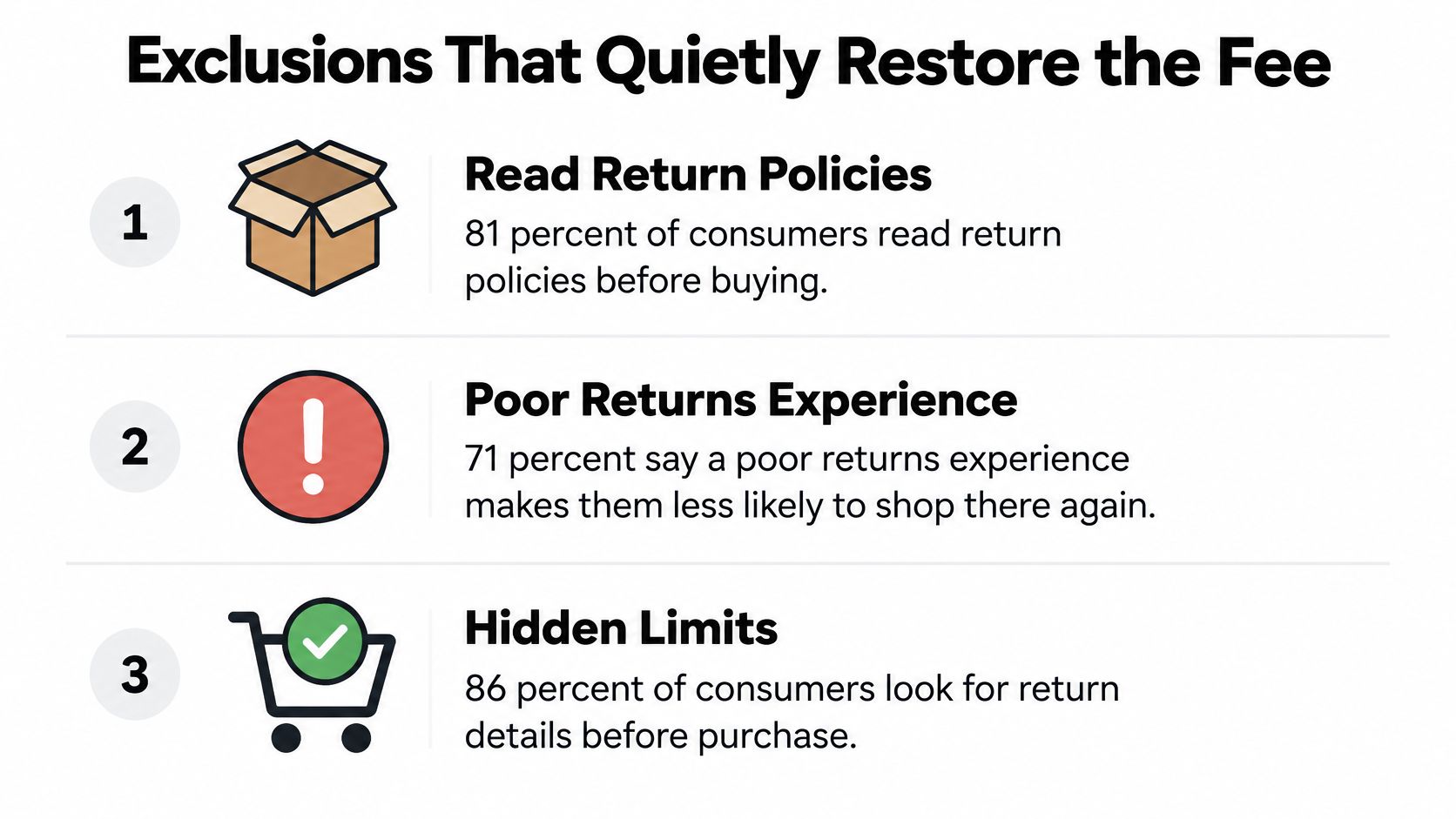
In a 2025 UPS study, 81% of consumers said they read return policies before purchasing, 71% said a poor returns experience would make them less likely to shop with a retailer again, and 86% preferred no-box, no-label returns with instant refunds, as summarized in UPS guidance on returns in 2025. Those preferences point to details worth checking before you order: the return channel, the refund method, and any conditions that shift the cost back to you.
The Conditions Under the Headline
A free-shipping threshold may depend on the qualifying subtotal, not the number at the bottom of your cart. If an order appears to clear the minimum but checkout calculates a lower qualifying amount, the shipping fee returns. Check the subtotal shown at checkout before deciding to add another item.
Speed can create a separate charge. Standard shipping may be free while an overnight or two-day upgrade costs extra. If you need snacks by a particular date, compare the price of the delivery speed you need rather than assuming the free option covers it.
Return policies can also limit which channel is free and what condition an item must be in. Check:
- Geography: Whether the shipping offer applies to your delivery address.
- Speed: Whether free shipping covers standard delivery only.
- Condition: Whether opened or used products can be returned.
- Refund form: Whether the refund goes to your payment method or takes another form.
- Timing: When the return period begins and how long you have to act.
Food makes the condition especially important. If you add a box to reach a shipping threshold, but nobody likes the flavor, opening it may remove the option to return it. A guide to choosing healthy snacks online can help you compare options before deciding what belongs in the cart.
A return may be free on paper yet inconvenient in practice. A label that requires printing or a distant drop-off point adds effort, even when postage costs nothing. Check the available return channel alongside the refund terms.
The short video below offers another pause point before you apply those checks to a real cart.
Before buying, review the conditions that apply to the order you are placing. Free shipping and free returns save money when they fit what you planned to buy. Adding unwanted food to clear a threshold can trade a small shipping fee for a box you cannot return.
Why Retailers Still Offer Free Returns
Returns are expensive enough that you'd expect retailers to avoid encouraging them. The National Retail Federation and Appriss Retail reported that U.S. consumers returned $743 billion in merchandise during 2023, equal to 14.5% of total retail sales, according to the National Retail Federation article on returns and reverse logistics. For every $1 billion in retail sales, the average retailer faced approximately $145 million in returned merchandise.
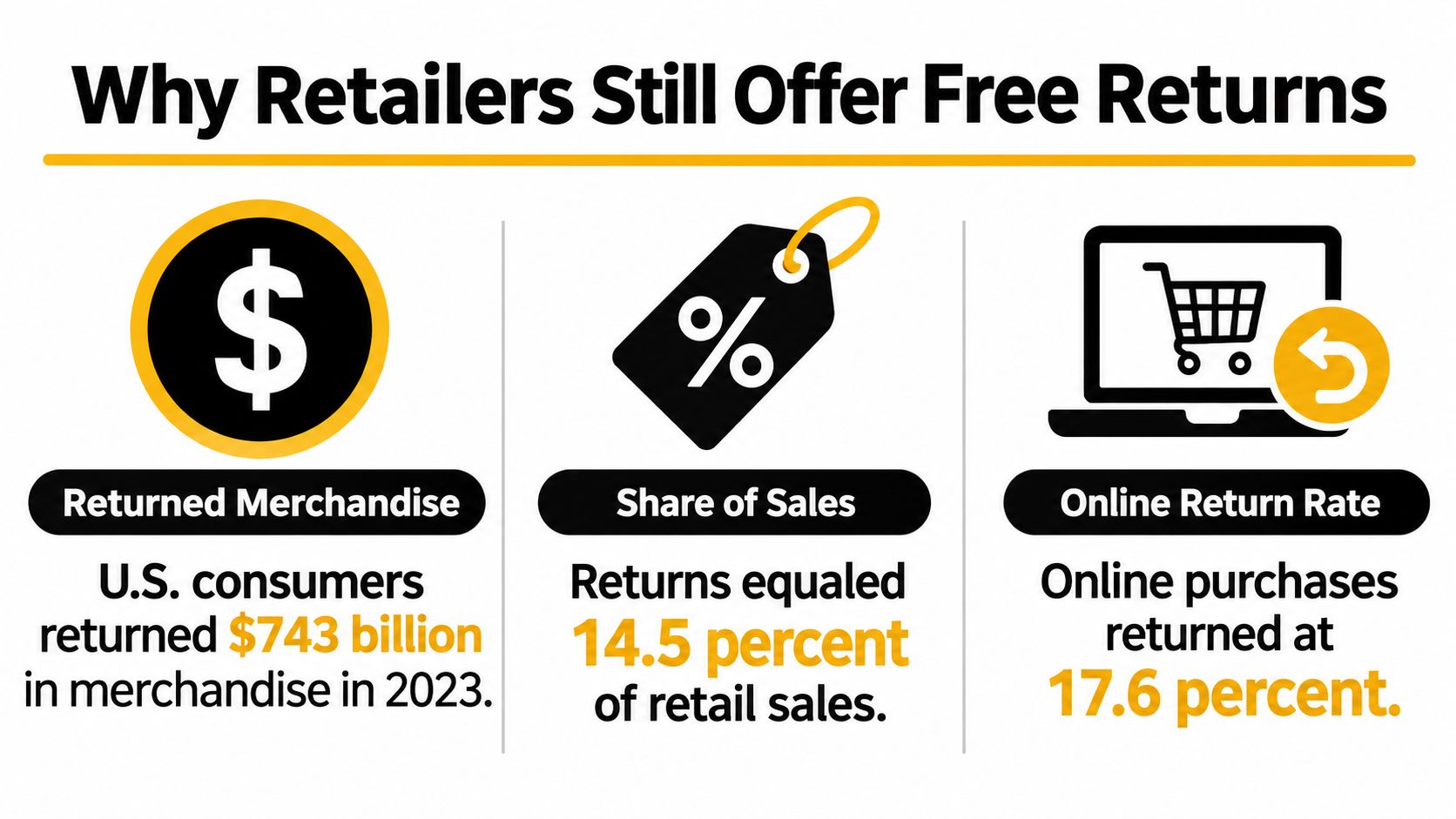
2023 U.S. return rates by channel
| Channel | Return rate | Returned merchandise |
|---|---|---|
| All U.S. retail | 14.5% | $743 billion |
| Online purchases | 17.6% | about $247 billion |
| Pure brick-and-mortar purchases | 10.02% | about $371 billion |
The Trade Retailers Are Making
Online purchases come back more often because you can't try, touch, or taste before you buy. A free return moves some of that purchase risk off you and onto the retailer. In exchange, the retailer takes on reverse logistics, inspection, restocking, refunds, and resale or disposal when an item can't be sold again.
Apparel drives much of that volume because fit is hard to judge from a size chart. A shelf-stable snack brand doesn't face fit returns, but it still faces wrong flavors, crushed boxes, and parcels that never arrive. Those problems need a clear rule even if they happen less often.
Retail teams also need a tidy way to sort those cases, which is why resources on managing customer return requests focus on intake, eligibility, and clear status updates. For you as a shopper, the test is simpler. A generous policy is real only when it names three things.
- What's eligible: Which products and conditions qualify, including whether opened food is excluded.
- When the refund arrives: Whether timing starts at drop-off, receipt, or inspection.
- Who pays the label: Whether postage is prepaid, reimbursed, deducted, or yours to buy.
A retailer keeps a free return offer because it reduces hesitation at checkout. The conditions stay tight because every returned box creates work after the sale.
That's the balance to look for. You want a policy that lowers your risk without hiding the steps. The retailer wants confidence at checkout without inviting returns it can't process or resell.
Claiming Shipping Problems on a Snack Order
Use our snack orders as the worked example. We only ship within the continental US, and certain products sold exclusively online may have limited quantities and can only be returned or exchanged according to the Return Policy. A shipping problem is about delivery, address, speed, or damage in transit, so handle it as a shipping claim first.
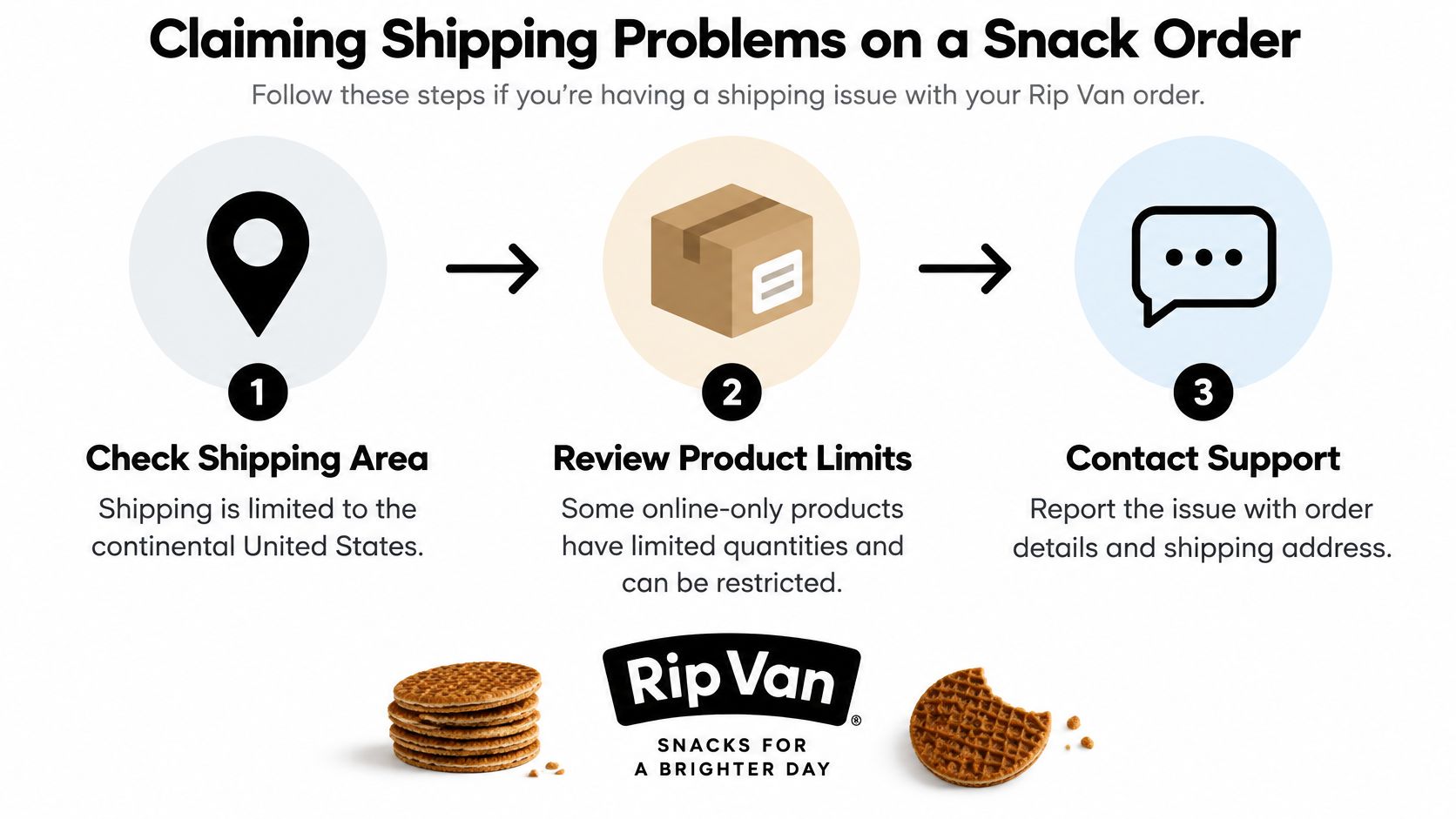
Steps for a Delivery Problem
- Confirm the address first: Make sure the ship-to address is in the continental United States before you pay.
- Check the threshold in the cart: Confirm the order already qualifies for our published free-shipping offer on orders of $45 or more, and don't select a faster speed unless you mean to pay for it.
- Save the confirmation: Keep the email with your order number and shipping method, because support will need both.
- Ask about upgrades early: If you chose upgraded shipping, ask whether that charge is refundable before the order ships.
- Report damage before you eat or toss it: If the box arrives damaged or wrong, contact support with the order details and photos before eating or discarding the product.
Photos matter because they show whether the outer box, the inner packaging, or both were affected. They also help support tell a carrier problem from a packing problem. Keep the shipping label visible in at least one photo if you can.
Check the live wording on our Shipping and Returns page before you act, because that's where the current policy sits. We also offer a 100% satisfaction guarantee, but a missing or damaged parcel should start as a shipping report, not a taste claim. Keeping those paths separate gets you the right fix faster.
Claiming the Royal Guarantee on a Taste Problem
Our 100% satisfaction guarantee, the Royal Guarantee, is a service claim. It isn't an apparel-style prepaid return where you print a label, drop off a box, and wait for inspection. Taste, damage to the product itself, and a wrong flavor go through support so we can apply the published policy to your order.
Steps for a Taste or Product Problem
- Keep the order number and packaging: Don't throw away the box or wrappers until support confirms the next step.
- Describe the problem in one sentence: Say whether it's the wrong flavor, damage, or taste, so the claim routes correctly.
- Start through the Shipping and Returns page: Use that path for a Royal Guarantee claim rather than looking for a prepaid label.
- State what's left: Say which remaining product you can send back, if any, and confirm whether the published policy provides a refund, exchange, or store credit for your case.
- Get timing in writing: Note the refund method and timing the support team confirms, and keep that message with your order email.
The food rule is the part shoppers miss. An opened, eaten box is generally not resalable and can't go back into inventory. Food already consumed past the policy rule is usually refused, even when the headline guarantee sounds broad.
Don't use a satisfaction guarantee as a sampling plan. Order the quantity you're prepared to keep if the flavor simply isn't your favorite.
The guarantee applies to the order you received and the problem you report. It isn't a reason to buy extra stock to clear a shipping threshold and sort it out later. If you're unsure about a flavor, start smaller, keep the packaging, and contact support promptly if the product itself is wrong or disappointing under the policy terms.
When Padding the Cart Stops Saving Money
Padding feels clever because the shipping line drops to zero. The question is whether the extra food is worth more to your household than the fee you avoided.
FedEx reports that 81% of shoppers add items to reach a free-shipping threshold, while DHL found that 37% of global shoppers have spent more to obtain free delivery and then returned the extra items, as noted in FedEx e-commerce resources for small businesses. With snacks, that return plan often fails, because opened food usually can't come back.
When adding items to reach free shipping pays off
| Basket gap | Example add-on | Return outlook | Smarter choice |
|---|---|---|---|
| A few dollars under a $45 snack threshold | One multipack you will finish this month | Unopened extras may qualify; opened food usually does not | Add it if you will eat it |
| Far under the threshold | Several boxes bought only for the badge | Uneaten food becomes waste or a return | Pay shipping or wait |
| Already over the threshold | Another box because shipping is already free | The extra item only adds waste or return risk | Stop adding |
| Repeat orders | Nothing extra | A free-shipping subscription removes the reason to pad | Subscribe instead of padding one cart |
Four Outcomes, One Decision
If your basket already clears $45, stop adding. Another box doesn't make shipping freer, it just raises the amount of food you need to store and finish. We offer free US shipping on orders $45 and over, so once you're over that line, the shipping decision is done.
If you're short by one snack your household will finish this month, adding it can be rational. You're not buying a badge, you're moving a planned purchase into this order and letting the threshold cover standard delivery. That's the cleanest case for padding.
If you're short by food nobody will eat, pay shipping or wait for a real reorder. A drawer of unwanted snacks isn't a saving, and it may expire or sit uneaten while you tell yourself it was free to ship. Paying a smaller fee is cheaper than buying a larger mistake.
If you order the same snacks again and again, look at subscribing instead. Our subscription orders ship free, and subscribing saves 10% on every order delivered to your door, separate from the one-time $45 rule. That removes the reason to pad a single cart just to chase the threshold each time.
- Build from use, not from the gap: Use our bundle builder to pick flavors your household already reaches for, then check the total.
- Count realistic consumption: Ask whether the extra box will be finished this month, not someday.
- Protect the return path: Keep extras unopened if you might need the policy, and don't count on returning opened food.
The test: Compare the dollar gap with food you'll eat this month. If the add-on fails that test, the shipping fee is the cheaper option.
Our Royal Guarantee covers a disappointing order under its published terms, but it isn't a reason to overbuy. Check the live threshold, ship-to area, and guarantee wording at ripvan.com before checkout, then make one decision. Pay the fee, add the useful item, subscribe, or leave the cart until you need a real reorder. That's how free shipping and free returns stay savings instead of becoming extra boxes you didn't want.
Check your cart against the $45 threshold first, add only snacks your household will finish this month, and keep extras unopened until you're sure. At Rip Van, you can shop our low-sugar wafels, wafers, and cookies with free US shipping on orders $45 and over, free shipping on subscriptions, and our 100% satisfaction Royal Guarantee under the published policy. Visit us to build an order that earns free shipping because you want the food, not because you chased the badge.
0 comments