

A pouch of keto cookie mix can look reassuring from the front: low sugar, high fiber, perhaps a prominent net-carb claim and a photo of a soft, golden cookie. Then you turn it around and find several carbohydrate lines, unfamiliar fibers, and sweeteners that seem to promise different things. The natural question is simple: does the back of the package support the promise on the front?
The answer depends less on the word “keto” than on your ability to read the complete label. A good mix should make its serving size, total carbohydrate, fiber source, sugar alcohols, and ingredients clear enough for you to judge how it fits your eating pattern, digestion, and baking habits. It can also help to separate a cookie decision from broader goals, such as setting realistic weight loss goals, because a lower-carbohydrate treat isn't automatically the right choice for every person or routine.
Why Keto Cookie Mixes Deserve a Second Look
The shopper in the kitchen has already done the hard part. They found a mix that promises a convenient cookie, opened the cupboard, and started comparing the front panel with the Nutrition Facts label. The front says “sugar free” or “low carb,” while the back lists total carbohydrate, dietary fiber, and a sweetener system that may include more than one polyol. The pouch looks straightforward until the numbers and ingredients tell a more complicated story.
Keto baking appeals because it removes much of the friction from lower-carbohydrate desserts. A prepared mix can offer a measured dry blend, fewer ingredients to source, and a more predictable route to a finished cookie than assembling several alternative flours and sweeteners yourself. It also gives shoppers a way to pursue a familiar texture without assuming that a low-sugar treat must be dry, crumbly, or aggressively flavored.
The trade-off is that convenience doesn't remove the need for label literacy. “Keto,” “sugar free,” and “low carb” are marketing descriptions, not a substitute for examining the regulated information on the package. The Nutrition Facts panel shows total carbohydrate, dietary fiber, sugars, and added sugars, while the ingredient list reveals which fibers, flours, and sweeteners created those values.
Practical rule: Treat the front of a keto cookie mix as an invitation to investigate, not as the final answer.
This category also deserves historical context. The ketogenic diet has a medical history extending back more than a century. In 1921, researchers at the Mayo Clinic proposed that a high-fat, low-carbohydrate diet could reproduce some metabolic effects of starvation, an early formulation described as close to the modern ketogenic approach in its balance of protein, minimal carbohydrate, and fat. You can read the historical account in this review of the ketogenic diet's development.
That history doesn't turn a cookie mix into a medical therapy. It does show why the category isn't just a recent fad, while the practical conclusion remains individual: inspect the product's nutrition profile, serving size, ingredients, and your total daily carbohydrate intake.
What a Keto Cookie Mix Actually Is
A keto cookie mix is a dry, shelf-stable blend designed to reduce digestible carbohydrate while preserving the structure people expect from a cookie. You usually add ingredients such as butter, oil, eggs, or water, then portion and bake the dough according to the package instructions.
A conventional cookie mix generally depends on wheat flour for structure and sugar for sweetness, browning, and bulk. A lower-carbohydrate formula may replace some or all of those functions with ingredients such as almond flour, coconut flour, plant fibers, sugar alcohols, high-intensity sweeteners, leaveners, salt, and flavorings. Each substitution solves one technical problem while potentially creating another.
Flour provides more than carbohydrate. It affects how dough absorbs liquid, spreads, holds air, and sets in the oven. Sugar also contributes more than sweetness. It affects moisture, browning, crispness, and the way a cookie feels after cooling. A mix that lowers digestible carbohydrate must recreate those functions with a different combination of fats, fibers, proteins, and sweeteners.
The job of each ingredient
| Ingredient category | Common examples | What it replaces |
|---|---|---|
| Lower-carbohydrate flour | Almond flour, coconut flour | Part or all of wheat flour |
| Functional fiber | Inulin, psyllium, plant fibers | Some flour bulk and moisture-holding capacity |
| Sweetener | Erythritol, monk fruit blends, other polyols | Granulated sugar |
| Fat-supporting ingredients | Butter, oil, nut ingredients | Some of the richness and mouthfeel associated with traditional cookies |
| Structure and lift | Leaveners, gums, eggs | Gluten structure and the aeration of conventional dough |
| Flavor ingredients | Cocoa, vanilla, spices, chocolate-style inclusions | Some of the flavor lost when sugar is reduced |
The word “keto” also doesn't tell you that a mix is low in calories, high in protein, or suitable for every medical need. It describes the intended carbohydrate profile, but it isn't a guarantee of a regulated threshold or a universal result for the person eating it.
Start with the serving size, then read total carbohydrate before interpreting any net-carb language. After that, identify which listed fiber can legitimately be counted and which sweeteners are present. That sequence keeps the product's design understandable instead of reducing the entire label to a single promotional number.
How the Nutrition Facts Label Treats Fiber and Sugar Alcohols
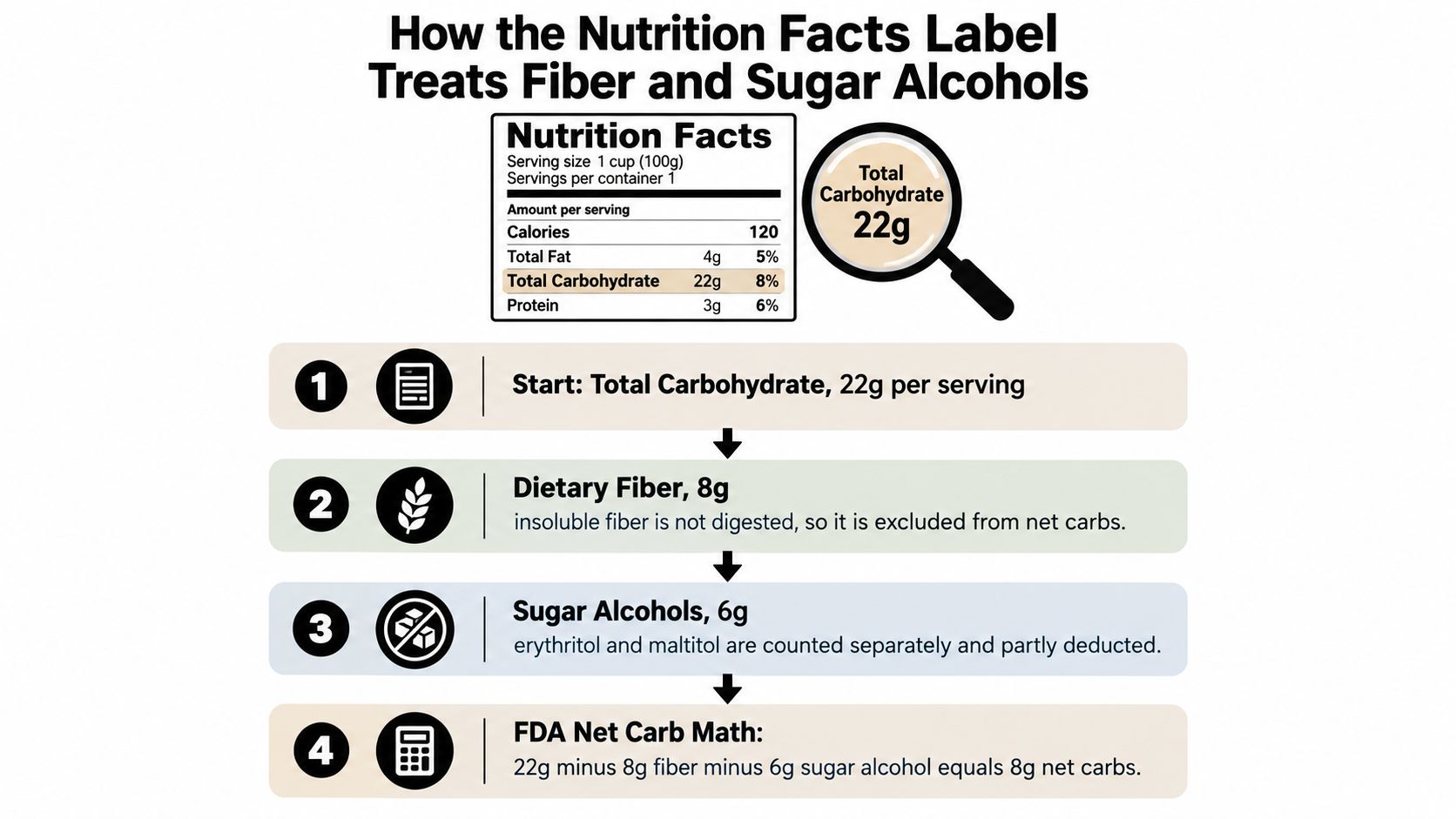
A keto cookie mix may display net carbs prominently, but that phrase is not an FDA-defined value on the Nutrition Facts panel. The regulated figures are total carbohydrate, dietary fiber, total sugars, and added sugars. A manufacturer can show its own net-carbohydrate calculation, yet you still need to compare it with those figures and the ingredient list.
Dietary fiber does not mean every carbohydrate a person digests incompletely. The FDA recognizes naturally occurring, intact plant carbohydrates, along with certain isolated or synthetic nondigestible carbohydrates that have demonstrated beneficial physiological effects. A qualifying fiber must contain at least three monomeric units. A nondigestible carbohydrate that does not meet the dietary-fiber definition remains within total carbohydrate.
That distinction changes how you assess a cookie mix. Two products may advertise similar fiber amounts while using sources with different regulatory treatment, baking behavior, and effects on texture. Because many mixes use isolated prebiotic fibers, review the types of prebiotic supplements before treating a fiber line as an automatic deduction. The FDA also expects fiber values to be established with suitable AOAC analytical methods, so responsible formulation depends on ingredient specifications and laboratory verification, not casual subtraction.
The FDA's Daily Value guidance for Nutrition and Supplement Facts labels explains how total carbohydrate, fiber, sugars, and added sugars appear on the label. Its guidance on dietary fiber labeling and analytical methods provides the technical background for deciding what may be declared as dietary fiber.
Why sugar alcohols need their own line of thought
Sugar alcohols are excluded from the regulatory definition of sugars, but they can require separate declaration when a product makes a claim about sugar, added sugar, or sugar alcohols. They remain part of total carbohydrate. The specific polyol also matters because it can affect sweetness, browning, texture, metabolizable energy, and digestive tolerance.
Erythritol, maltitol, sorbitol, xylitol, and isomalt belong to the same broad family, but they do not perform identically in a recipe or in the body. The Nutrition Facts panel should therefore reflect the actual sweetener system, rather than treating all polyols as one interchangeable deduction. The FDA's nutrition labeling guide for sugar alcohol declarations outlines the relevant labeling framework.
For a plain-language explanation of these ingredients in packaged food, read this guide to sugar alcohol in food. The practical lesson is straightforward: net carbs are a manufacturer's calculation, not a standardized Nutrition Facts value. Read the declared grams, identify each fiber and sweetener, and judge deductions ingredient by ingredient.
A Five Step Audit for Any Keto Cookie Mix
A label audit doesn't require specialist equipment. It requires reading in a consistent order so a striking front-of-package claim doesn't make you skip the less glamorous details on the back.
Start with total carbohydrate
Find Total Carbohydrate per serving first. This is the broadest carbohydrate figure on the panel, and it gives you the starting point before fiber or any sweetener interpretation enters the picture.
Don't begin with the net-carb claim printed beside the product name. The total tells you what the manufacturer has declared before you consider the components that may be treated separately.
Verify the fiber type and amount
Next, inspect both the dietary fiber line and the ingredient list. Look for the actual source, such as soluble corn fiber, inulin, polydextrose, acacia, psyllium, or another named ingredient. The label's fiber grams are more useful when you know what created them.
A high fiber number by itself doesn't tell you whether every carbohydrate in the formula can be treated as an equivalent deduction. The FDA's definition and documentation requirements matter, particularly when a mix uses several functional carbohydrates.
Identify the sweetener system
Now locate the sweeteners. The ingredient list may name erythritol, maltitol, sorbitol, xylitol, isomalt, allulose, monk fruit, stevia, or a blend of several ingredients. The Nutrition Facts panel may list sugar alcohols separately when the applicable claim and labeling conditions require it.
This step explains why two mixes with similar total carbohydrate can bake and feel very differently. Sweetener choice affects sweetness, spread, crispness, aftertaste, and the likelihood that a large portion will feel comfortable.
Check the serving size against your portion
Ask what the package calls one serving and how many finished cookies that serving represents. A label can look modest when viewed per serving, yet your actual snack may include several servings if the cookies are small or particularly easy to eat.
A useful audit compares the listed portion with the cookies you plan to make, the size you usually serve, and whether you're eating them alone or alongside another snack.
Recalculate carefully
Subtract only the fiber and sugar alcohol components that the label and applicable rules support. Don't automatically remove every unfamiliar carbohydrate, and don't assume that the largest advertised deduction is the most meaningful one for your body or goal.
For a more detailed introduction to reading the complete panel, use this practical Nutrition Facts label guide. It helps to write the calculation down once, then compare the result with the ingredient list rather than relying on a rounded front-panel statement.
Label-reading habit: If the Nutrition Facts panel looks unusually neat but the ingredient list contains several fiber and sweetener systems, slow down and investigate the individual components.
Sweetener Systems and How They Behave When Baked
Sweeteners influence much more than the sweetness of the dough. They can determine whether a cookie spreads, browns, stays soft, develops a cooling sensation, or leaves an aftertaste. The right choice depends on whether your priority is a familiar bake, a clean flavor, or digestive comfort.
| Sweetener | Sweetness compared with sugar | Browning | Cooling effect | Tolerance notes |
|---|---|---|---|---|
| Erythritol | Less sweet than sugar and often blended with other sweeteners | Limited browning | Noticeable cooling sensation for some people | Individual tolerance varies, especially as intake increases |
| Monk fruit blends | Clean sweetness, usually paired with a bulking ingredient | Limited browning on its own | Generally little cooling effect | The blend's other ingredients determine texture and tolerance |
| Allulose | Sugar-like sweetness and useful bulk | Can support a more sugar-like baked result | Usually less cooling than erythritol | Read the full label and assess personal response |
| Stevia blends | Very concentrated sweetness | Needs a separate bulking system | Usually little cooling | High levels can create bitter or metallic notes for some palates |
Erythritol often appeals to formulators because it can provide bulk as well as sweetness, but it may leave a cooling sensation and can behave differently from sugar in a hot oven. Monk fruit typically supplies sweetness rather than bulk, so a mix needs another ingredient to create dough volume and structure.
Allulose is often selected when a baker wants a result closer to sugar's browning and handling behavior. Stevia blends can keep the sweetener quantity small, but the rest of the formula has to supply the physical volume that sugar would normally provide. That supporting system can influence whether the finished cookie feels cakey, crisp, sandy, or soft.
Choose by the problem you need to solve: prioritize browning when the cookie looks pale, bulk when the dough lacks structure, and clean sweetness when aftertaste is the main concern.
The phrase “sugar free” also doesn't tell you which sweetener is present or how it will feel after baking. Read the ingredient list and consider the complete blend. For a closer look at formulation choices intended to reduce unpleasant aftertaste, consult this guide to artificial sweeteners without aftertaste.
Baking With a Keto Cookie Mix From Bowl to Tray
The package directions should be your starting point because every formula absorbs liquid and spreads differently. A mix built around almond flour won't behave exactly like one built around coconut flour or a large amount of fiber, so changing the fat or egg quantity casually can alter the dough more than you expect.
Begin by preparing the tray and gathering the wet ingredients before opening the pouch. Parchment can make release easier, while a refrigerated dough may need a short rest at room temperature so the fats blend evenly. Follow the manufacturer's oven setting rather than borrowing a temperature from a different recipe.
Build the dough with intention
Butter tends to bring a familiar dairy flavor and a rich mouthfeel. Ghee can produce a different spread and aroma, while coconut oil and avocado oil can change firmness and the way the cookie feels after cooling. Use the fat named in the package instructions first, then experiment only after you understand the base formula.
Eggs provide moisture and structure. If you're avoiding eggs, a flax egg, chia egg, or commercial egg replacer may work, but each adds a different amount of water and gel. A substitute can make the dough softer, denser, or more fragile, so test a small batch before changing the whole pouch.
Mix until the dry ingredients are hydrated and the dough holds together. Portioning evenly matters because keto dough can be sensitive to differences in thickness. If one cookie is thin and another is thick, they may finish at different times even when they share a tray.
Judge doneness by appearance
Keto cookies often continue to firm as they cool. Look for set edges and a center that still has some softness rather than waiting for the entire cookie to look crisp in the oven. Overbaking can produce a hard or dry result, particularly when the formula contains little conventional sugar.
Let the cookies rest on the tray before moving them to a rack. That short cooling period allows the structure to settle and reduces breakage. A cookie that seems too soft immediately after baking may become pleasantly firm once fully cooled.
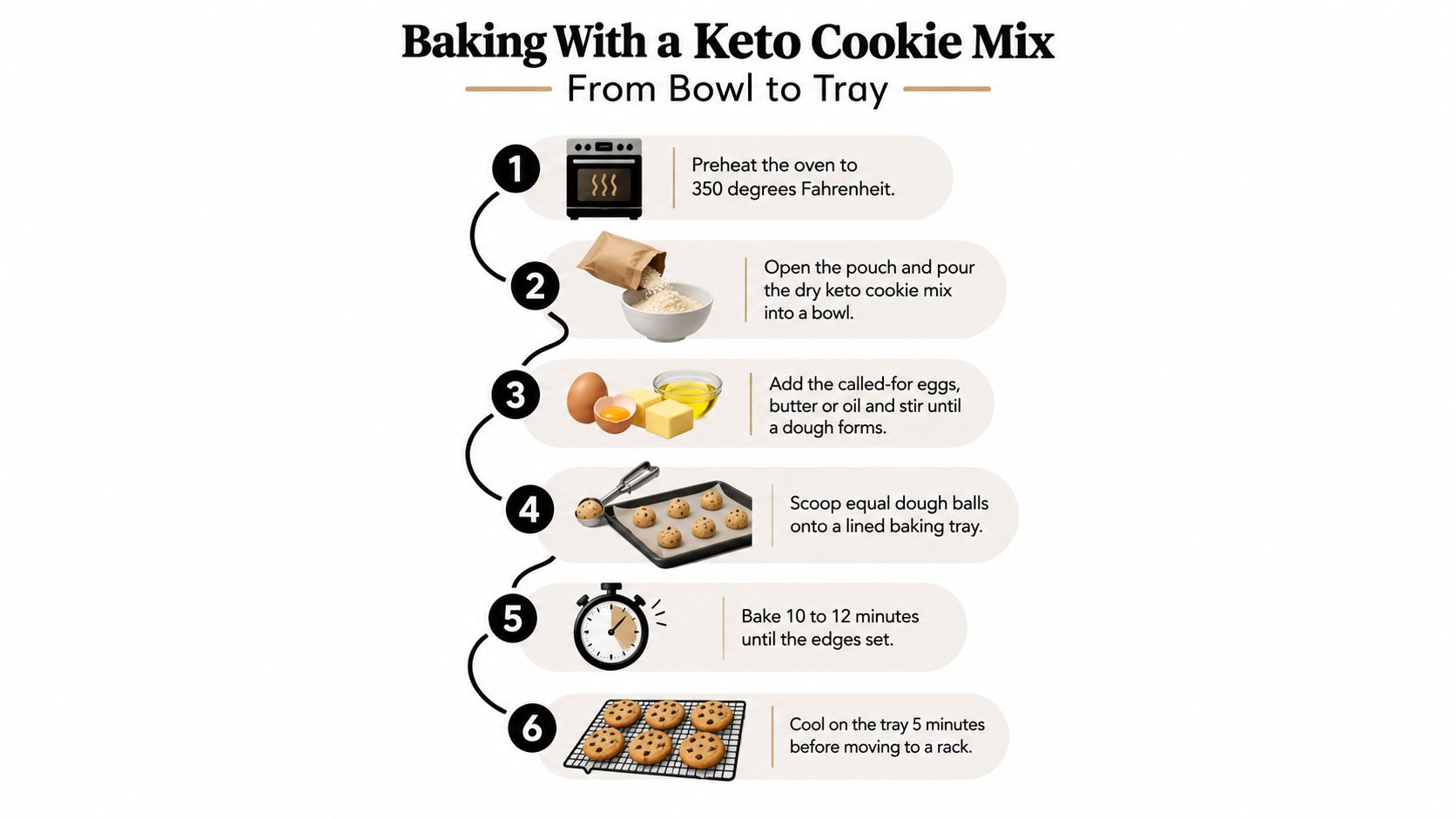
For a visual demonstration of the process, watch the following baking guide.
Serving Size, Digestion, and Who Should Be Cautious
A package may describe a modest portion, but people often judge cookies by pieces rather than servings. If you eat two or three cookies while working, you may multiply the listed carbohydrate, fiber, and sweetener amounts. The label hasn't changed, but your actual intake has.
Fiber and sugar alcohols can also look similar on paper while producing different experiences in the body. Some people tolerate a particular polyol or fiber comfortably, while others notice bloating, cramping, or changes in bowel habits. The ingredient list matters because the name of the sweetener gives you more context than a broad phrase such as “sugar free.”
A cautious tasting plan
| Sweetener | Usual tolerance threshold | Cooling effect | Caution for |
|---|---|---|---|
| Erythritol | Personal tolerance varies with portion and frequency | Can be noticeable | People sensitive to polyols or cooling sensations |
| Maltitol | May be less comfortable for some people than erythritol | Usually less cooling | People who react to digestive effects from polyols |
| Sorbitol, xylitol, or isomalt | Depends on the individual and total intake | Varies by ingredient | People with known polyol sensitivity |
| Monk fruit blends | Depends on the bulking ingredients in the blend | Usually limited | People reacting to the accompanying fibers or sweeteners |
| Allulose-based formulas | Individual response still matters | Usually limited | People with sensitive digestion who are testing a new product |
Start with a small portion when trying a new formula, drink fluids alongside it, and track how you feel over the following day. People with sensitive digestion, irritable bowel symptoms, fructose malabsorption, diabetes, or a known reaction to polyols should be especially careful and may want guidance from a qualified clinician.
No sweetener is universally best. A mix that fits one person's carbohydrate target may be a poor everyday snack if its fiber or polyol system causes discomfort.
Fitting Keto Cookie Mixes Into a Real Snack Routine
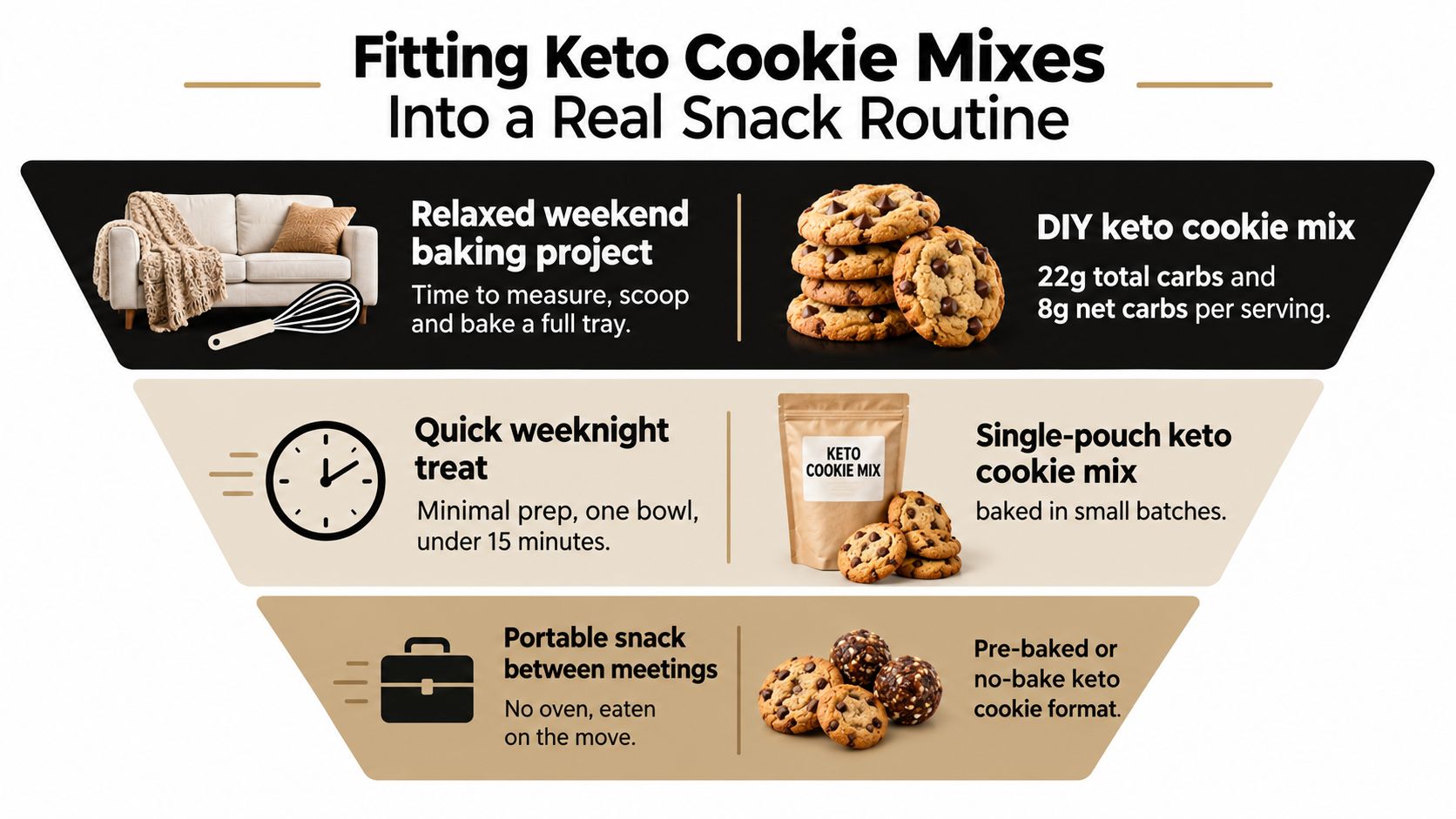
The best format depends on the moment, not just the nutrition panel. A relaxed weekend gives you time to measure ingredients, adjust a dough, and bake a full tray. A busy evening may favor a prepared pouch with minimal cleanup, while a commute or meeting schedule calls for a finished snack that doesn't require an oven.
| Situation | Useful format | What to prioritize |
|---|---|---|
| Relaxed baking project | DIY dry mix or larger prepared pouch | Ingredient control, texture, and experimentation |
| Quick weeknight treat | Prepared keto cookie mix | Simple preparation and a realistic portion |
| Portable snack | Pre-baked cookie or wafer-style format | Package convenience, serving control, and tolerance |
Homemade baking offers control, but it also asks you to keep alternative flours, fibers, fats, and sweeteners on hand. A store-bought mix reduces that setup, although you still need to audit the label and follow the package's serving guidance. Shelf-stable wafels and wafer bars can sit alongside both options when the limiting factor is time rather than a desire to bake.
A practical snack routine should pass three tests:
- It fits your actual schedule: You use the mix because it solves a real preparation problem, not because the pouch looks appealing in the pantry.
- It feels comfortable: The sweetener and fiber system work for your digestion at the portion you usually eat.
- It supports your goal: The full label aligns with your carbohydrate preferences, appetite, and broader eating pattern.
For broader ideas about choosing snacks with a weight-management goal in mind, Trim's snacking guide for weight loss offers useful context. Rotate flavors only when the underlying labels remain clear, and don't mistake variety for permission to ignore serving size.
Rip Van offers convenient low-sugar snacks across Dutch-style wafels, crispy wafers, wafer bars, cookies, and other portable formats, giving you an option when baking isn't practical. Visit Rip Van to compare flavors and formats, then use the same full-label approach to choose a snack that fits your routine and tolerance.
0 comments