

The most popular advice about keto cookies with almond flour is also the reason many batches fail: you can't replace wheat flour with almond flour cup for cup and expect the same cookie. Wheat flour brings gluten-forming proteins, starch, and a structure that stretches as the dough heats. Almond flour brings ground nuts, fat, protein, and fiber, but no gluten network. The dough needs a different balance of moisture, binding, shaping, and cooling.
That difference is useful, not a drawback. Almond flour can create rich, tender cookies with a relatively low digestible-carbohydrate contribution from the flour itself. It can also produce greasy puddles, fragile crumbs, or dense centers when the formula follows wheat-baking rules. The reliable approach is to treat almond flour as its own baking system, then control each variable deliberately.
The Science of Baking With Almond Flour
Why the one-to-one substitution fails
Wheat-flour cookies gain strength from starch and gluten proteins. Hydration and mixing develop gluten into an elastic framework that holds gases, limits spread, and gives the baked cookie enough strength to handle. Almond flour follows a different path because it contains ground nuts rather than a gluten-forming network.
Per 100 grams, USDA FoodData Central lists 16.2 grams of total carbohydrate, 9.27 grams of dietary fiber, 26.2 grams of protein, 50.2 grams of fat, and approximately 622 kilocalories for almond flour (USDA FoodData Central almond flour data). Subtracting fiber from total carbohydrate gives about 6.93 grams of carbohydrate per 100 grams. “Net carbohydrate” remains a recipe calculation rather than an FDA-defined Nutrition Facts value.
That fat content gives almond flour a tender crumb and pronounced flavor. It also affects shape. As the dough warms, free fat can lubricate the particles and encourage spreading before the cookie sets. Increasing the almond flour may intensify richness while making the dough less stable, because the added ingredient brings more fat along with its dry matter.
Practical rule: Treat almond flour as its own dough matrix with its own hydration rules.
What the flour contributes
Finely milled almond flour supplies bulk, protein, fiber, and fat. These components create a satisfying mouthfeel, although they respond differently from wheat starch and gluten. Protein contributes some structure, fiber absorbs part of the available moisture, and fat softens the crumb while encouraging browning at the edges. Too much free fat can leave the baked cookie oily.
The flour's energy density makes portion size relevant even when a recipe contains relatively little digestible carbohydrate. Butter, nut butter, chocolate, and rich fillings can increase the finished cookie's energy content quickly, so the flour's role should be assessed alongside the rest of the formula.
Finely milled, blanched almond flour suits a smooth, bakery-style cookie. Natural almond meal usually contains darker almond skins and has a coarser grind, producing a more rustic texture and less uniform appearance. The choice changes water absorption, dough density, and spread. A recipe tested with blanched flour may need adjustment when almond meal is substituted.
A reliable formula uses three forms of control:
- A dry matrix: Finely milled almond flour provides the main body and absorbs part of the liquid.
- A binder: Eggs, selected fibers, or another suitable binder connects the particles and gives the dough enough cohesion to shape.
- A heat strategy: Chilling, controlled thickness, and complete cooling help the cookie set before its structure weakens.
Texture failures usually trace back to this balance. Greasy, spreading cookies need better control of free fat and dough temperature. Crumbly cookies need more cohesion or moisture. Dense centers often reflect excessive thickness or insufficient setting time. Almond flour works best when fat, moisture, sweetener, and binders are adjusted as a coordinated system.
Selecting the Right Sweeteners and Binders
Sweeteners don't only change sweetness. They affect moisture, browning, cooling sensation, and the way a cookie spreads. Binders matter just as much because almond flour has no gluten to connect the dough into an elastic sheet.
Choosing a sweetener by texture
Erythritol tends to produce a drier, crisper result and can recrystallize as the cookie cools. That characteristic may be useful for a snappy edge, but a high proportion can create a cooling sensation or a slightly sandy finish. If the dough feels dry before baking, adding more erythritol won't fix the underlying balance.
Allulose generally supports a softer, chewier texture and browns more readily than many other low-carbohydrate sweeteners. That can help a pale almond cookie develop color, but it also means the edges may darken before the center is fully set. Use visual cues rather than assuming a familiar wheat-cookie bake time will apply.
Monk fruit is commonly used in blends rather than as the sole bulking ingredient. The blend's carrier determines much of the dough's volume and behavior, so read the ingredient panel instead of treating every monk-fruit product as interchangeable.
Stevia provides sweetness without supplying the same bulk as granulated sugar. It works best when the recipe already has enough dry structure from almond flour or another compatible ingredient. A direct swap can leave the dough thin in volume and alter the balance between wet and dry ingredients.
Sugar alcohols also deserve a closer look because their digestion and baking behavior differ from ordinary sugar. This guide to sugar alcohol in food offers useful context before you choose a sweetener for a family recipe.
Matching binders to the result
Eggs provide water, protein, emulsification, and setting power. Whole eggs tend to make a softer, more cohesive cookie, while extra egg white can increase firmness and reduce some of the richness that comes from yolk fat. Too much egg, however, can push the texture toward cakey or spongy.
Xanthan gum can improve cohesion with a very small amount, but too much can make a cookie gummy. Psyllium husk adds water-binding capacity and can reinforce a fragile dough, though it may create a denser bite if the dough doesn't receive enough hydration. Use one binder strategy at a time when testing, so you can tell which ingredient caused the change.
| Ingredient | Effect on Spread | Browning Level | Best Texture Outcome |
|---|---|---|---|
| Erythritol | Usually limits spread as the dough dries | Low to moderate | Crisp edge and firmer bite |
| Allulose | Can encourage a softer, more spreading dough | Moderate to high | Chewy center with browned edges |
| Monk fruit blend | Depends on the bulking ingredients in the blend | Varies | Balanced texture when matched to the formula |
| Stevia | Adds sweetness with little bulk | Low on its own | Useful in a structured dough |
| Whole egg | Supports cohesion and moderate spread | Moderate | Tender, cohesive center |
| Egg white | Can reinforce the set | Moderate | Firmer, less rich cookie |
| Xanthan gum | Helps limit crumble | Little direct effect | Cohesive, less fragile crumb |
| Psyllium husk | Can reduce uncontrolled spread when hydrated | Little direct effect | Denser, more resilient texture |
For a chewy center, start with a sweetener that retains some softness, a whole egg, and enough binder to prevent cracking. For a crisp edge, use a drier sweetener profile, flatten the dough more thinly, and avoid excess egg or liquid. Don't change the sweetener, egg quantity, and binder simultaneously. One-variable testing is slower at first, but it prevents you from mistaking a lucky batch for a repeatable formula.
Step-by-Step Mixing and Baking Instructions
Almond flour dough rewards precision more than wheat-flour dough does. Weigh the flour and sweetener, use the same scoop or scale for every portion, and keep the dough thickness consistent. Almond flour contains no gluten network to absorb small measuring errors, so a little extra flour, sweetener, or liquid can change spread and structure noticeably.
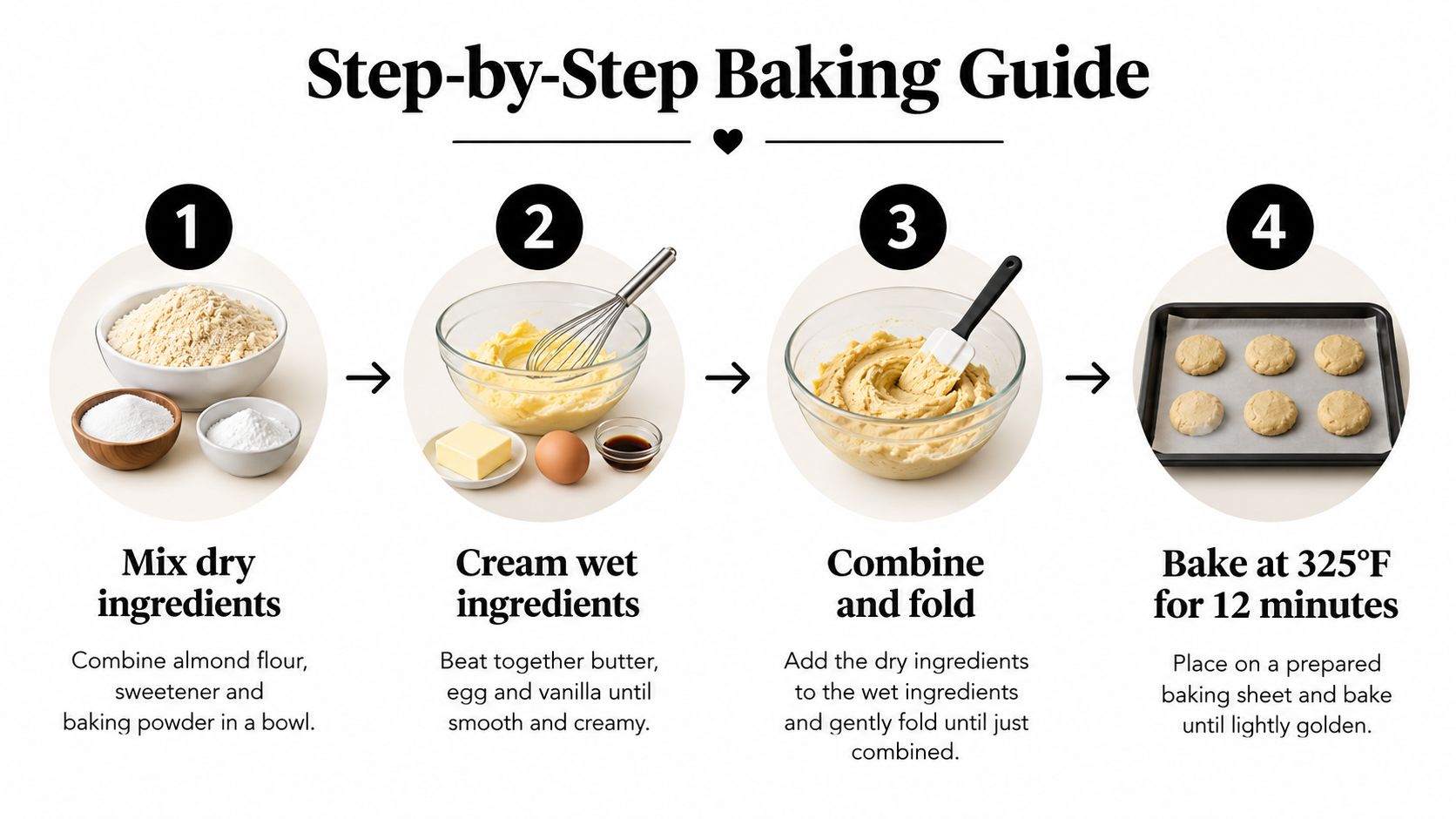
Build the dough in the right order
- Mix the dry ingredients. Whisk finely milled almond flour, the selected granulated sweetener, salt, and leavening until the mixture is even. Break up flour pockets at this stage. After liquid is added, dry clumps are harder to disperse without compacting the dough.
- Cream the fat and sweetener. Use softened butter, not melted butter, when the formula relies on a creamed base. Beat until smooth, then add the egg and vanilla gradually. Ingredients at a similar temperature emulsify more evenly. A cold egg can make soft butter seize into a lumpy mixture.
- Combine gently. Add the dry mixture in stages and fold until no obvious flour remains. Almond flour has no gluten to develop, but extended mixing can still compact its particles and produce a heavy cookie. Stop once the dough holds together.
- Rest and portion. Let the dough rest briefly so the almond flour and added fiber can absorb available moisture. Portion each cookie evenly, roll gently, and flatten every mound to the same thickness. A tall ball may retain its shape instead of spreading into a broad, even cookie.
Bake by appearance, not by the clock alone
A published protocol baked almond-flour cookies at 170 ± 2°C for 8 minutes across 9 treatment combinations and 3 replicates, producing 27 experimental units, followed by 30 minutes of cooling before testing (gluten-free almond-flour cookie research). Use those conditions as a controlled benchmark, not as a universal rule for every oven, pan, sweetener, or dough thickness.
Look for lightly golden edges and a center that no longer appears wet or glossy. The middle can still feel soft when the tray leaves the oven. Residual heat continues setting the cookie while moisture redistributes through the crumb.
Do not assess texture while the cookies are hot. Moving them immediately can tear the base, while leaving them on a hot metal tray too long can over-dry the underside. Let them set on the tray, transfer them to a rack, and cool them fully before changing the binder or liquid in the formula.
Record each test batch with a few consistent observations:
- Dough weight per cookie
- Flattened thickness
- Pre-bake and post-bake diameter
- Edge color
- Center firmness after cooling
- Crumble, chew, and aftertaste
- Oven position and pan type
A simple spreadsheet makes these comparisons easier, especially when several people share the same kitchen records. If those records are kept in a browser-based tool, how websites use cookies explains how websites handle stored browser data.
Repeat a small test batch before changing the whole formula. Altering several ingredients at once makes it difficult to identify whether spread, firmness, or browning came from the flour, sweetener, fat, or binder.
Troubleshooting Texture and Common Mistakes
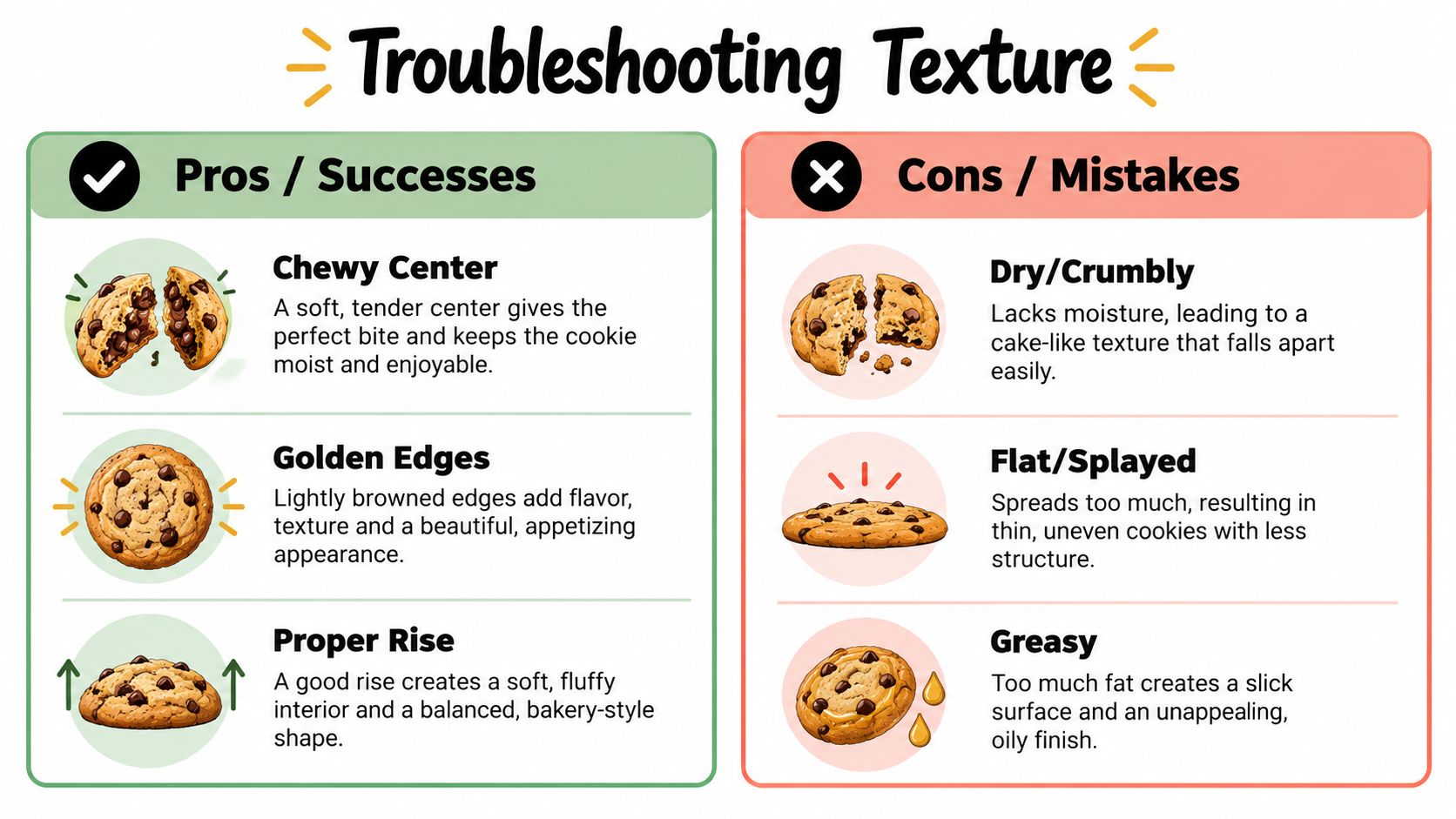
Texture failures usually come from the interaction of fat, water, particle size, binders, and heat. Almond flour contains more fat and no gluten network, so wheat-flour expectations can mislead you. Diagnose the dominant failure before changing the formula.
When the cookies spread too far
Warm dough and excess free fat are the first checks. Soft butter can work in a creamed dough, while melted butter reaches its liquid state immediately and encourages earlier spreading. Peanut butter, coconut oil, and high-fat chocolate inclusions can push the dough further in the same direction.
Chill the shaped dough, then bake one test cookie before filling the tray. If it still turns into a thin, greasy disk, reduce free fat or strengthen the binder. Adding more almond flour may make the cookie heavier and richer without solving the spread, because almond flour contributes substantial fat of its own.
Pan color changes the result too. A dark pan transfers heat more aggressively at the edges, so browning can advance before the center sets. Keep the pan type consistent during testing. A light aluminum sheet and a dark nonstick tray are different baking conditions, not interchangeable equipment.
When the cookies crumble or feel fragile
Crumbly cookies lack cohesion, moisture, or both. Press a portion of raw dough between your fingers. If it fractures before baking, the oven cannot create enough structure on its own.
A measured egg component or suitable dietary fiber can give the dough more support. Let the mixed dough rest before judging its final consistency, especially when fiber needs time to absorb moisture. Avoid adding liquid by guesswork. Excess liquid can produce a soft, spongy center instead of a cohesive crumb.
Almond flour grind also matters. Coarse meal leaves larger particles that interrupt the dough and create a rough, fragile bite. Finely milled blanched almond flour gives a more even surface and consistent structure. Reserve almond meal for cookies where a rustic texture is deliberate.
When the cookies are pale, dense, or spongy
Pale edges can result from a sweetener that browns slowly, a low oven temperature, or excess moisture. Raising the heat may darken the outside while the center remains under-set, so change one variable and assess the middle as carefully as the rim.
A spongy cookie often has too much egg or liquid for its dry matrix. Density can come from overmixing, tightly packed portions, or dough shaped too thickly. Weigh the ingredients because almond flour varies with grind and packing. A scale gives each batch the same starting balance.
The fastest rescue is a single-cookie trial. Bake one portion, cool it fully, record the result, and adjust only the variable most closely connected to the symptom.
Water activity matters at home because a thoroughly dried, fully cooled cookie usually stores more reliably than one sealed while warm. A no-added-sugar gluten-free cookie study reported measured water activity from 0.76 to 0.81, with the tested 50:50 almond-flour and coconut-flour blend producing the lowest value; it also notes that most spoilage bacteria generally do not grow below 0.91 (no-added-sugar gluten-free cookie formulation study). Let cookies cool completely before storing so trapped steam does not soften the crumb.
For comparison, low-sugar meringue cookies use a very different structure from almond flour dough. Their delicate texture still demonstrates how ingredient interactions, moisture, and setting conditions matter more than sweetness alone.
High-Value Variations and Flavor Add-Ins
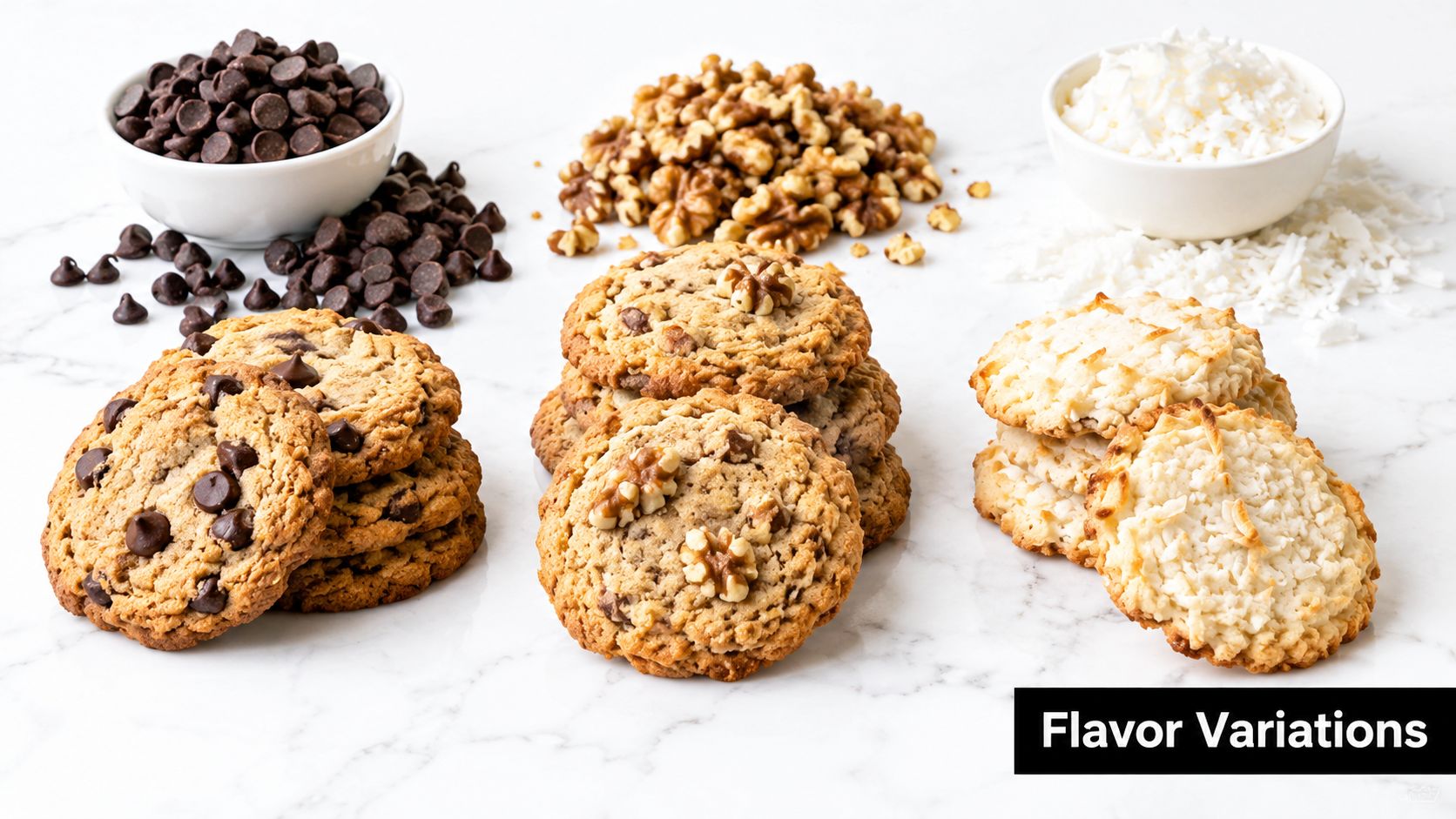
Once the base cookie holds its shape, add-ins become a controlled way to change flavor and texture. Add them gradually, because every inclusion brings its own fat, solids, or moisture and can shift the dough away from the tested balance.
Chocolate chip cookies
Sugar-free chocolate chips add cocoa solids, sweetener, and fat. Fold them in at the end so mixing doesn't smear the chips through the dough. If the dough becomes noticeably softer after adding them, chill the portions before baking rather than immediately adding more flour.
Use smaller chips when you want chocolate distributed through every bite, or chopped chocolate when you want larger melted pockets. Check the label for total carbohydrate, fiber, and added sugars because “sugar-free” doesn't mean carbohydrate-free.
Peanut butter cookies
Peanut butter contributes both solids and additional oil. A dough that was stable before the addition may spread more readily once peanut butter enters the formula. Start with a natural peanut butter that has been stirred thoroughly, then reduce some of the base butter if the mixture looks glossy or loose.
A small amount of extra binder can help, but don't use binder to hide an overloaded fat profile. The finished dough should be soft enough to shape without leaving an oily film on the hands. Chill it if the edges slump as you press them.
Coconut and nut variations
Unsweetened coconut flakes absorb moisture and create a more fibrous chew. They can make the dough seem dry even when the final cookie won't be, so rest the mixture before deciding to add liquid. Chop the flakes finely for a more cohesive cookie and leave them larger when a pronounced texture is part of the goal.
Walnuts, pecans, pistachios, and almonds add crunch but also introduce more fat. Toasting can deepen flavor, yet toasted nuts may make an already rich cookie seem heavier. Fold them in after the dough has formed, and keep the pieces small enough that they don't fracture the cookie during portioning.
Egg-free adaptations
Replacing an egg removes water, protein, and emulsifying power at once. A flax egg or hydrated chia gel can supply binding, but the result usually needs a longer rest so the gel can develop. The cookie may be denser and less aerated than the egg-based version, so flatten it deliberately and judge the center only after cooling.
For a vegan dough, use a plant-based fat that remains solid enough to support shaping. Liquid oils tend to make a gluten-free cookie spread aggressively unless the formula includes enough dry structure and the dough is thoroughly chilled.
Keep a separate version of your base formula for substitutions. An egg-free or vegan cookie isn't just the original cookie with one ingredient removed. Its hydration, emulsification, and setting behavior have all changed, so test the altered dough as its own recipe rather than expecting a perfect one-for-one result.
Nutrition Tracking Storage and Shelf Life
Almond flour can support a lower-carbohydrate cookie, but its nutrition belongs to the complete serving, not the flour alone. FDA labeling distinguishes total carbohydrate, dietary fiber, total sugars, and added sugars, so read those values together rather than reducing the recipe to a single “net carb” figure (FDA guidance on dietary fiber and Nutrition Facts labeling).
Calculate the finished cookie
Record the package values for every ingredient, including the sweetener, chocolate, nut butter, dairy products, and flavor additions. Add the recipe totals, then divide by the number of cookies produced. Uneven cookies create uneven servings, so weigh portions before baking or calculate the nutrition per gram after cooling.
Track these fields:
- Serving size: State whether one cookie is the serving.
- Total carbohydrate: Use the complete recipe total, including sweeteners and inclusions.
- Fiber: Count only fiber declared and defined for labeling purposes.
- Calories and fat: Keep both visible because almond flour contributes substantial fat and energy.
- Protein and saturated fat: Include them when comparing formulas or packaged snacks.
- Added sugars: Check each sweetened ingredient, including chocolate and blended sweeteners.
A low-carbohydrate ingredient does not guarantee the same blood-glucose response for every person. Likewise, a “keto” label does not make a calorie-dense cookie suitable for every eating pattern. Use the label to describe the recipe accurately, then judge the serving in the context of the rest of the diet.
Protect texture and flavor
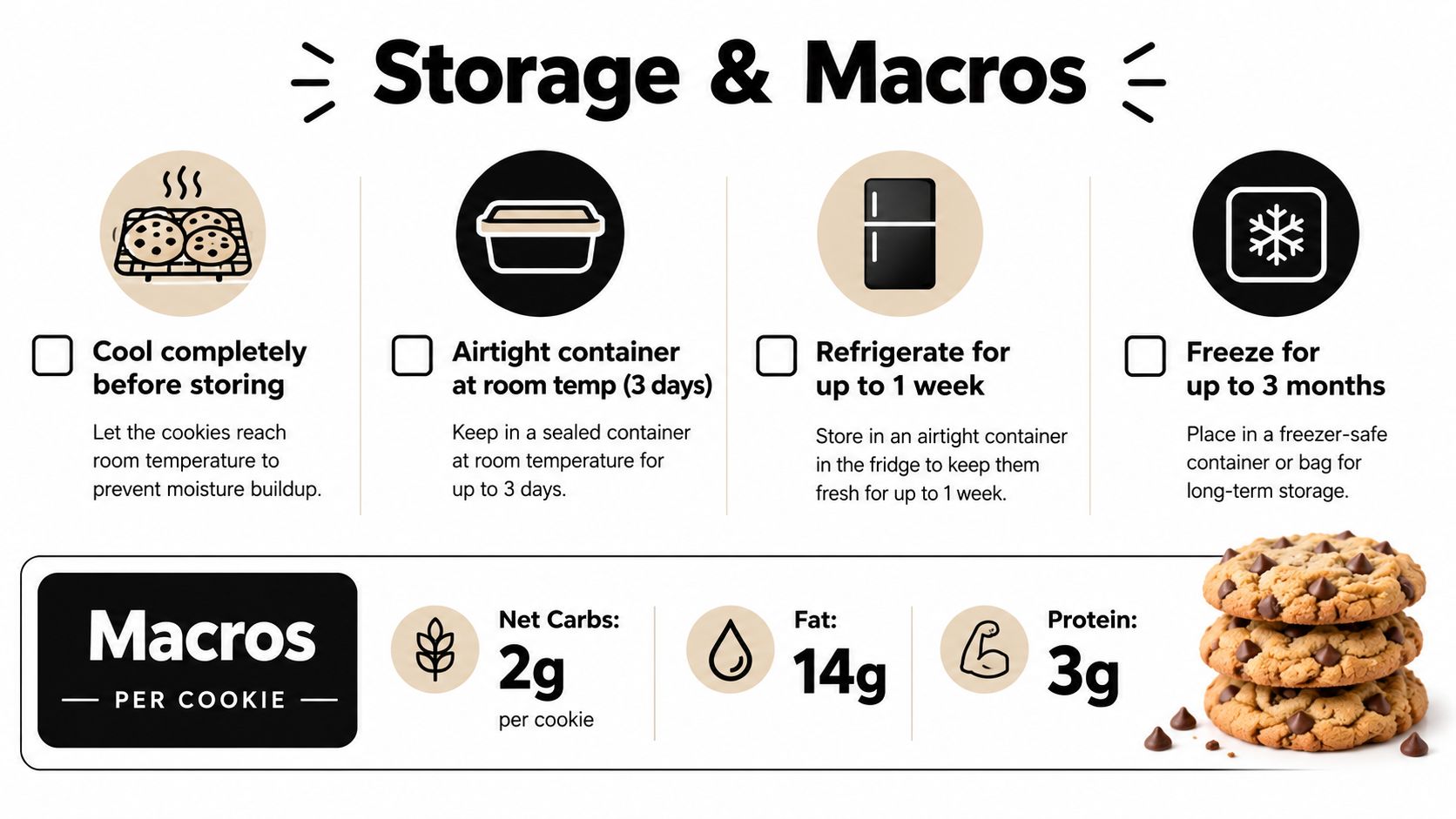
Cool the cookies completely before sealing them. Residual heat becomes condensation inside the container, softening crisp edges and encouraging moisture migration. Store cookies in an airtight container, and keep soft batches separate from cookies whose crisp texture matters.
For batch rotation, FIFO storage solutions from Simply Hospitality provide a useful system. Mark each container with the bake date and move older cookies forward, so the longest-stored batch gets used first.
Refrigeration can extend practical keeping quality, although chilled fat makes the cookies seem firmer. Let them move toward room temperature before assessing texture. Freeze extra portions when needed, wrapping cookies individually or sealing them with as little trapped air as possible.
Almond flour contains considerable unsaturated fat, which can contribute to stale or rancid flavor as storage continues. Keep the flour cool and protected from light, and discard cookies with a paint-like, bitter, or stale-nut aroma. For portable portions, resealable snack bags limit air exposure and make individual servings easier to track.
Rip Van offers low-sugar, high-fiber snacks, including wafels, wafers, wafer bars, and cookies, with options organized around preferences such as keto and gluten free. For a convenient alternative to homemade keto cookies with almond flour, visit Rip Van to compare portable snack options and ingredient lists.
0 comments