

You're hungry, standing in front of a snack shelf, and one package promises everything you want to hear: keto, low carb, perhaps zero sugar. You toss it into your basket because the front label feels reassuring. Later, you check the nutrition panel and discover that the serving is smaller than expected, the fiber is minimal, and the sweetener may not behave the way you assumed.
That experience is common because low-carb marketing and keto compatibility aren't identical. A useful snack has to fit your carbohydrate target, but it also needs enough protein or fiber to satisfy you, a realistic serving size, and ingredients you tolerate well. This guide will help you evaluate keto low carb snacks beyond the claims printed on the front.
Why Keto Snacking Feels Like a Trap
You've planned your meals carefully, but hunger arrives between them. At the store, a brightly packaged bar or cookie appears to solve the problem. The product says “keto,” so you expect it to support your plan. An hour later, you're still hungry, reaching for another snack, and wondering whether the issue is your discipline.
Usually, the issue is the evaluation method. A front-of-package claim can highlight low sugar while saying little about total carbohydrates, fiber, sugar alcohols, protein, fat, or serving size. A snack may technically fit a low-carb pattern but provide so little protein or fiber that it doesn't feel like food for long. Another may be energy-dense enough that repeated portions work against your broader goals, even if its carb count looks attractive.
The category grew faster than the shopping guidance
Keto began as a medical eating pattern in the 1920s, when doctors used a high-fat, very low-carbohydrate diet to help control seizures in epilepsy. By 2020, a medical review reported that keto was the most Googled diet in the United States, with 25.4 million unique searches, and cited a global ketogenic diet market valued at $9.57 billion in 2019 (medical review of the ketogenic diet).
That history helps explain the crowded snack aisle. Products now imitate familiar foods, including bars, cookies, chocolate snacks, breads, and wafers. The commercial growth is real, but the label literacy needed to judge these products hasn't always kept pace.
Shopping rule: Treat “keto” as an invitation to inspect the label, not as proof that the snack fits your needs.
The most reliable approach is to stop asking whether a package sounds healthy and start asking a few practical questions. How many carbohydrates does your actual portion contain? How much of the product is fiber or sugar alcohol? Does it contain protein, or is it mostly fat and sweetener? Will you feel satisfied after eating it?
Those questions turn a confusing purchase into a repeatable decision. They also make room for different preferences. A cheese crisp, boiled egg, nut portion, or packaged wafer can all have a place, but they serve different purposes and shouldn't be judged by carb count alone.
How to Read Keto Snack Labels Like an Expert
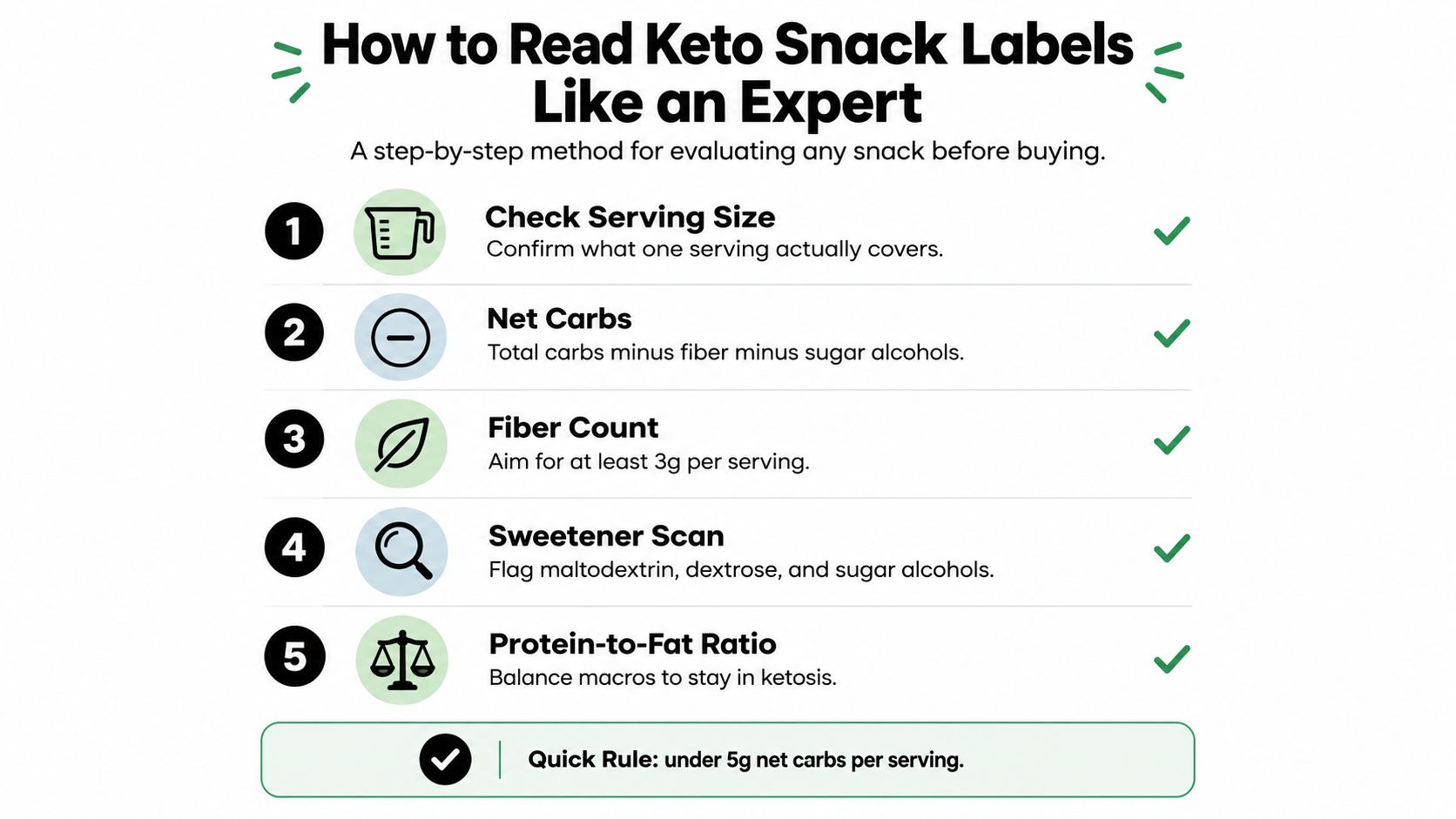
Label reading works best as a fixed routine. Start at the serving size, move through the carbohydrate panel, then inspect the ingredients and the snack's overall balance. Don't begin with the front of the package, because that's where the product makes its broadest claims.
Step 1, check the portion you'll actually eat
A label may list one small portion even though you'd naturally eat the entire pouch. Write down the serving size and compare it with the package. If a bag contains multiple servings, multiply the listed carbohydrates, fiber, and calories by the number of servings you expect to consume.
A snack that looks suitable per serving can become a different choice when eaten as a full package. This isn't a reason to avoid it. It's a reason to make the calculation before hunger makes the decision for you.
Step 2, calculate net carbs carefully
For keto planning, many guides use net carbs, calculated as:
Total carbohydrates minus fiber minus certain sugar alcohols equals net carbs.
Keto-focused guidance commonly uses 5 or fewer grams of net carbs per serving as a practical benchmark (Healthline's keto protein bar guidance). The calculation is useful, but it isn't a universal guarantee. Sugar alcohols differ in how they're absorbed, and some people experience digestive symptoms or a noticeable glucose response from particular ingredients.
Suppose a snack lists total carbohydrates, dietary fiber, and sugar alcohols. Subtract the fiber and the sugar alcohol amount only after confirming what type of sweetener the product uses. Don't subtract every ingredient that sounds like fiber, and don't assume every sugar alcohol has the same effect.
Step 3, look for a satisfying macro mix
Carbohydrates answer one question, but they don't tell you whether a snack will hold you until your next meal. Protein can help manage hunger between meals, while combining protein, fiber, and sometimes healthy fats can support steadier blood sugar and fullness, according to guidance from Harvard Health on low-carb snacks.
Use the panel to ask:
- Protein: Is there a meaningful protein source, such as eggs, dairy, meat, nuts, or seeds?
- Fiber: Does the snack offer fiber rather than only refined starch and sweetener?
- Fat: Does the fat improve satisfaction, or does it make a small snack easy to overeat?
- Calories: Is the portion appropriate for a snack, especially if you're eating several times daily?
The infographic's “at least 3g of fiber per serving” prompt can be a useful screening point, but it shouldn't become a rigid medical rule. Your total diet, appetite, digestion, and energy needs matter more than a single line on a package.
For a visual explanation of this process, Rip Van's guide to reading nutrition labels offers another label-focused reference.
Step 4, read the ingredient list from the beginning
Ingredients appear in descending order by weight. Look for recognizable foods and identify the main sources of sweetness, starch, protein, and added fiber. The nutrition panel tells you how much is present. The ingredient list tells you what created that number.
A product can fit your carb target and still be a poor everyday choice if it leaves you unsatisfied or causes digestive discomfort. Label reading is less about finding a perfect product and more about matching a snack with your body and your situation.
Hidden Carb Traps and Sweetener Mistakes
The most confusing labels usually involve sweeteners and added fibers. A product may contain little conventional sugar while still including ingredients that matter for carbohydrate counting, blood glucose, digestion, or cravings.
Sweeteners don't all behave alike
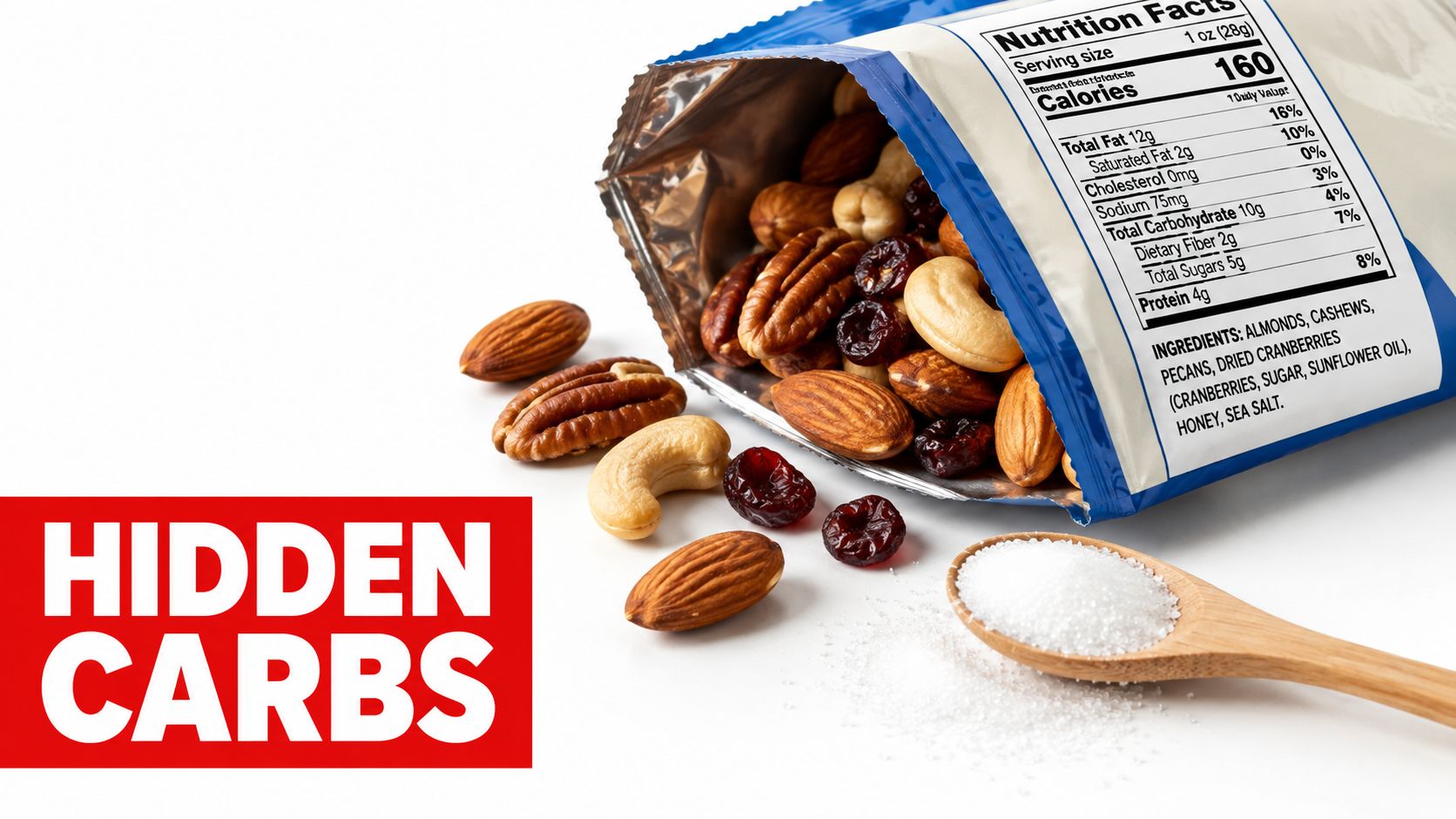
Maltitol deserves special attention. Brands may use it in low-sugar or sugar-free foods, but it's not interchangeable with every other sugar alcohol. Some people find that maltitol affects blood glucose more than they expected, and larger amounts can cause bloating or loose stools.
Other sugar alcohols can also create digestive problems, particularly when you eat several products containing them in the same day. Read the complete ingredient list and watch your own response. If a snack causes discomfort, a low net-carb calculation doesn't make it a good snack for you.
You can review the basic terminology in Rip Van's explanation of sugar alcohols in food, then apply the same caution to any brand.
Scan for less obvious carbohydrate sources
Common red flags include:
- Maltodextrin and dextrose: These are carbohydrate-containing ingredients that can appear in small quantities inside processed snacks.
- Refined flours and starches: Wheat flour, rice flour, tapioca starch, and similar ingredients can raise total carbohydrates even when the package emphasizes low sugar.
- Sweetened fruit pieces: Cranberries, chocolate inclusions, and flavored nut coatings often carry added sugars.
- Large fiber blends: Added fibers may lower calculated net carbs, but the product can still be difficult to digest or less satisfying than a whole-food snack.
- Serving-size tricks: A package can present a favorable number by defining a portion smaller than what a typical eater consumes.
This doesn't mean every processed ingredient is automatically harmful or that a short ingredient list guarantees keto compatibility. The useful question is whether the product's ingredients, nutrition panel, and your planned portion tell the same story.
A snack with a low net-carb figure but a long list of sweeteners may work occasionally, while a nut, seed, egg, olive, or cheese-based option may suit everyday use better. The right choice depends on your tolerance, hunger, and total eating pattern.
Smart Snack Ideas and On-the-Go Planning
A practical snack strategy starts with the occasion, not the product. A snack for a short gap before dinner doesn't need the same structure as food for a long commute, a workday, or travel. Choose the format first, then check whether the label supports it.
Build around a clear snack job
For quick hunger, pair protein with produce or fiber. Examples include a boiled egg with cucumber, plain cottage cheese with a few seeds, or tuna with crisp vegetables. For a crunch craving, try a measured portion of almonds, pumpkin seeds, cheese crisps, or roasted low-starch vegetables. For a sweet craving, choose a low-sugar packaged treat only after checking its serving size, net carbs, and sweetener blend.
Cottage cheese can work especially well when you want a protein-centered option. For additional ideas and flavor combinations, browse these AI-recommended cottage cheese meals, then adapt the portions and fruit choices to your carbohydrate target.
Use a portable three-part kit
A dependable work bag or travel kit can include:
- A protein anchor: An egg, tuna pouch, unsweetened dairy, jerky with a carefully checked label, or a packaged snack with a clear protein source.
- A fiber or produce component: Seeds, nuts, cucumber, bell pepper, celery, or another non-starchy vegetable.
- A measured satisfaction add-on: Olives, cheese, avocado, nut butter, or a low-sugar treat.
The third component matters because satisfaction is part of adherence. If every snack feels austere, cravings can build until you eat whatever is available. A planned treat can fit better than an unplanned grazing episode, provided you still check its label.
Portion the foods that are easy to overeat
Nuts, cheese, nut butter, and many keto desserts contain relatively little carbohydrate but can be dense and easy to eat quickly. Divide them into individual containers before the week begins. Keep one portion at your desk, one in your bag, and one in a place where you usually experience snack cravings.
For homemade preparation, hard-boiled eggs, chopped vegetables, seed mixes, and simple dips can be prepared ahead. Store perishable foods cold and keep shelf-stable items in small portions. Rotate flavors rather than buying a large quantity of one product, especially when you're testing a new sweetener or fiber blend.
Plan for the situation that usually catches you
Remote workers often need a snack that can be eaten without interrupting a meeting. Parents may need something that survives a car ride and doesn't require utensils. Travelers need packaging that remains stable and a label they can understand quickly.
For more portable ideas, Rip Van's grab-and-go keto snack guide can help you think in terms of convenience as well as carbohydrate count. The broader low-carb snack market is expanding, with one 2026 report estimating $4.79 billion in 2025 and projecting $10.5 billion by 2035 at an 8.1% CAGR (low-carb snacks market report). That growth gives shoppers more choice, but it also makes a consistent screening method more valuable.
Evaluating Branded Keto Snacks for Real Life
A branded snack should earn its place by solving a real problem. Compare it with a homemade or minimally processed alternative using the same questions: Does the portion fit? Does it satisfy you? Can you carry it easily? Does the price make sense for how often you'll eat it?
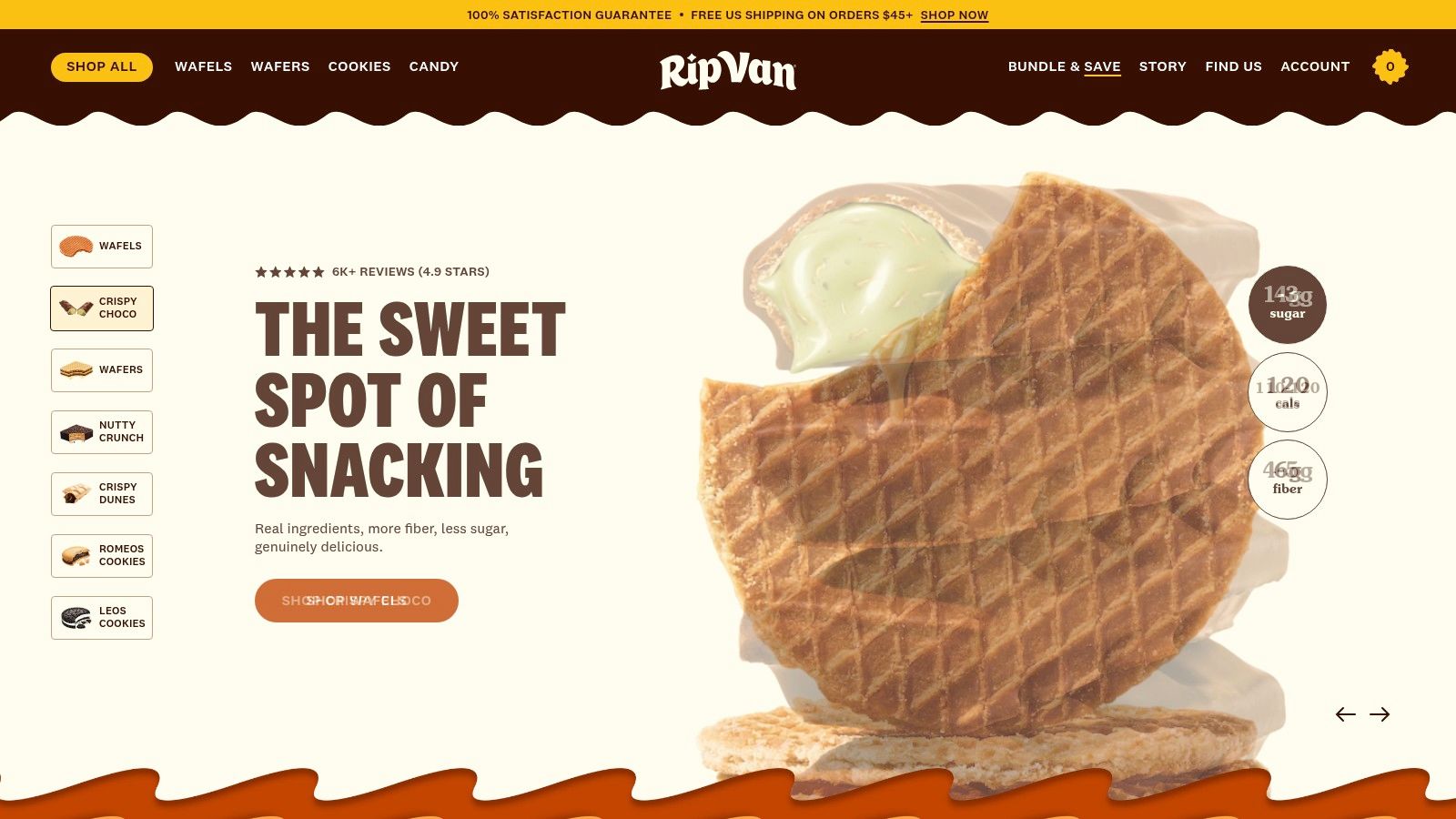
Start with the nutrition panel rather than the brand reputation. For a product such as Rip Van's keto wafers, check the current package for total carbohydrates, fiber, sugar alcohols, protein, calories, and serving size. Product formulations can change, so the label in your hand takes priority over an old blog post or a retailer description.
Compare the snack with realistic alternatives
| Evaluation point | Packaged keto snack | Whole-food alternative |
|---|---|---|
| Carbohydrate control | Use the current label to calculate net carbs | Estimate from the foods and portion |
| Convenience | Usually portable and ready to eat | May require cooling, preparation, or utensils |
| Satisfaction | Depends on texture, flavor, protein, and fiber | Often easier to build around protein and produce |
| Ingredient tolerance | Check sweeteners and added fibers | Ingredients are usually simpler |
| Cost | Pay for convenience and formulation | Often less expensive when prepared at home |
A packaged snack can be useful when it prevents a vending-machine purchase or gives you a predictable option during travel. It may be less useful if you eat several portions without feeling satisfied. Homemade food may offer better control, but it requires planning and may not fit every schedule.
Taste and texture also matter. A product you dislike won't become a sustainable habit because its macros look good. Buy a small amount first, record how it affects hunger and digestion, and decide whether it deserves repeat purchase.
The wider low-carb food market was valued at $15.2 billion in 2024 and is projected to reach $29.8 billion by 2033 at a 7.8% CAGR, according to a separate market report cited in the brief. That commercial scale means shoppers can find more formats, but a larger shelf also creates more opportunities for confusing claims.
A short product demonstration can make the format easier to judge before you buy:
Use branded keto snacks as tools, not automatic staples. The best choice is the one that fits your carbohydrate plan, keeps you satisfied, agrees with your digestion, and works within your budget.
Beyond Net Carbs and Building a Sustainable Keto Snack Strategy
Net carbs are useful, but they're only one part of a snack decision. A product with an exceptionally low number may still leave you hungry if it lacks protein or fiber, while a slightly higher-carb option may be more satisfying within your personal plan.
Research and expert guidance emphasize the value of combining protein and fiber for fullness and steadier blood sugar. That principle matters in keto eating because many familiar low-carb choices center on fat alone. Nuts, cheese, and pork rinds can fit the pattern, but rotating in eggs, seeds, vegetables, fish, dairy, and other protein sources creates a more balanced routine.
Let hunger guide the timing
Eat because you're hungry, not because a snack is available. If you're reaching for food every hour, examine your meals, sleep, hydration, stress, and portion satisfaction rather than adding more low-carb products automatically. A snack should support your day, not turn carbohydrate counting into constant monitoring.
Variety also improves sustainability. Rotate crunchy, savory, creamy, and sweet options. Keep a few dependable choices available, but leave space for meals that provide the bulk of your nutrition.
For broader background on adapting keto to personal goals and daily life, keto diet power unlocked offers another perspective. If you have diabetes, take glucose-lowering medication, are pregnant, or have a history of disordered eating, work with a qualified healthcare professional before making major dietary changes.
A successful keto snack strategy isn't the one with the most extreme label. It's the one you can use repeatedly, understand clearly, and adjust without guilt when your needs change.
Rip Van offers portable Dutch-style wafels, wafer bars, cookies, and other treats positioned around low sugar and higher fiber, with keto options that you can evaluate using the label method in this guide. Visit Rip Van to review the current product nutrition panels and choose a snack that fits your carb target, taste preferences, and daily routine.
0 comments