

You're standing in the snack aisle at 6 p.m., hungry, phone buzzing, holding two packages that both shout some version of sugar-free. One says no added sugar, the other says zero sugar, and the ingredient lists look like chemistry homework. You don't need another roundup of trendy brands. You need a fast way to tell what's honest, what's marketing fluff, and what fits your day, your stomach, and your budget. That's the smarter way to think about no sugar snacks to buy. Learn the labels once, and every future purchase gets easier.
What 'No Sugar' Actually Means at the Store
The front of the package is advertising. Treat it that way. No sugar on a wrapper doesn't guarantee no sweeteners, low calories, low carbs, or a snack you'll feel good after eating. Brands use several different claims, and shoppers waste money when they treat those claims as interchangeable.
Start with the trap I see most often. A product can say no added sugar and still contain naturally occurring sugar from fruit, milk, or other ingredients. That's not automatically bad, but it's not the same as sugar-free, and it matters if you're watching total carbs or packing a lunchbox and trying to keep the whole day in check.
The three claims that mislead shoppers
- No added sugar: Nothing was added during processing, but natural sugars can still be present, and calories can still be high.
- Sugar-free or zero sugar: The sweet taste usually comes from somewhere, often sugar alcohols or other sweeteners in the ingredient list.
- Keto-friendly: This front label tells you nothing until you check total carbs, fiber, and the specific sweeteners used.
The second trap is rounding. A label can show zero when a serving contains less than 0.5 grams, which the FDA industry guidance on Nutrition Facts changes explains can be reported as zero under U.S. rules. Eat three servings without noticing, and your zero isn't quite zero anymore. That's why serving size beats the headline number every time.
You also need a daily frame, or grams mean nothing. The World Health Organization strongly recommends keeping free sugars below 10% of total daily energy intake, with a further suggestion to go below 5% for additional health benefits, according to the WHO guideline on sugars intake for adults and children. On a roughly 2,000-calorie day, the same guideline translates those levels to about 50 grams and 25 grams.
Don't chase the lowest sugar number on the shelf. Chase the snack with honest labeling, real fiber, a portion that satisfies you, and a sweetener your body tolerates.
That daily budget exposes the problem. A few modest-looking sweet snacks can consume a big share of it before dinner. WHO counts sugars added by manufacturers, cooks, or consumers, plus sugars in honey, syrups, fruit juice, and fruit juice concentrates as free sugars. Sugars naturally present in whole fruit and milk are treated differently, so there's no need to panic about every gram of total sugar.
Use four filters from here on. Check the label properly, match the snack to your actual goal, sort the sweeteners, then judge cost per serving. If you pair snacks with coffee, the same label skepticism applies to drinks, and this Cartograph Coffee healthy coffee guide is a useful companion for spotting sugar hiding in your cup. Front labels start the conversation. The back panel settles it.
Reading the Label Like a Shortcut
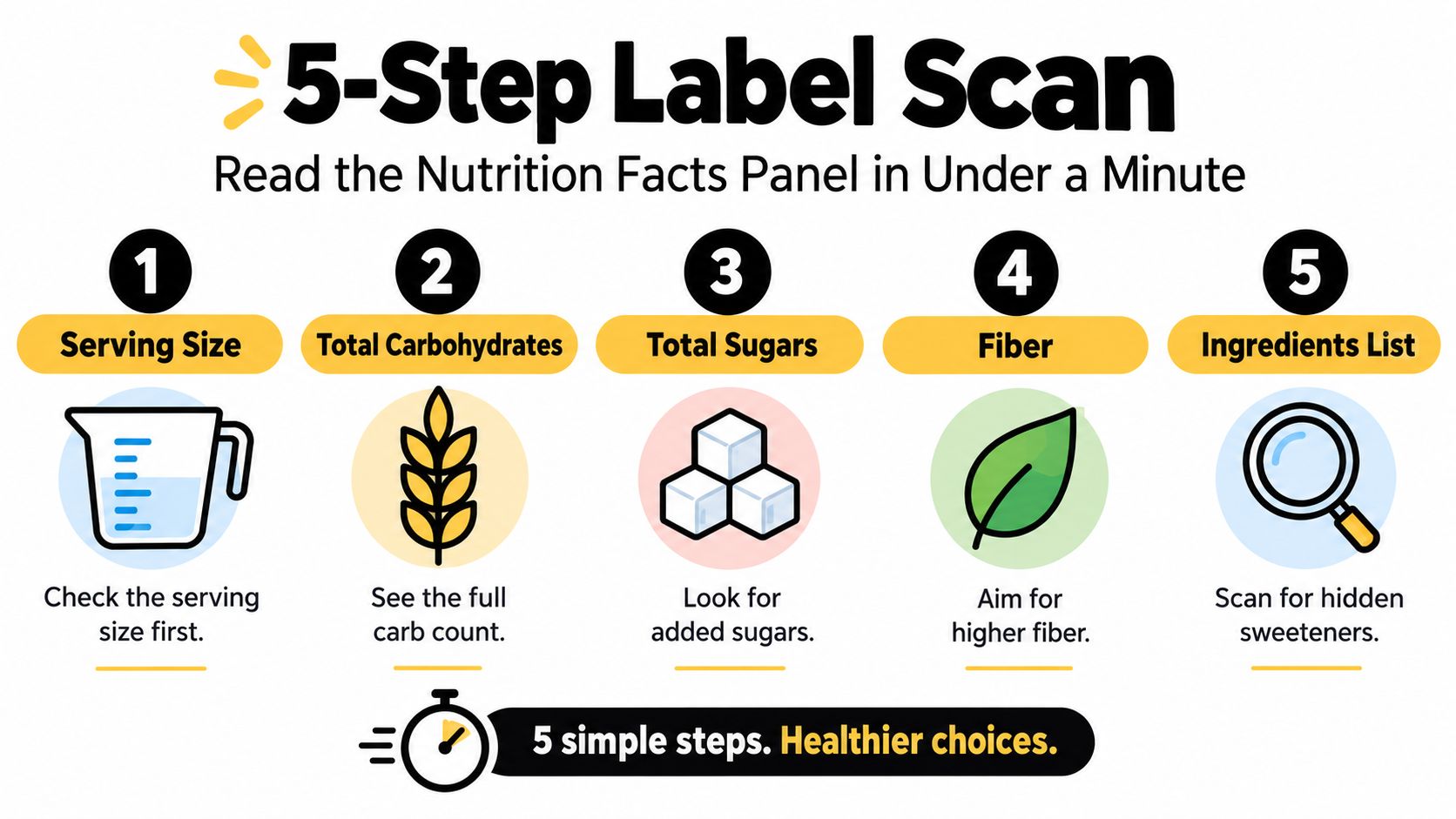
Flip the package over and scan in order. Don't start with calories, and don't start with the health claims. The panel rewards a consistent sequence, and once you've practiced it a few times, it takes less than a minute.
Step 1 is serving size. Everything below it describes that amount, not the whole bag, box, or bar if the package contains more than one serving. Ask yourself one blunt question. Is the listed serving the amount you'll eat while driving, working, or standing at the pantry door?
Work down the panel in this order
- Serving size: Multiply every number below by the servings you'll realistically eat.
- Total carbohydrates: Get the full carb picture before you focus on sugar alone.
- Total sugars and added sugars: Compare both lines, because they answer different questions.
- Fiber: Look for fiber that meaningfully offsets the snack's carb load and helps you stay full.
- Ingredients: Finish by checking which sweeteners created the flavor.
That third step is where most shoppers get tripped up. Total sugars include naturally occurring sugars, while added sugars cover sugars, syrups, honey, and concentrated fruit or vegetable juices introduced during processing, as the FDA explanation of added sugars on the Nutrition Facts label makes clear. A fruit-based bar and a candy-style bar can show similar total sugars for completely different reasons.
Use the infographic below as your pocket version of the scan.
Next, use the percent Daily Value column as a speed filter. The FDA sets the Daily Value for added sugars at 50 grams per day based on a 2,000-calorie diet, and notes 5% DV or less is low while 20% DV or more is high, per the FDA page linked above. If one small snack eats a fifth of your daily added-sugar reference, it had better be worth it.
Fiber is the line shoppers undervalue. Two snacks can show the same added sugar, but the one with meaningful fiber and a sturdier portion usually keeps you satisfied longer. The one without fiber often sends you back for a second snack, which doubles the sugar and the cost.
For a deeper walkthrough of panel terminology, this guide on how to read nutrition labels step by step breaks the same skill into more detail. Apply it beyond sweet snacks too. Crackers, for example, hide sweeteners in places you'd never expect, and these smart cracker swaps for snacking show how the same scan works in the savory aisle.
Quick screen: Low added-sugar percent, honest serving size, visible fiber. If a snack fails two of those three, put it back.
Sweeteners Worth Accepting and Avoiding
Sugar grams tell you how much. The ingredient list tells you what kind. Sort sweeteners into tiers based on your goals and your digestion, not based on whether a package calls them natural.
At the top of my avoid list are the obvious ones shoppers think they've escaped. Table sugar, high-fructose corn syrup, honey, and syrups all count toward the free or added sugar you'd trying to cut. Honey in a wholesome-looking bar is still sugar. A syrup with a rustic name is still sugar. Don't let pastoral branding do your thinking.
The middle tier needs personal testing
Sugar alcohols such as erythritol, maltitol, and xylitol sit in the tolerate-with-awareness tier for many people. They let manufacturers make chocolate, cookies, and wafers taste sweet without the same sugar load. The catch is digestive tolerance, which varies a lot from person to person and from one sugar alcohol to another.
That's the detail most buying guides skip. A sugar-free snack that leaves you bloated through an afternoon meeting isn't a smart buy, no matter how clean the sugar line looks. If you're new to these ingredients, this explainer on what sugar alcohol in food actually means clarifies how they differ from regular sugar and why labels don't always disclose them the same way. Start with one serving, not a box, and see how you feel.
| Tier | Examples | Shopper takeaway |
|---|---|---|
| Avoid if you can | Table sugar, high-fructose corn syrup, honey, syrups | These count as free or added sugars and defeat the purpose of the purchase |
| Tolerate with awareness | Erythritol, maltitol, xylitol | Useful in sugar-free products, but test your digestive tolerance with a single serving |
| Accept if they fit your goals | Monk fruit, stevia, allulose | Common on better-for-you packaging, check total carbs and overall ingredients anyway |
Monk fruit, stevia, and allulose are the sweeteners I see shoppers accept most comfortably, especially when the rest of the ingredient list is short and recognizable. They aren't magic, and they don't rescue a snack loaded with refined starch. They give you sweetness without relying on added sugar or artificial sweeteners.
That distinction matters at the shelf. Brands such as Rip Van build low-sugar wafels and wafers without corn syrup or artificial sweeteners, which is a concrete claim you can verify on the ingredient list rather than a vague wellness promise. Verify it anyway. Every flavor, every brand, every reformulation. Ingredient lists change, and your scan should take ten seconds before anything goes in the cart.
Matching Snacks to Your Real Goal
One snack can't do every job. The wafer that's perfect with afternoon coffee may fail a keto shopper, and the strict keto bar may be a miserable lunchbox choice for a seven-year-old. Pick the goal first, then shop.
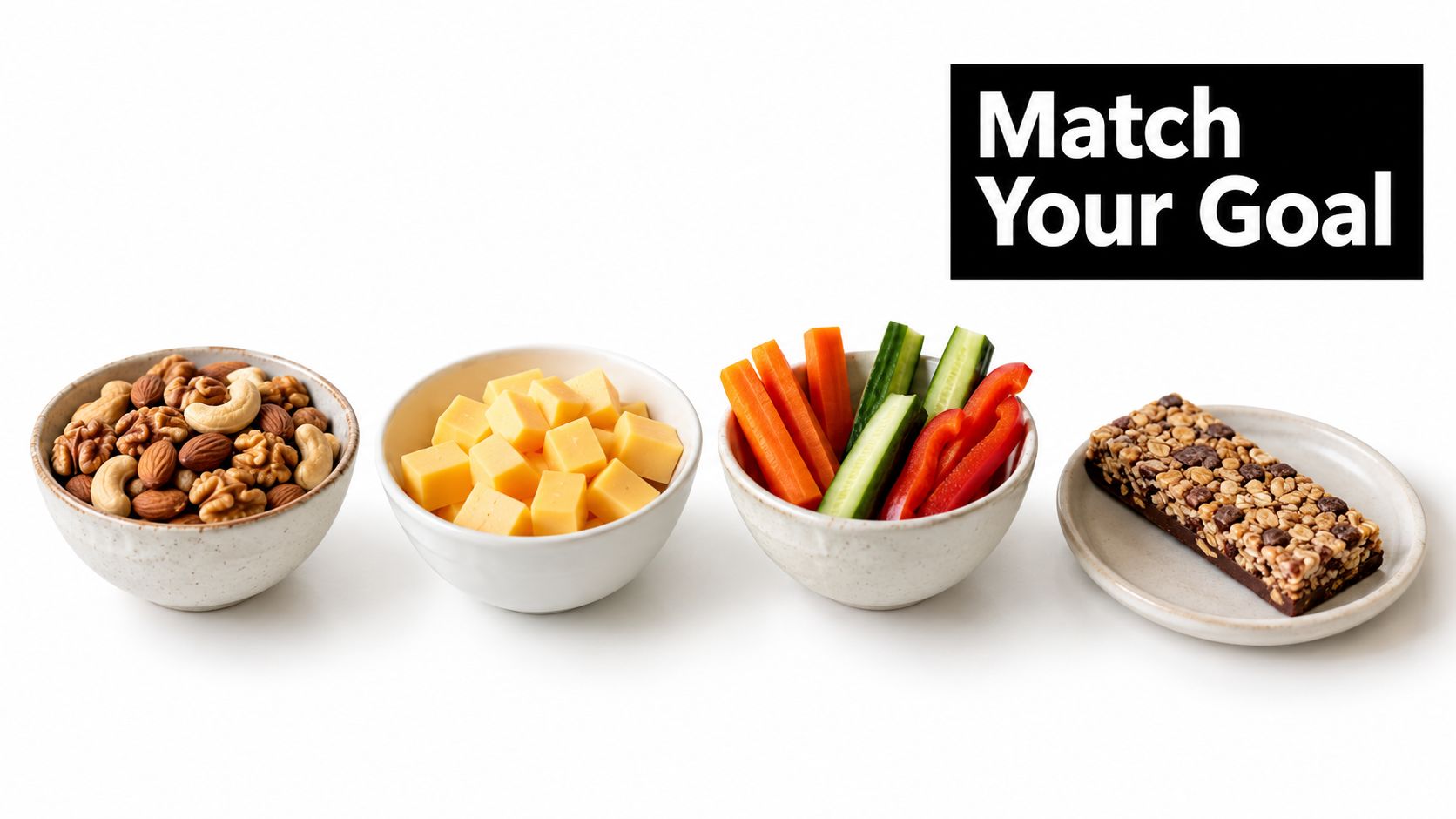
The spread below shows how different goals pull you toward different formats, from nuts and vegetables to bars and wafers.
Keto is the strictest filter. Ignore keto-friendly banners and go straight to total carbs, fiber, and sweetener type. Sugar alcohols and allulose show up frequently here because manufacturers need sweetness without sugar's carb impact. Your tolerance for those sweeteners decides whether a product is a staple or a one-time mistake.
Low-carb shoppers have more room. You still want low added sugar, but you don't need to reject a snack over a small amount of naturally occurring sugar from nuts or fruit. Wafers, cookies, nut-based bars, cheese crisps, and plain popcorn can all work if the serving size is honest and fiber is present.
Families and busy professionals need different things
Parents should optimize for flavor kids will eat, low added sugar, and fiber that makes the snack count. A pristine label nobody touches is wasted money. Individually wrapped wafers, cookies, and fruit-and-nut combinations travel well in lunchboxes, and you can confirm the added-sugar line in seconds before buying a multipack.
Busy professionals should optimize for portability and satiety. Desk snacks need to survive a drawer, not melt in a bag, and hold you until your next meal. Protein-forward options such as meat sticks, nuts, or seeds work well for hunger, while a low-sugar wafer or cookie handles the sweet craving that derails people around mid-afternoon.
The video below offers another visual pass at building a snack lineup around real routines rather than one universal winner.
Your health context matters too, and it isn't identical to your neighbor's. If you're weighing snack choices alongside broader concerns such as blood sugar or cardiovascular goals, this guide on nutrition for heart health explains why personalized targets beat generic rules. Use that thinking here. A family snack, a keto snack, and a post-workout snack are three different purchases, and buying for all three jobs with one product usually satisfies none of them.
Where to Buy for the Best Real Cost
A great snack at a bad price per serving is a bad buy. Shoppers know this instinctively. Price was the leading food-purchase influence at 71%, ahead of healthfulness at 57% and convenience at 52%, in the IFIC Food and Health Survey data from October 2025.
So ignore the package price and do one calculation. Divide the total price, including any shipping, by the number of servings you'll eat. That number is the true cost. A premium snack bought one pack at a time at a convenience store often looks absurd next to the same snack in a multipack.
Compare channels on total cost, not sticker price
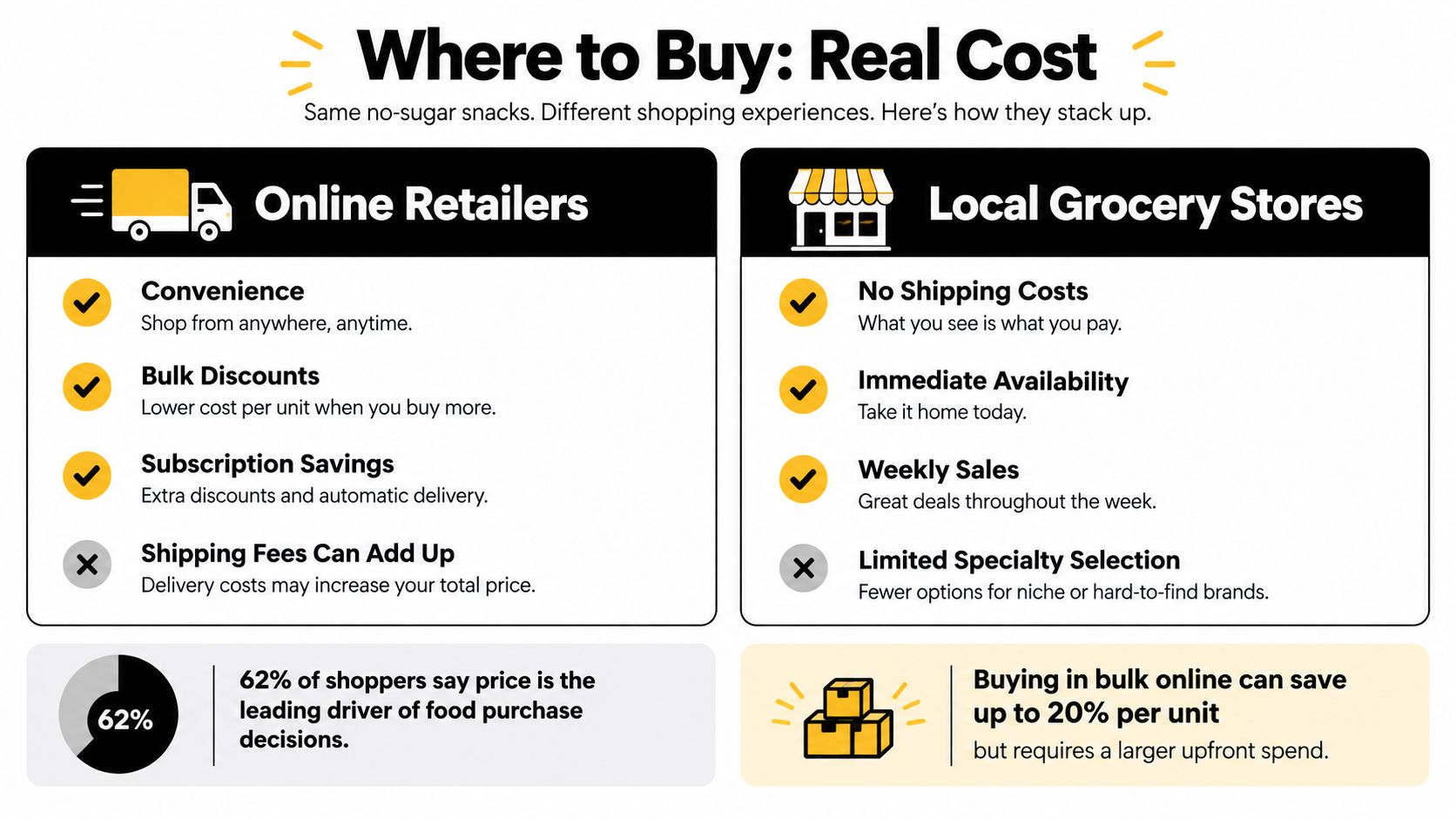
- Direct from the brand: Best selection, multipacks, subscriptions, and satisfaction guarantees, but check shipping thresholds before ordering small.
- Local grocery: Immediate, no shipping, weekly sales, but specialty low-sugar selection can be thin and inconsistent.
- Wholesale and international marketplaces: Useful for bulk buying and access outside your local market, but compare serving counts carefully.
The comparison below sums up the trade-off between ordering online and buying locally.
Factor satiety into the math. A slightly pricier serving with meaningful fiber that keeps you full can be cheaper than a bargain snack that leaves you hungry and reaching for a second one. Two cheap snacks cost more than one good snack, in money and in sugar.
Match the channel to the job. Buy lunchbox and desk staples in multipacks once you've confirmed your household likes them and tolerates the sweeteners. Buy single packs in-store only for testing new flavors. Keep shelf-stable wafers, bars, and nut packs as pantry backup for travel and chaotic weeks.
If ordering online is new to you, this overview of online snack ordering and delivery options covers what to check before checkout. Read the return or satisfaction policy too, because a guarantee lowers the risk of committing to a multipack. Free-shipping thresholds reward planned orders and punish impulse ones, so consolidate instead of placing three small orders a month.
Putting It All Together at the Shelf
Run the same four moves every time, in the same order, and the snack aisle stops being a gamble. Goal first, label second, sweeteners third, cost per serving last. Skip a step and you'll feel it in your stomach, your glucose, or your grocery bill.
Here's the workflow in its shortest form. Name the job the snack has to do, whether that's keto, lunchbox, desk drawer, or travel. Scan serving size, total carbs, total and added sugars, fiber, and ingredients. Check which tier the sweeteners fall into and whether you've tolerated them before. Then divide the total price by real servings.
The four mistakes to stop making
- Trusting the front of the package: Claims are marketing until the panel confirms them.
- Ignoring serving size: A low number for half a bar isn't a low number for the bar you'll eat.
- Chasing zero blindly: Zero sugar with high carbs or harsh sweeteners can still miss your goal.
- Buying premium snacks one at a time: Single packs wreck cost per serving and make good habits feel unaffordable.
The best no sugar snacks to buy are the ones you'd buy again after reading the back of the package, not before.
Do one small thing today. Pull a snack from your own pantry, the one you bought because the front looked healthy, and run it through the scan. Check the serving size you eat, the added-sugar percent, the fiber, and the sweeteners. Decide whether it earns its shelf space or gets replaced on your next shop.
That single test teaches more than any product list. Lists go stale when brands reformulate, prices shift, and stores rotate stock. Your four-step workflow doesn't. Carry it into every store, every website, and every category, and you'll keep buying snacks that fit your goals long after today's trendy recommendation is forgotten.
When you're ready to put this framework to work, Rip Van offers low-sugar wafels, wafers, and cookies made without corn syrup or artificial sweeteners, with options you can filter by dietary goal. Read the labels, compare the fiber and sweeteners against what you've learned here, and order a multipack of the flavor that fits your routine.
0 comments