

You're putting together a snack board, or looking for something crisp to tuck into a lunch bag, and a bag of rosemary olive oil crackers looks like an easy choice. The name sounds wholesome, but it doesn't tell you much about the flour, salt, or fiber inside. And if you're baking at home, the same attractive idea can turn into a disappointing batch if the crackers come out bendy instead of crisp.
A better way to judge them is to look at both sides of the snack: what the ingredients contribute nutritionally, and what the baking and storage process does to texture. Once you know what to look for, rosemary olive oil crackers are easier to assess, make, and serve.
What Rosemary Olive Oil Crackers Actually Are
At a snack board, these crackers sit comfortably between plain water crackers and strongly seasoned flatbreads. They're thin, savory baked crackers, usually made from flour and water, with olive oil for richness and rosemary for an aromatic, resinous note. The result should be crisp and lightly herbed, with a faint fruitiness from the oil, rather than soft, sweet, or bread-like.
That distinction helps separate them from familiar neighbors. Water crackers are deliberately neutral, so toppings take the lead. Shortbread-style crackers tend to be richer and more tender, while breadsticks are thicker and often have more chew. A good rosemary olive oil cracker should break cleanly, carrying enough flavor to be enjoyable on its own without overwhelming cheese, dips, or other accompaniments.
The cracker format began as practical food, not an indulgent snack. Historical accounts trace modern crackers to hardtack, or ship's biscuit, recorded as far back as 1190. Traditional hardtack used flour made from grain or legumes and water, shaped into tablets and baked very hard for storage and transport. The history of crackers and hardtack) helps explain why crackers still suit travelers, workers, students, and families: their compact shape and dry, crisp structure make them convenient to carry.
Over time, that durable format expanded beyond maritime and military food into a broad category of crisp baked snacks. Rosemary and olive oil give the basic idea a more Mediterranean character, while retaining the portability that made crackers useful in the first place.
The Taste and Texture Profile in Plain Language
A well-made rosemary olive oil cracker has a clear flavor arc. Olive oil provides a gentle grassy or fruity note first; rosemary follows with a fragrant, slightly piney character; salt gives the finish definition. The flavor should linger lightly, not coat the mouth or leave a bitter, scorched-herb aftertaste.
Texture is just as revealing. The ideal cracker feels light in the hand and snaps decisively when you bite it. It breaks into small crunchy crumbs rather than bending or turning chewy. A leathery center usually points to uneven drying, while a tough, hard bite can suggest that the dough or final bake needs attention.
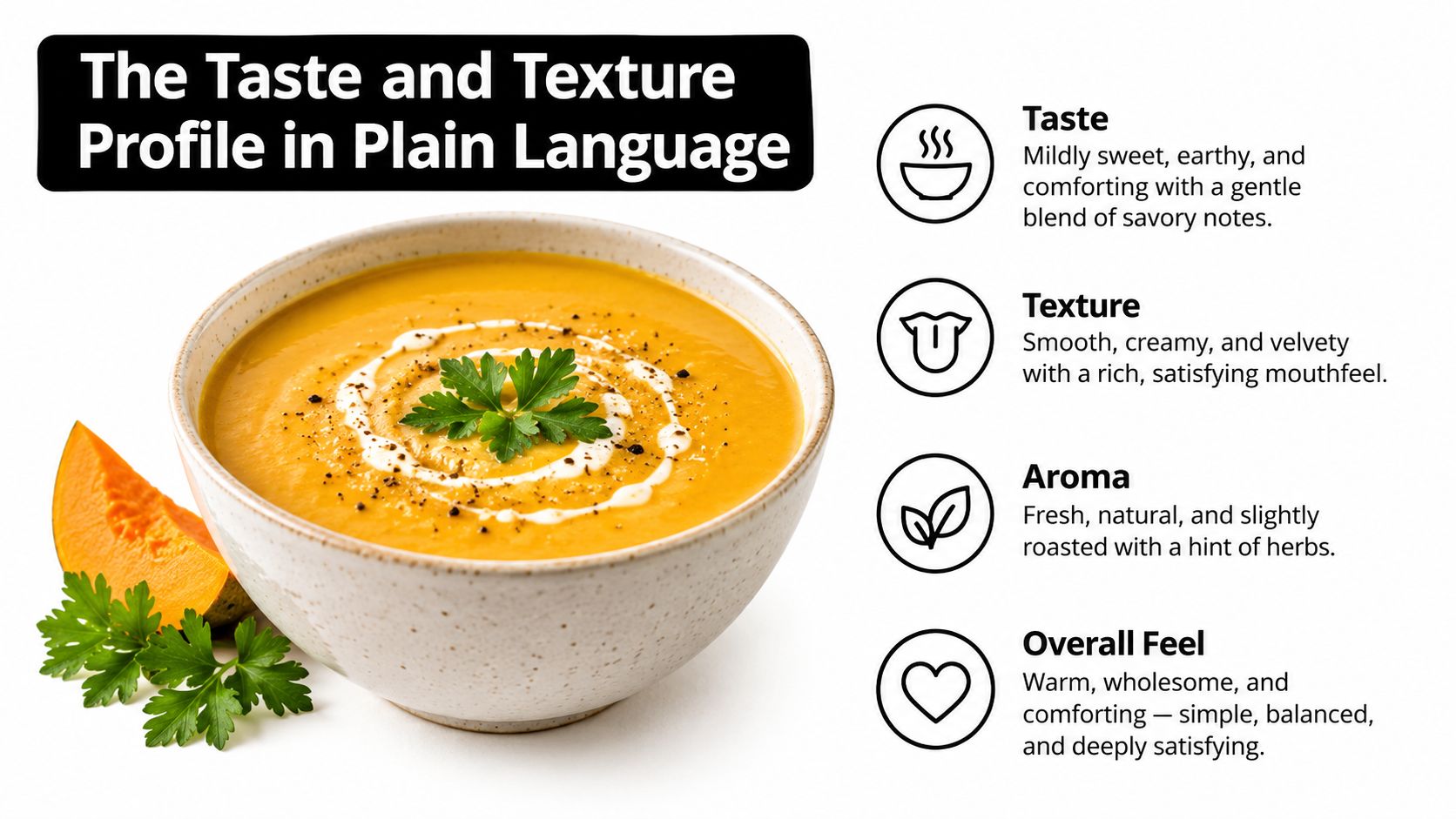
Think of the texture spectrum. A Ritz cracker is rich, tender, and flaky. A Carr's water cracker is comparatively plain and very crisp. Rye crispbread is coarser and denser, with a more pronounced grain flavor. Rosemary olive oil crackers generally land closer to the water cracker end, but olive oil adds a rounder mouthfeel and rosemary makes the aroma more expressive.
A useful test: Listen for the snap, then notice how quickly the cracker clears from your palate. Crispness should be obvious; the rosemary and oil should complement it, not make the bite heavy.
Ingredients, Nutrition, and the Variables That Actually Matter
Start with the flour. All-purpose flour gives a familiar, relatively tender snap. Whole-wheat flour brings a nuttier flavor and can add fiber, while gluten-free blends vary in how they absorb water and hold together. The flour choice affects more than nutrition: it changes dough feel, rolling, browning, and how easily a thin cracker stays intact.
Olive oil contributes flavor and limits gluten development, which helps give the cracker a friable, delicate bite. Extra-virgin olive oil brings a more noticeable aroma; a milder olive oil leaves more room for rosemary and toppings. Fine salt spreads more evenly through dough, while flaky salt sprinkled on top creates occasional salty bursts. Fresh rosemary tends to be aromatic and soft, whereas dried rosemary is more concentrated and can taste harsh if used too heavily.
Hydration and thickness are important, too. A dough with too much water can be harder to dry into a crisp finished cracker; a thick sheet takes longer to dry through than a thin one. Those differences can affect the result more than small changes to the herb quantity.
Compare the ingredient list, not just the name
Olive oil may be a welcome alternative to butter, but it doesn't turn a refined-flour cracker into a balanced snack by itself. Pay attention to the flour, fiber, salt, sugar, and portion size. A recipe comparison in this guide to crackers with fiber is a useful reminder that crackers with similar flavor names can have different nutrition profiles.
| Element | All-Purpose White-Flour Version | Whole-Wheat + Lower-Salt Version |
|---|---|---|
| Flour | Refined flour, usually a lighter flavor and texture | Whole-wheat flour adds grain flavor and can contribute fiber |
| Salt | A generous hand can make the savory flavor prominent | A lighter amount lets rosemary and oil come through |
| Fiber | May be low when made with refined flour | Can be higher, depending on the recipe and serving |
| Nutrition takeaway | Check serving size and fiber instead of assuming the flavor signals balance | Still check sodium, carbohydrates, and portion size |
Are These Crackers Actually a Better-For-You Choice
Olive oil doesn't automatically make a cracker healthy. Rosemary adds aroma, not a meaningful substitute for checking the nutrition label, and a refined-flour cracker may still be mostly starch. “No added sugar” is a useful detail, but it doesn't mean low-carb, high-fiber, or suitable for every dietary goal.
Use the label as a quick reality check:
- Flour type: Look at the ingredient list. Whole-grain or legume flours may change the fiber and carbohydrate profile, but the label determines what's present.
- Fiber: Check the amount per serving rather than relying on phrases such as “made with olive oil.” One circulated recipe reports 0 g fiber per serving, while another reports 2 g fiber. The examples show how much recipes can differ; they don't predict the nutrition of every product.
- Sodium: Savory crackers can vary substantially in salt. One recipe example reports 585 mg sodium per serving, a useful reminder to check the actual label rather than assume that a small cracker portion is low in sodium.
- Sugar and serving size: Check both. A cracker can contain little or no sugar and still deliver substantial carbohydrates, while the portion listed on the package may be smaller than what you'd serve yourself.
For someone managing carbohydrate intake, a whole-grain label alone doesn't make a cracker low-carb. Seed-enriched or legume-based formulas can change the nutrition profile, but compare the total carbohydrates and fiber per stated serving with your own needs. If you're buying for a child or choosing a lunch-box snack, consider sodium and portion size alongside the ingredient list. The snack-trend overview also makes clear why shoppers look beyond sugar alone when comparing snacks.
A Reliable Homemade Recipe and the Variables That Decide Crispness
The goal is a dry, evenly baked cracker, not a very browned one. A workable home formula uses 2 cups flour, ⅓ cup olive oil, ⅔ cup warm water, ½ teaspoon salt, and about 2 tablespoons chopped fresh rosemary. If you use dried rosemary, use less and distribute it carefully because its flavor is more concentrated. Mix until a soft dough forms, then cover and let it rest briefly so it's easier to roll without springing back.
Heat the oven to 400°F. Roll the dough between parchment sheets, or on a lightly floured counter, to about 1/16 inch. Cut into shapes, move them to a lined baking sheet, and prick the surface with a fork if you want to reduce puffing. Bake for 12–15 minutes as a starting point, keeping a close eye on the edges. Oven behavior and cracker size vary, so use doneness rather than the clock as your guide.
Diagnose the texture before changing the recipe
Lift a cracker from the tray. If the center bends instead of snapping, it needs more drying. If the rosemary darkens quickly or tastes bitter, the exposed herbs may be browning too aggressively, or the surface may have too much oil. Spread fresh rosemary evenly through the dough, and avoid treating deep golden color as the only sign of doneness.
Thickness is a key control: thick spots dry more slowly than thin ones, which can leave you with crisp edges and a leathery middle. For commercial products, finished-product water activity, written as a_w, is more useful for judging microbial stability and crispness than moisture percentage alone. FDA guidance lists typical cracker a_w near 0.30, and describes a practical development target of approximately 0.30–0.45, measured on the packaged product. The FDA guidance on water activity explains why moisture pickup during storage can soften a cracker even when the baking process seemed successful.
Cool the crackers on a rack rather than leaving them on the hot sheet. Once completely cool, store them in an airtight container; residual warmth can lead to softening. If they lose their snap, spread them on a tray and warm them in a 300°F oven for 3–4 minutes, then let them cool fully before sealing them again. For more snack-making inspiration, this honey butter chips recipe offers another example of how seasoning and crisp texture work together.
Pairing and Serving Ideas Beyond the Cheese Board
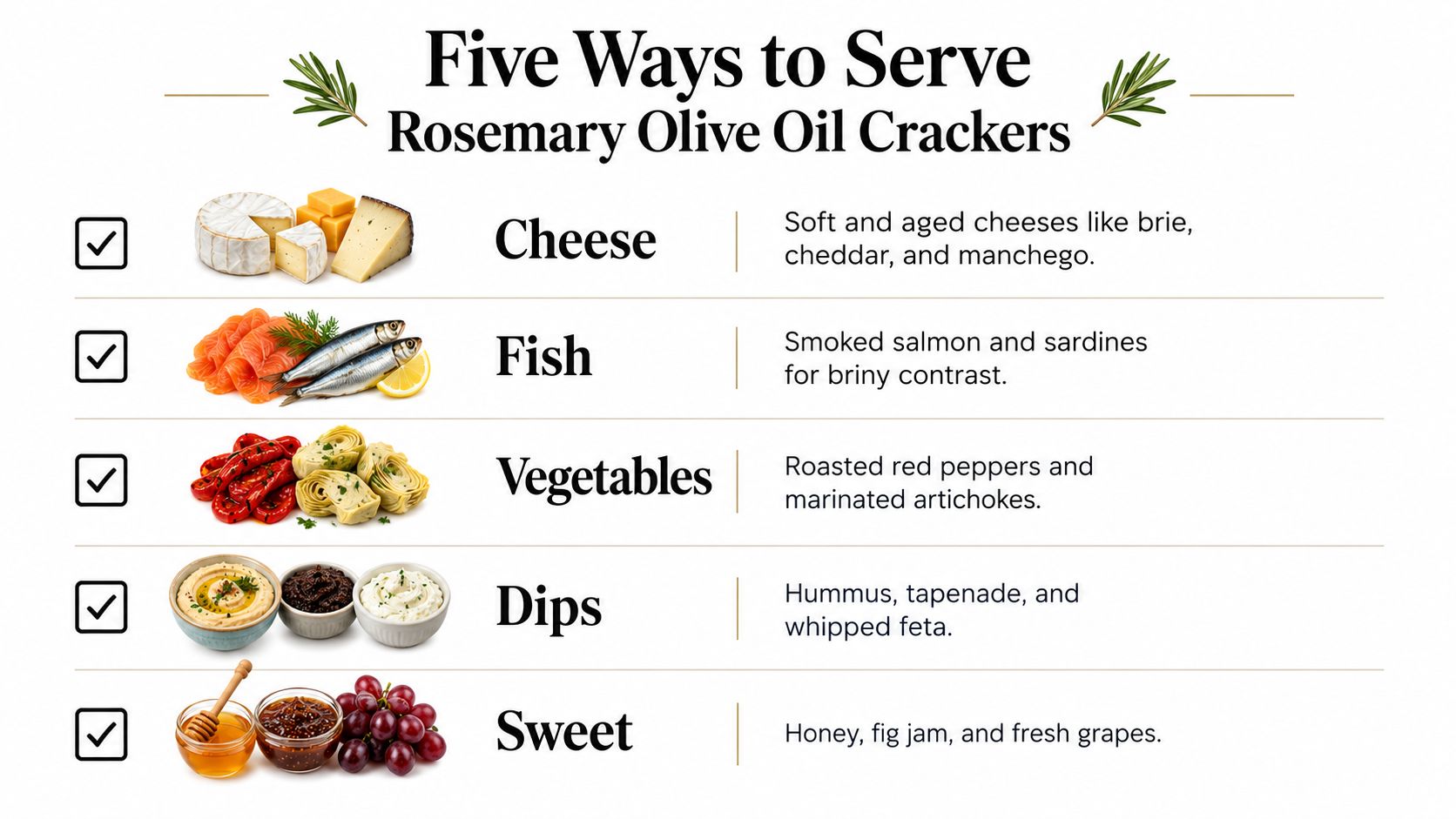
Rosemary and olive oil naturally suit foods with savory, Mediterranean-leaning flavors, but a good pairing also depends on texture and intensity. The cracker's snap gives soft foods contrast, while its salt and herb notes can support richer ingredients without making every bite feel heavy.
- Soft and aged cheeses: Pair a crisp cracker with brie for a creamy contrast, or with aged manchego for a firmer, savory match. For more ideas on matching grain-forward crackers and cheese, see this guide to whole-grain crackers with cheese.
- Charcuterie: Cured meats bring salt and richness; rosemary supplies a herbal note that works well alongside them. Add olives or roasted peppers if you want a more complete Mediterranean-style board.
- Dips and spreads: Hummus and white bean dip offer a soft, mild contrast, while tapenade brings a briny, intense flavor. Labneh works well when you want something cool and tangy.
- Soup and salad: Serve the crackers beside tomato soup or a Caesar salad when you want a crisp alternative to bread. Their sturdy texture makes them easy to dip or crumble over a bowl.
- Drinks: Dry white wine and sparkling wine can refresh the palate between salty bites. If you're considering a light red alongside cured meats and aged cheese, this Napa red wine overview from Girard Winery offers useful context for choosing a style.
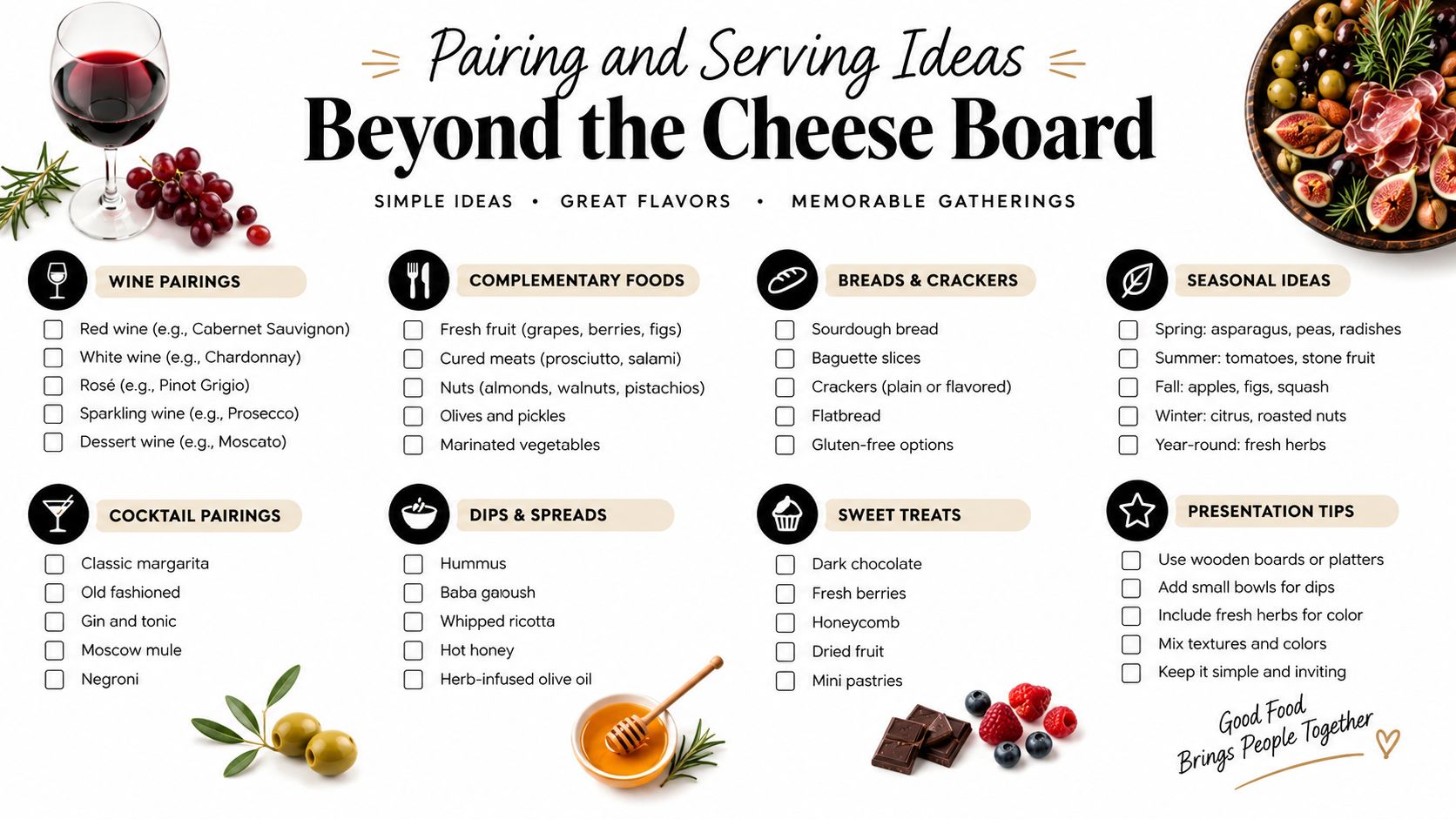
For an easy first board, combine one soft cheese, one dip, a few roasted vegetables, and a handful of crackers. Keep the accompaniments modest: the rosemary should remain noticeable rather than disappearing beneath strongly seasoned toppings.
What to Look for When Buying and How to Store Them Right
At the store, start with the ingredient list rather than the front of the package. Check which flour appears, whether olive oil is listed, and how much salt and fiber the serving provides. If you need gluten-free, vegetarian, or another specific dietary option, verify that the package makes a clear claim and review its ingredient and allergen information rather than inferring suitability from the flavor.
Packaging matters because crackers readily pick up moisture. A resealable, moisture-resistant package or a rigid container generally offers better protection than thin film that doesn't close securely. For unopened crackers, follow the date printed on the package; after opening, transfer leftovers to an airtight container and keep them away from the stove, steam, and other humid spots. Parchment between layers can help prevent crumbs and salt from rubbing onto the crackers.
Spot the storage problem
Soft crackers have usually absorbed moisture. Stale crackers may have lost their clean, fresh flavor, while an off, flat, or rancid note can indicate that the oil no longer tastes fresh. If the flavor seems wrong, don't try to disguise it with a dip.
Compare products by cost per serving, not just package price. Use each label's stated serving size and package contents, then decide whether the ingredient profile and texture justify the cost for how you'll use them. For snacks carried on a hike or packed for a trip, a travel food storage guide can help you think through how to protect portable foods from crushing and exposure. If wheat crackers are part of your usual snack rotation, this overview of healthy wheat crackers can offer another comparison point.
Your Three Decisions Before the Next Snack Run
Bake or buy: Homemade crackers make sense when you want to choose the flour, oil, salt, and herb balance yourself. Packaged crackers are convenient for travel, lunch boxes, and hosting, so choose the option that fits the occasion rather than treating one as universally better.
Which claims to trust: Start with the nutrition panel and ingredient list. “Made with olive oil” and “no added sugar” don't answer questions about fiber, sodium, flour type, or portion size.
How to keep them crisp: Let homemade crackers cool completely, then seal them in an airtight container. At the store, favor packaging that closes securely and protects against moisture.
For your next snack run, compare two labels side by side and choose the one that best fits your needs. If you're looking for other portable snacks with a focus on lower sugar and fiber, visit Rip Van to explore its wafels, wafers, cookies, and crispy snacks.
0 comments