

You're standing in front of the cookie shelf at Whole Foods with a very normal problem. You want something sweet, but you also want it to fit your goals. Then the labels start competing for your attention. Sugar-free. Low sugar. Keto. No artificial sweeteners. High fiber.
At that point, a simple snack choice can feel weirdly technical.
If you've searched for sugar free cookies whole foods, you're probably not just looking for any cookie without table sugar. You might be trying to manage carbs, avoid a blood sugar spike, skip certain sweeteners, or find something your stomach tolerates. Those are different goals, and one front-of-pack claim doesn't answer all of them.
That's where most shoppers get tripped up. A cookie can be sugar-free and still not work for keto. It can be lower in sugar but still feel rough on digestion. It can also fit nicely into your routine if you know what to check first.
The Cookie Aisle Dilemma
A client once told me she spent ten minutes in the Whole Foods snack aisle comparing two cookie packages and left with neither. One said sugar-free. The other said keto-friendly. A third looked cleaner because the ingredient list was shorter. She didn't want a lecture. She wanted a cookie that made sense.
That's the grocery store dilemma. The package gives you a quick promise, but your body lives with the details.
At Whole Foods, this can feel even trickier because the store tends to attract products with wellness language and cleaner-label positioning. That's helpful, but it can also make several options sound equally smart when they're designed for different needs. A family snack, a low-sugar dessert, and a strict low-carb treat might all sit near each other.
Where confusion usually starts
Most shoppers mix up these labels:
- Sugar-free means the product is marketed around the absence of sugar, but that doesn't automatically tell you the total carb load.
- Low sugar often means less sugar than a standard cookie, not no sugar.
- Keto usually signals carb awareness, but you still need to verify the nutrition panel.
- Diabetes-friendly is often used loosely in conversation, even though it's not the same as a regulated front label shoppers can rely on by itself.
Don't let the front of the box make the decision for you. Let it earn your trust by what's on the back.
What makes this manageable
You don't need to memorize nutrition science. You need a short checklist:
- Look at the total carbohydrate line first.
- Scan for fiber and any listed sugar alcohols.
- Read the ingredient list to see what replaced sugar.
- Ask one practical question: “Will this work for my body and my goal today?”
That last part matters. The right cookie for a parent packing lunches may be different from the right cookie for someone staying in ketosis. Both choices can be reasonable. The difference is knowing what trade-off you're making.
Decoding the 'Sugar-Free' Promise at Whole Foods
The phrase sugar free cookies whole foods sounds simple, but it hides a lot of nuance. “Sugar-free” tells you something important, just not everything you probably want to know.
For shoppers, the biggest mistake is treating sugar-free as a shortcut for healthy, low carb, or weight-friendly. Sometimes it is. Sometimes it isn't.
What the label tells you and what it doesn't
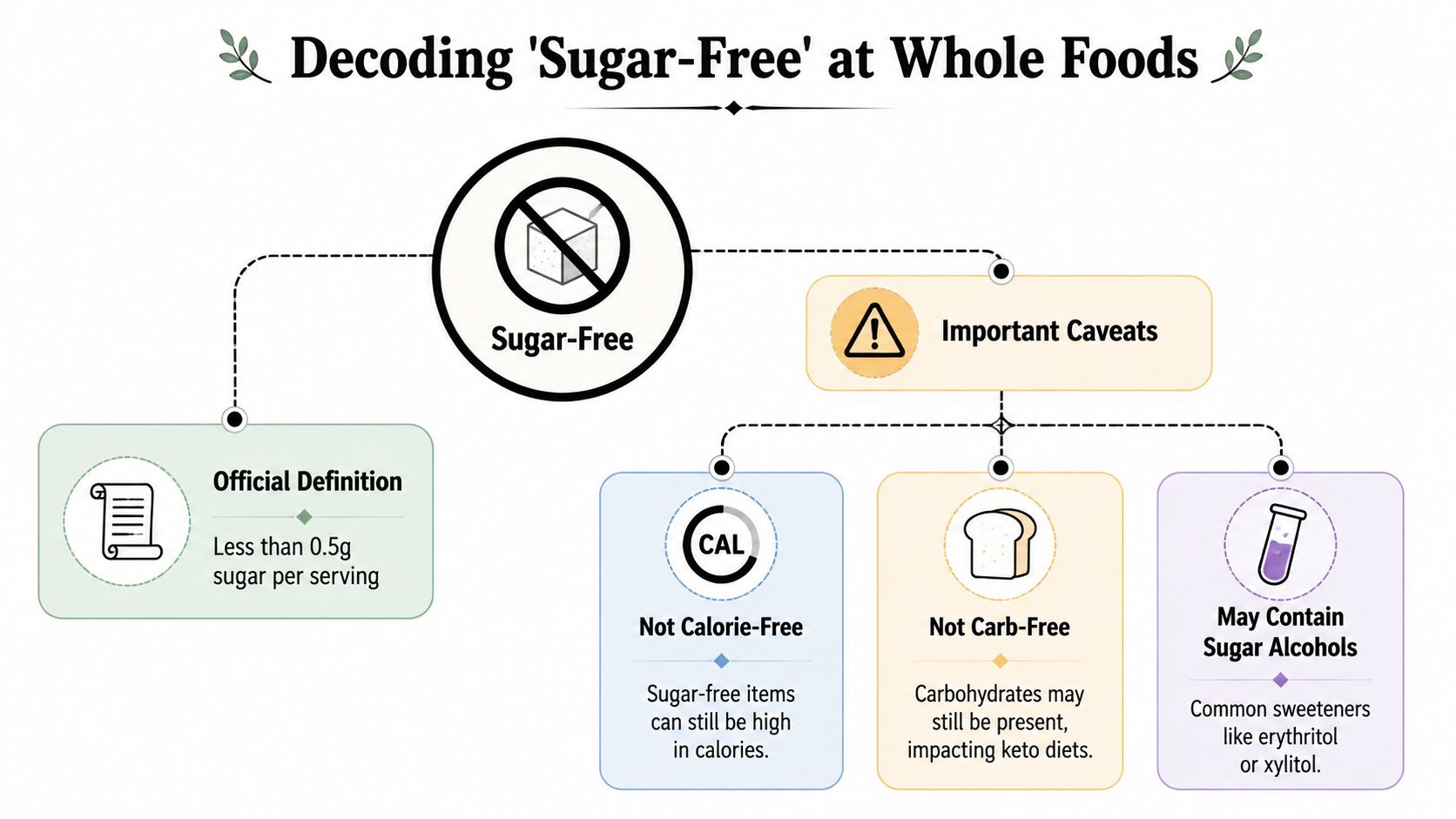
When you see sugar-free on a cookie package, think of it as one data point, not the final answer. It tells you the product was formulated without sugar in the usual sense of that claim. It does not automatically mean:
- Carb-free
- Calorie-free
- Keto-friendly
- Easy on digestion
That's why two sugar-free cookies can behave very differently in your routine. One may fit a lower-carb day fairly well. Another may still contain enough carbohydrate to knock it out of the “keto treat” category for some people.
This visual makes the label logic easier to sort out:
Why Whole Foods products often look different
Whole Foods also adds another layer to the story. The store's ingredient standards ban several ingredients commonly used in mainstream cookie formulations, including high-fructose corn syrup, aspartame, sucralose, saccharin, and partially hydrogenated oils, according to Whole Foods Market food ingredient standards.
That matters because a sugar-free cookie made for Whole Foods often has to solve sweetness and texture in a different way than a conventional grocery store cookie. Product developers can't lean on some of the common artificial sweeteners or older fat systems you might see elsewhere.
What that means in practice
When a product has to fit Whole Foods standards, you'll often notice a few formulation patterns:
| What you may see | Why it's used | Shopper takeaway |
|---|---|---|
| Sugar alcohols | Add sweetness with less sugar impact than standard sugar | May affect digestion for some people |
| Fiber blends | Help with texture, bulk, and sweetness support | Can improve structure, but tolerance varies |
| Fruit-derived or non-artificial flavor systems | Fit cleaner-label expectations | Ingredient lists may look more recognizable |
That cleaner-label angle is attractive, but it doesn't erase the need to check the numbers. A cookie can avoid certain additives and still not match your carb target.
Practical rule: Treat “sugar-free” as the start of your label reading, not the end of it.
The better question to ask
Instead of asking, “Is this sugar-free?” ask, “What did they use instead, and how much total carbohydrate is still here?”
That one shift makes shopping much easier. It helps you separate the products that are merely avoiding sugar from the ones that truly fit your eating style.
The Sweetener Spectrum A Guide to What Replaces Sugar
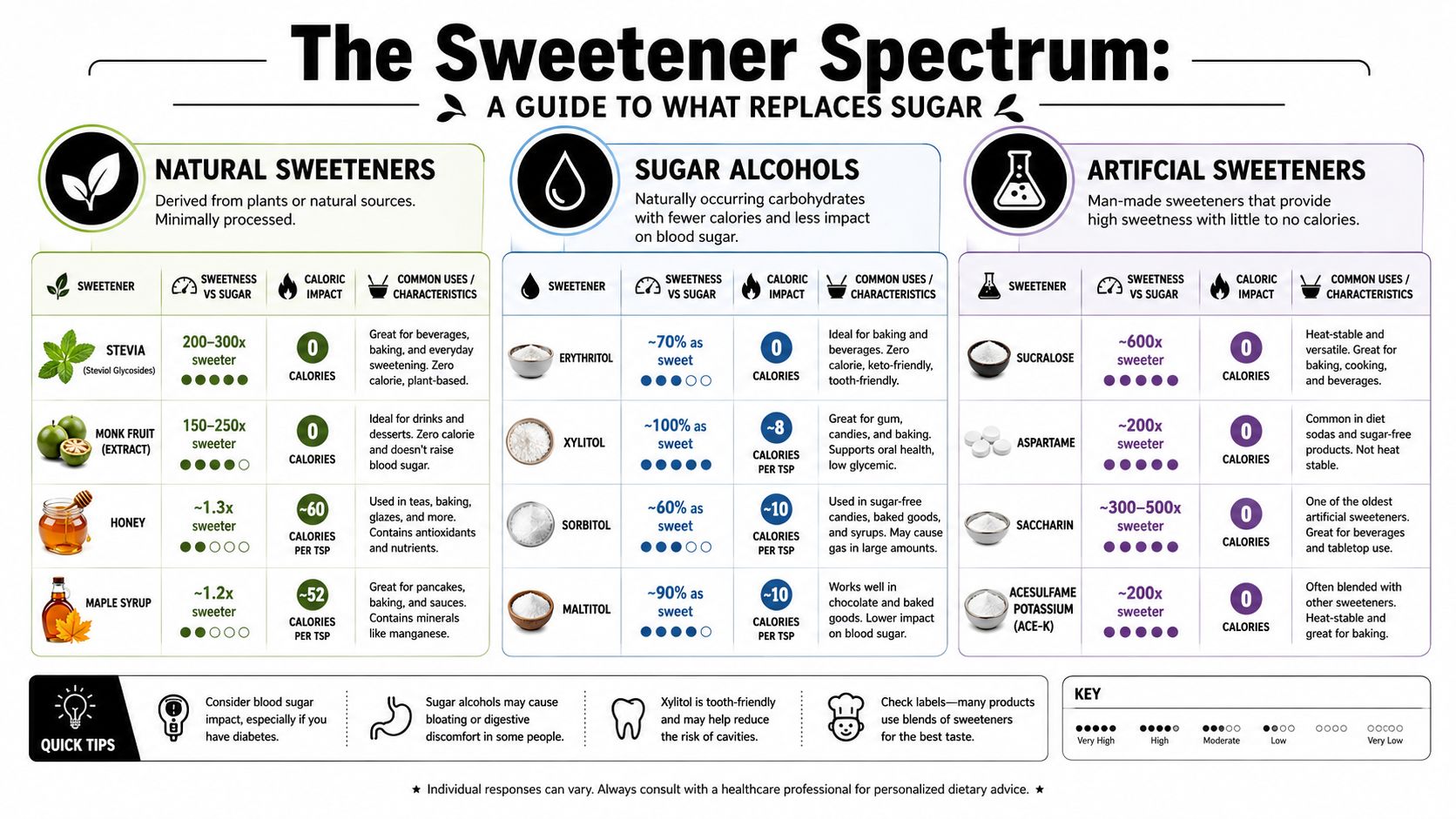
Once sugar is removed, something has to do the work. Cookies still need sweetness, but they also need bulk, browning, moisture, and structure. That's why ingredient lists matter so much more than the front label.
A Whole Foods listing for SUSANS SUGAR FREE Sugar Free Oats and Chocolate Cookies shows 9g total carbohydrate per serving, even though the product is labeled sugar free, as shown on the Whole Foods product page. That's a good reminder that removing sugar doesn't remove all carbs.
This comparison graphic gives you a quick mental map:
Sugar alcohols
Sugar alcohols are common in sugar-free cookies because they can add sweetness and some of the bulk that sugar usually provides. On labels, these may show up in ingredient lists that aim to mimic a familiar cookie texture without using standard sugar.
The upside is practical. They often help a cookie taste more dessert-like than some high-intensity sweeteners alone.
The downside is tolerance. Some people do fine with them. Others notice gas, bloating, or a laxative effect, especially if they eat more than one serving or combine several sugar-free products in a day.
If a cookie says sugar-free and your stomach says absolutely not, the sweetener blend is often the reason.
For a plain-language explainer on these ingredients, this guide on what sugar alcohol is in food can help you interpret what you're seeing on the label.
Stevia, monk fruit, and other non-sugar sweeteners
These sweeteners are popular with shoppers who want a lower-sugar option without relying heavily on sugar alcohols. They can work well, but the taste profile can vary. Some people notice a cooling effect or an aftertaste, while others don't mind it at all.
Their biggest advantage is often strategic use. Brands may combine them with fibers or other ingredients to soften the flavor and make the cookie feel more balanced.
Fibers and carob-based ingredients
Some cookies use soluble fibers or similar ingredients to replace part of sugar's texture role. These don't just sweeten. They also help with body and chew. That's one reason some sugar-free cookies still feel close to a standard packaged cookie.
If you bake at home, ingredients such as premium Portuguese carob can also be useful for adding naturally sweet, cocoa-like flavor depth without relying only on sugar. That can be helpful if you're trying to build a cookie that tastes satisfying with less sweetener overall.
A quick ingredient cheat sheet
When you read the ingredient list, ask these three questions:
- What creates the sweetness? Look for the main sweetener source first.
- What creates the texture? Fibers, starches, and fats often tell you how “cookie-like” it will feel.
- What tends to bother your digestion? If you already know certain sweeteners don't sit well with you, use that history.
A good ingredient list isn't just about purity. It's about whether the formula matches your body, your taste preference, and your reason for buying the cookie in the first place.
Is It Keto Friendly Calculating Net Carbs
This is the point where many shoppers get clarity fast. A cookie can be sugar-free and still miss the mark for keto because keto focuses on carbohydrate impact, not just the absence of sugar.
If you follow a lower-carb eating style, the phrase you need to care about most is net carbs.
The simple formula
The usual quick calculation is:
Net carbs = Total carbohydrate - fiber - sugar alcohols
That formula gives you a more useful estimate than the sugar line alone when you're deciding whether a cookie fits your plan.
Here's the habit I want you to build. Don't start with the marketing claim. Start with the nutrition facts panel.
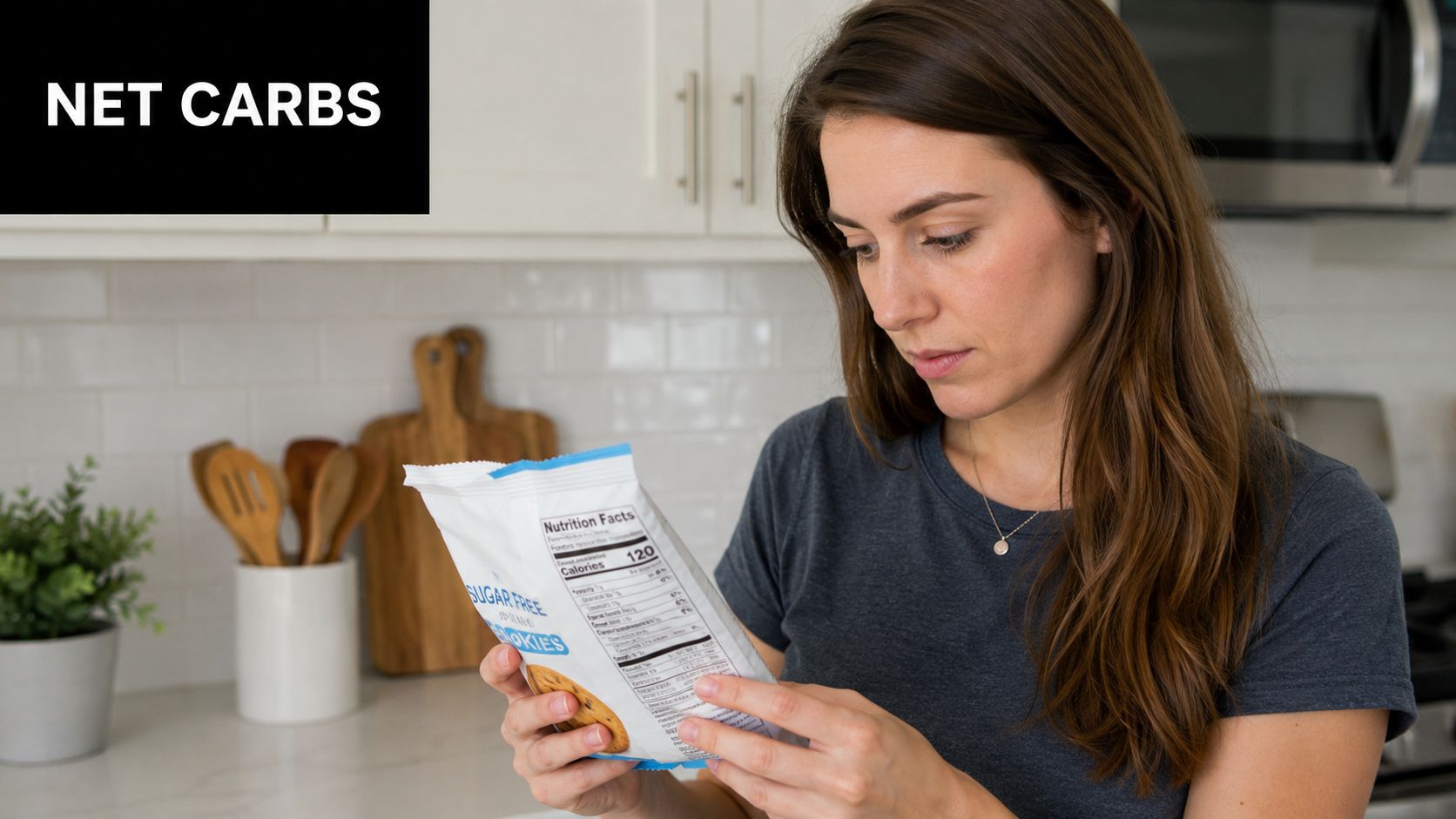
A real-store style example
One typical sugar-free cookie in the Whole Foods ecosystem may list 9g total carbohydrate and 4.5g total fat per serving, based on the profile shown for a sugar-free cookie listing referenced through Eat This Much nutrition data. That alone tells you something important. Sugar-free doesn't equal very low carb.
If the package also lists fiber and sugar alcohols, you can do the net carb math right there in the aisle. If it doesn't clearly break those out in a way that helps you, that's your sign to be cautious rather than optimistic.
How to do it in the store
Use this order every time:
- Find total carbs first. This is your starting number.
- Check fiber next. Some cookies use fiber to improve texture and lower net impact.
- Look for sugar alcohols if they're listed and relevant to your approach.
- Compare the result to your own daily target, not someone else's.
Some keto shoppers prefer stricter interpretations than others. That's fine. The key is consistency.
A sugar-free label answers one question. Net carbs answer the one keto eaters actually need.
When a cookie still may not fit
Even after you calculate net carbs, you may decide the cookie isn't worth it. Common reasons include:
- The serving size is tiny, and you know you'll eat more.
- The sweetener bothers your stomach, which makes the carb math irrelevant.
- The texture triggers overeating, especially if you're trying to use treats strategically.
If you want broader context for fitting treats into a lower-carb pattern, these Keto diet strategies can help you think beyond a single snack decision.
The practical goal isn't perfection. It's buying a cookie you can enjoy without being surprised by how it affects hunger, digestion, or your carb total for the day.
Your In-Store and Online Shopping Plan for Whole Foods
Knowing the label is one thing. Finding the right product without wandering the store for twenty minutes is another.
Whole Foods tends to carry sugar-free and reduced-sugar items across more than one part of the store, especially when a product is positioned as specialty, better-for-you, or seasonal. That means you need a search pattern, not just good intentions.
Here's a shopping checklist you can save to your phone:
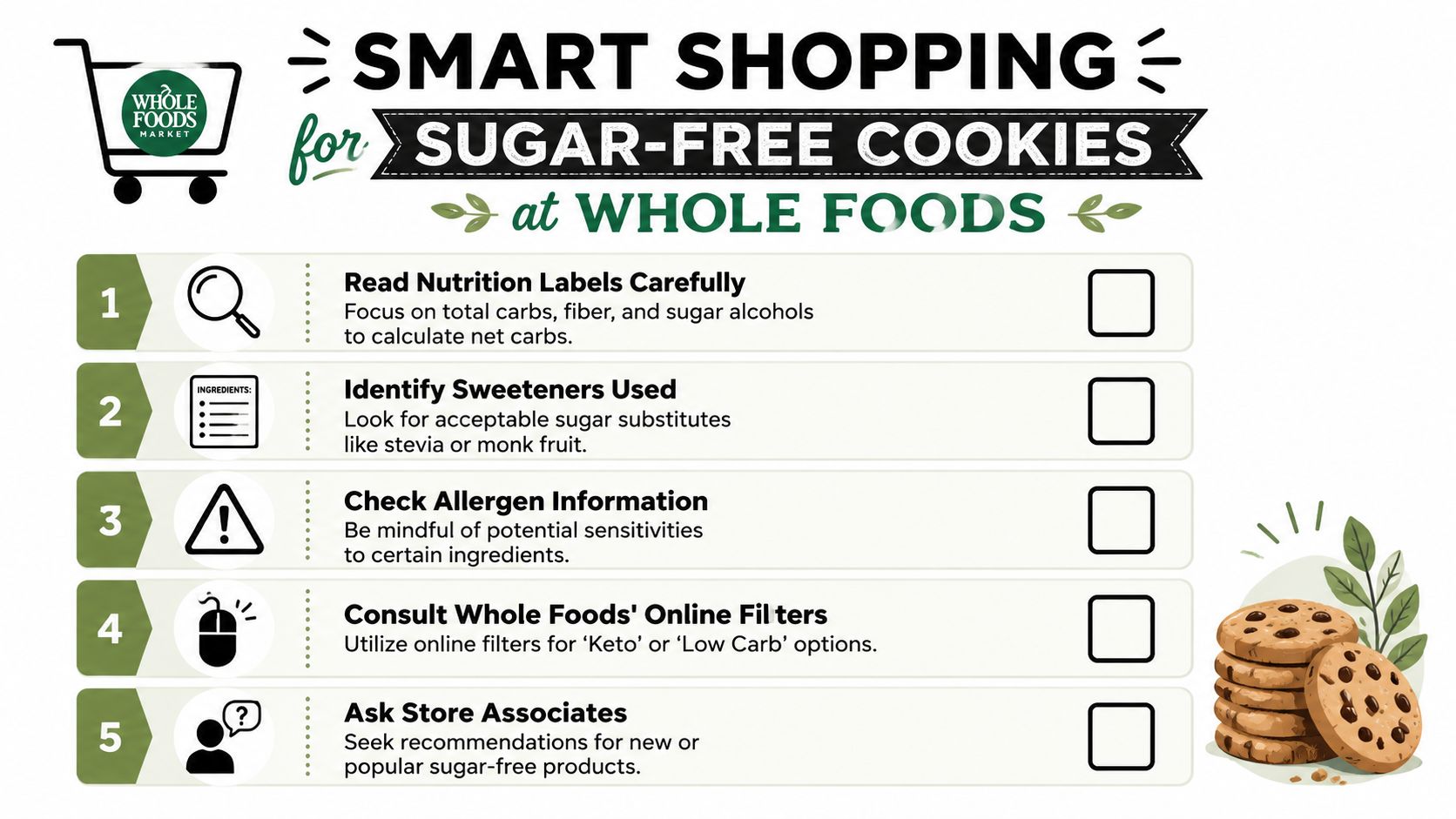
Where to look in the store
Start with the obvious spot, then branch out.
- Main cookie and cracker aisle. Many shoppers stop here first, and they should.
- Natural snacks or specialty diet shelf. This is often where low-sugar and alternative-ingredient products land.
- Gluten-free or specialty baking-adjacent areas. Some crossover products get shelved nearby.
- End caps and new-item displays. New launches often appear here before they become part of your mental store map.
A useful sign of what's showing up in the category is that Voortman rolled out mini sugar-free Vanilla Shortbread and Iced Oatmeal cookies in a 5 oz resealable pouch in 2024, according to WholeFoods Magazine coverage of mini sugar-free cookies. That kind of snackable, portion-conscious format is worth checking for on displays and newer shelves.
Search smarter online
If you shop in the app or on the website, broad searches can be messy. More specific phrases usually work better.
Try searches like:
- sugar free cookies
- low sugar cookies
- keto cookies
- monk fruit cookies
- no artificial sweeteners cookies
If results feel thin, change your search term instead of assuming the store doesn't carry what you need. Product tagging isn't always consistent.
You can also widen your options by looking at related specialty snack categories. For example, shoppers who need alternatives beyond cookies may find this guide to gluten free crackers at Whole Foods useful for rounding out better-for-you snack choices.
Ask better questions in person
Store associates can help more when your question is specific.
Instead of asking, “Where are the healthy cookies?” try:
- Do you have any sugar-free cookies without artificial sweeteners?
- Are there any lower-carb cookie options in a resealable pouch?
- Do you carry sugar-free cookies in the main aisle or the specialty section?
A quick product walk-through can also help if you prefer seeing real packaging before buying.
A simple store routine works best. Check one shelf, scan the carb line, review the sweetener, and move on if it doesn't fit. That keeps you from getting stuck comparing every single box.
Smart Cookie Picks and Better-for-You Alternatives
The best choice usually isn't the cookie with the loudest health claim. It's the one that matches your actual goal.
If you want a family snack, you may care most about ingredient simplicity and a moderate sweetness level. If you're eating low carb, the full nutrition panel becomes your filter. If you're sensitive to certain sweeteners, digestive comfort may matter more than strict sugar avoidance.
What a strong pick looks like
A practical sugar-free cookie choice often has a few things going for it:
- A sweetener you recognize and tolerate
- A nutrition panel that fits your real eating style
- A serving size that feels realistic
- An ingredient list that doesn't rely on claims alone to sound healthy
That last point is important. A cookie can be sugar-free and still not be your best fit. Sometimes the better option is a lower-sugar product with a structure and portion that work better for your habits.
Matching the cookie to the person
Different shoppers need different filters.
| Shopper goal | What to prioritize | What to watch out for |
|---|---|---|
| General lower-sugar eating | Familiar ingredients and satisfying flavor | “Health halo” packaging |
| Keto or low-carb | Net carb math and serving realism | High total carbs despite sugar-free wording |
| Sensitive digestion | Sweetener type and portion size | Sugar alcohol-heavy formulas |
| Family snacking | Taste, ingredient clarity, shareability | Confusing labels that imply more than they deliver |
Buy for your real behavior, not your ideal behavior. If you know you'll eat several servings, evaluate the product that way.
One sensible option among many
If you're comparing better-for-you snack brands, Rip Van's sugar free cookie brands guide can be a useful reference point. Rip Van also offers cookies and wafers positioned around lower sugar and fiber-conscious snacking, which may appeal to shoppers who want alternatives to conventional cookies without artificial sweeteners.
That doesn't mean every product fits every plan. It means the right comparison standard is broader than “does it say sugar-free?”
Better alternatives when the aisle disappoints
Sometimes the smartest move is not buying the sugar-free cookie at all.
Consider these options:
- Bake at home using Whole Foods baking ingredients that align with your preferences.
- Choose a smaller sweet snack that's lower sugar but easier on your stomach.
- Pair a treat with protein or fat if you're trying to make it more satisfying.
- Skip the cookie and come back another day if nothing on the shelf meets your needs.
That last choice is underrated. Walking away from a confusing label isn't failure. It's good shopping.
The more often you practice reading labels this way, the faster it gets. Soon, “sugar free cookies whole foods” stops being a vague search and becomes a simple decision process you can trust.
If you want a straightforward better-for-you snack option to compare against what you see in the store, take a look at Rip Van. It's a useful place to browse low-sugar, fiber-forward cookies, wafers, and keto-friendly snacks when you want something convenient without relying on artificial sweeteners.
0 comments