

At 3 p.m., the screen starts to blur. You reread the same email, your stomach feels hollow, and the vending machine suddenly seems to offer the fastest solution. That small decision can influence how you feel through the rest of the afternoon, how hungry you are at dinner, and whether you reach for another sweet food later.
So, why are healthy snacks important? A well-chosen snack can provide useful nutrients, support steadier energy, and help you respond to hunger before it becomes urgent. The key isn't perfection. It's building an option that's satisfying enough to choose when you're tired, busy, or distracted.
The Afternoon Crash and the Snack Moment That Shapes Your Day
The office is quiet except for keyboard clicks and the low hum of the vending machine down the hall. Your shoulders have crept toward your ears. Your eyes keep leaving the spreadsheet, and your thoughts feel slower than they did after lunch. You may not feel dramatically hungry yet, but you know you need something.
That moment is more than a test of willpower. It's a decision point. A sweet drink or refined-carb snack may feel effective because it delivers quick energy, but a snack with protein, fiber, and some healthy fat is more likely to keep you satisfied until your next meal. The difference isn't about labeling one food “good” and another “bad.” It's about whether the food matches the job you need it to do.

The snack can change what happens next
Suppose you eat a balanced snack at that point. You may arrive at dinner feeling comfortably hungry rather than desperate. That makes it easier to serve a reasonable meal, eat at a calmer pace, and notice when you've had enough. A snack won't solve every evening problem, but it can remove the extreme hunger that often pushes people toward impulsive choices.
The opposite pattern is familiar too. You wait too long, grab whatever is closest, and then continue grazing because the first bite didn't provide lasting satisfaction. By bedtime, you may feel overly full, restless, or annoyed that the day got away from you.
Practical rule: Choose the snack that helps your next decision, not only the one that feels exciting for the next few minutes.
The healthy snacks for work guide can help you think through portable options that fit a desk, commute, or shared office kitchen. The broader lesson is simple: snack quality is a daily lever. It can support energy, manage cravings, add nutrients, and make a nourishing routine easier to repeat.
Six Reasons Healthy Snacks Matter More Than You Think
Healthy snacks matter because between-meal eating often represents a meaningful part of the day. In the United States, 95% of adults eat at least one snack on a given day, and snacks provide about 24% of daily energy intake and 43% of added sugars among snack consumers, according to the World Health Organization reference document. A small improvement in a frequent eating occasion can therefore matter more than people expect.
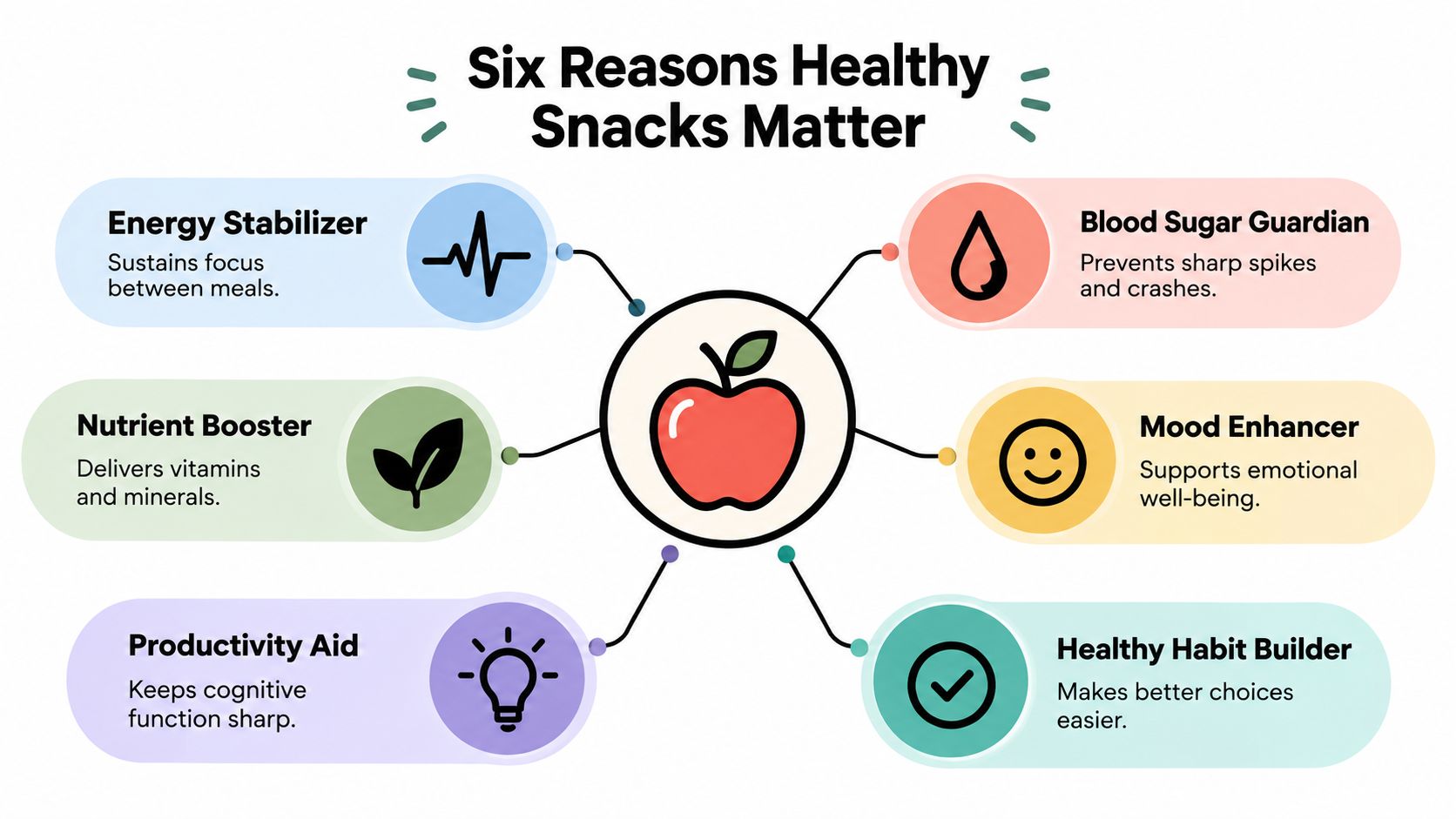
1. They bridge energy gaps
A snack can connect two meals when your schedule is long or your appetite doesn't line up neatly with the clock. Pairing a carbohydrate source with protein or fat gives you more than a quick burst of sweetness. It provides a practical way to stay focused until the next full meal.
2. They can moderate glucose swings
The composition of a snack affects what happens after you eat. In a free-living study, a fiber-containing snack attenuated blood glucose after dinner and again after breakfast the following day, showing that snack choices can influence glycemic exposure beyond the immediate eating window, as described in this fiber and post-meal glucose research. Soluble or viscous fiber can be especially useful because it slows digestion and absorption.
3. They support appetite management
Protein and fiber help a snack feel substantial. Controlled research found that a high-protein, high-fiber snack bar lowered glucose and insulin responses over nine hours, reduced peak morning glucose by 16%, and lowered lunch energy intake by 5% compared with comparison conditions, according to the published research summary. Those findings don't mean every snack produces the same result, but they show how composition can affect later appetite.
4. They fill nutritional gaps
Meals don't always include every food group you need that day. A snack can add fruit, vegetables, whole grains, dairy, legumes, nuts, or seeds without requiring a complete second meal. Yogurt with berries, roasted chickpeas, or apple slices with nut butter can contribute nutrients while also addressing hunger.
5. They can support mood and concentration
Hunger makes demanding tasks feel harder. A snack won't replace sleep, hydration, or a balanced meal, but it can give your brain and body usable fuel during a long class, commute, shift, or meeting. More consistent nourishment can also make irritability less likely to become the deciding factor at the next meal.
6. They can reduce frantic meal eating
Arriving at dinner ravenous often narrows your choices to whatever is fastest. A planned snack gives you a buffer. You can still enjoy dinner, but you're less likely to treat the meal as an emergency.
For families who face inconsistent food access, snack planning also intersects with community support. People looking for local assistance can explore HELP Now family assistance from the Homeless Engagement Lift Partnership. When snacks are built intentionally, these benefits can reinforce one another. Better satiety supports calmer choices, and easier choices support a more dependable routine.

How to Build a Snack That Actually Works
A snack doesn't need to be elaborate. Use four parts: a protein anchor, a fiber source, a healthy fat, and a flavor you enjoy. This combination is more practical than chasing a perfect ingredient because it helps cover both nutrition and satisfaction.
Start with the anchor
Protein gives the snack structure. Try Greek yogurt, cottage cheese, roasted chickpeas, a boiled egg, cheese, or a lower-sodium jerky. If the snack is mostly carbohydrate, the food may disappear quickly without feeling complete.
Add a fiber source next. Apple slices, berries, vegetables, oats, popcorn, beans, or whole-grain crackers can slow digestion and make the snack more filling. Fiber-rich foods also help you move beyond the narrow idea that a healthy snack must be low in sugar.
Healthy fat supplies staying power and texture. Nuts, seeds, avocado, olives, or nut butter can turn a plain snack into one that feels satisfying. Finally, add flavor through cinnamon, cocoa, herbs, salsa, or a favorite seasoning. A snack you don't enjoy won't become a dependable default.
| Component | Role in the Snack | Example Ingredients |
|---|---|---|
| Protein anchor | Supports fullness and gives the snack substance | Greek yogurt, cheese, roasted chickpeas |
| Fiber source | Slows digestion and adds texture | Apple, berries, vegetables, whole-grain crackers |
| Healthy fat | Extends satisfaction and improves mouthfeel | Almonds, pumpkin seeds, olives, nut butter |
| Bold flavor | Makes the choice satisfying enough to repeat | Cinnamon, cocoa, salsa, herbs |
A fruit-only snack can be nutritious but may not hold you for long. Crackers alone may provide energy without enough staying power. Pair apple slices with almond butter, whole-grain crackers with cheese, or yogurt with berries and seeds instead. For more combinations built around fiber, see these high-fiber snack ideas.
Smart Timing and Portions for Steady Energy
A useful snack is partly about what you eat and partly about when you eat it. Start with your last meal, your current hunger, and the demand ahead. If lunch was several hours ago and dinner is still some time away, a planned afternoon snack may prevent the late-day scramble.
For many active adults, a gap of roughly two to three hours can be a practical point to reassess hunger, but bodies and schedules vary. You don't need to eat just because the clock says so. Ask whether you feel physical hunger, whether your last meal was substantial, and whether exercise or an unusually long work period is coming.
Match the snack to the moment
- Between meals: A portion in the 150 to 250 calorie range can work for a standard hunger gap, such as yogurt with berries or a small handful of nuts with fruit. These figures are practical portion guidance, not a rule for every person.
- Before exercise: Choose something smaller and easy to digest when activity is close. A small protein bite or a few crackers with a simple protein source may suit you about 30 minutes before exercise, depending on tolerance.
- Around a workout: A somewhat larger snack, around 300 calories, may make sense when it replaces a meal or supports a demanding training session. Your overall intake and training plan still matter.
- Near bedtime: Keep the choice modest if you're hungry late. Cottage cheese can provide protein, but large, sugary, or heavy portions may feel uncomfortable and interfere with sleep for some people.
Runners can use a dedicated Swift Running pre-run nutrition guide when deciding how food, timing, and exercise fit together. The most useful portion is the one that leaves you satisfied without making the next meal feel unnecessary or turning a small hunger cue into automatic grazing.
Snack Needs by Audience and Lifestyle
The phrase “healthy snack” doesn't describe one universal food. A child needs a different balance from a keto dieter, and an adult rushing between appointments needs portability above all. The shared standard is recognizable ingredients, a sensible portion, and enough protein or fiber to meet the next demand.
| Audience | Top Priorities | Example Snacks |
|---|---|---|
| Children | Calcium, lower added sugar, appealing presentation | Cheese cubes with apple slices, whole-grain crackers with sunflower butter |
| Keto dieters | Higher fat, moderate protein, very low carbohydrate | Cheese crisps, olives, deviled eggs, macadamia nuts |
| On-the-go adults | Portability, shelf stability, protein or fiber, manageable sodium | Pre-portioned trail mix, roasted chickpeas, single-serve nut butter, lower-sodium jerky |
For children
Kids often respond to shape, color, and ease before they respond to a nutrition label. Cheese cubes with apple slices can feel more inviting than a formal plate, while whole-grain crackers with sunflower butter provide a sturdy alternative to juice boxes and chips. Keep sweetness moderate and let the child participate in assembling the snack.
For keto dieters
A keto-friendly choice can still be highly processed. Cheese crisps, olives, eggs, and macadamia nuts fit a low-carbohydrate pattern, but bars marketed as “low net carb” may contain hidden sugars or long ingredient lists. Read the label rather than relying on the front-of-package claim.
For busy adults
Portability changes the decision. A snack that requires refrigeration or utensils may fail during a commute, campus day, or shift. Portion trail mix before leaving home, keep roasted chickpeas in a work bag, or choose a single-serve nut butter pack that pairs with fruit. The best option is the one you can access before hunger becomes urgent.
Why Choosing Healthy Snacks Is Harder Than It Sounds
People don't lack information about apples, yogurt, nuts, or whole grains. The harder problem is access at the exact moment hunger, stress, distraction, and limited time collide. Vending machines, checkout aisles, and office kitchens often place highly indulgent foods directly in the path of the person who needs something immediately.
The 2025 U.S. snack survey found that only 15% of respondents choose a snack because it's healthy. Hunger led the reasons at 56%, followed by taste at 45% and convenience at 34%, according to the IFIC Snacking Spotlight survey. The implication is important: health information alone rarely wins the snack moment.
Change the surroundings, not just the intention
Put washed fruit where you can see it. Store nuts, roasted chickpeas, or shelf-stable snacks in a desk drawer. Build a few snack boxes at the start of the week so the decision is already made. If an office candy bowl is always within reach, move it away from the main walkway and add a shared jar of nuts or whole-grain options.
Marketing can add confusion. Words such as “natural,” “keto,” or “protein” don't tell you whether a snack contains enough fiber, how much added sugar it has, or whether the portion fits your needs. The nutrition label reading guide can help you look past the front panel and assess the actual serving information.
Healthy choices become easier when they require fewer steps than the alternative. Visibility, portability, and pre-portioning turn nutrition knowledge into an environment that supports action.
Your Simple Snack Selection Checklist
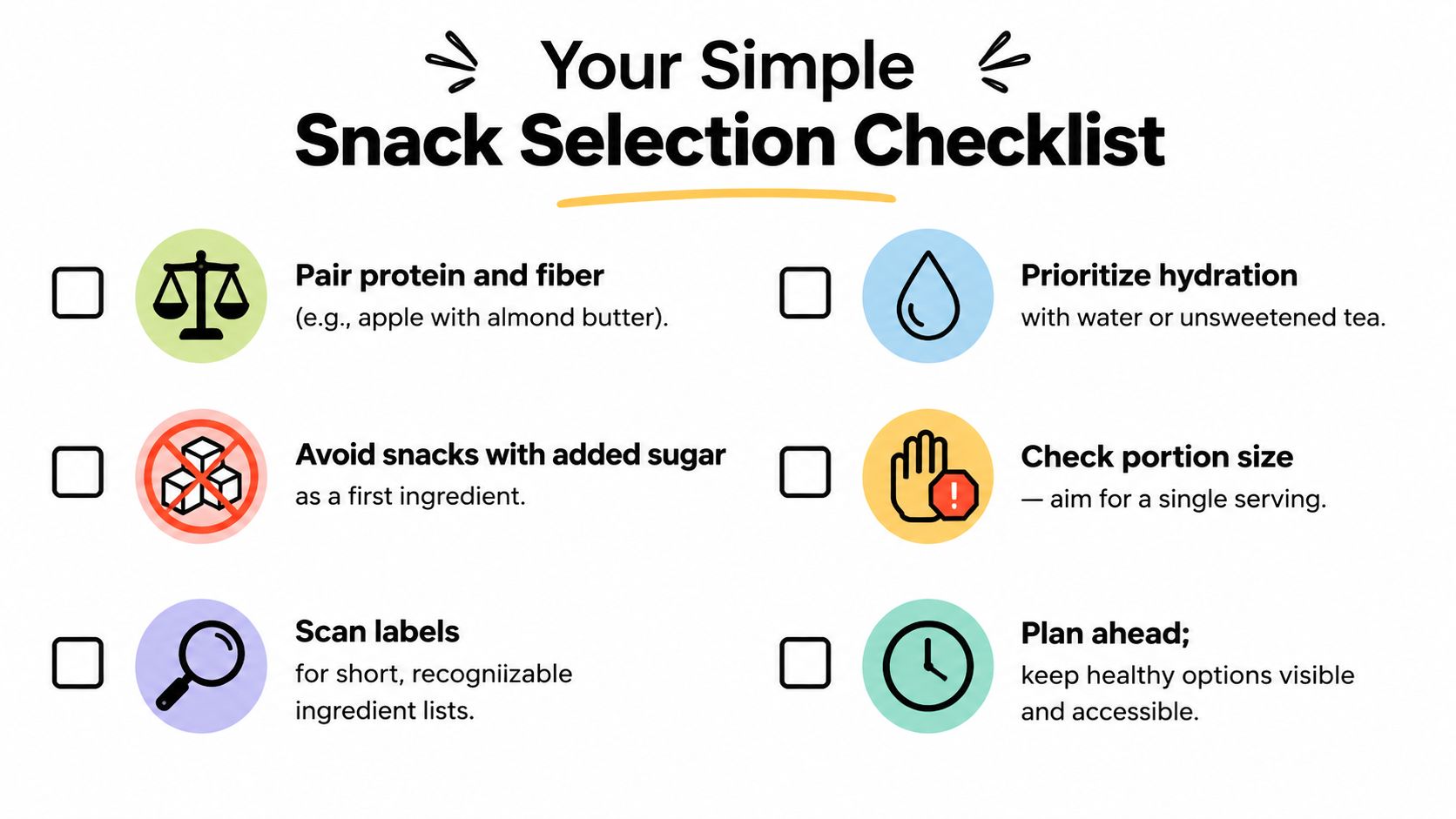
Use this quick filter at the store, vending machine, or office kitchen:
- Check the label: Look for under 8 grams of added sugar, more than 3 grams of fiber, and more than 4 grams of protein per serving when those values fit your needs. These thresholds are practical screening tools from this checklist, not universal medical requirements.
- Check the build: Look for the protein, fiber, and healthy-fat combination. Apple with almond butter, yogurt with berries, and crackers with cheese are easy examples.
- Check the portion: Choose an amount that fits in one hand, often around 150 to 250 calories for a between-meal snack.
- Check the prep: Favor choices that need no cooking or take less than a minute to assemble. Convenience matters because the snack has to work during real hunger.
- Check hydration: Water or unsweetened tea can accompany the snack. If you want more ideas connecting food choices with rest, explore this sleep promoting foods guide.
Keep two anchor rules visible. Choose the snack you'd want at 3 p.m. when you're tired, and keep at least one better-for-you option at eye level. In 2025, Americans' leading healthy-food cues included good source of protein at 38%, fresh at 36%, and low in sugar at 34%, while global data found that 56% of consumers eat a healthy snack at least once a day, compared with 49% for indulgent snacks, according to the IFIC Food and Health Survey. Taste and price still matter, so choose foods that satisfy both your nutrition priorities and your actual cravings.
Rip Van offers portable wafels, wafers, wafer bars, cookies, and Crispy Dunes made for lower-sugar snacking, with no corn syrup or artificial sweeteners and more fiber compared with many popular alternatives. Visit Rip Van to browse convenient options that can make a balanced, satisfying snack easier to keep within reach.
0 comments