

The best healthy snacks you can buy have a few things in common: they're low in added sugar, high in dietary fiber, and made from ingredients you can actually recognize. These are the snacks that give you lasting energy without the dreaded crash, helping you stay full and sharp between meals.
Your Smart Guide to Buying Healthy Snacks
Let's be real—navigating the snack aisle can feel like a mission. It's a loud, colorful place, and every package seems to be shouting about its health benefits. This guide is here to cut through that noise and help you find snacks that are genuinely good for you and taste great, too.
We're going to skip the marketing fluff and focus on what really matters: reading the nutrition label like an expert, understanding the key things to look for, and spotting quality ingredients.
Think of this as your new playbook for becoming a more confident snack shopper. You don't need to be a nutritionist to make smart choices; you just need to know the fundamentals. This isn't just a personal goal, either—it's part of a huge shift in how we all eat. The global healthy snacks market is valued at around USD 101.3 billion and climbing, all because people are demanding better options without all the extra sugar and artificial junk. You can actually explore the full healthy snacks market report to see how this trend is changing what ends up on our grocery shelves.
What Makes a Snack Genuinely Healthy?
Instead of getting hung up on calorie counting, let's shift our focus to the quality of those calories. A truly great snack does more than just temporarily stop your stomach from growling; it actively fuels your body and brain. Our goal is to give you the tools to tell the difference between snacks that are working for you and those that are working against you.
We'll break it down into three simple pillars for judging any snack you pick up:
-
Spotting Hidden Sugars: You'll learn how to find added sugars on an ingredient list, even when they're hiding behind dozens of different names.
-
Prioritizing Fiber: We'll dig into why fiber is so important for feeling full, keeping your energy steady, and supporting good digestion.
-
Choosing Clean Ingredients: You’ll get good at spotting short ingredient lists full of whole foods you can easily pronounce.
Before we dive deep, here’s a quick-reference table that summarizes what to look for on any snack label.
Quick Guide to Identifying a Genuinely Healthy Snack
| Nutritional Marker | What to Look For | Why It Matters |
|---|---|---|
| Added Sugar | Less than 5 grams per serving. Look for natural sweeteners like monk fruit or allulose instead of corn syrup or cane sugar. | High added sugar leads to energy crashes, empty calories, and can contribute to long-term health issues. |
| Dietary Fiber | At least 3-5 grams per serving. Sources like chicory root, whole grains, and nuts are excellent. | Fiber keeps you feeling full longer, aids digestion, and helps stabilize blood sugar for steady energy. |
| Ingredient List | A short, simple list of ingredients you can recognize and pronounce. Whole foods should be near the top. | A clean ingredient list means fewer processed additives, artificial flavors, and chemicals. It’s a sign of quality. |
This table is your cheat sheet. If a snack hits these three marks, you’re on the right track.
By the time you're done with this guide, you won't just know which snacks are healthy—you'll understand why. This is about building a skill that will help you make better choices for yourself and your family, no matter what new products hit the market.
How to Decode a Nutrition Label
Ever feel like you need a secret decoder ring to understand a nutrition label? You're not alone. But think of it less like a complex scientific chart and more like a snack's resume—it tells you exactly what it's made of and what it can do for your body.
Instead of getting lost in all the numbers, you just need to know where to look. A quick scan can reveal whether you’re holding a source of steady energy or just a sugar crash waiting to happen.
Start with the Ingredient List
Before you even glance at the percentages and grams, your first stop should always be the ingredient list. Honestly, this is the most revealing part of the whole package. A good rule of thumb? If you can't pronounce it, or if it sounds like something from a chemistry lab, it’s probably not the best choice.
Look for a short, simple list filled with whole foods you actually recognize, like oats, nuts, or cocoa. The order is a big deal, too. Ingredients are listed by weight, so whatever’s at the top of the list is what you're getting the most of.
Master the 'Big Three' on the Label
Okay, once you’ve given the ingredients a thumbs-up, it’s time to look at three critical numbers on the Nutrition Facts panel. These will tell you almost everything you need to know.
-
Serving Size: This one is sneaky. Always, always check the serving size first. All the other numbers on the label are based on one serving, but a small package can easily contain two or more. It’s a common trap that leads to accidentally doubling your sugar and calorie intake.
-
Added Sugars: This is a huge one. You want to find snacks with less than 5 grams of added sugar per serving. Natural sugars from things like fruit are perfectly fine, but added sugars (think corn syrup or cane sugar) are just empty calories that set you up for that classic energy spike and inevitable crash.
-
Dietary Fiber: Now for the good stuff. Aim for at least 3 grams of fiber. Fiber is what helps you feel full and satisfied long after you've finished eating. It slows digestion and helps keep your blood sugar stable, giving you that sustained energy we're all after.
This simple decision-making flow can help you quickly evaluate any snack on the shelf.
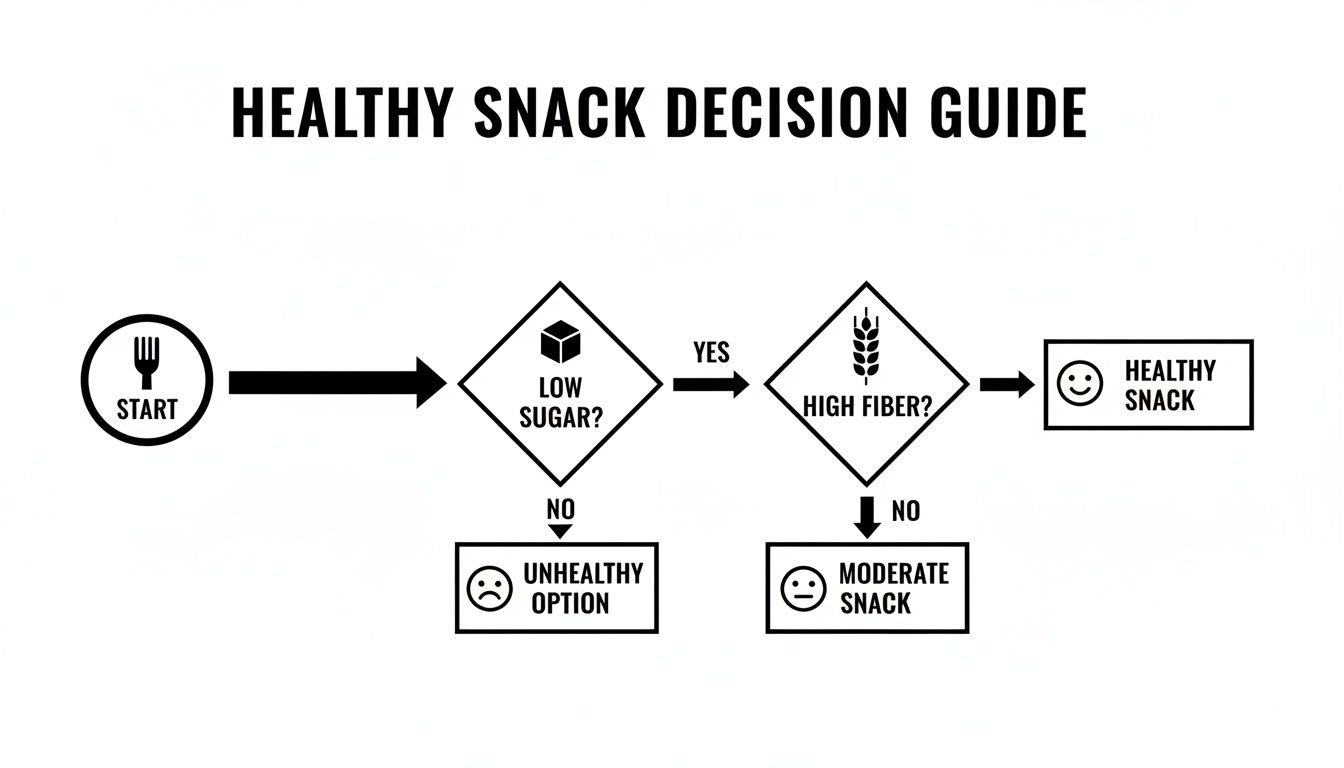
The flowchart lays out a really straightforward path to smarter snacking. It's all about prioritizing low sugar and high fiber—those are your two most important checkpoints for a truly healthy choice.
A truly great snack delivers on both fronts: low added sugar and a meaningful amount of fiber. This dynamic duo gives you satisfying flavor and lasting energy without the burnout that comes from a sugar rush.
Look for Clean Labels
The movement toward simple, understandable ingredients is getting bigger every day. People want to know what they're eating, and they're choosing snacks that have nothing to hide. This trend toward "clean labels" means avoiding artificial colors, sweeteners, and weird preservatives.
This shift actually makes your job easier. When a brand is proud of what’s inside, the ingredient list is usually short, simple, and easy to read. For a deeper dive into what makes a great choice, check out our guide on finding the best low-sugar snack bars.
By putting these simple principles into practice, you turn the nutrition label from a source of confusion into your most powerful tool. You no longer have to fall for the flashy claims on the front of the box. Now, you can just flip it over and get the real story, making you a smarter shopper every single time.
Finding Snacks That Fit Your Lifestyle
Think of healthy eating less like a rigid set of rules and more like a personalized roadmap. The "best" snack isn't a one-size-fits-all product; it's the one that aligns with your body, your goals, and your lifestyle.
What works for a friend on a keto diet will be completely different from a great plant-based option. Understanding these key differences is what turns a restrictive diet into an empowering way of eating. It's all about finding delicious snacks that feel like they were made just for you.
Navigating Keto-Friendly Snacks
The whole point of a ketogenic diet is to get your body to burn fat for fuel instead of carbs. This means keeping your carbohydrate intake super low, which can make snack time feel like navigating a minefield.
When you're scanning labels for keto-friendly options, your North Star is net carbs. You find this number by taking the total carbs and subtracting the fiber and certain sugar alcohols.
- Look for Healthy Fats: Snacks built around nuts, seeds, and other healthy fat sources are your best bet.
- Watch Out for Sneaky Sugars: Always check for hidden sugars. You want to see natural, zero-calorie sweeteners like monk fruit or allulose instead.
- Fiber is Your Friend: Fiber is a keto game-changer. Ingredients like chicory root fiber help you feel full and aid digestion without bumping up your net carb count.
A common trap is the "low-carb" snack packed with artificial ingredients. Don't just look at the front of the box. Flip it over and read the ingredient list to make sure you're getting real, quality fuel.
Choosing the Best Gluten-Free Snacks
If you have celiac disease, a gluten sensitivity, or just prefer to avoid gluten, finding snacks that are both safe and tasty is a top priority. Thankfully, the world of delicious gluten-free options has exploded in recent years.
Obviously, you need to avoid wheat, barley, and rye. But a truly great gluten-free snack does more than just take gluten out—it adds nutrient-rich ingredients in its place.
The gold standard is a "Certified Gluten-Free" seal on the packaging. This tells you the product has been properly tested to avoid cross-contamination, which can be a real issue in facilities that also handle wheat.
Be wary of snacks that just swap gluten for refined starches and sugar. The best ones use a base of naturally gluten-free whole foods, like nuts, seeds, or certified gluten-free oats. For a deeper dive, check out our guide to finding the best gluten free snacks.
Finding Great Plant-Based and Vegetarian Snacks
Whether you're fully vegan or just trying to eat more plants, your snack choices will naturally center on whole foods. We're talking fruits, veggies, nuts, seeds, and whole grains.
For a snack to be truly plant-based, it can't contain any animal products. That means no meat, dairy, or eggs, and for many, no honey.
- Prioritize Plant Protein: To stay full and satisfied, look for snacks with protein from chickpeas, lentils, nuts, or seeds.
- Demand Clean Ingredients: The best options have short, simple ingredient lists you can actually recognize. A long list of chemical names is usually a sign to put it back on the shelf.
- Scan for Hidden Animal Products: Ingredients like whey, casein, and gelatin pop up in a surprising number of snacks. A quick label check is always a smart move.
Ultimately, finding the right snack comes down to matching quality nutrition with your personal health plan. When you know what to look for, you can stock your pantry with delicious options that truly help you thrive.
Smart Snacking Strategies for Every Occasion
Knowing what a healthy snack looks like on paper is one thing. Actually putting that knowledge to work during a crazy week? That's the real game. The best snacks are the ones that slide right into your life, ready to go the moment hunger hits. It’s all about being prepared, not perfect.
Let's get practical. Your day is a series of different moments, and each one calls for a different kind of fuel. The snack that gets you through a morning workout probably isn't the same one you’ll be sharing during family movie night.
A little forethought can turn snacking from a reactive, often regrettable, decision into a proactive, empowering habit. When you match the right snack to the right occasion, you’re setting yourself up for steady energy and real satisfaction all day long.
Fueling Your Workday at the Office
The office can be a minefield of snack temptations—that ever-present candy bowl, the breakroom pastries. It’s a big deal, too; research shows that snacks account for about one-third of our daily calories, so what you choose at work really adds up. To sidestep that classic afternoon slump, you need snacks that deliver sustained energy, not a quick sugar spike and crash.
Think portable, mess-free, and packed with nutrients. The goal here is to fight off mental fatigue and keep your focus razor-sharp.
- Desk Drawer Staples: Keep your workspace stocked with reliable, non-perishable options. Things like pre-portioned nuts, roasted chickpeas, or individually wrapped low-sugar bars are perfect. They're right there when you need a quick brain boost.
- The Power Pair: For fuel that lasts, try combining a little protein with some fresh produce. A classic apple with a single-serving packet of nut butter gives you fiber, healthy fats, and protein to keep you full and focused through that long meeting.
- Fridge-Friendly Options: If you have access to a fridge, Greek yogurt cups or string cheese are fantastic choices. They pack a solid protein punch that helps you ignore the siren song of less-healthy alternatives.
Having these smart choices within arm's reach makes it so much easier to just walk on by the sugary stuff.
Snacking at work isn't just about staving off hunger; it's about actively managing your energy. The right snack can be the difference between a productive afternoon and a losing battle against the 3 p.m. wall.
Smart Snacking On the Go
Life is busy, and let’s be honest, meals don’t always happen right on schedule. For those days jam-packed with errands, long commutes, or travel, your snacks need to be durable, portable, and require absolutely zero prep. This is where grab-and-go convenience has to meet smart nutrition.
When you’re on the move, you need something you can eat with one hand that won't leave a mess on your clothes. It all comes down to planning ahead so you can avoid the temptations of the drive-thru or the gas station candy aisle.
- Build a "Car Kit": Keep a small stash of go-to snacks in your car or bag. Items like jerky (whether meat or plant-based), whole-food protein bars, or dried fruit can be absolute lifesavers when you're stuck in traffic or racing between appointments.
- Embrace Built-In Portion Control: Single-serving packages are your best friend for on-the-go snacking. They stop you from mindlessly overeating and are ridiculously easy to toss in a purse, gym bag, or backpack. Rip Van's individually wrapped wafels or cookies are designed for exactly this.
- Hydrate Smartly: Sometimes our brains mistake thirst for hunger. Always keep a water bottle with you. If you need a little more than that, a smoothie or a yogurt drink can deliver both hydration and nutrients.
Finding Family-Friendly Treats
Snacking with the whole family, especially when kids are in the mix, comes with its own unique set of hurdles. The goal is to find options that are delicious enough for even the pickiest eaters while still meeting your own nutritional standards. This is a great opportunity to build healthy habits together.
The trick is to find snacks that feel like a treat but are secretly full of the good stuff.
- Make a Smart Swap: Instead of traditional cookies loaded with sugar, try a version with way less sugar and a boost of fiber. It’s a simple switch that satisfies a sweet tooth without sending everyone on a sugar rollercoaster.
- Make It Fun: There’s a reason "ants on a log" (celery with nut butter and raisins) is a classic. Presenting healthy foods in a playful, creative way makes them instantly more appealing to kids.
- Snack Together: When kids see the adults in their life genuinely enjoying healthy options, they're far more likely to give them a try. Share a big bowl of air-popped popcorn or put together a simple plate of fruit and cheese to share.
By weaving these simple strategies into your routine, you make healthy snacking a natural, easy part of any scenario. You and your family will be fueled and ready for whatever the day throws your way.
Delicious and Convenient Snack Ideas to Try
Okay, you know what to look for on a label. That’s the hard part. Now comes the fun part: finding snacks that are genuinely delicious and good for you. The goal isn’t to eat boring food; it’s to discover satisfying options that fit your life without making you feel like you’re missing out.
This is where we move from reading nutrition panels to actually enjoying a great snack. Let’s explore a few ideas that prove healthy snacking can be both easy and something you actually look forward to.
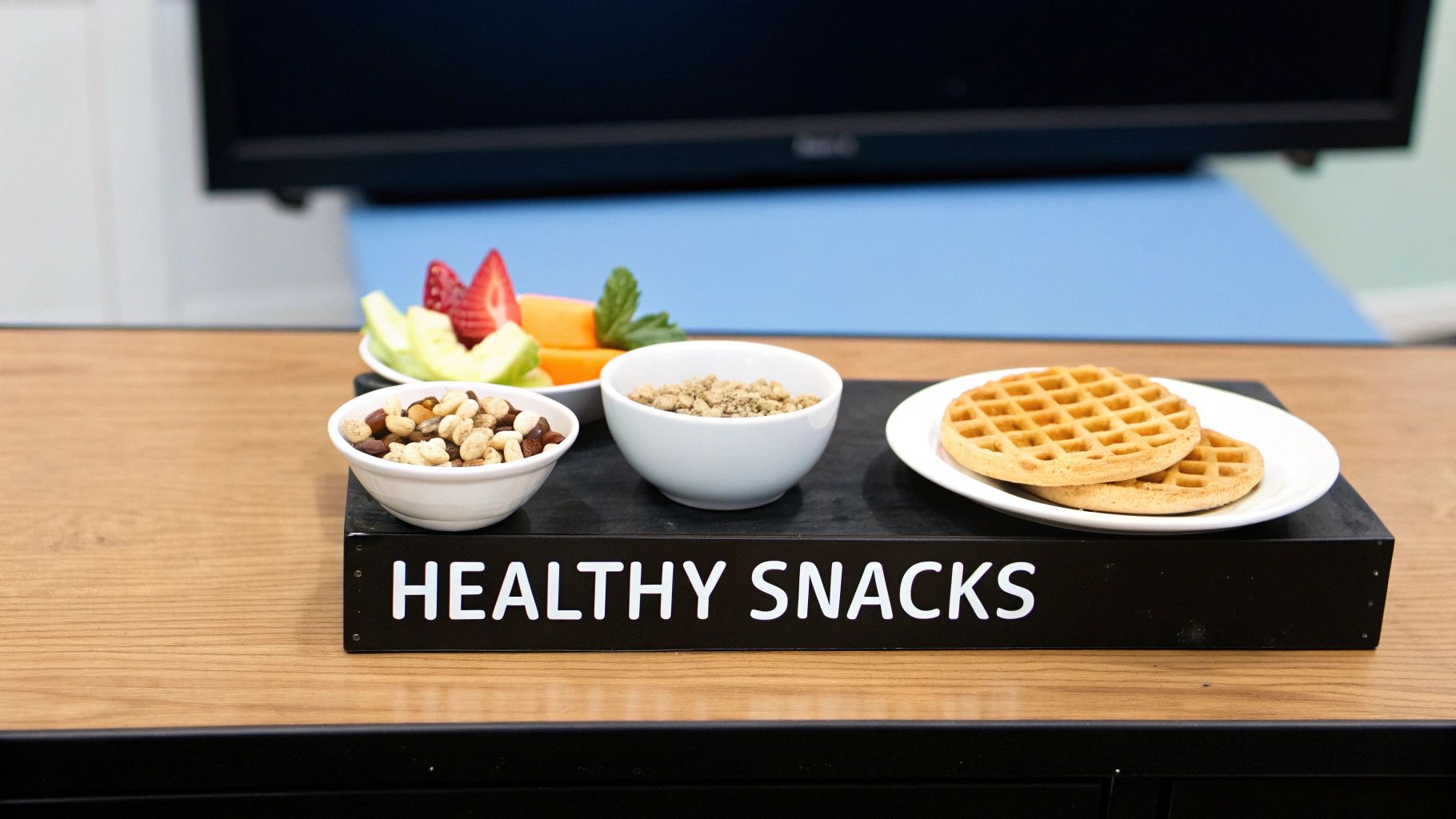
The Perfect Coffee Companion
Picture this: your morning coffee or afternoon tea, paired with something warm and just sweet enough to feel like a treat. But this time, it won’t send you on a sugar-fueled rollercoaster.
A low-sugar Dutch-style wafel is perfect for this moment. With only a few grams of sugar and a healthy dose of fiber, it hits that sweet spot without the crash. It turns a simple coffee break from a mindless habit into a genuinely satisfying ritual.
Guilt-Free Family Treats
We’ve all been there—trying to find one snack the whole family can agree on is nearly impossible, especially when you’re trying to avoid the usual sugar bombs. The trick is finding something that feels like a classic treat but is built on a much better foundation.
Low-sugar cookies are a fantastic swap. Instead of the high-sugar, empty-calorie versions, look for options made with minimal added sugar and extra fiber. They give you that satisfying crunch and sweetness that both kids and adults crave, making them a win for after-school snacks or a shared dessert.
It’s about creating better food experiences for the whole family. When you focus on quality ingredients, you can enjoy these moments together without worrying about the inevitable energy slump that follows a sugar rush.
Midday Indulgences That Energize
The 3 p.m. slump is real, and it usually sends us hunting for something crunchy. But instead of grabbing chips or sugary crackers, think about lighter, crispier alternatives that offer more balanced fuel.
Light snacks like wafers or crispy wafer bars can be the perfect solution. They deliver that delightful texture without feeling heavy or greasy. When you find one with minimal sugar, you get the satisfying crunch you need to power through the afternoon, not drag you down. Our guide to the best healthy snack bars has even more ideas for balanced energy.
Exploring Global Snack Inspirations
Sometimes the best snack ideas are waiting just outside our usual grocery store aisles. Snacking looks different around the world, and many cultures have delicious traditions that prioritize whole foods and balanced flavors over pure sugar.
For example, looking into healthy Japanese snacks can introduce you to amazing treats made from ingredients like seaweed, edamame, and rice. It's a great way to discover new textures and tastes. Broadening your horizons can open up a whole new world of snacking possibilities.
Simple, Whole-Food Combinations
Of course, you can't go wrong with the classics. Some of the best healthy snacks are the ones you put together yourself, and it doesn't have to be complicated. Pairing simple, whole-food ingredients is a timeless strategy for a reason—it works.
Here are a few dietitian-approved combos that are quick and easy:
- Greek Yogurt and Berries: Protein from the yogurt and fiber from the berries deliver steady, long-lasting energy. Plus, it's packed with calcium and vitamin C.
- Apple Slices with Nut Butter: This gives you a satisfying crunch along with healthy fats and fiber, keeping you full and supporting good gut health.
- Hummus with Veggie Sticks: Dipping carrots, cucumbers, or bell peppers in hummus is a fantastic way to get fiber, vitamins, and plant-based protein all in one.
These pairings are simple, nutritious, and easy to customize. At the end of the day, the best snacks are the ones that fit your lifestyle, satisfy your cravings, and leave you feeling great long after you've finished eating.
The Art of Mindful Snacking and Smart Storage
You've done the hard part—you found some genuinely healthy snacks. But what you do next is just as important. How you eat and store those snacks can be the difference between getting their full nutritional punch and, well, not.
Think of it this way: you wouldn't buy beautiful, fresh produce just to let it wilt in your crisper drawer. The same goes for your snacks. A little care protects your investment in your health. Learning a few food storage and handling best practices can give you a professional edge, right in your own kitchen.
Master Your Portions and Presence
Ever looked down and realized you've polished off an entire bag of something without even tasting it? That’s mindless eating. Mindful snacking is the complete opposite—it’s about paying attention, savoring each bite, and listening to your body.
When you're truly present, you start to notice your actual hunger and fullness cues. One of the best ways to get started? Built-in portion control. Single-serving packages take the guesswork out of the equation entirely.
Here are a few simple tricks to build a more mindful habit:
- Plate Your Snack: Never eat straight from the bag or box. Putting your portion on a plate or in a bowl sends a powerful visual signal to your brain that this is a complete snack.
- Ditch the Distractions: For just a few minutes, step away from your screen. Turn off the TV. Focus only on the food in front of you.
- Chew, Don't Inhale: Really taste the flavors and feel the textures. Slowing down not only helps your digestion but also makes the snack far more satisfying.
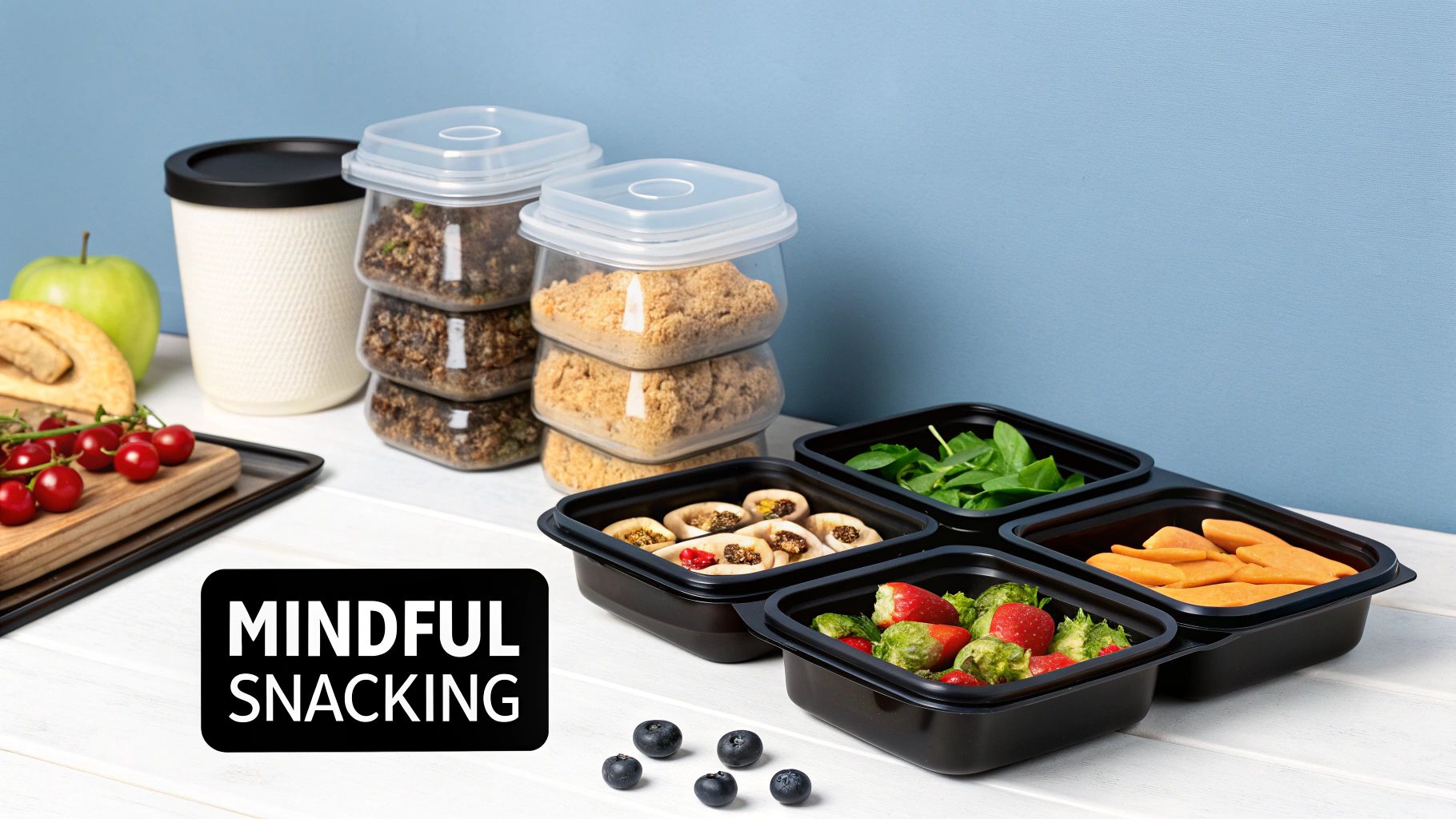
Smart Storage for Lasting Freshness
Proper storage is your secret weapon against waste. It keeps your snacks tasting great and ensures you’re not throwing your money (or your good intentions) in the trash.
Different snacks need different care, but some rules are universal. For anything crunchy like nuts, seeds, or whole-grain crackers, airtight containers are a must. They create a barrier against air and moisture, the two main culprits behind stale snacks.
For things that need to be kept cool, like yogurt or certain protein bars, always pay attention to the "best by" date and make sure they’re stored at the right temperature.
Pro-Tip: Make mindful portioning and smart storage work together. Spend a little time at the beginning of the week prepping snacks into single-serving containers. This simple system keeps everything fresh while making the healthy choice the easy choice when you're in a hurry.
Got Questions About Healthy Snacking? We’ve Got Answers.
Let's be honest, trying to find genuinely healthy snacks can feel like a pop quiz in the middle of a grocery store aisle. It's totally normal to have questions, even when you're trying to make great choices.
Think of this as your cheat sheet. We'll walk through the most common questions about reading labels, sticking to specific diets, and finding snacks the whole family will love.
What’s the First Thing I Should Look for on a Nutrition Label?
When you turn that package over, cut through the noise and zero in on two things: ‘Added Sugars’ and ‘Dietary Fiber.’ These tell you the real story.
A good rule to live by is to aim for snacks with less than 5 grams of added sugar per serving. For fiber, anything over 3 grams is a fantastic start. Why? Low sugar helps you dodge those awful energy spikes and crashes, and fiber is what keeps you feeling full and satisfied. Once you've checked those two, give the ingredient list a quick scan for things you actually recognize.
How Do I Find Snacks for Diets like Keto or Gluten-Free?
Shopping for a specific diet is way easier than it used to be, but you still have to be a bit of a detective. Your best friend here is a trusted certification on the package, like a "Certified Gluten-Free" seal or a "Keto-Friendly" logo.
- For Keto: You’ll want to look for low net carbs (that’s just total carbs minus fiber). Check the ingredients for healthy fats from sources like nuts and seeds, too.
- For Gluten-Free: Even with a certification, it never hurts to give the ingredient list a final once-over to make sure there are no hidden sources of wheat, barley, or rye.
Pro-tip: Most online stores have handy filters that let you sort by dietary needs, which can save a ton of time.
Are Pre-Packaged Snacks Actually a Healthy Option for My Family?
Yes, they absolutely can be! The biggest win with pre-packaged snacks is built-in portion control, which is a lifesaver for kids and adults alike. For a busy family, the convenience of a grab-and-go option is a game-changer.
The trick is simply to apply the same rules we've been talking about. Read the labels and hunt for options with low sugar, a good dose of fiber, and ingredients you can pronounce. When you find the right ones, pre-packaged snacks are the perfect combo of smart nutrition and real-world convenience.
Ready to fill your pantry with snacks that taste amazing and fit your goals? Rip Van offers a whole lineup of wafels, cookies, and bars made with low sugar and high fiber to power your day. Explore our full collection and discover your new favorite guilt-free treat.
0 comments