

When you're looking for a truly great low-sugar granola bar, the magic number to remember is 5 grams of added sugar or less. But it’s not just about the sugar. The best bars also pack in plenty of fiber and are made from whole-food ingredients you can actually recognize, giving you a satisfying snack without the dreaded sugar crash.
The Hunt for Genuinely Healthy Snacks
Let's be real. Walking down the snack aisle is often a frustrating experience. You grab a granola bar that looks healthy, flip it over, and discover its nutrition label is almost identical to a candy bar's. It’s no wonder so many of us are fed up with overly sweet, highly processed options.
This isn't just a passing fad—it's a full-blown movement. People are more informed than ever, and they're demanding foods that actually fuel their bodies and fit their wellness goals. This shift has completely shaken up the snack market.
The Rise of the Mindful Snacker
This push from consumers is reshaping the entire industry. The global granola bar market, valued at USD 6.48 billion in 2024, is expected to surge to USD 11.32 billion by 2035. This incredible growth is fueled by people just like you who want convenient, low-sugar snacks that work for a busy life. You can read more about this market evolution on Metatech Insights.
Today’s shopper is an ingredient detective, turning over boxes and questioning every line on the nutrition panel. They're looking for authenticity and transparency, not just another low-calorie claim.
This guide is here to help you become that detective. We're going to cut through the marketing fluff and misleading "health halos" that so many brands use to hide what's really in their products.
By the time you're done reading, you'll know how to:
- Spot sneaky sugars and bogus claims from a mile away.
- Understand what actually makes a low-sugar bar healthy.
- Confidently pick snacks that taste amazing and support your health.
The good news is that brands are finally getting the message. Innovative companies are crafting snacks that are both delicious and genuinely low in sugar. You no longer have to choose between flavor and your well-being. Let's dive in and make you a smarter, more empowered shopper.
Decoding What Low Sugar Really Means
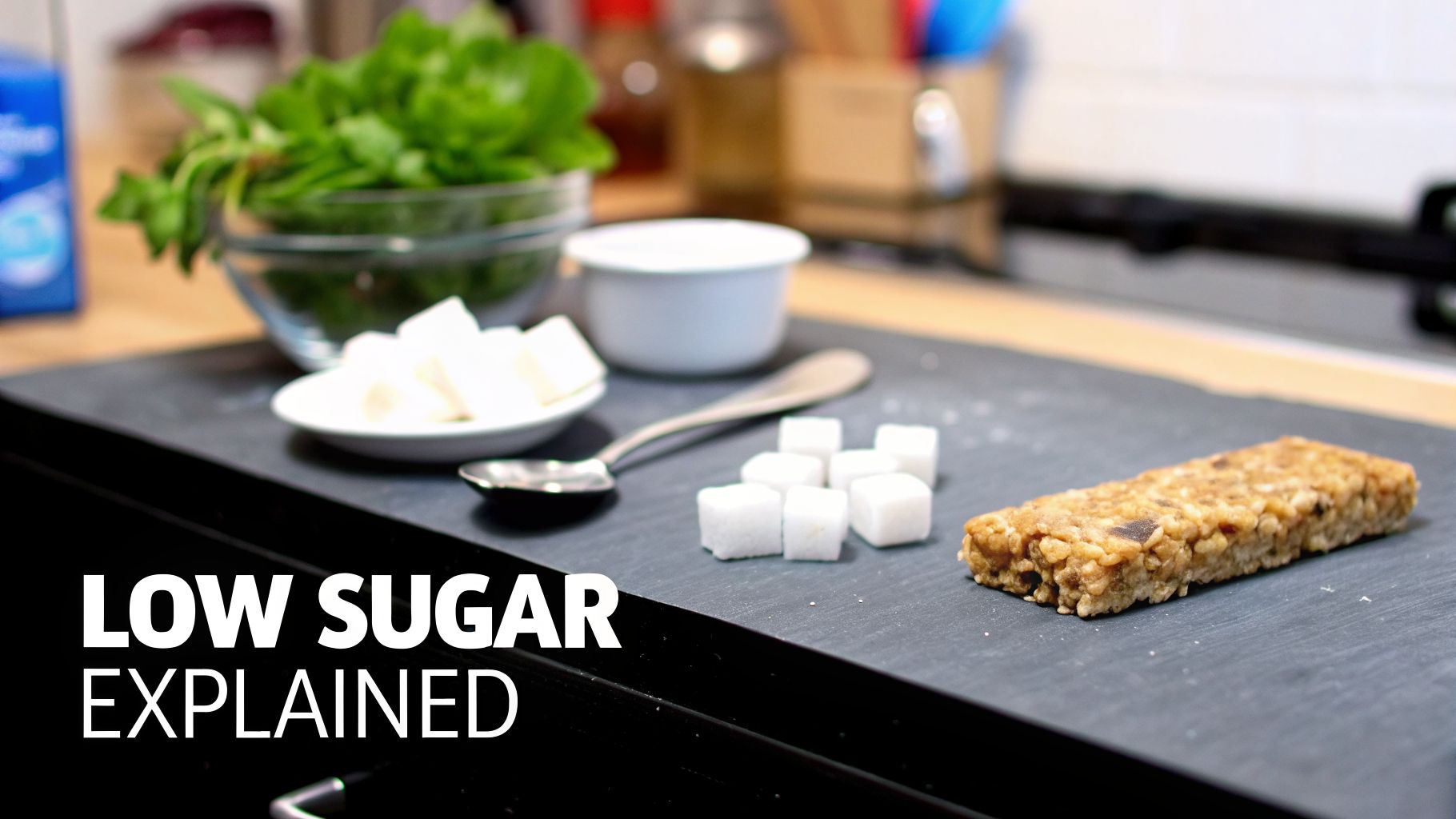
You’ve seen the phrase “low sugar” plastered across countless snack packages, but what does it actually mean? The truth is, it can be frustratingly vague. Unlike terms like “low fat,” the FDA hasn't set an official, regulated definition for "low sugar." This leaves the door wide open for brands to interpret the term however they see fit.
This is where a little label-reading savvy becomes your greatest asset. To cut through the marketing noise, I always recommend a simple visualization trick: think in sugar cubes. One standard sugar cube is roughly 4 grams of sugar. So, if you pick up a bar with 12 grams of sugar, you're essentially eating three sugar cubes. Framing it that way makes the numbers on the label feel much more real.
Natural Sugars vs. Added Sugars
Now, let's get a bit more specific, because not all sugars are the same. The most important distinction to make is between naturally occurring sugars and added sugars.
Natural sugars are the ones found in whole foods, like fructose in fruit or lactose in dairy products. The great thing about these is that they come packaged with other good stuff—fiber, vitamins, and minerals—which helps your body manage them more effectively.
Added sugars, on the other hand, are the sugars and syrups put into foods during processing. We're talking about ingredients like high-fructose corn syrup, cane sugar, or brown rice syrup. These are what health experts are most concerned about because they deliver calories without any real nutritional payback and can contribute to health issues when we eat too much of them.
According to the American Heart Association (AHA), men should aim for no more than 36 grams (about 9 teaspoons) of added sugar per day, while women should stick to 25 grams (about 6 teaspoons).
This guideline is your north star in the snack aisle. When you’re hunting for one of the best low sugar granola bars, you want something that helps you stay well within that daily budget, not a snack that blows most of it in one go.
To help you spot these sugars in disguise, here’s a quick guide to what you might see on a nutrition label.
Understanding Sugar on Nutrition Labels
A quick guide to interpreting different sugar terms and their impact on your health.
| Term | What It Really Means | Common Examples |
|---|---|---|
| Total Sugars | This includes both naturally occurring sugars (from fruit, milk) and any added sugars. It's the big-picture number. | A bar with fruit will have natural sugars contributing to this total. |
| Added Sugars | These are the sugars added during processing. This is the number to watch most closely for your health. | High-fructose corn syrup, cane sugar, honey, maple syrup, agave nectar. |
| Sugar Alcohols | Sweeteners that have fewer calories than regular sugar. They can cause digestive upset in some people if eaten in large amounts. | Erythritol, xylitol, sorbitol, maltitol. |
| "No Added Sugar" | This means the manufacturer didn't add any sugar, but the product can still contain natural sugars or sugar alcohols. | A fruit-and-nut bar might have "no added sugar" but still be high in total sugar. |
Keeping an eye on the "Added Sugars" line is your best strategy for making a truly healthy choice.
A Practical Guideline for "Low Sugar"
So, what's a good number to aim for? While brands play by their own rules, a solid rule of thumb among nutritionists is to look for snacks with 5 grams of added sugar or less per serving.
Sticking to this 5-gram threshold is a simple and effective way to filter out the glorified candy bars. It ensures your snack will give you sustained energy, not a jarring sugar spike followed by the dreaded crash. It’s the one number that can reliably guide you to a genuinely low-sugar option you can feel great about eating.
How to Read Labels Like a Nutrition Pro
Ever feel like you need a secret decoder ring to figure out which granola bars are actually healthy? The snack aisle can be a confusing place, but once you know a few key things to look for on the nutrition label, you’ll be able to spot a genuinely good choice from a candy bar in disguise.
Think of it as learning a new skill. With a little practice, you can cut through the marketing noise and feel confident about what you're buying.
First, Check the Serving Size
Before you look at anything else, your eyes should go straight to the serving size. This one number gives context to everything else on the label. It’s a classic trick for brands to use a tiny serving size to make their numbers look more impressive than they really are.
For instance, a package might hold two small bars, but the nutrition facts only apply to one. If you polish off the whole pack—and let's be honest, most of us do—you have to double everything. That means double the calories, double the fat, and most importantly, double the sugar.
Find the "Added Sugars" Line
Next, find the line for “Added Sugars.” This is your single most important clue when hunting for the best low sugar granola bars. It separates the sugars that are naturally part of ingredients (like fruit) from the sugars that were dumped in during processing.
It’s amazing how much sugar can be packed into a "healthy" snack. Many of the classic granola bars you grew up with can have as much as 15 grams of added sugar. That's almost four teaspoons of pure sugar. It's no wonder 78% of consumers now say they check for sugar content before buying.
As a simple rule of thumb, look for bars with 5 grams of added sugar or less. This one filter will instantly help you weed out most of the sugar bombs on the shelf.
Scan the Ingredient List for Sugar's Aliases
After you’ve checked the numbers, it’s time to play detective with the ingredient list. Ingredients are always listed by weight, so whatever you see first is what the bar is mostly made of. If sugar—or one of its many sneaky names—is in the top three, that’s a big red flag.
Sugar is a master of disguise. Keep an eye out for these common culprits hiding in plain sight:
- High-fructose corn syrup
- Cane juice or evaporated cane juice
- Dextrose, maltose, or fructose
- Brown rice syrup or agave nectar
- Fruit juice concentrate
For a deeper dive into decoding these labels, check out our complete guide on how to read nutrition labels. This is a skill that empowers you to see past the flashy packaging and understand what you're really eating.
Look for the Fiber-Sugar Connection
Finally, don't just look at what you don't want (sugar); look for what you do want—fiber! Fiber is sugar’s natural counterbalance. It slows down how quickly your body absorbs sugar, which helps prevent those dreaded energy spikes and crashes.
A bar with a decent amount of fiber will keep you feeling full and satisfied much longer. Aim for a bar that has at least 3-5 grams of fiber. You’ll typically find it in ingredients like oats, chicory root, nuts, and seeds. Finding a bar that gets this balance right—low in added sugar and high in fiber—is the real secret to a great snack.
Finding the Perfect Bar for Your Lifestyle
Let's be real: the "best" low-sugar bar doesn't actually exist. The best bar is the one that’s right for you—your health goals, your dietary needs, and, frankly, your taste buds. The snack aisle can be overwhelming, but this guide will help you zero in on your perfect match.
Think of it this way: you wouldn't take a delicate road bike out on a rugged mountain trail. The same logic applies here. Grabbing just any bar labeled "low sugar" won't work if you're following a specific diet like keto or need a certified gluten-free option.
The good news is that the market has exploded with choices. While traditional granola bars are still expected to make up a 55% value share of the market by 2025, it’s the low-sugar versions that are really pushing things forward with exciting, new options. You can read more on these granola market trends if you're curious, but we'll focus on how to find the right bar for your life, right now.
This simple decision guide breaks down how to read any food label in three quick steps, so you can confidently find the best low sugar granola bars for your pantry.
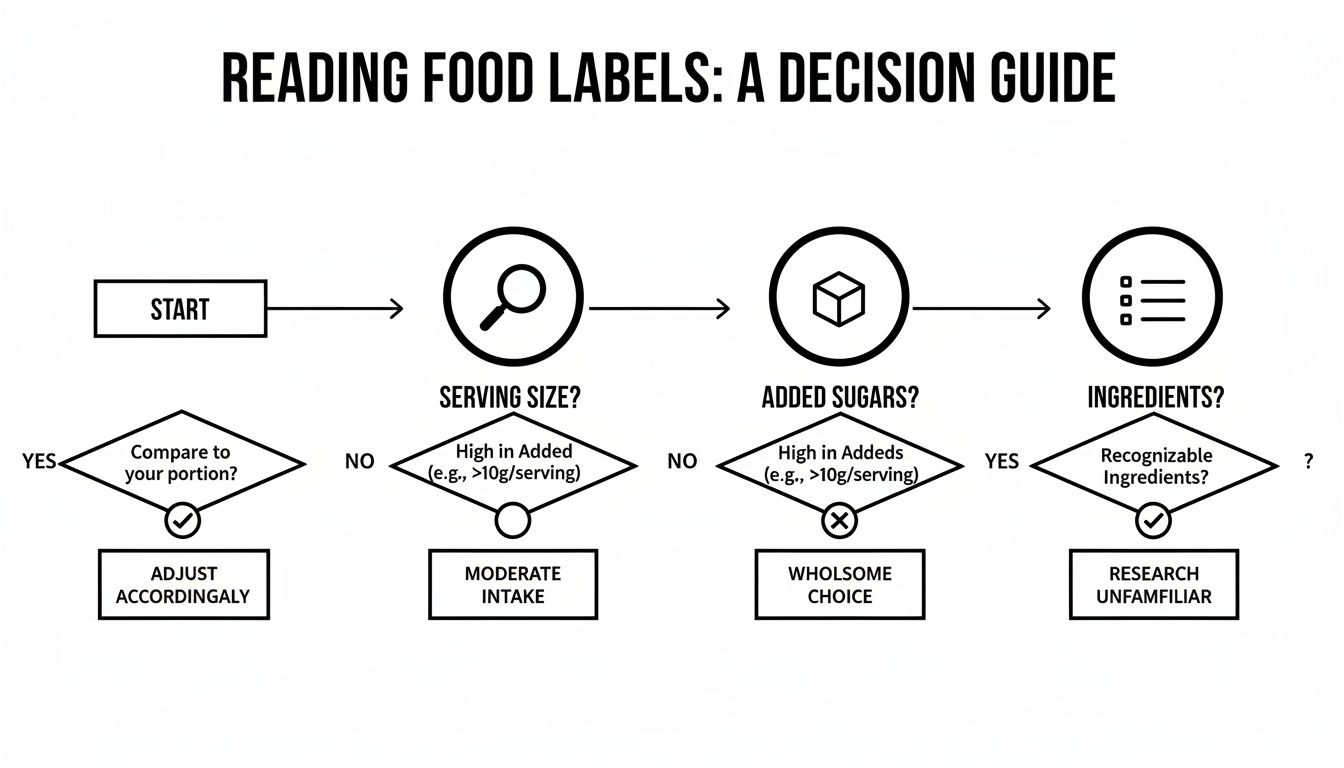
As you can see, a quick glance at the serving size, added sugars, and the first few ingredients tells you almost everything you need to know about a bar's real nutritional value.
Bars for Keto and Low-Carb Diets
If you’re on a keto or low-carb diet, your world revolves around one thing: net carbs. This is the number you get when you subtract fiber and certain sugar alcohols from the total carbohydrates. To stay in ketosis, you have to keep that number way down.
Here's what to look for:
- Net Carbs: Your target is 5g or fewer per bar. No exceptions.
- Sweeteners: Look for keto-approved sweeteners like erythritol, monk fruit, or allulose. Steer clear of maltitol, as it can still spike blood sugar for some people.
- Healthy Fats: Ingredients like almonds, coconut oil, and various nut butters are your best friends here.
A solid keto bar gives you that satisfying hit of fat and protein to keep you full without kicking you out of ketosis.
Finding Truly Gluten-Free Options
For the roughly 30 million Americans who have celiac disease or a gluten sensitivity, "gluten-free" isn't a preference—it's a necessity. The biggest pitfall with granola bars is cross-contamination. Even if a bar is made with oats, which are naturally gluten-free, they are often processed on the same equipment as wheat.
Don't just scan for "oats" on the ingredient list and call it a day. For true peace of mind, you need to see a "Certified Gluten-Free" seal on the package. This is your guarantee that the product has been rigorously tested to meet strict gluten-free standards.
Beyond that seal, the best gluten-free bars don't compromise on texture or flavor. They use smart, whole-food ingredients like nuts, seeds, and certified gluten-free grains to make a bar that’s genuinely delicious.
The Best Low-Sugar Snacks for Kids
Picking snacks for kids is a special kind of challenge. You need something they'll be excited to eat, but you definitely don't want to hand them a glorified candy bar. It’s all about finding that sweet spot between tasty and nutritious.
When you're shopping for the little ones, focus on these points:
- Simple Ingredients: The shorter the ingredient list, the better. Look for whole foods you can actually recognize, like oats, real fruit, and seeds.
- Low Added Sugar: Stick to that 5-gram rule we talked about, or even less. Natural sweetness from fruit is always a win.
- Kid-Sized Portions: Many brands now offer smaller bars designed for smaller bodies, which helps prevent overeating.
The best low-sugar snacks for kids feel like a fun treat but are secretly packed with the good stuff to fuel them through school and playtime. For a deeper dive, check out our guide on choosing low-sugar snack bars. When you match your snack choice to your lifestyle, you're not just eating—you're making a smart move for your well-being.
Looking Beyond Sugar at the Full Ingredient List
So you've flipped the package over and found the "Added Sugars" line. That's a great start, but the real story is in the ingredient list. A truly good low-sugar bar isn't just about what's been taken out; it’s about the quality of what's been put in.
Think of it this way: You wouldn't build a house by simply avoiding flimsy materials. You'd actively choose strong ones like solid wood and concrete for a sturdy foundation. The same goes for your snacks. You want ingredients that work for your body, not just empty fillers.
The best low sugar granola bars are built with nutrient-dense ingredients that give you more bang for your buck, turning a simple snack into something that actually supports your health goals.
The Power of Functional Ingredients
The bars that really stand out are the ones packed with ingredients that do more than just provide calories. These functional ingredients turn a snack into a tool for better health.
Here are the three heavy hitters to look for:
- High-Quality Fiber: Fiber is a superstar for keeping you full and supporting a healthy gut. You’ll want to see ingredients like chicory root fiber (a prebiotic that feeds your good gut bacteria) or soluble fiber from whole sources like oats and nuts, which also helps keep blood sugar stable.
- Quality Protein: This is what gives a snack real staying power. Protein from nuts, seeds, or even pea protein provides sustained energy, helps you feel satisfied, and supports muscle health.
- Whole Foods: An ingredient list you can actually read is always a fantastic sign. When you see words like almonds, oats, chia seeds, and real cocoa, you know you're getting nutrients straight from the source.
Choosing a bar is like picking your teammates for a game. You want strong, reliable players like fiber and protein, not benchwarmers like artificial fillers that don't contribute anything of value.
Ingredients to Approach with Caution
Just as you hunt for the good stuff, you also need to keep an eye out for ingredients that might not be so great. Some bars hit that low-sugar target by swapping in substitutes that can have their own downsides.
For instance, many people who read labels carefully prefer natural sweeteners, like natural honeycomb as an ingredient, instead of options that are heavily processed. But there are other alternatives to be aware of.
Certain sugar alcohols are a very common replacement. While some, like erythritol, are usually easy on the system, others are notorious for causing bloating and digestive upset in a lot of people. If you want to dive deeper into how these work, our guide on what sugar alcohol in food is breaks it all down.
Ultimately, looking past the sugar number to scan the entire ingredient list is what gives you control. It’s the difference between simply dodging sugar and actively choosing a healthier, more functional snack.
Why Smart Snackers Are Choosing Better Options
You’ve made it through the nutritional maze of the snack aisle. Armed with a new perspective, you can now look at that wall of colorful boxes and know exactly what you’re looking for.
The goal is refreshingly simple: find snacks with minimal added sugar, a solid amount of fiber, and clean ingredients you can actually pronounce. These are the non-negotiables. When a brand builds its entire philosophy around this simple formula, you know they’re on the right track. They understand that you shouldn’t have to sacrifice your well-being for a little indulgence.
What Smart Snacking Really Looks Like
The best brands out there prove that a delicious treat doesn’t need to be a sugar bomb. They’ve figured out how to craft bars that are genuinely tasty while keeping added sugars low and fiber high. The result is a snack that gives you steady energy, not a ticket to an afternoon crash.
This is more than just picking one bar over another; it’s a whole new way of thinking about snacking.
- Convenience Without the Caveat: You get the on-the-go fuel you need for a busy life, without having to feel guilty about what’s in it.
- Options for Every Diet: The most innovative companies are offering choices that fit different needs, whether you're going keto, gluten-free, or just trying to find something healthy for your kids.
For many people, smart snacking goes beyond just sugar. It's about how each food fits into their bigger health picture. If you're fine-tuning your diet for a specific goal, understanding your macronutrients—protein, carbs, and fat—is a game-changer. Using a macro calculator for weight loss can be an incredibly powerful tool for dialing in your nutrition.
Ultimately, every time you choose a better bar, you're casting a vote for your own health. You’re now ready to make smarter, more satisfying choices that truly support your wellness journey.
Got Questions About Low-Sugar Bars? We've Got Answers.
Even after you get the hang of reading labels, a few questions always seem to pop up in the snack aisle. Let's tackle some of the most common ones that might be on your mind.
How Many Grams of Sugar Is Actually "Low Sugar"?
While the FDA hasn't set an official number, a great rule of thumb from nutrition experts is to aim for 5 grams of added sugar or less per bar.
Think of it as the sweet spot. It's just enough to be satisfying without sending your energy levels on a rollercoaster. Sticking to this simple number is one of the quickest ways to weed out the candy bars in disguise.
Are Natural Sweeteners Like Honey Really Better?
This is a big one, and it's easy to see why it's confusing. While natural sweeteners like honey and maple syrup sound healthier and have some trace minerals, your body ultimately breaks them down just like regular sugar.
The most important thing to look at is the “added sugars” line on the nutrition facts panel. That number tells the real story, no matter where the sweetness comes from.
Your body doesn't really distinguish between sugar from honey and sugar from a cane field. What matters most is the total amount you're eating, so always keep an eye on that "added sugars" number.
Can I Eat Low-Sugar Granola Bars Every Day?
Absolutely. A well-made bar that's low in sugar and high in fiber can easily fit into a healthy daily routine. They're perfect for a grab-and-go breakfast, a pre-workout bite, or to get you through that 3 p.m. slump.
Just be mindful that it's one part of a balanced diet, not a replacement for whole meals.
Ready to find a delicious, low-sugar snack that you'll actually look forward to eating? Give Rip Van a try and feel great about your choice. Check out the whole collection and find your new favorite.
0 comments