

You're standing in the grocery aisle with a packet of chocolate chip cookies in one hand and your phone in the other. The front promises a tempting treat, but the back tells a different story: wheat flour appears in the ingredients, or the chocolate contains milk powder, or a small “may contain” statement raises a question you can't answer quickly. Finding cookies that are both gluten free and dairy free takes more than spotting a friendly-looking package.
The challenge isn't just removing two ingredients. Gluten normally helps a cookie hold together, while butter contributes fat, moisture, flavor, and browning. A successful cookie must replace both functions without becoming gritty, flat, greasy, or overly dense. With a careful label routine and a better understanding of formulation, you can shop and bake with much more confidence.
The Double-Restriction Cookie Dilemma
The hardest part of shopping for cookies gluten free dairy free is that each restriction changes the other. A gluten-free recipe may use butter to create richness and tenderness. A dairy-free recipe may rely on wheat flour for structure. Remove both, and the product developer or home baker has to rebuild the cookie from the ground up.
That's why a package can look ideal at first glance and still fail your requirements. “Gluten-free” says nothing by itself about milk ingredients, and “vegan” doesn't automatically mean the product was made without wheat or protected from gluten cross-contact. The front of the pack is a starting point, not a safety decision.
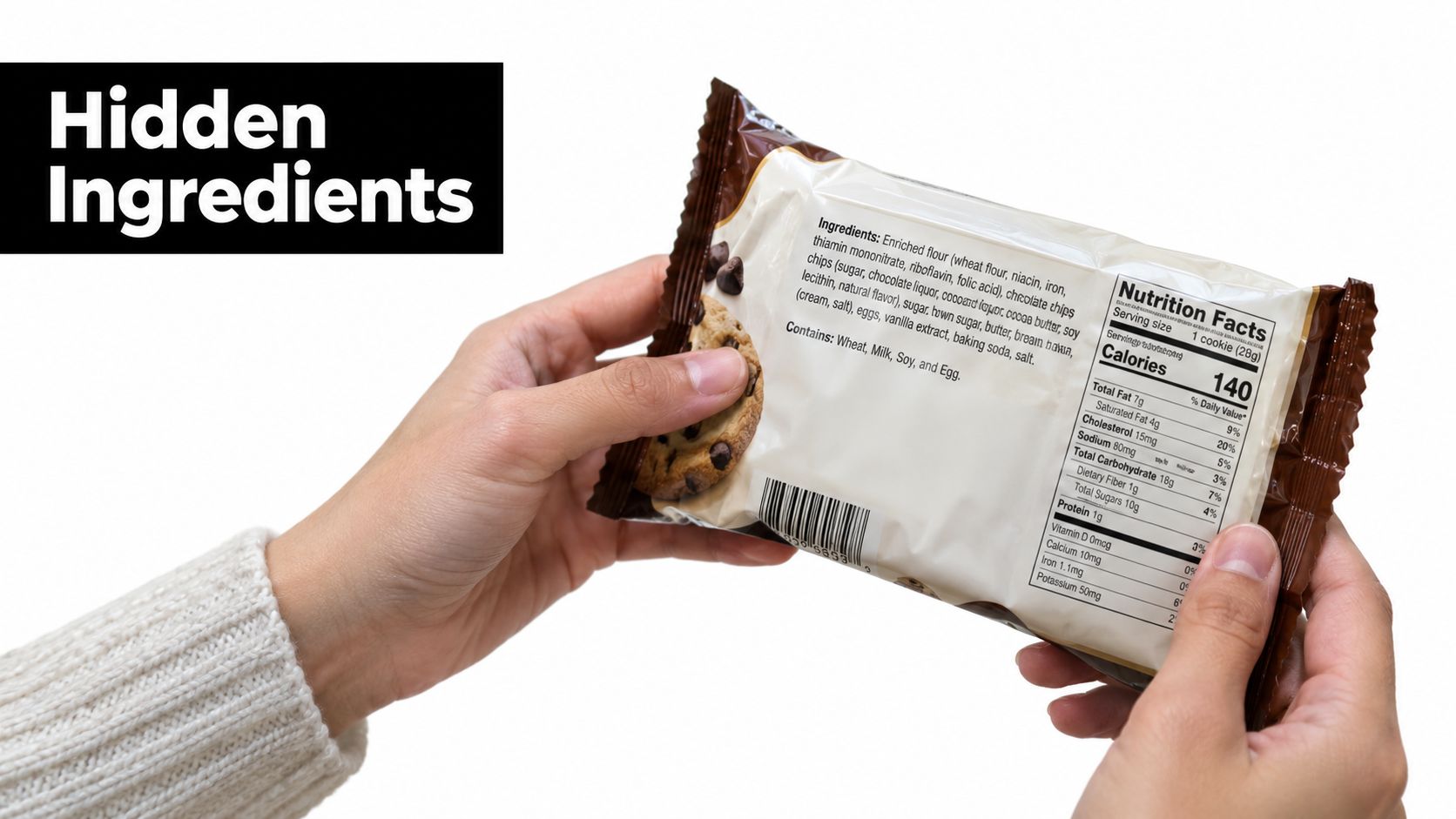
Why the combination is unusually demanding
Gluten forms a flexible network in conventional dough. That network helps control spread, traps gas, and gives the baked cookie enough strength to hold together. Butter brings its own technical advantages. Its water turns to steam, its milk solids support browning and flavor, and its fat contributes tenderness and mouthfeel.
Without gluten, dough can spread too far or break into sandy fragments. Without dairy butter, the cookie may lose moisture, browning, and the rounded flavor people associate with a classic chocolate chip cookie. A substitute that solves one problem can create another. Coconut oil may provide fat but spread too aggressively when melted, while a heavy starch blend may improve shape but leave the bite dry.
Practical rule: Treat gluten-free and dairy-free as one formulation problem, not two separate substitutions.
Cross-contact also deserves a calm, practical approach. Shared mixers, scoops, baking trays, flour dust, and production lines can matter to someone with celiac disease or a serious allergy. You don't need to panic at every package, but you do need a repeatable method for checking certifications, allergen statements, and manufacturing warnings.
The category itself is no longer limited to a small specialty shelf. A 2026 forecast of the gluten-free bakery products market estimated the market at USD 7.83 billion in 2025, with a projection of USD 8.48 billion in 2026 and USD 12.99 billion by 2031. The same forecast identified cookies and biscuits as a particularly dynamic subsegment, which means shoppers have more formats to evaluate, but also more labels to read carefully.
Reading Labels Like a Pro
A good label check takes longer than a quick glance, but it becomes fast once you follow the same order every time. Start with the claims on the front, then confirm the ingredients, then inspect the allergen and cross-contact language. Never let a photograph of oats, chocolate, or almonds substitute for the actual ingredient panel.
Start with the claims, then verify them
Look for a clear gluten-free statement or a credible third-party gluten-free certification symbol. A certification doesn't eliminate the need to read the full label, but it gives you more information than a vague phrase such as “made with alternative grains.” If gluten avoidance is medically necessary, prioritize products with transparent certification and manufacturing information.
For dairy, search for an explicit dairy-free or vegan statement, but check what the manufacturer means by it. Dairy can appear as milk, butter, cream, milk powder, casein, sodium caseinate, whey, whey protein, lactose, or ghee. Chocolate coatings, fillings, caramel layers, and flavor powders deserve particular attention because dairy ingredients may appear outside the cookie dough itself.
Modified food starch and malt flavoring also deserve a closer look when you're checking for gluten. The source of an ingredient can vary, so a product with an ambiguous term may require a manufacturer's clarification rather than a guess. Natural flavors can also be difficult to interpret when a package doesn't explain their allergen sources.
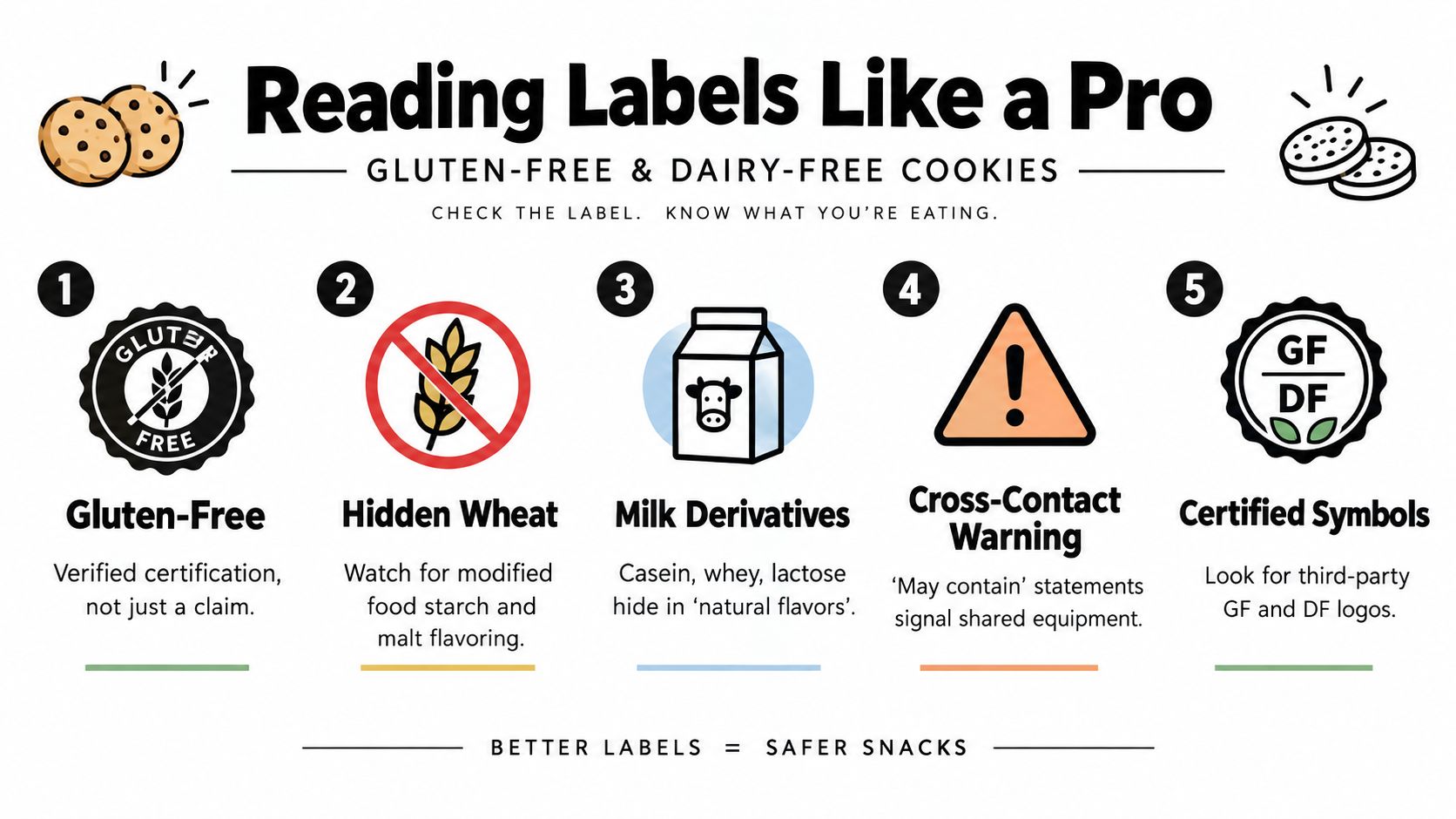
Separate ingredients from cross-contact warnings
“Contains milk” identifies an intentional allergen ingredient. “May contain milk” or “made on shared equipment with milk” describes a potential cross-contact pathway. Those statements answer different questions, and both can matter.
The same distinction applies to wheat and gluten. A cookie can use gluten-free ingredients while still being produced in a facility that handles wheat. For a person with celiac disease, the manufacturer's certification and controls may be more useful than the marketing language alone. For a severe allergy, the safest decision may require contacting the brand directly.
Keep a reliable reference nearby if labels leave you uncertain. This food label allergen safety guide can help you build a consistent process for interpreting allergen language instead of making a rushed decision at the shelf.
A useful shopping sequence looks like this:
- Check the gluten-free claim: Prefer a recognized certification when you need a higher level of assurance.
- Scan the allergen declaration: Look specifically for wheat, milk, and statements about shared equipment.
- Read the full ingredient list: Search for milk derivatives, malt-related ingredients, and ambiguous starches.
- Check the flavor components: Chocolate, icing, caramel, and cream-style fillings often change the allergen profile.
- Use dietary filters carefully: Online filters, including those explained in this guide to gluten-free snacks, can narrow your options, but verify the current package before buying.
A vegan label is useful, not conclusive. It can help you rule out intentional dairy ingredients, but you still need to confirm gluten status and cross-contact information. Likewise, a gluten-free seal doesn't tell you whether the recipe contains butter or milk chocolate.
The Science of Structure and Texture
A cookie that crumbles into sand or spreads into a thin, greasy disk usually has a structural problem, not merely a flavor problem. Gluten-free dough lacks the viscoelastic network that conventional wheat dough provides. Dairy-free dough may also lack the water and milk solids that help butter-based cookies brown and develop a satisfying bite.
Formulators compensate with combinations of flours, starches, fats, and binders. Hydrocolloids, such as xanthan gum, help hold water and increase dough cohesion. Starch-rich blends create tenderness and reduce the heaviness that can come from relying on a single dense flour. Almond flour contributes fat and flavor, but it doesn't behave like wheat flour on its own.
What binders actually change
The relationship between water and structure is direct. More soluble fiber or hydrocolloid generally increases water binding, which raises dough viscosity and helps reduce crumble. Too little binding can produce excessive spread and a sandy fracture, while too much can make the cookie gummy or tough.
A technical study of gluten-free cookies used pearl millet flour, flaxseed flour, psyllium husk, shortening, and water to tune texture and dough behavior. Its formula included 60 grams of pearl millet flour, 15 to 22.5 grams of flaxseed flour, 5 grams of psyllium husk, and 36 grams of shortening. Those quantities illustrate the broader principle: gluten-free cookies need a coordinated system of flour, fiber, fat, and liquid, not a random one-for-one swap.
The technical study on gluten-free cookie structure is useful because it connects ingredient selection with rheology rather than treating texture as a mystery. In practical terms, a cookie with a strong binder system should feel cohesive after cooling, not powdery or fragile.
Why fat selection matters
Dairy butter contains both fat and water, along with milk solids that support browning and flavor development. Plant-based fats vary widely in their solid-fat content and emulsification behavior. A firm vegan butter block often behaves more like dairy butter than a pourable oil, while coconut oil needs to remain solid if you want to control spread and preserve chew.
Texture also affects perceived flavor. A dry cookie releases flavor quickly but disappears unpleasantly fast. A cohesive, tender cookie holds its shape while releasing chocolate, vanilla, spice, or caramel notes gradually. That's why structural choices can improve taste at the same time. For a closer look at how a fiber ingredient functions in snack formulation, explore what chicory root fiber is, while remembering that added fiber doesn't replace the need for a balanced flour and fat system.
Baked Fresh vs Store-Bought Options
Homemade and packaged cookies solve different problems. Baking gives you control over the flour blend, fat, chocolate, utensils, and work surfaces. Buying gives you portability, consistency, and a quick answer when you need a snack without planning a baking session.
For someone managing celiac disease or a serious dairy allergy, the decision starts with cross-contact control, not taste. A home kitchen isn't automatically safe. Wheat flour can remain on counters, baking sheets, measuring cups, or mixers, and dairy residue can linger in bowls or spatulas. If other people in the household use those tools, you'll need a dedicated, carefully cleaned setup.
What homemade cookies do better
Scratch baking makes experimentation possible. You can choose a certified gluten-free flour blend, a dairy-free chocolate brand, and a plant-based fat with the texture you want. You can also adjust the bake for a soft center, crisp edge, or chewy finish instead of accepting whatever texture survives commercial packaging.
The trade-off is consistency. Gluten-free dough often needs time to hydrate before baking, and the first batch may spread too much or remain too soft in the center. A hot baking sheet, melted fat, insufficient chilling, or an unbalanced flour blend can change the result quickly.
| Choice | Main advantage | Common limitation |
|---|---|---|
| Homemade batch | Maximum ingredient and equipment control | Requires planning and reliable cross-contact practices |
| Small-batch bakery | Fresh texture and specialist knowledge | Production controls and allergen policies vary |
| Packaged cookie | Convenience, portability, and consistent portions | Texture may depend on stabilizers and careful packaging |
| Online purchase | Wider access to dietary filters and product details | Current labels and shipping conditions still need checking |
When packaged cookies make sense
A well-formulated store-bought cookie can be a practical choice, especially for travel, work, school lunches, or an emergency snack drawer. Commercial products often use stabilizers, fibers, and carefully selected fats to preserve texture over time. Those ingredients aren't automatically a drawback, but they should be evaluated alongside the allergen information and your own dietary needs.
Use the guide to gluten-free cookies as a starting point for comparing formats and ingredients, then confirm the product's current packaging before purchase. A cookie that works for a person avoiding gluten by preference may not meet the level of assurance required for celiac disease or a severe allergy.
Freshness also changes texture. Homemade cookies can have a softer center and more pronounced aroma, while packaged cookies may be crisper, sturdier, and easier to carry. Neither is universally better. Choose the option that gives you the right balance of safety, control, convenience, and enjoyment for that particular occasion.
How Modern Brands Are Solving the Puzzle
Gluten-free cookies have moved well beyond a narrow medical specialty. The Institute of Food Technologists' analysis of cookie-market development reported that 23% of new sweet baked goods launches in the United States from April 2022 to March 2023 carried a gluten-free claim. Earlier data cited in the same source valued U.S. gluten-free product sales at USD 6.4 billion in 2020, with a projection of USD 11 billion by 2026, and recorded 833 gluten-free products among 5,810 cookies in its dataset.
Those figures help explain why product developers now treat gluten-free cookie texture as a central design problem. Shoppers expect a product to deliver crispness, chew, chocolate distribution, and a clean finish, not avoid wheat.
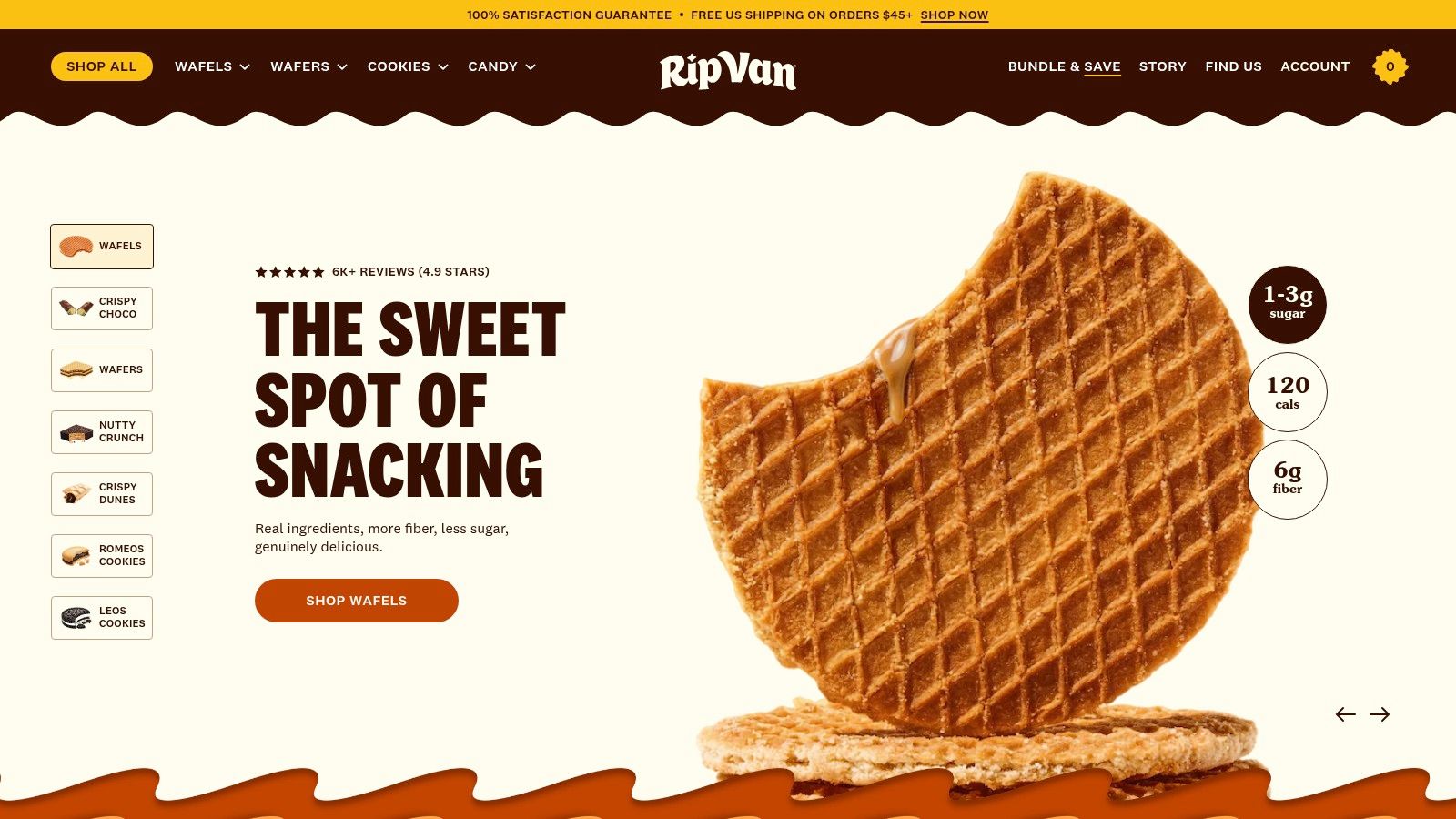
The useful shift from exclusion to experience
Modern formulations often begin with a flour blend designed to work as a system rather than replacing wheat flour with a single alternative. Plant-based fats then provide richness and control spread, while fibers, starches, and binders help create a bite that survives storage.
Clear dietary filters make that work easier for shoppers to find. A strong online product page should distinguish gluten-free from dairy-free, identify relevant allergens, and avoid making consumers decode the entire product range manually. That clarity matters because “better for you” is not a substitute for an allergen-specific claim.
A product can remove an ingredient and still disappoint if it doesn't replace the ingredient's function.
The strongest options also avoid using sweetness as the only source of satisfaction. Flavor can come from cocoa, spices, vanilla, toasted grains, nuts, or caramel notes, while texture contributes as much to indulgence as sugar does. Claims such as no corn syrup, no artificial colors, natural flavors, or higher fiber may appeal to shoppers, but the label still needs to match the individual's gluten and dairy requirements.
The video below offers a visual look at a cookie-style snack format and how product presentation can communicate dietary positioning.
For store-bought cookies, judge the solution in three layers: safety clarity, ingredient function, and eating quality. A certified claim supports the first. A thoughtful flour, fat, and binder combination supports the second. The final test is whether the cookie remains pleasant after cooling, without a greasy coating, powdery finish, or brittle collapse.
Mastering the Art of Homemade Substitutes
Successful gluten-free dairy-free baking starts with substitutions that preserve function. Don't remove butter and wheat flour from a conventional recipe and expect the same dough to behave normally. Replace the structural and moisture roles deliberately, then make small adjustments based on how the dough looks and feels.
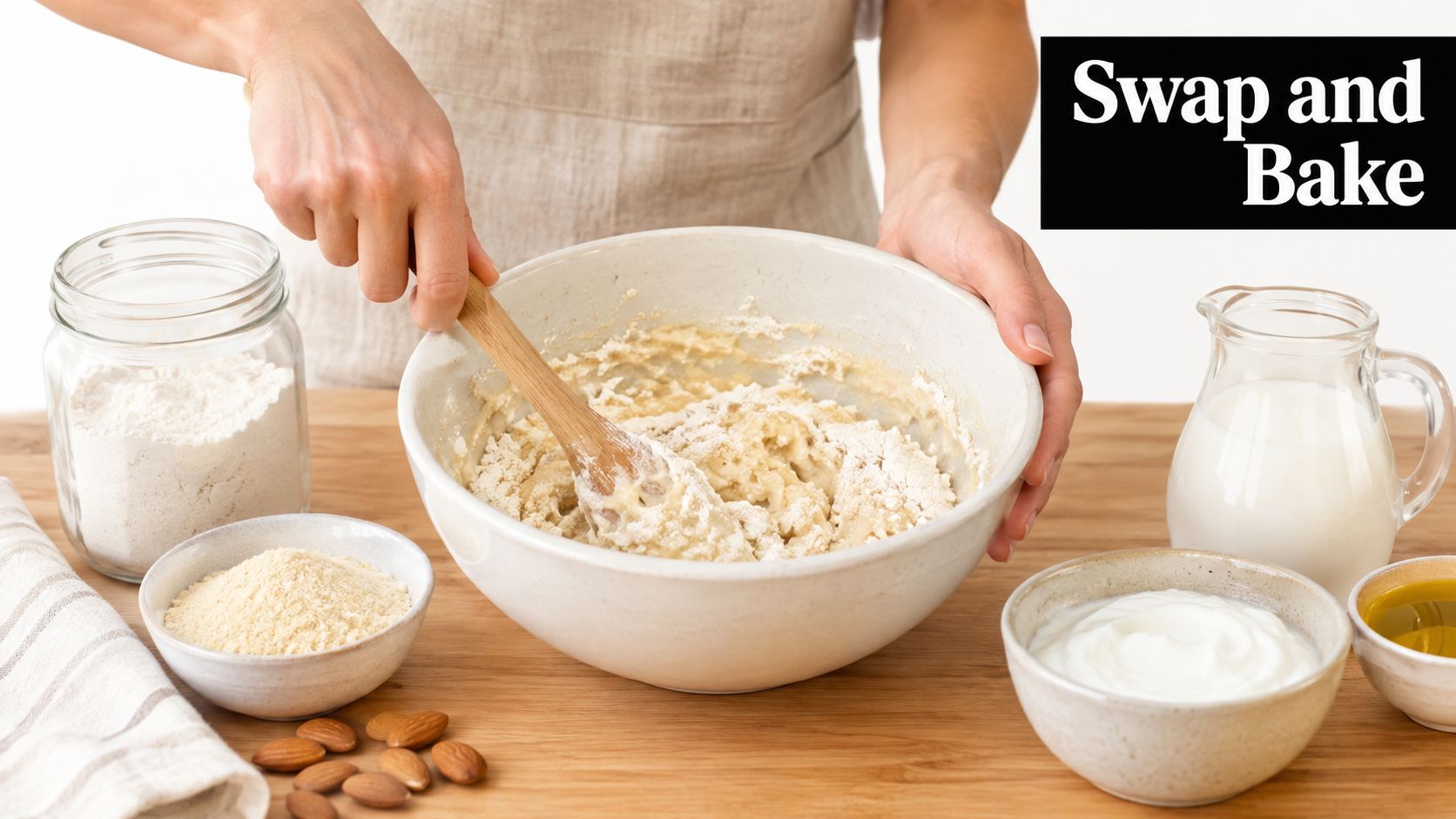
Choose a fat that stays controlled
A solid vegan block-style butter is usually the easiest starting point for a classic drop cookie. Published gluten-free dairy-free formulas use about 10 tablespoons of vegan block-style butter per batch, which demonstrates how closely these products can stand in for conventional butter when the recipe is designed around them. A block fat is easier to cream with sugar and generally gives you better control over spread than a thin, liquid oil.
Solid coconut oil can work too. One published formulation uses 1/2 cup of solid coconut oil, but the important detail is its physical state. If you melt it before mixing, the dough can spread too quickly and produce a flatter, greasier cookie. Keep it solid or sufficiently firm, and chill the dough if it feels loose.
Build the flour blend as a team
A 1:1 gluten-free flour blend is convenient, but check whether it already contains xanthan gum or another binder. Adding more without checking can make the cookie dense or gummy. If the blend contains no binder, a small, measured amount may improve cohesion, but the correct amount depends on the blend and the style of cookie.
Almond flour can add tenderness and nutty flavor, yet it doesn't replace wheat flour volume and absorption by itself. A better approach is to combine it with starches or a balanced gluten-free blend, then allow the dough to rest so the dry ingredients can hydrate. This is especially important when the dough contains fiber-rich ingredients.
Use chilling as a formulation tool
Resting isn't just a convenience. It gives flour particles, starches, and binders time to absorb available moisture, which can reduce spread and improve shape. If the first tray comes out thin, chill the remaining dough longer and make sure the baking sheet has cooled before loading it again.
For browning without dairy milk solids, use a suitable plant fat and don't overcrowd the tray. A moderately hot oven, parchment, and enough space around each portion help the edges develop color before the center dries out. Let the cookies cool on the tray before moving them, because gluten-free cookies often firm as they lose heat.
Baker's test: Bake a small portion first. Change one variable at a time, such as chilling, binder, or fat firmness, so you know what actually improved the result.
Your Final Checklist for Safe Indulgence
Finding cookies gluten free dairy free becomes much easier when you separate the decision into safety, formulation, and convenience. A product can taste excellent and still be unsuitable for your needs if the label is unclear. A certified product can meet your restrictions and still be a poor choice if the texture doesn't satisfy you.
Use this checklist before buying or baking:
- Confirm gluten status: Look for a clear gluten-free claim or credible third-party certification, especially when gluten exposure has medical consequences.
- Confirm dairy status: Check for dairy-free or vegan labeling, then scan for milk, butter, casein, whey, lactose, ghee, and milk-derived flavor components.
- Inspect cross-contact wording: “May contain” and shared-equipment statements provide information you shouldn't ignore.
- Review the formulation: A cohesive cookie usually needs a balanced flour blend, a suitable binder, and a fat that remains controlled during baking.
- Choose the right route: Bake at home when ingredient and equipment control matter most. Buy packaged cookies when portability, consistency, and time are the priorities.
- Test the texture: Avoid cookies that crumble into dust, feel greasy, or turn hard immediately after cooling. Those signals often point to a weak balance of moisture, structure, and fat.
- Recheck before repeat purchases: Manufacturers can change recipes, facilities, or packaging, so don't rely only on a previous shopping decision.
The gluten-free bakery category is established enough to offer more choice, but more choice doesn't remove the need for careful reading. A dependable routine lets you enjoy the cookie itself instead of spending the entire snack worrying about what might be inside.
Rip Van offers gluten-free wafels and other better-for-you snack formats, with dietary filters that help shoppers narrow options around needs such as gluten free, low sugar, keto, and vegetarian. Visit Rip Van to review the current product details and find a convenient cookie-style treat that fits your label-checking routine.
0 comments