

When you're looking for a quick, healthy snack that actually keeps you feeling full and energized, high-fiber snack bars are a game-changer. They're crafted to pack a serious punch of dietary fiber while often keeping sugar levels low, making them a top-tier choice for better digestion and energy that lasts.
Your Quick Guide to Smarter Snacking
Let's be honest, the snack aisle can be overwhelming. Finding something that's both delicious and genuinely good for you feels like a real challenge. High-fiber snack bars are designed to cut through that clutter. They offer a simple, powerful way to boost your daily nutrition without giving up the convenience and flavor you crave.
Think of these bars as your secret weapon against that all-too-familiar afternoon slump. The high fiber content slows down digestion, which helps keep your blood sugar from going on a rollercoaster ride. That means no more sharp spikes and crashes you get from sugary snacks, just steady, reliable energy to carry you through the day.
Why Smart Snacking Matters
Smart snacking is more than just grabbing something to quiet a rumbling stomach; it's about making deliberate choices that support your wellness goals. It's about fueling your body right. High-fiber bars are perfect for this, delivering a host of benefits in one easy-to-grab package. And it seems like everyone is catching on.
This shift toward healthier choices is clear in the market trends. The high-fiber snacks market is expected to balloon from USD 28.4 billion to an incredible USD 76.3 billion by 2035. This boom is all thanks to health-aware people like you who want snacks that do more—snacks that actively help with digestion and managing weight.
A well-chosen high fiber snack bar does more than just fill a gap between meals. It actively works to support your digestive system, manage hunger, and maintain stable energy levels, making it a cornerstone of a healthy, on-the-go lifestyle.
The table below breaks down the key advantages you get from making high-fiber bars a regular part of your routine.
Key Benefits of High Fiber Snack Bars at a Glance
| Benefit Category | How High Fiber Bars Help | Perfect For |
|---|---|---|
| Digestive Health | Promotes regular bowel movements and supports a healthy gut microbiome. | Anyone looking to improve their gut health and regularity. |
| Sustained Energy | Slows sugar absorption, preventing energy spikes and crashes. | Beating the 3 PM slump and fueling busy days. |
| Weight Management | Increases feelings of fullness (satiety), helping to reduce overall calorie intake. | Individuals aiming to manage their weight or curb overeating. |
| Heart Health | Soluble fiber can help lower cholesterol levels and support cardiovascular wellness. | Those focused on maintaining a heart-healthy diet. |
As you can see, the benefits go far beyond just a quick bite, touching on major aspects of overall health and well-being.
What to Expect from This Guide
This guide is here to give you the confidence to pick the absolute best high-fiber snacks for you. We'll walk through everything from what "high-fiber" actually means to how to read a nutrition label like a pro.
Here’s a sneak peek at what you'll learn:
- Sustained Energy: We’ll dive into how fiber helps you sidestep those dreaded energy crashes.
- Digestive Health: Discover the crucial role fiber plays in keeping your gut happy.
- Hunger Management: Understand the science behind why these bars keep you feeling full for longer.
- Dietary Goals: Find out how they can fit seamlessly into different lifestyles, from low-sugar to keto.
Getting your portions right is a big part of smart snacking, and this handy guide on how to measure food without a scale can help, especially when you're on the move. And if you're looking for more great ideas, be sure to check out our handpicked list of the best high-fiber snacks.
Understanding Fiber and Why Your Body Needs It
Ever thought of dietary fiber as your digestive system's personal trainer? It’s one of the most underrated heroes in nutrition. Fiber is a type of carbohydrate that your body can't actually digest, and while that sounds odd, its inability to be broken down is precisely what makes it so powerful for keeping you running smoothly.
When you grab a high-fiber snack bar, you're doing more than just curbing hunger—you're giving your body a critical tool. This is a big deal, especially when you consider that over 90% of women and 97% of men in the U.S. fall short of their recommended daily fiber intake.
Let's look at the two main types of fiber and what they do for you.
The Dynamic Duo: Soluble and Insoluble Fiber
Dietary fiber isn't just one thing; it's more like a tag team, with each player having a specific job to keep you healthy. Getting to know both helps you understand the magic happening inside your body when you eat a fiber-rich snack.
-
Soluble Fiber: The Gel-Forming Hero This type dissolves in water, creating a thick, gel-like substance in your gut. Think of it like a sponge that slows down digestion. This process is great for weight management because it helps you feel fuller for longer. It also puts the brakes on sugar absorption, which helps stabilize your blood sugar and prevent those nasty energy spikes and crashes.
-
Insoluble Fiber: The System Sweeper Insoluble fiber is the opposite—it doesn’t dissolve in water. A better analogy for this one is a broom for your digestive tract. It adds bulk to your stool, helping waste move more efficiently through your system. This is what keeps you regular and prevents constipation, ensuring your gut stays happy.
Both types are vital, and the best high fiber snack bars will give you a healthy dose of each. They work in tandem to support everything from your immediate energy levels to your long-term health.
"A diet rich in both soluble and insoluble fiber is fundamental to health. It supports a balanced gut microbiome, aids in nutrient absorption, and contributes to cardiovascular health by helping to manage cholesterol levels."
It’s this one-two punch that makes fiber so effective. One type controls the pace, and the other keeps the whole system clean and moving.
The Gut Health Connection
Your gut is home to trillions of microorganisms, a bustling community known as your gut microbiome. These tiny residents are major players in your overall health, influencing your immune system, your mood, and how you metabolize food. And their favorite meal? Fiber.
Soluble fiber, in particular, acts as a prebiotic. It makes its way to your large intestine undigested, where it becomes food for the beneficial bacteria living there. A thriving and diverse microbiome is linked to incredible benefits, from better digestion to a more robust immune response.
Every high-fiber snack you eat is an investment in this internal ecosystem. If you’re curious about your own digestive health, learning more about your personal gut microbiome can offer some fascinating insights. Resources that explain What Is A Gut Microbiome Test can be a great place to start.
Simply put, getting enough fiber is non-negotiable. It’s not just about staying regular; it’s about fueling yourself with sustained energy, keeping hunger at bay, and maintaining a healthy internal environment. A high-fiber snack bar is an easy and tasty way to give your body what it needs to thrive.
How to Read Snack Bar Nutrition Labels Like an Expert
Ever feel overwhelmed in the snack aisle? You're not alone. The shelves are packed with bars making bold health claims, but the real story is always on the back, in the nutrition label. Learning to read it is like having a secret decoder ring—it helps you see past the flashy marketing and find a snack that actually works for you.
Think of the nutrition facts panel as a quick biography of the snack in your hand. While it lists all the key players (carbs, protein, fat), the hero we’re focused on is fiber. But a high fiber count is only one part of the story. You also need to see how it works with other characters, like sugar and total carbs, to know if it's the right fit.
This skill is more important than ever. The North American snack bar market, currently a USD 14.79 billion industry, is expected to grow to USD 15.98 billion soon. This boom is fueled by people like you demanding healthier, more transparent options, especially for weight management and diabetic-friendly diets. You can dig deeper into this trend with market data from Grandview Research.
Master the Art of Net Carbs
If you follow a low-carb or ketogenic diet, the term “Net Carbs” is everything. It’s a simple way to understand how many carbohydrates your body will actually break down and use for energy, which is what can impact blood sugar.
The calculation is surprisingly straightforward.
Total Carbohydrates - Dietary Fiber - Sugar Alcohols = Net Carbs
So, why subtract fiber? Because most of it passes through your system without being digested, it doesn't really contribute to blood sugar spikes. This simple math gives you a far more accurate picture of a snack's true impact on your body.
Unmasking Sugars and Fillers
Next up, it’s time to become a sugar detective. The "Added Sugars" line on the label is a helpful clue, but sneaky sweeteners often hide in plain sight on the ingredient list.
Keep an eye out for these usual suspects:
- Hidden Sugars: High-fructose corn syrup, dextrose, maltodextrin, cane juice, and agave nectar are all just sugar in disguise.
- Artificial Sweeteners: Things like aspartame, sucralose, and saccharin can cause digestive upset for some people.
- Sugar Alcohols: Erythritol, xylitol, and sorbitol are popular in low-sugar products. While they’re a better option than sugar, they can still cause bloating if you’re sensitive to them.
This chart breaks down the different types of fiber and what they do for your body, so you know exactly what you're looking for on that label.
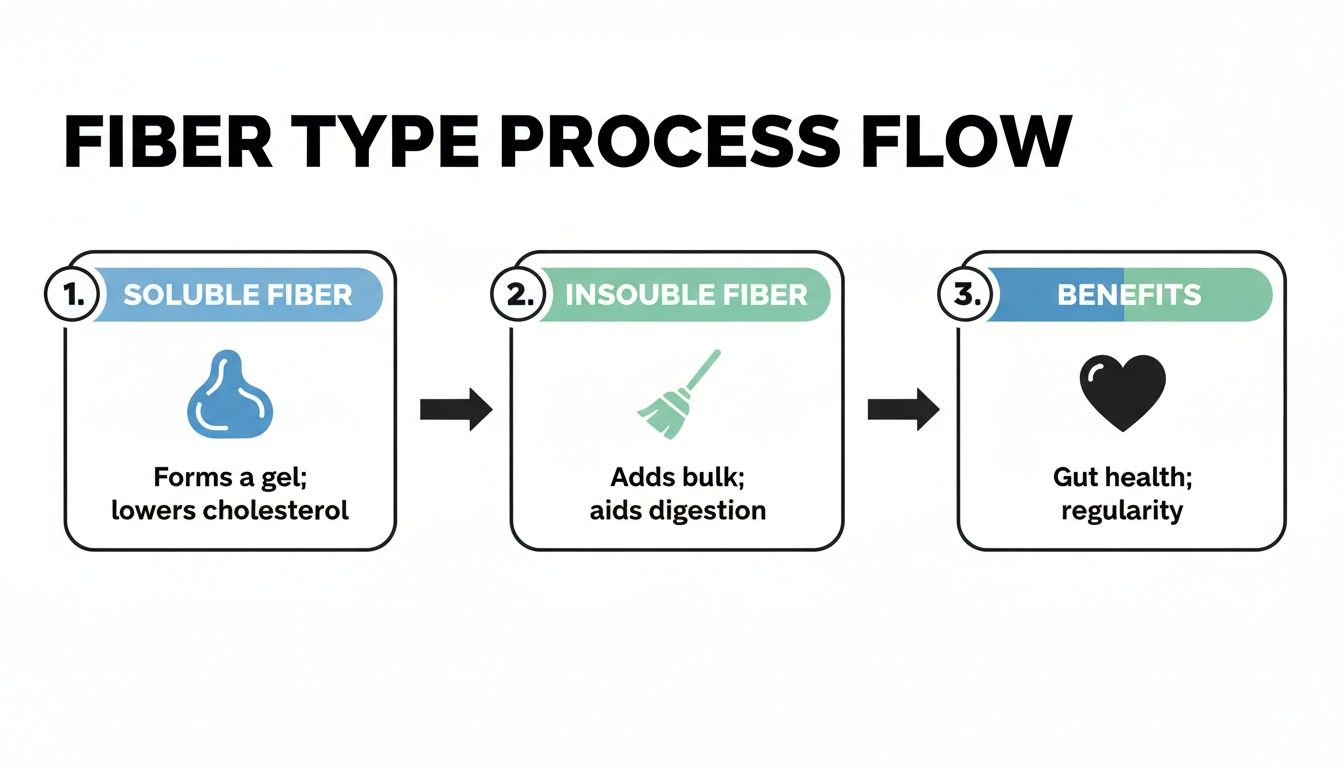
As you can see, both soluble and insoluble fibers are your friends, working together to keep you feeling full and your digestive system running smoothly.
Decoding Your High Fiber Snack Bar Label
To see how this works in the real world, let's compare two very different snack bars side-by-side. The differences become obvious when you know what to look for.
| Nutrient | Typical Snack Bar | High-Quality Fiber Bar (Example) | What to Look For |
|---|---|---|---|
| Dietary Fiber | 1-2g | 6g or more | Aim for at least 5g to promote fullness and gut health. |
| Total Sugars | 15-20g | 1-5g | The lower, the better. Check for added sugars specifically. |
| Net Carbs | 25g+ | 5-10g | Lower net carbs support stable energy and blood sugar. |
| Ingredients | Sugars, refined flours, artificial flavors | Whole foods (nuts, seeds), chicory root fiber, natural sweeteners | Look for recognizable, whole-food ingredients at the top of the list. |
This table makes it crystal clear: a truly healthy bar prioritizes fiber and whole ingredients while keeping sugar and net carbs in check.
Your 5-Point Label Check Method
To make things even easier, here’s a quick mental checklist to run through every time you pick up a new snack bar. It’ll help you make a smart choice in seconds.
-
Check the Serving Size: First things first. Are the numbers for the whole bar or just half of it? This common trick can be misleading.
-
Aim for High Fiber: Look for a bar with at least 5 grams of fiber. This is what will keep you feeling full and satisfied between meals.
-
Calculate the Net Carbs: A quick subtraction (Total Carbs - Fiber) will tell you if the bar aligns with your energy and dietary goals.
-
Scrutinize the Sugar: Try to stick to bars with less than 5 grams of sugar. We dive even deeper into this in our guide to low-sugar snack bars.
-
Read the Ingredient List: The first few ingredients make up the bulk of the bar. You want to see whole foods like nuts, seeds, and chicory root fiber, not a long list of fillers and preservatives.
Once you get the hang of this, you’ll be able to spot a genuinely good-for-you snack in no time. No more guesswork, just smart, confident choices.
Finding the Right High Fiber Bar for Your Lifestyle
Let's be honest, not all high fiber snack bars are made the same. The one that’s perfect for you really comes down to your personal health goals and what you need from a snack. The right bar can be a game-changer for your wellness routine, but grabbing the wrong one can easily throw you off track.
Think of it like picking the right gear for a sport—you wouldn't wear flip-flops for a mountain hike. In the same way, the bar that’s perfect for someone on a keto diet is completely different from what a person with gluten sensitivity needs, or even someone who’s just trying to cut back on sugar. Knowing the difference is everything. Let's break down how to pick a bar that actually works for you, without sacrificing flavor.
Bars for Keto and Low-Carb Diets
If you're following a ketogenic or low-carb plan, your entire focus is on keeping carbs to a minimum to maintain ketosis. This is where the term "net carbs" becomes your best friend. You'll want to look for high-fiber snack bars that make this number clear and easy to find on the package.
A truly keto-friendly bar gets its low net carb count from smart fiber sources that don’t mess with your blood sugar, like chicory root fiber.
A great keto snack bar isn’t just low in carbs. It’s also packed with healthy fats from ingredients like nuts and seeds to give you that long-lasting energy and feeling of fullness, which is exactly what the high-fat, low-carb lifestyle is all about.
When you're scanning the label, here’s what to look for:
- Super Low Net Carbs: Aim for bars with 5g of net carbs or less per serving. This makes it easy to fit into your daily macros without a second thought.
- Good Fats Up Front: Ingredients like almonds, coconut oil, or sunflower seeds should be near the top of the list.
- Smart Sweeteners: Look for natural, zero-calorie sweeteners like monk fruit or stevia. You'll want to steer clear of regular sugar and high-glycemic sugar alcohols.
Stick to these tips, and you’ll find a tasty snack that crushes cravings while keeping you firmly in ketosis. For more ideas, check out our guide to high-fiber, low-carb snacks.
Gluten-Free Snacking Without Compromise
For anyone with celiac disease or a gluten sensitivity, finding a snack bar that's both safe and delicious can feel like a real mission. Your number one priority is finding a product with a clear, certified gluten-free label. That certification is your assurance that it's been properly tested and won't have any cross-contamination.
But a great gluten-free bar goes a step further. It should be built on naturally gluten-free ingredients like nuts, seeds, or certified gluten-free oats to deliver both that crucial fiber and a satisfying texture. Try to avoid bars that use a lot of refined rice flours or starches, as they often don't bring much nutritional value to the table.
Keeping an Eye on Sugar Intake
Cutting back on sugar is one of the best things you can do for your health, from keeping your energy levels steady to promoting better wellness in the long run. When you're picking out a bar, flip it over and find the "Added Sugars" line on the nutrition label. You want this number to be as close to zero as possible, and definitely under 5 grams.
Be on the lookout for sneaky sugars like high-fructose corn syrup, agave, or cane juice. The best bars are sweetened naturally with a touch of fruit or with zero-calorie options like stevia. That way, you get to enjoy a sweet-tasting snack without the dreaded sugar crash later.
This shift toward healthier options is changing the whole game. The USA snack bar market, currently valued at USD 9.8 billion, is expected to explode to USD 23.3 billion by 2035, and that growth is almost entirely thanks to people like you demanding cleaner, more functional snacks. You can dive deeper into this trend in a detailed report from Future Market Insights. No matter what your dietary needs are, there’s a high-fiber bar out there that can help you nail your goals.
The Best Times to Eat High Fiber Snack Bars
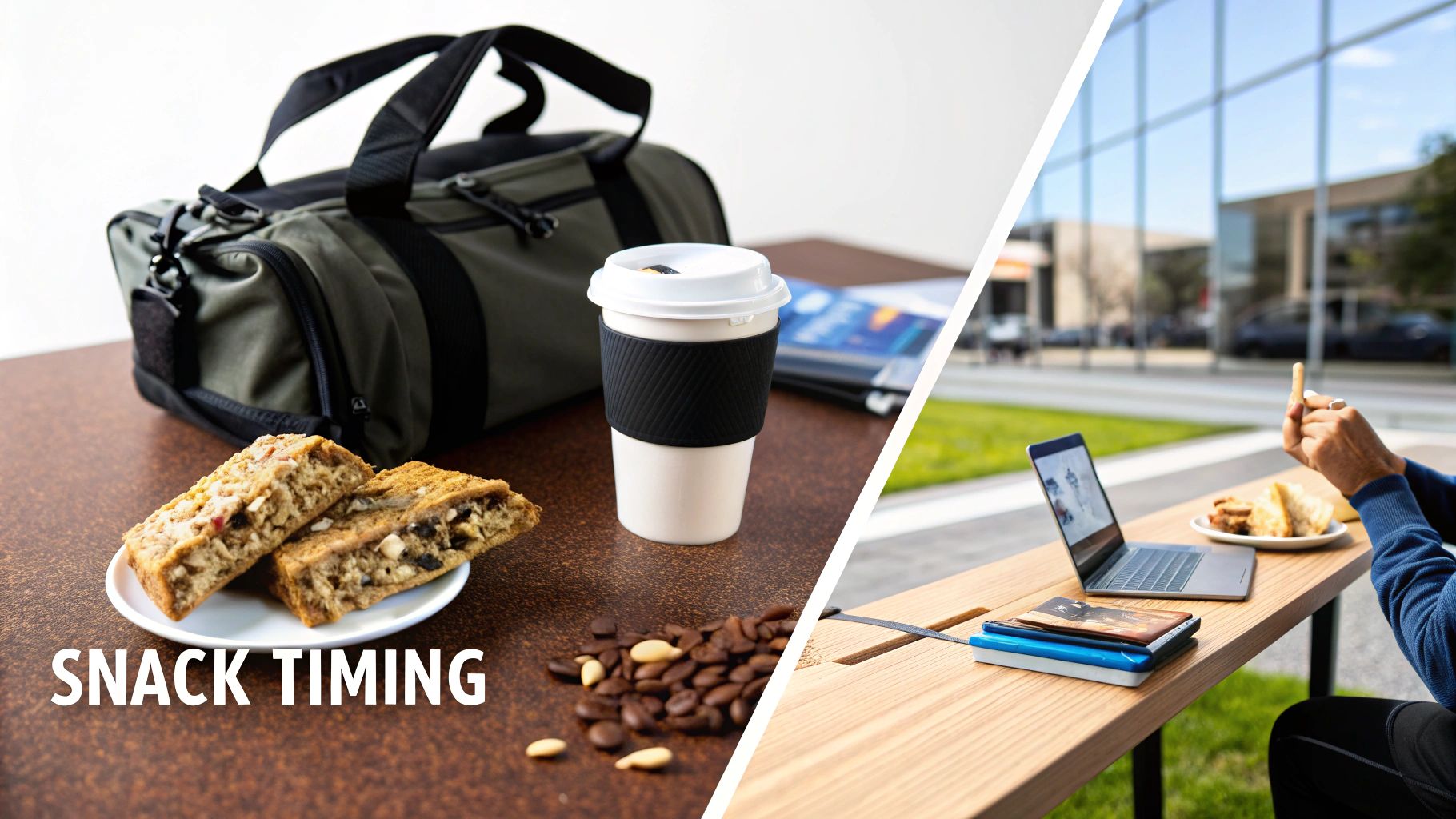
Knowing what a high-fiber bar is and why it's good for you is the first step. The real magic happens when you figure out when to eat them. Nailing the timing can turn a simple snack into a powerful tool for managing hunger, sustaining energy, and navigating a busy day.
These bars are incredibly versatile, ready to slide into just about any part of your routine. Whether you're staring down a project deadline or getting ready to hit the gym, there's a perfect moment to grab one. Let's break down the best times to make a high-fiber bar work for you.
Tame the Midday Hunger Monster
We’ve all felt it. That 10:30 AM grumble or the 3:00 PM slump when your stomach starts talking and the next meal seems miles away. This is prime time for a high-fiber snack bar. The fiber gets to work, slowing down digestion and giving you a steady stream of energy—no sugar crash included.
When you grab a high-fiber bar during these hunger pangs, you’re doing more than just quieting your stomach. You’re promoting a feeling of fullness that can keep you from overdoing it at your next meal. Think of it as a smart, proactive move.
Instead of a bag of chips or a candy bar that gives you a quick spike followed by a crash, a fiber-rich snack offers satisfaction that actually lasts. It's a simple swap that helps keep your blood sugar on an even keel, letting you stay sharp and focused.
Pre-Workout Fuel for Sustained Performance
What you eat before you move can make or break your performance. For longer, steadier activities—think a long hike, a bike ride, or a solid weightlifting session—a high-fiber bar about an hour beforehand is a fantastic choice. The fiber helps moderate how quickly your body absorbs carbs, giving you that slow-burn energy you need to go the distance.
Just a quick heads-up: if you're gearing up for a high-intensity, explosive workout, a lot of fiber right before might not feel great. For some people, it can lead to a bit of digestive discomfort. You might want something a little easier to digest for those all-out sessions.
Want to turn your bar into a more complete mini-meal?
- Pair with Protein: Add a handful of almonds or a cheese stick to give your muscles some love.
- Add Fresh Fruit: A small apple or banana provides some quick carbs for an immediate energy lift.
- Hydrate Properly: Always have some water with your bar. It helps the fiber work its magic.
Your Go-To Snack for Travel and Busy Days
When life gets crazy, healthy eating is often the first casualty. That's where high fiber snack bars become a lifesaver. They are the ultimate portable solution for days when you're constantly on the move. They’re compact, don't need a fridge, and are ready to eat anytime, anywhere.
Keep them handy for:
- Traveling: Toss a few in your carry-on to sidestep overpriced, unhealthy airport snacks.
- Busy Workdays: Stash one in your desk for those days packed with back-to-back meetings.
- Running Errands: Keep one in your bag to fight off the temptation of the drive-thru.
Having a genuinely nutritious option at arm's reach makes it so much easier to stick with your health goals, no matter how packed your schedule is. It’s a simple strategy to make sure you always have a smart choice ready to go.
Common Questions About High Fiber Snack Bars
Even with all the info, you might still have a few questions about adding high-fiber snack bars to your routine. Let's tackle some of the most common ones so you can snack with confidence.
Can I Eat High Fiber Snack Bars Every Day?
For most people, yes! A daily high-fiber bar can be a fantastic way to hit your fiber targets and support your overall health. The most important thing is to listen to your body. If you're new to a high-fiber diet, start slow—maybe one bar every other day—to give your digestive system a chance to adapt.
And don't forget to drink plenty of water! Water is fiber's best friend; it helps everything move along smoothly. Think of these bars as a supplement to a healthy diet full of whole foods, not as a total meal replacement.
Will High Fiber Snack Bars Make Me Feel Bloated?
It's not uncommon to feel a little bloated when you first introduce more fiber. This is usually just your gut microbiome getting used to the new arrival. To sidestep any discomfort, ease into it and, again, stay hydrated.
It's also worth checking the ingredient list. Some bars are packed with sugar alcohols like maltitol or sorbitol, which can cause digestive issues for some people. If you find you're sensitive, look for bars that get their fiber from more natural sources like chicory root, oats, or nuts.
The bottom line is to pay attention to your body's signals. A brief adjustment period is one thing, but if you're consistently uncomfortable, it might just mean a specific ingredient isn't right for you. Bars with simple, clean ingredients are often the easiest on your system.
Are High Fiber Bars Good for Weight Management?
They can be a great ally in your weight management efforts. Fiber is a powerhouse when it comes to making you feel full and satisfied—what experts call satiety. A fiber-rich snack can curb your hunger, helping you avoid overeating later and keeping your daily calorie intake in check.
When you find a bar that’s also low in sugar and net carbs, you have the perfect tool to crush cravings without spiking your blood sugar. Combined with a balanced diet and regular physical activity, these bars are a smart, convenient way to stay on track with your goals.
What Is the Difference Between Net Carbs and Total Carbs?
This is a big one, especially if you're following a keto or low-carb diet. Total Carbohydrates, as you see on the nutrition label, is the sum of all starches, sugars, and fiber in a food.
Net Carbs are the carbs your body actually digests and uses for energy—the ones that affect your blood sugar. To calculate them, you just take the Total Carbs and subtract the grams of dietary fiber (and some sugar alcohols). This number gives you a much more accurate picture of a snack's real impact.
Ready to find a high-fiber snack that's as delicious as it is beneficial? Rip Van offers a variety of low-sugar, high-fiber wafels and cookies designed to satisfy your sweet tooth without the guilt. Explore the full collection at RipVan.com and discover your new favorite snack.
0 comments