

If you're wondering how to stop sugar cravings for good, the secret isn't about fighting the urge with sheer willpower. It's about getting ahead of it entirely. The real goal is to prevent the craving from ever showing up in the first place.
This means we need to look at what's happening inside your body. By stabilizing your blood sugar with protein, fiber, and healthy fats at every meal and tuning up lifestyle habits like sleep and stress, you can regain control. Let's break down the biology behind those cravings so you can work with your body, not against it.
So, Why Do You Crave Sugar Anyway?
That intense, almost primal urge for something sweet? It's not a character flaw—it’s a biological signal. Your body is basically shouting that it's having an energy crisis.
When you eat something sugary or a highly processed carb, your blood sugar skyrockets, giving you that quick, feel-good burst of energy. But the high is always followed by a crash. Your body releases a flood of insulin to pull all that sugar out of your blood, and suddenly your energy plummets.
You're left feeling tired, irritable, and mentally foggy. What does your brain do? It panics and sends out a powerful SOS for another quick hit of energy. The fastest source it knows is sugar. This is the "blood sugar rollercoaster," a vicious cycle where each crash just sets you up for the next intense craving. It's a physiological loop, not a personal failing.
How Our Modern Diet Fuels the Fire
Our current food environment pours gasoline on this fire. It’s hard to escape. Did you know the average American eats a mind-boggling 126.4 grams of sugar every single day? That adds up to over 100 pounds a year and is more than four times the recommended daily limit.
With this constant influx, our bodies are essentially being trained to expect that spike-and-crash pattern, which makes the cravings feel almost constant. If you're curious, you can explore more data on global sugar consumption to see just how common this has become.
To truly get off this rollercoaster, you have to address the root of the problem. It's not about gritting your teeth and resisting a cookie. It's about giving your body the steady, reliable fuel it needs so it never has to sound the alarm for a sugar fix.
Key Takeaway: A sugar craving is almost always a symptom of unstable blood sugar, not a lack of discipline. The real strategy is to keep your energy levels steady throughout the day to prevent the "crash" that triggers the craving in the first place.
In this guide, I’ll walk you through practical, actionable steps to do just that. We'll cover everything from how to build a better plate and choose smarter snacks to simple lifestyle tweaks that help your body naturally dial down the sugar cravings for good.
Build a Craving-Proof Daily Meal Plan
The best way to stop sugar cravings in their tracks is to never let them start in the first place. Instead of white-knuckling it through an intense craving, you can build a daily way of eating that makes them a non-issue. The whole approach is about keeping your blood sugar steady, so your body never sends out those frantic SOS signals for a quick sugar hit.
At the heart of this strategy is a simple but powerful trio of nutrients: protein, fiber, and healthy fats. When you make a point to include these three in every single meal, you’re essentially building a fortress against that dreaded blood sugar rollercoaster.
The Power Trio: Protein, Fiber, and Fat
Think of it this way: sugar is like kindling—it flares up hot and fast, then burns out, leaving you cold. Protein, fiber, and fat are the slow-burning logs that keep your internal furnace going steadily for hours.
- Protein: This is your secret weapon for feeling full and satisfied. It digests slowly, which means you stay full longer and your energy levels don't dip.
- Healthy Fats: Just like protein, fats put the brakes on digestion. This helps release energy from your food into your system at a nice, even pace, preventing the sharp spikes and crashes that send you running for the cookie jar.
- Fiber: Fiber is a game-changer for blood sugar control. It slows down how quickly your body absorbs sugar, which is absolutely key to avoiding that post-meal slump. For some great ideas, check out these high-fiber, low-carb snacks.
This cycle is exactly what we're trying to break. A meal high in simple carbs and sugar gives you that initial rush, but the crash that follows is what triggers the next powerful craving. It’s a vicious loop.
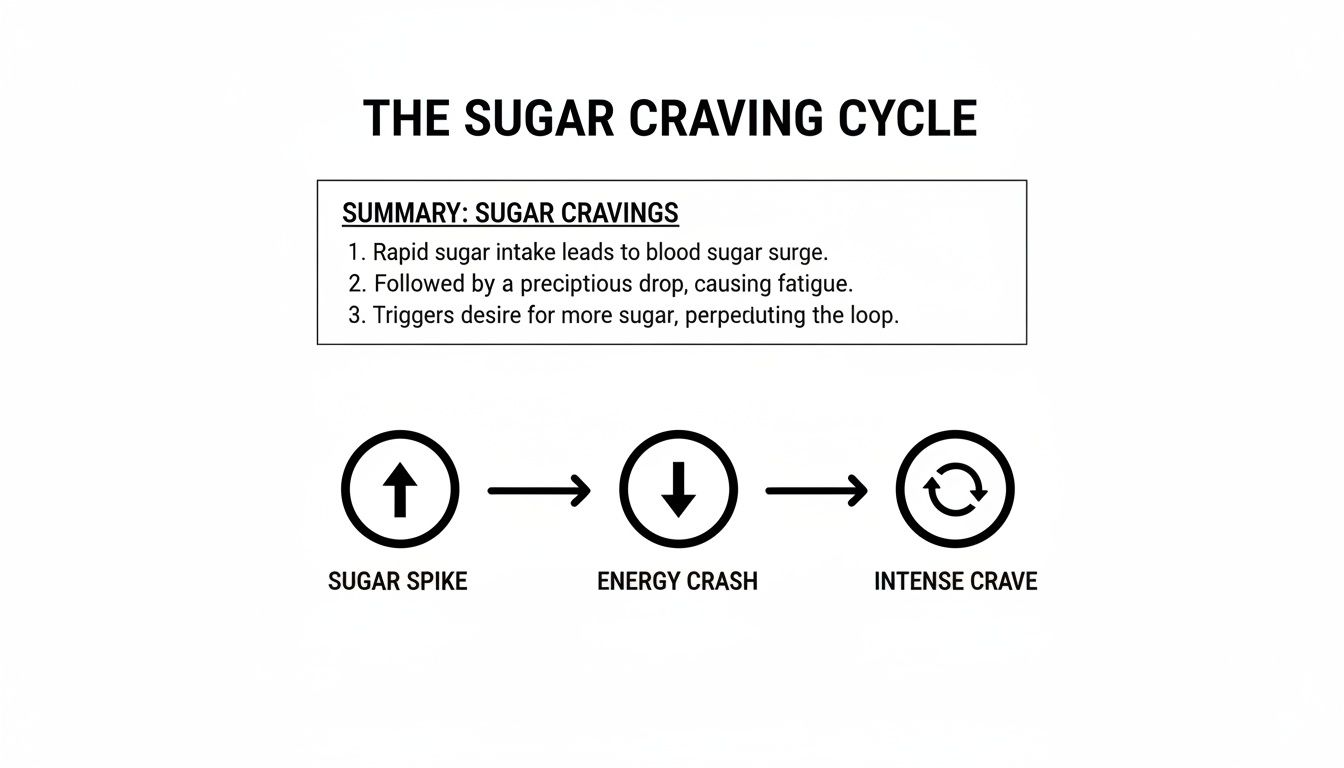
As you can see, that sugar spike is a short-term loan from your future energy, and the crash is when the bill comes due—with interest.
Putting It Into Practice With Simple Meal Swaps
Don't worry, this doesn't mean you need to completely overhaul your diet overnight. It's all about making smart, strategic swaps that fit into your real life.
Think about a common breakfast: a plain bagel with cream cheese. It's mostly refined carbs, and it's practically a guarantee that you'll be starving and craving something sweet by 10 a.m.
Now, what if you swapped that for two scrambled eggs (protein and fat) with half an avocado (healthy fat and fiber) on one slice of whole-grain toast? That balanced combination provides steady, sustained energy that will easily carry you through to lunch.
Here's a quick cheat sheet to make these swaps even easier.
Your Craving-Proof Meal Swap Cheat Sheet
| Instead Of This High-Sugar Option... | Try This Craving-Proof Alternative... | Why It Works |
|---|---|---|
| Breakfast: Sugary cereal or a plain bagel with cream cheese. | Breakfast: Scrambled eggs with spinach and avocado, or Greek yogurt with berries and nuts. | Protein, healthy fats, and fiber start your day with stable energy instead of a sugar rush and crash. |
| Lunch: Salad with fat-free dressing and croutons. | Lunch: The same salad, but with grilled chicken, chickpeas, and a handful of sunflower seeds. | Adding a robust source of protein and fat turns a light lunch into a satisfying meal that prevents the 3 p.m. slump. |
| Dinner: A large bowl of plain pasta with jarred tomato sauce. | Dinner: A smaller portion of pasta mixed with lean ground turkey and loaded with sautéed veggies like zucchini and bell peppers. | This "bulking up" method adds fiber and protein, slowing carb absorption and keeping you full all evening. |
See how simple that can be? It's about adding, not just taking away. You're building a better, more satisfying plate.
A well-balanced plate is proactive, not reactive. By building your meals around protein, fiber, and healthy fats, you are essentially creating an internal system that naturally regulates your energy and appetite, making sugar cravings far less likely to occur.
To really set yourself up for success, a little bit of planning goes a long way. Using effective meal planning strategies ensures you always have these craving-proof meals and snacks ready to go. When you're busy or stressed, having a plan removes the guesswork and makes healthy eating your automatic default, not a chore.
Master Smart Snacking to Defeat Cravings
Snacking often gets a bad rap. Many of us see it as a moment of weakness or something that will wreck our healthy eating goals. But I want you to reframe that thinking. When done right, snacking is actually one of your most powerful tools for stopping sugar cravings before they even start.
Think of it this way: smart snacking is a strategic bridge between meals. Its job is to keep your blood sugar stable and your energy consistent. When you wait too long to eat, your blood sugar plummets, and your body screams for the fastest fuel it can find—sugar. A well-timed snack prevents this emergency call from ever going out.
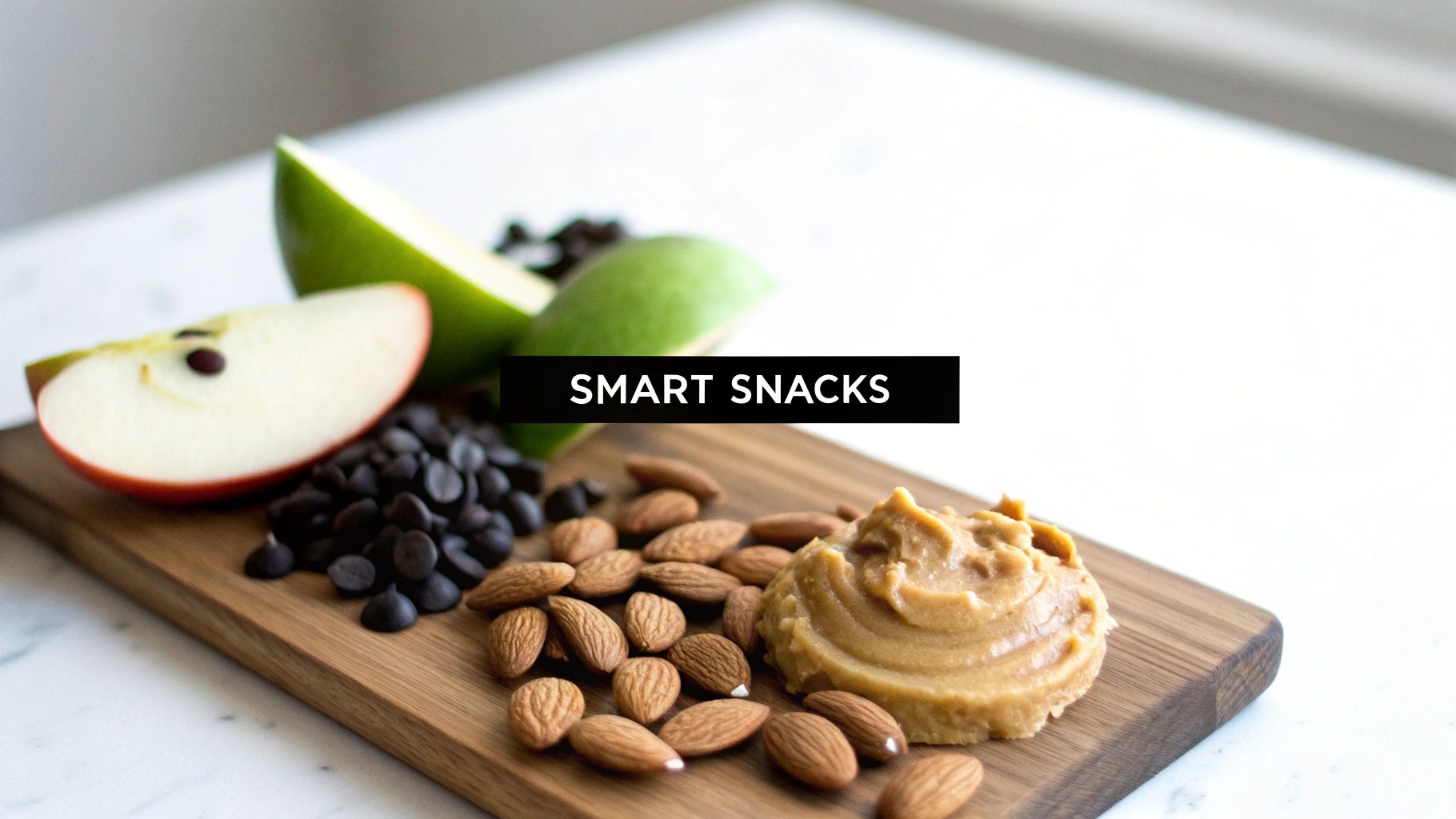
The trick is to build your snacks with the same principles you use for your main meals, just in smaller portions. That's where my "Snack Trinity" comes in.
Embrace the Snack Trinity: Protein, Fiber, and Fat
Every snack you reach for should have a combination of protein, fiber, and healthy fats. This trio is the secret to feeling full, slowing down digestion, and preventing the wild blood sugar swings that trigger intense cravings. A snack built on this foundation will keep you satisfied for hours, not just minutes.
Here’s a quick look at why this combination is a game-changer:
- Protein is brilliant at signaling satiety to your brain, telling it that you're full.
- Healthy Fats slow down how quickly your stomach empties, making that feeling of fullness last much longer.
- Fiber works to slow the absorption of carbohydrates, ensuring you get a gentle, steady rise in blood sugar instead of a sharp spike and crash.
With this approach, your snack becomes a proactive move against future cravings. You’re not just quieting a rumbling stomach; you’re setting your body up for stable energy all day long.
Quick and Easy Craving-Crushing Snack Ideas
Knowing the theory is great, but having practical, grab-and-go options is what really makes a difference. You don't need complicated recipes to build a better snack.
Here are some of my personal go-to pairings that nail the Snack Trinity:
- An apple with a tablespoon of almond butter: The apple gives you fiber and that satisfying crunch, while the almond butter brings in protein and healthy fats.
- A handful of walnuts and a few dark chocolate chips (70% cocoa or higher): Walnuts are loaded with healthy fats and a bit of protein. The dark chocolate offers antioxidants and a rich flavor with very little sugar.
- Plain Greek yogurt with a sprinkle of berries and chia seeds: This is a protein powerhouse thanks to the yogurt, with a fantastic fiber boost from the berries and seeds.
- Baby carrots or bell pepper strips with hummus: You get fiber and crunch from the veggies, plus a great blend of protein, fat, and fiber from the hummus.
These simple ideas are designed to be truly satisfying and incredibly effective at keeping you on an even keel.
Remember, the goal of a smart snack is not just to fill a gap but to stabilize your system. A well-constructed snack acts as a preventative measure, ensuring your blood sugar remains balanced so that intense, uncontrollable cravings never have a chance to take hold.
For those times when you need a convenient option that still fits the bill, finding the right packaged snack is key. Something low-sugar and high-fiber, like a Rip Van wafel, can be a lifesaver. It gives you that crunch and sweetness you're looking for without derailing your efforts. If you need more inspiration, check out these other delicious low-sugar snack ideas to keep your pantry stocked and ready for anything.
Powerful Lifestyle Habits That Crush Cravings
What you eat is only one piece of the puzzle when you're learning how to stop sugar cravings naturally. Your day-to-day habits—how you sleep, handle stress, and even how much water you drink—play a massive role in regulating the hormones that drive that intense desire for something sweet.
Mastering these lifestyle pillars can be the missing link that finally makes your efforts stick for good.
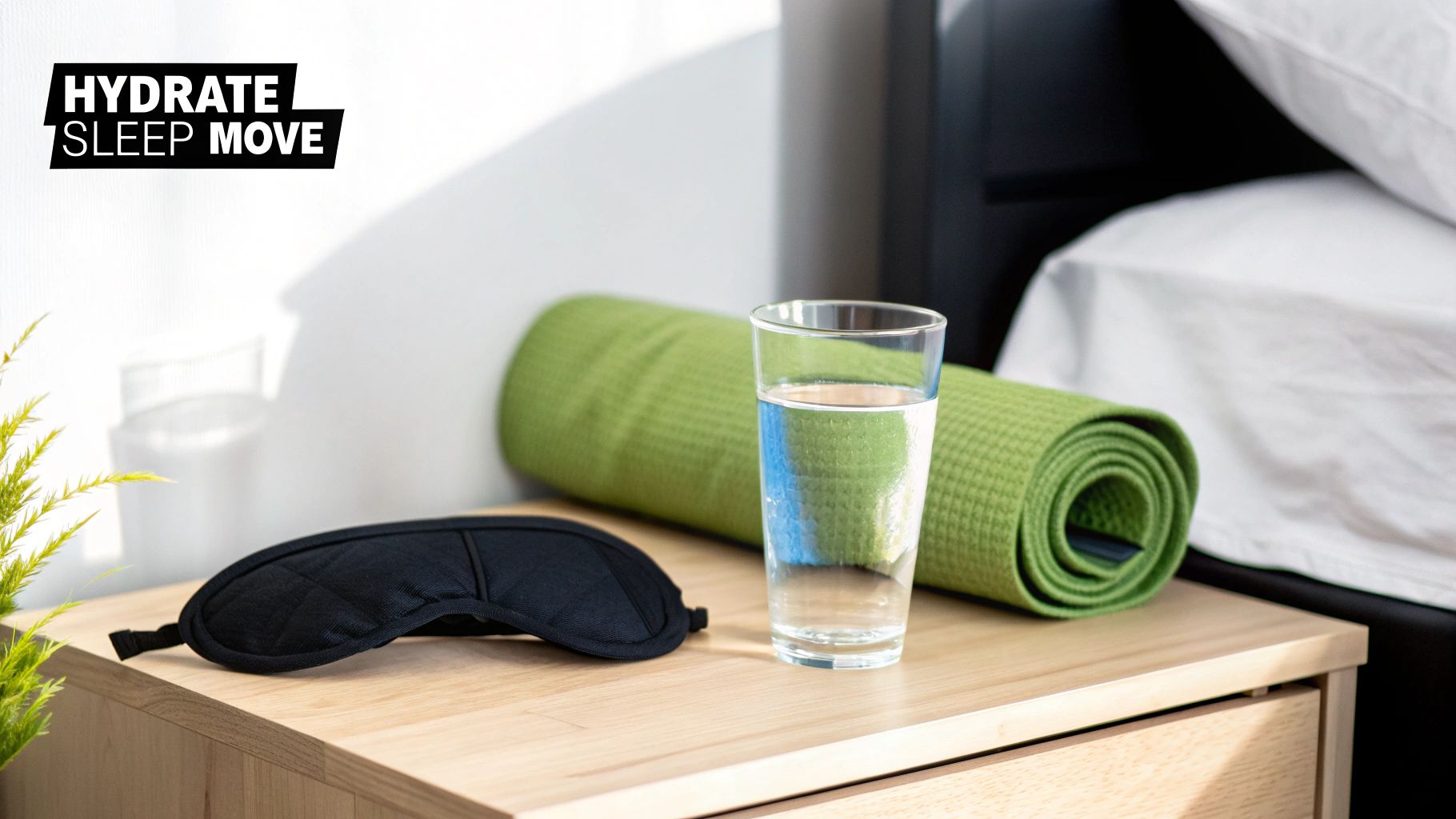
Often, what feels like a desperate need for a cookie is really your body sending a different signal in disguise. By tuning into these foundational needs, you can get ahead of many cravings before they even start.
Stay Hydrated to Keep Cravings at Bay
Have you ever felt sluggish and automatically reached for a sugary snack, only to realize later you were just thirsty? It happens more often than you'd think. The hypothalamus, the part of your brain that handles both hunger and thirst, can easily get its wires crossed when you're dehydrated.
This is why staying hydrated is such a simple yet powerful tool. Dehydration often shows up feeling a lot like hunger. In fact, studies show that even a 2% loss in body water can cause cravings to spike by 20%. On the flip side, aiming for 8-10 glasses of water a day can slash them by as much as 28%.
Prioritize Sleep to Reset Hunger Hormones
A rough night's sleep is a guaranteed recipe for a day filled with intense sugar cravings. When you're sleep-deprived, two key hormones that control your appetite go completely haywire.
- Ghrelin: Think of this as your "go" hormone—it tells you when you're hungry. Lack of sleep sends it soaring, making you feel ravenous.
- Leptin: This is your "stop" hormone that signals fullness. When you're tired, leptin levels plummet, so you never feel truly satisfied after eating.
This hormonal imbalance creates a perfect storm. You feel hungrier than usual, and your brain, desperate for a quick energy fix, pushes you hard toward high-calorie, sugary foods. Aiming for a consistent 7-9 hours of quality sleep is one of the most effective ways to reduce your sugar intake because it keeps these hormones in check. Trials have even confirmed that sleep-deprived individuals crave up to 45% more sugar.
Manage Stress to Avoid Emotional Eating
Stress is a huge trigger for sugar cravings. When you're stressed, your body releases cortisol, a hormone that floods your system and gets you ready for "fight or flight." This process burns a ton of energy, and your brain knows the fastest source of fuel is sugar.
Stress-induced cravings aren't just "in your head"—they are a physiological response. Your body is screaming for quick fuel to handle a perceived threat, which is why "comfort foods" are so often sweet.
Building effective stress management techniques into your routine is essential. You don't need a huge time commitment; simple practices can make a world of difference:
- Mindful Breathing: When you feel stress creeping in, just take five deep belly breaths.
- Quick Movement: A brisk 10-minute walk can lower cortisol and completely reset your mindset.
- Journaling: Spending a few minutes writing down whatever is on your mind can be a great way to release tension.
Your In-the-Moment Plan for Intense Cravings
Even when you’re doing everything right with your meals, a powerful sugar craving can pop up out of nowhere. This isn’t a sign of failure—it's just your body sending a strong, albeit misguided, signal. The trick is to have a plan ready for these moments so you aren't relying on pure willpower, which tends to run out when we're tired or stressed.
The goal isn't to pretend the craving doesn't exist. Instead, you're going to create a small buffer, a little bit of time and space between the urge and your action. This brief pause is often all it takes for the most intense wave of the craving to pass, letting you make a clearer choice.
Use the 15-Minute Rule
When that urge for something sweet hits hard, don't just tell yourself "no." That can feel like a losing battle from the start. Instead, make a deal with yourself: you can have it, but you have to wait just 15 minutes.
It sounds simple, but this little delay works wonders by defusing the urgency. During that time, the key is to do something that breaks your current pattern and shifts your brain's focus.
Here are a few tactics I've seen work time and again for that 15-minute window:
- Drink a big glass of water. Sometimes, what feels like a sugar craving is actually your body crying out for hydration. Downing a glass of water might make the urge vanish completely.
- Take a quick walk. Even a short 10-15 minute stroll, especially if you can get outside, boosts feel-good neurotransmitters and dials down stress hormones. It's like a reset button for your brain.
- Tackle a simple chore. Spend a few minutes tidying your desk, folding a load of laundry, or organizing a junk drawer. It redirects your mental energy and provides a little hit of accomplishment, which can satisfy that reward-seeking impulse.
More often than not, by the time your 15 minutes are up, the craving has either disappeared or lost most of its power. You're back in the driver's seat.
Don’t Fight It, Distract It: The best way to handle a sudden, intense craving isn't to wrestle with it. It's to redirect your attention. Creating a strategic delay lets that initial hormonal and emotional surge subside, giving your rational mind a chance to catch up.
What if the craving is still nagging you after the delay? You still have a choice. Rather than grabbing a sugary snack that will just kickstart the whole cycle again, reach for a planned, intelligent indulgence.
This is where having something like a Rip Van wafel stashed away is a game-changer. It’s a delicious, low-sugar, high-fiber treat that satisfies the desire without the fallout. This isn't giving in—it’s a smart pivot that keeps you in control and on track.
Common Questions About Kicking Sugar Cravings
When you decide to cut back on sugar, a lot of questions pop up. It's completely normal. Getting clear answers can be the difference between sticking with it and giving up, so let's tackle some of the most common ones I hear.
How Long Does It Actually Take to Stop Craving Sugar?
This is probably the number one question, and while everyone is a bit different, you’ll likely feel a real shift faster than you expect. Most people tell me they notice their cravings get way less intense and frequent after about one to two weeks of consistently eating better.
Those first few days? They can be tough. Your body and brain are literally recalibrating. But as you start eating balanced meals that keep your blood sugar steady, your taste buds begin to reset. That nagging, constant "need" for something super sweet really does start to fade on its own.
Do I Have to Give Up Sweets Forever?
Not at all! This isn't about punishment or total deprivation. The whole point is to get back in the driver's seat, so you control your choices instead of your cravings controlling you.
You can absolutely still enjoy a treat. The trick is to do it on your terms.
This journey isn't about eliminating joy; it's about redefining it. The new reward becomes sustained energy and mental clarity—not a sugar rush followed by a crash.
When you do want something sweet, you can make a smarter choice. You'll find yourself reaching for a lower-sugar option that satisfies you without kicking off that blood sugar rollercoaster.
What About Artificial Sweeteners? Do They Help?
This is a really tricky area, and even the science isn't settled. On one hand, artificial sweeteners don't have calories. On the other, some studies suggest they keep your brain hooked on that hyper-sweet taste. This can make it much harder to appreciate the subtle, natural sweetness in things like fruit or yogurt.
Because of that, I always recommend focusing on retraining your palate with whole, nutrient-dense foods. It’s a much more reliable and sustainable way to find lasting freedom from those intense cravings.
What If I Slip Up?
First off, a slip-up is just a moment. It's not a failure. The worst thing you can do is let one cookie turn into a whole week of bad choices. Remember, consistency beats perfection every single time.
Just acknowledge it, don't beat yourself up, and get right back to your plan with your very next meal. Make sure that meal is loaded with protein, fiber, and healthy fats to get your blood sugar stable again. Be kind to yourself and focus on the progress you've already made.
At Rip Van, we get it. Satisfying your sweet tooth shouldn't mean sabotaging your health. Our delicious wafels, cookies, and wafers are made with low sugar and high fiber, so you can enjoy a genuinely tasty treat that supports your goals. Discover a smarter way to snack at https://ripvan.com.
0 comments