

You're standing in the kitchen, craving something buttery and sweet, while a traditional cookie sits just outside your carbohydrate target. A package labeled keto looks like an easy answer, but the front of the package doesn't tell you everything. The cookie may fit a low-carbohydrate plan while still contributing substantial saturated fat, little fiber, or enough sweetener to upset your digestion.
That's why keto cookies with butter deserve a closer look. Butter can help create a crisp edge and rich flavor, yet the finished cookie needs to be judged by its complete Nutrition Facts panel, serving size, ingredients, and place in your overall eating pattern.
The Keto Cookie Dilemma Made Simple
The decision often starts with a familiar scene: a buttery cookie is within reach, but a conventional version made with wheat flour, sugar, or syrup may exceed your carbohydrate target. A low-carb butter cookie can fit more easily, yet the package's keto label answers only one question: whether the product is marketed for a ketogenic eating pattern.
Ketogenic diets were developed around a metabolic goal, not a particular packaged snack. In 1911, physicians in Paris reported that fasting reduced seizure severity. In 1921, Mayo Clinic researchers proposed a low-carbohydrate, high-fat diet to reproduce fasting's metabolic effects. Russell Wilder later introduced the term “ketogenic diet” and designed a Mayo Clinic protocol in 1923 (historical overview).
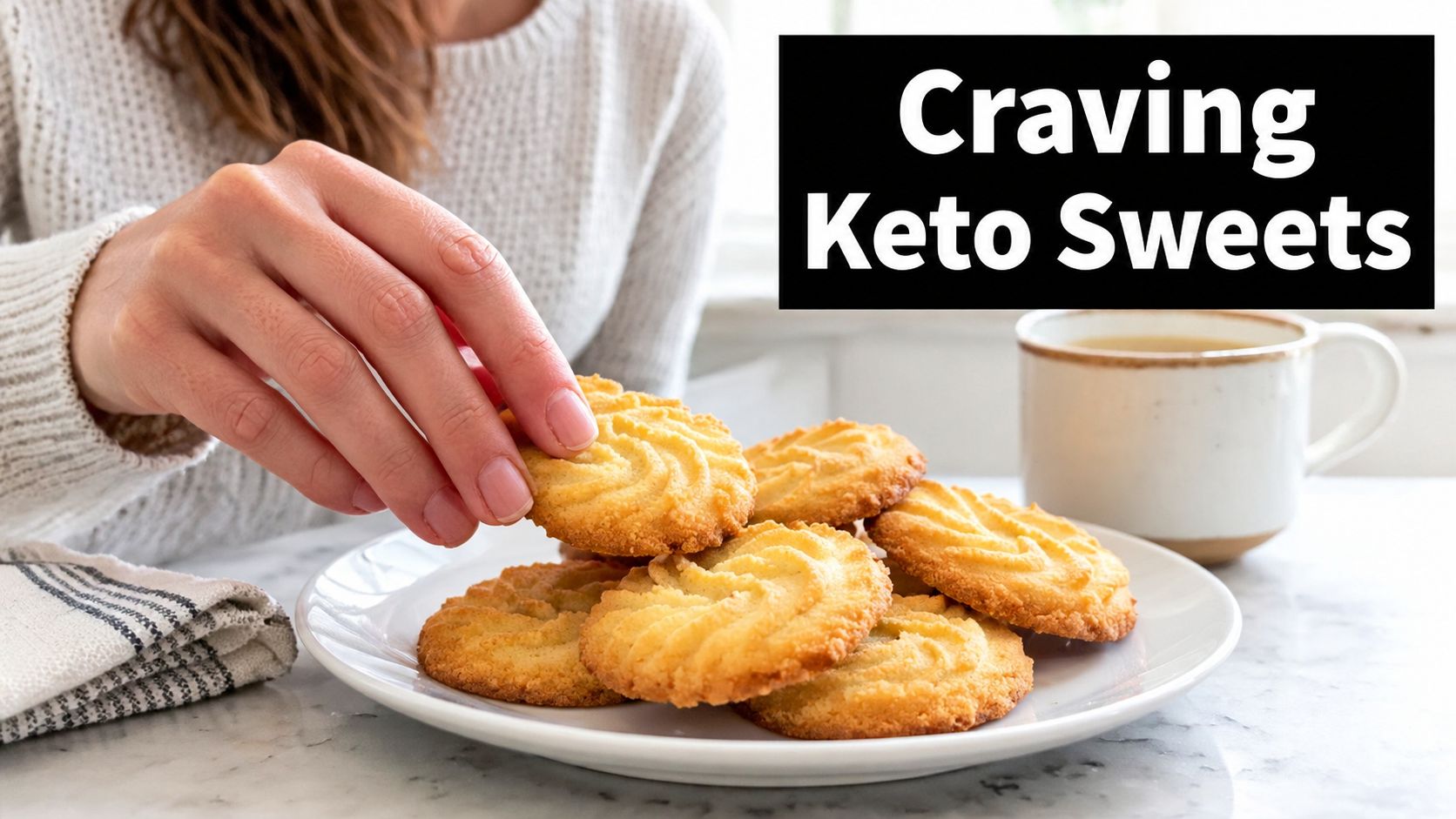
That clinical history gives the label a useful boundary. A snack labeled keto is not automatically a therapeutic ketogenic formula, and butter does not make every cookie nutritionally equivalent. The cookie still deserves a close look because ketosis compatibility and cardiovascular considerations can point in different directions.
What makes the cookie keto compatible
A cookie generally fits a ketogenic approach when its digestible carbohydrate amount works with the eater's personal carbohydrate target. Flour choice, sweetener, fiber, and portion size all affect that amount. Butter contributes little carbohydrate, but it cannot cancel carbohydrates supplied by almond-flour blends, starches, syrups, or other ingredients.
Use the label like a measuring cup rather than a promise on the front of the package. Check total carbohydrate, fiber, sweeteners, serving size, and the number of cookies counted as one serving. A cookie may fit one person's target and leave little room for another person's meals.
Portion size also changes the trade-off. Eating one serving after checking the panel is a label-based decision. Eating several servings because the bag says “keto” replaces information with marketing.
Practical rule: Treat “keto” as a prompt to inspect the label, not as permission to ignore portions or the rest of your diet.
People managing insulin resistance may need advice beyond snack selection. Medically guided insulin resistance support can help clarify how individual goals, medications, and metabolic health affect dietary changes.
The useful question has two parts: does the cookie fit your carbohydrate target, and do its fat, fiber, ingredients, and portion make sense for your broader eating pattern? A buttery texture answers neither question on its own.
Why Butter Belongs in Keto Cookie Recipes
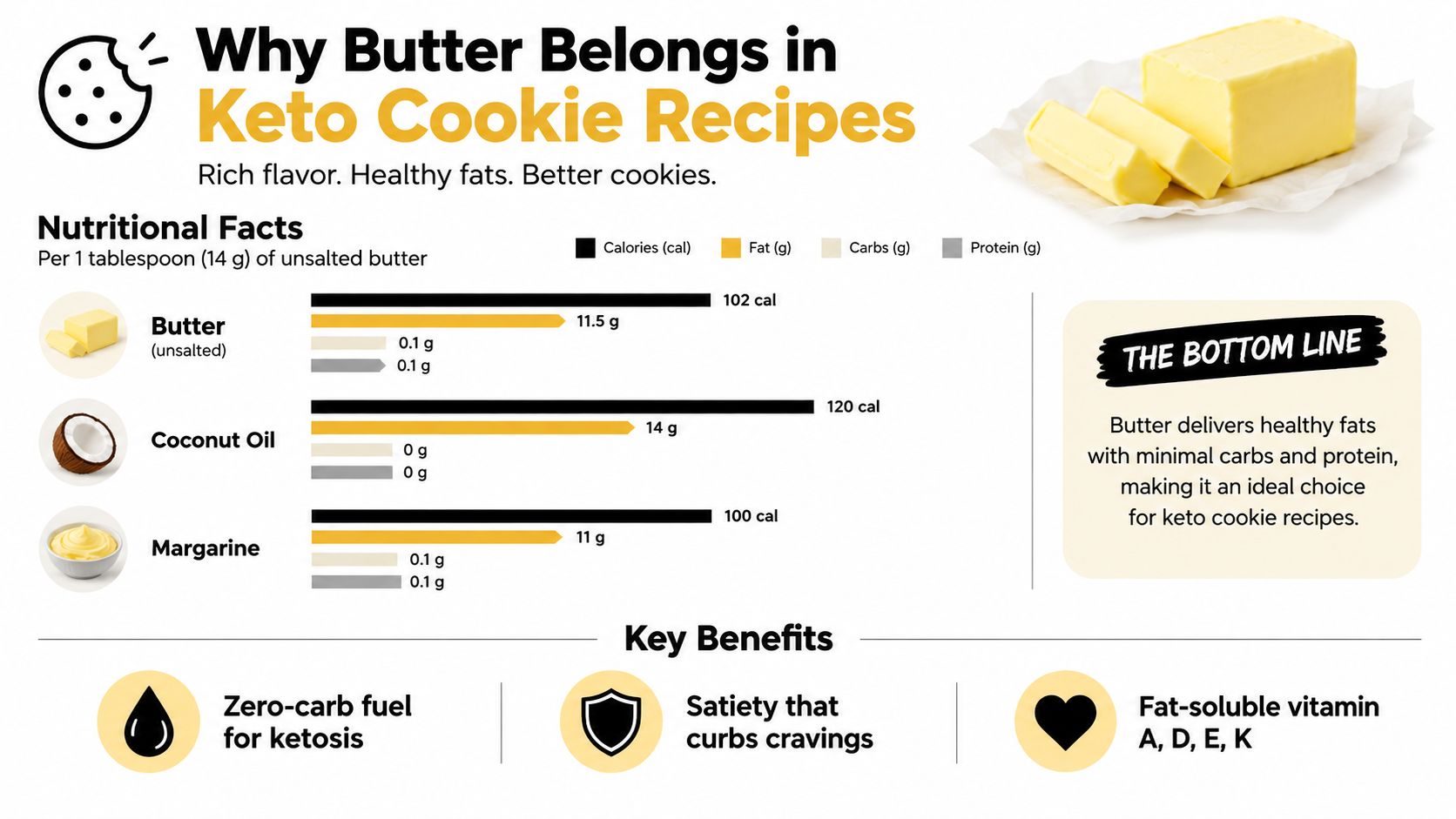
Butter earns its place in keto cookie dough for a simple reason: it adds richness and tenderness without adding carbohydrate. That can make it easier to build a satisfying cookie around low-carbohydrate ingredients, while avoiding the sugar or starch common in traditional recipes.
The trade-off is concentration. Unsalted butter provides approximately 14.2 grams per tablespoon, with about 100 calories, 12 grams of total fat, 7 grams of saturated fat, and 0 grams of fiber, according to this butter nutrition data. It also contains approximately 717 calories per 100 grams, so a small amount can raise a cookie's energy content quickly. Ketosis compatibility and cardiovascular considerations therefore need separate checks.
How butter changes the dough
Use softened butter when creaming it with a low-carbohydrate sweetener. It coats flour particles and helps create a tender crumb. Chilled butter produces a firmer dough and may help cookies hold their shape in the oven.
Butter also carries flavor. Almond flour, coconut flour, eggs, vanilla, cocoa, and spices can taste fuller when paired with a rich fat. A cookie may feel more satisfying than a dry substitute, but that feeling does not determine its carbohydrate content or its effect on the rest of the day's fat intake.
Check four parts of the formulation:
- Carbohydrate: Which ingredients contribute digestible carbohydrate?
- Fat: How much butter or other fat reaches each serving?
- Fiber: Does the recipe provide a meaningful fiber source, or mainly replace sugar with fat?
- Portion: How many cookies count as one serving?
The historical therapeutic ketogenic ratio was commonly approximately 4:1 by weight of fat to combined carbohydrate and protein. A consumer cookie does not automatically follow that clinical formula. It may suit a low-carbohydrate eating pattern while offering a different balance of fat, protein, and carbohydrate.
For almond-flour recipes, this almond flour keto cookie guide offers practical context on flour texture and formulation. Read the complete ingredient list and calculate the finished recipe, because butter can support the dough without defining the cookie's whole nutritional profile.
Making vs Buying Keto Cookies Butter
Homemade cookies give you control. You choose the flour, sweetener, butter, flavorings, and portion size. You can also leave out ingredients that don't agree with you, such as a particular polyol or fermentable fiber.
The trade-off is that you must do the work. You'll need to calculate the recipe, divide the dough consistently, monitor browning, and store the finished cookies. A homemade cookie can look small while containing a large amount of butter, so dividing the dough evenly is part of nutrition accuracy, not just presentation.
A simple homemade decision
Use a basic butter-cookie framework as a starting point: softened butter for richness, a low-carbohydrate flour for structure, an approved sweetener that you tolerate, and flavorings such as vanilla, cinnamon, or cocoa. Avoid treating the base formula as automatically keto. Flour blends can include starch, and sweetener systems can combine several ingredients with different effects on carbohydrate calculations and digestion.
Homemade baking suits you if:
- You need ingredient control: You can adjust sweetness, flour, dairy, and flavor.
- You want a specific texture: More butter can create tenderness, while a drier dough may produce a crisper cookie.
- You can manage portions: Freeze or pack individual servings instead of leaving the entire batch on the counter.
When buying makes more sense
Store-bought cookies offer convenience and consistent labeling. That can matter during travel, workdays, or school routines when measuring ingredients and baking isn't realistic. The package also gives you a defined serving size, although you still need to check whether that serving matches the amount you intend to eat.
Compare products using the same questions:
| Question | Homemade cookie | Packaged cookie |
|---|---|---|
| Ingredient control | High | Depends on the formula |
| Portion consistency | Requires careful dividing | Set by the package |
| Label work | You calculate the recipe | Nutrition panel is provided |
| Sweetener tolerance | You choose the system | You must inspect the ingredients |
| Convenience | Requires preparation | Ready to eat |
A packaged product may use butter, another dairy fat, or a blend of oils. Don't assume that “keto” means butter-based, and don't assume that butter makes a product superior. The right choice depends on your carbohydrate target, saturated-fat goals, taste preferences, and tolerance.
For a ready-to-bake option, a keto cookie mix guide can help you compare the convenience of a mix with the control of baking from individual ingredients. Either way, read the finished serving information. A low-carbohydrate recipe can still become a large snack when several servings are combined.
Decoding Keto Cookie Nutrition Labels
The front of a package is the least useful place to stop. Words such as keto, sugar-free, and low sugar don't reveal the complete carbohydrate picture. A noncompetitor food database warns that these claims don't show the product's actual carbohydrate, fiber, or sugar-alcohol amounts, and it cautions that sugar alcohols shouldn't automatically be deducted when calculating net carbs (label and sweetener guidance).
Read the panel in order
Begin with serving size. If the label defines one serving as one cookie but you eat two, every listed value applies twice. This is the most common source of confusion because a product can appear modest on paper while the actual snack is larger.
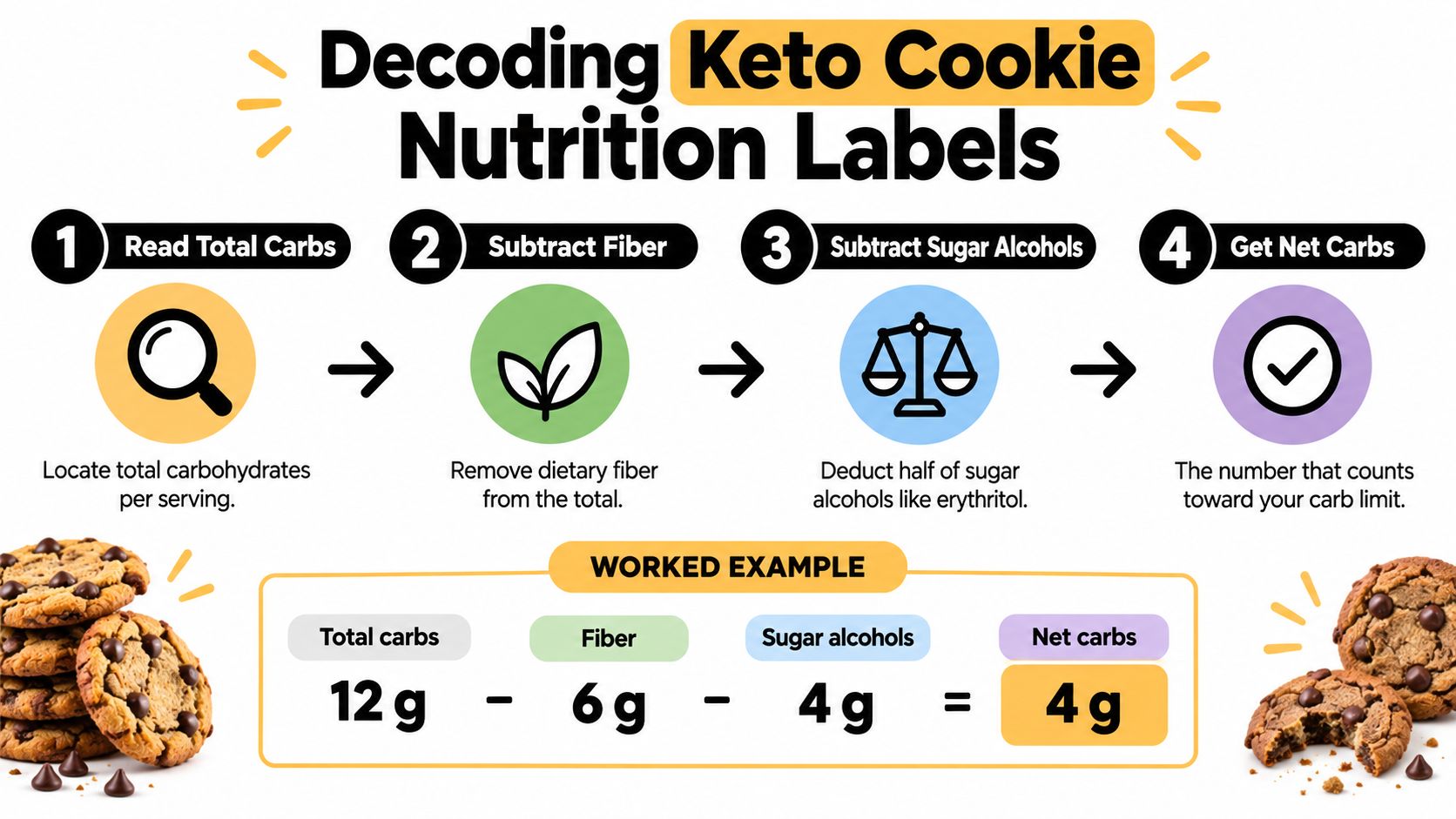
Next, find total carbohydrate and dietary fiber. A basic starting calculation is:
Total carbohydrate minus dietary fiber equals an initial estimate of net carbohydrate.
Sugar alcohols require more care. Different sugar alcohols are absorbed differently, and manufacturers may use a mixture of sweeteners. Some people use a full deduction for erythritol, while other products or sweeteners may call for a partial deduction or no deduction. Don't apply one blanket rule to every label.
A practical label checklist
- Locate total carbohydrate per serving.
- Identify dietary fiber and subtract it when appropriate.
- Read the ingredient list for each sugar alcohol or fermentable fiber.
- Calculate the amount for the number of servings you'll eat.
A label that lists 12 grams of total carbohydrate, 6 grams of fiber, and 4 grams of sugar alcohols might produce a net-carb estimate of 4 grams under the example calculation shown in the visual. That result depends on the sweetener and the calculation method, so treat it as an example of the process rather than a universal rule.
Label habit: Write the calculation down before deciding whether a cookie fits your day.
Sweeteners also affect comfort. Larger portions of some polyols or fermentable fibers may cause bloating, cramping, or diarrhea for certain people. Start with one serving, drink adequate fluid, notice your own response, and stop if discomfort develops. A nutrition label reading guide can support this process, but your personal tolerance still matters more than a front-of-pack claim.
Heart Health Considerations for Keto Treats
A butter cookie may fit a low-carbohydrate pattern while still raising a separate heart-health question. Ketosis compatibility measures carbohydrate intake. It does not, by itself, describe saturated fat, fiber, cholesterol, blood pressure, or the rest of the eating pattern.
One tablespoon of unsalted butter contains approximately 7 grams of saturated fat (butter nutrition data). Spread across a batch, that amount may seem small in each cookie, yet several portions can make butter a substantial source of saturated fat. Removing added sugar does not remove this trade-off.
Ketosis and cardiovascular quality are different tests
A clinical review describes mixed evidence around ketogenic diets. It discusses possible reductions in dietary fiber and increases in cardiovascular risk when saturated-fat intake rises, while also noting that LDL responses differ among individuals. The 2025 review discussed trials in which some low-carbohydrate diets improved triglycerides, HDL cholesterol, blood sugar, blood pressure, and inflammation, so cardiovascular concerns are not supported uniformly (clinical review).
The useful question is what the cookie replaces. Replacing a highly sugary dessert may support a lower-carbohydrate goal. Replacing nuts, seeds, vegetables, or another fiber-rich snack with a butter-heavy cookie creates a different nutritional balance. The same cookie can therefore fit one goal while weakening another.
Build the rest of the day carefully
Pair a butter-based treat with foods that provide unsaturated fats and fiber, if they suit your dietary pattern. Review your own lipid results, with particular attention to LDL cholesterol. People with hyperlipidemia or familial hypercholesterolemia should discuss dietary changes with a clinician instead of relying on a product's keto label.
Long-term cardiovascular effects of ketogenic diets remain uncertain, so definitive “heart healthy” claims go beyond the evidence presented here. Readers exploring broader wellness options can review telomyx.co.uk, but that resource does not replace individualized medical advice.
Choosing the Best Keto Snacks for You
The best choice depends on the job the snack needs to do. A homemade butter cookie may suit a weekend baking project. A packaged low-sugar cookie may work better in a desk drawer or travel bag. Neither choice is automatically right for every person.
Use this quick filter before buying or baking:
- Check the full panel: Look at serving size, total carbohydrate, fiber, sweeteners, calories, and saturated fat.
- Test tolerance: Start with one serving when a product contains polyols or fermentable fibers.
- Consider the replacement: Ask whether the cookie is replacing a sugary dessert, a meal, or a more fiber-rich snack.
- Review your health goals: Ketosis compatibility doesn't answer questions about LDL cholesterol, blood pressure, diabetes medication, or personal digestion.
- Choose convenience with care: A product you can portion and understand may be more useful than a theoretically perfect recipe you never prepare.
Rip Van offers low-sugar, higher-fiber snack formats, including wafer cookies and related treats, with product information that can help shoppers assess carbohydrate suitability. Use its labels the same way you'd assess any other option, especially if butter, saturated fat, or sweetener tolerance is part of your decision.
A broader approach to weight management also includes sleep, meals, movement, medications, and individual health needs. For additional context, read this guide on how to lose weight without exercise, and discuss major dietary changes with a qualified professional when appropriate.
Here's a short visual reminder of how to compare a snack's carbohydrate claim with its complete nutrition profile:
A thoughtful keto cookie choice isn't about finding a magic ingredient. It's about matching the serving, carbohydrate calculation, fat profile, fiber content, and sweetener system to your own goals.
Rip Van offers convenient low-sugar snack options, including wafer cookies and other portable treats, with product details that help you review carbohydrate suitability. Visit Rip Van to compare available snacks and choose an option that fits your label-reading approach and eating routine.
0 comments