

You've mixed a batch of keto cookies with coconut flour, scooped the dough, and then watched it crack before it reaches the baking sheet. Or perhaps the cookies looked perfect when warm, only to become dry and crumbly after cooling. Coconut flour can produce excellent low-carb cookies, but it doesn't behave like wheat flour or almond flour. The key is understanding how its fiber absorbs and redistributes moisture.
Once you treat hydration, resting, portioning, and cooling as part of the recipe rather than minor details, keto cookies made with coconut flour become much more predictable. You'll also avoid a common mistake: assuming that more fiber automatically means a better cookie or a more comfortable snack.
The Two Paths to Keto Cookies
A cookie can look right in the mixing bowl and still fail after cooling. The flour choice usually explains why. Almond flour and coconut flour create different doughs, so they cannot share the same formula or be exchanged gram for gram.
Almond flour supplies fat and tenderness, giving the dough a familiar, forgiving texture. It generally absorbs less liquid, which makes shaping easier when the recipe needs a small adjustment. For a direct comparison, see Rip Van's guide to keto cookies with almond flour.
Coconut flour takes a different role. It contributes concentrated fiber and helps build a compact cookie structure, but it also leaves less room for imprecise measuring. A USDA FoodData Central-derived record lists approximately 58.9 grams of total carbohydrate and 34.2 grams of dietary fiber per 100 grams of coconut flour, along with 438 calories, 16.1 grams of protein, and 15.3 grams of fat (USDA-derived coconut flour data). That works out to an estimated 24.7 grams of net carbohydrate per 100 grams. Coconut flour is therefore low-carb in many formulations, not carbohydrate-free.
Why the choice changes the cookie
The two flours also differ in how much structure they provide per gram. Coconut flour is a structural ingredient with high water demand, while almond flour contributes more richness and bulk. Cost may favor coconut flour because a smaller amount can support the dough, but replacing almond flour with it directly will usually produce a dry or overly firm result.
Its fiber advantage creates a hydration challenge that requires separate handling. That relationship can also affect whether a finished cookie feels comfortable to eat, especially when a recipe packs in fiber without enough attention to portion size and moisture.
Baker's rule: Choose coconut flour for its fiber and compact structure, not as a substitute that behaves like almond flour.
A controlled technical study found that coconut-flour additions above 15 to 20% sharply reduced several dough and sensory properties, while a 10% addition preserved better technological performance (coconut-flour dough study). A mixed flour system is often easier to control, particularly when the goal is a tender cookie rather than a dense, brittle one.
Measuring and Resting the Dough
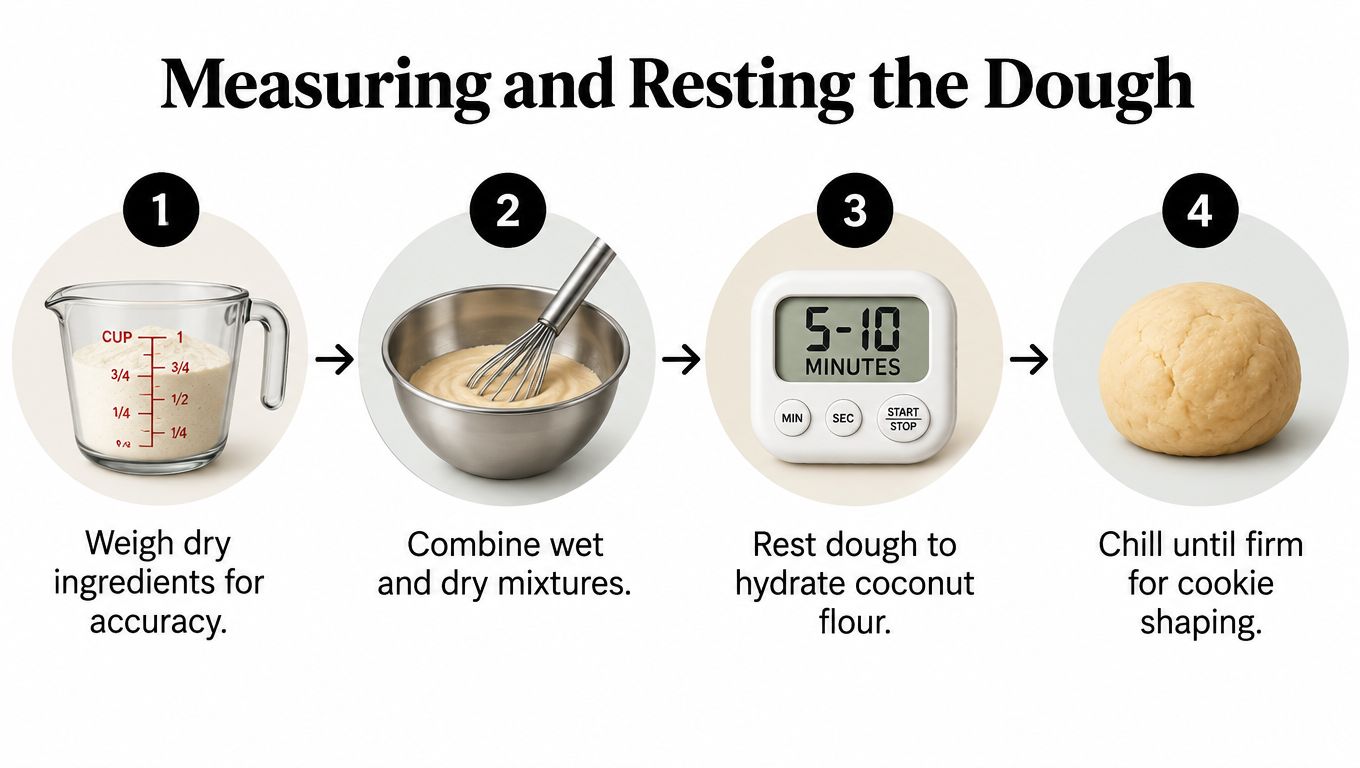
A cookie can look perfectly measured and still bake dry if the flour was packed into a cup. Start with a scale. Weigh the coconut flour and each dry ingredient separately, because its high fiber content absorbs liquid quickly and leaves little room for casual measuring.
Use coconut flour as a modest part of the dry structural system, then add hydration gradually. The practical sequence is simple: weigh, mix, pause, and only then correct. A 5 to 10 minute rest gives the fiber time to take up moisture, so the dough's final texture becomes easier to judge.
A dependable mixing sequence
- Weigh the dry structure. Combine coconut flour with leavening, salt, and the remaining dry ingredients. Whisk thoroughly so the leavener and salt are distributed instead of collecting in one area.
- Build the liquid phase. Mix the egg or eggs with melted butter or another fat, vanilla, and the selected sweetener. Allow melted fat to cool slightly before it meets the egg, which helps keep the mixture smooth.
- Add the liquid in stages. Pour the wet mixture into the dry ingredients and stir until no dry pockets remain. The dough may appear uneven at first. Give the fiber time to hydrate before changing the formula.
- Rest on purpose. Set a timer for 5 to 10 minutes. During that interval, a loose, scoopable mixture can become firm enough to portion and shape. This pause is part of the mixing method, not idle time.
- Chill for shaping. After the hydration period, chill the dough until a scoop or fingertip leaves a clean impression. Chilling helps when the fat remains fluid and makes portioning more consistent.
The target dough feels soft and cohesive. Slight tackiness is acceptable, while cracking during rolling or balling signals insufficient moisture. Add liquid or egg in small increments, mix thoroughly, and give each correction time to distribute through the fiber.
A stiff, crumbly dough needs a small addition of liquid followed by another brief hydration period. A greasy dough that spreads needs a little coconut flour, then enough time for that new flour to absorb fat and moisture. Large corrections often overshoot, producing cookies that are dense or dry.
Portioning determines thickness because coconut-flour dough may spread less than wheat-based dough. Use the same scoop for every cookie and flatten each portion deliberately. Thin pieces bake crisper and should cool fully on the tray. For a softer center, retain more moisture-binding ingredients and remove the cookies before the middle becomes completely dry.
Color can mislead. Coconut flour changes browning and density, so a dark edge does not always indicate the right bake. Look for a set center, then assess the cooled texture. A repeatable bite is a better endpoint than surface color alone.
For a visual demonstration of mixing and shaping, this coconut-flour cookie preparation video lets you compare dough consistency through each stage.
Small measurement habits also matter when converting kitchen quantities. This guide to teaspoon to milligram conversions can help reduce errors caused by treating volume and weight as interchangeable.
Choosing Sweeteners and Binders
Sweeteners change more than sweetness. They also affect moisture, spread, crispness, cooling sensation, and how the cookie sets. Erythritol often produces a drier, crisper bite and can leave a cooling sensation. Allulose generally supports a softer texture and more browning, but it can make a cookie more tender and less crisp. Monk fruit is commonly used in blends, so the texture depends on what accompanies it.
The binder determines whether the dough holds together after coconut flour absorbs its liquid. Eggs provide water, protein, and structure, making them the most straightforward choice for a tender cookie. Psyllium husk adds gel-forming fiber, while xanthan gum contributes elasticity and cohesion in small amounts. Too much of either can create a gummy or overly tight bite.
| Ingredient | Texture Impact | Best Use Case |
|---|---|---|
| Erythritol | Drier, crisper, sometimes cooling | Thin cookies and crisp edges |
| Allulose | Softer, more tender, better browning | Soft-centered cookies |
| Monk fruit blend | Depends on the carrier sweetener | Balanced sweetness with controlled texture |
| Egg | Moisture, protein structure, tenderness | Cohesive everyday cookie dough |
| Psyllium husk | Adds gel structure and chew | Recipes needing extra binding |
| Xanthan gum | Improves cohesion and elasticity | Fragile doughs used in small amounts |
Match the binder to the goal
For a crisp cookie, use enough egg to bind without turning the dough cakey, keep portions thin, and choose a sweetener that supports a drier set. For chewiness, a whole egg or a combination of egg and another moisture-binding ingredient can help. Psyllium may work when the dough falls apart, but it isn't a cure for insufficient liquid or excessive coconut flour.
Nutrition tracking also requires ingredient awareness. Sweeteners can contribute different amounts of digestible carbohydrate, and serving size changes the final calculation. Readers who want a structured approach can use this resource on how to track macros sustainably when comparing homemade batches and packaged snacks.
A useful distinction is the difference between sweetness and bulk. Some sweeteners add volume and influence spread, while concentrated blends may contribute little structure. If you replace one with another, don't assume the dough will behave identically. Adjust the liquid only after the dough has rested.
For a clearer explanation of sugar alcohols and their role in food, see what sugar alcohol is in food. The practical lesson is simple: evaluate the sweetener by its behavior in the baked cookie, not just by its label.
Understanding Fiber and Digestive Comfort
A cookie can be low in digestible carbohydrate and still cause bloating or irregular bowel movements. The main issue is often the speed of the fiber increase, combined with a formula that demands more fluid than the rest of the diet provides.
As noted earlier, the USDA-derived coconut flour record lists 34.2 grams of dietary fiber per 100 grams compared with 58.9 grams of total carbohydrate. Using the composition detailed above, the estimated net carbohydrate remains about 24.7 grams per 100 grams. Nutrition panels vary by brand because processing and formulation affect the final composition, so use the exact supplier information when calculating a batch.
Why more fiber can feel worse
A 2025 scoping review reports that constipation affects approximately 1 to 27% of adults during the initial phase of a ketogenic diet, partly because restricting starchy foods can also reduce fiber intake (2025 ketogenic-diet scoping review). Adding a large amount of coconut flour at once may worsen discomfort rather than correct it. Its fiber absorbs water, and a sudden increase can lead to bloating, cramping, or changed bowel habits when fluid intake and other foods shift at the same time.
Use coconut-flour cookies as one source of fiber, not as a substitute for vegetables, nuts, seeds, or adequate fluids. Start with a modest portion if you are new to keto baking, then observe your response before eating more. Persistent digestive symptoms warrant advice from a qualified healthcare professional instead of further increasing fiber independently.
Gradual adjustment is the practical target. More coconut flour does not automatically make a cookie healthier, more filling, or easier to digest. Hydrate the dough fully, account for its water demand, and increase portions slowly. Those steps improve both texture and digestive comfort.
Three Proven Flavor Variations
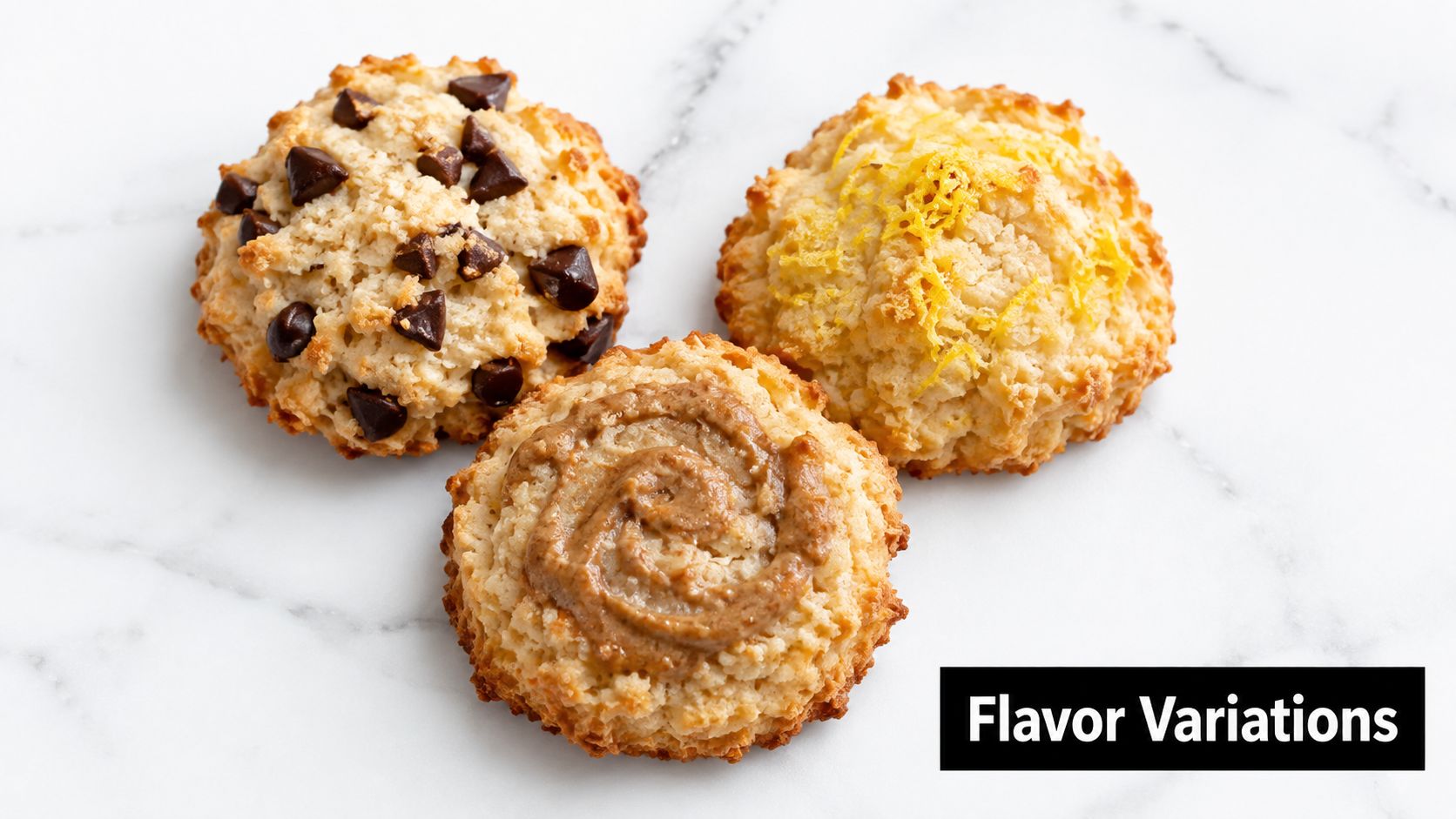
Once the base dough holds together after resting, flavor changes are straightforward. Keep the coconut-flour structure stable and alter the ingredients that contribute aroma, sweetness, or richness. That makes it easier to identify whether a texture problem comes from hydration or from the variation itself.
Chocolate chip
Fold sugar-free chocolate chips into the rested dough, using enough to distribute flavor without making each portion difficult to bind. Chocolate chips add solid inclusions, so mix them in after the dough has hydrated. Scoop, flatten lightly, and bake until the center is set.
This version works best with a soft-centered structure. Use an egg-based binder and avoid overbaking, because the chips can make a warm cookie seem more moist than it will feel after cooling.
Lemon and coconut
Add finely grated lemon zest to the wet phase before combining it with the dry ingredients. The zest gives a stronger aroma than bottled flavoring and keeps the cookie bright without adding liquid. If the dough becomes noticeably loose after the addition, let it rest fully before making any correction.
Lemon works particularly well with a tender cookie. A softer sweetener profile and a moderate amount of egg help preserve the delicate texture, while a light flattening encourages an even bake.
Nut butter swirl
Spoon small pockets of unsweetened nut butter over the portioned dough and swirl gently with the tip of a knife. Don't fully blend it into the dough. Distinct ribbons create contrast and reduce the need to rebuild the entire liquid balance.
This variation is richest and most fragile while warm. Leave the cookies on the baking tray until their structure firms, then transfer them carefully. If the dough feels loose before shaping, chill it rather than adding a large amount of coconut flour, which can mute the swirl and produce a dry crumb.
Storage, Freezing, and Snack Swaps
Coconut-flour cookies often change texture after baking because moisture continues moving through the crumb as the cookies cool. Let them cool completely before storing. Packing them while warm traps steam and can soften crisp edges or make the centers feel heavier.
An airtight container is the safest default. Separate soft cookies from crisp cookies if you're storing multiple textures, since moisture can migrate from one style to the other. If a cookie becomes too firm, a short period at room temperature can restore some tenderness, but reheating may also alter sweetener texture.
Freezing without losing the bite
Freeze fully cooled cookies in a sealed container with parchment between layers. You can also freeze portioned dough, provided you label the container with the flavor and baking instructions. Frozen dough may need a little extra time to become shapeable, but avoid adding more coconut flour before it has warmed enough to judge.
For repeatable results, freeze portions at the same weight and shape them before storage. That keeps baking more consistent when you pull out only what you need.
When baking isn't practical
Homemade cookies give you control over coconut flour, eggs, sweeteners, and portion size. They also require weighing, resting, chilling, baking, and cooling. On busy days, a ready-made low-sugar snack can fill a different role, especially when you still want a portable option with fiber and a cookie or wafer texture.
Rip Van offers Dutch-style wafels, wafers, wafer bars, LEOS and Romeos cookies, plus Crispy Dunes and Crispy Choco varieties. Its product range emphasizes low sugar, no corn syrup or artificial sweeteners, natural flavors, no artificial colors, and non-GMO ingredients, with options organized around dietary preferences such as keto, gluten free, and vegetarian.
Homemade keto cookies coconut flour work best when you respect their hydration curve. Store-bought snacks work best when you need consistency and convenience. Keeping both options available makes it easier to avoid rushed substitutions or eating a large portion just because nothing else is ready.
Bake your next batch with a scale, rest the dough before adjusting it, and start with a modest portion to assess both texture and digestion. When you need a convenient low-sugar, fiber-focused alternative to homemade cookies, browse the portable snack options from Rip Van and choose a format that fits your routine.
0 comments