

When you see "keto-friendly" on a snack bar wrapper, what does that really mean? In short, it’s a snack engineered to support a ketogenic state—where your body burns fat for fuel instead of carbs.
Unlike standard granola or protein bars loaded with sugars and grains, a true keto bar is built differently. It’s high in healthy fats, moderate in protein, and extremely low in the carbohydrates that can kick you out of fat-burning mode. Think of it as a convenient, on-the-go fuel source that won’t spike your blood sugar.
What Actually Makes a Snack Bar Keto-Friendly?
Let's cut through the marketing fluff. "Keto-friendly" isn't just a trendy label; it signals a very specific nutritional blueprint designed to keep your body in ketosis. A genuinely keto-friendly snack bar is a carefully crafted tool that works with your metabolism, not against it.
Imagine your body on keto is like a hybrid car that has switched from running on gasoline (carbs) to its electric battery (fat). To keep that battery charged, you need the right kind of fuel. A real keto snack bar provides exactly that by sticking to a strict macronutrient formula.
The Core Macronutrient Formula
At its heart, a keto-friendly snack bar has to follow a precise balance of macronutrients, or "macros." This isn't just a loose guideline—it's the fundamental rule that separates an authentic keto product from a carb-heavy imposter in clever packaging.
Here’s the breakdown of what to look for:
- Very Low Net Carbohydrates: This is the absolute non-negotiable. The goal is to keep net carbs (that’s total carbs minus fiber and certain sugar alcohols) incredibly low, typically under 5 grams per serving. This is crucial for preventing your body from switching back to burning sugar.
- Moderate Protein: Protein is essential, but too much of it can be converted into glucose in the body through a process called gluconeogenesis, which can knock you out of ketosis. A good keto bar has just enough protein to keep you full and support muscle, but not so much that it works against you.
- High Healthy Fats: On a keto diet, fat is your primary energy source. Quality bars are packed with healthy fats from sources like nuts, seeds, coconut oil, or MCT oil. These provide sustained energy and are key to feeling satisfied.
For a quick reference, here’s what the ideal macronutrient profile for a keto-friendly snack bar looks like. Keep these targets in mind when you're scanning labels at the store.
Keto-Friendly Snack Bar Macronutrient Checklist
| Macronutrient | Ideal Range Per Serving | Why It Matters |
|---|---|---|
| Net Carbs | < 5 grams | Prevents blood sugar spikes and keeps your body in a fat-burning state (ketosis). |
| Protein | 5–15 grams | Provides satiety and supports muscle without being excessive enough to convert to glucose. |
| Healthy Fats | 10–20 grams | Serves as the primary fuel source, delivering sustained energy and promoting fullness. |
Getting these numbers right is what makes a bar truly work for a ketogenic lifestyle. It's a strategic blend designed to maintain ketosis, not just a low-sugar treat.
Beyond the Numbers: Ingredients Matter
While hitting the right macro targets is critical, the quality of the ingredients is what separates a good keto bar from a great one. A bar can have perfect numbers but still be filled with junk—like artificial ingredients, inflammatory oils, or sweeteners that cause digestive issues.
This is where thoughtful brands stand out. For instance, Rip Van’s low-sugar cookies and wafers are crafted to deliver that satisfying treat experience without compromising your dietary goals. They achieve this by using high-quality components that align with both the numbers and the spirit of a clean keto lifestyle.
The demand for these well-formulated snacks is exploding. The global market for keto-friendly options was valued at a massive $15.2 billion in 2023, reflecting a huge shift in how people approach snacking. Projections show this trend is only growing, as more people discover the benefits of low-carb diets for weight management and sustained energy. You can explore more market trends and insights about keto snacks to see just how popular they've become.
How to Confidently Calculate Net Carbs on Any Label
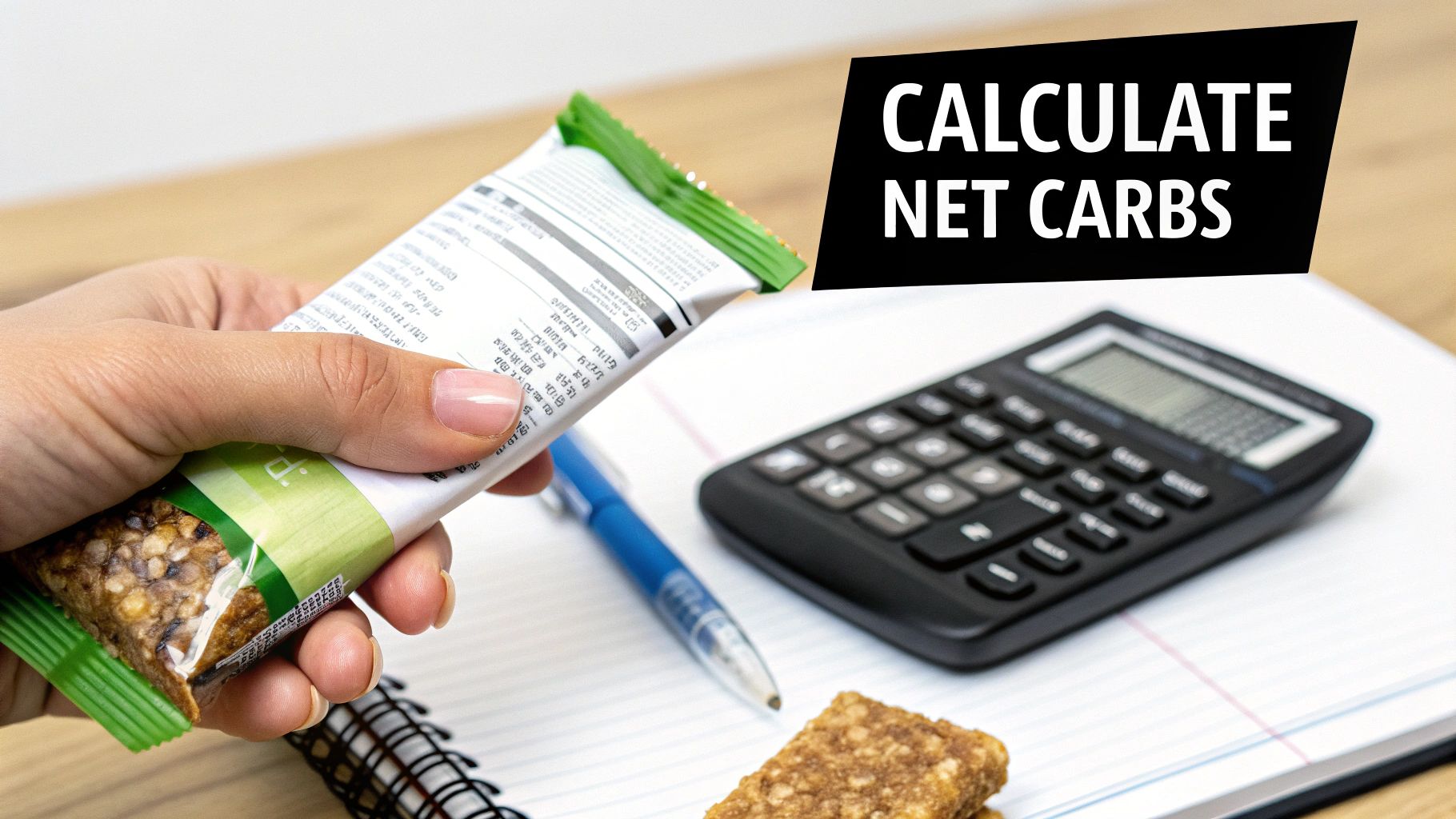
Mastering the nutrition label is probably the single most powerful skill you can develop on a keto diet. That "Total Carbohydrates" number can look scary at first, but it definitely doesn't tell the whole story. This is where understanding net carbs becomes your superpower for finding truly keto friendly snack bars.
Think of your daily carb limit like a budget. Total carbs are the "gross income," but net carbs are your "take-home pay"—the amount that actually affects your state of ketosis.
The goal is to figure out that "take-home" number. It’s the only part that really counts, representing the carbs your body actually digests and turns into glucose. Luckily, the math is pretty simple.
The Simple Formula for Net Carbs
Finding the net carbs in any food just takes a little subtraction. The final number is what you track against your daily keto carb limit.
The Net Carb Formula Total Carbohydrates – Dietary Fiber – Certain Sugar Alcohols = Net Carbs
So, why does this work? It’s because dietary fiber and specific sugar alcohols don’t behave like other carbs. They mostly pass right through your system without causing the big blood sugar and insulin spikes that can knock you out of ketosis. You get to deduct them from your carb budget.
Let's break down each piece of the puzzle so you can feel totally confident doing this yourself.
Decoding the Label Step by Step
Ready to become a net carb detective? Grab any snack bar from your pantry and we'll walk through this together. Once you get the hang of it, it only takes a few seconds.
-
Find Total Carbohydrates: Look for this line on the Nutrition Facts panel. This is your starting point. Let’s say a bar lists 20g of Total Carbohydrates.
-
Subtract Dietary Fiber: Right below that, you’ll find the "Dietary Fiber" line. Fiber is a carb your body can't break down, so it doesn't mess with your blood sugar. If the bar has 12g of Dietary Fiber, subtract that from your total.
-
Subtract Certain Sugar Alcohols: This is the one tricky part. Not all sugar alcohols are created equal. You only want to subtract the good ones, like erythritol, xylitol, and allulose. If the label shows 4g of erythritol, you can subtract that, too. Just be wary of subtracting maltitol, as it can still have a noticeable impact on blood sugar.
Let's apply this to our example:
- 20g (Total Carbs)
-
- 12g (Fiber)
-
- 4g (Erythritol)
- = 4g Net Carbs
This quick calculation shows that a bar with a seemingly high 20g of carbs actually only has 4g of net carbs, making it a fantastic keto-friendly choice. If you want to learn more about how this works, you can check out our guide on high-fiber snack bars.
Putting Your Knowledge into Practice
Now, let's see why this skill is so crucial by comparing two imaginary snack bars.
| Feature | Bar A "Keto-Approved" | Bar B "Low-Carb Imposter" |
|---|---|---|
| Total Carbohydrates | 22g | 18g |
| Dietary Fiber | 15g | 3g |
| Erythritol (Sugar Alcohol) | 5g | 0g |
| Maltitol (Sugar Alcohol) | 0g | 10g |
| Net Carb Calculation | 22g - 15g - 5g = 2g | 18g - 3g = 15g |
| Verdict | Truly Keto-Friendly | Not Keto-Friendly |
As you can see, Bar A, even with more total carbs, is the clear winner for keto with only 2g of net carbs. Bar B, which might be marketed as "low-carb," would likely kick you out of ketosis with its 15g of net carbs. This simple math lets you see past clever marketing and choose snacks that actually support your goals.
Decoding Ingredients: Good Fats Versus Hidden Sugars
Once you've got the hang of calculating net carbs, the next step is to become an ingredient detective. The nutrition label gives you the "what"—the macros—but the ingredient list tells you the how. A truly great keto-friendly bar is built from high-quality, recognizable ingredients, not a long list of chemicals and fillers.
Think of it like building a house. Two homes might look identical from the outside, but one is made with solid oak and stone while the other uses cheap particleboard. You'll find out which one was built to last the first time a big storm rolls through. The same goes for your snacks. Quality ingredients give you sustained energy and keep you feeling full, while cheap ones can quietly undermine your health goals.
Identifying Keto Power Players
The best keto-friendly snack bars are packed with ingredients that do more than just keep carbs low. I call these the "power players"—the components that deliver healthy fats, clean protein, and satisfying fiber. When you see these names high up on the ingredient list, you know you're on the right track.
Keep an eye out for bars that feature these keto-approved stars:
- Nuts and Seeds: Almonds, pecans, walnuts, chia seeds, and pumpkin seeds are the foundation of many fantastic keto bars. They're your go-to source for healthy fats, fiber, and important micronutrients.
- Healthy Oils: Coconut oil and MCT oil (Medium-Chain Triglycerides) are keto superstars. MCT oil is especially valuable because your body can quickly convert it into ketones, giving your brain and body a clean, fast-acting source of energy.
- Quality Protein Sources: Look for whey protein isolate, collagen, or solid plant-based options like pea or hemp protein. These provide the building blocks your muscles need without piling on unnecessary carbs.
- Natural Fibers: Ingredients like chicory root fiber or soluble tapioca fiber add substance and help you feel full, all while having a minimal impact on your net carb count.
Focusing on bars with these ingredients means you’re not just avoiding carbs; you’re actively fueling your body. It's why thoughtful brands like Rip Van build their recipes around clean, whole-food components to create snacks you can genuinely feel good about eating.
The demand for well-made, convenient keto options has absolutely exploded. Keto protein bars are a huge part of this, with the global market hitting $1,158.56 million in 2021 and on track to reach a massive $3,274.81 million by 2033. This isn't just a trend; it's a clear signal that people want snacks that taste great and fit their macros. You can discover more insights about the keto protein bar market to see how the industry is evolving.
Spotting Keto Saboteurs to Avoid
Just as important as knowing what to look for is knowing what to run from. Plenty of products are marketed as "low-carb" or "keto," but they’re hiding ingredients that can stall your progress, spike your blood sugar, or cause inflammation. These are the keto saboteurs, often disguised under scientific-sounding names.
Here’s a quick-reference table of common ingredients to watch out for.
| Ingredient Category | Examples to Avoid | Why They're a Problem |
|---|---|---|
| Hidden Sugars | Corn syrup, maltodextrin, dextrose, fructose | These are all high-glycemic sugars that will spike your blood sugar and kick you right out of ketosis. |
| Inflammatory Oils | Soybean oil, canola oil, corn oil, sunflower oil | These industrial seed oils are loaded with omega-6 fatty acids and can contribute to inflammation in the body. |
| Artificial Sweeteners | Sucralose, aspartame, acesulfame potassium | While they don't have carbs, some people experience digestive upset or find that they trigger cravings for more sweets. |
| Unnecessary Fillers | Soy protein isolate, artificial flavors, chemical preservatives | These are often signs of a lower-quality product and can be a source of digestive issues for some people. |
Learning to scan for these saboteurs is a crucial skill. For instance, maltodextrin is a highly processed powder made from starch that actually has a higher glycemic index than table sugar. Seeing that on a label is a major red flag for anyone serious about keto. By choosing bars that leave these ingredients out, you’re protecting your metabolic health and making sure your snack is truly working for you.
The Sweetener Showdown: Which Ones Support Ketosis?
When you’re hunting for a keto-friendly snack bar, the sweetener is the make-or-break ingredient. Get it right, and you’ve got a delicious treat that keeps you on track. Get it wrong, and you might as well be eating a candy bar. It can feel like a minefield out there, but once you know who the key players are, it gets a whole lot simpler.
Think of it this way: not all sweeteners are created equal. Some are your best friends on keto, while others are undercover enemies waiting to kick you out of ketosis. We can sort them into three simple groups: the good guys, the maybes, and the ones to run from.
The Best Choices for Staying in Ketosis
The absolute gold standard for keto sweeteners are those with a glycemic index of zero. This means they won’t mess with your blood sugar or insulin levels one bit. These are the names you want to see high up on the ingredient list.
- Stevia: A natural, plant-based powerhouse that’s hundreds of times sweeter than sugar but comes with zero calories or carbs. It's one of the most popular and trusted options for a reason.
- Monk Fruit: Another all-natural winner derived from a small fruit. It delivers intense sweetness with no calories or carbs and is known for its clean taste that lacks the aftertaste some other sweeteners have.
- Allulose: This one is fascinating. It's a "rare sugar" found naturally in things like figs. It tastes and feels like sugar, but your body doesn't really metabolize it, so it adds sweetness and texture without adding carbs to your count.
- Erythritol: A type of sugar alcohol that passes through your system mostly unabsorbed, giving it a near-zero impact on blood sugar. You’ll find this one in a ton of keto products.
Smart brands, like Rip Van, lean heavily on sweeteners like allulose and monk fruit. It's how they deliver that satisfying, indulgent flavor without the metabolic fallout.
Sweeteners to Use With Caution
Next, we have the gray area. These sweeteners might work for some people in small amounts, but they can cause digestive upset or a minor blood sugar bump in others. It’s all about personal tolerance.
A perfect example is Xylitol. It's a very common sugar alcohol with a low glycemic index, but it's not zero. Many people handle it just fine, but others report a slight glucose response or stomach issues. It’s also incredibly important for pet owners to know that xylitol is highly toxic to dogs, so keep any products containing it far away from your furry friends.
When you choose a snack bar, you're not just picking a treat; you're selecting a tool to help you stay on track. The right sweeteners ensure that tool works with you, not against you, making it easier to manage cravings and maintain ketosis.
Understanding the finer points of this category can make a big difference. If you want to go deeper, you can learn more about sugar alcohols in food and see how they fit into a low-carb diet. Seeing how these are used in other products, like zero sugar seltzers, can also give you a better sense of how they work.
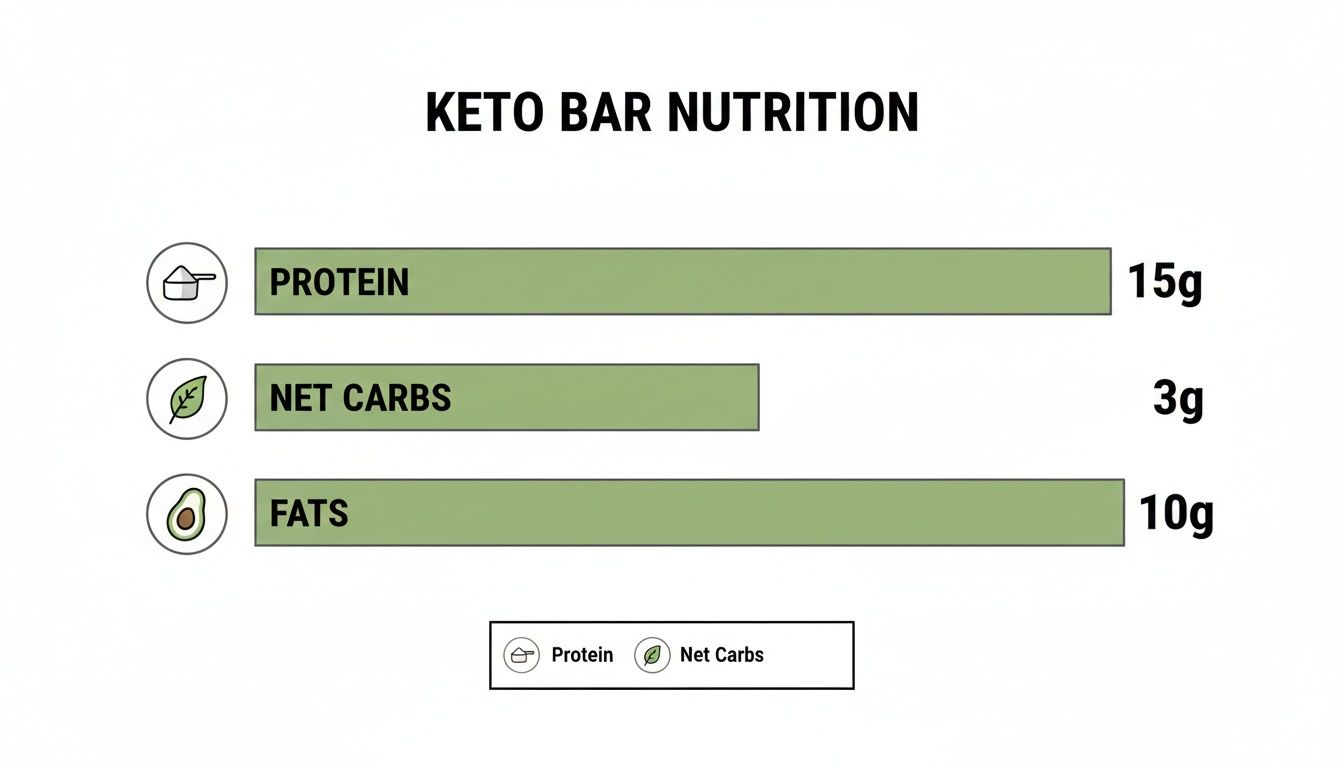
This chart shows what a well-made keto bar looks like from a numbers perspective—high fat, moderate protein, and barely-there net carbs. It all comes back to smart ingredient choices.
Keto Sweetener Comparison Guide
Navigating the world of sweeteners can be tricky. This table breaks down some of the most common ones you'll encounter on labels, giving you a quick reference for making smart choices.
| Sweetener | Glycemic Index | Net Carbs | Keto-Friendly? |
|---|---|---|---|
| Stevia | 0 | 0 | Excellent |
| Monk Fruit | 0 | 0 | Excellent |
| Allulose | 0 | 0 | Excellent |
| Erythritol | 0-1 | 0 | Excellent |
| Xylitol | 7-13 | Variable | Use with caution |
| Maltitol | 35-52 | High | No |
| Sucrose (Table Sugar) | 65 | High | No |
| Maltodextrin | 105-136 | High | Absolutely not |
As you can see, the difference between a great choice like Stevia and a poor one like Maltitol is massive. Always aim for sweeteners with a glycemic index as close to zero as possible.
Sweeteners to Avoid at All Costs
Finally, let's talk about the definite "no-gos." These are the sweeteners that will quickly sabotage your ketogenic efforts, even if the package says "sugar-free."
- Maltitol: This sugar alcohol is infamous in the keto community. It’s known for causing serious digestive upset and has a glycemic index as high as 52 (for context, table sugar is 65). It's a hard pass.
- Sucralose and Aspartame: While they are technically zero-calorie, some research suggests these artificial sweeteners can harm your gut microbiome and might even spark more sugar cravings.
- Maltodextrin: This is a cheap, highly processed carbohydrate powder often used as a filler. It can spike your blood sugar even faster than plain sugar. Always scan the ingredient list for this one.
Learning to spot these different sweeteners is a keto superpower. It allows you to confidently grab a snack bar that satisfies your craving while keeping your body in fat-burning mode.
Finding Your Perfect Keto Snack Bar in the Wild
Alright, you know how to decode labels and spot the right ingredients. Now it's time for the fun part: putting that knowledge to the test in the real world. Hunting for the perfect keto snack bar at the grocery store or online can feel a bit like a treasure hunt, but with a few simple strategies, you'll know exactly where to look.
Think of this as your field guide for navigating the snack aisle with confidence. Whether you’re browsing in person or scrolling online, knowing where to focus your attention saves a ton of time and ensures you go home with a snack that actually supports your goals, not just one with flashy marketing.
Smart Shopping Strategies for Keto Bars
So, where do these elusive keto bars actually live in a typical grocery store? They tend to hang out in a few specific spots.
Start your search in these key locations:
- The Health Food or "Natural" Aisle: This is usually ground zero for most keto and low-carb products. Brands specifically designed for various dietary needs are often clustered together here.
- The Protein Bar Section: You’ll definitely find keto-friendly options mixed in with the standard protein and granola bars. This is where your label-reading skills are critical to separate the true keto gems from the carb-loaded imposters.
- Gluten-Free Sections: Every now and then, you'll find keto products hiding in the gluten-free aisle, so it's always worth a quick look.
Shopping online? Use those search filters. A simple search for "keto bars" is a good start, but the real magic happens when you filter for 5g of net carbs or less per serving. This one move will instantly clear out most of the noise.
And the market for these snacks is exploding. Ready-to-eat keto snacks are a huge part of the nutrition bar industry, which is on track to hit $1.54 billion in 2025. With the entire ketogenic diet market projected to reach $18.67 billion by 2033, it's clear that snack bars are a fast-growing favorite because they’re just so easy.
Portion Control Still Matters
Even the most perfect keto-friendly snack bar isn't a free pass to eat as much as you want. It's so important to remember that calories and carbs—even just a few grams—add up quickly. A classic mistake is overindulging in "keto" treats, which can easily stall weight loss or even knock you out of ketosis.
Key Takeaway: Think of a keto bar as a single, deliberate serving. They’re a fantastic tool for convenience and crushing cravings, but they work best when enjoyed in moderation as part of a diet centered on whole foods.
This is why products that come in pre-portioned, single-serving packs are a game-changer. They completely remove the guesswork and make it simple to grab exactly what you need without overdoing it.
How to Use Keto Bars in Your Routine
A great keto bar is more than just a snack; it's a versatile tool you can fit into your day in a bunch of different ways. Their grab-and-go nature makes them ideal for times when a full meal just isn’t an option. For more tips on working these into your diet, check out our comprehensive guide to low-sugar snack bars.
Here are a few of the best times to reach for one:
- As a Pre-Workout Boost: The healthy fats, especially from sources like MCT oil, provide a quick yet sustained source of energy to power your workout without a sugary crash.
- A Travel-Friendly Lifesaver: Airports, road trips, and hectic travel days are notorious for being keto-unfriendly zones. Tossing a few bars in your bag means you’re always prepared.
- A Quick and Easy Dessert: When a sweet craving strikes after dinner, a keto bar can be a totally satisfying, guilt-free way to indulge without derailing your progress.
This is where Rip Van’s single-serving snacks really shine. A perfectly portioned LEOS cookie or a Crispy Dunes wafer gives you amazing flavor and a satisfying crunch, making it incredibly easy to stick to your goals without sacrificing convenience.
Your Questions About Keto Snack Bars Answered
Stepping into the world of keto-friendly snacks can feel a bit like learning a new language. You've got the basics down—net carbs, good fats, no sugar—but questions pop up when you're standing in the snack aisle. What about this sweetener? Can I really eat one of these every day?
Let's clear up the confusion. Think of this as your practical, no-nonsense FAQ for choosing the right keto snack bar. We'll tackle the real-world questions that come up so you can snack with confidence.
Can I Eat Keto-Friendly Snack Bars Every Day?
While it’s tempting, it's best to think of keto bars as a powerful tool in your toolbox, not the whole toolbox itself. They are lifesavers on busy days, perfect for travel, and amazing for kicking a sudden craving to the curb without wrecking your progress.
But the cornerstone of any healthy way of eating, keto included, is whole, unprocessed food. If you lean too heavily on any packaged food—even a high-quality one—you risk missing out on the vast array of vitamins and minerals you get from fresh vegetables, quality proteins, and fats like avocado or olive oil.
So, can a well-made bar from a brand you trust be a regular part of your routine? Absolutely. Just make sure it’s complementing a diet rich in whole foods, not replacing it.
Why Do Some Keto Bars Cause Digestive Issues?
If you've ever felt that tell-tale stomach grumble after a keto bar, you’re definitely not alone. The problem almost always boils down to two main culprits: certain sugar alcohols and a heavy dose of specific fibers.
Ingredients like maltitol, for instance, are notorious for causing gas and bloating. Our bodies don't fully absorb them, so they end up fermenting in the gut, which can lead to some serious discomfort for a lot of people. Even some generally well-tolerated sweeteners, like erythritol, can cause issues for sensitive folks, especially in larger amounts.
The solution is always on the label. To sidestep digestive drama, get in the habit of scanning the ingredient list. Look for bars sweetened with stevia, monk fruit, or allulose, which are known for being much gentler on the stomach. It’s why thoughtful brands like Rip Van stick to these sweeteners—so you can enjoy a treat that’s as easy on your gut as it is on your blood sugar.
Are "Low-Carb" and "Keto-Friendly" Bars the Same Thing?
This is a fantastic question, and the answer is a firm no. The two terms are not interchangeable, and getting them mixed up can stall your progress.
The term "low-carb" is incredibly broad and isn't regulated. A bar with 15g of net carbs can easily be marketed as "low-carb," but that single snack could blow through most of a strict keto dieter's daily allowance of 20-30g.
"Keto-friendly," however, implies a much stricter formula. It’s a signal that the product was specifically designed to keep you in ketosis.
Here’s a quick way to think about it:
- Low-Carb: A general claim meaning fewer carbs than a "regular" version. The net carb count could be anything.
- Keto-Friendly: A specific claim indicating a precise macro profile, usually under 5-7g of net carbs, with moderate protein and high healthy fat.
The bottom line? Always do your own math. Flip the package over, calculate the net carbs yourself, and make sure it fits your daily goals.
How Do Keto Bars Stop Cravings Without Spiking Blood Sugar?
The secret behind a truly effective keto bar is a clever one-two punch that satisfies your sweet tooth and keeps you full.
First, they use zero-glycemic sweeteners. Ingredients like monk fruit, stevia, and allulose deliver that sweet taste your brain is craving, but they do it without raising your blood glucose or prompting an insulin response. You get all the pleasure of a sweet treat without any of the metabolic consequences.
Second, they’re loaded with healthy fats and fiber. These two ingredients are satiety superstars. They slow down digestion, which helps you feel full and satisfied for hours, effectively turning off your hunger signals.
This powerful combination of smart sweeteners and satiating ingredients gives you the feeling of eating a real dessert, letting you conquer cravings without the awful sugar crash and rebound hunger that always follows a high-carb snack.
Ready to enjoy a delicious, low-sugar snack that perfectly fits your keto lifestyle? The treats from Rip Van are crafted with high-quality ingredients like allulose and monk fruit to deliver amazing flavor without the guilt. Explore the full collection of satisfying cookies and wafers at https://ripvan.com.
0 comments