

Minimally processed foods still provide roughly one-third of total energy intake worldwide, even as ultra-processed foods continue expanding in many markets (PubMed review). That fact changes the conversation. Minimally processed snacks aren't an obscure niche for people who make every meal from scratch. They sit inside an everyday food system that's becoming more packaged, more convenient, and harder to judge from the front of a wrapper.
The problem is that shoppers are tired of vague promises such as “clean,” “natural,” and “plant-based.” A product can sound wholesome while containing a long formulation built around refined sugars, starches, flavorings, colors, and texture agents. A better approach starts with the technical definition, then turns it into a shelf-level habit you can use in seconds.
Why Minimally Processed Snacks Matter Right Now
The global diet is changing. Minimally processed foods remain a substantial source of energy, but their share has been declining while ultra-processed foods have become especially prominent in North America, Australasia, Europe, and Latin America, with sales also rising in Asia, the Middle East, and Africa (global nutrition review). That shift helps explain why shoppers are looking for snacks that preserve more of the original food rather than turning it into an industrial formulation.
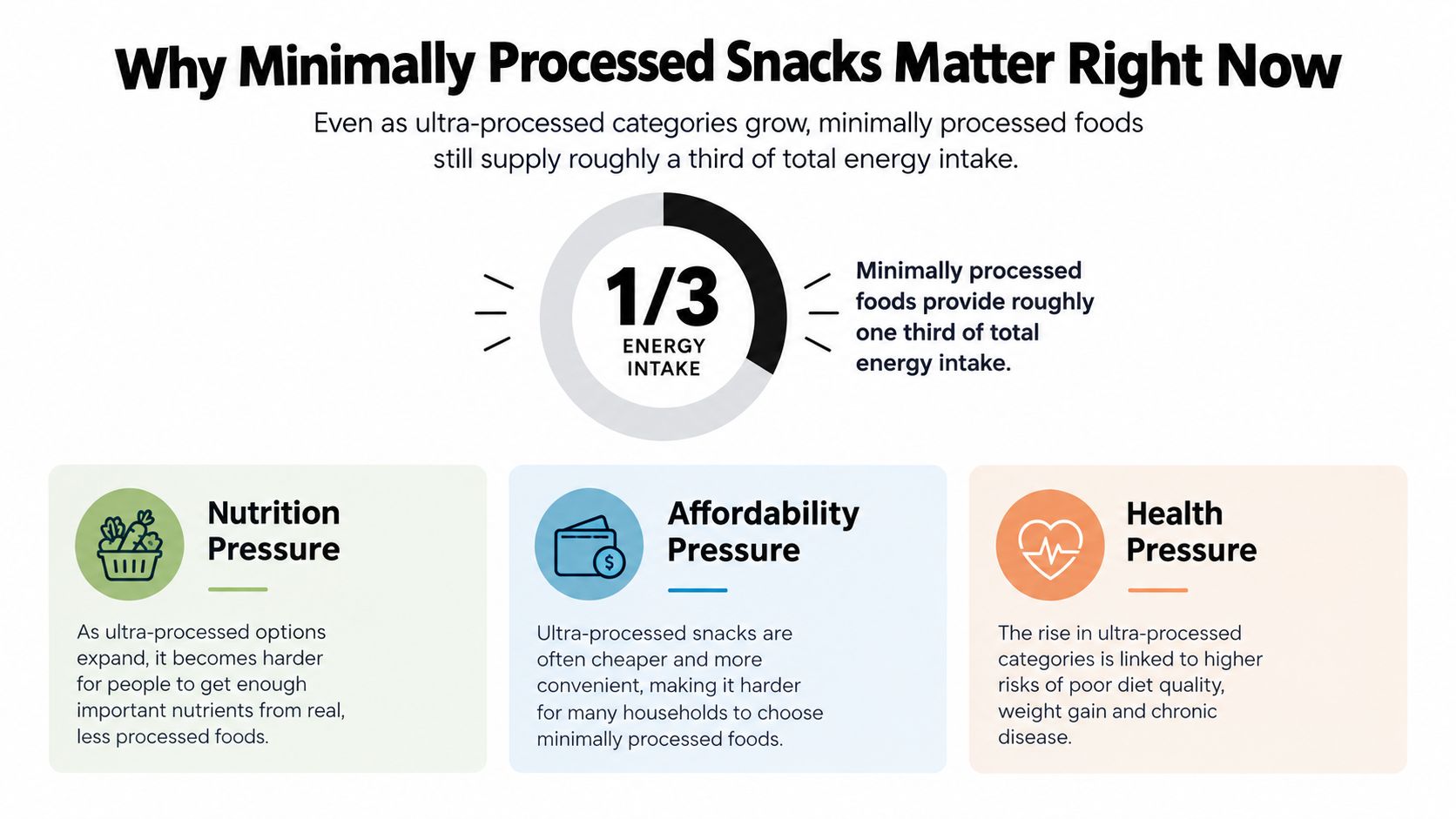
Three pressures are pushing this interest.
- Health concerns: People want everyday foods that support sensible eating patterns as rates of metabolic illness place more attention on sugar, fiber, energy density, and meal quality.
- Marketing fatigue: “Clean label” language doesn't tell you how a product was made. It can describe a short ingredient list, but it can also function as broad advertising language without a consistent technical standard.
- More attention to processing: Nutrition researchers and public-health policymakers increasingly use the NOVA classification, developed in the 2010s by Brazilian public-health researchers, to compare foods by their degree and purpose of processing (NOVA overview).
NOVA gives this article its backbone. It separates foods that have been dried, ground, roasted, boiled, refrigerated, frozen, pasteurized, or vacuum-packed from products formulated with industrial ingredients and cosmetic additives. That distinction matters because “minimally processed” isn't just a marketing phrase. It describes a processing method.
Practical rule: Use processing level as your starting point, not your final verdict.
The useful questions are concrete. Can you recognize the main ingredients? Has the food kept its natural structure? Does the serving provide meaningful fiber or protein? Is added sugar doing most of the work? The answers will help you compare a plain nut mix, roasted chickpeas, fruit, yogurt, a granola bar, and a filled wafer without relying on front-of-pack claims.
What Minimally Processed Actually Means
Under NOVA, Group 1 foods are unprocessed or minimally processed foods altered mainly to preserve them, make them safer, or make them easier to use. The allowed treatments include washing, drying, grinding, roasting, boiling, refrigeration, freezing, pasteurization, and vacuum packaging. The defining feature is the absence of added salt, sugar, oils, fats, or cosmetic additives in the food itself (NOVA classification details).
A plain almond, for example, is still recognizable as an almond after roasting. Unsweetened dried fruit remains fruit, though its water has been removed. Plain yogurt has been cultured and pasteurized, but it doesn't need a collection of flavors, colors, and sweeteners to resemble something else. Roasted chickpeas and simple whole-grain foods can fit the same category when manufacturers don't add industrial ingredients that change the product's basic identity.
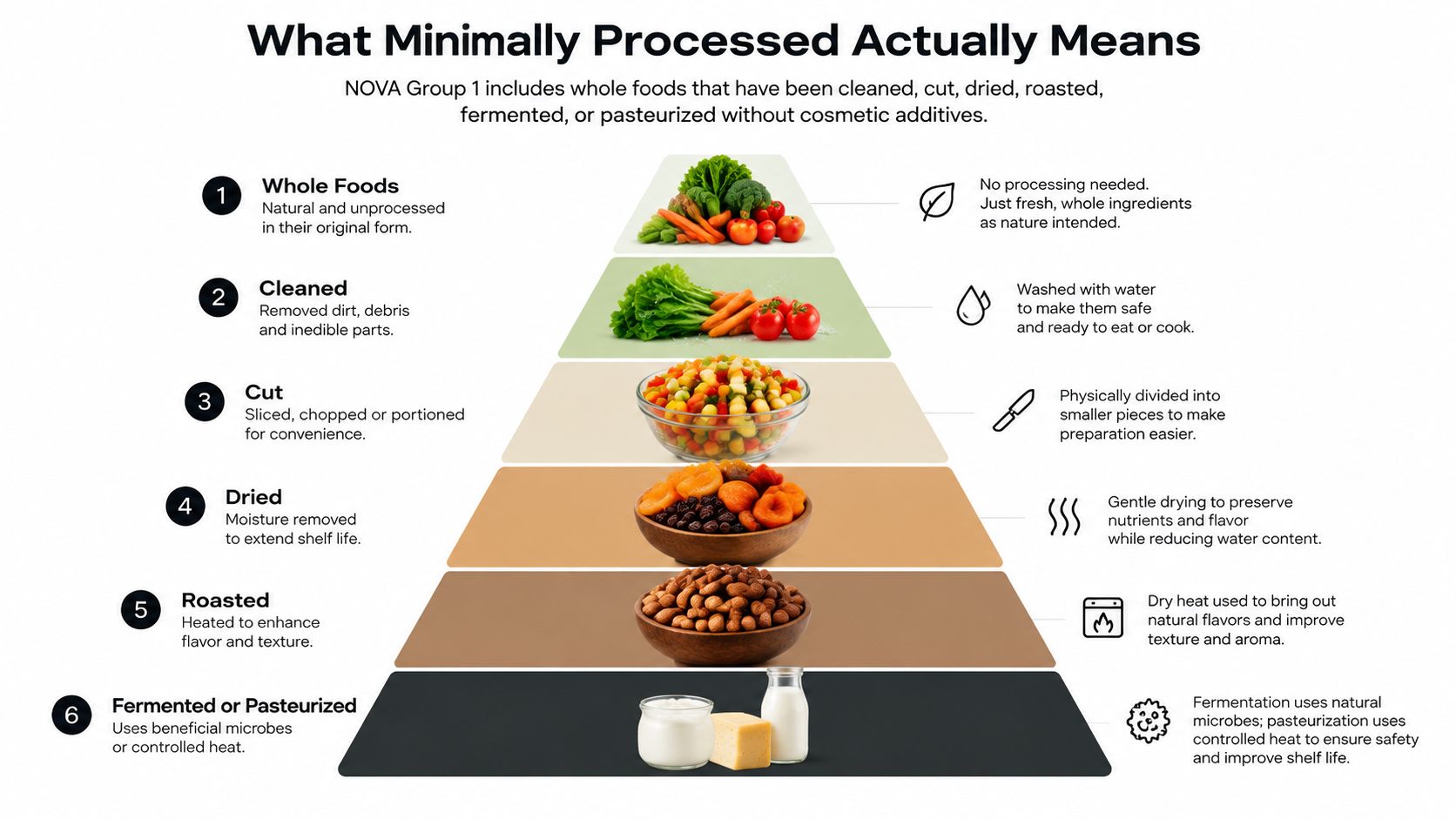
Ultra-processed snacks sit at the other end of the spectrum. They're industrial formulations that may contain refined starches or sugars, added flavors, colors, emulsifiers, and other ingredients used mainly to create a particular taste, appearance, or texture. The distinction isn't about counting ingredients. A food with several familiar ingredients may still be minimally processed, while a product with a short list can include highly formulated components.
A shelf hierarchy you can remember
Think of the categories as a visual slope rather than a rigid health ranking:
- Closest to the original food: fresh fruit, vegetables, plain nuts, seeds, and unseasoned dairy.
- Preserved staples: unsweetened dried fruit, frozen fruit, roasted chickpeas, and plain whole-grain ingredients.
- Simple packaged combinations: products built from recognizable foods with limited formulation.
- Highly formulated snacks: products whose identity depends on refined ingredients, cosmetic additives, or industrial texture systems.
The simplest question is: Would these ingredients look familiar in a normal kitchen? If the answer is yes, you're more likely to be in the minimally processed zone. For practical meal planning around work, commuting, and family routines, this guide to a whole-food diet for busy adults can help translate the principle into daily habits.
Is Less Processing Always Better for You
Less processing is a useful clue, not a complete nutrition judgment. A minimally processed snack can still be high in added sugar, while a more processed product may fit an otherwise balanced eating pattern. Compare processing with added sugar, fiber, protein, fat, portion size, and satiety.
A snack's name or health-focused packaging cannot settle the question. Plain roasted chickpeas may retain useful structure and fiber. A granola bar may contain oats and fruit yet depend heavily on sweeteners and a formulated binder. “Granola” describes a format, not the finished snack's nutritional value.
A Purdue study on replacing a refined-carbohydrate snack with pecans examined a calorie-matched swap and reported improvements in cardiometabolic markers (Purdue study report). The practical lesson is simple: what replaces a snack matters, not only how many calories it contains. Processing level also has a limited relationship with overall diet quality on its own. Familiar foods such as bread and granola can seem healthier than they are because shoppers recognize the format.
Use this four-factor check at the shelf:
| Factor | Why it matters | Quick check at the shelf |
|---|---|---|
| Processing level | It shows how far the food has moved from its original form and whether preservation or formulation shaped the product. | Look for recognizable ingredients and a snack that still resembles its base foods. |
| Added sugar | A minimally processed base can become a sweet snack with little nutritional value when sugar dominates. | Check the Nutrition Facts panel and scan for sugar, syrup, honey, or concentrated fruit juice. |
| Fiber and protein | These nutrients can make a snack more substantial between meals. | Compare fiber and protein with the serving size rather than trusting “whole grain” or “protein” on the front. |
| Fullness | A snack that disappears quickly may not satisfy, even when its ingredients look familiar. | Look for chew or crunch, or pair it with food that adds protein, fiber, or fat. |
A useful analogy is a house. Processing describes how the ingredients were assembled. The nutrition panel shows what the finished structure contains. You need both views before deciding whether the snack fits your needs.
Flavor terminology deserves the same careful reading. This guide to natural flavors and artificial flavors can clarify label language, but neither phrase provides a complete assessment of a snack's sugar, fiber, protein, or overall fit.
How to Spot Minimally Processed Snacks on the Shelf
Shoppers need a method that works in a crowded aisle. In a June 2025 U.S. survey, 63% of respondents said identifying ultra-processed foods was harder than doing their taxes, while only 11% felt very confident identifying them on packaging (survey report). Confusion isn't a personal failure. Packaging is designed to highlight benefits, not always to show how much formulation sits behind them.
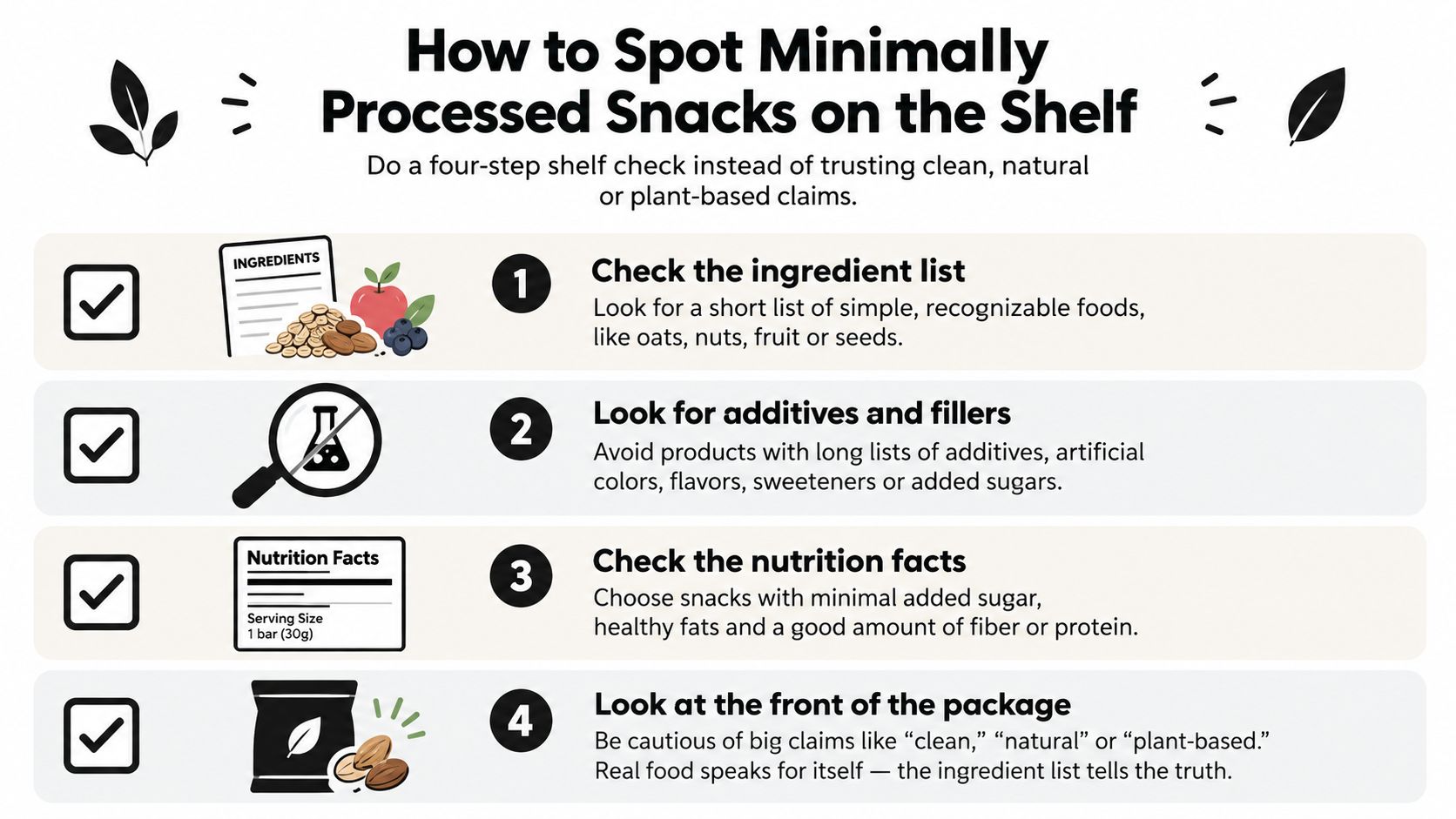
Start with the back of the package
Step one is the ingredient list. Look for a recognizable base such as oats, nuts, fruit, cheese, legumes, or whole grains. A short list can be helpful, but ingredient familiarity matters more than an arbitrary ingredient count.
Step two is added sugar. Search for cane sugar, syrup, honey, and concentrated fruit juice. The order of ingredients provides useful context, but the total added sugar per serving gives you the more practical answer. A product can contain familiar ingredients and still be sweetened heavily.
Step three is structure and nutrition. Does the snack retain visible pieces, chew, or crunch? Does it contribute useful fiber, protein, or fat? A whole-food ingredient that has been reduced to a sweet paste or thin coating may not offer the same eating experience as the intact food.
Step four is additives and serving size. Ingredients used for safety and preservation aren't automatically a problem. Pay closer attention when colors, flavors, sweeteners, or texture agents appear to create the product's main appeal. Then compare the front label with the Nutrition Facts panel. A package may describe one bar as a serving, but you should verify what the panel defines as one serving.
Shelf test: recognizable foods, modest added sugar, useful nutrition, and no unexplained health halo.
Front-of-pack terms such as “natural,” “plant-based,” and “clean” can guide your attention, but they can't replace the label. For a more detailed walkthrough, use this practical guide to reading nutrition labels.
If you prefer visual instruction, this video offers another way to review the basics of label reading:

Matching Minimally Processed Snacks to Your Diet
Processing level is only one part of dietary fit. A snack that works for one person may be inconvenient, too sweet, too high in carbohydrate, or unsuitable for an allergy-conscious household. Match the ingredient profile to the goal you're following, then confirm the serving size and nutrition facts.
For low-sugar eating, start with plain yogurt, nuts, cheese, whole fruit, or a lightly sweetened packaged snack after checking both total and added sugar. For a high-fiber pattern, oats, beans, lentils, whole fruit, vegetables, nuts, and whole-grain products give you more useful starting points than a front label that says “made with whole grains.”
Keto choices require closer attention to net carbohydrates, protein, calories, and serving size. Nuts, seeds, cheese, and some low-carb baked formats may fit more easily than fruit or grain-heavy snacks. Gluten-free shoppers should look for an explicit gluten-free label when cross-contact matters, then ask whether the food offers meaningful nutrition rather than assuming that gluten-free means minimally processed.
| Dietary goal | Helpful formats | Check before choosing |
|---|---|---|
| Low sugar | Plain yogurt with berries, nuts, cheese, whole fruit, lightly sweetened wafers | Added sugar, total sugar, sweetener sources, and serving size |
| High fiber | Oats, roasted legumes, whole fruit, vegetables, nuts, whole-grain snacks | Fiber per serving, ingredient order, and digestive tolerance |
| Keto or low carb | Nuts, seeds, cheese, and compatible low-carb baked snacks | Net carbohydrates, protein, calories, and hidden sweeteners |
| Gluten free | Fruit, nuts, dairy, legumes, and products with a clear gluten-free label | Cross-contact statement, nutrient density, and formulation |
| Family convenience | Yogurt, cheese, fruit, trail mix, and portable packaged snacks | Allergens, texture, portioning, and whether children can eat it easily |
Rip Van products can fit some of these patterns depending on the specific line and flavor. Wafels may suit a low-sugar goal, while keto and gluten-free suitability depends on the exact nutrition panel, net carbohydrates, and allergen information. Treat the product line as a group of different formats, not as one universal answer.
Why Texture and Structure Change How Full You Feel
Crunch affects more than enjoyment. In a controlled study, a hard ultra-processed meal was eaten at about half the rate of a soft ultra-processed meal, with reported eating rates of 25.9 grams per minute versus 61.2 grams per minute. After adjustment for energy consumed, the hard meal also produced a 32% higher post-meal fullness iAUC (controlled texture study).
The study doesn't prove that every crunchy snack is filling. It does show why structure deserves a place in snack design. A harder, less fragmented food generally takes more chewing, slows the pace of eating, and gives your body more time to register the meal. A rapidly dissolving snack can be easy to consume before fullness catches up.
Use crunch as one part of the combination
A crisp wafel can provide audible resistance and a deliberate eating rhythm. Pair it with plain yogurt and berries for a softer, protein-containing companion, nut butter for fat and texture, or cheese for a savory contrast. The combination often feels more substantial than eating a sweet snack by itself.
A crunchy food can still be highly processed, heavily sweetened, and easy to overeat. Texture isn't a health claim. It's a behavioral signal that works best alongside recognizable ingredients, modest added sugar, fiber, protein, and an appropriate portion.
People who eat quickly may find that foods requiring deliberate chewing create a small pause in the routine. More ideas for combining this principle with nutrient-dense ingredients appear in these high-fiber snack ideas.
Quick Snack Ideas and Simple Pairings You Can Make Today
The easiest way to apply the framework is to build snacks from a clear base, then add one ingredient for texture or portability. Each option below uses foods you can identify before you assemble them.
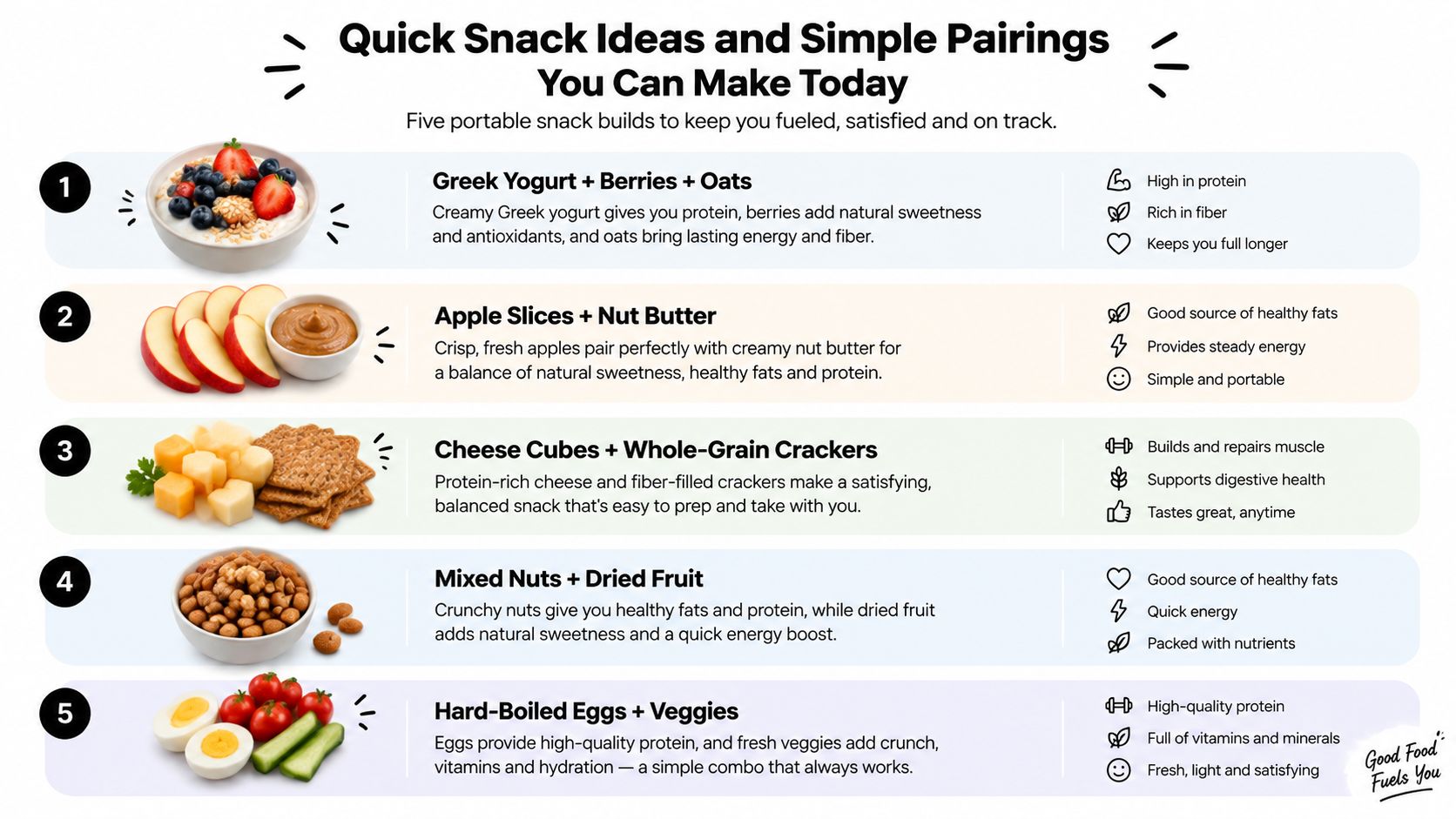
- Greek yogurt, berries, and oats. Spoon plain yogurt into a container, add berries, and finish with oats for chew. Prep it the night before, keep it chilled, and add a shelf-stable wafel just before eating if you want a separate crisp element.
- Apple slices with nut butter. Slice an apple at home and pack nut butter separately to prevent a messy container. This takes only a few minutes, and the fruit's moisture contrasts with the dense spread and a crisp packaged companion.
- Cheese cubes with whole-grain crackers. Cube cheese in advance and store it cold. Choose crackers with an ingredient list that reflects whole grains rather than relying only on the phrase “whole grain” on the front.
- Trail mix from nuts, seeds, and unsweetened dried fruit. Combine your own ingredients so you control the sweetness and can account for allergies. Store individual portions in small containers for commutes, desk drawers, or school bags.
- Vegetables with a yogurt dip. Mix plain yogurt with herbs or spices, then pack it with carrots, cucumber, peppers, or other vegetables you enjoy. Add a crisp wafel separately when you want more variety in texture.
A one-trip pantry list
Buy plain yogurt, berries, apples, nut butter, cheese, whole-grain crackers, nuts, seeds, unsweetened dried fruit, vegetables, oats, and a portable wafer or wafel format. Wash fruit and vegetables when you get home, portion the trail mix, and cube the cheese so the next snack requires assembly rather than cooking.
For children, use snack boxes with separate compartments and check choking risks, allergies, and age-appropriate textures. For work or travel, combine one chilled item with one shelf-stable item so the snack remains practical without depending on a specialty recipe.
Putting It All Together When You Shop Next Time
Use one decision rule at the shelf: check the ingredients, check the sugar, check the nutrition, and check the structure. First, look for recognizable whole foods. Next, identify added sugars and where they appear in the ingredient list. Then confirm the serving size and look for useful fiber or protein. Finally, ask whether the snack still has a meaningful texture or has been reduced to a highly engineered bite.
Don't turn the rule into a purity test. A product can be convenient and still fit your routine, while a minimally processed food can be a poor choice if it doesn't satisfy you or support your dietary needs. The strongest comparison considers processing level, added sugar, fiber density, protein, allergens, portion size, and how the snack feels to eat.
A short-ingredient wafel can serve as a practical example of this process when its label shows recognizable ingredients, a low-sugar formulation, a defined portion, and enough structure to provide crunch. Review the exact package rather than assuming every flavor or product line has the same nutrition profile. The category is also moving toward clearer ingredient communication, more visible certifications, and benefits that shoppers can verify instead of broad purity language.
Your next purchase doesn't require a perfect snack. It requires a transparent one that matches your goal and keeps you satisfied.
Rip Van offers Dutch-style wafels, crispy wafers, wafer bars, cookies, and other portable treats designed around lower sugar, natural flavors, and clear product information. Visit Rip Van to compare the available formats and choose a snack that fits your ingredient preferences, dietary needs, and everyday routine.
0 comments