

When you're looking for the best healthy packaged snacks, the formula is actually pretty simple: low added sugar, high fiber, and ingredients you can actually recognize. Brands like Rip Van have perfected this, delivering on taste and steady energy without the crash you get from most sugary treats.
The Smart Snacker's Dilemma

It’s a familiar story. You're busy, hunger strikes, and you need something now. The dilemma is real: grab the first thing you see and brace for the inevitable energy slump, or find a snack that actually fuels you without taking up time you don’t have?
For a long time, "packaged snack" felt like a dirty word, a compromise between what was easy and what was actually good for you.
But that old trade-off is a thing of the past. The world of convenience foods has undergone a massive transformation, and thankfully, you’re no longer stuck choosing between fast and healthy.
A New Era of Healthy Snacking
The collective demand for genuinely healthy packaged snacks has forced a major shift in the food industry. This isn't just some passing trend; it's a full-blown movement.
In fact, the healthy snacks market is expected to balloon to USD 195.2 billion by 2035. That number is a clear signal that people everywhere are tired of compromising on their wellness. You can explore more about this market growth and what it means for shoppers.
This guide will give you the tools to navigate this new world of snacking with confidence. Forget trying to memorize long lists of "good" and "bad" foods. Instead, you'll learn a simple, powerful framework to spot the best healthy packaged snacks on any shelf.
The goal is to move past the marketing noise on the front of the box and get straight to the facts on the nutrition label. True health is found in the details, not the flashy claims.
We'll break down exactly what to look for—from sugar and fiber to ingredient quality and portion control. With these skills, you’ll be able to quickly find snacks that are:
- Nourishing and Satisfying: They give you sustained energy, not a fleeting sugar rush.
- Convenient and Portable: Designed for a real, on-the-go lifestyle.
- Genuinely Delicious: Because you shouldn't have to sacrifice taste for your health.
Get ready to change how you think about snacking. It's time to discover just how easy it is to make smart choices that fuel your goals.
What Actually Makes a Snack Healthy?
The word "healthy" gets slapped on just about every package in the snack aisle, but what does it really mean? It’s not about some magical superfood or a perfect, guilt-free ingredient. It's much simpler than that. The best way to judge a snack is by looking at four key things.
Think of it as your own personal snack-rating system. Once you get the hang of it, you can walk down any grocery store aisle and instantly tell the difference between a genuinely good-for-you option and just clever marketing. It’s all about getting past the hype and focusing on what fuels your body best.
Master the Sugar Equation
First up, let's talk sugar. A truly healthy snack has very little added sugar. The natural sugar in an apple is fine—it comes with fiber, which helps your body process it slowly. But added sugars? They’re just empty calories that send your energy levels on a rollercoaster, ending in a crash that leaves you sluggish and wanting more.
When you're looking at a nutrition label, aim for snacks with less than 5-6 grams of added sugar per serving. This is the single most important rule for avoiding that dreaded mid-afternoon slump. A low-sugar snack gives you steady, reliable energy, not a frantic burst that kills your focus.
Embrace the Fiber Factor
If sugar is the villain, fiber is the hero. Think of fiber as the ingredient that gives a snack its staying power. It’s what makes you feel full and satisfied, keeping hunger at bay for hours, not minutes. Without it, a snack is just a temporary fix.
A good rule of thumb is to look for at least 3 grams of fiber per serving. This simple check helps you find snacks that will actually hold you over until your next meal.
The winning combination for lasting energy is low sugar and high fiber. It’s the difference between feeling great for the rest of the afternoon and hunting for another snack in 30 minutes.
This balance is what keeps your blood sugar stable, which has a huge impact on your mood, concentration, and energy all day long.
Use the Whole Ingredient Test
Next, flip the package over and scan the ingredients list. The best snacks are made from foods you can actually picture in your head. A great guideline is to pick snacks where the first few ingredients are real, whole foods—things like oats, nuts, seeds, or fruit.
If the ingredient list is a mile long and reads like a chemistry textbook, put it back on the shelf. You want to avoid all those unpronounceable chemicals, artificial colors, and weird fillers. Simplicity is your friend here.
- Look For: Ingredients like "almonds," "whole grain oats," or "chickpea flour."
- Watch Out For: Things like "high-fructose corn syrup," "partially hydrogenated oils," and artificial sweeteners.
Stick to Portion-Perfect Sizes
Let's be honest, even the healthiest snack can become unhealthy if you eat the whole bag. This is where portion control comes in, and pre-portioned snacks are a game-changer.
When a snack is already individually wrapped, it takes all the guesswork out of the equation. There’s no need to measure anything or try to stop yourself from diving back into a jumbo-sized bag. The right portion is already decided for you, making it so much easier to get the fuel you need without accidentally derailing your goals.
How to Decode a Nutrition Label in Seconds
Let's be honest, nutrition labels can look intimidating—like they were designed by scientists, for scientists. But you don't need a degree in chemistry to figure them out. Once you know what to look for, you can get the real story on any snack in under a minute.
Forget trying to analyze every single number. Just focus on a few key areas that reveal everything you need to know.
The Big Three: Serving Size, Sugar, and Ingredients
First things first, always find the serving size. This is where food manufacturers can be a little sneaky. That bag of pretzels might seem like a single portion, but the label could tell you it's actually two or three servings. Every number on that label—calories, fat, sugar—is based on one serving. It's easy to accidentally eat double or triple what you intended.
Next, skip down to the added sugars. Don't get tripped up by "total sugars," which includes naturally occurring sugars from things like fruit or milk. Added sugars are the ones you want to watch out for, as they offer empty calories that often lead to that dreaded afternoon energy crash.
A great rule of thumb is to look for snacks with 6 grams of added sugar or less per serving. This one number is a fantastic shortcut to finding a genuinely healthy choice.
Finally, give the ingredients list a quick scan. Here’s a simple trick I always use: the five-ingredient rule. The first five ingredients make up the vast majority of the product, since they're listed by weight. If you see sugar, corn syrup, or a bunch of words you can't pronounce at the top of that list, consider it a red flag.
You want to see real, whole foods listed first—things like oats, almonds, or chickpea flour. A short, simple ingredient list is almost always a sign you're on the right track.
This little guide makes it even easier to visualize the process.
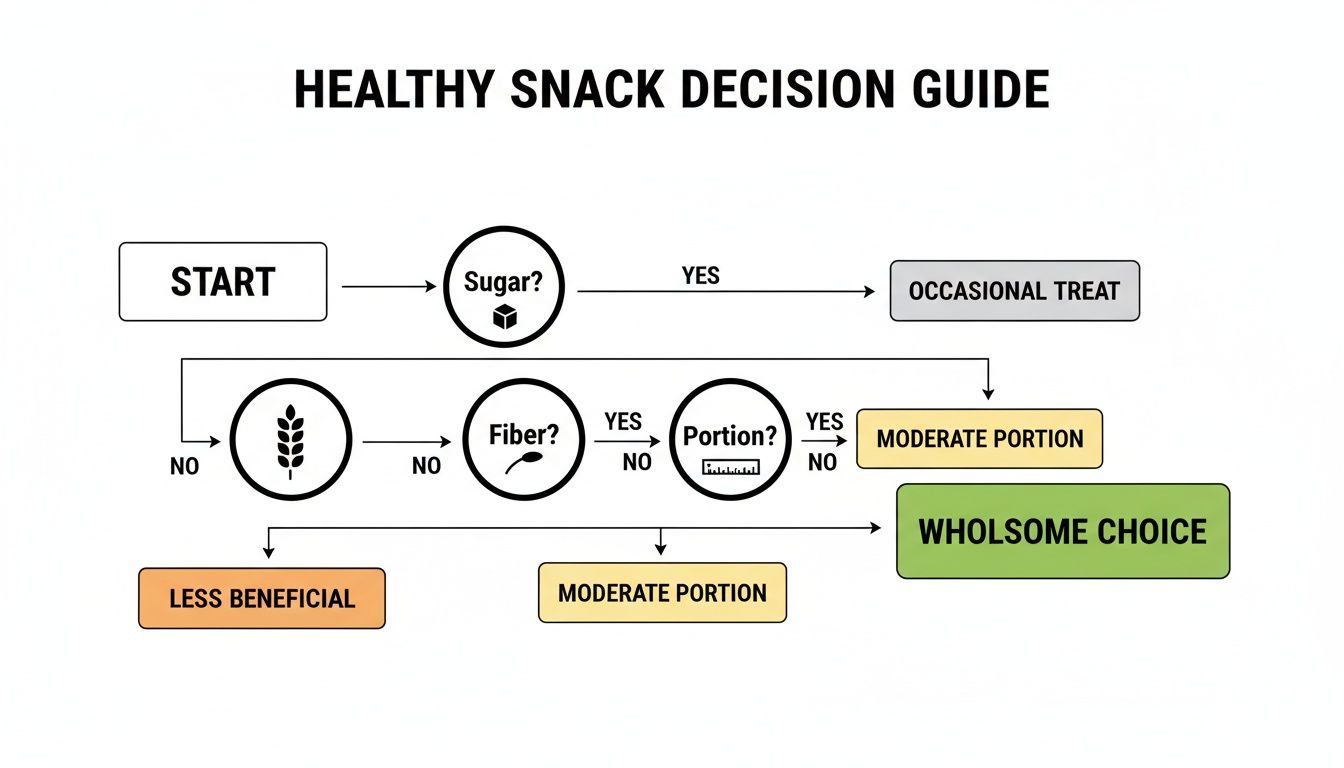
As you can see, balancing low sugar with a good amount of fiber, all in a controlled portion, is the quickest way to know if a snack is truly good for you.
Spotting Hidden Sugars and Sweeteners
Food companies have gotten pretty creative with how they list sugar. It's not always so obvious. Be on the lookout for anything ending in "-ose" (like dextrose or fructose), as well as terms like cane juice, molasses, and high-fructose corn syrup.
You'll also see some snacks using sugar alcohols as a lower-calorie sweetener. While they are often a better alternative, it’s worth understanding what they are and how they work. You can get the full scoop on what sugar alcohol in food is and see if it's a good fit for you.
Nutrition Label Quick-Check Guide
To make it even simpler, here's a handy table you can mentally reference next time you're in the snack aisle. It pulls together the most important metrics for a fast and accurate assessment.
| Nutrient | What to Look For (Ideal Range) | Why It Matters |
|---|---|---|
| Serving Size | Confirm it matches your intended portion. | All other numbers are based on this amount. |
| Added Sugars | 6 grams or less per serving. | Minimizes empty calories and energy spikes. |
| Dietary Fiber | At least 3 grams per serving. | Promotes fullness, aids digestion, and stabilizes blood sugar. |
| First 5 Ingredients | Whole foods (oats, nuts, fruit). | These make up the bulk of the snack. Avoid sugar and chemicals. |
By keeping these four checkpoints in mind, you can quickly cut through the noise and make a confident, healthy choice every time.
Finding the Right Snack for Your Lifestyle
Let's be honest, the "best" healthy snack isn't a one-size-fits-all kind of thing. What a marathon runner needs to refuel is worlds away from what a busy parent needs for their kid’s lunchbox. The right snack has to fit your life—your daily grind, your goals, and your routine.
Think about it like picking the right gear for a trip. You wouldn't pack hiking boots for a beach vacation. In the same way, matching your snack to your specific needs ensures you’re getting the right kind of fuel when you need it most. Let's dig into a few common scenarios.
For the Busy Professional Needing All-Day Energy
Ah, the 2 p.m. slump. We’ve all been there. Your focus starts to drift, your eyelids feel heavy, and that big project suddenly seems impossible. That mid-afternoon crash is often the direct result of a sugary, unsatisfying snack you grabbed earlier.
To keep your energy steady and your mind sharp, you need snacks that provide sustained fuel. That means looking for a few key things:
- Low in added sugar: This helps you avoid that notorious spike-and-crash cycle that kills productivity.
- High in fiber: Fiber slows everything down, giving you a steady, gradual release of energy that lasts for hours.
- Convenient and portable: Let's face it, if it isn't easy to grab between meetings or stash in your desk, you're not going to eat it.
A low-sugar, high-fiber wafel, like the ones from Rip Van, is a perfect example. It hits that sweet spot, satisfying your craving without sending your energy levels on a rollercoaster.
For Parents and Kids on the Go
Packing snacks for kids is a whole different ballgame. They have to be nutritious, but also tasty enough that your little one will actually eat them. On top of that, they often need to be school-friendly (which usually means nut-free). The real trick is finding something that isn't just a sugar bomb in disguise.
The secret is to keep it simple. Look for snacks with short, recognizable ingredient lists and minimal added sugar. Individually wrapped portions are a true lifesaver for busy parents—just toss one in a lunchbox or backpack and you’re good to go.
The ultimate win is finding a snack that both kids and parents can agree on. Focus on whole ingredients and controlled portions to give them the balanced energy they need to learn and play all day.
For the Fitness Enthusiast
What you eat around your workouts can make a huge difference in your performance and recovery. Your snacking needs will change based on whether you're fueling up for a long run or trying to repair muscle after a heavy lifting session.
For a pre-workout boost, you'll want something with easily digestible carbohydrates for quick, accessible energy. After the workout, the focus shifts to protein for muscle repair, usually paired with some carbs to restock your energy stores. A snack that balances these macronutrients without a ton of sugar is exactly what you need to support your fitness goals.
For the Low-Carb or Keto Dieter
If you're following a low-carb or keto lifestyle, you know how hard it can be to find a good snack. Hidden sugars and carbs are lurking everywhere, and navigating labels can feel like a full-time job.
The best packaged snacks for this way of eating are specifically designed to be low in net carbs. Keep an eye out for products made with alternative flours and sweetened with keto-friendly options. This way, you can enjoy a satisfying treat without kicking yourself out of ketosis. Rip Van’s keto-friendly snacks, for example, are made to deliver fantastic flavor while keeping the net carb count incredibly low.
Our Top Picks for Healthy and Delicious Snacks
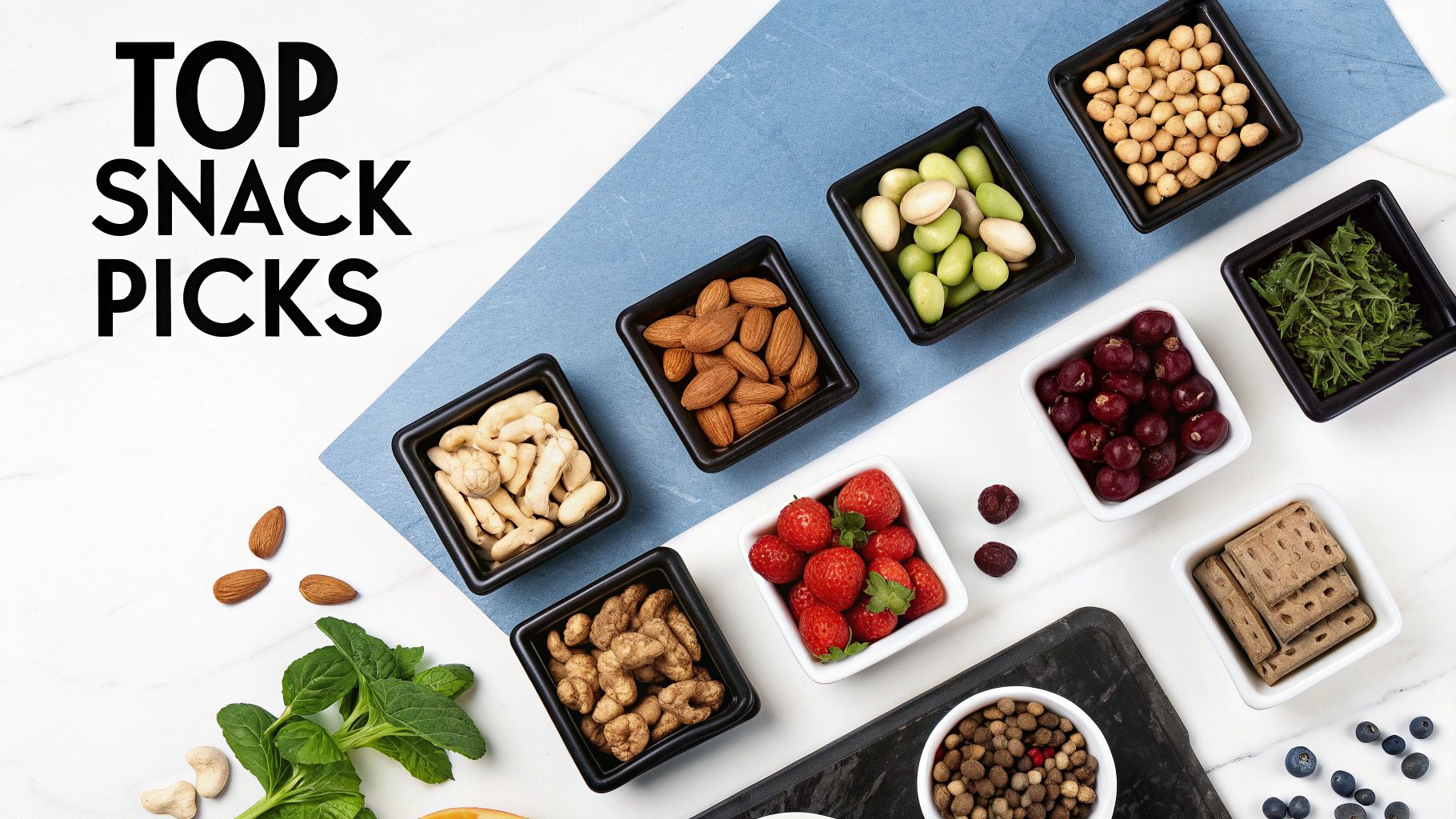
Alright, you're now equipped to read a nutrition label like a pro and spot what actually makes a snack good for you. So, let's get to the fun part and talk about some of the best healthy packaged snacks out there. These options prove you really don't have to choose between convenience and nutrition—you can get great taste, too.
The snacks I've picked out here are fantastic for scratching a specific itch, whether you want something sweet or savory. More importantly, they all stick to the principles we've covered: low sugar, high fiber, and clean ingredients. They’re built to give you steady energy without that dreaded afternoon crash.
Smartly Sweet Cookies and Wafels
We all get that craving for something sweet. It’s so easy to grab a standard cookie loaded with sugar, but there are some genuinely amazing alternatives that give you that same satisfying moment without the baggage. The key is finding a treat that feels like a reward but works with your body.
This is where brands like Rip Van really shine. They’ve managed to create Dutch-style wafels and cookies that taste indulgent but are actually low in sugar and packed with fiber. It’s the kind of smart snacking that lets you enjoy a sweet bite without derailing your health goals or sending you into an energy slump. If you want more ideas for these kinds of balanced treats, check out our guide to low-sugar snack bars.
Savory and Satisfying Bites
Sometimes, you just need that crunchy, salty fix. Instead of diving into a bag of greasy potato chips, look for savory snacks that deliver real nutritional value—like protein and fiber—to actually keep you full and focused.
Here are a few of my go-to savory choices:
- Roasted Chickpeas: They give you that awesome crunch you’re looking for, plus a solid hit of plant-based protein and fiber.
- Seaweed Snacks: These are super light, crispy, and surprisingly full of minerals. They’re a fantastic low-calorie way to handle a salt craving.
- Individual Hummus Packs: Grab some whole-grain crackers or baby carrots and you've got a perfectly portioned, balanced mini-meal.
You'll notice these types of snacks often come in convenient single-serving bags and pouches, which have taken over the market with a 42-43% share. It makes sense—with two in five consumers trying to snack healthier, the demand for portable, high-fiber, and low-sugar options is only getting bigger. You can discover more insights about these healthy snacking trends to see how our preferences are changing the game.
Finding a great snack comes down to simple math: Subtract the junk (like excess sugar) and add the good stuff (like fiber and protein). The result is sustained energy and satisfaction.
Looking for even more ideas? You can find some great inspiration in this list of 8 Delicious 150 Calorie Snacks to help power you through your day. It’s another great resource for keeping your snacking habits both healthy and interesting.
Your Smart Snack Shopping Strategy
Finding truly healthy packaged snacks gets a whole lot easier once you have a game plan. It doesn't matter if you're an online shopper or prefer walking the grocery store aisles—a few savvy moves can completely change what ends up in your pantry.
Shopping Online
When you're shopping online, your first stop should always be the brand's own website. You’ll often find the best deals there, like exclusive bundles, subscription discounts, or satisfaction guarantees that third-party retailers just don't offer.
If you're on a bigger site like Amazon or Thrive Market, put those digital filters to work. Instead of scrolling through a sea of options, you can instantly zero in on what you want by searching for terms like "high fiber" or "low sugar." It saves a ton of time.
Navigating the Grocery Store
In the store, it pays to think outside the main snack aisle. Let's be honest, that's usually where the junk food lives. Instead, take a detour through the health food section or check out the aisles dedicated to specific diets, like gluten-free or keto. You’d be surprised at the hidden gems and innovative brands you can find tucked away from the mainstream chips and cookies.
Pro Tip: Don't overlook the checkout lanes. As more and more people look for better options on the go, even these impulse-buy zones are getting stocked with healthier snacks. For more ideas, check out our guide to healthy convenience store snacks.
Answering Your Top Questions About Healthy Packaged Snacks
Walking down the snack aisle can feel like navigating a minefield of confusing claims and hidden sugars. It's totally normal to have questions. Let's tackle some of the most common ones so you can feel confident in your choices.
Think of this as your cheat sheet for your next grocery run.
Are "Gluten-Free" or "Organic" Snacks Automatically a Healthy Choice?
Not always. While these labels are crucial for people with specific health needs or values, they don't give a snack a free pass on nutrition. For example, an organic cookie can still be packed with sugar and empty calories.
The nutrition label is your source of truth. Ignore the flashy claims on the front of the box for a moment and flip it over. The real story is always in the added sugar, fiber count, and the first few ingredients.
How Can I Avoid That Mid-Afternoon Sugar Crash?
The secret to steady, all-day energy is finding snacks that balance carbohydrates with a good amount of fiber. Think of fiber as the brakes for your body's sugar absorption—it slows everything down, preventing that notorious energy spike and the inevitable crash that follows.
A snack full of refined carbs and sugar with little to no fiber is a one-way ticket to an energy slump. To keep yourself feeling sharp and focused, always aim for snacks with at least 3 grams of fiber and very little added sugar.
What’s Most Important When Choosing Healthy Snacks for Kids?
For kids, it really comes down to two things: portion control and simple ingredients. Individually wrapped snacks are a parent's best friend, making it easy to hand out a properly-sized treat for a lunchbox or after-school fuel-up.
Read the ingredients list like a detective. The best kids' snacks are made from recognizable whole foods—things like oats, real fruit, or nuts. Steer clear of high-fructose corn syrup and artificial colors to give them the clean, steady energy they need to learn and play.
Ready to stock your pantry with delicious, satisfying snacks that fit your healthy lifestyle? Explore the full collection of low-sugar, high-fiber treats from Rip Van and discover your new favorite go-to. Find the perfect snack for any moment at https://ripvan.com.
0 comments