

Let's face it: finding a keto cookie that actually hits the spot can feel like a mission impossible. The very best keto cookies manage to walk a tightrope, balancing rich, crave-worthy flavor with smart, low-carb ingredients like almond flour, clean sweeteners, and healthy fats. This guide will show you exactly how to spot these gems and finally find a cookie you love—without derailing your health goals.
The Search for a Genuinely Great Keto Cookie
The keto lifestyle has completely changed the game for how we think about food, especially snacks. When you're hunting for a great keto cookie, it helps to think about what makes classic treats like traditional chocolate crinkle cookies so amazing—it's that perfect harmony of soft texture and deep, satisfying flavor. The big challenge for keto snacks is recreating that magic without the usual sugar and flour.
This guide tackles that challenge head-on. We're going to move past the generic advice and get into the details of what separates a truly great keto cookie from the sad, chalky ones. We’ll break down how to find treats that not only taste incredible but also actively support your ketogenic goals with smart ingredients.
Finding Your Way in a Crowded Market
The demand for better-for-you snacks isn't just a passing fad; it's a massive shift in how people eat. The global market for keto diet products is booming, valued at a staggering US$13.9 billion in 2026 and expected to climb to US$20.7 billion by 2033. Snacks like keto cookies are at the forefront of this movement, growing faster than any other category because they're so convenient and appealing.
This explosive growth means you have more options than ever before, but it also creates a lot of noise. With so many products slapping a "keto" label on the package, it’s crucial to become a savvy shopper who can tell the difference between real quality and just clever marketing.
Your Guide to Keto Cookie Success
Think of this article as your personal roadmap. It gives you a clear framework for decoding labels, understanding different sweeteners, and recognizing the high-quality fats and fibers that make all the difference. We'll also see how innovative brands like Rip Van have cracked the code to create indulgent, low-sugar snacks that don't taste like a compromise.
By the time you're done reading, you'll have the confidence and knowledge to:
- Read nutrition labels and accurately calculate net carbs.
- Spot beneficial ingredients like MCT oil and almond flour.
- Dodge hidden sugars and problematic sweeteners.
- Fit treats into your lifestyle without any guilt or setbacks.
Ultimately, my goal is to help you find a keto cookie you'll genuinely look forward to eating.
What Makes a Cookie Keto? It's Not Your Grandma's Recipe
We all know what makes a traditional cookie so darn good: classic wheat flour and a generous helping of sugar. They’re responsible for that perfect soft-but-chewy bite and irresistible sweetness. The problem? Those two ingredients are the fastest way to derail ketosis. So, what’s the secret to a genuinely keto cookie? It’s a total reinvention, a ground-up redesign that works with your body's fat-burning engine, not against it.
Imagine your body has two fuel tanks. One is filled with carbs (like high-octane gasoline), giving you a quick burst of energy. The other is filled with fat (like steady-burning diesel), offering long-lasting, stable power. The whole point of a ketogenic diet is to flip the switch and teach your body to run on that diesel tank full-time.
A regular cookie is pure gasoline—you get a fast, sugary spike followed by a hard crash, and it instantly forces your body back into carb-burning mode. The best keto cookies, on the other hand, are engineered to keep you running smoothly on diesel, providing satisfying energy without knocking you out of your metabolic groove.
The Building Blocks of a Better Cookie
To pull this off, keto cookies are built with a completely different set of ingredients. Instead of just taking things out, the recipe is rebuilt with smart swaps that deliver the taste and texture you crave while keeping carbs to a bare minimum. It’s about replacing the bad with the beneficial.
A true keto cookie stands on three pillars:
- Low-Carb Flours: Forget wheat. Almond and coconut flours are the stars of the show, giving cookies structure and a great mouthfeel without the carb overload.
- Smart Sweeteners: To get that sweet flavor without a blood sugar spike, bakers turn to ingredients like monk fruit, stevia, and erythritol. These are essential for staying in ketosis.
- Healthy Fats and Fiber: Good fats from sources like nuts, butter, or even MCT oil add richness and keep you energized. Fiber contributes to the texture and makes you feel full, all while helping to lower the final carb count.
The Only Number That Matters: Net Carbs
This brings us to the most critical concept for any keto snacker: net carbs. You might glance at a nutrition label and see "Total Carbohydrates" and panic. But hold on—not all carbs are the same, and your body certainly doesn't treat them that way.
Net carbs are the carbohydrates your body actually digests and converts into glucose. This is the number that impacts your blood sugar and determines whether you stay in ketosis.
Figuring out net carbs is pretty straightforward. You just take the total carbs and subtract the carbs your body doesn't digest—namely, fiber and certain sugar alcohols. Since these pass through your system without being used for energy, they don’t count against your daily keto allowance.
Getting this concept down is the difference between a frustrating keto journey and a successful one. A cookie might have 20 grams of total carbs, which sounds like a definite "no." But if it also has 12 grams of fiber and 5 grams of a sugar alcohol like erythritol, the math changes completely. Its net carb count is just 3 grams. Suddenly, that off-limits treat becomes a perfect keto-friendly indulgence. Mastering this one little calculation is your ticket to enjoying the best keto cookies with total peace of mind.
How to Calculate Net Carbs Like a Pro
The nutrition label on any packaged food is your secret weapon, and the number you’re hunting for is net carbs. Honestly, learning how to calculate this figure is the single most empowering skill you can pick up on a ketogenic diet. It turns you from a hesitant buyer into a confident shopper who can make smart choices in any grocery aisle, especially when you’re craving a good keto cookie.
Think of "Total Carbohydrates" on a label as all the roads on a map. Your body, however, doesn't travel down every single one. Some routes, like fiber and certain sugar alcohols, are indigestible. They pretty much pass right through without being turned into glucose. Since they don't mess with your blood sugar, you can subtract them to find the roads your body actually uses for fuel.
The Net Carb Formula Explained
The calculation itself is incredibly straightforward—it's just simple subtraction. Once this clicks, you'll be able to glance at any food label and know if it works for you in seconds.
The formula is: Total Carbohydrates - Dietary Fiber - Certain Sugar Alcohols = Net Carbs
Let's quickly break down what you're looking at on the label:
- Total Carbohydrates: This is your starting point, listed right on the nutrition panel. It’s the grand total of everything: starches, sugars, fiber, and sugar alcohols.
- Dietary Fiber: Your body can't digest fiber, so it has almost no impact on your blood sugar. You can subtract the full amount.
- Sugar Alcohols: Now, this is where it gets a little tricky. Some, like erythritol and allulose, have a glycemic index of zero and can be fully subtracted. Others, like maltitol, can have a slight impact. For a deeper dive, check out our guide on what sugar alcohol is in food.
By focusing only on the carbs that actually affect your body, you get a much more accurate picture of how a food fits into your keto lifestyle. This is the secret to enjoying treats without knocking yourself out of ketosis.
This is all about shifting your body's energy source from carbs to fat, which is the whole point of ketosis.
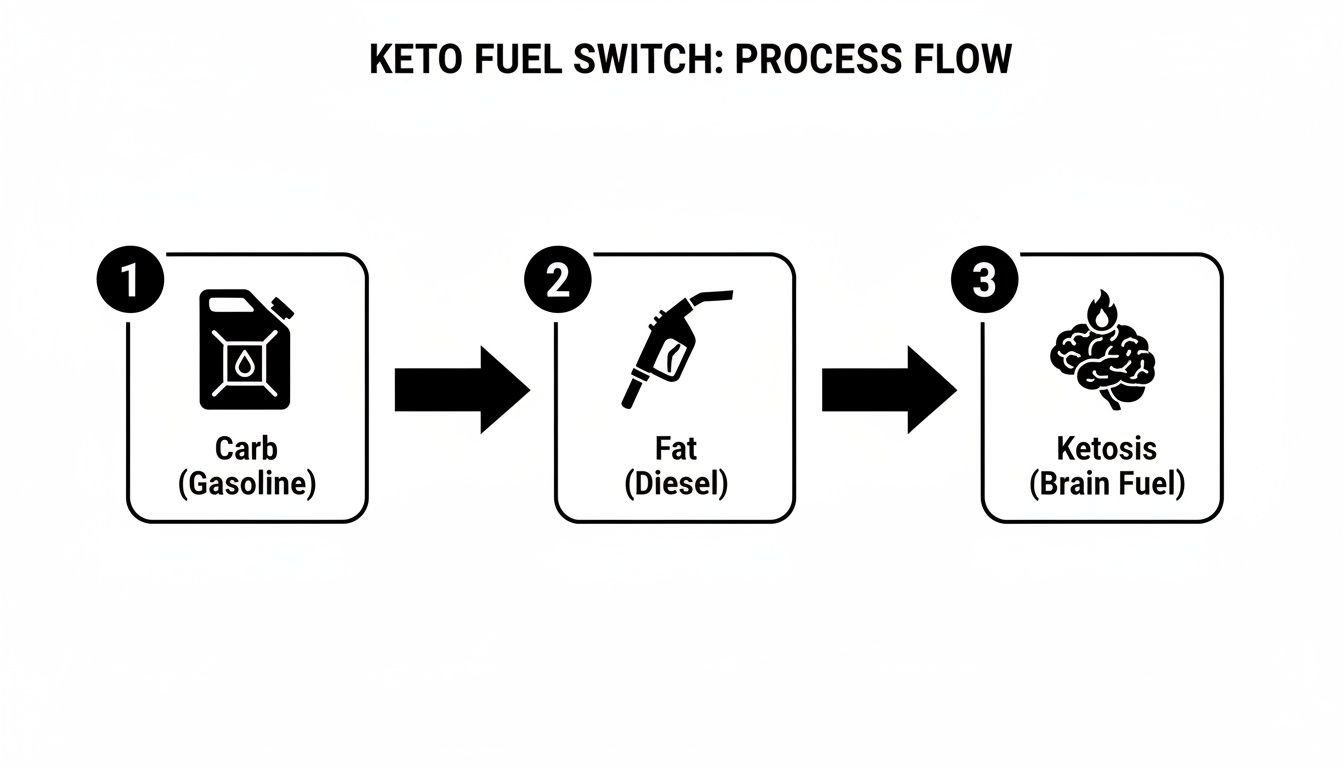
Understanding this fuel switch is exactly why calculating net carbs matters so much—it's how you make sure you're giving your body the right stuff.
Traditional Cookie vs Keto Cookie: A Net Carb Showdown
Let's put this into practice. A side-by-side comparison shows you just how a cookie that looks high in carbs can actually be the perfect keto snack. Imagine you pick up two different chocolate chip cookies. Their total carb counts might seem surprisingly close, but the real story is in the math.
| Nutrient | Typical Chocolate Chip Cookie (per 30g serving) | Keto-Friendly Cookie (e.g., Rip Van) (per 30g serving) |
|---|---|---|
| Total Carbohydrates | 22g | 20g |
| Dietary Fiber | 1g | 12g |
| Sugar Alcohols | 0g | 5g (Erythritol) |
| Net Carbs | 21g | 3g |
Just look at that difference! The regular cookie's 21g of net carbs would blow through most people's daily keto allowance in just a few bites.
But the keto cookie? It’s packed with fiber and uses a zero-impact sweetener, bringing it down to a beautiful 3g of net carbs.
This is precisely why reading the whole label is non-negotiable. That 20g total carb number on the keto cookie is totally misleading if you don't know the story behind it. By applying the simple net carb formula, you see the truth: one is a sugar bomb, and the other is a perfectly crafted, low-carb treat. This skill gives you the freedom to enjoy delicious snacks without any of the guesswork.
Choosing Sweeteners That Support Ketosis
When you're hunting for the best keto cookies, the sweetener is the make-or-break ingredient. Think of it as a secret agent: its mission is to deliver all the sweet, satisfying taste of a regular cookie without blowing your cover and spiking your blood sugar. It sounds complicated, but I find it helps to think of sweeteners with a simple traffic light system: green for go, yellow for caution, and red for stop.
Getting this right is everything. The demand for keto-friendly snacks is exploding—the market is expected to jump from USD 15.67 million in 2025 all the way to USD 34.33 million by 2033. That’s not just a trend; it's a massive shift. People want treats that are high in fiber and low in sugar, and a good keto cookie delivers just that.
Choosing the right sweetener means your delicious snack won't undo all your hard work. It's the real key to guilt-free indulgence.
Green Light Keto Sweeteners
These are your keto all-stars. Green-light sweeteners have virtually no impact on your blood glucose, which makes them perfect for staying in ketosis. You get all the sweetness you crave without the metabolic drama.
Here are the most common and trusted sweeteners you'll find in great keto products:
- Monk Fruit: This is a natural, zero-calorie sweetener that comes from a small green melon. It's incredibly sweet, so you don't need much, and it doesn't have that weird, bitter aftertaste some sweeteners do.
- Stevia: Another plant-based powerhouse, stevia is also calorie-free and a go-to for many keto recipes and products.
- Erythritol: This one is a sugar alcohol, but it’s the exception to the rule. Your body doesn’t really metabolize it, so it just passes through without causing blood sugar spikes or the digestive issues that give other sugar alcohols a bad name.
- Allulose: This is a newer player on the scene, often called a "rare sugar." What's great about allulose is that it tastes and acts a lot like regular sugar but has almost zero calories and no effect on blood sugar.
You’ll notice that brands like Rip Van stick to these clean, effective sweeteners. It’s how they make sure their snacks are genuinely "better-for-you" and a perfect fit for a keto lifestyle.
Yellow Light Sweeteners: Use with Caution
Now for the "yellow light" category. These sweeteners aren't a hard "no," but you need to be a bit more mindful. These are mostly other sugar alcohols that, unlike erythritol, can slightly raise blood sugar and might cause some digestive upset, especially if you eat too much.
Think of these as sweeteners to have in moderation. They're way better than sugar, but they aren't a total free-for-all like the green-light options. It really comes down to your personal tolerance.
Here are the main ones to watch for:
- Xylitol: It has a low glycemic index, but it's not zero. It can work for some people, but it’s best to consume it cautiously.
- Maltitol: This one is particularly tricky. Its glycemic index is higher than other sugar alcohols, and it’s famous for causing stomach trouble. A lot of "sugar-free" candies use it, which is why savvy keto folks tend to steer clear.
If you're looking for creative ways to sweeten your keto treats, you could even incorporate things like Sugar‑Free Syrups to add great flavor without the carbs.
Red Light Sweeteners: Avoid Completely
Finally, we have the red-light sweeteners. These are the culprits that will absolutely kick you out of ketosis, no questions asked. They often hide in plain sight, sometimes in foods marketed as "healthy," so you have to become a bit of a label detective.
Here are the main offenders to avoid at all costs:
- Table Sugar (Sucrose): The obvious one!
- High-Fructose Corn Syrup (HFCS): A staple in so many processed foods.
- Honey and Maple Syrup: They might be natural, but to your body, they're pure sugar.
- Agave Nectar: This is often misleadingly marketed as a healthy alternative, but it’s packed with fructose.
- Maltodextrin: It’s a highly processed powder that can spike blood sugar even faster than table sugar.
Spotting any of these on an ingredient list is an immediate red flag. The best keto cookies will always use green-light sweeteners to make sure they taste amazing and keep you on track.
The Building Blocks of a Superior Keto Cookie
Once you get past the net carb count, the best keto cookies are really defined by the quality of their ingredients. It’s about more than just what’s left out; it’s about what’s put in. Think of it like building a house—the blueprint (low carbs) is critical, but the quality of the materials you use determines if it will stand strong.
A truly well-crafted keto cookie is a masterclass in ingredient synergy. Every component is there for a reason, chosen not just to replace sugar or wheat, but to actively add something beneficial. This is where a simple snack becomes a smart choice for your body.
Rethinking the Flour
The first thing to go in any keto recipe is traditional flour. Wheat flour is loaded with carbs, so it's out from the start. This is where alternative flours come in, and almond and coconut flour are the undisputed champions.
- Almond Flour: This is the workhorse of keto baking. Made from finely ground almonds, it creates a wonderfully moist, slightly dense cookie with a rich, buttery flavor. Better yet, it brings healthy fats, a bit of protein, and nutrients like vitamin E to the table.
- Coconut Flour: A little of this stuff goes a long way because it's super absorbent. It lends a subtle sweetness and a lighter, softer texture. It's also incredibly high in fiber, which is a huge win for feeling full and supporting digestion.
These flours don't just slash the carbs; they actually add nutritional value that wheat flour can't touch.
The Power of Healthy Fats and Fiber
Fats and fiber are the real unsung heroes of a great keto cookie. On a ketogenic diet, fat is your main fuel source, so the type of fat you eat really matters.
The best keto cookies are made with fats that do more than just taste good. Healthy fats from sources like almonds, butter, or even added MCT oil provide clean, sustained energy. This is the kind of fuel that keeps you feeling sharp and satisfied, without the sugar crash. It's what turns a cookie from a simple treat into a truly functional snack.
Fiber is the secret weapon for making a keto cookie that actually satisfies you. It helps lower the net carb count and is crucial for making you feel full, which is key to managing cravings and staying on track.
This is where smart snack design makes all the difference. Cookies that are intentionally high in fiber, like those from Rip Van, are designed to be more filling. When a cookie helps you feel full longer, it stops being just a treat and becomes a tool for managing your appetite. You can learn more about how this works by reading up on the benefits of high-fiber, low-carb snacks.
In the end, it’s what’s inside that counts. By picking cookies made with nutrient-dense flours, high-quality fats, and a good dose of fiber, you’re getting so much more than a low-carb dessert. You’re getting a smarter snack that works with your body, not against it.
How to Fit Keto Treats Into Your Life
Finding a genuinely good keto cookie feels like striking gold. But the real secret to long-term success isn't just finding the cookie—it's knowing how to fit it into your routine without derailing your progress. The idea is to make these treats a sustainable part of your lifestyle, not a forbidden pleasure that ends in a binge.
The most common pitfall I see is treating keto-friendly snacks as a free-for-all. Yes, they’re much better for you, but calories still count. A simple trick is to pair your cookie with something else to boost satisfaction. Instead of eating it alone, try having it with a bulletproof coffee or a small handful of macadamia nuts. That extra fat helps you feel fuller longer, making one treat feel like more than enough.
Timing Is Everything
When you eat your keto cookie can be just as important as which one you choose. If you're smart about it, that little snack can do more than just quiet a craving. Think about the moments in your day when your body could really use a lift.
Here are a few moments when a keto snack can be your best friend:
- Pre-Workout Boost: Need a little kick before hitting the gym? A cookie packed with healthy fats offers a quick, easily digestible source of energy.
- The 3 PM Slump: We all know it. That afternoon energy dip can be brutal. A keto cookie can get you over the hump without the sugar crash that follows a typical snack.
- A Smart Dessert: End your day on a sweet note with a planned treat that fits your macros. It’s a great way to avoid feeling deprived, which is often what leads people to fall off the wagon.
This strategic snacking approach is catching on. In fact, snacks are taking over the keto food scene, with the market projected to hit a massive USD 17.26 billion by 2031. People on keto love how portable treats like cookies let them stay in fat-burning mode without a ton of meal prep. It’s a win for everyone from busy parents to serious athletes. You can dive deeper into this trend and discover key insights into the keto food market on mordorintelligence.com.
The Simple Genius of Portion Control
One of the easiest yet most powerful ways to stay on track is to lean on built-in portion control. It takes the guesswork—and the temptation to grab "just one more"—out of the equation.
Choosing individually wrapped snacks, like those from Rip Van, gives you a clear, physical stopping point. When the wrapper is empty, you're done. This simple boundary helps you actually savor the treat you’re having instead of mindlessly reaching for the next one.
Ultimately, working keto cookies into your life isn't about restriction; it's about being strategic. By pairing them with other foods, timing them for maximum benefit, and relying on built-in portion control, you turn a simple treat into a tool that supports your health goals. Your cookie goes from being a guilty pleasure to a well-deserved, intelligent part of your daily routine.
Got Questions About Keto Cookies? We've Got Answers
Alright, so you've got the basics down—net carbs, good versus bad ingredients—but a few questions might still be bubbling up. Let's clear up some of the common uncertainties so you can pick your next keto treat with total confidence.
Think of this as your final checklist before diving into the delicious world of keto-friendly cookies.
So, Can I Eat Keto Cookies Every Day?
Look, while keto cookies are a game-changer for satisfying a sweet tooth, it's best to think of them as a treat, not a daily staple. The goal is to fit them into your bigger picture—a balanced ketogenic diet where you’re hitting your macros. For most people, that means staying under 20-50 grams of net carbs per day.
Having a cookie a few times a week is a great way to stay on track without feeling like you're missing out. Just be mindful of the serving size and log it like you would anything else. It's all about making it work for your goals.
Will Sugar Alcohols Kick Me Out of Ketosis?
This is a fantastic question, and the answer is: it depends on which one! Not all sugar alcohols are created equal.
The gold standards for keto are erythritol and allulose. These have almost zero impact on blood sugar, making them perfect for staying in ketosis. On the other hand, sugar alcohols like maltitol can cause a blood sugar spike for some people, so you have to be a bit more careful with those. The best keto cookies stick to the good stuff.
The right sweeteners make all the difference. Choosing cookies made with erythritol, monk fruit, or stevia is the surest way to enjoy a sweet treat without worrying about being kicked out of ketosis.
Are Keto Cookies a Good Option for Diabetics?
Since they're specifically made to be low in sugar and net carbs, many keto cookies can be a great fit for someone managing their blood sugar levels. They're designed to sidestep the sharp spikes you get from regular sweets. If you're looking for more snack ideas, we've put together a helpful guide on low-sugar cookies for diabetics.
That said, everyone's body is different. It’s always a smart move to chat with your doctor or a registered dietitian before adding new foods to your diabetes management plan. They can help you make sure your choices are a perfect match for your personal health needs.
At Rip Van, we craft our snacks to be both delicious and aligned with your wellness goals. Our keto-friendly options are made with high-quality ingredients, high fiber, and low sugar, so you can snack confidently. Find your new favorite treat today at Ripvan.com.
0 comments